Quick Answer
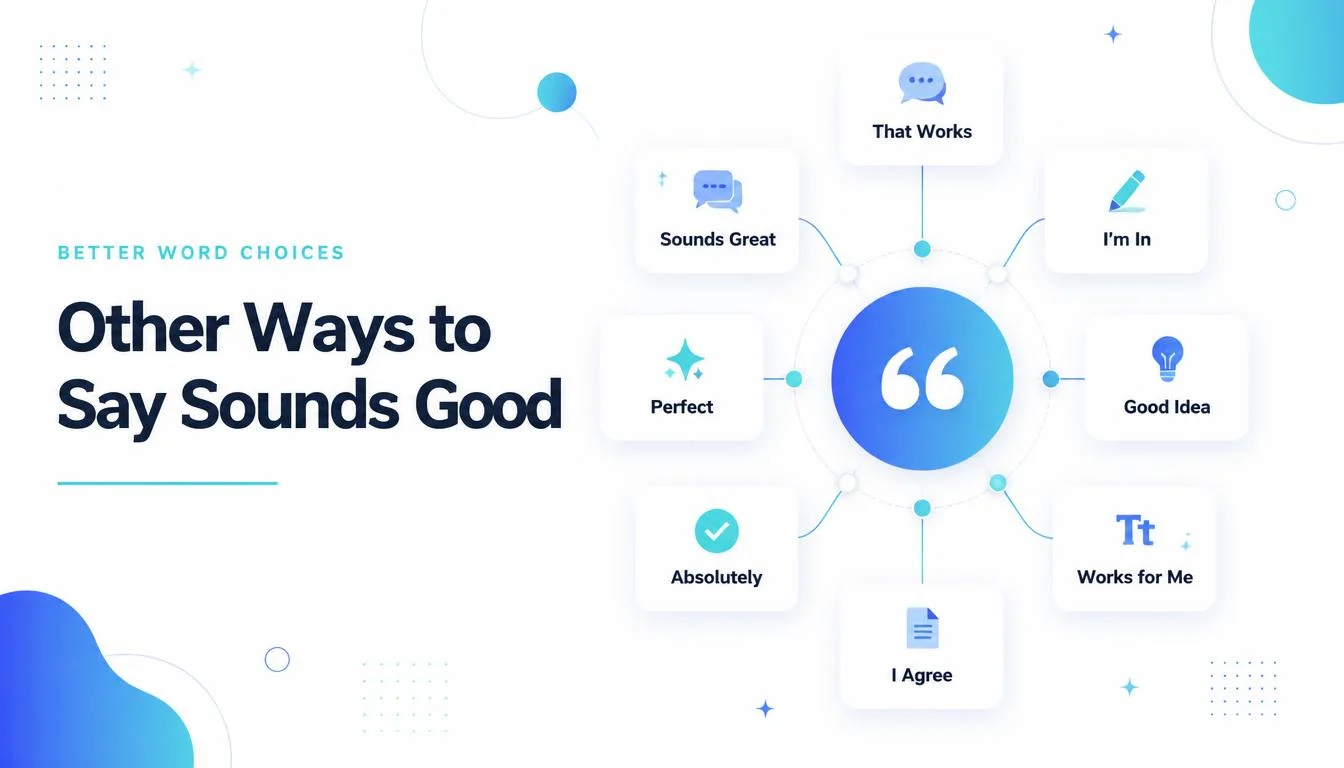
Other ways to say sounds good include “That works for me,” “Sounds great,” “Absolutely,” “I’m on board,” and “That’s perfect.” These expressions help you agree naturally in casual and professional conversations.
Knowing other ways to say sounds good can make your conversations more engaging, natural, and expressive. Whether you’re chatting with friends, responding to a colleague, or confirming a plan, using different expressions helps you communicate agreement with confidence.
In this guide, you’ll discover useful other ways to say sounds good for casual conversations, professional emails, and workplace discussions. These alternatives will help you express agreement, enthusiasm, and approval in a clear and appropriate way.
Quick Categories: Alternatives at a Glance
Formal alternatives to “Sounds Good”
- That is acceptable.
- That is agreeable.
- I approve of this proposal.
- That arrangement is suitable.
Pro Tip: Use complete, respectful expressions when responding to formal proposals or official arrangements.
Casual alternatives
- That works for me.
- Sounds great.
- I’m good with that.
- Perfect!
Pro Tip: Choose short, natural phrases when talking with friends or familiar colleagues.
Professional alternatives
- That works well for me.
- I agree with that approach.
- That aligns with our objectives.
- I am happy to proceed.
Pro Tip: In workplace communication, connect your agreement to the plan, decision, or next step.
Informal expressions
- I’m in!
- Absolutely!
- Count me in.
- I’m on board.
Pro Tip: Use enthusiastic expressions with people who are comfortable with a relaxed conversational style.
“The right alternative can turn a simple agreement into a clear, confident response.”
Common Mistakes When Using “Sounds Good”
Here are five common mistakes English learners should avoid.
1. Using it in every situation
Repeating the same phrase can make your responses sound monotonous.
Example: “Sounds good” is your response to every suggestion, even in formal emails.
Better: “That works well for me.”
2. Using it when you do not agree
“Sounds good” generally communicates approval, so it may create confusion if you have concerns.
Example: “Sounds good,” when you actually disagree with the proposed deadline.
Better: “I have a concern about the timeline.”
3. Using it in overly formal writing
The phrase may sound too conversational in official correspondence.
Example: “Sounds good” in a formal contract approval email.
Better: “I approve of the proposed arrangement.”
4. Confusing agreement with excitement
“Sounds good” can show simple agreement without strong enthusiasm.
Example: “Sounds good,” when you want to express genuine excitement about a new opportunity.
Better: “That sounds fantastic!”
5. Leaving your response unclear
A short reply may not confirm which part of a plan you accept.
Example: “Sounds good,” after receiving several different meeting options.
Better: “Tuesday at 10 a.m. works well for me.”
What Does “Sounds Good” Mean?
“Sounds good” is an informal expression used to indicate that a suggestion, plan, offer, or idea seems acceptable or appealing.
Grammar Explanation
The phrase is a shortened conversational form of “That sounds good.”
- Sounds: A linking verb that connects the subject to a description.
- Good: An adjective describing the suggestion or plan.
Example: “Let’s meet at 3 p.m.” “Sounds good!”
In this exchange, the speaker expresses agreement with the proposed meeting time.
When to Use “Sounds Good”
The expression is appropriate in many everyday situations.
Common contexts
- Accepting invitations: Agreeing to meet friends for lunch.
- Confirming plans: Approving a suggested time or location.
- Responding to suggestions: Showing that an idea seems suitable.
- Workplace conversations: Acknowledging a colleague’s proposal.
- Online communication: Replying to messages, chats, and informal emails.
Spoken vs. Written English
| Context | Usage |
|---|---|
| Spoken English | Natural in everyday conversations and meetings |
| Text messages | Friendly and concise |
| Informal emails | Appropriate for familiar colleagues |
| Formal emails | Often better replaced with a more precise expression |
| Official documents | Usually unsuitable |
Is It Professional or Polite to Say “Sounds Good”?
Polite? Yes.
Professional? Yes, in many everyday workplace situations, although more specific wording may be preferable in formal communication.
“Sounds good” is generally friendly and respectful. However, it can seem vague when a clear commitment or formal approval is needed.
Business-style example:
“Your proposed meeting time works well for me. I look forward to discussing the project.”
This response confirms agreement while maintaining a professional tone.
Pros and Cons of Using “Sounds Good”
Pros
- Simple and natural: Easy to use in everyday conversation.
- Friendly tone: Helps maintain a positive interaction.
- Common usage: Widely understood by English speakers.
- Easy to understand: Clearly communicates general agreement.
Cons
- Can sound too casual: May not fit certain formal business situations.
- Can be overused: Repetition reduces variety in communication.
- Limited emotional range: Does not always convey strong enthusiasm.
- Not ideal for formal writing: May lack precision in official correspondence.
“Agreement is not always the same as enthusiasm. Choose words that communicate exactly how you feel.”
Other Ways to Say “Sounds Good” (With Examples)
These alternatives will help you sound more fluent, confident, and natural in different situations.
Use them according to tone, context, and audience to express excitement, admiration, or approval.
Alternatives With Meanings and Examples
1. Phrase: That Works for Me
- Meaning: Indicates that a suggestion is acceptable.
- Explanation: Commonly used to agree with plans, schedules, or arrangements.
- Example Sentence: “Let’s meet at 2 p.m.” “That works for me.”
- Best Use: Scheduling plans
- Worst Use: Formal approvals
- Tone: Friendly, neutral, practical
- Context Variability: Casual: “That works for me.” Professional: “The proposed schedule works well for me.” Spoken: “Yep, that works.”
2. Phrase: Absolutely
- Meaning: Expresses strong agreement or enthusiastic approval.
- Explanation: Shows that you completely support a suggestion or request.
- Example Sentence: “Can you join us for the meeting?” “Absolutely!”
- Best Use: Strong agreement
- Worst Use: Expressing uncertainty
- Tone: Confident, enthusiastic, positive
- Context Variability: Casual: “Absolutely!” Professional: “Absolutely, I can attend.” Spoken: “Absolutely, let’s do it.”
3. Phrase: That Sounds Great
- Meaning: Shows that an idea or plan is appealing.
- Explanation: Communicates both agreement and positive enthusiasm.
- Example Sentence: “We could have lunch together tomorrow.” “That sounds great!”
- Best Use: Friendly invitations
- Worst Use: Formal decisions
- Tone: Warm, upbeat, friendly
- Context Variability: Casual: “That sounds great!” Professional: “That sounds like a great approach.” Spoken: “Sounds great to me.”
4. Phrase: I Agree
- Meaning: Indicates that you share someone’s opinion or decision.
- Explanation: A straightforward way to express agreement with a statement or proposal.
- Example Sentence: “We should review the report before submitting it.” “I agree.”
- Best Use: Shared opinions
- Worst Use: Casual excitement
- Tone: Neutral, direct, professional
- Context Variability: Casual: “Yeah, I agree.” Professional: “I agree with your recommendation.” Spoken: “I completely agree.”
5. Phrase: I’m on Board
- Meaning: Indicates willingness to support or participate in a plan.
- Explanation: Often used when agreeing to an idea or collaborative project.
- Example Sentence: “We’re launching a new initiative next month.” “I’m on board.”
- Best Use: Team collaboration
- Worst Use: Official documentation
- Tone: Supportive, enthusiastic, informal
- Context Variability: Casual: “I’m on board!” Professional: “I’m on board with the proposed initiative.” Spoken: “Count me in, I’m on board.”
6. Phrase: Perfect!
- Meaning: Expresses complete satisfaction with a suggestion or arrangement.
- Explanation: A short response used when a plan meets your expectations.
- Example Sentence: “I’ll send you the file by noon.” “Perfect!”
- Best Use: Quick confirmations
- Worst Use: Serious disagreements
- Tone: Positive, concise, enthusiastic
- Context Variability: Casual: “Perfect!” Professional: “Perfect, thank you for confirming.” Spoken: “Perfect, see you then.”
7. Phrase: That Sounds Wonderful
- Meaning: Shows strong approval of an appealing idea.
- Explanation: Adds warmth and enthusiasm to a positive response.
- Example Sentence: “We’re organizing a team celebration.” “That sounds wonderful!”
- Best Use: Warm invitations
- Worst Use: Routine approvals
- Tone: Warm, appreciative, enthusiastic
- Context Variability: Casual: “That sounds wonderful!” Professional: “That sounds like a wonderful opportunity.” Spoken: “It sounds wonderful.”
8. Phrase: I’m Happy With That
- Meaning: Communicates satisfaction with a proposed arrangement.
- Explanation: Shows that you are comfortable with a decision or suggestion.
- Example Sentence: “We can finalize the design in blue.” “I’m happy with that.”
- Best Use: Approving arrangements
- Worst Use: Expressing excitement
- Tone: Calm, positive, agreeable
- Context Variability: Casual: “I’m happy with that.” Professional: “I’m happy with the proposed arrangement.” Spoken: “Yes, I’m happy with that.”
9. Phrase: That Seems Reasonable
- Meaning: Indicates that a suggestion appears fair or logical.
- Explanation: Useful when agreeing with a practical proposal after considering it.
- Example Sentence: “We can extend the deadline by two days.” “That seems reasonable.”
- Best Use: Practical decisions
- Worst Use: Celebratory occasions
- Tone: Measured, thoughtful, neutral
- Context Variability: Casual: “That seems reasonable.” Professional: “The proposed timeline seems reasonable.” Spoken: “Yes, that sounds reasonable.”
10. Phrase: I Can Work With That
- Meaning: Shows that you can accept and manage a proposed arrangement.
- Explanation: Often used when a suggestion is workable even if it is not ideal.
- Example Sentence: “We can offer a slightly later delivery date.” “I can work with that.”
- Best Use: Flexible arrangements
- Worst Use: Strong enthusiasm
- Tone: Practical, flexible, cooperative
- Context Variability: Casual: “I can work with that.” Professional: “We can work with the revised timeline.” Spoken: “Yes, I can work with that.”
“Professional communication becomes clearer when your agreement includes a specific detail or next step.”
11. Phrase: Definitely
- Meaning: Expresses firm agreement or certainty.
- Explanation: Commonly used to confirm willingness or approval.
- Example Sentence: “Would you like to join the workshop?” “Definitely!”
- Best Use: Firm agreement
- Worst Use: Uncertain decisions
- Tone: Confident, positive, direct
- Context Variability: Casual: “Definitely!” Professional: “Definitely, I will attend.” Spoken: “Definitely, that works.”
12. Phrase: I’m Good With That
- Meaning: Indicates that you accept a suggestion.
- Explanation: A relaxed expression of agreement used in everyday conversations.
- Example Sentence: “Let’s take the earlier train.” “I’m good with that.”
- Best Use: Casual agreement
- Worst Use: Formal correspondence
- Tone: Relaxed, friendly, informal
- Context Variability: Casual: “I’m good with that.” Professional: “That arrangement works for me.” Spoken: “Yeah, I’m good with that.”
13. Phrase: That Is Acceptable
- Meaning: Indicates that something meets the minimum requirements.
- Explanation: Often used in formal or neutral situations to acknowledge an acceptable proposal.
- Example Sentence: “We can revise the report by Friday.” “That is acceptable.”
- Best Use: Formal acknowledgment
- Worst Use: Warm invitations
- Tone: Formal, neutral, reserved
- Context Variability: Casual: “That is fine.” Professional: “The proposed terms are acceptable.” Spoken: “That is acceptable to me.”
14. Phrase: I Approve
- Meaning: Expresses formal agreement or authorization.
- Explanation: Used when someone has the authority to approve a decision or proposal.
- Example Sentence: “Here is the final draft for your review.” “I approve.”
- Best Use: Formal authorization
- Worst Use: Casual invitations
- Tone: Formal, decisive, authoritative
- Context Variability: Casual: “Looks good to me.” Professional: “I approve the proposed changes.” Spoken: “I approve of this plan.”
15. Phrase: I’m Happy to Proceed
- Meaning: Shows willingness to move forward with a plan.
- Explanation: Useful when confirming the next step in a professional process.
- Example Sentence: “Shall we begin the implementation phase?” “I’m happy to proceed.”
- Best Use: Project decisions
- Worst Use: Unresolved concerns
- Tone: Professional, cooperative, positive
- Context Variability: Casual: “Let’s go ahead.” Professional: “I’m happy to proceed with the proposal.” Spoken: “I’m happy to proceed.”
16. Phrase: That Makes Sense
- Meaning: Indicates that an idea or explanation is logical.
- Explanation: Used to show understanding and agreement with someone’s reasoning.
- Example Sentence: “We should prioritize the urgent tasks first.” “That makes sense.”
- Best Use: Logical agreement
- Worst Use: Celebratory moments
- Tone: Thoughtful, neutral, supportive
- Context Variability: Casual: “That makes sense.” Professional: “That approach makes sense.” Spoken: “Yes, that makes sense to me.”
17. Phrase: Count Me In
- Meaning: Expresses willingness to participate in an activity or plan.
- Explanation: Commonly used to accept an invitation or volunteer for something.
- Example Sentence: “We’re planning a group study session.” “Count me in!”
- Best Use: Group activities
- Worst Use: Formal approvals
- Tone: Enthusiastic, friendly, informal
- Context Variability: Casual: “Count me in!” Professional: “I’d be happy to participate.” Spoken: “Count me in for that.”
18. Phrase: I’m All for It
- Meaning: Shows strong support for an idea or proposal.
- Explanation: Communicates enthusiasm and willingness to support a plan.
- Example Sentence: “We should introduce flexible working hours.” “I’m all for it.”
- Best Use: Supporting ideas
- Worst Use: Neutral evaluations
- Tone: Enthusiastic, supportive, informal
- Context Variability: Casual: “I’m all for it.” Professional: “I support the proposed change.” Spoken: “I’m definitely all for it.”
19. Phrase: That Will Do Nicely
- Meaning: Indicates that something is suitable or sufficient.
- Explanation: Often used when a solution meets the required needs.
- Example Sentence: “Would this meeting room be suitable?” “That will do nicely.”
- Best Use: Practical solutions
- Worst Use: Expressing excitement
- Tone: Polite, measured, slightly formal
- Context Variability: Casual: “That’ll do.” Professional: “That arrangement will serve our needs.” Spoken: “That will do nicely.”
20. Phrase: I Couldn’t Agree More
- Meaning: Expresses complete agreement with someone’s opinion.
- Explanation: Used to emphasize strong agreement with a statement or viewpoint.
- Example Sentence: “Clear communication is essential for teamwork.” “I couldn’t agree more.”
- Best Use: Strong agreement
- Worst Use: Simple scheduling
- Tone: Emphatic, confident, professional
- Context Variability: Casual: “I couldn’t agree more.” Professional: “I couldn’t agree more with that assessment.” Spoken: “I couldn’t agree more.”
“A good response does more than agree. It tells the other person whether you understand, approve, or want to participate.”
21. Phrase: Works for Me
- Meaning: Indicates that a proposed option is suitable.
- Explanation: A concise way to accept a schedule, plan, or arrangement.
- Example Sentence: “Let’s start at 9 a.m.” “Works for me.”
- Best Use: Scheduling
- Worst Use: Formal approvals
- Tone: Casual, practical, agreeable
- Context Variability: Casual: “Works for me.” Professional: “That time works well for me.” Spoken: “Yep, works for me.”
22. Phrase: Sounds Like a Plan
- Meaning: Shows agreement with a proposed course of action.
- Explanation: Often used when someone outlines a practical plan.
- Example Sentence: “We’ll finish the presentation today and rehearse tomorrow.” “Sounds like a plan.”
- Best Use: Action plans
- Worst Use: Formal reports
- Tone: Friendly, confident, conversational
- Context Variability: Casual: “Sounds like a plan.” Professional: “That sounds like a workable plan.” Spoken: “Sounds like a plan to me.”
23. Phrase: By All Means
- Meaning: Expresses permission or enthusiastic agreement.
- Explanation: Commonly used to encourage someone to proceed with an action.
- Example Sentence: “May I share your suggestion with the team?” “By all means.”
- Best Use: Giving permission
- Worst Use: Routine scheduling
- Tone: Polite, formal, encouraging
- Context Variability: Casual: “Sure, go ahead.” Professional: “By all means, please proceed.” Spoken: “By all means.”
24. Phrase: I’m in!
- Meaning: Expresses willingness to join an activity or plan.
- Explanation: A brief and enthusiastic way to accept an invitation.
- Example Sentence: “We’re going hiking this weekend.” “I’m in!”
- Best Use: Casual invitations
- Worst Use: Formal correspondence
- Tone: Energetic, informal, enthusiastic
- Context Variability: Casual: “I’m in!” Professional: “I’d be glad to participate.” Spoken: “I’m definitely in.”
25. Phrase: That’s a Great Idea
- Meaning: Shows approval and enthusiasm for a suggestion.
- Explanation: Often used to compliment someone’s idea while agreeing with it.
- Example Sentence: “Let’s create a shared document for the project.” “That’s a great idea.”
- Best Use: Idea approval
- Worst Use: Neutral decisions
- Tone: Positive, appreciative, enthusiastic
- Context Variability: Casual: “Great idea!” Professional: “That’s a great idea for improving collaboration.” Spoken: “That’s a really great idea.”
26. Phrase: I See No Problem With That
- Meaning: Indicates that you do not identify an objection to a proposal.
- Explanation: Used to communicate acceptance while leaving room for practical considerations.
- Example Sentence: “Could we move the discussion to Thursday?” “I see no problem with that.”
- Best Use: Practical approval
- Worst Use: Strong enthusiasm
- Tone: Neutral, measured, cooperative
- Context Variability: Casual: “No problem with that.” Professional: “I see no issue with the proposed change.” Spoken: “I see no problem with that.”
27. Phrase: That Is Fine by Me
- Meaning: Indicates that you accept a suggestion or arrangement.
- Explanation: A polite expression of agreement that can sound neutral or mildly enthusiastic.
- Example Sentence: “Would you prefer to meet online?” “That is fine by me.”
- Best Use: Accepting arrangements
- Worst Use: Excited reactions
- Tone: Polite, calm, agreeable
- Context Variability: Casual: “That’s fine by me.” Professional: “That arrangement is fine by me.” Spoken: “That’s perfectly fine by me.”
28. Phrase: I Support That
- Meaning: Expresses approval or backing for an idea or decision.
- Explanation: Suitable when you want to communicate clear support for a proposal.
- Example Sentence: “We should invest in additional employee training.” “I support that.”
- Best Use: Supporting proposals
- Worst Use: Casual invitations
- Tone: Professional, supportive, direct
- Context Variability: Casual: “I’m all for it.” Professional: “I support that recommendation.” Spoken: “I fully support that.”
29. Phrase: That Sounds Promising
- Meaning: Indicates that an idea appears likely to be useful or successful.
- Explanation: Expresses cautious optimism without guaranteeing an outcome.
- Example Sentence: “We’ve identified a new approach to improve customer service.” “That sounds promising.”
- Best Use: Early proposals
- Worst Use: Final approvals
- Tone: Thoughtful, optimistic, measured
- Context Variability: Casual: “Sounds promising.” Professional: “That approach sounds promising.” Spoken: “That sounds quite promising.”
30. Phrase: Let’s Do It
- Meaning: Expresses readiness and enthusiasm to begin an activity.
- Explanation: A direct phrase used to turn agreement into action.
- Example Sentence: “Are we ready to launch the new campaign?” “Let’s do it!”
- Best Use: Starting projects
- Worst Use: Formal approvals
- Tone: Energetic, confident, informal
- Context Variability: Casual: “Let’s do it!” Professional: “Let’s move forward with the plan.” Spoken: “All right, let’s do it.”
Mini Quiz: Test Your Understanding
Choose the most suitable response for each situation.
1. Your manager proposes a meeting time that suits you. What should you say?I’m in!That time works well for me.Count me in!
2. A friend invites you to a weekend picnic, and you are excited to join.That is acceptable.I approve.Count me in!
3. A colleague explains a logical solution to a problem. Which response fits?That makes sense.I’m in!Let’s do it!
4. You want to formally authorize a proposed change. Which phrase is most suitable?Sounds like a plan.I approve the proposed changes.Perfect!Check answers
Comparison Table: Top 10 Alternatives
| Phrase | Tone | Best Use |
|---|---|---|
| That works for me | Friendly, neutral | Scheduling |
| Absolutely | Confident, enthusiastic | Strong agreement |
| That sounds great | Warm, positive | Invitations |
| I agree | Direct, professional | Opinions |
| I’m on board | Supportive, informal | Teamwork |
| Perfect! | Upbeat, concise | Confirmations |
| That makes sense | Thoughtful, neutral | Logical agreement |
| I’m happy to proceed | Professional, positive | Business decisions |
| Count me in | Enthusiastic, informal | Group activities |
| That’s a great idea | Appreciative, positive | Suggestions |
FAQs
1. What is another way to say “Sounds Good” professionally?
You can say “That works well for me,” “I agree with that approach,” or “I’m happy to proceed” in professional conversations.
2. Is “Sounds Good” formal or informal?
It is generally conversational and informal, although it is widely accepted in everyday workplace communication.
3. How do you say “Sounds Good” in a formal email?
Use phrases such as “I agree with the proposed arrangement” or “The suggested timeline is acceptable.”
4. What is a more enthusiastic way to say “Sounds Good”?
“That sounds fantastic,” “Absolutely,” and “That’s a great idea” express stronger enthusiasm and approval.
5. Can I use “Sounds Good” to accept an invitation?
Yes. It is a natural way to accept an invitation, but “I’d love to” or “Count me in” can express more enthusiasm.
Conclusion
Learning different ways to say “sounds good” helps you communicate with greater confidence, clarity, and variety. From casual conversations to professional discussions, choosing the right expression allows you to convey agreement, approval, and enthusiasm more naturally.
Read More Related Articles:
- Other Ways to Say You’re Beautiful | Beyond the Ordinary Compliment In 2026
- Other Ways to Say I Love You in Spanish | Beyond the Usual Phrase In 2026
- Other Ways to Say I Love You in Other Languages | Beyond the Classic Three Words In 2026

Henry Walker is an American writer and blogger with a keen interest in communication, language and digital content. At TextsResponse.com, he creates informative and reader-focused resources designed to help people communicate with clarity, confidence and authenticity.