Quick Answer
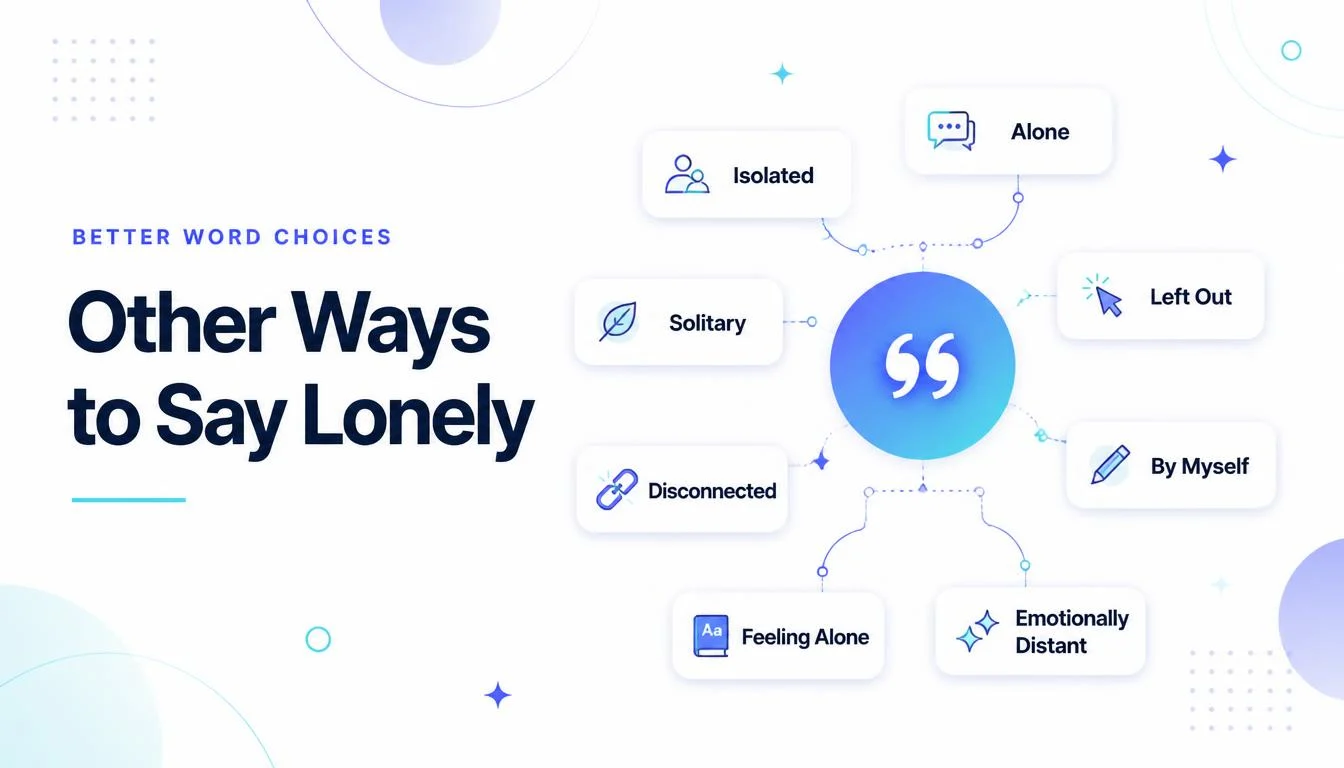
Other ways to say lonely include isolated, alone, disconnected, lonesome, and feeling left out. These alternatives help you express loneliness with greater emotion and precision.
Learning other ways to say lonely can help you express your feelings more clearly and make your English vocabulary more expressive. Whether you are writing a personal story, describing a character, or sharing your emotions in a conversation, choosing the right word can communicate the depth of your experience.
The word “lonely” often describes feeling sad because of a lack of companionship or emotional connection. However, alternatives such as “isolated,” “lonesome,” “disconnected,” and “left out” convey slightly different meanings. Understanding these expressions helps you describe emotional experiences naturally in personal conversations, creative writing, and professional communication.
What Does “Lonely” Mean? (Meaning, Grammar and Real Use)
Imagine moving to a new city, starting a job where you know nobody, or spending a weekend without hearing from your friends. You might describe these experiences as lonely. However, the word can express more than simply being physically alone. It can also describe feeling emotionally disconnected, missing someone, or wanting meaningful companionship.
Learning other ways to say lonely helps you communicate these feelings with greater precision. For example, isolated emphasizes separation, lonesome expresses sadness, and disconnected highlights a lack of emotional connection. Choosing the right expression makes your writing more descriptive and your conversations more natural.
Definition
Lonely is an adjective that describes feeling sad because of a lack of companionship, connection, or meaningful social interaction. It can also describe places or situations that create this feeling.
Grammar and Usage
The word lonely is an adjective. It commonly appears after linking verbs such as feel, seem, and be.
- Correct: I feel lonely when my friends travel.
- Correct: She had a lonely childhood.
- Incorrect: I am loneliness.
- Correct: I feel loneliness.
Loneliness is the noun form, while lonely describes a person, place, or experience.
Where Is It Used?
- Spoken English: To share personal feelings with friends and family.
- Written English: To describe characters, settings, emotions, and personal experiences.
- Professional communication: To discuss social isolation or the importance of workplace connection.
- Formal writing: To describe loneliness in social research, essays, or reports.
The expression is common in everyday English, but more precise alternatives can help you communicate emotional experiences with greater sensitivity.
When Should You Use “Lonely”?
Choose a suitable alternative according to the situation, your audience, and the emotion you want to express.
- When describing sadness: Use lonesome or downhearted when loneliness feels emotionally painful.
- When describing separation: Use isolated or cut off when someone has limited contact with others.
- When describing independence: Use solitary or alone when emphasizing being by yourself.
- When describing relationships: Use disconnected or emotionally distant when a person lacks meaningful connection.
- When describing a place: Use deserted or desolate when a setting feels empty or abandoned.
- When describing a temporary experience: Use by myself or without company when simply explaining that nobody else is present.
Spoken vs. Written English
In conversation, expressions such as I feel alone and I feel disconnected sound natural and direct. In creative writing, words such as forlorn, desolate, and lonesome can create a stronger emotional atmosphere.
Formal vs. Informal English
Formal writing often benefits from expressions such as socially isolated or experiencing loneliness. Informal conversations allow more personal phrases, such as feeling left out or feeling on my own.
Is “Lonely” Professional or Just Polite?
The word lonely is neither inherently unprofessional nor impolite. Its suitability depends on the context. It is appropriate when discussing well-being, workplace relationships, or the emotional effects of working remotely.
However, professional reports may benefit from more specific wording, especially when describing measurable social conditions rather than personal feelings.
Business-style example: “Some remote employees may feel socially isolated without regular opportunities for team interaction.”
- Polite? ✔️ Yes
- Professional? ✔️ Yes, when the context is appropriate.
For additional workplace vocabulary, see the Professional English Communication Guide.
Pros and Cons of Using “Lonely”
Pros
- Simple and clear: Most English speakers understand the word immediately.
- Emotionally expressive: It communicates a feeling that goes beyond physical separation.
- Widely used: It works in everyday conversations, stories, and personal writing.
- Easy to personalize: It can describe temporary feelings, long-term experiences, or emotional states.
Cons
- Limited precision: It may not explain whether the problem is sadness, isolation, or a lack of companionship.
- Potentially intense: Some situations involve being alone without feeling lonely.
- Repetitive writing: Using the same adjective repeatedly can weaken descriptive passages.
- Context-sensitive: In professional reports, it may need a more specific phrase to communicate the situation accurately.
Common Mistakes People Make
Understanding these mistakes helps you use synonyms naturally and avoid changing the intended meaning.
1. Confusing “Alone” With “Lonely”
Being alone describes a situation, while being lonely describes an emotional experience.
- Incorrect: I enjoy being lonely at home because nobody disturbs me.
- Correct: I enjoy being alone at home because nobody disturbs me.
2. Using “Solitary” to Describe Every Sad Feeling
Solitary emphasizes being alone rather than necessarily feeling unhappy.
- Incorrect: She felt solitary because she missed her family.
- Correct: She felt lonely because she missed her family.
3. Using “Isolated” Without Considering Separation
Isolated often suggests limited contact, physical separation, or exclusion.
- Incorrect: I was isolated for ten minutes while waiting for my friend.
- Correct: I was alone for ten minutes while waiting for my friend.
4. Confusing “Loneliness” With “Lonely”
Lonely is an adjective, while loneliness is a noun.
- Incorrect: His lonely became worse after moving.
- Correct: His loneliness became worse after moving.
5. Choosing an Overly Dramatic Word for a Mild Situation
Words such as forlorn and desolate can sound more intense than ordinary conversational language.
- Incorrect: I felt desolate when my colleague went to lunch.
- Correct: I felt a little lonely when my colleague went to lunch.
Small tone mistakes can make confident English sound careless.
Alternatives by Category
The following preview highlights useful options from the full list of 30 expressions below. Each category focuses on a different communication setting.
Formal alternatives to “Lonely”
- Socially isolated
- Emotionally disconnected
- Devoid of companionship
Pro Tip: In formal reports, describe the specific condition rather than assuming how someone feels.
Casual alternatives
- Alone
- Lonesome
- Feeling left out
Pro Tip: Use a straightforward expression in everyday conversation unless you need to communicate a deeper emotion.
Professional alternatives
- Socially isolated
- Lacking social connection
- Emotionally distant
Pro Tip: Describe observable circumstances in workplace communication, and avoid making assumptions about another person’s emotional state.
Informal expressions
- On my own
- By myself
- Cut off
Pro Tip: Check whether your phrase describes physical separation, emotional distance, or both before using it.
“Formal and informal English aren’t about correctness. They’re about context.”
Other Ways to Say “Lonely”: 30 Alternatives With Examples
These 30 alternatives help you build vocabulary and describe isolation, sadness, separation, and the need for companionship. Choose each expression according to its meaning and the situation.
1. Alone
Meaning: Without other people.
Explanation: Describes a physical or social situation without automatically expressing sadness.
Example Sentence: I was alone at home all evening.
Best Use: Everyday conversation
Worst Use: Emotional diagnosis
Tone: Neutral, direct
Context Variability: Casual, professional, spoken
2. Lonesome
Meaning: Feeling sad without companionship.
Explanation: A close synonym that often sounds more personal or literary than lonely.
Example Sentence: He felt lonesome after moving away from home.
Best Use: Personal storytelling
Worst Use: Technical reports
Tone: Gentle, emotional
Context Variability: Casual, spoken, literary
3. Isolated
Meaning: Separated from other people.
Explanation: Highlights limited contact, distance, or exclusion rather than simply being by yourself.
Example Sentence: The new employee felt isolated from the rest of the team.
Best Use: Workplace discussions
Worst Use: Lighthearted banter
Tone: Neutral, serious
Context Variability: Professional, casual, written
4. Solitary
Meaning: Existing or occurring alone.
Explanation: Often describes a lifestyle, activity, or setting. It does not necessarily indicate sadness.
Example Sentence: She enjoyed long, solitary walks in the countryside.
Best Use: Descriptive writing
Worst Use: Emotional disclosure
Tone: Reflective, neutral
Context Variability: Professional, written, spoken
5. Lacking Companionship
Meaning: Having insufficient company.
Explanation: A clear phrase for situations where someone wants or needs more social interaction.
Example Sentence: He was lacking companionship after retirement.
Best Use: Personal reflection
Worst Use: Casual banter
Tone: Neutral, descriptive
Context Variability: Professional, written, spoken
6. Disconnected
Meaning: Lacking a sense of connection.
Explanation: Often describes emotional distance from friends, family, colleagues, or a community.
Example Sentence: I felt disconnected from my classmates after changing schools.
Best Use: Relationship discussions
Worst Use: Physical descriptions
Tone: Reflective, neutral
Context Variability: Casual, professional, written
7. Lacking Social Connection
Meaning: Having limited meaningful social relationships.
Explanation: A useful expression for discussing social well-being without relying on an emotional label.
Example Sentence: Some remote workers experience a lack of social connection.
Best Use: Workplace reports
Worst Use: Intimate conversations
Tone: Formal, objective
Context Variability: Professional, written, spoken
8. Emotionally Isolated
Meaning: Feeling separated from others emotionally.
Explanation: Describes a lack of emotional support or understanding, even when people are physically nearby.
Example Sentence: She felt emotionally isolated despite having many acquaintances.
Best Use: Relationship writing
Worst Use: Casual greetings
Tone: Serious, empathetic
Context Variability: Professional, written, spoken
9. Left Out
Meaning: Excluded from a group or activity.
Explanation: Often describes loneliness caused by exclusion rather than a general lack of companionship.
Example Sentence: I felt left out when everyone discussed plans without me.
Best Use: Social situations
Worst Use: Formal research
Tone: Casual, personal
Context Variability: Casual, professional, spoken
10. On My Own
Meaning: Without anyone accompanying or helping me.
Explanation: This phrase can describe independence or separation. Its emotional meaning depends on context.
Example Sentence: I spent the weekend on my own.
Best Use: Everyday conversation
Worst Use: Clinical reports
Tone: Neutral, conversational
Context Variability: Casual, professional, spoken
11. By Myself
Meaning: Without other people present.
Explanation: A natural expression for describing a situation in which you have no company.
Example Sentence: I ate lunch by myself today.
Best Use: Casual conversation
Worst Use: Academic analysis
Tone: Informal, neutral
Context Variability: Casual, professional, spoken
12. Secluded
Meaning: Away from other people or busy places.
Explanation: Usually describes a person, location, or setting separated from ordinary activity. It does not always suggest sadness.
Example Sentence: They lived in a secluded cottage near the forest.
Best Use: Setting descriptions
Worst Use: Emotional complaints
Tone: Descriptive, neutral
Context Variability: Professional, written, spoken
13. Cut Off
Meaning: Separated from contact or communication.
Explanation: Suggests that someone has limited access to other people or feels disconnected from a community.
Example Sentence: She felt cut off from her friends after relocating.
Best Use: Social separation
Worst Use: Formal presentations
Tone: Conversational, serious
Context Variability: Casual, professional, spoken
14. Forsaken
Meaning: Abandoned or deserted.
Explanation: A strong, literary term that can suggest being abandoned by people who once offered care or support.
Example Sentence: The character felt forsaken after everyone left.
Best Use: Creative writing
Worst Use: Routine conversation
Tone: Dramatic, literary
Context Variability: Written, casual, literary
15. Forlorn
Meaning: Sad, abandoned, or without hope.
Explanation: Conveys a deeper emotional feeling than simply being alone.
Example Sentence: He gave a forlorn look as the train departed.
Best Use: Character descriptions
Worst Use: Business emails
Tone: Melancholy, literary
Context Variability: Written, spoken, literary
16. Desolate
Meaning: Empty, bleak, or deeply unhappy.
Explanation: Describes an emotional state or a place that feels deserted and lifeless.
Example Sentence: The empty house looked desolate after the family moved away.
Best Use: Creative descriptions
Worst Use: Casual updates
Tone: Intense, descriptive
Context Variability: Written, spoken, literary
17. Bereft
Meaning: Deprived of someone or something important.
Explanation: Often conveys profound loss, grief, or the absence of a valued relationship.
Example Sentence: She felt bereft after losing her closest friend.
Best Use: Serious personal writing
Worst Use: Everyday small talk
Tone: Formal, sorrowful
Context Variability: Professional, written, spoken
18. Without Company
Meaning: Not accompanied by another person.
Explanation: A neutral phrase that emphasizes the absence of companionship without assuming sadness.
Example Sentence: He preferred not to travel without company.
Best Use: Practical explanations
Worst Use: Emotional poetry
Tone: Neutral, formal
Context Variability: Professional, written, spoken
19. Socially Isolated
Meaning: Having limited social contact or participation.
Explanation: Particularly useful in discussions about communities, aging, remote work, and social well-being.
Example Sentence: Older adults may become socially isolated when transport is limited.
Best Use: Research writing
Worst Use: Friendly greetings
Tone: Formal, objective
Context Variability: Professional, written, spoken
20. Emotionally Distant
Meaning: Not feeling emotionally close to others.
Explanation: Describes a lack of intimacy or openness, especially within an existing relationship.
Example Sentence: He seemed emotionally distant during their conversation.
Best Use: Relationship discussions
Worst Use: Casual introductions
Tone: Reflective, serious
Context Variability: Professional, casual, written
21. Unaccompanied
Meaning: Without another person accompanying you.
Explanation: A more formal alternative that describes a person’s circumstances rather than their emotional state.
Example Sentence: The visitor arrived unaccompanied.
Best Use: Formal descriptions
Worst Use: Emotional storytelling
Tone: Formal, factual
Context Variability: Professional, written, spoken
22. Abandoned
Meaning: Left behind or no longer cared for.
Explanation: Stronger than alone because it suggests that someone has been left without expected support.
Example Sentence: She felt abandoned when her friends stopped contacting her.
Best Use: Emotional storytelling
Worst Use: Minor inconveniences
Tone: Strong, emotional
Context Variability: Casual, professional, written
23. Neglected
Meaning: Not receiving enough attention or care.
Explanation: Emphasizes an unmet need for attention, support, or consideration rather than simple physical separation.
Example Sentence: He felt neglected when nobody checked on him.
Best Use: Relationship discussions
Worst Use: Neutral descriptions
Tone: Serious, personal
Context Variability: Casual, professional, written
24. Out of Touch
Meaning: No longer communicating regularly.
Explanation: Describes reduced contact with people or groups. It may contribute to loneliness without directly expressing it.
Example Sentence: I have been out of touch with my old classmates.
Best Use: Social updates
Worst Use: Emotional assessments
Tone: Conversational, neutral
Context Variability: Casual, professional, spoken
25. Alienated
Meaning: Feeling separated from or rejected by a group.
Explanation: Suggests a loss of belonging, often caused by conflict, differences, or exclusion.
Example Sentence: The constant criticism left him feeling alienated from his colleagues.
Best Use: Social analysis
Worst Use: Casual greetings
Tone: Serious, analytical
Context Variability: Professional, written, spoken
26. Estranged
Meaning: No longer close to someone.
Explanation: Commonly describes relationships that have become distant because of disagreement, separation, or a prolonged lack of contact.
Example Sentence: She felt lonely after becoming estranged from her brother.
Best Use: Family relationships
Worst Use: Temporary separation
Tone: Serious, formal
Context Variability: Professional, written, spoken
27. Without Support
Meaning: Lacking help, care, or encouragement.
Explanation: Useful when loneliness comes from feeling that nobody is available to offer assistance.
Example Sentence: He felt alone and without support during the difficult transition.
Best Use: Support discussions
Worst Use: Light conversation
Tone: Neutral, empathetic
Context Variability: Professional, written, spoken
28. Unconnected
Meaning: Not linked to or associated with others.
Explanation: Can describe social or emotional separation, although the intended meaning should be made clear through context.
Example Sentence: She felt unconnected to the community around her.
Best Use: Community discussions
Worst Use: Intimate conversations
Tone: Neutral, descriptive
Context Variability: Professional, written, spoken
29. Longing for Company
Meaning: Strongly wanting someone to spend time with.
Explanation: Focuses on the desire for companionship rather than merely describing the absence of other people.
Example Sentence: He was longing for company during the quiet holiday weekend.
Best Use: Personal storytelling
Worst Use: Technical documents
Tone: Warm, emotional
Context Variability: Casual, written, spoken
30. Yearning for Connection
Meaning: Deeply wanting a meaningful relationship or bond.
Explanation: A thoughtful expression for loneliness that comes from wanting understanding, closeness, or a sense of belonging.
Example Sentence: She was yearning for connection after months of working remotely.
Best Use: Reflective writing
Worst Use: Routine business updates
Tone: Emotional, reflective
Context Variability: Professional, written, spoken
Comparison Table: Top 10 Alternatives at a Glance
| Phrase | Tone | Best Use |
|---|---|---|
| Alone | Neutral | Everyday situations |
| Lonesome | Emotional | Personal stories |
| Isolated | Serious | Social separation |
| Solitary | Descriptive | Creative writing |
| Disconnected | Reflective | Relationships |
| Left out | Casual | Group situations |
| Socially isolated | Formal | Reports and research |
| Emotionally distant | Serious | Relationship discussions |
| Forlorn | Literary | Character descriptions |
| Yearning for connection | Reflective | Emotional writing |
For more expressive vocabulary, explore Other Ways to Say “Amazing”.
Quick Self-Check: Mini Quiz
Test your understanding of tone and context by choosing the most appropriate expression for each situation.
1. You want to describe a person who has very little social contact. Which phrase is most suitable for a formal report?
- A. By myself
- B. Socially isolated
- C. Forlorn
- D. Lonesome
Correct answer: B. Socially isolated.
2. You are writing a story about someone who feels abandoned and deeply sad. Which word creates the strongest literary effect?
- A. Unaccompanied
- B. Solitary
- C. Forlorn
- D. Alone
Correct answer: C. Forlorn.
3. You want to tell a friend that nobody else was present when you had lunch. Which phrase sounds most natural?
- A. I ate lunch by myself.
- B. I ate lunch bereft.
- C. I ate lunch alienated.
- D. I ate lunch emotionally distant.
Correct answer: A. I ate lunch by myself.
4. A colleague feels that they no longer have a meaningful bond with their team. Which expression fits best?
- A. Secluded
- B. Disconnected
- C. Unaccompanied
- D. Without company
Correct answer: B. Disconnected.
FAQs
1. What are the best synonyms for lonely?
The most useful synonyms include alone, lonesome, isolated, disconnected, and solitary. Each describes a slightly different experience, so choose according to the context.
2. What is a formal word for lonely?
Socially isolated is a suitable formal expression when discussing limited social contact. Emotionally disconnected works when the main issue is a lack of emotional closeness.
3. What is a stronger word for lonely?
Forlorn, bereft, and desolate can express deeper sadness or a stronger sense of loss. They are especially useful in literary or reflective writing.
4. What is the difference between lonely and alone?
Alone means being without other people, while lonely describes feeling sad because of insufficient companionship or connection. A person can be alone without feeling lonely.
5. How can I describe loneliness without using the word lonely?
Describe the specific feeling or situation. For example, say “I feel disconnected from my friends” or “I am longing for meaningful companionship.
Conclusion
Expanding your vocabulary gives you more ways to describe emotional experiences accurately. Words such as isolated, lonesome, disconnected, and yearning for connection help you express different shades of meaning in conversations, essays, stories, and professional communication.
Practice choosing one alternative each day and use it in an original sentence. Pay attention to whether the expression describes physical separation, emotional sadness, or a lack of belonging. This simple habit can make your English more natural, precise, and expressive.
Read More Related Articles:
- Other Ways to Say You’re Beautiful | Beyond the Ordinary Compliment In 2026
- Other Ways to Say I Love You in Spanish | Beyond the Usual Phrase In 2026
- Other Ways to Say I Love You in Other Languages | Beyond the Classic Three Words In 2026

Victoria Hughes is a content writer dedicated to making communication clearer and more effective. Through TextsResponse.com, she shares practical insights and thoughtfully crafted response ideas that help readers express themselves with confidence.