Quick Answer
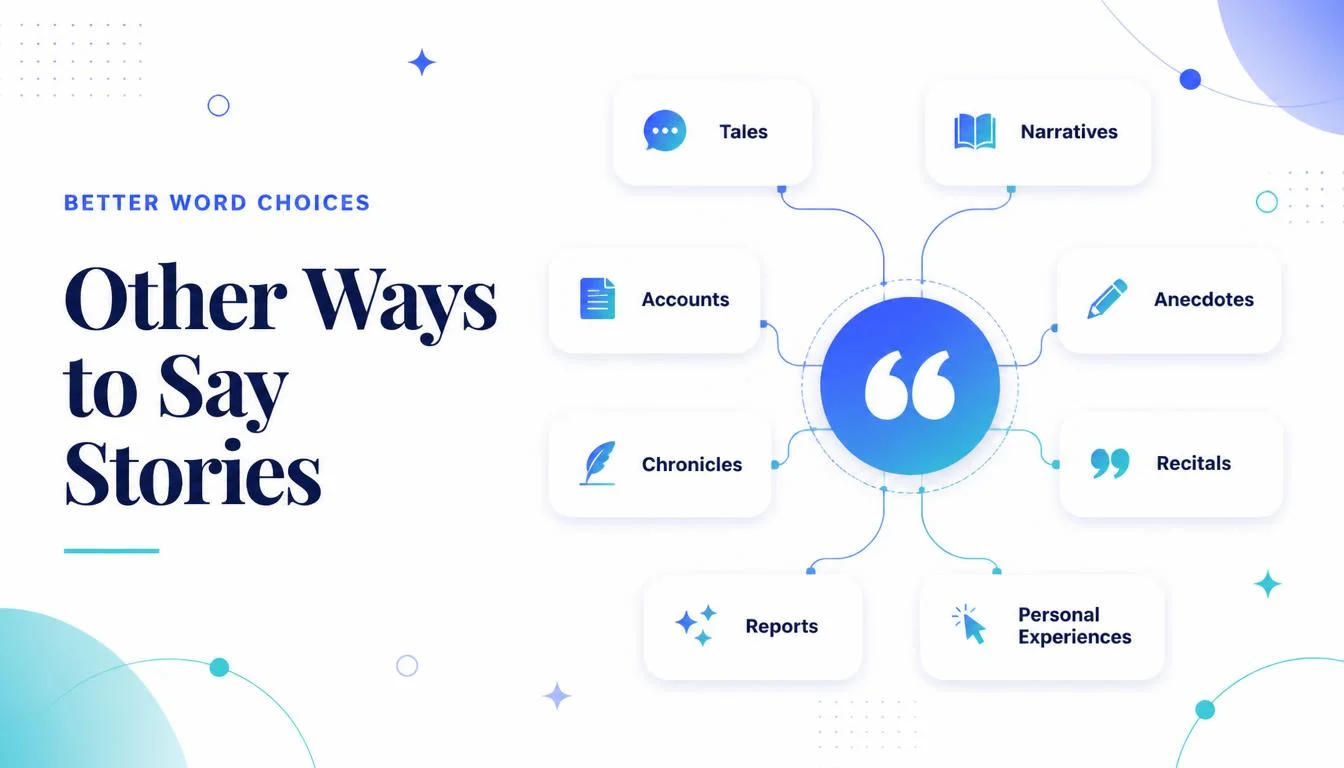
Other ways to say stories include tales, narratives, accounts, anecdotes, and chronicles. These alternatives help you describe personal experiences, fictional events, and real-life situations more effectively.
Learning other ways to say stories can make your writing more engaging and help you express ideas with greater variety. Whether you are writing an essay, sharing personal experiences, creating fiction, or having everyday conversations, choosing the right alternative can make your message clearer and more interesting.
The word “stories” can refer to fictional tales, personal experiences, historical accounts, or reports about real events. Alternatives such as “narratives,” “anecdotes,” “accounts,” and “chronicles” have slightly different meanings and uses. Understanding these differences can help you choose the most appropriate expression for academic writing, professional communication, and casual conversations.
What Does “Stories” Mean? (Meaning, Grammar & Real Use)
Stories are accounts of events, experiences, or imagined situations shared to entertain, inform, explain, or inspire an audience. You might tell a story about a memorable vacation, read a fictional story to a child, or share a success story during a business presentation.
Imagine you are giving a presentation at work. Instead of saying, “I want to share a story about our company’s success,” you could say, “I want to share an account of our company’s success.” The second version sounds more formal and businesslike. In casual conversation, however, “story” often feels warmer and more natural.
Learning alternatives to stories helps English learners communicate with greater precision. These words can describe personal memories, fictional adventures, historical events, or professional experiences. Just as you choose different expressions to express excitement in English, you can select a suitable synonym to match your audience and purpose.
Definition: A story is a spoken or written account of real or imaginary events, usually presented in a meaningful sequence.
Grammar note: “Story” is a countable noun. Its plural form is “stories.” The word works in both formal and informal contexts, depending on how it is used.
Example: She shared an inspiring story about overcoming challenges.
People use stories in everyday conversations, literature, education, journalism, marketing, and business communication.
When Should You Use “Stories”?
The best alternative depends on what you want to communicate and who will read or hear your words.
- Everyday conversations: Use “tales,” “experiences,” or “personal accounts” when sharing memories.
- Creative writing: Choose “narratives,” “fables,” or “legends” for different types of storytelling.
- Professional presentations: Use “case studies,” “accounts,” or “success stories” to communicate business experiences.
- Academic writing: Consider “narratives,” “historical accounts,” or “documented accounts.”
- Journalism: Use “reports,” “accounts,” or “news stories” when discussing events.
- Marketing: Use “customer stories,” “brand narratives,” or “testimonials” to build trust.
- Education: Use “examples,” “case studies,” or “illustrative narratives” to explain concepts.
Spoken vs. Written
In conversation, “stories,” “tales,” and “anecdotes” sound natural and approachable. In essays, reports, and professional documents, “narratives,” “accounts,” and “case studies” may communicate ideas more precisely.
Formal vs. Informal
Formal writing often benefits from specific terms such as “historical accounts” or “documented narratives.” Informal communication allows more flexibility, making words such as “tales” and “personal stories” suitable for friendly conversations.
Is “Stories” Professional or Just Polite?
The word “stories” is both acceptable and professional in many situations. Its suitability depends on the subject and context.
Politeness concerns how respectfully you communicate. Professionalism concerns clarity, accuracy, and appropriateness for your audience.
For example, in a business meeting, you might say:
“Our customer success stories demonstrate how the new service addresses common client challenges.”
This sentence sounds professional because it connects the stories to a clear business purpose.
- Polite? ✔️ Yes
- Professional? ✔️ Yes
For a formal research report, however, “documented accounts” or “case studies” may be more precise than the general word “stories.”
Pros and Cons of Using “Stories”
Pros
- Easy to understand: Most English speakers recognize the word immediately.
- Versatile: It describes fictional events, real experiences, and personal memories.
- Engaging: Stories can make information more relatable and memorable.
- Suitable for many contexts: The word works in conversations, presentations, books, and marketing.
Cons
- Sometimes too broad: Readers may not know whether a story is factual or fictional.
- Limited precision: Academic and professional writing may require a more specific term.
- Potential ambiguity: In some contexts, “story” can suggest an unverified or exaggerated account.
- Less technical: Specialized documents may benefit from words such as “case study,” “report,” or “narrative.”
Common Mistakes People Make
Choosing a synonym without considering its meaning can make your English sound unnatural. Avoid these five common mistakes.
1. Using “Anecdotes” for Every Type of Story
Incorrect: The fantasy novel contains several funny anecdotes.
Correct: The fantasy novel contains several imaginative tales.
An anecdote is usually a short account of a particular incident, often amusing or interesting.
2. Confusing “Narratives” With “News Reports”
Incorrect: The journalist published three fictional narratives about yesterday’s accident.
Correct: The journalist published three reports about yesterday’s accident.
A narrative describes events in sequence, while a news report aims to provide information about actual events.
3. Using “Legends” for Ordinary Personal Experiences
Incorrect: My legend about yesterday’s shopping trip was interesting.
Correct: My story about yesterday’s shopping trip was interesting.
A legend is a traditional story associated with a person, place, or event, often containing extraordinary elements.
4. Using “Testimonials” for Unverified Personal Stories
Incorrect: The company collected customer testimonials without asking customers to endorse its service.
Correct: The company collected customer stories about their experiences with its service.
A testimonial usually expresses a person’s endorsement, recommendation, or positive experience.
5. Using “Case Studies” for Every Informal Conversation
Incorrect: I told my friend a case study about my weekend.
Correct: I told my friend a story about my weekend.
A case study involves a detailed examination of a particular situation, person, organization, or problem. It is generally more analytical than an everyday story.
Small tone mistakes can make confident English sound careless.
Alternatives by Category
The following preview introduces useful alternatives grouped by tone and purpose. Each phrase also appears in the complete list below.
Formal alternatives to “Stories”
- Narratives
- Accounts
- Chronicles
Pro Tip: Use “accounts” for descriptions of events and “chronicles” when emphasizing events recorded over time.
Casual alternatives
- Tales
- Personal experiences
- Anecdotes
Pro Tip: Choose “personal experiences” when sharing something you actually lived through, rather than an imagined event.
Professional alternatives
- Case studies
- Reports
- Testimonials
Pro Tip: In business writing, select the term that accurately describes the material instead of using a broad synonym.
Informal expressions
- Yarn
- Adventures
- Memories
Pro Tip: Reserve “yarn” for relaxed conversations, particularly when the story is entertaining or exaggerated.
Formal and informal English aren’t about correctness. They’re about context.
30 Other Ways to Say “Stories” (Full List With Examples)
These 30 alternatives help you describe experiences, entertain readers, explain events, and communicate ideas with greater precision. Choose each expression according to its meaning, tone, and intended audience.
1. Narratives
Meaning: Accounts of connected events.
Explanation: Suitable for fiction, research, and discussions of how events unfold.
Example Sentence: The book explores narratives of migration.
Best Use: Academic writing
Worst Use: Simple greetings
Tone: Formal, descriptive
Context Variability: Professional, written, spoken
2. Tales
Meaning: Stories, often entertaining or imaginative.
Explanation: A versatile choice for fiction, traditional storytelling, and casual conversation.
Example Sentence: Grandfather told us tales of distant lands.
Best Use: Creative writing
Worst Use: Technical reports
Tone: Warm, expressive
Context Variability: Casual, spoken, written
3. Accounts
Meaning: Descriptions of events or experiences.
Explanation: Often emphasizes what happened, especially when factual information matters.
Example Sentence: Several accounts describe the historical event.
Best Use: Factual descriptions
Worst Use: Fairy tales
Tone: Neutral, factual
Context Variability: Professional, written, spoken
4. Anecdotes
Meaning: Short accounts of interesting incidents.
Explanation: Often used to illustrate a point or entertain an audience with a specific experience.
Example Sentence: She shared funny anecdotes from university.
Best Use: Speeches, conversations
Worst Use: Full novels
Tone: Friendly, engaging
Context Variability: Casual, professional, spoken
5. Chronicles
Meaning: Records of events over time.
Explanation: Emphasizes the sequence or development of events, often historical or significant.
Example Sentence: The book chronicles the town’s transformation.
Best Use: Historical writing
Worst Use: Quick updates
Tone: Formal, informative
Context Variability: Professional, written, spoken
6. Reports
Meaning: Organized accounts of findings or events.
Explanation: Best when the purpose is to inform readers rather than entertain them.
Example Sentence: The reports describe the project’s progress.
Best Use: Workplace communication
Worst Use: Fairy tales
Tone: Objective, professional
Context Variability: Professional, written, spoken
7. Personal Experiences
Meaning: Events someone has personally encountered.
Explanation: Clearly identifies the material as based on someone’s own life.
Example Sentence: He shared personal experiences from his first job.
Best Use: Personal reflection
Worst Use: Imaginary fiction
Tone: Honest, relatable
Context Variability: Casual, professional, spoken
8. Case Studies
Meaning: Detailed examinations of specific situations.
Explanation: Common in business, education, and research to explain challenges, processes, and outcomes.
Example Sentence: The case studies highlight successful marketing strategies.
Best Use: Business analysis
Worst Use: Casual gossip
Tone: Analytical, professional
Context Variability: Professional, written, spoken
9. Testimonies
Meaning: Statements describing experiences or providing evidence.
Explanation: Often used in legal, religious, or public contexts where firsthand statements matter.
Example Sentence: The testimonies described what witnesses had observed.
Best Use: Formal statements
Worst Use: Fictional adventures
Tone: Serious, authoritative
Context Variability: Professional, written, spoken
10. Memories
Meaning: Recollections of past experiences.
Explanation: Highlights what someone remembers rather than presenting a complete account of events.
Example Sentence: Her memories of childhood still make her smile.
Best Use: Personal reflections
Worst Use: Objective analysis
Tone: Nostalgic, personal
Context Variability: Casual, written, spoken
11. Experiences
Meaning: Events or situations someone has encountered.
Explanation: Useful when focusing on what a person learned, felt, or observed.
Example Sentence: The speaker described experiences that shaped her career.
Best Use: Personal development
Worst Use: Fictional plots
Tone: Reflective, neutral
Context Variability: Professional, casual, spoken
12. Legends
Meaning: Traditional stories associated with remarkable people or events.
Explanation: Often combines cultural history with extraordinary or possibly unverified details.
Example Sentence: Local legends describe a hidden treasure.
Best Use: Folklore discussions
Worst Use: Routine updates
Tone: Imaginative, traditional
Context Variability: Casual, written, spoken
13. Fables
Meaning: Short fictional tales that teach a moral lesson.
Explanation: Often feature animals or symbolic characters that represent human behavior.
Example Sentence: The teacher used fables to explain honesty.
Best Use: Moral education
Worst Use: Business reporting
Tone: Educational, imaginative
Context Variability: Casual, written, spoken
14. Myths
Meaning: Traditional stories explaining beliefs, origins, or natural phenomena.
Explanation: Commonly connected to cultural traditions, gods, heroes, and explanations of the world.
Example Sentence: The course examines myths from ancient Greece.
Best Use: Cultural studies
Worst Use: Routine documentation
Tone: Traditional, informative
Context Variability: Professional, written, spoken
15. Fairy Tales
Meaning: Imaginative stories involving magical or extraordinary events.
Explanation: Often feature enchanted settings, unusual characters, and clear conflicts between good and evil.
Example Sentence: The children enjoyed reading fairy tales.
Best Use: Children’s literature
Worst Use: Financial reports
Tone: Magical, playful
Context Variability: Casual, written, spoken
16. Adventures
Meaning: Exciting experiences involving challenges or discoveries.
Explanation: Emphasizes action, exploration, and unexpected events.
Example Sentence: She shared stories of her adventures abroad.
Best Use: Travel writing
Worst Use: Routine records
Tone: Energetic, engaging
Context Variability: Casual, written, spoken
17. Episodes
Meaning: Individual events within a larger sequence.
Explanation: Useful for describing particular incidents in a person’s life, a series, or a broader narrative.
Example Sentence: The memoir describes several episodes from his childhood.
Best Use: Sequential accounts
Worst Use: Formal conclusions
Tone: Neutral, descriptive
Context Variability: Professional, casual, written
18. Accounts of Events
Meaning: Descriptions of what happened.
Explanation: A clear expression for factual explanations, eyewitness descriptions, and historical documentation.
Example Sentence: The museum preserves accounts of important events.
Best Use: Historical documentation
Worst Use: Casual jokes
Tone: Factual, formal
Context Variability: Professional, written, spoken
19. Success Stories
Meaning: Accounts of achievements or positive outcomes.
Explanation: Often used to inspire others or demonstrate the results of a strategy.
Example Sentence: The website features success stories from former students.
Best Use: Marketing content
Worst Use: Failure analysis
Tone: Positive, encouraging
Context Variability: Professional, casual, written
20. Customer Stories
Meaning: Accounts of customers’ experiences with a product or service.
Explanation: Businesses use them to demonstrate how customers interact with their offerings.
Example Sentence: The company published customer stories on its website.
Best Use: Brand communication
Worst Use: Private correspondence
Tone: Relatable, professional
Context Variability: Professional, written, spoken
21. Testimonials
Meaning: Statements endorsing a person, product, or service.
Explanation: Unlike general customer stories, testimonials usually communicate approval or a recommendation.
Example Sentence: The school displayed student testimonials online.
Best Use: Product promotion
Worst Use: Neutral reporting
Tone: Persuasive, positive
Context Variability: Professional, written, spoken
22. Case Histories
Meaning: Detailed records of an individual or situation over time.
Explanation: Common in medicine, social work, psychology, and other fields that document a person’s circumstances or development.
Example Sentence: The researcher reviewed several case histories.
Best Use: Specialized documentation
Worst Use: Casual conversation
Tone: Technical, formal
Context Variability: Professional, written, spoken
23. Illustrations
Meaning: Examples used to clarify an idea.
Explanation: Can refer to brief stories or scenarios that make an abstract point easier to understand.
Example Sentence: The professor used illustrations to explain the theory.
Best Use: Teaching concepts
Worst Use: Complete novels
Tone: Clear, educational
Context Variability: Professional, written, spoken
24. Narratives of Experience
Meaning: Organized accounts of personal experiences.
Explanation: Emphasizes how an individual describes and connects events from their life.
Example Sentence: The study examines narratives of experience among new teachers.
Best Use: Qualitative research
Worst Use: Casual greetings
Tone: Academic, reflective
Context Variability: Professional, written, spoken
25. Biographies
Meaning: Written accounts of a person’s life.
Explanation: Usually covers major experiences, achievements, relationships, and events across someone’s life.
Example Sentence: She reads biographies of influential leaders.
Best Use: Life histories
Worst Use: Brief incidents
Tone: Informative, formal
Context Variability: Professional, written, spoken
26. Memoirs
Meaning: Personal accounts of selected life experiences.
Explanation: Unlike a full biography, a memoir usually focuses on particular periods, themes, or reflections.
Example Sentence: His memoir recounts his years as a journalist.
Best Use: Personal storytelling
Worst Use: Quick updates
Tone: Reflective, intimate
Context Variability: Professional, written, spoken
27. Yarn
Meaning: An informal term for an entertaining story.
Explanation: Common in relaxed conversation, especially when a story is colorful, humorous, or exaggerated.
Example Sentence: My uncle told us a funny yarn about his travels.
Best Use: Friendly conversation
Worst Use: Academic writing
Tone: Informal, playful
Context Variability: Casual, spoken
28. Reports of Incidents
Meaning: Descriptions of particular events or occurrences.
Explanation: Appropriate when the focus is on what happened, including the relevant details and circumstances.
Example Sentence: Reports of incidents were submitted to the manager.
Best Use: Incident documentation
Worst Use: Fantasy fiction
Tone: Objective, formal
Context Variability: Professional, written, spoken
29. Personal Accounts
Meaning: Firsthand descriptions of someone’s experiences.
Explanation: Highlights the speaker’s perspective and can be useful in journalism, history, or personal writing.
Example Sentence: Personal accounts helped researchers understand the community’s experience.
Best Use: Firsthand reporting
Worst Use: Imaginary tales
Tone: Authentic, descriptive
Context Variability: Professional, casual, written
30. Brand Narratives
Meaning: Stories communicating a brand’s identity, values, and purpose.
Explanation: Businesses use brand narratives to explain their origins, mission, and relationship with customers.
Example Sentence: The campaign strengthened the company’s brand narrative.
Best Use: Brand strategy
Worst Use: Private diaries
Tone: Strategic, persuasive
Context Variability: Professional, written, spoken
Comparison Table: Top 10 Alternatives at a Glance
| Phrase | Tone | Best Use |
|---|---|---|
| Narratives | Formal | Academic writing |
| Tales | Friendly | Creative writing |
| Accounts | Neutral | Factual descriptions |
| Anecdotes | Engaging | Speeches and conversations |
| Chronicles | Formal | Historical records |
| Reports | Professional | Workplace communication |
| Personal experiences | Reflective | Sharing life events |
| Case studies | Analytical | Business and research |
| Memories | Personal | Recalling the past |
| Success stories | Positive | Marketing and presentations |
Quick Self-Check (Mini Quiz)
Test your understanding by choosing the most appropriate expression for each situation.
1. You are writing a formal report about a workplace incident. Which phrase fits best?
A. Fairy tales
B. Reports of incidents
C. Yarn
Correct answer: B. Reports of incidents.
2. You want to describe a short, funny event from your childhood during a speech. Which word is most suitable?
A. Anecdote
B. Case history
C. Brand narrative
Correct answer: A. Anecdote.
3. A company wants to show how its service helped a customer achieve a goal. Which phrase is most appropriate?
A. Customer story
B. Myth
C. Chronicle
Correct answer: A. Customer story.
4. You are discussing traditional stories about gods and the origins of the world. Which word should you use?
A. Reports
B. Myths
C. Testimonials
Correct answer: B. Myths.
FAQs
1. What are the best synonyms for stories?
Common synonyms include narratives, tales, accounts, anecdotes, chronicles, and experiences. The best choice depends on whether the story is fictional, factual, personal, or professional.
2. What is a formal word for stories?
“Narratives,” “accounts,” and “chronicles” are useful formal alternatives. For detailed business or research examples, “case studies” may be more appropriate.
3. What is another word for stories in professional writing?
Use “case studies,” “reports,” “documented accounts,” or “customer stories” depending on the subject. These expressions can communicate the purpose of the material more precisely.
4. What is the difference between stories and narratives?
A story describes real or imagined events. A narrative emphasizes how those events are organized and presented, often focusing on their sequence, perspective, or meaning.
5. How can I avoid repeating the word stories in an essay?
Choose a synonym that matches the subject. Use “accounts” for factual events, “anecdotes” for brief personal incidents, “narratives” for organized storytelling, and “case studies” for detailed analysis.
Conclusion
Learning different expressions for stories helps you communicate more accurately in conversations, essays, presentations, and professional documents. Although many synonyms share a similar meaning, they differ in tone, purpose, and context. Choosing the right one makes your writing clearer and your spoken English more natural.
Practice by replacing repeated words in your daily writing. Read the sentence aloud and check whether the alternative matches your intended meaning and audience. For more vocabulary guidance, explore See also: Other Ways to Say “Amazing” and See also: Professional English Communication Guide.
Read More Related Articles:
- Other Ways to Say You’re Beautiful | Beyond the Ordinary Compliment In 2026
- Other Ways to Say I Love You in Spanish | Beyond the Usual Phrase In 2026
- Other Ways to Say I Love You in Other Languages | Beyond the Classic Three Words In 2026
Victoria Hughes is a content writer dedicated to making communication clearer and more effective. Through TextsResponse.com, she shares practical insights and thoughtfully crafted response ideas that help readers express themselves with confidence.