Quick Answer
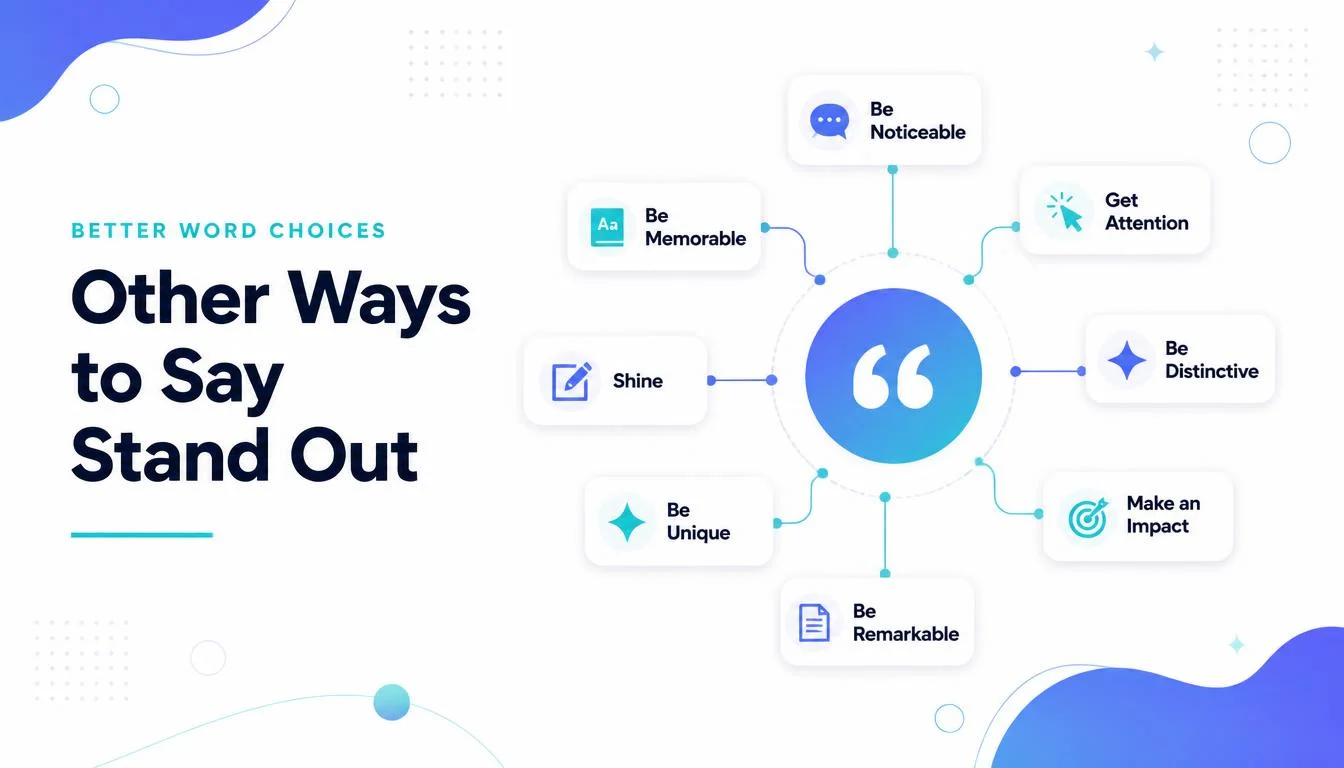
Other ways to say stand out include distinguish yourself, make an impression, shine, be noticeable, and set yourself apart.
Looking for other ways to say stand out? Choosing the right expression can help you communicate more clearly and naturally in conversations, writing, interviews, and professional settings.
Learning other ways to say stand out also helps you avoid repetition and express ideas with greater precision. Whether you want to highlight a person, achievement, idea, or quality, the right phrase can make your English more engaging and effective.
What Is “Other Ways to Say stand out”?
Imagine you are giving a presentation and one speaker is especially memorable. You might say, “She really stands out.” The same idea appears when describing an impressive employee, a unique product, a striking design, or a student whose work gets noticed. However, repeating the same phrase can make your English feel less flexible.
Learning alternatives to stand out helps you describe visibility, uniqueness, achievement, and attractiveness more precisely. The best expression depends on what makes someone or something noticeable. You might want to express excitement in English, praise someone’s performance, describe a strong visual feature, or explain why an idea receives attention.
“Stand out” generally means to be noticeably different, impressive, or prominent compared with others. It is a phrasal verb and is common in both spoken and written English.
Example: Her presentation stood out because it was clear and engaging.
People use the phrase in casual conversations, workplace communication, academic discussions, marketing, reviews, and creative writing.
When Should You Use “stand out”?
The expression works in many situations, but your choice should reflect the audience, purpose, and degree of emphasis.
Common contexts
- Describing people: Someone may stand out because of their skills, personality, confidence, or appearance.
- Talking about work: A strong proposal, presentation, resume, or project can stand out.
- Discussing products: A unique product can stand out from competitors.
- Describing visual features: A bright color or unusual design may stand out.
- Praising achievements: Outstanding performance can make someone noticeable.
- Discussing ideas: An original or convincing argument can stand out from others.
Spoken vs. written English
Spoken: “Your idea really stands out.”
Written: “The proposal distinguishes itself through its practical approach.”
“Stand out” is natural in everyday speech. More precise alternatives may be preferable in formal reports, academic writing, and professional documents.
Formal vs. informal
In casual settings, expressions such as shine, get noticed, and catch the eye can sound natural.
In formal settings, distinguish yourself, differentiate yourself, and make a strong impression may fit better.
Is It Professional or Just Polite?
“Stand out” is both professional and conversational, depending on how it is used. It is not especially formal, but it is widely accepted in workplace communication.
Business example:
“Your proposal stands out because it addresses the client’s concerns directly.”
Polite? ✔️ Yes
Professional? ✔️ Yes
For highly formal reports, however, a more specific expression can communicate the exact reason for distinction more effectively.
Pros and Cons of Using “stand out”
Pros
- Simple: Easy for learners and native speakers to understand.
- Versatile: Works for people, products, ideas, designs, and achievements.
- Natural: Common in everyday and professional English.
- Positive potential: It can communicate distinction without sounding exaggerated.
Cons
- Broad meaning: It does not always explain why something is noticeable.
- Can become repetitive: Frequent use may make writing less varied.
- Context dependent: It can describe positive or negative attention.
- Less precise: Formal writing may benefit from a more specific verb.
Common Mistakes People Make
1. Using “stand out” when “outstanding” is needed
Incorrect: “She is very stand out in her team.”
Correct: “She is very outstanding in her team.”
2. Adding unnecessary prepositions
Incorrect: “His work stands out from of the others.”
Correct: “His work stands out from the others.”
3. Confusing “stand out” with “stand for”
Incorrect: “This symbol stands out environmental protection.”
Correct: “This symbol stands for environmental protection.”
4. Using the phrase when you mean physical separation
Incorrect: “The two buildings stand out from each other.”
Correct: “The two buildings are separated from each other.”
5. Using “stand out” when a formal verb is more precise
Less precise: “The report stands out because of its detailed analysis.”
More precise: “The report distinguishes itself through its detailed analysis.”
“Small tone mistakes can make confident English sound careless.”
Alternatives by Category
Formal alternatives to “stand out”
- Distinguish yourself
- Differentiate yourself
- Distinguish itself
- Set yourself apart
Pro Tip: Use these expressions when discussing qualifications, achievements, business strategy, or academic work.
Casual alternatives
- Shine
- Get noticed
- Catch the eye
Pro Tip: Choose these expressions for friendly conversations and everyday descriptions where a relaxed tone feels natural.
Professional alternatives
- Make a strong impression
- Demonstrate distinction
- Attract attention
Pro Tip: In workplace writing, connect the phrase to a specific quality so your praise sounds concrete rather than vague.
Informal expressions
- Turn heads
- Grab attention
- Get noticed
Pro Tip: Reserve these expressions for conversational contexts unless the surrounding professional text is intentionally energetic.
“Formal and informal English aren’t about correctness. They’re about context.”
Other Ways to Say “stand out” (Full List with Examples)
These 30 alternatives build vocabulary flexibility and help you express admiration, attention, uniqueness, or approval according to context.
1. Phrase: Distinguish yourself
Meaning: Be noticeably different.
Explanation: Highlights personal achievement or ability.
Example Sentence: “She distinguished herself through excellent leadership.”
Best Use: Career writing
Worst Use: Casual chat
Tone: Formal, confident
Context Variability: professional / spoken / written
2. Phrase: Set yourself apart
Meaning: Make yourself noticeably different.
Explanation: Often emphasizes a unique advantage.
Example Sentence: “Her portfolio sets her apart from other applicants.”
Best Use: Job applications
Worst Use: Casual greetings
Tone: Professional, positive
Context Variability: professional / written / spoken
3. Phrase: Differentiate yourself
Meaning: Show how you differ.
Explanation: Common when discussing competition or strategy.
Example Sentence: “The company differentiates itself through customer service.”
Best Use: Business strategy
Worst Use: Friendly chat
Tone: Formal, analytical
Context Variability: professional / written / spoken
4. Phrase: Make an impression
Meaning: Be memorable to others.
Explanation: Focuses on the effect you create.
Example Sentence: “Her opening presentation made a strong impression.”
Best Use: Professional events
Worst Use: Technical reports
Tone: Neutral, positive
Context Variability: professional / spoken / written
5. Phrase: Make a strong impression
Meaning: Be especially memorable.
Explanation: Adds emphasis to the impact of someone or something.
Example Sentence: “The candidate made a strong impression during the interview.”
Best Use: Workplace feedback
Worst Use: Casual description
Tone: Professional, positive
Context Variability: professional / spoken / written
6. Phrase: Shine
Meaning: Perform exceptionally well.
Explanation: Commonly describes people displaying talent or ability.
Example Sentence: “She really shone during the group presentation.”
Best Use: Personal praise
Worst Use: Formal reports
Tone: Warm, positive
Context Variability: casual / spoken / professional
7. Phrase: Get noticed
Meaning: Receive attention.
Explanation: Simple and natural for achievements, designs, or work.
Example Sentence: “A clear portfolio can help you get noticed.”
Best Use: Career advice
Worst Use: Academic analysis
Tone: Casual, direct
Context Variability: casual / professional / spoken
8. Phrase: Attract attention
Meaning: Cause people to notice something.
Explanation: Works for people, products, advertisements, and ideas.
Example Sentence: “The unusual design attracted attention.”
Best Use: Marketing writing
Worst Use: Private conversation
Tone: Neutral, clear
Context Variability: professional / written / spoken
9. Phrase: Catch the eye
Meaning: Immediately attract visual attention.
Explanation: Particularly useful for colors, designs, images, and displays.
Example Sentence: “The bright cover catches the eye.”
Best Use: Visual descriptions
Worst Use: Formal analysis
Tone: Natural, vivid
Context Variability: casual / spoken / written
10. Phrase: Draw attention
Meaning: Cause people to notice something.
Explanation: Useful when discussing both positive and negative attention.
Example Sentence: “The report draws attention to an important issue.”
Best Use: Academic writing
Worst Use: Casual praise
Tone: Neutral, formal
Context Variability: professional / written / spoken
11. Phrase: Command attention
Meaning: Strongly attract attention.
Explanation: Suggests that something naturally demands notice.
Example Sentence: “The speaker commanded attention from the beginning.”
Best Use: Public speaking
Worst Use: Mild situations
Tone: Strong, formal
Context Variability: professional / spoken / written
12. Phrase: Capture attention
Meaning: Successfully hold someone’s interest.
Explanation: Common for presentations, advertising, writing, and media.
Example Sentence: “The opening story captured the audience’s attention.”
Best Use: Presentation skills
Worst Use: Routine messages
Tone: Professional, energetic
Context Variability: professional / spoken / written
13. Phrase: Grab attention
Meaning: Quickly attract notice.
Explanation: More conversational than “capture attention.”
Example Sentence: “The headline grabs attention immediately.”
Best Use: Marketing copy
Worst Use: Formal research
Tone: Casual, energetic
Context Variability: casual / professional / spoken
14. Phrase: Turn heads
Meaning: Attract strong attention.
Explanation: Often describes striking appearances, designs, or achievements.
Example Sentence: “The innovative display turned heads at the exhibition.”
Best Use: Creative descriptions
Worst Use: Formal reports
Tone: Informal, vivid
Context Variability: casual / spoken / written
15. Phrase: Rise above the rest
Meaning: Become more noticeable or successful.
Explanation: Emphasizes comparison with others.
Example Sentence: “Her preparation helped her rise above the rest.”
Best Use: Encouraging praise
Worst Use: Neutral analysis
Tone: Positive, motivational
Context Variability: casual / spoken / professional
16. Phrase: Be distinctive
Meaning: Have clearly recognizable qualities.
Explanation: Focuses on uniqueness rather than attention itself.
Example Sentence: “The brand has a distinctive visual identity.”
Best Use: Brand descriptions
Worst Use: Personal greetings
Tone: Professional, precise
Context Variability: professional / written / spoken
17. Phrase: Be remarkable
Meaning: Be unusually impressive or noticeable.
Explanation: Useful when emphasizing exceptional qualities.
Example Sentence: “Her progress this year has been remarkable.”
Best Use: Performance feedback
Worst Use: Neutral facts
Tone: Positive, formal
Context Variability: professional / written / spoken
18. Phrase: Be prominent
Meaning: Be important or highly noticeable.
Explanation: Particularly useful for formal descriptions of visibility or position.
Example Sentence: “The logo is prominent on the front page.”
Best Use: Formal descriptions
Worst Use: Friendly chat
Tone: Formal, objective
Context Variability: professional / written / spoken
19. Phrase: Gain recognition
Meaning: Become known or appreciated.
Explanation: Focuses on receiving acknowledgment over time.
Example Sentence: “The researcher gained recognition for her work.”
Best Use: Career achievements
Worst Use: Immediate events
Tone: Professional, positive
Context Variability: professional / written / spoken
20. Phrase: Earn recognition
Meaning: Receive acknowledgment through achievement.
Explanation: Implies that recognition resulted from worthwhile performance.
Example Sentence: “The team earned recognition for its innovative project.”
Best Use: Achievement writing
Worst Use: Visual description
Tone: Formal, positive
Context Variability: professional / written / spoken
21. Phrase: Make your mark
Meaning: Become memorable through achievement.
Explanation: Suggests creating a lasting influence.
Example Sentence: “She hopes to make her mark in the industry.”
Best Use: Career goals
Worst Use: Technical instructions
Tone: Conversational, positive
Context Variability: casual / professional / spoken
22. Phrase: Leave an impression
Meaning: Be memorable.
Explanation: Focuses on the lasting effect of an experience.
Example Sentence: “The speaker left a lasting impression on the audience.”
Best Use: Event feedback
Worst Use: Statistical reports
Tone: Neutral, polished
Context Variability: professional / spoken / written
23. Phrase: Gain visibility
Meaning: Become more widely noticed.
Explanation: Common in business, marketing, media, and career contexts.
Example Sentence: “The campaign helped the organization gain visibility.”
Best Use: Marketing strategy
Worst Use: Casual conversation
Tone: Professional, analytical
Context Variability: professional / written / spoken
24. Phrase: Rise to prominence
Meaning: Become widely recognized or important.
Explanation: Usually describes people, organizations, or movements.
Example Sentence: “The company rose to prominence through innovative products.”
Best Use: Formal writing
Worst Use: Casual chat
Tone: Formal, polished
Context Variability: professional / written / spoken
25. Phrase: Demonstrate distinction
Meaning: Show exceptional or unique qualities.
Explanation: Suitable for formal evaluations and professional writing.
Example Sentence: “The study demonstrates distinction in its methodology.”
Best Use: Formal evaluation
Worst Use: Everyday speech
Tone: Formal, academic
Context Variability: professional / written / spoken
26. Phrase: Show individuality
Meaning: Display unique personal qualities.
Explanation: Useful for style, personality, creativity, and self-expression.
Example Sentence: “The design shows individuality without losing clarity.”
Best Use: Creative feedback
Worst Use: Business metrics
Tone: Neutral, positive
Context Variability: casual / spoken / written
27. Phrase: Be eye-catching
Meaning: Easily attract visual attention.
Explanation: Best for colors, graphics, clothing, designs, and displays.
Example Sentence: “The website uses an eye-catching layout.”
Best Use: Design feedback
Worst Use: Academic arguments
Tone: Casual, descriptive
Context Variability: casual / professional / written
28. Phrase: Be exceptional
Meaning: Be unusually good or impressive.
Explanation: Stronger than simply being noticeable.
Example Sentence: “Her attention to detail is exceptional.”
Best Use: Performance praise
Worst Use: Neutral description
Tone: Positive, formal
Context Variability: professional / spoken / written
29. Phrase: Excel
Meaning: Perform extremely well.
Explanation: Focuses on superior performance rather than appearance.
Example Sentence: “He excels at solving complex problems.”
Best Use: Performance reviews
Worst Use: Visual descriptions
Tone: Professional, positive
Context Variability: professional / written / spoken
30. Phrase: Distinguish itself
Meaning: Become noticeably different or superior in a particular area.
Explanation: Useful for organizations, products, reports, and ideas.
Example Sentence: “The company distinguishes itself through reliable service.”
Best Use: Business writing
Worst Use: Personal chat
Tone: Formal, professional
Context Variability: professional / written / spoken
Comparison Table: Top 10 Alternatives at a Glance
| Phrase | Tone | Best Use |
|---|---|---|
| Distinguish yourself | Formal, confident | Career writing |
| Set yourself apart | Professional, positive | Job applications |
| Make an impression | Neutral, positive | Workplace communication |
| Shine | Warm, positive | Personal praise |
| Get noticed | Casual, direct | Career advice |
| Attract attention | Neutral, clear | Marketing |
| Catch the eye | Natural, vivid | Visual descriptions |
| Draw attention | Neutral, formal | Academic writing |
| Capture attention | Professional, energetic | Presentations |
| Be distinctive | Professional, precise | Brand descriptions |
Quick Self-Check
1. Which phrase best fits a formal job application?
A. Turn heads
B. Distinguish yourself
C. Grab attention
D. Shine
Answer: B. Distinguish yourself
2. Which expression is most appropriate for a visually attractive website design?
A. Catch the eye
B. Rise to prominence
C. Earn recognition
D. Excel
Answer: A. Catch the eye
3. Which phrase best describes excellent workplace performance?
A. Turn heads
B. Excel
C. Catch the eye
D. Grab attention
Answer: B. Excel
4. Which sentence sounds most natural in professional marketing?
A. “Our brand turns heads in the report.”
B. “Our brand distinguishes itself through customer service.”
C. “Our brand shines from the others.”
D. “Our brand stands for the competitors.”
Answer: B. “Our brand distinguishes itself through customer service.”
FAQs
What are the best other ways to say stand out?
Useful choices include distinguish yourself, set yourself apart, make an impression, shine, attract attention, and be distinctive. The best option depends on the context and tone.
What is a formal way to say stand out?
Distinguish yourself, differentiate yourself, distinguish itself, and set yourself apart are useful formal or professional alternatives.
How can I say stand out professionally?
Try make a strong impression, gain recognition, gain visibility, demonstrate distinction, or distinguish yourself in professional communication.
What is a casual way to say stand out?
In casual conversations, you can use shine, get noticed, catch the eye, grab attention, or turn heads.
Can “stand out” be used in academic writing?
Yes. “Stand out” is grammatically correct and understandable in academic writing, but more precise expressions such as distinguish itself, be distinctive, or demonstrate distinction may suit formal analysis better.
conclusion
Learning other ways to say stand out gives you more control over tone and meaning. Instead of using one expression repeatedly, you can choose a phrase that specifically communicates achievement, uniqueness, visibility, recognition, or visual appeal.
Practice these alternatives in sentences related to your everyday work, studies, and conversations. Pay attention to whether you are speaking casually, writing professionally, or describing something creatively.
Read More Related Articles:
- Other Ways to Say Circle Back | Improve Your Workplace Communication In 2026
- Other Ways to Say Welcome to the Team | Warm First Impression In 2026
- Other Ways to Say I Hope All Is Well | Make a Better First Impression In 2026

Victoria Hughes is a content writer dedicated to making communication clearer and more effective. Through TextsResponse.com, she shares practical insights and thoughtfully crafted response ideas that help readers express themselves with confidence.