Quick Answer:
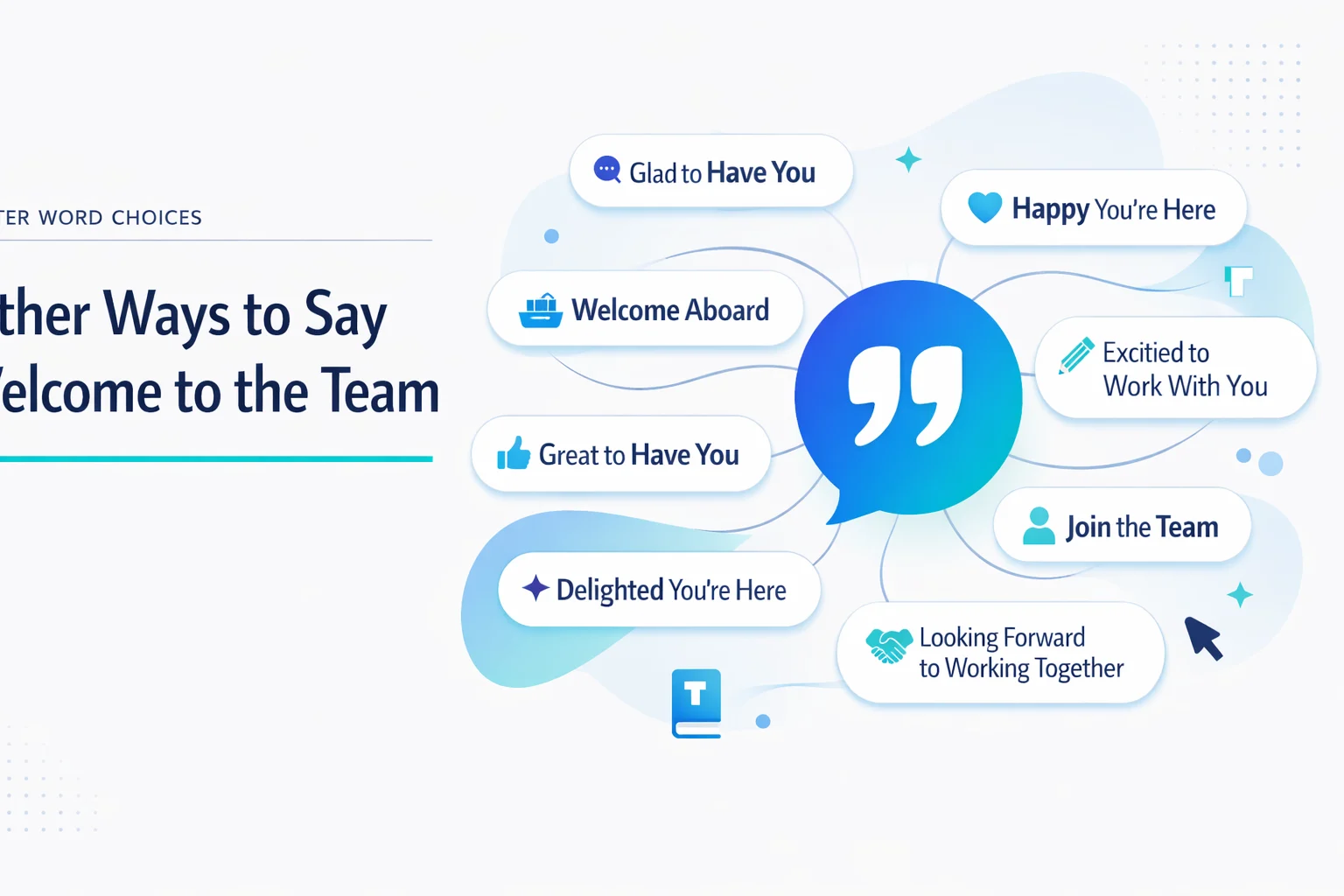
Looking for other ways to say welcome to the team?Try these top alternatives: We’re thrilled to have you on board, Welcome aboard, It’s great to have you here, We’re delighted to welcome you, and So glad you’re joining us.
“Welcome to the team” is one of the most common phrases used when someone new joins a workplace, sports squad, volunteer group, or any collaborative environment. It’s friendly, simple, and gets the job done.
However, using the exact same phrase every time can feel repetitive, routine, and even impersonal. That’s why learning alternatives to welcome to the team is essential for anyone who wants to sound more fluent, thoughtful, and professionally polished in English. Whether you’re sending a welcome email, giving a speech, or chatting with a new colleague, the right words can make someone feel truly valued.
In this guide, you’ll discover 30 powerful ways to express excitement in English when welcoming new team members with clear explanations, real examples, and practical tips on when and where to use each one.
Pull Quote: “The right welcome sets the tone for everything that follows. Choose your words with intention.”
Quick Categories
Formal Alternatives to “Welcome to the Team”
- We are delighted to have you on board
- We extend our sincerest welcome
- It is a pleasure to welcome you
- We are pleased to have you join us
Casual Alternatives
- Welcome aboard!
- So glad you’re here
- Great to have you with us
- Happy to have you join
Professional Alternatives
- We’re excited to have you as part of the team
- Your presence is a valuable addition
- We look forward to working together
- Thrilled to welcome you aboard
Informal Expressions
- Hey, welcome to the crew!
- So stoked to have you here
- Welcome to the squad
- Glad to have you on board, friend
Pro Tip: Match your tone to the workplace culture. Startups often prefer casual and energetic welcomes, while law firms and banks typically expect formal, polished language.
Common Mistakes to Avoid
- Being too vague: Saying just “Welcome” without acknowledging the team or the person’s role feels impersonal.
- ❌ “Welcome.”
- ✅ “Welcome to the marketing team, Sarah!”
- Overusing the same phrase: Repeating “welcome to the team” in every email and meeting makes you sound robotic.
- ❌ “Welcome to the team. Welcome to the team again!”
- ✅ “Welcome aboard! We’re thrilled to have you.”
- Mixing formal and informal tones awkwardly: Using slang in a formal welcome email can come across as unprofessional.
- ❌ “Hey yo, welcome to the team, esteemed colleague.”
- ✅ “We are delighted to welcome you to our team.”
- Forgetting to personalize: Generic welcomes fail to make new members feel seen.
- ❌ “Welcome to the team.”
- ✅ “Welcome to the team, James we can’t wait to see your design work!”
- Using overly complex language: Trying too hard with fancy words can sound insincere.
- ❌ “We enthusiastically proffer our most profound welcome.”
- ✅ “We’re truly excited to have you with us.”
What Does “Welcome to the Team” Mean?
“Welcome to the team” is a greeting used to acknowledge and accept someone who has just joined a group, organization, or workplace. It signals openness, inclusion, and a positive attitude toward the new member.
Example: “Welcome to the team, Maria! We’re so excited to start working with you.”
The phrase is straightforward, universally understood, and works in both spoken and written English.
Pull Quote: “A great welcome isn’t just about words it’s about making someone feel they belong.”
When to Use “Welcome to the Team”
- When a new employee starts their first day
- When someone joins a project group or committee
- When a new member enters a sports team or club
- When welcoming a volunteer to a nonprofit organization
- When introducing a new colleague in a team meeting
Spoken vs Written: Works well in both. In writing, it’s common in emails, Slack messages, and welcome letters. In speech, it’s used in introductions and team gatherings.
Formal vs Informal: The phrase sits comfortably in the middle polite enough for most professional settings but casual enough for everyday conversation.
Is It Professional or Polite to Say “Welcome to the Team”?
Polite? ✔️ Yes it’s warm, inclusive, and respectful.
Professional? ❌ Not always in formal business writing, it can feel too generic and overused.
Business-style example: “On behalf of the entire department, I would like to extend a warm welcome to our newest colleague.” This sounds more professional than a plain “Welcome to the team.”
Pros and Cons of Using “Welcome to the Team”
Pros
- Simple and natural easy for anyone to say
- Friendly tone puts new members at ease
- Common usage universally understood
- Easy to understand no confusion about meaning
Cons
- Too informal for formal business documents
- Overused can feel like a scripted response
- Limited emotional range doesn’t convey genuine excitement
- Not suitable for formal writing like official letters or announcements
Other Ways to Say Welcome to the Team
These alternatives to welcome to the team will help you sound more fluent, confident, and natural in different situations. Use them according to tone, context, and audience to express excitement in English, admiration, or approval.
Formal & Professional Alternatives
1. Phrase: We are delighted to have you on board
Meaning: Expresses genuine happiness about the new member joining.
Explanation: “Delighted” adds a touch of formality and warmth that feels more polished than a simple welcome.
Example Sentence: “We are delighted to have you on board, Mr. Chen. Your expertise will be invaluable.”
Best Use: Formal emails
Worst Use: Casual chat
Tone: Warm, formal, respectful
Context Variability: Professional ideal for corporate welcome letters and official announcements
2. Phrase: We extend our sincerest welcome
Meaning: Offers a heartfelt and deeply respectful greeting.
Explanation: “Sincerest” elevates the welcome to a more ceremonial and meaningful level.
Example Sentence: “We extend our sincerest welcome to all new members joining our research division.”
Best Use: Official events
Worst Use: Text messages
Tone: Formal, ceremonial, respectful
Context Variability: Professional used in conferences, formal gatherings, and official statements
3. Phrase: It is a pleasure to welcome you
Meaning: Indicates that welcoming the person brings joy.
Explanation: A classic, polished phrase that works beautifully in professional correspondence.
Example Sentence: “It is a pleasure to welcome you to our law firm, Ms. Rodriguez.”
Best Use: Welcome letters
Worst Use: Group chats
Tone: Polite, refined, professional
Context Variability: Professional common in formal emails and introductions
4. Phrase: We are pleased to have you join us
Meaning: Communicates satisfaction and approval about the new addition.
Explanation: “Pleased” is professional yet approachable perfect for semi-formal business settings.
Example Sentence: “We are pleased to have you join us as our new financial analyst.”
Best Use: Business emails
Worst Use: Social media DMs
Tone: Professional, polite, warm
Context Variability: Professional suitable for internal company communications
5. Phrase: Your presence is a valuable addition to the team
Meaning: Highlights the new member’s worth and importance.
Explanation: This phrase makes the newcomer feel seen, valued, and appreciated.
Example Sentence: “Your presence is a valuable addition to the team, and we look forward to your contributions.”
Best Use: Welcome speeches
Worst Use: Quick greetings
Tone: Appreciative, professional, uplifting
Context Variability: Professional excellent for formal introductions
6. Phrase: We are honored to have you join us
Meaning: Conveys that the team feels privileged by the new member’s presence.
Explanation: “Honored” adds a layer of deep respect and admiration.
Example Sentence: “We are honored to have you join us as our guest speaker for this quarter.”
Best Use: Executive welcomes
Worst Use: Everyday greetings
Tone: Respectful, formal, gracious
Context Variability: Professional ideal for welcoming senior leaders or distinguished guests
7. Phrase: We look forward to working together
Meaning: Expresses anticipation and optimism about future collaboration.
Explanation: Shifts focus from the present moment to the exciting journey ahead.
Example Sentence: “Welcome to the team, David we look forward to working together on the upcoming project.”
Best Use: Team emails
Worst Use: One-word replies
Tone: Optimistic, professional, collaborative
Context Variability: Professional works well in both formal and semi-formal settings
8. Phrase: We’re thrilled to welcome you aboard
Meaning: Conveys intense excitement and enthusiasm.
Explanation: “Thrilled” is stronger than “happy” or “glad” it shows genuine eagerness.
Example Sentence: “We’re thrilled to welcome you aboard, Emma! Your skills are exactly what we need.”
Best Use: Onboarding emails
Worst Use: Extremely formal documents
Tone: Enthusiastic, warm, professional
Context Variability: Professional excellent for modern, energetic workplaces
9. Phrase: We’re excited to have you as part of the team
Meaning: Shows eagerness and positive anticipation.
Explanation: “Excited” is energetic and forward-looking, perfect for welcoming new talent.
Example Sentence: “We’re excited to have you as part of the team, and we can’t wait to see what we’ll achieve together.”
Best Use: Team announcements
Worst Use: Very formal letters
Tone: Energetic, warm, inclusive
Context Variability: Professional ideal for creative and tech industries
Warm & Friendly Alternatives
10. Phrase: Welcome aboard!
Meaning: A classic, nautical-inspired greeting that means “welcome to our group.”
Explanation: Short, punchy, and universally understood it adds a touch of camaraderie.
Example Sentence: “Welcome aboard, Lisa! Let’s make this an incredible journey together.”
Best Use: First-day greetings
Worst Use: Formal legal documents
Tone: Friendly, classic, warm
Context Variability: Casual to professional works in almost any setting
11. Phrase: It’s great to have you here
Meaning: A simple, genuine expression of happiness about someone’s presence.
Explanation: Conversational and relaxed makes people feel immediately comfortable.
Example Sentence: “It’s great to have you here, Mark we’ve all heard wonderful things about you.”
Best Use: In-person greetings
Worst Use: Formal reports
Tone: Warm, casual, genuine
Context Variability: Casual to semi-formal perfect for everyday workplace interactions
12. Phrase: So glad you’re joining us
Meaning: Expresses relief and happiness that the person chose to join.
Explanation: “So glad” feels personal and heartfelt without being overly formal.
Example Sentence: “So glad you’re joining us, Priya we’ve been waiting for someone with your expertise.”
Best Use: Welcome messages
Worst Use: Formal business letters
Tone: Warm, personal, enthusiastic
Context Variability: Casual to semi-formal great for team chats and emails
13. Phrase: Happy to have you join
Meaning: A cheerful, straightforward way to welcome someone.
Explanation: Short, sweet, and universally positive works in almost any context.
Example Sentence: “Happy to have you join our design team, Alex your portfolio is incredible!”
Best Use: Quick welcomes
Worst Use: Official announcements
Tone: Cheerful, simple, warm
Context Variability: Casual to semi-formal ideal for daily communication
14. Phrase: We’re thrilled to have you on board
Meaning: A slightly more formal version of “welcome aboard” with extra enthusiasm.
Explanation: Combines the classic “on board” with the powerful emotion of “thrilled.”
Example Sentence: “We’re thrilled to have you on board, and we can’t wait to see your contributions.”
Best Use: Onboarding communications
Worst Use: Very formal legal contexts
Tone: Enthusiastic, warm, professional
Context Variability: Professional excellent for welcome emails and LinkedIn posts
15. Phrase: It’s great to have you with us
Meaning: Conveys genuine appreciation for the new member’s presence.
Explanation: Warm and inclusive makes the newcomer feel like part of the family.
Example Sentence: “It’s great to have you with us, Tom we’re all looking forward to working with you.”
Best Use: Team introductions
Worst Use: Formal corporate memos
Tone: Warm, inclusive, friendly
Context Variability: Casual to semi-formal ideal for team meetings
Encouraging & Inspiring Alternatives
16. Phrase: We can’t wait to start working together
Meaning: Expresses strong anticipation and eagerness to collaborate.
Explanation: Creates a sense of shared purpose and collective excitement.
Example Sentence: “Welcome to the team, Rachel we can’t wait to start working together on the new campaign.”
Best Use: Project kickoffs
Worst Use: Brief text messages
Tone: Energetic, collaborative, optimistic
Context Variability: Professional perfect for project-based welcomes
17. Phrase: We’ve been looking forward to this day
Meaning: Suggests the new member’s arrival has been highly anticipated.
Explanation: Makes the person feel wanted, special, and important from day one.
Example Sentence: “We’ve been looking forward to this day your arrival brings fresh energy to our mission.”
Best Use: Leadership welcomes
Worst Use: Casual greetings
Tone: Anticipatory, warm, significant
Context Variability: Professional excellent for CEO or manager welcome messages
18. Phrase: Here’s to new beginnings together
Meaning: A toast-like phrase celebrating the start of a shared journey.
Explanation: Reflective and hopeful it sets a positive, forward-looking tone.
Example Sentence: “Here’s to new beginnings together we’re excited for what lies ahead.”
Best Use: Welcome speeches
Worst Use: Quick emails
Tone: Inspiring, hopeful, warm
Context Variability: Professional to casual great for team celebrations
19. Phrase: The team is better with you in it
Meaning: Directly communicates that the newcomer improves the team.
Explanation: A powerful confidence booster that makes people feel instantly valued.
Example Sentence: “The team is better with you in it, Michael we’re so glad you’re here.”
Best Use: Personal welcomes
Worst Use: Formal documents
Tone: Personal, uplifting, warm
Context Variability: Casual to semi-formal ideal for one-on-one welcomes
20. Phrase: We’re excited to see what you’ll bring
Meaning: Expresses curiosity and optimism about the new member’s unique contributions.
Explanation: Focuses on future potential and individual strengths.
Example Sentence: “Welcome to the team, Olivia we’re excited to see what you’ll bring to our projects.”
Best Use: Creative team welcomes
Worst Use: Formal legal contexts
Tone: Curious, optimistic, encouraging
Context Variability: Professional great for innovative workplaces
Casual & Informal Alternatives
21. Phrase: Welcome to the crew!
Meaning: A relaxed, friendly way to say someone has joined the group.
Explanation: “Crew” implies camaraderie and teamwork in a casual, cool way.
Example Sentence: “Welcome to the crew, Jake! We’re going to have a blast working together.”
Best Use: Startup teams
Worst Use: Corporate boardrooms
Tone: Casual, friendly, cool
Context Variability: Casual ideal for informal teams and creative environments
22. Phrase: Welcome to the squad!
Meaning: A playful, modern way to welcome someone to the team.
Explanation: “Squad” is trendy and fun perfect for younger, more casual teams.
Example Sentence: “Welcome to the squad, Mia we’re so hyped to have you!”
Best Use: Social media teams
Worst Use: Formal business settings
Tone: Playful, modern, casual
Context Variability: Casual best for informal, younger teams
23. Phrase: So stoked to have you here!
Meaning: Conveys extreme excitement and enthusiasm.
Explanation: “Stoked” is slang for “very excited” it’s energetic and fun.
Example Sentence: “So stoked to have you here, Danny! You’re going to love it.”
Best Use: Creative teams
Worst Use: Professional emails
Tone: Energetic, enthusiastic, casual
Context Variability: Casual for informal, high-energy environments
24. Phrase: Glad to have you on board, friend!
Meaning: A friendly, personal welcome that emphasizes warmth.
Explanation: Adding “friend” makes the welcome feel more personal and less corporate.
Example Sentence: “Glad to have you on board, friend! Let’s grab lunch this week.”
Best Use: Small teams
Worst Use: Large corporations
Tone: Friendly, personal, warm
Context Variability: Casual perfect for close-knit teams
25. Phrase: Great to see you join our team
Meaning: A simple, positive way to acknowledge someone’s arrival.
Explanation: Casual yet professional enough for most workplace settings.
Example Sentence: “Great to see you join our team, Sam we’ve heard amazing things.”
Best Use: Team meetings
Worst Use: Formal documents
Tone: Positive, casual, warm
Context Variability: Casual to semi-formal versatile for daily use
Creative & Unique Alternatives
26. Phrase: Joining our team with joy
Meaning: Emphasizes happiness and positive energy around the new member’s arrival.
Explanation: A poetic, uplifting twist on the standard welcome.
Example Sentence: “We welcome you joining our team with joy and open arms.”
Best Use: Creative industries
Worst Use: Financial institutions
Tone: Joyful, creative, warm
Context Variability: Professional to casual great for arts and media
27. Phrase: Welcoming you aboard with open arms
Meaning: Expresses wholehearted, unconditional acceptance.
Explanation: Visual and emotive it creates a powerful image of warmth and inclusion.
Example Sentence: “We’re welcoming you aboard with open arms, and we can’t wait to get started.”
Best Use: Welcoming speeches
Worst Use: Quick text messages
Tone: Warm, inclusive, heartfelt
Context Variability: Professional to casual excellent for meaningful welcomes
28. Phrase: Warm welcome to our newest member
Meaning: A classic, slightly formal way to greet a newcomer.
Explanation: “Warm” adds emotional depth to an otherwise standard greeting.
Example Sentence: “A warm welcome to our newest member, Dr. Patel we’re honored to have you.”
Best Use: Professional introductions
Worst Use: Casual chats
Tone: Warm, professional, respectful
Context Variability: Professional ideal for formal settings
29. Phrase: It’s wonderful to have you here
Meaning: Expresses genuine delight and appreciation.
Explanation: “Wonderful” adds a touch of elegance and warmth.
Example Sentence: “It’s wonderful to have you here, Anna your positivity is contagious.”
Best Use: Friendly welcomes
Worst Use: Formal contracts
Tone: Delightful, warm, elegant
Context Variability: Casual to semi-formal great for most settings
30. Phrase: You’re now officially a part of the team!
Meaning: Celebrates the formal moment of joining.
Explanation: “Officially” marks the milestone and makes it feel significant.
Example Sentence: “You’re now officially a part of the team, Kevin let’s celebrate!”
Best Use: First-day welcomes
Worst Use: Very formal documents
Tone: Celebratory, warm, official
Context Variability: Professional perfect for onboarding moments
Pull Quote: “The best welcome phrases are the ones that feel authentic to you and your workplace culture.”
Mini Quiz / Self-Check
1. Which phrase would you use to welcome a new CEO in a formal email?
- A. “Hey, welcome to the squad!”
- B. “We are delighted to have you on board.”
- C. “So stoked to have you here!”
Answer: B “We are delighted to have you on board” is formal and respectful.
2. You’re welcoming a new intern in a Slack channel. Which alternative sounds most appropriate?
- A. “We extend our sincerest welcome.”
- B. “Welcome aboard! So glad you’re here.”
- C. “It is a pleasure to welcome you.”
Answer: B “Welcome aboard! So glad you’re here” is warm, friendly, and perfect for casual team communication.
3. Which phrase is too informal for a corporate welcome letter?
- A. “We’re thrilled to have you on board.”
- B. “Welcome to the squad!”
- C. “We look forward to working together.”
Answer: B “Welcome to the squad!” is too casual for formal corporate communication.
4. You want to make a new team member feel valued and important. Which phrase works best?
- A. “Glad you’re here.”
- B. “The team is better with you in it.”
- C. “Hi, welcome.”
Answer: B “The team is better with you in it” is personal, specific, and makes the person feel truly valued.
Comparison Table: Top 10 Alternatives
| Phrase | Tone | Best Use |
|---|---|---|
| We are delighted to have you on board | Formal, warm | Corporate welcome emails |
| We extend our sincerest welcome | Formal, ceremonial | Official events and conferences |
| It is a pleasure to welcome you | Polite, refined | Formal letters and introductions |
| Welcome aboard! | Friendly, classic | First-day greetings, all settings |
| We’re thrilled to have you on board | Enthusiastic, professional | Onboarding emails, LinkedIn posts |
| The team is better with you in it | Personal, uplifting | One-on-one welcomes |
| We can’t wait to start working together | Energetic, collaborative | Project kickoffs and team meetings |
| Welcome to the crew! | Casual, cool | Startup and creative teams |
| So glad you’re joining us | Warm, personal | Team chats and messages |
| Here’s to new beginnings together | Inspiring, hopeful | Welcome speeches and celebrations |
FAQs
1. What are other ways to say welcome to the team in a formal email?
Use phrases like “We are delighted to have you on board,” “It is a pleasure to welcome you,” or “We extend our sincerest welcome.” These maintain professionalism while conveying warmth.
2. Is “welcome aboard” professional enough for the workplace?
Yes, “Welcome aboard” is professional and widely used in business settings. It’s friendly yet polished, making it suitable for emails, meetings, and onboarding materials.
3. What’s a casual way to say welcome to the team?
Try “Welcome to the crew!” “So glad you’re here,” or “Happy to have you join.” These are relaxed, friendly, and perfect for informal team environments.
4. How can I welcome a new team member without saying “welcome”?
Focus on expressing excitement or appreciation instead. For example: “We’re thrilled to have you with us,” “Your expertise is exactly what we needed,” or “We can’t wait to start working together.”
5. Is “welcome to the team” too informal for professional writing?
It can be especially in very formal documents like official letters or executive announcements. In those cases, opt for more polished alternatives like “We are pleased to welcome you” or “It is a pleasure to have you join us.”
Conclusion
Learning other ways to say welcome to the team is a simple yet powerful way to elevate your English communication skills. Whether you’re writing a formal email, giving a speech, or chatting with a new colleague, having a diverse vocabulary of welcome phrases helps you sound more fluent, confident, and emotionally intelligent.
Start practicing these alternatives to welcome to the team today. Pay attention to tone, context, and your audience. The more you vary your language, the more natural and professional you’ll sound. Remember: the right words don’t just welcome someone they make them feel truly part of something special.
Pull Quote: “Fluency isn’t just about knowing words it’s about knowing which words to use and when.”
Read More Related Articles:
- Other Ways to Say “The Author Says” | Like a Skilled Academic Writer In 2026
- Other Ways to Say “In Summary” | Clearer and Stronger Conclusions In 2026
- Other Ways to Say “Similarly” | Smart Synonyms You’ll Use Every Day In 2026

Victoria Hughes is a content writer dedicated to making communication clearer and more effective. Through TextsResponse.com, she shares practical insights and thoughtfully crafted response ideas that help readers express themselves with confidence.