Quick Answer
Looking for alternatives to break a leg? Here are five top options: Knock ’em dead, Best of luck, You’ve got this, Wishing you success, and Go get ’em.
Break a leg is one of English’s most famous idioms. It means “good luck” and is traditionally used to wish performers well before they go on stage. The phrase originated in the theatre world, where superstition held that saying “good luck” directly would bring bad luck instead.
Learning alternatives to break a leg helps you sound more fluent and adaptable. Different situations call for different tones whether you need to express excitement in English with a friend or offer professional encouragement to a colleague. Mastering these variations shows emotional intelligence and linguistic range.
“The right tone makes your English sound professional and confident.”
Quick Categories
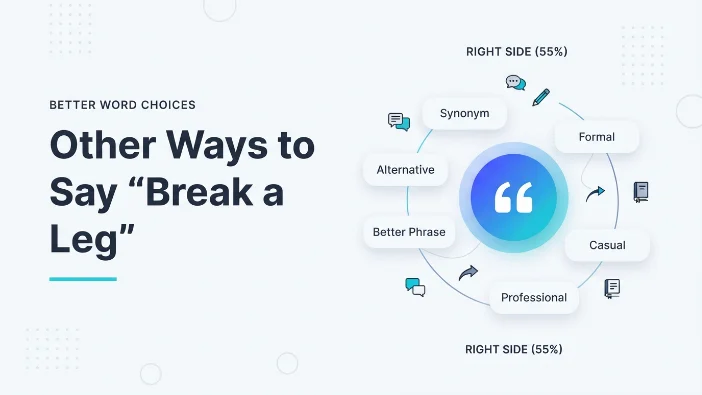
Formal alternatives to “break a leg”
- Wishing you success
- Best of luck with your presentation
- I’m confident in your success
- May your efforts be rewarded
- Wishing you every success
Casual alternatives
- Knock ’em dead
- You’ve got this
- Go get ’em
- Crush it
- Go smash it
Professional alternatives
- I wish you the best of luck
- Hoping for your triumphant outcome
- Believing in your potential
- Wishing you smooth sailing ahead
- All the best in your endeavors
Informal expressions
- Show them what you’ve got
- Shine bright
- Give it your all
- Hit it out of the park
- Take the stage by storm
💡 Pro Tip: Match your phrase to your audience. Use formal alternatives in work emails, casual ones with friends, and professional ones in meetings or performance reviews.
Common Mistakes People Make Using “Break a Leg”
- Using it in inappropriate contexts – Saying break a leg to someone before surgery or a dangerous activity can sound insensitive.
- ❌ “You’re having heart surgery? Break a leg!”
- Using it in formal writing – The phrase is too informal for business emails or official correspondence.
- ❌ “Dear Mr. Thompson, break a leg with the quarterly report.”
- Misunderstanding the meaning – Some learners think it literally means to injure oneself.
- ❌ “I fell down the stairs and actually broke my leg just like you said!”
- Overusing it – Repeating break a leg in every situation makes your English sound repetitive.
- ❌ “Break a leg on your test! Break a leg at work! Break a leg at home!”
- Using it with athletes – Because it references physical injury, it’s often considered inappropriate for sports contexts.
- ❌ “Good luck at the football match break a leg!”
What Does “Break a Leg” Mean?
Break a leg is an idiomatic expression used to wish someone good luck, especially before a performance, presentation, or important event.
Grammar note: It’s an imperative verb phrase used as an interjection. You can add a name or pronoun: “Break a leg, Sarah!” or “Break a leg, everyone!”
Example sentence: “You’re going on stage in five minutes break a leg!”
When to Use “Break a Leg”
- Before a theatre performance, concert, or dance recital
- Before a public speech or presentation
- Before a job interview (informal setting)
- Before an audition
- Before a competition or game (casual context)
Spoken vs Written: Primarily spoken. Rarely used in formal writing.
Formal vs Informal: Informal. Avoid in professional emails or business documents.
Is It Professional or Polite to Say “Break a Leg”?
Polite? ✔️ Yes – when used appropriately with friends, family, or colleagues in casual settings.
Professional? ❌ No – in most cases. It’s considered too informal and theatrical for workplace communication.
Business-style example: Instead of “Break a leg on your presentation,” say “Wishing you success with your presentation today.”
Pros and Cons of Using “Break a Leg”
Pros:
- Simple and natural
- Friendly and warm tone
- Common and widely understood
- Easy to remember and use
Cons:
- Too informal for professional settings
- Overused and can sound cliché
- Limited emotional range
- Not suitable for formal writing or speeches
Other Ways to Say “Break a Leg”
These alternatives will help you sound more fluent, confident, and natural in different situations. Use them according to tone, context, and audience to express excitement, admiration, or approval.
1. Phrase: Knock ’Em Dead
Meaning: An energetic way to wish someone an impressive performance.
Explanation: This confident, informal expression encourages someone to amaze their audience or perform exceptionally well.
Example Sentence: “You’re going to be fantastic tonight knock ’em dead!”
Best Use: Performances, speeches, presentations
Worst Use: Formal emails
Tone: Energetic, confident
Context Variability: Casual, spoken
2. Phrase: You’ve Got This
Meaning: A reassuring way to tell someone they are capable and prepared.
Explanation: This modern expression builds confidence by reminding someone that they have the skills to succeed.
Example Sentence: “I know you’re nervous, but you’ve got this.”
Best Use: Interviews, exams, competitions
Worst Use: Formal letters
Tone: Reassuring, supportive
Context Variability: Casual, spoken
3. Phrase: Give It Your All
Meaning: Encouraging someone to put maximum effort into something.
Explanation: This phrase focuses on dedication and effort rather than simply hoping for good luck.
Example Sentence: “This is your moment give it your all.”
Best Use: Sports, competitions, challenges
Worst Use: Formal documents
Tone: Motivational, sincere
Context Variability: Casual, spoken
4. Phrase: Shine Bright
Meaning: A warm way to encourage someone to show their best qualities.
Explanation: This uplifting expression is often used to encourage friends or family before an important event.
Example Sentence: “Go out there and shine bright tonight!”
Best Use: Performances, celebrations, special occasions
Worst Use: Business emails
Tone: Warm, affectionate
Context Variability: Casual, spoken
5. Phrase: Show Them What You’ve Got
Meaning: Encouraging someone to demonstrate their skills and abilities.
Explanation: This enthusiastic phrase motivates someone to confidently display their talents.
Example Sentence: “This is your chance show them what you’ve got!”
Best Use: Auditions, competitions, presentations
Worst Use: Formal correspondence
Tone: Enthusiastic, bold
Context Variability: Casual, spoken
6. Phrase: Go Smash It
Meaning: A fun and energetic way to wish someone great success.
Explanation: Popular in informal English, this expression shows confidence that someone will perform extremely well.
Example Sentence: “Go smash it at your gig tonight!”
Best Use: Informal events, concerts, competitions
Worst Use: Professional settings
Tone: Playful, energetic
Context Variability: Casual, spoken
7. Phrase: Godspeed
Meaning: A traditional way to wish someone success and safety on an important journey.
Explanation: This somewhat old-fashioned expression has a serious and respectful tone and is best suited to significant occasions.
Example Sentence: “Godspeed on your new adventure abroad.”
Best Use: Major journeys, important new chapters
Worst Use: Everyday situations
Tone: Solemn, respectful
Context Variability: Formal, spoken or written
8. Phrase: Hit It Out of the Park
Meaning: A sports-inspired way to encourage someone to achieve outstanding success.
Explanation: Borrowed from baseball, this informal idiom suggests doing exceptionally well, especially on an important task.
Example Sentence: “I know you’ll hit it out of the park with this presentation.”
Best Use: Work projects, presentations, major challenges
Worst Use: Formal writing
Tone: Motivational, casual
Context Variability: Casual, spoken
9. Phrase: Best of Luck
Meaning: A classic way to wish someone success and good fortune.
Explanation: This versatile expression works in a wide range of personal and professional situations.
Example Sentence: “Best of luck with your interview tomorrow.”
Best Use: Almost any context
Worst Use: None
Tone: Neutral, supportive
Context Variability: Casual, formal, spoken or written
10. Phrase: Wishing You Success
Meaning: A professional way to express hope for someone’s achievement.
Explanation: This polished phrase focuses on the person’s future success rather than luck alone.
Example Sentence: “Wishing you success with the new marketing campaign.”
Best Use: Professional emails, projects, new ventures
Worst Use: Very casual conversations
Tone: Professional, optimistic
Context Variability: Professional, written
11. Phrase: Fingers Crossed
Meaning: A hopeful expression used when wishing for a positive outcome.
Explanation: This familiar informal phrase communicates hope that things will go well.
Example Sentence: “Fingers crossed for your exam results!”
Best Use: Informal situations, friendly messages
Worst Use: Formal writing
Tone: Hopeful, casual
Context Variability: Casual, spoken
12. Phrase: Do Your Best
Meaning: Encouraging someone to give their greatest effort.
Explanation: This straightforward expression emphasizes effort rather than guaranteeing success.
Example Sentence: “Just do your best that’s all anyone can ask.”
Best Use: Work, school, competitions
Worst Use: None
Tone: Supportive, neutral
Context Variability: Casual, professional, spoken
13. Phrase: I’m Confident in Your Success
Meaning: A professional expression of strong belief in someone’s abilities.
Explanation: This encouraging phrase communicates confidence while maintaining a polished tone.
Example Sentence: “I’m confident in your success as you take on this new role.”
Best Use: Mentoring, professional settings
Worst Use: Very casual chats
Tone: Professional, encouraging
Context Variability: Professional, written
14. Phrase: May Your Efforts Be Rewarded
Meaning: A formal wish that someone’s hard work leads to positive results.
Explanation: This respectful expression recognizes dedication and hopes that the person’s efforts produce a worthwhile outcome.
Example Sentence: “May your efforts be rewarded with continued success.”
Best Use: Formal letters, professional messages
Worst Use: Casual conversations
Tone: Formal, respectful
Context Variability: Formal, written
15. Phrase: All the Best
Meaning: A friendly and versatile way to wish someone well.
Explanation: This simple expression can be used when someone is starting something new or moving on to their next chapter.
Example Sentence: “All the best with your new job!”
Best Use: Farewells, new beginnings, messages
Worst Use: None
Tone: Warm, friendly
Context Variability: Casual, professional, spoken or written
16. Phrase: Wishing You Every Success
Meaning: A polished way to wish someone continued achievement.
Explanation: This expression sounds respectful and professional, making it useful for career changes and important accomplishments.
Example Sentence: “Wishing you every success as you take on this new responsibility.”
Best Use: Formal emails, professional messages
Worst Use: Very casual settings
Tone: Respectful, professional
Context Variability: Formal, written
17. Phrase: Rooting for You
Meaning: An informal way to show support and encouragement.
Explanation: This warm phrase tells someone that you are personally supporting them and hoping they succeed.
Example Sentence: “I’m rooting for you you’re going to do great!”
Best Use: Friends, family, teammates
Worst Use: Formal documents
Tone: Supportive, warm
Context Variability: Casual, spoken
18. Phrase: Hoping for Your Triumphant Outcome
Meaning: A dramatic way to express hope for someone’s victory or success.
Explanation: This grand-sounding expression is best reserved for major achievements, competitions, or ceremonial occasions.
Example Sentence: “Hoping for a triumphant outcome in the competition.”
Best Use: Formal events, awards, major achievements
Worst Use: Everyday conversation
Tone: Formal, grand
Context Variability: Formal, written
19. Phrase: Take the Stage by Storm
Meaning: Encouraging someone to deliver a powerful and memorable performance.
Explanation: This vivid expression suggests making a strong impression and capturing the audience’s attention.
Example Sentence: “Go take the stage by storm you were born for this!”
Best Use: Performances, presentations, public speaking
Worst Use: Formal writing
Tone: Inspiring, bold
Context Variability: Casual, spoken
20. Phrase: Sending Positive Vibes Your Way
Meaning: A modern and casual way to express encouragement and good wishes.
Explanation: This popular informal expression communicates optimism and emotional support.
Example Sentence: “Sending positive vibes your way for the big meeting!”
Best Use: Texts, social media, friendly messages
Worst Use: Professional emails
Tone: Casual, modern
Context Variability: Casual, spoken or written
21. Phrase: May Fortune Favor You
Meaning: A formal and poetic way to wish someone luck.
Explanation: This literary expression has a classic feel and works particularly well for significant occasions or new beginnings.
Example Sentence: “May fortune favor you in your new venture.”
Best Use: Formal occasions, speeches, new beginnings
Worst Use: Casual chats
Tone: Formal, poetic
Context Variability: Formal, written
22. Phrase: Here’s to Your Success
Meaning: A celebratory expression wishing someone future achievement.
Explanation: Often used as a toast, this phrase combines encouragement with a sense of celebration.
Example Sentence: “Here’s to your success and everything you’ve worked so hard to achieve!”
Best Use: Toasts, celebrations, milestone events
Worst Use: Everyday professional emails
Tone: Celebratory, warm
Context Variability: Formal, spoken
23. Phrase: Believe in Yourself
Meaning: Encouraging someone to trust their own abilities.
Explanation: This personal expression focuses on confidence and self-belief rather than luck.
Example Sentence: “Believe in yourselfyou’ve prepared for this.”
Best Use: Personal encouragement, exams, challenges
Worst Use: Formal documents
Tone: Personal, uplifting
Context Variability: Casual, spoken
24. Phrase: Make Us Proud
Meaning: A warm way to encourage someone to perform well for people who support them.
Explanation: This phrase creates a sense of belonging and encouragement, especially among family members or teammates.
Example Sentence: “Go out there and make us proud!”
Best Use: Family, teams, competitions
Worst Use: Formal writing
Tone: Warm, encouraging
Context Variability: Casual, spoken
25. Phrase: I Wish You the Best of Luck
Meaning: A personal and slightly more complete version of “best of luck.”
Explanation: This expression adds warmth while remaining appropriate in many professional and personal situations.
Example Sentence: “I wish you the best of luck with your presentation.”
Best Use: Professional messages, interviews, important events
Worst Use: None
Tone: Professional, warm
Context Variability: Professional, spoken or written
26. Phrase: Wishing You Smooth Sailing Ahead
Meaning: A wish for an easy and successful journey ahead.
Explanation: This metaphorical expression hopes that someone encounters few difficulties as they move forward.
Example Sentence: “Wishing you smooth sailing ahead with the new project.”
Best Use: Work, new ventures, transitions
Worst Use: Very formal reports
Tone: Optimistic, encouraging
Context Variability: Professional, written
27. Phrase: Go Get ’Em
Meaning: An energetic way to encourage someone to pursue success.
Explanation: This lively expression gives someone a final boost of confidence before a challenge or competition.
Example Sentence: “Go get ’em at the competition today!”
Best Use: Sports, competitions, challenges
Worst Use: Formal settings
Tone: Energetic, bold
Context Variability: Casual, spoken
28. Phrase: Crush It
Meaning: A modern way to encourage someone to perform exceptionally well.
Explanation: This informal expression suggests that someone will handle a challenge with confidence and achieve excellent results.
Example Sentence: “You’re going to crush it at the audition!”
Best Use: Informal encouragement, friends, teammates
Worst Use: Formal writing
Tone: Modern, confident
Context Variability: Casual, spoken
29. Phrase: May Your Hard Work Pay Off
Meaning: A wish that someone’s effort leads to success.
Explanation: This thoughtful expression recognizes dedication and hopes that the person’s hard work produces positive results.
Example Sentence: “May your hard work pay off in the final results.”
Best Use: Professional settings, academic achievements
Worst Use: Very casual chats
Tone: Respectful, encouraging
Context Variability: Formal, written
30. Phrase: Toi Toi Toi
Meaning: A traditional theatrical expression used to wish performers good luck.
Explanation: Commonly associated with theater and opera, it serves as a traditional alternative to “break a leg.”
Example Sentence: “Toi toi toi you’ll be brilliant tonight!”
Best Use: Theater, opera, performances
Worst Use: Non-performance situations
Tone: Theatrical, traditional
Context Variability: Casual, spoken
Choosing the right expression makes your encouragement sound more natural, thoughtful, and appropriate for the situation.
“Your choice of words reveals your awareness of context a mark of true fluency.”
Mini Quiz / Self-Check
1. Which phrase is most appropriate for a professional email to a colleague?
- A) Break a leg
- B) Wishing you success
- C) Go smash it
Answer: B
2. You’re at a friend’s concert. Which phrase would you use?
- A) May your efforts be rewarded
- B) Knock ’em dead
- C) Godspeed
Answer: B
3. Which phrase is NOT suitable for a job interview setting?
- A) Best of luck
- B) You’ve got this
- C) Break a leg
Answer: C
4. You’re sending a farewell card to a departing colleague. Which phrase works best?
- A) Wishing you every success
- B) Go get ’em
- C) Crush it
Answer: A
Comparison Table: Top 10 Alternatives
| Phrase | Tone | Best Use |
|---|---|---|
| Knock ’em dead | Energetic, confident | Performances, speeches |
| Best of luck | Neutral, supportive | Almost any context |
| You’ve got this | Reassuring, modern | Interviews, exams |
| Wishing you success | Professional, optimistic | Work emails, projects |
| Give it your all | Motivational, sincere | Sports, competitions |
| All the best | Warm, friendly | Farewells, new beginnings |
| I’m confident in your success | Professional, encouraging | Mentoring, professional settings |
| Fingers crossed | Hopeful, casual | Informal situations |
| Godspeed | Solemn, respectful | Major journeys |
| Go get ’em | Energetic, bold | Sports, competitions |
FAQs
1. Is “break a leg” only used in theatre?
No, it’s now commonly used before any important event like a presentation, interview, or exam. However, it originated in theatre and is most at home in performance contexts.
2. Can I say “break a leg” in a professional email?
It’s best to avoid it. Use professional alternatives like “Wishing you success” or “Best of luck with your presentation” instead.
3. What’s the difference between “break a leg” and “good luck”?
Both mean the same thing, but break a leg is informal and idiomatic. Good luck is more neutral and can be used in almost any context.
4. Why do people say “break a leg” instead of “good luck”?
It comes from a theatre superstition that saying “good luck” directly would bring bad luck. Wishing the opposite was believed to bring good fortune.
5. Is “break a leg” offensive?
No, it’s not offensive when used appropriately. However, avoid using it in formal settings or with athletes, as it references physical injury.
Conclusion
Learning alternatives to break a leg expands your expressive range and helps you adapt to any situation. Whether you’re encouraging a friend before a performance or supporting a colleague before a big presentation, choosing the right phrase shows emotional intelligence and linguistic awareness.
Practice using these alternatives daily. Pay attention to tone and context your English will sound more natural, confident, and professional.
Read More Related Articles:
- Other Ways to Say I Love U | For Every Romantic and Sweet Occasion In 2026
- Other Ways to Say I Can’t Wait | Express Excitement More Creatively In 2026
- Other Ways to Say You’re Beautiful | Beyond the Ordinary Compliment In 2026

Victoria Hughes is a content writer dedicated to making communication clearer and more effective. Through TextsResponse.com, she shares practical insights and thoughtfully crafted response ideas that help readers express themselves with confidence.