Quick Answer:
Looking for fresh alternatives to “good idea”? Try these five top options: That’s brilliant, That sounds like a plan, I like the way you think, That’s a smart approach, and Good call. Each suits different tones and contexts.
Looking for other ways to say “good idea”? Whether you want to sound more enthusiastic, professional, friendly, or natural, there are plenty of alternatives to choose from.
Using different expressions can make your conversations and writing feel more engaging. From “That’s a brilliant idea” to “That makes a lot of sense,” the right phrase can help you express genuine approval with more variety.
Quick Categories
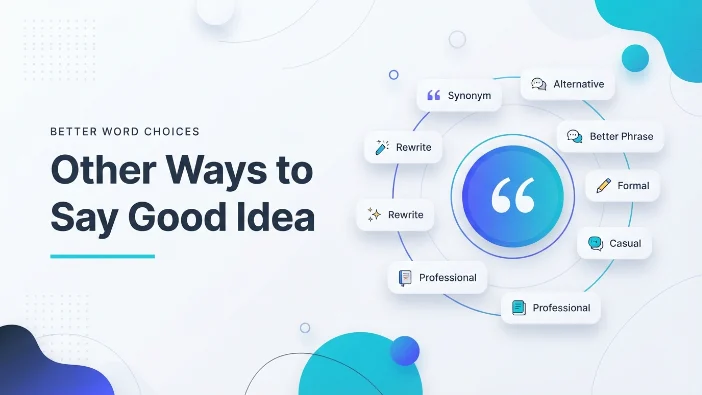
Formal Alternatives to “Good Idea”
- Astute proposal
- Well-considered plan
- Prudent recommendation
- Judicious thought
- Sound notion
- Wise insight
- Discerning idea
- Rational proposition
Casual Alternatives
- Good call
- Sounds good
- That’s brilliant
- Nice one
- I like that
- That’s not a bad idea
Professional Alternatives
- That’s a great suggestion
- That’s definitely worth pursuing
- That makes a lot of sense
- That’s a solid idea
- I think we should run with that
- That’s a smart approach
Informal Expressions
- Good shout
- That might just work
- I love that idea
- Perfect!
- That’s a clever suggestion
- Now we’re talking
Common Mistakes
1. Overusing “good idea” in formal writing.
❌ “Your good idea about the merger is noted.”
✅ “Your astute proposal regarding the merger is noted.”
2. Using casual phrases in professional emails.
❌ “Good shout on the quarterly report.”
✅ “That’s a great suggestion for the quarterly report.”
3. Sounding dismissive with short responses.
❌ “Good idea.” (said flatly)
✅ “That’s brilliant!” (with enthusiasm)
4. Misusing “That’s not a bad idea” – it can sound like faint praise.
❌ “That’s not a bad idea for a marketing campaign.”
✅ “That’s a smart approach for the marketing campaign.”
5. Using “Good call” for suggestions rather than decisions.
❌ “Good call on suggesting we hire more staff.”
✅ “That’s a great suggestion to hire more staff.”
What Does “Good Idea” Mean?
Definition: “Good idea” is a phrase used to express approval, agreement, or enthusiasm for a suggestion, plan, or thought someone has shared. It acknowledges that the proposed concept is valuable, sensible, or worth considering.
Grammar note: It functions as a noun phrase. It can stand alone as an exclamation (“Good idea!”) or be used in a full sentence (“That’s a good idea”).
Example: “Why don’t we start the meeting with a quick icebreaker?” – “Good idea! That’ll help everyone relax.”
When to Use “Good Idea”
- Brainstorming sessions – to encourage participation
- Casual conversations – with friends or colleagues
- Quick acknowledgments – when you want to keep the response short
- Spoken English – very common in everyday speech
- Informal written communication – like texts or instant messages
“Good idea” works well in spoken English but can feel too generic in formal writing.
Is It Professional or Polite to Say “Good Idea”?
Polite? ✔️ Yes – it’s a friendly and encouraging way to acknowledge someone.
Professional? ❌ No – in most professional settings, it’s considered too informal and overused.
Business-style example:
❌ “Good idea for the new product line.”
✅ “That’s a well-considered plan for the new product line.”
In emails, reports, or meetings with senior stakeholders, choosing a more precise alternative shows you take the discussion seriously and respect the speaker’s contribution.
Pros and Cons of Using “Good Idea”
Pros:
- Simple and natural – everyone understands it
- Friendly tone – encourages others to share
- Common usage – you’ll hear it everywhere
- Easy to understand – no confusion about meaning
Cons:
- Too informal for work – lacks professional weight
- Overused – loses impact with repetition
- Limited emotional range – doesn’t convey strong enthusiasm
- Not suitable for formal writing – essays, reports, official correspondence
Other Ways to Say Good Idea
These alternatives will help you sound more fluent, confident, and natural in different situations. Use them according to tone, context, and audience to express excitement in English, show admiration, or deliver professional approval.
Formal Alternatives (1–10)
1. Phrase: Astute Proposal
- Meaning: A suggestion that shows sharp insight and intelligence.
- Explanation: This phrase is ideal for formal writing when you want to compliment someone’s perceptiveness.
- Example Sentence: “Your astute proposal for restructuring the department has impressed the entire board.”
- Best Use: Business emails
- Worst Use: Casual chats
- Tone: Formal, admiring
- Context Variability: Professional
2. Phrase: Well-Considered Plan
- Meaning: A proposal that has been carefully thought through.
- Explanation: This alternative emphasizes that the idea is not impulsive but thoroughly evaluated.
- Example Sentence: “This well-considered plan addresses all our key concerns about the project timeline.”
- Best Use: Reports, essays
- Worst Use: Text messages
- Tone: Thoughtful, respectful
- Context Variability: Professional
3. Phrase: Prudent Recommendation
- Meaning: A suggestion that shows good judgment and caution.
- Explanation: Use this when you want to highlight the wisdom and careful reasoning behind the idea.
- Example Sentence: “Your prudent recommendation to delay the launch until Q3 was exactly what we needed.”
- Best Use: Financial or strategic discussions
- Worst Use: Everyday conversation
- Tone: Wise, cautious
- Context Variability: Professional
4. Phrase: Judicious Thought
- Meaning: An idea that demonstrates sound judgment.
- Explanation: This phrase praises the decision-making process as much as the idea itself.
- Example Sentence: “That was a judicious thought – it saved us from making a costly error.”
- Best Use: Performance reviews
- Worst Use: Casual banter
- Tone: Analytical, appreciative
- Context Variability: Professional
5. Phrase: Sound Notion
- Meaning: A reliable and well-founded concept.
- Explanation: “Sound” implies the idea is solid, logical, and trustworthy.
- Example Sentence: “Your sound notion about improving customer retention has been adopted company-wide.”
- Best Use: Academic writing
- Worst Use: Social media comments
- Tone: Logical, grounded
- Context Variability: Professional
6. Phrase: Wise Insight
- Meaning: A deep understanding that leads to a valuable idea.
- Explanation: This phrase acknowledges both the idea and the wisdom behind it.
- Example Sentence: “Her wise insight into consumer behavior transformed our marketing strategy.”
- Best Use: Leadership communication
- Worst Use: Quick replies
- Tone: Respectful, profound
- Context Variability: Professional
7. Phrase: Discerning Idea
- Meaning: An idea that shows excellent judgment and taste.
- Explanation: “Discerning” suggests the person has a keen ability to distinguish what is valuable.
- Example Sentence: “Your discerning idea to focus on premium clients has increased our revenue by 20%.”
- Best Use: Client presentations
- Worst Use: Informal emails
- Tone: Elegant, complimentary
- Context Variability: Professional
8. Phrase: Rational Proposition
- Meaning: A suggestion based on logic and reason.
- Explanation: This phrase emphasizes the logical foundation of the idea.
- Example Sentence: “The rational proposition you submitted aligns perfectly with our long-term objectives.”
- Best Use: Strategic planning
- Worst Use: Personal conversations
- Tone: Objective, clear-headed
- Context Variability: Professional
9. Phrase: Enlightened Suggestion
- Meaning: A proposal that shows advanced understanding or awareness.
- Explanation: This implies the idea comes from a place of knowledge and clarity.
- Example Sentence: “Your enlightened suggestion about remote work policies has improved team morale significantly.
- Best Use: HR or policy discussions
- Worst Use: Casual settings
- Tone: Progressive, insightful
- Context Variability: Professional
10. Phrase: Well-Thought-Out Strategy
- Meaning: A plan that has been carefully developed with attention to detail.
- Explanation: This alternative emphasizes the effort and care put into developing the idea.
- Example Sentence: “The well-thought-out strategy you presented gives us a clear path forward.”
- Best Use: Project proposals
- Worst Use: Quick acknowledgments
- Tone: Comprehensive, diligent
- Context Variability: Professional
The right tone makes your English sound professional and confident. Choose formal alternatives for emails, reports, and presentations.”
Professional Alternatives (11–19)
11. Phrase: That’s a Great Suggestion
- Meaning: An enthusiastic and professional way to acknowledge a good idea.
- Explanation: This is a safe, versatile alternative that works in most workplace settings.
- Example Sentence: “That’s a great suggestion, Sarah. Let’s include it in the next iteration of the proposal.”
- Best Use: Team meetings
- Worst Use: Formal reports
- Tone: Encouraging, supportive
- Context Variability: Professional / Spoken
12. Phrase: That’s Definitely Worth Pursuing
- Meaning: The idea has enough merit to justify further investigation.
- Explanation: This phrase shows you take the idea seriously and are open to exploring it.
- Example Sentence: “Your concept for a new loyalty program is definitely worth pursuing.”
- Best Use: Project planning
- Worst Use: Quick responses
- Tone: Measured, optimistic
- Context Variability: Professional
13. Phrase: That Makes a Lot of Sense
- Meaning: The idea is logical and well-reasoned.
- Explanation: This alternative focuses on the clarity and practicality of the suggestion.
- Example Sentence: “That makes a lot of sense – splitting the workload into smaller teams will speed up delivery.”
- Best Use: Problem-solving discussions
- Worst Use: Formal writing
- Tone: Logical, agreeable
- Context Variability: Professional / Spoken
14. Phrase: That’s a Solid Idea
- Meaning: A reliable, well-founded suggestion.
- Explanation: “Solid” conveys strength and dependability, making it ideal for professional contexts.
- Example Sentence: “That’s a solid idea for the new onboarding process. Let’s develop it further.”
- Best Use: Strategy meetings
- Worst Use: Formal documents
- Tone: Dependable, grounded
- Context Variability: Professional / Spoken
15. Phrase: I Think We Should Run With That
- Meaning: You agree to adopt and implement the idea.
- Explanation: This business idiom signals commitment and forward momentum.
- Example Sentence: “I think we should run with that approach for the next quarter. It’s efficient and cost-effective.”
- Best Use: Decision-making meetings
- Worst Use: Casual conversation
- Tone: Decisive, action-oriented
- Context Variability: Professional
16. Phrase: That’s a Smart Approach
- Meaning: The method or idea shows intelligence and good judgment.
- Explanation: This phrase highlights the strategic thinking behind the suggestion.
- Example Sentence: “That’s a smart approach to customer acquisition – it leverages our existing strengths.”
- Best Use: Brainstorming sessions
- Worst Use: Personal chats
- Tone: Strategic, admiring
- Context Variability: Professional / Spoken
17. Phrase: That’s a Clever Suggestion
- Meaning: The idea is ingenious and shows quick thinking.
- Explanation: This phrase praises both the idea and the intelligence of the person who proposed it.
- Example Sentence: “That’s a clever suggestion for automating the reporting process. It will save us hours.”
- Best Use: Innovation discussions
- Worst Use: Formal correspondence
- Tone: Appreciative, sharp
- Context Variability: Professional / Spoken
18. Phrase: That’s an Excellent Plan
- Meaning: A proposal that is outstanding and well-structured.
- Explanation: A strong, positive alternative that conveys genuine approval.
- Example Sentence: “That’s an excellent plan for expanding into the European market. I fully support it.”
- Best Use: Presentations
- Worst Use: Quick texts
- Tone: Enthusiastic, supportive
- Context Variability: Professional / Spoken
19. Phrase: That Might Just Work
- Meaning: The idea is creative and has a good chance of succeeding.
- Explanation: This phrase is perfect when an idea is unconventional but promising.
- Example Sentence: “That might just work – using social media influencers instead of traditional ads is a bold move.”
- Best Use: Creative brainstorming
- Worst Use: Formal proposals
- Tone: Optimistic, intrigued
- Context Variability: Professional / Spoken
“Professional phrases show you’re engaged and thoughtful. They build credibility in meetings and emails.”
Casual & Informal Alternatives (20–30)
20. Phrase: Good Call
- Meaning: You confirm that a decision or suggestion was the right one.
- Explanation: Extremely popular in casual spoken English, especially for decisions in hindsight.
- Example Sentence: “Good call on postponing the event – the weather forecast looks terrible.”
- Best Use: Casual conversations
- Worst Use: Professional emails
- Tone: Friendly, affirming
- Context Variability: Casual / Spoken
21. Phrase: Sounds Good
- Meaning: You agree that the suggestion or plan is acceptable.
- Explanation: A short, natural way to show agreement in everyday speech.
- Example Sentence: “Let’s meet at 7 PM for dinner.” – “Sounds good. See you then.”
- Best Use: Text messages, casual chats
- Worst Use: Business writing
- Tone: Relaxed, agreeable
- Context Variability: Casual / Spoken
22. Phrase: That’s Brilliant
- Meaning: The idea is extremely clever and impressive.
- Explanation: Common in British English, this conveys strong enthusiasm.
- Example Sentence: “We could host the workshop outdoors if the weather stays nice.” – “That’s brilliant!”
- Best Use: Friendly conversations
- Worst Use: Formal reports
- Tone: Enthusiastic, excited
- Context Variability: Casual / Spoken
23. Phrase: I Love That Idea
- Meaning: You personally and strongly approve of the suggestion.
- Explanation: A warm, personal way to express genuine excitement.
- Example Sentence: “Let’s start a book club at work.” – “I love that idea! I’ve been wanting to read more.”
- Best Use: Personal conversations
- Worst Use: Formal writing
- Tone: Warm, enthusiastic
- Context Variability: Casual / Spoken
24. Phrase: Perfect!
- Meaning: The idea is the ideal solution.
- Explanation: A short, high-energy confirmation used when a suggestion solves a problem completely.
- Example Sentence: “We can review the presentation right after lunch.” – “Perfect! That fits my schedule.”
- Best Use: Quick confirmations
- Worst Use: Official documents
- Tone: Energized, decisive
- Context Variability: Casual / Spoken
25. Phrase: Nice One
- Meaning: A friendly way to say “good job” or “good idea.
- Explanation: Very informal and common in British and Australian English.
- Example Sentence: “I booked the tickets for half price.” – “Nice one! That’s a great deal.”
- Best Use: Friends, colleagues
- Worst Use: Professional settings
- Tone: Friendly, approving
- Context Variability: Casual / Spoken
26. Phrase: Good Shout
- Meaning: A British informal way to say “good idea.”
- Explanation: Used to show quick approval in casual conversation.
- Example Sentence: “Let’s grab a coffee before the meeting starts.” – “Good shout. I need the caffeine.”
- Best Use: British casual conversations
- Worst Use: American professional settings
- Tone: Informal, quick
- Context Variability: Casual / Spoken
27. Phrase: I Like the Way You Think
- Meaning: You appreciate the person’s creative or clever thinking.
- Explanation: A friendly and encouraging phrase that praises the person, not just the idea.
- Example Sentence: “What if we turned the spare room into a home office?” – “I like the way you think!
- Best Use: Friendly conversations
- Worst Use: Business emails
- Tone: Encouraging, personal
- Context Variability: Casual / Spoken
28. Phrase: That’s Not a Bad Idea
- Meaning: A modest way of saying something is a good idea.
- Explanation: This understated expression is common in British English and can sound quite natural.
- Example Sentence: “Why don’t we check our answers together?” – “That’s not a bad idea. It’ll save us time.”
- Best Use: Casual suggestions
- Worst Use: Formal contexts
- Tone: Modest, understated
- Context Variability: Casual / Spoken
29. Phrase: Now We’re Talking
- Meaning: You are excited because the idea is exactly what you wanted.
- Explanation: This idiom expresses strong approval and enthusiasm.
- Example Sentence: “How about pizza for dinner?” – “Now we’re talking! I was hoping you’d say that.
- Best Use: Casual, enthusiastic moments
- Worst Use: Professional settings
- Tone: Excited, playful
- Context Variability: Casual / Spoken
30. Phrase: That Sounds Like a Plan
- Context Variability: Casual / Spoken
- Meaning: You agree to the proposed course of action.
- Explanation: A friendly way to confirm an arrangement or suggestion.
- Example Sentence: “Let’s start with the budget review and then move to the timeline.” – “That sounds like a plan.”
- Best Use: Planning discussions
- Worst Use: Formal documents
- Tone: Agreeable, collaborative
Using varied expressions makes your English more engaging and natural. Practice one new phrase each day.”
Mini Quiz / Self-Check
1. Which phrase is most appropriate for a formal business email?
- A) Good shout
- B) Astute proposal
- C) Sounds good
- D) Nice one
Answer: B) Astute proposal
2. You’re in a brainstorming session with your team. A colleague suggests a creative but unconventional idea. Which response is best?
- A) That’s not a bad idea
- B) That might just work
- C) Good call
- D) Perfect!
Answer: B) That might just work
3. Your friend suggests getting takeout instead of cooking. Which casual response shows enthusiasm?
- A) That makes a lot of sense
- B) That’s a solid idea
- C) Now we’re talking
- D) That’s a great suggestion
Answer: C) Now we’re talking
4. You’re in a project review meeting. Your manager presents a well-researched plan. Which phrase is most professional?
- A) I love that idea
- B) That’s brilliant
- C) That’s a well-considered plan
- D) Good shout
Answer: C) That’s a well-considered plan
Comparison Table: Top 10 Alternatives
| Phrase | Tone | Best Use |
|---|---|---|
| Astute proposal | Formal, admiring | Business emails |
| Well-considered plan | Thoughtful, respectful | Reports, essays |
| That’s a great suggestion | Encouraging, supportive | Team meetings |
| That’s definitely worth pursuing | Measured, optimistic | Project planning |
| That makes a lot of sense | Logical, agreeable | Problem-solving |
| That’s a solid idea | Dependable, grounded | Strategy meetings |
| Good call | Friendly, affirming | Casual conversations |
| That’s brilliant | Enthusiastic, excited | Friendly chats |
| I love that idea | Warm, enthusiastic | Personal conversations |
| That sounds like a plan | Agreeable, collaborative | Planning discussions |
FAQs
1. What is the best formal alternative to “good idea”?
“Astute proposal” and “well-considered plan” are excellent formal alternatives that convey professionalism and respect.
2. Can I say “good idea” in a professional email?
Yes, but it’s better to use more formal alternatives like “that’s a great suggestion” or “that makes a lot of sense” to sound more professional.
3. What are some casual ways to say “good idea”?
Casual alternatives include “good call,” “sounds good,” “that’s brilliant,” “nice one,” and “good shout” (British English).
4. Is “that’s not a bad idea” a compliment?
Yes, it’s a modest way of saying something is a good idea, though it can sometimes sound like faint praise depending on tone.
5. How can I express excitement about an idea in English?
Use enthusiastic phrases like “I love that idea,” “that’s brilliant,” “perfect,” or “now we’re talking” to show genuine excitement.
Conclusion
Learning alternatives to “good idea” transforms your English from basic to brilliant. Whether you need to express excitement in English with friends or deliver polished professional reaction phrases in the boardroom, having a rich vocabulary of alternatives to “good idea” gives you the confidence to communicate clearly and appropriately.
Start by choosing one or two new phrases each day and practice using them in real conversations. Pay attention to tone and context – the same phrase that works with friends might not suit a formal email. With consistent practice, these other ways to say “good idea” will become second nature, and your spoken and written English will sound more fluent, engaging, and professional.
Read More Related Articles:
- Other Ways to Say You’re Beautiful | Beyond the Ordinary Compliment In 2026
- Other Ways to Say I Love You in Spanish | Beyond the Usual Phrase In 2026
- Other Ways to Say I Love You in Other Languages | Beyond the Classic Three Words In 2026

Henry Walker is an American writer and blogger with a keen interest in communication, language and digital content. At TextsResponse.com, he creates informative and reader-focused resources designed to help people communicate with clarity, confidence and authenticity.