Quick Answer
“No worries” is a friendly, casual way to reassure someone or accept an apology or thanks. It works well in relaxed conversations but is not always suitable for formal writing. Top alternatives include: no problem, don’t worry about it, it’s all good, not a big deal, and all is well.
No worries” is one of the most common casual expressions in spoken English. People use it to reassure someone, respond to an apology, or accept thanks without making a big deal of it. It shows up constantly in everyday conversation, texting, and informal workplace chats.
Learning alternatives to “no worries” helps you match your language to the situation. Some moments call for a relaxed, friendly tone, while others need a more polished, professional response. Knowing several options also helps you express excitement, warmth, and confidence naturally.
This guide breaks down 30 alternatives to “no worries,” grouped by tone, so you always know the right phrase for the right context.
Quick Categories
Formal Alternatives to “No Worries”
- Not a problem at all
- That is perfectly fine
- Please don’t concern yourself with it
- It was no trouble
Pro Tip: Use formal alternatives in emails, client conversations, and professional meetings to sound polished and respectful.
Casual Alternatives
- No biggie
- All good
- Don’t sweat it
- No sweat
Pro Tip: Save casual alternatives for friends, close coworkers, or informal texting to sound natural and relaxed.
Professional Alternatives
- Happy to help
- Glad I could assist
- Of course, no issue
- That’s completely fine
Pro Tip: Professional alternatives work best when you want to sound warm but still competent in a work setting.
Informal Expressions
- No worries at all
- It’s cool
- Chill, it’s fine
- Don’t stress
Pro Tip: Informal expressions are great for spoken conversation but should be avoided in written business communication.
Pull Quote: “Great English speakers don’t just know more words, they know when to use them.
Common Mistakes People Make With “No Worries”
- Using it in formal emails. Incorrect: “No worries, I will send the report tomorrow.” Better: “That is not a problem, I will send the report tomorrow.”
- Repeating it too often in one conversation. Incorrect: “No worries… no worries… no worries about that too.”
- Using it after serious apologies. Incorrect: “No worries” after someone apologizes for a major mistake.
- Using it with senior executives or clients. Incorrect: “No worries, boss, I’ll handle it.”
- Mixing it with overly formal language in the same sentence. Incorrect: “No worries, I shall attend to this matter promptly.”
What Does “No Worries” Mean?
No worries” is an informal expression used to reassure someone that everything is fine, that no apology is needed, or that a favor was not a problem. Grammatically, it functions as a fixed phrase or interjection rather than a full sentence.
Example Sentence: “Sorry I’m late.” “No worries, we just started.
When to Use “No Worries”
- Responding to a small apology
- Accepting thanks casually
- Reassuring a friend or coworker informally
- Spoken English: Very common and natural
- Written English: Best kept to casual texts, chats, or emails to close colleagues
- Formal settings: Should be avoided in business writing, reports, or client communication
- Informal settings: Ideal for everyday conversation
Is It Professional or Polite to Say “No Worries”?
“No worries” is polite because it reassures the other person and removes tension. However, it is not always professional, especially in formal business writing or communication with senior stakeholders.
Business Example: A client apologizes for a delayed payment. Saying “No worries” may sound too casual, while “That is completely understandable” sounds professional and courteous.
Polite? Yes Professional? No (in most formal contexts)
Pros and Cons of Using “No Worries”
Pros:
- Simple and natural
- Friendly tone
- Common usage
- Easy to understand
Cons:
- Too informal for work
- Overused
- Limited emotional range
- Not suitable for formal writing
Pull Quote: “Fluency isn’t about knowing every word, it’s about choosing the right one.
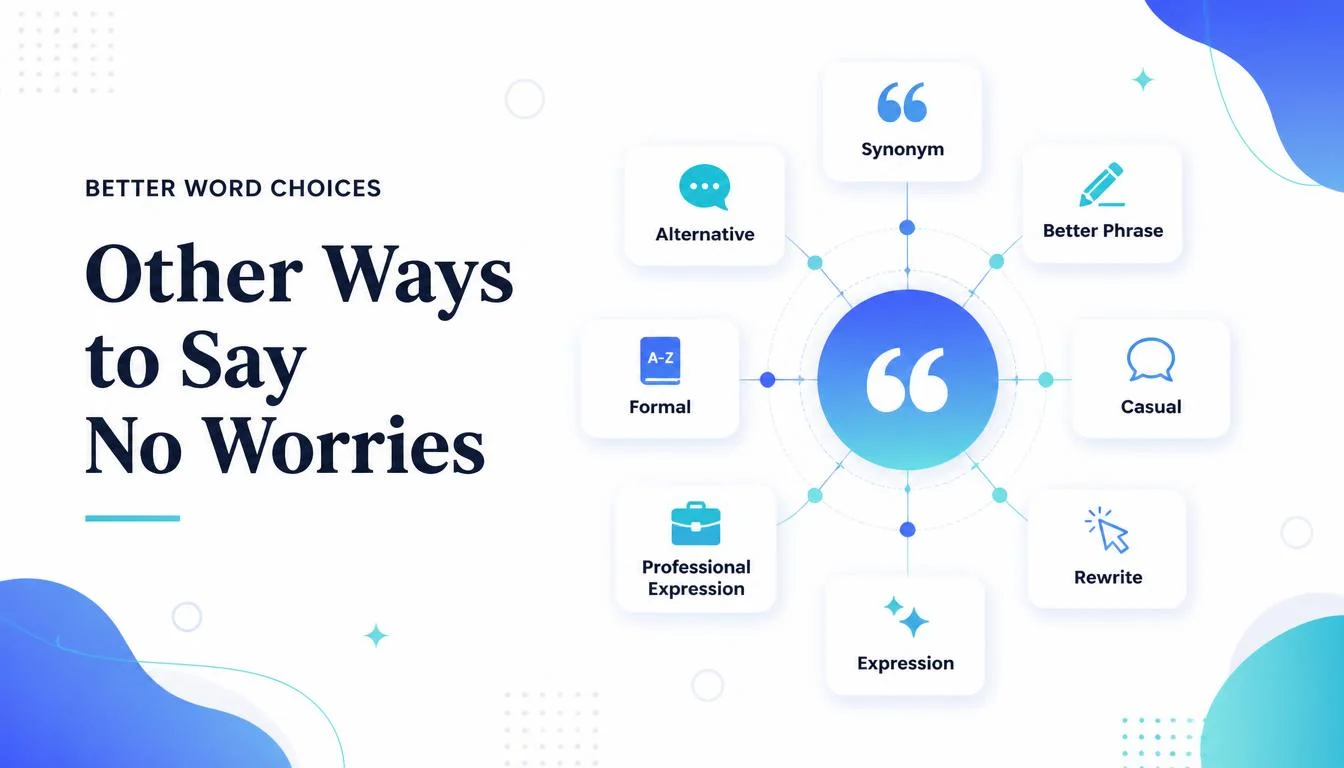
Other Ways to Say No Worries
These alternatives will help you sound more fluent, confident, and natural in different situations. Use them according to tone, context, and audience to express reassurance, friendliness, or approval.
1. Phrase: No Problem
- Meaning: A relaxed way to accept thanks or an apology.
- Explanation: Common in both spoken and written casual English.
- Example Sentence: “Thanks for waiting.” “No problem at all.”
- Best Use: Casual, everyday
- Worst Use: Formal emails
- Tone: Friendly, relaxed
- Context Variability: Casual, spoken
2. Phrase: Don’t Worry About It
- Meaning: Tells someone there is nothing to be concerned about.
- Explanation: Slightly warmer and more reassuring than “no worries.”
- Example Sentence: “I forgot to call you back.” “Don’t worry about it.”
- Best Use: Friends, coworkers
- Worst Use: Formal reports
- Tone: Reassuring, warm
- Context Variability: Casual, spoken
3. Phrase: It’s All Good
- Meaning: Everything is fine, and no issue exists.
- Explanation: Very casual and popular in spoken American English.
- Example Sentence: “Sorry for the mix-up.” “It’s all good.”
- Best Use: Informal chats
- Worst Use: Business meetings
- Tone: Laid-back, easygoing
- Context Variability: Casual, spoken
4. Phrase: Not a Big Deal
- Meaning: The situation is minor and not worth worrying about.
- Explanation: Downplays the seriousness of a mistake or favor.
- Example Sentence: “I broke the mug, sorry.” “Not a big deal.”
- Best Use: Casual settings
- Worst Use: Formal writing
- Tone: Casual, dismissive-lite
- Context Variability: Casual, spoken
5. Phrase: All Is Well
- Meaning: Everything is in order and fine.
- Explanation: Slightly more formal and calm sounding.
- Example Sentence: “I hope the delay didn’t cause issues.” “All is well.”
- Best Use: Semi-formal messages
- Worst Use: Very casual chats
- Tone: Calm, composed
- Context Variability: Professional, spoken
6. Phrase: Not a Problem at All
- Meaning: A stronger, more polished way to say something is fine.
- Explanation: Adds emphasis and can work well in courteous professional communication.
- Example Sentence: “I appreciate your patience.” “Not a problem at all.”
- Best Use: Client emails
- Worst Use: Very informal texts
- Tone: Courteous, reassuring
- Context Variability: Professional, spoken
7. Phrase: That Is Perfectly Fine
- Meaning: Confirms full acceptance without hesitation.
- Explanation: Common in professional and customer service English.
- Example Sentence: “I need to reschedule.” “That is perfectly fine.”
- Best Use: Business communication
- Worst Use: Casual texting
- Tone: Polished, professional
- Context Variability: Professional
8. Phrase: Please Don’t Concern Yourself With It
- Meaning: Reassures someone formally that they need not worry.
- Explanation: Very formal and often used in writing.
- Example Sentence: “Please don’t concern yourself with it; we have handled it.”
- Best Use: Formal letters
- Worst Use: Casual talk
- Tone: Formal, respectful
- Context Variability: Professional
9. Phrase: It Was No Trouble
- Meaning: Indicates a favor or task was easy to do.
- Explanation: Often used after someone says thank you.
- Example Sentence: “Thanks for picking that up.” “It was no trouble.”
- Best Use: Polite responses
- Worst Use: Serious apologies
- Tone: Gracious, polite
- Context Variability: Professional, spoken
10. Phrase: No Biggie
- Meaning: A very casual way of saying something is not important.
- Explanation: Popular among younger speakers and in informal texting.
- Example Sentence: “I’m running five minutes late.” “No biggie.”
- Best Use: Friends, texting
- Worst Use: Work emails
- Tone: Playful, casual
- Context Variability: Casual, spoken
11. Phrase: All Good
- Meaning: A short version of “it’s all good.”
- Explanation: Extremely common in quick spoken replies.
- Example Sentence: “Sorry, wrong number.” “All good.”
- Best Use: Quick replies
- Worst Use: Formal writing
- Tone: Breezy, casual
- Context Variability: Casual, spoken
12. Phrase: Don’t Sweat It
- Meaning: Tells someone not to stress over something.
- Explanation: An idiomatic, friendly expression.
- Example Sentence: “I owe you one.” “Don’t sweat it.”
- Best Use: Informal conversation
- Worst Use: Business writing
- Tone: Relaxed, friendly
- Context Variability: Casual, spoken
13. Phrase: No Sweat
- Meaning: Something was easy or not a problem.
- Explanation: Similar to “no biggie,” often used after a favor.
- Example Sentence: “Can you help me move this?” “No sweat.”
- Best Use: Casual favors
- Worst Use: Formal settings
- Tone: Easygoing, informal
- Context Variability: Casual, spoken
14. Phrase: Happy to Help
- Meaning: Expresses willingness and satisfaction in assisting.
- Explanation: A professional and warm response.
- Example Sentence: “Thanks for the quick fix.” “Happy to help.”
- Best Use: Customer service
- Worst Use: Very casual chats
- Tone: Warm, professional
- Context Variability: Professional
15. Phrase: Glad I Could Assist
- Meaning: Shows pleasure in having helped someone.
- Explanation: Common in workplace and service contexts.
- Example Sentence: “You saved my presentation.” “Glad I could assist.”
- Best Use: Workplace replies
- Worst Use: Casual texting
- Tone: Polished, sincere
- Context Variability: Professional
16. Phrase: Of Course, No Issue
- Meaning: Confirms agreement without hesitation.
- Explanation: Sounds confident and accommodating.
- Example Sentence: “Could you resend the file?” “Of course, no issue.”
- Best Use: Professional emails
- Worst Use: Informal banter
- Tone: Confident, courteous
- Context Variability: Professional
17. Phrase: That’s Completely Fine
- Meaning: Emphasizes full acceptance of a situation.
- Explanation: Slightly stronger than “that’s fine.”
- Example Sentence: “I need an extra day.” “That’s completely fine.”
- Best Use: Business contexts
- Worst Use: Very casual talk
- Tone: Reassuring, professional
- Context Variability: Professional
18. Phrase: No Worries at All
- Meaning: An emphasized version of “no worries.”
- Explanation: Adds warmth and extra reassurance.
- Example Sentence: “Sorry for the confusion.” “No worries at all.”
- Best Use: Friendly conversation
- Worst Use: Formal documents
- Tone: Warm, casual
- Context Variability: Casual, spoken
19. Phrase: It’s Cool
- Meaning: Signals that everything is fine in a very informal way.
- Explanation: Common among peers and younger speakers.
- Example Sentence: “I can’t make it tonight.” “It’s cool.”
- Best Use: Friends, informal texts
- Worst Use: Business settings
- Tone: Relaxed, informal
- Context Variability: Casual, spoken
20. Phrase: Chill, It’s Fine
- Meaning: Reassures someone in a laid-back, informal way.
- Explanation: Often used to calm someone down.
- Example Sentence: “I think I made a mistake.” “Chill, it’s fine.”
- Best Use: Close friends
- Worst Use: Professional settings
- Tone: Casual, calming
- Context Variability: Casual, spoken
21. Phrase: Don’t Stress
- Meaning: Tells someone to relax about a situation.
- Explanation: Common in supportive, informal conversations.
- Example Sentence: “I still owe you the notes.” “Don’t stress.”
- Best Use: Peer conversations
- Worst Use: Formal writing
- Tone: Supportive, casual
- Context Variability: Casual, spoken
22. Phrase: Not to Worry
- Meaning: A slightly old-fashioned but polite reassurance.
- Explanation: Common in British English and polite speech.
- Example Sentence: “I’m running a bit late.” “Not to worry.”
- Best Use: Polite conversation
- Worst Use: Very casual texting
- Tone: Gentle, courteous
- Context Variability: Professional, spoken
23. Phrase: It Happens
- Meaning: Normalizes a small mistake as common and understandable.
- Explanation: Often used to comfort someone after an error.
- Example Sentence: “I spilled coffee on the desk.” “It happens.”
- Best Use: Casual reassurance
- Worst Use: Formal reports
- Tone: Understanding, relaxed
- Context Variability: Casual, spoken
24. Phrase: No Harm Done
- Meaning: Confirms that a mistake caused no real damage.
- Explanation: Useful when reassuring someone after a minor error.
- Example Sentence: “I sent that to the wrong person.” “No harm done.”
- Best Use: Workplace mishaps
- Worst Use: Serious incidents
- Tone: Reassuring, calm
- Context Variability: Professional, spoken
25. Phrase: Think Nothing of It
- Meaning: Tells someone not to feel indebted or guilty.
- Explanation: A polite, slightly formal reassurance.
- Example Sentence: “Thanks again for covering my shift.” “Think nothing of it.”
- Best Use: Polite responses
- Worst Use: Casual texting
- Tone: Gracious, formal-lite
- Context Variability: Professional, spoken
26. Phrase: Consider It Done
- Meaning: Confirms a task will be handled without issue.
- Explanation: Often used to reassure someone about a request.
- Example Sentence: “Can you send that today?” “Consider it done.”
- Best Use: Workplace requests
- Worst Use: Casual apologies
- Tone: Confident, professional
- Context Variability: Professional
27. Phrase: You’re Fine
- Meaning: Reassures someone directly that they did nothing wrong.
- Explanation: Simple and direct, common in spoken English.
- Example Sentence: “Did I interrupt you?” “You’re fine.”
- Best Use: Quick reassurance
- Worst Use: Formal writing
- Tone: Direct, casual
- Context Variability: Casual, spoken
28. Phrase: There’s Nothing to Worry About
- Meaning: A fuller, more explicit reassurance.
- Explanation: Useful when someone needs extra comfort.
- Example Sentence: “I hope this didn’t cause a problem.” “There’s nothing to worry about.”
- Best Use: Supportive conversations
- Worst Use: Quick casual replies
- Tone: Warm, reassuring
- Context Variability: Professional, spoken
29. Phrase: Take It Easy, It’s Fine
- Meaning: Combines reassurance with a calming tone.
- Explanation: Often used when someone seems anxious or concerned.
- Example Sentence: “I feel bad about the delay.” “Take it easy, it’s fine.”
- Best Use: Calming a stressed person
- Worst Use: Formal business writing
- Tone: Gentle, casual
- Context Variability: Casual, spoken
30. Phrase: All Settled
- Meaning: Confirms that a matter is fully resolved.
- Explanation: Useful when closing a topic on a reassuring note.
- Example Sentence: “So we’re okay about the schedule change?” “All settled.”
- Best Use: Wrapping up conversations
- Worst Use: Casual banter
- Tone: Confident, conclusive
- Context Variability: Professional, spoken
“Confident English speakers adapt their tone to match the moment.”
Mini Quiz
1. Which phrase is best for a formal client email?
A) No biggie
B) Not a problem at all
C) Chill, it’s fine
Answer: B
2. Which phrase best reassures someone after a serious workplace mistake?
A) No harm done
B) No sweat
C) It’s cool
Answer: A
3. Which alternative sounds most professional when responding to thanks from a manager?
A) Happy to help
B) No sweat
C) It’s cool
Answer: A
4. Which phrase is too casual for a business report?
A) That is perfectly fine
B) Don’t sweat it
C) Not a problem at all
Answer: B
Comparison Table: Top Alternatives
| Phrase | Tone | Best Use |
|---|---|---|
| No problem | Friendly, relaxed | Casual, everyday |
| Don’t worry about it | Reassuring, warm | Friends, coworkers |
| Not a problem at all | Formal, courteous | Client emails |
| That is perfectly fine | Polished, professional | Business communication |
| It was no trouble | Gracious, polite | Polite responses |
| No biggie | Playful, casual | Friends, texting |
| Happy to help | Warm, professional | Customer service |
| Of course, no issue | Confident, courteous | Professional emails |
| Not to worry | Gentle, courteous | Polite conversation |
| Consider it done | Confident, professional | Workplace requests |
FAQs
Is “no worries” grammatically correct?
Yes, it functions as a fixed informal expression, though it is not a complete formal sentence.
Can I use “no worries” in a business email?
It is better to use formal alternatives to “no worries” such as “not a problem at all” in professional emails.
Is “no worries” the same as “you’re welcome”?
Not exactly. “No worries” often responds to an apology, while “you’re welcome” responds to thanks.
What is a more professional way to say “no worries”?
Try “that is completely fine” or “happy to help” for a more professional reaction phrase.
Why should I learn other ways to say “no worries”?
Learning alternatives to “no worries” helps you express excitement, warmth, and professionalism appropriately across different situations.
Conclusion
Mastering alternatives to “no worries” helps you sound more natural, confident, and adaptable in both spoken and written English. Whether you need casual expressions in English for everyday chats or professional reaction phrases for the workplace, having a range of options makes your communication stronger.
Practice using these phrases daily and pay attention to tone. Over time, choosing the right expression for the right context will become second nature, helping you sound polished, polite, and fluent in every conversation.
Read More Related Articles:
- Other Ways to Say You’re Beautiful | Beyond the Ordinary Compliment In 2026
- Other Ways to Say I Love You in Spanish | Beyond the Usual Phrase In 2026
- Other Ways to Say I Love You in Other Languages | Beyond the Classic Three Words In 2026

Daniel Murphy is a professional writer and blogger specializing in digital communication and messaging trends. As a contributor to TextsResponse.com, he creates reader-focused content designed to help people find the right words at the right time.