Quick Answer
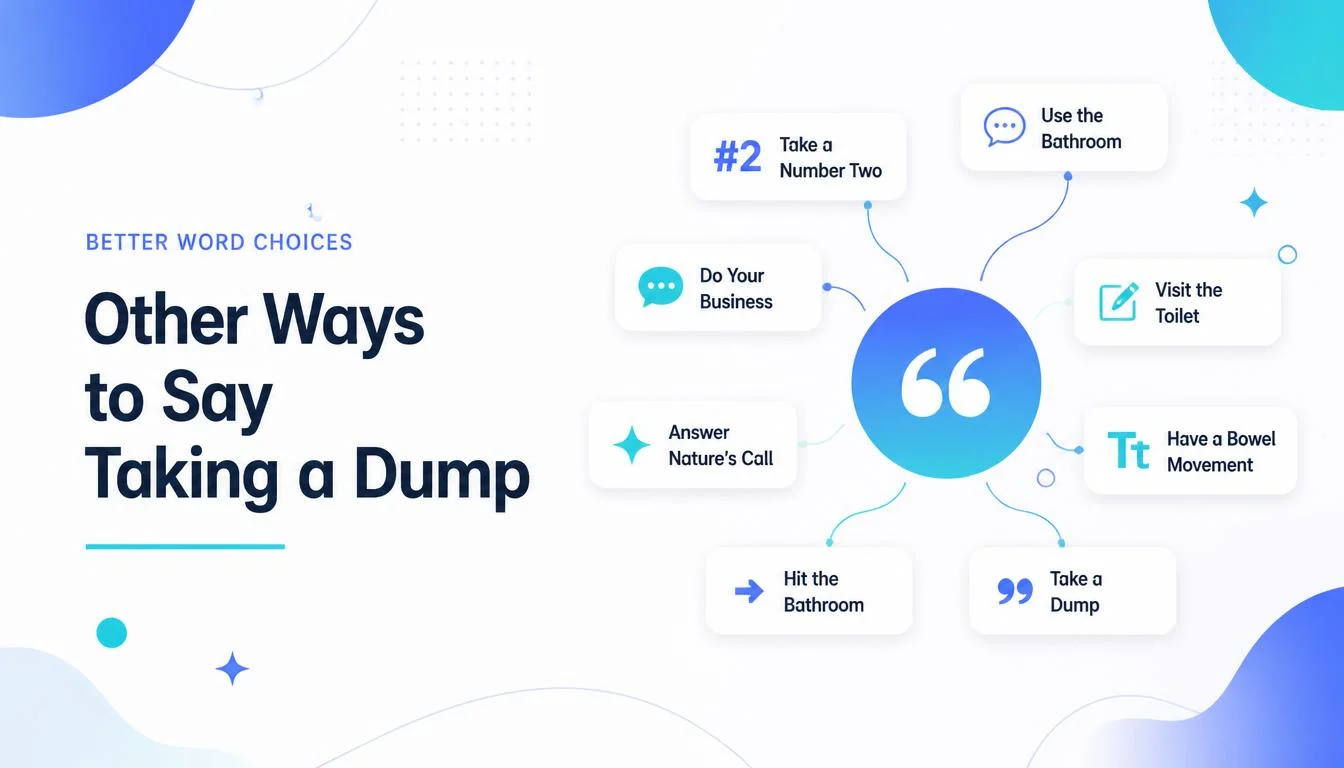
Other ways to say taking a dump include using the bathroom, having a bowel movement, going number two, pooping, and relieving yourself. Choose an expression based on your audience and the level of formality.
Learning other ways to say taking a dump can help you communicate more naturally in different social situations. While this phrase is common in casual conversations, it is informal and may sound crude or inappropriate in professional settings. Choosing a suitable alternative helps you express the same meaning more politely.
Whether you want a polite expression, a casual phrase, or a humorous alternative, there are plenty of options to explore. Expressions such as “using the bathroom,” “going number two,” and “having a bowel movement” suit different contexts, helping you speak comfortably with friends, family, coworkers, or healthcare professionals.
The right word choice can instantly change how confident you sound.
What Is “Taking a Dump”? (Meaning, Grammar & Real Use)
Imagine you are at work when a colleague asks where you are going. Saying “I’m going to take a dump” might make friends laugh, but it could sound unnecessarily crude in a meeting. Knowing how to express the same idea in different ways helps you communicate comfortably without embarrassing yourself or others.
The phrase taking a dump is an informal expression for passing stool. It is common in casual conversation, comedy, and conversations among friends, but it is generally unsuitable for formal or professional situations. More neutral alternatives include using the bathroom and having a bowel movement.
Learning alternatives to this phrase helps English learners understand informal expressions in English and recognize when everyday slang is appropriate. Just as you choose different words to express excitement in English, you should adapt bathroom-related vocabulary to your audience and setting.
Definition: Taking a dump means passing stool, usually expressed in a blunt or humorous way.
Grammar note: The phrase uses the verb take with the noun dump. It is an informal idiom, typically used in the continuous form, as in “I’m taking a dump.”
Example: “Excuse me, I need to use the restroom.”
People use these expressions in spoken English, informal messages, jokes, and health-related discussions. In professional writing, neutral or medically accurate terms are usually preferable.
When Should You Use These Alternatives?
Choosing the right expression depends on the setting, your relationship with the listener, and how much detail you need to communicate.
Common contexts
- At work: Say “I need to use the restroom” or “I’ll be back shortly.
- At home: “I need to use the bathroom” is natural and straightforward.
- With friends: “I’m going to take a poop” or “I need to go number two” may sound casual.
- At a doctor’s appointment: “I’m having a bowel movement” is more precise.
- When speaking to children: “Go potty” or “do a number two” may be suitable, depending on the child’s age.
- In comedy or informal storytelling: “Taking a dump” can communicate bluntness or humor.
Spoken vs. written English
Spoken English: Everyday expressions such as “going to the bathroom” and “number two” are widely understood. Cruder expressions may be acceptable among close friends.
Written English: Use neutral wording in emails, workplace messages, educational materials, and formal documents. Medical writing may require more precise terminology.
Formal vs. informal English
Formal English favors clarity, discretion, and accuracy. Informal English allows humor, slang, and direct expressions when the audience is comfortable with them.
For example, “I need to use the restroom” is suitable for most workplace settings, while “I’m going to take a dump” is better reserved for informal conversations with people who appreciate that style.
Is It Professional or Just Polite?
The phrase taking a dump is understandable, but its blunt, informal tone makes it a poor choice for most professional situations.
Politeness vs. professionalism
- Politeness: Choosing considerate language that respects other people’s comfort.
- Professionalism: Communicating clearly and appropriately for the workplace or business setting.
Business-style example: “Excuse me for a moment. I’ll be right back.”
- Polite? ✔️ Yes, when used appropriately.
- Professional? ❌ No, the original phrase is generally too crude for workplace communication.
For more guidance on choosing appropriate workplace expressions, see the Professional English Communication Guide.
Pros and Cons of Using “Taking a Dump”
The phrase has a clear meaning in informal conversation, but its tone can limit where you can use it.
Pros
- Easy to understand: Most native English speakers recognize the expression.
- Direct: It communicates the intended meaning without much explanation.
- Humorous: It can create a comic effect among friends.
- Common in informal speech: It appears in casual conversations, jokes, and entertainment.
Cons
- Too crude for work: It may sound disrespectful or immature in professional settings.
- Potentially offensive: Some listeners may find it unpleasant or inappropriate.
- Limited formality: It does not suit most professional emails or formal writing.
- Unnecessary bluntness: A more discreet expression often communicates the same need more comfortably.
Common Mistakes People Make
Learning the differences between these expressions can help you avoid awkward wording and communicate more naturally.
1. Using crude slang at work
❌ “I’m taking a dump. Don’t bother me.”
✔️ “I need to use the restroom. I’ll be back shortly.”
2. Confusing urination with passing stool
❌ “I need to have a bowel movement” when you specifically mean that you need to urinate.
✔️ “I need to urinate” when referring specifically to passing urine.
3. Using medical terminology in casual conversation unnecessarily
❌ “I need to defecate immediately” when casually talking to a friend.
✔️ “I need to use the bathroom.”
4. Assuming every bathroom expression has the same meaning
❌ “I’m going to the bathroom” always means passing stool.
✔️ “I’m going to the bathroom” can refer to urination, passing stool, or simply using the facilities.
5. Using childish expressions in formal writing
❌ “The patient did a number two” in a clinical report.
✔️ “The patient had a bowel movement.”
Small tone mistakes can make confident English sound careless.
Alternatives by Category
These examples preview some of the most useful expressions from the full list below.
Formal alternatives to “taking a dump”
- Having a bowel movement
- Defecating
- Passing stool
Pro Tip: Choose precise medical terminology when discussing symptoms, digestive health, or clinical observations.
Casual alternatives
- Using the bathroom
- Going to the toilet
- Taking a poop
Pro Tip: Use neutral bathroom expressions when you do not know how comfortable the listener is with direct language.
Professional alternatives
- Using the restroom
- Needing the facilities
- Having a bowel movement
Pro Tip: In workplace conversations, a brief and discreet explanation is usually enough.
Informal expressions
- Taking a dump
- Doing a number two
- Dropping a deuce
Pro Tip: Reserve slang for casual conversations where humor and direct language are welcome.
“Formal and informal English aren’t about correctness. They’re about context.”
Other Ways to Say Taking a Dump: 30 Alternatives With Examples
These 30 alternatives help you discuss bathroom needs with greater confidence. Some are polite and discreet, while others are casual, humorous, or medically precise.
1. Phrase: Using the Bathroom
Meaning: Using bathroom facilities.
Explanation: A common, polite expression that does not specify the reason.
Example Sentence: “Excuse me, I’m using the bathroom.
Best Use: Everyday conversation
Worst Use: Medical precision
Tone: Neutral, polite
Context Variability: casual / professional / spoken
2. Phrase: Having a Bowel Movement
Meaning: Passing stool.
Explanation: A medically appropriate, neutral expression often used in healthcare.
Example Sentence: “The nurse asked whether I had a bowel movement today.”
Best Use: Medical discussions
Worst Use: Casual joking
Tone: Neutral, clinical
Context Variability: professional / medical / spoken
3. Phrase: Going to the Toilet
Meaning: Using the toilet.
Explanation: A common expression in British English and many other varieties of English.
Example Sentence: “I’ll be back after going to the toilet.”
Best Use: Everyday conversation
Worst Use: Formal reports
Tone: Neutral, direct
Context Variability: casual / professional / spoken
4. Phrase: Using the Restroom
Meaning: Using bathroom facilities.
Explanation: A polite expression particularly common in American English.
Example Sentence: “Could you tell me where the restroom is?”
Best Use: Workplace settings
Worst Use: Medical diagnosis
Tone: Polite, neutral
Context Variability: casual / professional / spoken
5. Phrase: Taking a Poop
Meaning: Passing stool.
Explanation: A casual expression often used with friends or children.
Example Sentence: “The toddler needs to take a poop.”
Best Use: Family conversations
Worst Use: Business meetings
Tone: Casual, informal
Context Variability: casual / family / spoken
6. Phrase: Having a Number Two
Meaning: Passing stool.
Explanation: A discreet, familiar expression used with children and adults.
Example Sentence: “My son needs to do a number two.”
Best Use: Family conversations
Worst Use: Clinical reports
Tone: Gentle, informal
Context Variability: casual / family / spoken
7. Phrase: Defecating
Meaning: Expelling stool from the body.
Explanation: A precise term commonly used in medical and scientific contexts.
Example Sentence: “The medication may cause difficulty defecating.”
Best Use: Medical writing
Worst Use: Casual banter
Tone: Clinical, formal
Context Variability: professional / medical / written
8. Phrase: Passing Stool
Meaning: Releasing stool from the body.
Explanation: A neutral, medically useful expression that is clear without being crude.
Example Sentence: “The patient reported pain when passing stool.”
Best Use: Health discussions
Worst Use: Casual jokes
Tone: Neutral, clinical
Context Variability: professional / medical / spoken
9. Phrase: Going Number Two
Meaning: Passing stool.
Explanation: A common euphemism that makes the subject less direct.
Example Sentence: “She told the babysitter she needed to go number two.”
Best Use: Family conversations
Worst Use: Technical reports
Tone: Gentle, informal
Context Variability: casual / family / spoken
10. Phrase: Taking a Dump
Meaning: Passing stool.
Explanation: A blunt slang expression used mainly in casual speech.
Example Sentence: “He joked that he was taking a dump.”
Best Use: Casual humor
Worst Use: Formal meetings
Tone: Crude, informal
Context Variability: casual / spoken / humorous
11. Phrase: Answering Nature’s Call
Meaning: Going to the bathroom.
Explanation: A traditional euphemism that avoids specifying the bodily function.
Example Sentence: “Excuse me while I answer nature’s call.”
Best Use: Light conversation
Worst Use: Medical records
Tone: Polite, old-fashioned
Context Variability: casual / literary / spoken
12. Phrase: Visiting the Bathroom
Meaning: Going to the bathroom.
Explanation: A discreet phrase that can refer to any use of bathroom facilities.
Example Sentence: “I’ll be visiting the bathroom before we leave.”
Best Use: Polite conversation
Worst Use: Clinical precision
Tone: Neutral, courteous
Context Variability: casual / professional / spoken
13. Phrase: Using the Facilities
Meaning: Using a restroom or toilet.
Explanation: A discreet expression suitable for public and professional environments.
Example Sentence: “Please excuse me while I use the facilities.”
Best Use: Professional settings
Worst Use: Casual comedy
Tone: Formal, discreet
Context Variability: professional / public / spoken
14. Phrase: Going to the Loo
Meaning: Going to the toilet.
Explanation: A familiar British English expression that is informal and widely understood in the UK.
Example Sentence: “I’ll just pop to the loo.”
Best Use: British conversation
Worst Use: Formal reports
Tone: Casual, friendly
Context Variability: casual / spoken / regional
15. Phrase: Taking a Leak
Meaning: Urinating.
Explanation: Informal slang for passing urine, not stool. It is included as a useful contrast to prevent confusion.
Example Sentence: “He stopped to take a leak.”
Best Use: Casual speech
Worst Use: Formal writing
Tone: Informal, blunt
Context Variability: casual / spoken / humorous
16. Phrase: Dropping a Deuce
Meaning: Passing stool.
Explanation: American slang, generally used humorously or casually.
Example Sentence: “He said he needed to drop a deuce.”
Best Use: Informal humor
Worst Use: Workplace emails
Tone: Slang, humorous
Context Variability: casual / spoken / humorous
17. Phrase: Doing a Number Two
Meaning: Passing stool.
Explanation: A gentle expression commonly used with children and in family conversations.
Example Sentence: “The child told his teacher he needed to do a number two.”
Best Use: Family conversations
Worst Use: Medical documentation
Tone: Gentle, informal
Context Variability: casual / family / spoken
18. Phrase: Going for a Poop
Meaning: Going to pass stool.
Explanation: An informal phrase that directly describes the intended action without the harsher tone of some slang.
Example Sentence: “The dog went outside for a poop.”
Best Use: Casual conversation
Worst Use: Formal business
Tone: Informal, direct
Context Variability: casual / spoken / family
19. Phrase: Relieving Myself
Meaning: Using the toilet to relieve bodily needs.
Explanation: A discreet expression that does not specify whether someone needs to urinate or pass stool.
Example Sentence: “Excuse me, I need to relieve myself.”
Best Use: Polite conversation
Worst Use: Detailed diagnosis
Tone: Polite, discreet
Context Variability: casual / professional / spoken
20. Phrase: Taking Care of Business
Meaning: Handling a personal task, sometimes using the toilet.
Explanation: A vague, humorous expression whose meaning depends heavily on context.
Example Sentence: “I’ll be a few minutes while I take care of business.”
Best Use: Casual humor
Worst Use: Medical reporting
Tone: Humorous, indirect
Context Variability: casual / spoken / humorous
21. Phrase: Doing My Business
Meaning: Attending to bodily needs.
Explanation: An informal expression often associated with pets or children, although adults sometimes use it humorously.
Example Sentence: “The puppy went outside to do its business.”
Best Use: Pet conversations
Worst Use: Formal reports
Tone: Casual, indirect
Context Variability: casual / family / spoken
22. Phrase: Having a Bowel Evacuation
Meaning: Emptying the bowels.
Explanation: A technical expression sometimes used in healthcare, although bowel movement is more natural in many situations.
Example Sentence: “The treatment helped the patient have a bowel evacuation.”
Best Use: Clinical discussions
Worst Use: Casual chat
Tone: Technical, formal
Context Variability: professional / medical / written
23. Phrase: Emptying My Bowels
Meaning: Releasing stool from the bowels.
Explanation: A direct but medically oriented expression used when discussing digestive function.
Example Sentence: “The patient experienced difficulty emptying their bowels.”
Best Use: Health discussions
Worst Use: Light conversation
Tone: Clinical, direct
Context Variability: professional / medical / spoken
24. Phrase: Going to the Bathroom for a While
Meaning: Taking time to use the bathroom.
Explanation: A discreet everyday phrase that avoids explaining the exact reason.
Example Sentence: “I’ll be going to the bathroom for a while.”
Best Use: Casual situations
Worst Use: Clinical notes
Tone: Neutral, discreet
Context Variability: casual / professional / spoken
25. Phrase: Spending Time on the Toilet
Meaning: Sitting on the toilet for some time.
Explanation: A literal expression that may imply passing stool but does not guarantee that this is happening.
Example Sentence: “He spends too much time on the toilet reading.”
Best Use: Everyday conversation
Worst Use: Medical diagnosis
Tone: Neutral, descriptive
Context Variability: casual / spoken / written
26. Phrase: Having a Toilet Break
Meaning: Taking a break to use the toilet.
Explanation: A practical phrase focused on taking a break rather than specifying the bodily function.
Example Sentence: “Let’s take a short toilet break before continuing.”
Best Use: Group activities
Worst Use: Clinical documentation
Tone: Neutral, practical
Context Variability: casual / professional / spoken
27. Phrase: Going to the Bathroom to Poop
Meaning: Using the bathroom to pass stool.
Explanation: A clear, conversational expression that is more specific than simply saying you need the bathroom.
Example Sentence: “The child said he was going to the bathroom to poop.”
Best Use: Family conversations
Worst Use: Formal meetings
Tone: Casual, direct
Context Variability: casual / family / spoken
28. Phrase: Passing a Bowel Movement
Meaning: Expelling stool.
Explanation: An understandable health-related expression, although having a bowel movement is generally more idiomatic.
Example Sentence: “The nurse asked whether the patient was passing bowel movements regularly.”
Best Use: Health discussions
Worst Use: Casual banter
Tone: Clinical, neutral
Context Variability: professional / medical / spoken
29. Phrase: Taking a Bathroom Break
Meaning: Pausing an activity to use the bathroom.
Explanation: A common, polite expression that does not reveal whether someone needs to urinate or pass stool.
Example Sentence: “Let’s take a bathroom break before the next session.”
Best Use: Workplace settings
Worst Use: Medical precision
Tone: Polite, practical
Context Variability: casual / professional / spoken
30. Phrase: Attending to Personal Needs
Meaning: Taking care of private bodily needs.
Explanation: A broad, formal expression useful when discretion matters and the specific activity is irrelevant.
Example Sentence: “The participant may leave the room to attend to personal needs.”
Best Use: Formal settings
Worst Use: Casual storytelling
Tone: Formal, discreet
Context Variability: professional / public / written
Comparison Table: Top 10 Alternatives at a Glance
| Phrase | Tone | Best Use |
|---|---|---|
| Using the bathroom | Neutral, polite | Everyday conversation |
| Having a bowel movement | Clinical, neutral | Medical discussions |
| Going to the toilet | Neutral, direct | Everyday speech |
| Using the restroom | Polite, neutral | Workplace settings |
| Taking a poop | Casual, informal | Family conversations |
| Having a number two | Gentle, informal | Conversations with children |
| Defecating | Clinical, formal | Medical writing |
| Passing stool | Neutral, clinical | Health discussions |
| Answering nature’s call | Polite, old-fashioned | Light conversation |
| Relieving myself | Discreet, polite | Public settings |
Quick Self-Check: Mini Quiz
Test your understanding of tone, meaning, and context.
Question 1
You are at a business meeting and need to leave briefly. Which expression is best?
- A. I’m taking a dump.
- B. I need to use the restroom.
- C. I’m dropping a deuce.
Question 2
A doctor asks about a patient’s digestive health. Which term is most appropriate?
- A. Having a bowel movement.
- B. Taking a poop.
- C. Taking care of business.
Question 3
Which expression specifically means urinating rather than passing stool?
- A. Passing stool.
- B. Having a number two.
- C. Taking a leak.
Question 4
Which expression is a discreet way to refer to attending to bodily needs without specifying the activity?
- A. Dropping a deuce.
- B. Attending to personal needs.
- C. Taking a dump.
Question 1A. I’m taking a dump.B. I need to use the restroom.C. I’m dropping a deuce.
Question 2A. Having a bowel movement.B. Taking a poop.C. Taking care of business.
Question 3A. Passing stool.B. Having a number two.C. Taking a leak.
Question 4A. Dropping a deuce.B. Attending to personal needs.C. Taking a dump.
Check answersReset quiz
FAQs
1. What are other ways to say taking a dump politely?
You can say “using the bathroom,” “using the restroom,” or “relieving myself.” These expressions are more discreet and appropriate for most everyday and workplace situations.
2. What is the formal term for taking a dump?
Defecating, passing stool, and having a bowel movement are common alternatives. The best choice depends on whether you are speaking casually, discussing health, or writing a clinical report.
3. Is taking a dump considered slang?
Yes. It is an informal, blunt expression for passing stool. It is generally acceptable in casual conversations with friends but may sound crude in professional or formal settings.
4. What is the difference between taking a dump and having a bowel movement?
Both refer to passing stool, but taking a dump is slang, while having a bowel movement is neutral and medically appropriate.
5. What is a funny way to say taking a dump?
Expressions such as “dropping a deuce” and “taking care of business” can sound humorous in informal conversations. Use them only when the audience is comfortable with that tone.
Conclusion
Learning different ways to express bathroom needs helps you speak more naturally and confidently. A phrase such as “using the restroom” works well in professional situations, while expressions such as “taking a poop” and “dropping a deuce” are better suited to casual conversations. For health-related discussions, precise language is often the clearest option.
Practice these expressions by matching them to realistic situations, from workplace conversations to informal chats with friends. Understanding the difference between polite language, clinical vocabulary, and slang will help you choose words that suit your audience.
Read More Related Articles:
- Other Ways to Say Thanks for Letting Me Know | Leave a Better Impression In 2026
- Other Ways to Say Thank You for Your Business | Customers Truly Appreciate In 2026
- Other Ways to Say “I Hope You’re Doing Well” | People Actually Enjoy Reading In 2026

Daniel Murphy is a professional writer and blogger specializing in digital communication and messaging trends. As a contributor to TextsResponse.com, he creates reader-focused content designed to help people find the right words at the right time.