Quick Answer
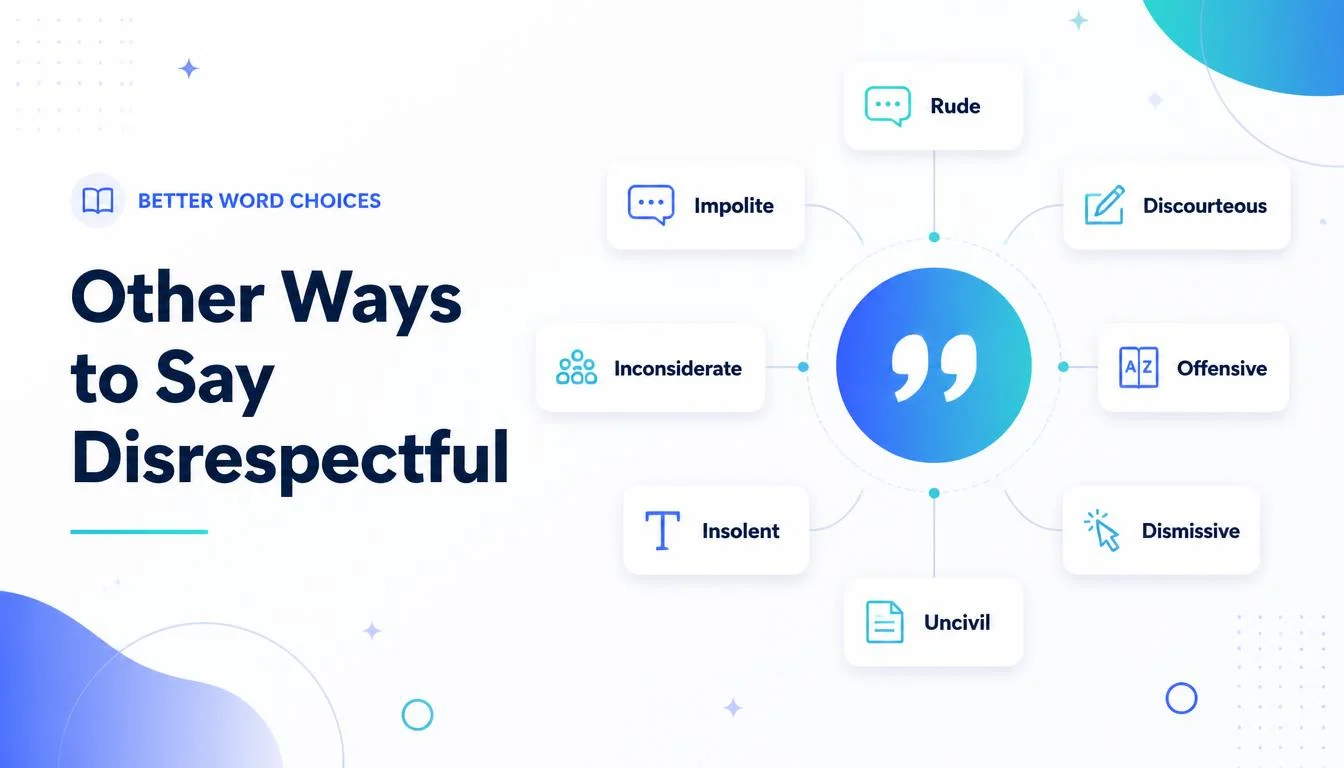
Other ways to say disrespectful include rude, impolite, discourteous, insolent, offensive, and disregarding.
Finding the right other ways to say disrespectful can help you express criticism more accurately without sounding unnecessarily harsh. Different situations call for different words, from polite workplace feedback to casual conversations.
Learning other ways to say disrespectful also helps you describe behavior, tone, or communication more precisely. Whether you need a formal synonym or a softer alternative, the right phrase can make your message clearer and more effective.
What Is “Other Ways to Say Disrespectful”? Meaning, Grammar & Real Use
Imagine a coworker interrupting you repeatedly during a meeting, a student speaking rudely to a teacher, or someone making an inappropriate comment about another person’s boundaries. In each situation, you may want to describe the behavior as disrespectful, but repeating the same word can make your English sound limited. Learning alternatives to “disrespectful” gives you more control over tone and meaning.
For English learners, word choice matters because not every synonym carries the same level of seriousness. “Rude” is common in everyday conversation, while “discourteous” sounds more formal. “Offensive” focuses more on causing hurt or insult, while “inconsiderate” emphasizes a lack of thought for other people.
These distinctions are useful when you need to express criticism politely, describe behavior accurately, or use professional reaction phrases. They also support broader communication skills, including how to express excitement in English when the emotional context changes.
Definition
“Disrespectful” describes behavior, language, or actions that show a lack of respect for another person, group, rule, or authority.
Grammar Note
“Disrespectful” is an adjective. It can describe a person’s behavior, words, attitude, or actions and is commonly used in both spoken and written English.
Example:
“His comments were disrespectful toward the staff.”
Where and Why It Is Used
The word appears in everyday conversations, workplace discussions, school settings, complaints, reviews, and formal descriptions of inappropriate conduct.
Depending on the context, a stronger or softer alternative may communicate your meaning more precisely.
When Should You Use “Disrespectful”?
The word is useful when you need to identify behavior that crosses a social, personal, or professional boundary.
Common Contexts
- Describing rude behavior toward another person
- Discussing inappropriate workplace conduct
- Explaining why someone’s comments were offensive
- Addressing poor manners or inappropriate attitudes
- Describing behavior toward teachers, parents, managers, or authority figures
- Talking about someone who ignores another person’s feelings or boundaries
Spoken vs Written
In spoken English, “rude,” “impolite,” and “disrespectful” are natural and easy to understand.
In written communication, especially formal writing, words such as “discourteous,” “inconsiderate,” or “inappropriate” can sound more precise.
Formal vs Informal
Use direct terms such as “rude” or “disrespectful” in everyday conversation.
For professional or formal situations, consider more measured language such as “discourteous,” “inappropriate,” or “unprofessional.”
Is It Professional or Just Polite?
“Disrespectful” is not inherently unprofessional, but it can sound confrontational when used to criticize someone directly.
Professional communication often focuses on the behavior rather than attacking the person’s character.
Business example:
“Some of the comments made during the meeting were inappropriate and did not support a respectful discussion.”
Verdict
Polite? ✔️ Yes, when used carefully and objectively.
Professional? ✔️ Yes, when describing behavior rather than personally attacking someone.
For workplace communication, context and phrasing matter more than the word itself. A statement such as “That behavior was disrespectful” is more professional than “You are a disrespectful person.”
Pros and Cons of Using “Disrespectful”
Pros
- Clear meaning: Most English speakers immediately understand it.
- Useful across contexts: It works in personal, educational, and workplace situations.
- Direct communication: It clearly identifies a lack of respect.
- Emotionally flexible: It can describe anything from mild rudeness to serious misconduct.
Cons
- Can sound confrontational: Directly labeling behavior may make someone defensive.
- May lack precision: It does not always explain exactly what was wrong.
- Can feel judgmental: Describing a person rather than their behavior can sound personal.
- Sometimes too broad: A more specific word may better describe the situation.
Common Mistakes People Make
1. Confusing “disrespectful” with “disrespected”
❌ “I was disrespectful by his comment.”
✔️ “I was disrespected by his comment.”
“Disrespectful” describes the person or behavior causing the lack of respect. “Disrespected” describes the person receiving it.
2. Using “disrespectful” when “rude” is more natural
❌ “The waiter was disrespectful when he forgot my order.”
✔️ “The waiter was rude when he ignored my order.”
Not every unpleasant interaction involves a meaningful lack of respect.
3. Describing a person instead of specific behavior
❌ “You are disrespectful.”
✔️ “Interrupting people while they are speaking is disrespectful.”
The second sentence focuses on conduct rather than attacking someone’s character.
4. Using “offensive” for every rude action
❌ “She was offensive because she interrupted me.”
✔️ “She was rude because she interrupted me.”
“Offensive” usually suggests that something caused insult, hurt, or strong discomfort.
5. Using highly formal words in casual conversations
❌ “Your behavior was discourteous” in a relaxed conversation with a close friend.
✔️ “That was pretty rude.”
Formal vocabulary is not automatically better. The right choice depends on the relationship and situation.
Small tone mistakes can make confident English sound careless.
Alternatives by Category
Formal alternatives to “disrespectful”
- Discourteous
- Inconsiderate
- Improper
- Offensive
Pro Tip: Use formal alternatives when writing complaints, reports, academic responses, or carefully worded professional messages.
Casual alternatives
- Rude
- Impolite
- Mean
- Thoughtless
Pro Tip: In everyday conversations, choose words your listener can understand immediately instead of forcing formal vocabulary.
Professional alternatives
- Unprofessional
- Inappropriate
- Discourteous
- Insensitive
Pro Tip: At work, describe the behavior and its effect instead of making a personal judgment about someone’s character.
Informal expressions
- Out of line
- Crossing the line
- Not showing respect
- Acting badly
Pro Tip: Informal expressions in English work best when speaking with friends, family, or colleagues in relaxed situations.
“Formal and informal English aren’t about correctness. They’re about context.”
Other Ways to Say “Disrespectful”: Full List with Examples
These 30 alternatives build vocabulary and help you describe negative behavior with greater precision. Choose each phrase according to tone, relationship, and context.
1. Phrase: Rude
Meaning: Lacking good manners.
Explanation: A common everyday alternative.
Example Sentence: “His response was rude.”
Best Use: Daily conversation
Worst Use: Formal reports
Tone: Direct, casual
Context Variability: casual / spoken
2. Phrase: Impolite
Meaning: Not showing good manners.
Explanation: A polite way to criticize poor behavior.
Example Sentence: “It was impolite to interrupt her.”
Best Use: Social situations
Worst Use: Severe misconduct
Tone: Mild, formal
Context Variability: casual / professional / spoken
3. Phrase: Discourteous
Meaning: Showing poor manners.
Explanation: A more formal alternative to rude.
Example Sentence: “His response was discourteous.”
Best Use: Formal communication
Worst Use: Friendly chats
Tone: Formal, restrained
Context Variability: professional / spoken
4. Phrase: Inconsiderate
Meaning: Not thinking about others’ feelings.
Explanation: Highlights a lack of thoughtfulness.
Example Sentence: “Leaving without telling us was inconsiderate.”
Best Use: Personal behavior
Worst Use: Direct insults
Tone: Calm, critical
Context Variability: casual / professional / spoken
5. Phrase: Offensive
Meaning: Causing insult or hurt.
Explanation: Stronger than simply being rude.
Example Sentence: “The comment was offensive.”
Best Use: Hurtful remarks
Worst Use: Minor mistakes
Tone: Strong, serious
Context Variability: professional / spoken
6. Phrase: Insensitive
Meaning: Failing to consider feelings.
Explanation: Useful for comments lacking emotional awareness.
Example Sentence: “That remark was insensitive.”
Best Use: Sensitive topics
Worst Use: Minor delays
Tone: Serious, measured
Context Variability: professional / spoken
7. Phrase: Inappropriate
Meaning: Not suitable for the situation.
Explanation: Focuses on suitability rather than personal character.
Example Sentence: “That comment was inappropriate.”
Best Use: Workplace situations
Worst Use: Friendly teasing
Tone: Professional, neutral
Context Variability: professional / spoken
8. Phrase: Unprofessional
Meaning: Not meeting workplace standards.
Explanation: Specifically useful for professional conduct.
Example Sentence: “His behavior was unprofessional.”
Best Use: Workplace feedback
Worst Use: Family disputes
Tone: Formal, direct
Context Variability: professional / spoken
9. Phrase: Thoughtless
Meaning: Showing little consideration.
Explanation: Describes behavior that may hurt others unintentionally.
Example Sentence: “That was a thoughtless thing to say.”
Best Use: Personal criticism
Worst Use: Serious abuse
Tone: Mild, critical
Context Variability: casual / spoken
10. Phrase: Mean
Meaning: Unkind or hurtful.
Explanation: Simple and common, especially in informal speech.
Example Sentence: “That was mean of him.”
Best Use: Casual conversation
Worst Use: Business reports
Tone: Informal, direct
Context Variability: casual / spoken
11. Phrase: Insulting
Meaning: Showing or expressing an insult.
Explanation: Focuses specifically on words or actions that demean someone.
Example Sentence: “Her comment was insulting.”
Best Use: Hurtful comments
Worst Use: Minor mistakes
Tone: Strong, direct
Context Variability: casual / professional / spoken
12. Phrase: Disparaging
Meaning: Expressing criticism or belittlement.
Explanation: A formal word for language that puts someone down.
Example Sentence: “He made disparaging remarks about his colleague.”
Best Use: Formal writing
Worst Use: Casual chats
Tone: Formal, serious
Context Variability: professional / written
13. Phrase: Condescending
Meaning: Treating someone as less intelligent or important.
Explanation: Useful when someone’s attitude feels superior.
Example Sentence: “Her condescending tone upset the team.”
Best Use: Workplace behavior
Worst Use: Simple disagreement
Tone: Critical, precise
Context Variability: professional / spoken
14. Phrase: Patronizing
Meaning: Acting as though someone is inferior.
Explanation: Describes an attitude of artificial superiority.
Example Sentence: “His patronizing response annoyed the customer.”
Best Use: Social criticism
Worst Use: Minor errors
Tone: Strong, critical
Context Variability: professional / spoken
15. Phrase: Dismissive
Meaning: Showing that something is unimportant.
Explanation: Useful when someone ignores another person’s ideas or concerns.
Example Sentence: “Her dismissive response ended the discussion.”
Best Use: Workplace discussions
Worst Use: Friendly mistakes
Tone: Formal, measured
Context Variability: professional / spoken
16. Phrase: Abrasive
Meaning: Harsh or unpleasant in manner.
Explanation: Describes communication that feels rough or difficult.
Example Sentence: “His abrasive manner made collaboration difficult.”
Best Use: Workplace feedback
Worst Use: Minor disagreement
Tone: Professional, critical
Context Variability: professional / written
17. Phrase: Uncivil
Meaning: Lacking courtesy or politeness.
Explanation: Formal and useful for describing hostile communication.
Example Sentence: “The discussion became uncivil.”
Best Use: Formal discussion
Worst Use: Casual teasing
Tone: Formal, serious
Context Variability: professional / written
18. Phrase: Discourteous
Meaning: Showing poor courtesy.
Explanation: A refined choice for formal criticism.
Example Sentence: “The customer’s response was discourteous.”
Best Use: Formal complaints
Worst Use: Friendly conversation
Tone: Formal, restrained
Context Variability: professional / written
19. Phrase: Inconsiderate
Meaning: Failing to consider others.
Explanation: Best when someone’s actions inconvenience or upset others.
Example Sentence: “It was inconsiderate to cancel without notice.”
Best Use: Social behavior
Worst Use: Serious insults
Tone: Mild, critical
Context Variability: casual / professional / spoken
20. Phrase: Insulting
Meaning: Offensive or disrespectful toward someone.
Explanation: Strongly emphasizes the insulting effect of words or behavior.
Example Sentence: “His response sounded insulting.”
Best Use: Personal remarks
Worst Use: Accidental errors
Tone: Direct, strong
Context Variability: casual / professional / spoken
21. Phrase: Out of line
Meaning: Beyond acceptable behavior.
Explanation: An informal expression for behavior that crosses a boundary.
Example Sentence: “That comment was completely out of line.”
Best Use: Everyday criticism
Worst Use: Academic writing
Tone: Informal, direct
Context Variability: casual / spoken
22. Phrase: Crossing the line
Meaning: Going beyond an acceptable boundary.
Explanation: Highlights a serious social or personal limit.
Example Sentence: “Making that joke was crossing the line.”
Best Use: Personal boundaries
Worst Use: Formal reports
Tone: Informal, strong
Context Variability: casual / spoken
23. Phrase: Not showing respect
Meaning: Failing to behave respectfully.
Explanation: A clear phrase that directly explains the issue.
Example Sentence: “You’re not showing respect for the team.”
Best Use: Direct feedback
Worst Use: Formal reports
Tone: Clear, direct
Context Variability: casual / professional / spoken
24. Phrase: Disrespectful in tone
Meaning: Sounding lacking in respect.
Explanation: Focuses specifically on how someone’s words sound.
Example Sentence: “Your response was disrespectful in tone.”
Best Use: Communication feedback
Worst Use: Friendly joking
Tone: Professional, measured
Context Variability: professional / spoken
25. Phrase: Showing poor manners
Meaning: Behaving without proper courtesy.
Explanation: A softer way to identify rude behavior.
Example Sentence: “Interrupting others shows poor manners.”
Best Use: Teaching manners
Worst Use: Serious misconduct
Tone: Mild, educational
Context Variability: casual / spoken
26. Phrase: Acting badly
Meaning: Behaving in an unacceptable way.
Explanation: Simple and informal, especially with children or friends.
Example Sentence: “He was acting badly during the meeting.”
Best Use: Casual feedback
Worst Use: Formal complaints
Tone: Informal, mild
Context Variability: casual / spoken
27. Phrase: Hostile
Meaning: Unfriendly or aggressive.
Explanation: Stronger than rude and often linked to aggression.
Example Sentence: “His tone became hostile.”
Best Use: Serious conflict
Worst Use: Minor rudeness
Tone: Strong, serious
Context Variability: professional / spoken
28. Phrase: Belligerent
Meaning: Aggressively confrontational.
Explanation: A strong formal word for openly hostile behavior.
Example Sentence: “The customer became belligerent.”
Best Use: Serious incidents
Worst Use: Minor disagreement
Tone: Formal, strong
Context Variability: professional / written
29. Phrase: Degrading
Meaning: Causing someone to feel humiliated or less worthy.
Explanation: Strong language for behavior that lowers someone’s dignity.
Example Sentence: “The remarks were degrading and unnecessary.”
Best Use: Serious criticism
Worst Use: Minor rudeness
Tone: Strong, serious
Context Variability: professional / written
30. Phrase: Deferentially lacking
Meaning: Failing to show expected respect.
Explanation: This phrase is highly formal and uncommon, so clearer alternatives are usually preferable.
Example Sentence: “His manner was lacking in deference.”
Best Use: Formal analysis
Worst Use: Casual speech
Tone: Very formal
Context Variability: professional / written
Comparison Table: Top 10 Alternatives at a Glance
| Phrase | Tone | Best Use |
|---|---|---|
| Rude | Casual, direct | Everyday conversation |
| Impolite | Mild, polite | Social situations |
| Discourteous | Formal, restrained | Professional writing |
| Inconsiderate | Mild, critical | Personal behavior |
| Offensive | Strong, serious | Hurtful remarks |
| Inappropriate | Neutral, professional | Workplace communication |
| Unprofessional | Formal, direct | Workplace conduct |
| Insensitive | Serious, measured | Sensitive topics |
| Out of line | Informal, strong | Everyday criticism |
| Dismissive | Formal, measured | Workplace discussions |
Quick Self-Check
1. Your colleague interrupts you repeatedly during a meeting. Which phrase is most appropriate?
A. Sweet
B. Inappropriate
C. Delicious
D. Exciting
Answer: B. Inappropriate
2. A friend makes a mildly rude comment. Which option sounds most natural?
A. Rude
B. Belligerent
C. Degrading
D. Uncivilized
Answer: A. Rude
3. You are writing a formal complaint about poor customer service. Which word fits best?
A. Mean
B. Discourteous
C. Bad
D. Silly
Answer: B. Discourteous
4. Someone makes a joke that seriously insults another person. Which word is strongest?
A. Thoughtful
B. Inconsiderate
C. Offensive
D. Friendly
Answer: C. Offensive
FAQs
What is a professional way to say someone is disrespectful?
“Inappropriate,” “unprofessional,” “discourteous,” and “dismissive” can sound more measured in workplace communication.
What is the best synonym for disrespectful?
“Rude” is the most common everyday synonym, while “discourteous” is more formal and “inappropriate” is often useful in professional settings.
Is “rude” stronger than “disrespectful”?
Not necessarily. “Rude” usually focuses on poor manners, while “disrespectful” can suggest a broader failure to show respect.
How can I politely describe disrespectful behavior?
Focus on the specific action instead of attacking the person. For example, say, “That comment was inappropriate” rather than labeling someone personally.
What are some formal alternatives to disrespectful?
Useful formal choices include “discourteous,” “inappropriate,” “insensitive,” “dismissive,” “unprofessional,” and “disparaging.”
conclusion
Choosing the right alternative can make your English more precise, natural, and professional. Words such as “rude,” “impolite,” and “out of line” work well in everyday situations, while “discourteous,” “inappropriate,” and “unprofessional” are often better for workplace communication.
Building a wider vocabulary also helps you adjust your tone instead of relying on one word repeatedly. Practice choosing alternatives based on the relationship, setting, seriousness, and intended effect.
Read More Related Articles:
- Other Ways to Say You’re Beautiful | Beyond the Ordinary Compliment In 2026
- Other Ways to Say I Love You in Spanish | Beyond the Usual Phrase In 2026
- Other Ways to Say I Love You in Other Languages | Beyond the Classic Three Words In 2026

Daniel Murphy is a professional writer and blogger specializing in digital communication and messaging trends. As a contributor to TextsResponse.com, he creates reader-focused content designed to help people find the right words at the right time.