Quick Answer
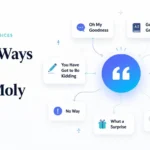
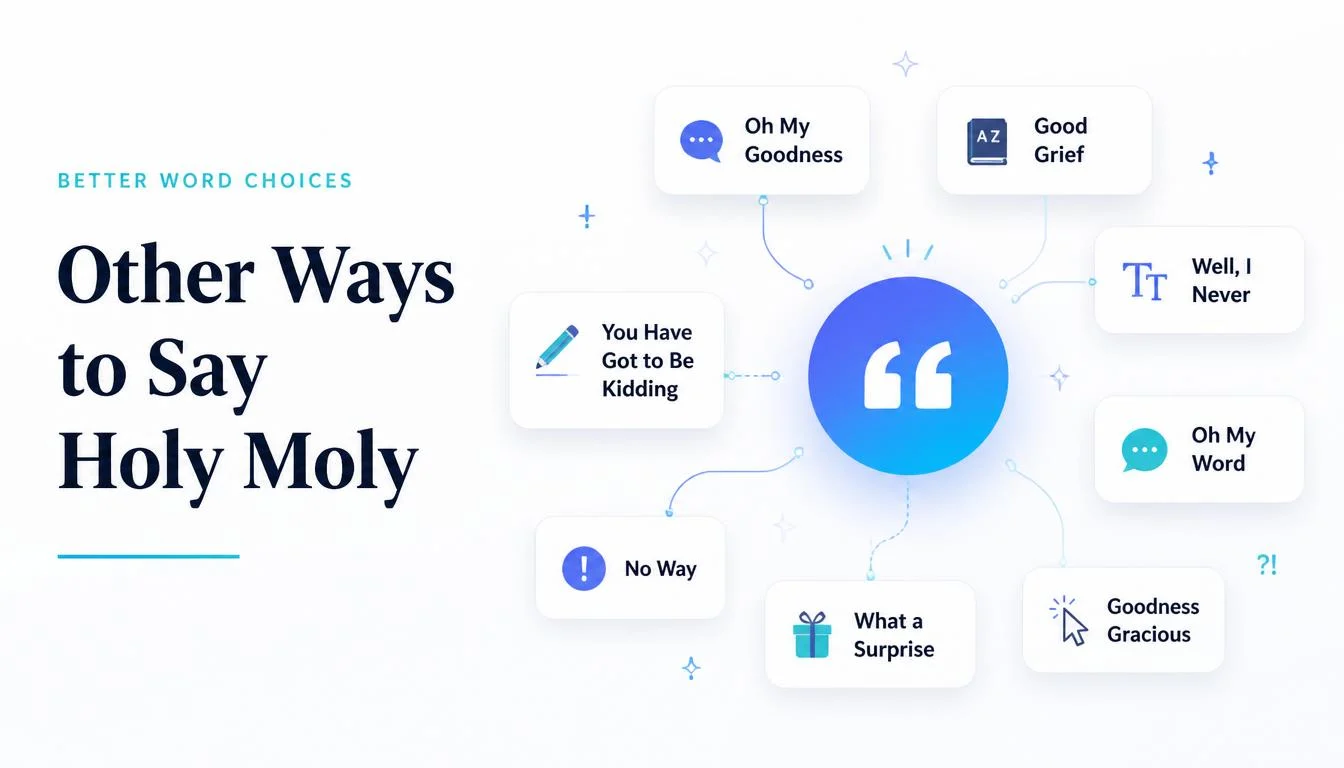
Other ways to say holy moly include “Oh my goodness,” “Good grief,” “Wow,” “Holy cow,” and “No way!” These expressions help you show surprise, excitement, or disbelief naturally.
Learning other ways to say holy moly can make your everyday English more expressive and engaging. Whether you are chatting with friends, reacting to unexpected news, or sharing an exciting moment, choosing the right expression helps you communicate your feelings naturally.
The phrase “holy moly” is an informal expression used to show surprise, amazement, or disbelief. Exploring alternatives such as “Oh my gosh,” “Are you kidding me?” and “Well, I’ll be!” can expand your vocabulary and help you respond confidently in different situations.
What Is “Holy Moly”? (Meaning, Grammar & Real Use)
Imagine receiving unexpected good news, seeing an incredible performance, or discovering that your favorite product costs twice as much as you expected. You might instinctively say, “Holy moly!” This familiar expression communicates surprise, excitement, or disbelief without requiring a long explanation.
Holy moly is an informal exclamation used in everyday English. It can express amazement at something impressive, shock at unexpected news, or disbelief when something seems extraordinary. Its playful sound makes it especially popular in friendly conversations, entertainment, and casual online communication.
Learning alternatives to holy moly helps you adjust your reaction to different audiences. You might choose “Oh my goodness” around colleagues, “That’s incredible!” when praising an achievement, or “Unbelievable!” when reacting to unexpected news.
These expressions also help English learners express excitement in English without repeating the same phrase. Understanding their emotional differences makes your conversations more natural and gives you greater control over your tone.
Meaning: Holy moly is an informal exclamation expressing surprise, amazement, excitement, or disbelief.
Grammar: It functions as an interjection. It usually stands alone or appears at the beginning of a sentence.
Example: “Holy moly! You finished the entire project in one afternoon!”
People primarily use it in spoken English, casual messages, entertainment, and informal writing. Although it is generally harmless, a more neutral expression may be better suited to formal reports, business presentations, and academic writing.
When Should You Use “Holy Moly”?
The expression works best when you want to react quickly and emotionally to something unexpected.
Common situations
- Unexpected news: Reacting to surprising information from a friend.
- Impressive achievements: Showing amazement at someone’s skills or success.
- Unexpected prices: Expressing surprise at an expensive purchase.
- Exciting experiences: Responding to a spectacular performance or beautiful view.
- Funny situations: Adding playful emphasis to an amusing discovery.
- Online conversations: Responding to surprising photographs, videos, or messages.
Spoken vs. Written English
In spoken English, holy moly sounds spontaneous and expressive. Your facial expression and voice help communicate whether you feel excited, shocked, or amused.
In written English, it works well in text messages, social media posts, informal blogs, and dialogue. In professional emails, research papers, and official documents, choose a more precise alternative.
Formal vs. Informal Communication
- Formal: “That is remarkable,” “This is extraordinary,” or “What an impressive achievement.”
- Informal: “Holy cow!” “No way!” or “Oh my goodness!”
- Neutral: “That’s surprising!” or “I didn’t expect that!”
Choose the expression according to your relationship with the listener, the situation, and the strength of your reaction.
Is It Professional or Just Polite?
Holy moly is generally friendly and harmless, but it is not a standard professional reaction phrase. It can sound playful, overly casual, or insufficiently measured in a serious workplace discussion.
Politeness means communicating respectfully. Professionalism also involves selecting language that fits the audience, purpose, and workplace environment. An informal phrase can be polite without being appropriate for every business situation.
Business-style example:
“That’s an impressive result. Your team exceeded its original target by a significant margin.”
This response conveys genuine surprise and appreciation without sounding overly casual.
- Polite? ✔️ Yes
- Professional? ❌ Not usually
In a relaxed team meeting, holy moly might be acceptable. For a client presentation or formal email, use a more measured expression.
Pros and Cons of Using “Holy Moly”
Pros
- Easy to understand: Most English speakers recognize it as an expression of surprise.
- Friendly tone: It makes everyday conversations sound lively and approachable.
- Memorable expression: Its playful sound helps communicate an immediate reaction.
- Versatile meaning: It can express excitement, amazement, and mild disbelief.
Cons
- Too informal for some settings: It may sound inappropriate in official communication.
- Can become repetitive: Using it for every surprise limits your vocabulary.
- Limited emotional precision: It does not always communicate whether you feel impressed, worried, or disappointed.
- Unsuitable for formal writing: Academic and business documents usually require more precise language.
The best approach is to keep the phrase available for casual conversations while learning alternatives for different audiences and emotional situations.
Common Mistakes People Make
English learners sometimes use expressions of surprise without considering their tone or grammatical structure. Avoid these five common mistakes.
1. Using an informal expression in a formal presentation
Incorrect: “Holy moly, our quarterly revenue increased!”
Correct: “Our quarterly revenue increased remarkably.”
2. Confusing surprise with admiration
Incorrect: “Holy moly, your presentation was excellent!” when aiming for a polished professional tone.
Correct: “Your presentation was outstanding.”
3. Overusing the same expression
Incorrect: “Holy moly!” in response to every message throughout a conversation.
Correct: Alternate between “That’s incredible,” “Really?” and “I didn’t expect that.”
4. Choosing an expression that sounds too dramatic
Incorrect: “Good grief!” when congratulating a colleague on a routine accomplishment, if the phrase suggests frustration.
Correct: “Well done! That’s a great result.”
5. Forgetting punctuation
Incorrect: “Holy moly you won the competition”
Correct: “Holy moly! You won the competition!”
Use an exclamation mark when the reaction is strong. A comma or period may be more suitable when the expression is part of a longer sentence or the tone is restrained.
Small tone mistakes can make confident English sound careless.
Alternatives by Category
The following preview introduces useful alternatives for different audiences. Each phrase also appears in the complete list below.
Formal alternatives to “Holy Moly”
- That’s remarkable!
- Extraordinary!
- That’s astonishing!
- What an impressive achievement!
Pro Tip: In formal settings, describe what impressed you instead of relying on a general exclamation.
Casual alternatives
- Oh my goodness!
- Wow!
- Holy cow!
- Unbelievable!
Pro Tip: Use your voice and the surrounding sentence to make your reaction sound sincere rather than exaggerated.
Professional alternatives
- That’s impressive!
- Remarkable results!
- That’s extraordinary!
- I didn’t expect that!
Pro Tip: Connect your reaction to a specific achievement, result, or piece of information.
Informal expressions
- No way!
- Good grief!
- You’ve got to be kidding me!
- What on earth?
Pro Tip: Consider whether the expression communicates excitement, disbelief, or frustration before using it with someone you do not know well.
“Formal and informal English aren’t about correctness. They’re about context.”
Other Ways to Say “Holy Moly” (Full List with Examples)
These 30 alternatives help you build fluency and express excitement, admiration, or approval according to the situation. Some communicate pleasant surprise, while others suggest disbelief or concern.
1. Phrase: Oh My Goodness!
Meaning: Surprise or amazement.
Explanation: A friendly, widely understood expression.
Example Sentence: “Oh my goodness! This view is beautiful!”
Best Use: Everyday conversations
Worst Use: Formal reports
Tone: Warm and surprised
Context Variability: casual / spoken / informal writing
2. Phrase: Wow!
Meaning: Strong surprise or admiration.
Explanation: A short, versatile reaction to something impressive or unexpected.
Example Sentence: “Wow! You completed the assignment already.”
Best Use: General reactions
Worst Use: Detailed reports
Tone: Excited and neutral
Context Variability: casual / professional / spoken
3. Phrase: Holy Cow!
Meaning: Surprise or disbelief.
Explanation: A playful alternative that closely matches the informal tone of holy moly.
Example Sentence: “Holy cow! That’s a huge improvement.”
Best Use: Friendly conversations
Worst Use: Formal presentations
Tone: Playful and surprised
Context Variability: casual / spoken / informal writing
4. Phrase: Unbelievable!
Meaning: Difficult to believe.
Explanation: Expresses amazement at something extraordinary, whether positive or negative.
Example Sentence: “Unbelievable! They won the championship.”
Best Use: Major surprises
Worst Use: Routine updates
Tone: Intense and emphatic
Context Variability: casual / professional / spoken
5. Phrase: That’s Incredible!
Meaning: Extremely impressive or surprising.
Explanation: A positive expression that communicates admiration.
Example Sentence: “That’s incredible! Your design looks fantastic.”
Best Use: Praising achievements
Worst Use: Minor updates
Tone: Enthusiastic and positive
Context Variability: casual / professional / spoken
6. Phrase: Good Grief!
Meaning: Surprise, frustration, or disbelief.
Explanation: Depending on context, it can sound amused, exasperated, or mildly annoyed.
Example Sentence: “Good grief! How did we lose the file?”
Best Use: Mild frustration
Worst Use: Formal praise
Tone: Exasperated and expressive
Context Variability: casual / spoken / informal writing
7. Phrase: Oh My Gosh!
Meaning: Surprise or excitement.
Explanation: An informal, friendly exclamation suitable for many everyday situations.
Example Sentence: “Oh my gosh! You got the job!”
Best Use: Happy surprises
Worst Use: Official documents
Tone: Cheerful and informal
Context Variability: casual / spoken / informal writing
8. Phrase: That’s Astonishing!
Meaning: Extremely surprising.
Explanation: A polished alternative for events or facts that exceed expectations.
Example Sentence: “That’s astonishing! The experiment produced such clear results.”
Best Use: Unexpected discoveries
Worst Use: Casual greetings
Tone: Formal and impressed
Context Variability: professional / spoken / formal writing
9. Phrase: No Way!
Meaning: Disbelief or astonishment.
Explanation: A conversational expression used when something seems difficult to believe.
Example Sentence: “No way! You’re moving to another country?”
Best Use: Friendly reactions
Worst Use: Official correspondence
Tone: Informal and surprised
Context Variability: casual / spoken / informal writing
10. Phrase: You’ve Got to Be Kidding Me!
Meaning: Strong disbelief.
Explanation: Suggests that information seems impossible, unexpected, or frustrating.
Example Sentence: “You’ve got to be kidding me! The event was canceled again.”
Best Use: Unexpected setbacks
Worst Use: Client meetings
Tone: Emotional and emphatic
Context Variability: casual / spoken / informal writing
11. Phrase: That’s Remarkable!
Meaning: Worthy of attention or admiration.
Explanation: A polished expression for unusual accomplishments or important discoveries.
Example Sentence: “That’s remarkable! Your research has clarified the issue.”
Best Use: Professional praise
Worst Use: Routine greetings
Tone: Respectful and impressed
Context Variability: professional / spoken / formal writing
12. Phrase: Extraordinary!
Meaning: Far beyond what is ordinary.
Explanation: Highlights something exceptional, impressive, or unusual.
Example Sentence: “Extraordinary! The team delivered ahead of schedule.”
Best Use: Exceptional achievements
Worst Use: Minor updates
Tone: Elevated and admiring
Context Variability: professional / spoken / formal writing
13. Phrase: What a Surprise!
Meaning: An unexpected event or discovery.
Explanation: Works for pleasant surprises and neutral unexpected developments.
Example Sentence: “What a surprise! I didn’t know you were visiting.”
Best Use: Unexpected visits
Worst Use: Predictable events
Tone: Friendly and neutral
Context Variability: casual / professional / spoken
14. Phrase: That’s Mind-Blowing!
Meaning: Extremely impressive or difficult to comprehend.
Explanation: A vivid informal expression for something that changes your expectations.
Example Sentence: “That’s mind-blowing! The technology can translate conversations instantly.”
Best Use: Amazing discoveries
Worst Use: Formal reports
Tone: Excited and emphatic
Context Variability: casual / spoken / informal writing
15. Phrase: Goodness Me!
Meaning: Surprise or amazement.
Explanation: A somewhat old-fashioned expression that remains recognizable in English.
Example Sentence: “Goodness me! You’ve grown so much.”
Best Use: Gentle surprise
Worst Use: Technical documents
Tone: Mild and expressive
Context Variability: casual / spoken / informal writing
16. Phrase: I Can’t Believe It!
Meaning: Difficulty accepting unexpected information.
Explanation: Communicates strong surprise, whether the news is positive or negative.
Example Sentence: “I can’t believe it! We actually won.”
Best Use: Emotional reactions
Worst Use: Routine updates
Tone: Personal and emphatic
Context Variability: casual / professional / spoken
17. Phrase: That’s Amazing!
Meaning: Extremely good or impressive.
Explanation: A positive alternative that communicates enthusiasm and approval.
Example Sentence: “That’s amazing! You learned the entire song.”
Best Use: Celebrating success
Worst Use: Negative news
Tone: Warm and enthusiastic
Context Variability: casual / professional / spoken
18. Phrase: What on Earth?
Meaning: Confusion or astonishment.
Explanation: Usually introduces a question when something seems strange or unexpected.
Example Sentence: “What on earth happened to the schedule?”
Best Use: Expressing confusion
Worst Use: Formal apologies
Tone: Curious and surprised
Context Variability: casual / spoken / informal writing
19. Phrase: Seriously?
Meaning: Doubt or surprise.
Explanation: A short question that asks whether surprising information is true.
Example Sentence: “Seriously? You’ve never visited the ocean?”
Best Use: Checking surprising news
Worst Use: Formal announcements
Tone: Direct and informal
Context Variability: casual / spoken / informal writing
20. Phrase: That’s Impressive!
Meaning: Deserving admiration.
Explanation: Recognizes skill, effort, quality, or achievement without sounding overly dramatic.
Example Sentence: “That’s impressive! You completed the report before the deadline.”
Best Use: Workplace recognition
Worst Use: Expressing disappointment
Tone: Professional and positive
Context Variability: casual / professional / spoken
21. Phrase: Astounding!
Meaning: Extremely surprising or impressive.
Explanation: A strong alternative suited to remarkable discoveries or exceptional results.
Example Sentence: “Astounding! The results exceeded every expectation.”
Best Use: Exceptional findings
Worst Use: Casual greetings
Tone: Strong and formal
Context Variability: professional / spoken / formal writing
22. Phrase: Well, I’ll Be!
Meaning: Surprise or disbelief.
Explanation: An idiomatic expression often used when something unexpected turns out to be true.
Example Sentence: “Well, I’ll be! You found the missing keys.”
Best Use: Unexpected discoveries
Worst Use: Formal correspondence
Tone: Folksy and surprised
Context Variability: casual / spoken / informal writing
23. Phrase: Fancy That!
Meaning: Mild surprise at something unexpected.
Explanation: A conversational expression, particularly familiar in British English.
Example Sentence: “Fancy that! We chose the same book.”
Best Use: Light surprises
Worst Use: Serious emergencies
Tone: Witty and understated
Context Variability: casual / spoken / informal writing
24. Phrase: How Amazing!
Meaning: Strong admiration or delight.
Explanation: Emphasizes how impressive or exciting something appears.
Example Sentence: “How amazing! Your garden is full of flowers.”
Best Use: Expressing admiration
Worst Use: Negative developments
Tone: Positive and expressive
Context Variability: casual / professional / spoken
25. Phrase: That’s Unexpected!
Meaning: Something happened differently from what was anticipated.
Explanation: A neutral alternative that acknowledges surprise without exaggeration.
Example Sentence: “That’s unexpected. We received approval earlier than planned.”
Best Use: Workplace updates
Worst Use: Celebratory speeches
Tone: Neutral and measured
Context Variability: professional / spoken / formal writing
26. Phrase: What a Revelation!
Meaning: A surprising discovery or realization.
Explanation: Highlights information that changes someone’s understanding of a subject.
Example Sentence: “What a revelation! The new evidence explains the entire problem.”
Best Use: Important discoveries
Worst Use: Ordinary events
Tone: Thoughtful and emphatic
Context Variability: professional / spoken / formal writing
27. Phrase: That’s Phenomenal!
Meaning: Exceptionally impressive.
Explanation: Communicates enthusiastic approval of outstanding performance or results.
Example Sentence: “That’s phenomenal! Your team doubled its productivity.”
Best Use: Celebrating achievements
Worst Use: Minor improvements
Tone: Enthusiastic and emphatic
Context Variability: casual / professional / spoken
28. Phrase: I’m Amazed!
Meaning: Feeling strong surprise or admiration.
Explanation: Focuses directly on your personal emotional response.
Example Sentence: “I’m amazed by how quickly you learned.”
Best Use: Personal reactions
Worst Use: Impersonal reports
Tone: Sincere and impressed
Context Variability: casual / professional / spoken
29. Phrase: This Is Incredible!
Meaning: Something is exceptionally impressive or surprising.
Explanation: Directly emphasizes the importance or quality of what you are experiencing.
Example Sentence: “This is incredible! The view stretches across the entire valley.”
Best Use: Impressive experiences
Worst Use: Routine paperwork
Tone: Enthusiastic and emphatic
Context Variability: casual / professional / spoken
30. Phrase: I Never Saw That Coming!
Meaning: Something happened unexpectedly.
Explanation: A natural expression for surprising developments, plot twists, or unanticipated outcomes.
Example Sentence: “I never saw that coming! They announced a second winner.”
Best Use: Unexpected outcomes
Worst Use: Formal reports
Tone: Conversational and surprised
Context Variability: casual / spoken / informal writing
Comparison Table: Top 10 Alternatives at a Glance
The following expressions offer a useful balance of everyday familiarity, emotional clarity, and versatility.
| Phrase | Tone | Best Use |
|---|---|---|
| Oh My Goodness! | Friendly | Everyday surprises |
| Wow! | Neutral, excited | General reactions |
| Holy Cow! | Playful | Casual conversations |
| Unbelievable! | Emphatic | Major surprises |
| That’s Incredible! | Enthusiastic | Praising achievements |
| That’s Remarkable! | Professional | Workplace praise |
| That’s Astonishing! | Formal | Unexpected discoveries |
| No Way! | Informal | Friendly disbelief |
| That’s Amazing! | Positive | Celebrating success |
| That’s Impressive! | Professional | Recognizing effort |
For additional positive reactions, explore Other Ways to Say “Amazing”.
Quick Self-Check (Mini Quiz)
Test your understanding of tone and context.
Question 1
You are presenting quarterly results to senior management. Which reaction is most appropriate?
A. Holy cow!
B. That’s an impressive result.
C. No way!
Correct answer: B. It communicates appreciation in a professional tone.
Question 2
Your friend tells you that she has won a major competition. What is a natural response?
A. Oh my goodness! Congratulations!
B. What on earth?
C. That’s unexpected, according to the data.
Correct answer: A. It communicates excitement and happiness.
Question 3
You hear an unbelievable plot twist in a movie. Which expression fits best?
A. Please accept my professional assessment.
B. I never saw that coming!
C. The result is noteworthy.
Correct answer: B. It sounds spontaneous and natural.
Question 4
A colleague shares a surprising but neutral project update. Which phrase is the most measured?
A. You’ve got to be kidding me!
B. Holy moly!
C. That’s unexpected.
Correct answer: C. It acknowledges surprise without an exaggerated reaction.
FAQs
1. What are the best alternatives to holy moly?
Some of the best alternatives are “Oh my goodness,” “Wow,” “Holy cow,” “Unbelievable,” and “That’s incredible.” The right choice depends on how surprised you feel and who is listening.
2. Is holy moly considered slang?
Holy moly is an informal exclamation rather than highly offensive slang. It is generally playful and harmless, making it suitable for many casual conversations.
3. What is a professional way to say holy moly?
Use expressions such as “That’s remarkable,” “That’s impressive,” or “That’s extraordinary.” These alternatives communicate surprise or admiration while maintaining a professional tone.
4. Can I use holy moly in formal writing?
It is usually better to avoid holy moly in academic papers, formal business reports, and official correspondence. Choose a precise phrase such as “This is an extraordinary result” instead.
5. How can I use alternatives to holy moly naturally?
Practice matching each expression to a real situation. Use “Wow” for general surprise, “That’s impressive” for professional praise, and “I can’t believe it” for personal disbelief.
Conclusion
Learning different ways to express surprise helps you communicate with greater confidence and precision. Instead of relying on one familiar exclamation, choose words that reflect your feelings, the situation, and your relationship with the listener.
Practice these alternatives in conversations, messages, and workplace discussions. Pay attention to how native speakers use emphasis, punctuation, and tone to distinguish excitement from disbelief or frustration. Over time, your vocabulary will become more flexible and natural.
Read More Related Articles:
- Other Ways to Say Circle Back | Improve Your Workplace Communication In 2026
- Other Ways to Say Welcome to the Team | Warm First Impression In 2026
- Other Ways to Say I Hope All Is Well | Make a Better First Impression In 2026

Victoria Hughes is a content writer dedicated to making communication clearer and more effective. Through TextsResponse.com, she shares practical insights and thoughtfully crafted response ideas that help readers express themselves with confidence.