Quick Answer
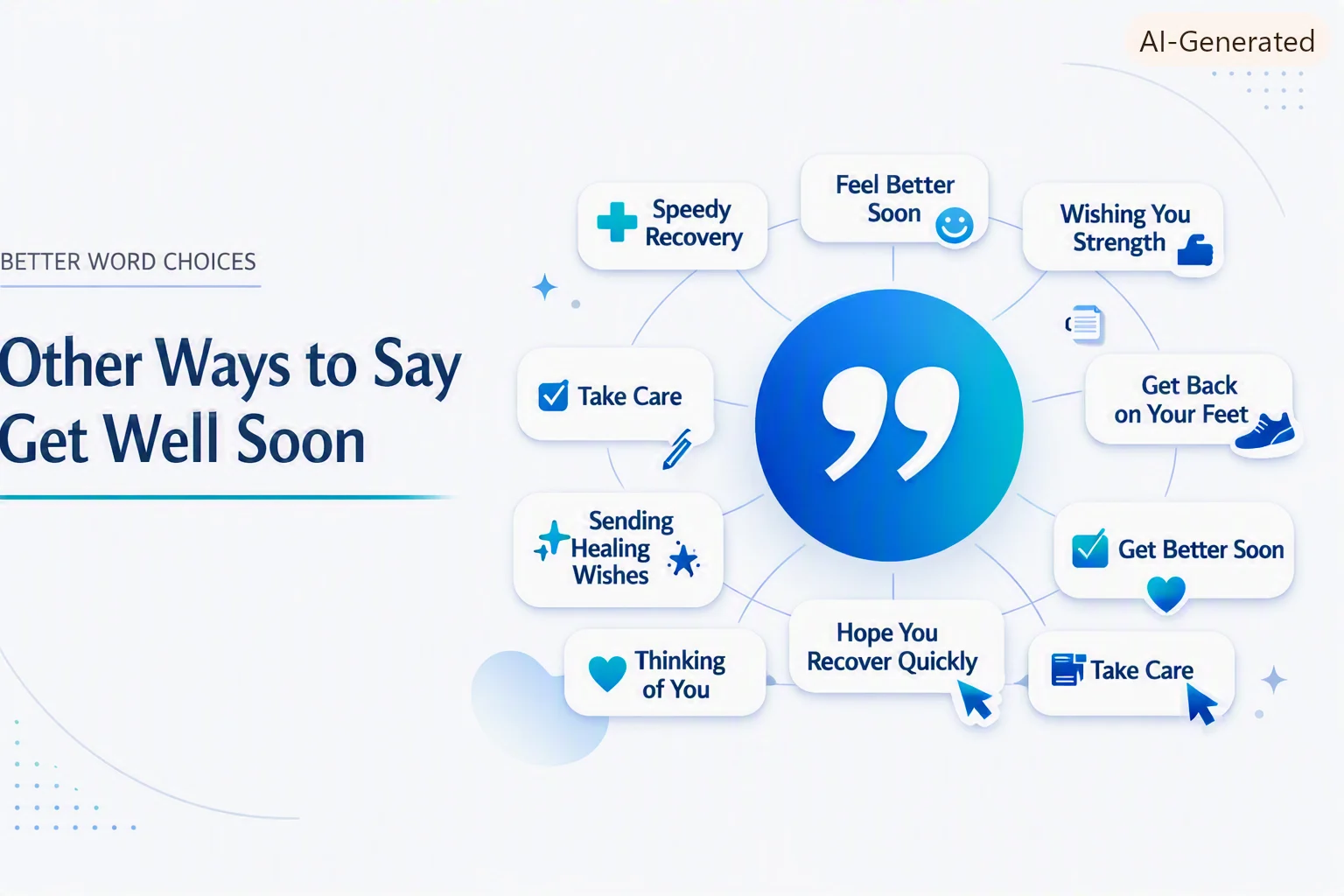
Looking for alternatives to “get well soon”?Try these five fluent, natural options right away: feel better soon, wishing you a speedy recovery, take care of yourself, hope you’re back on your feet soon, and sending healing thoughts your way. Each one works for different situations, from casual texts to professional emails.
Get well soon” is one of the most common phrases in English used to wish someone a fast recovery from illness or injury. People say it to friends, family, coworkers, and even acquaintances when someone is sick, hospitalized, recovering from surgery, or simply feeling unwell. It works well in cards, texts, emails, and casual conversation. So check the article Other Ways to Say Get Well Soon.
However, repeating the same phrase again and again can sound repetitive or impersonal, especially in professional settings. Learning alternatives to “get well soon” helps you sound more genuine, expressive, and emotionally intelligent. It also allows you to match your tone to the relationship and situation, whether that means writing a formal note to a colleague or a warm message to a close friend.
Knowing multiple ways to express care also helps you express excitement in English for someone’s eventual recovery, showing optimism and support rather than just a routine wish. This guide breaks down 30 alternatives by formality, tone, and context so you always choose the right words.
Quick Categories
Formal Alternatives to “Get Well Soon”
- Wishing you a speedy recovery
- I hope you feel better soon
- Sending you healing thoughts
- My thoughts are with you during your recovery
Pro Tip: Use formal alternatives in workplace emails, cards to supervisors, or messages to clients. They show respect while keeping emotional distance appropriate.
Casual Alternatives
- Feel better soon
- Hope you’re up and about again soon
- Rest up and heal fast
- Get better soon, buddy
Pro Tip: Casual phrases work best with close friends or family. Add the person’s name or a nickname to make the message feel more personal.
Professional Alternatives
- Wishing you a swift and full recovery
- Take all the time you need to recover
- Please rest and prioritize your health
- We hope to see you back at full strength soon
Pro Tip: In professional settings, pair the phrase with an offer of support, such as “Let us know if you need anything while you recover.”
Informal Expressions
- Hang in there, feel better!
- Hope you kick this bug soon
- Get well quick, we miss you!
- Hope you’re back on your feet soon
Pro Tip: Informal expressions work well in texts and social media comments, but avoid them in emails to managers or clients.
Small changes in wording can completely shift how warm or professional you sound.”
Common Mistakes
- Using overly casual phrases in formal emails. Example mistake: “Hope you kick this bug soon!” written to a company client.
- Repeating the exact same phrase in every message. Example mistake: Sending “get well soon” in five different cards to the same coworker.
- Forgetting to match tone to the relationship. Example mistake: Writing “sending healing thoughts your way” to a casual gym buddy when a simple “feel better soon” fits better.
- Overusing exclamation marks in professional messages. Example mistake: “Feel better soon!!! Miss you!!!” in a work email.
- Ignoring cultural or workplace sensitivity around illness. Example mistake: Adding jokes about the illness instead of a sincere wish, such as joking about a serious diagnosis.
What Does “Get Well Soon” Mean?
“Get well soon” is a short, common expression used to wish someone a quick recovery from sickness, injury, or a medical procedure. Grammatically, it functions as an imperative wish, shortened from a longer phrase like “I hope you get well soon.
Example Sentence: “I heard you had surgery last week. Get well soon!”
When to Use “Get Well Soon”
- When a friend or family member is sick or injured
- When a coworker is out on medical leave
- In greeting cards, texts, or social media messages
- Spoken casually in person or over a phone call
- Written informally in quick notes or messages
- Less common in highly formal business documents, where longer phrases are preferred
Is It Professional or Polite to Say “Get Well Soon”?
“Get well soon” is polite and widely understood, but it can sound slightly casual for very formal business communication, such as messages to senior executives or official company correspondence.
Business-style example: Instead of “Get well soon,” a professional email might say, “We wish you a speedy and full recovery, and please don’t hesitate to reach out if you need anything.
Polite? Yes Professional? No (in most formal business contexts)
Pros and Cons of Using “Get Well Soon”
Pros:
- Simple and natural
- Friendly tone
- Common usage
- Easy to understand
Cons:
- Too informal for work
- Overused
- Limited emotional range
- Not suitable for formal writing
“Fluency isn’t about knowing more words, it’s about knowing the right word for the moment.”
30 Other Ways to Say “Get Well Soon”
Whether you’re writing a heartfelt card, sending a supportive text, or responding to a coworker who’s unwell, choosing the right words can make your message feel more thoughtful and personal. Here are 30 excellent alternatives to “Get well soon,” organized by context and tone.
Formal Alternatives
1. Wishing You a Speedy Recovery
Meaning: A formal wish for someone to recover quickly.
Explanation: One of the most common alternatives to get well soon, especially in professional emails, greeting cards, and workplace messages.
Example Sentence: Wishing you a speedy recovery after your surgery.
Best Use: Business emails, greeting cards
Avoid Using: Casual text messages
Tone: Formal, warm
Context: Professional, written
2. Feel Better Soon
Meaning: A simple wish for someone to regain their health.
Explanation: A friendly and widely used expression that’s perfect for everyday conversations.
Example Sentence: Feel better soon—we miss seeing you at school!
Best Use: Friends, family, text messages
Avoid Using: Formal business correspondence
Tone: Casual, friendly
Context: Casual, spoken
3. Hope You’re Back on Your Feet Soon
Meaning: A wish for someone to recover and return to their normal routine.
Explanation: Usually refers to recovering from an injury or temporary illness.
Example Sentence: Hope you’re back on your feet soon after your accident.
Best Use: Minor injuries and short-term recovery
Avoid Using: Serious or long-term illnesses
Tone: Casual, encouraging
Context: Casual, spoken
4. Sending Healing Thoughts Your Way
Meaning: A heartfelt expression of emotional support during recovery.
Explanation: Commonly used in sympathy cards and messages to close friends or family.
Example Sentence: Sending healing thoughts your way during this difficult time.
Best Use: Greeting cards, personal messages
Avoid Using: Business emails
Tone: Warm, sincere
Context: Casual, written
5. Take Care of Yourself
Meaning: A gentle reminder to rest and prioritize your health.
Explanation: A versatile phrase suitable for both personal and professional conversations.
Example Sentence: Take care of yourself and get plenty of rest.
Best Use: Friends, coworkers
Avoid Using: Highly formal documents
Tone: Caring, supportive
Context: Casual, professional
6. Rest Up and Heal Fast
Meaning: An informal encouragement to rest so recovery comes quickly.
Explanation: Often used among close friends, teammates, or family members.
Example Sentence: Rest up and heal fast—the team can’t wait to have you back!
Best Use: Friends, teammates
Avoid Using: Formal writing
Tone: Casual, upbeat
Context: Casual, spoken
7. I Hope You Feel Better Soon
Meaning: A sincere wish for someone’s health to improve.
Explanation: Slightly more personal than simply saying feel better soon.
Example Sentence: I hope you feel better soon. Let me know if there’s anything I can do.
Best Use: Coworkers, acquaintances, friends
Avoid Using: Very informal chats where brevity is preferred
Tone: Sincere, polite
Context: Professional, spoken
8. Wishing You a Swift and Full Recovery
Meaning: A formal wish for complete healing.
Explanation: Frequently used in workplace announcements and professional messages.
Example Sentence: The entire team is wishing you a swift and full recovery.
Best Use: Workplace communication
Avoid Using: Casual text messages
Tone: Formal, respectful
Context: Professional, written
9. Hope You Kick This Bug Soon
Meaning: A casual wish for someone to recover from a minor illness.
Explanation: The word bug informally refers to illnesses like a cold or the flu.
Example Sentence: Hope you kick this bug soon—colds are no fun!
Best Use: Friends and family
Avoid Using: Serious illnesses
Tone: Playful, casual
Context: Casual, spoken
10. My Thoughts Are with You During Your Recovery
Meaning: A compassionate expression of support during recovery.
Explanation: Often used in serious or sensitive situations.
Example Sentence: My thoughts are with you during your recovery following surgery.
Best Use: Serious illness or surgery
Avoid Using: Minor illnesses
Tone: Formal, compassionate
Context: Professional, written
Professional Alternatives
11. Get Better Soon, Buddy
Meaning: A warm and friendly recovery wish.
Explanation: Adding buddy creates a close, personal tone.
Example Sentence: Get better soon, buddy—we all miss you.
Best Use: Close friends
Avoid Using: Professional communication
Tone: Friendly, casual
Context: Casual, spoken
12. Hang in There, Feel Better!
Meaning: An encouraging message that combines emotional support with a recovery wish.
Explanation: Suitable when someone is having a difficult time recovering.
Example Sentence: Hang in there, feel better! You’ve got this.
Best Use: Friends and family
Avoid Using: Formal writing
Tone: Encouraging, casual
Context: Casual, spoken
13. Please Rest and Prioritize Your Health
Meaning: A professional reminder to focus on recovery.
Explanation: Commonly used by managers, HR teams, and coworkers.
Example Sentence: Please rest and prioritize your health. Work can wait.
Best Use: Workplace communication
Avoid Using: Casual texting
Tone: Professional, caring
Context: Professional, written
14. We Hope to See You Back at Full Strength Soon
Meaning: A supportive wish for both recovery and a successful return.
Explanation: Frequently used in company-wide messages and team communications.
Example Sentence: We hope to see you back at full strength soon, but take all the time you need.
Best Use: Workplace teams
Avoid Using: Personal conversations
Tone: Formal, supportive
Context: Professional, written
15. Take All the Time You Need to Recover
Meaning: A reassuring message that encourages a stress-free recovery.
Explanation: Lets the person know there is no pressure to return before they’re ready.
Example Sentence: Take all the time you need to recover—we’ll be here when you’re ready.
Best Use: Managers and coworkers
Avoid Using: Quick text messages
Tone: Reassuring, professional
Context: Professional, written
16. Get Well Quick—We Miss You!
Meaning: A friendly message expressing both concern and appreciation.
Explanation: Combines encouragement with letting someone know they’re missed.
Example Sentence: Get well quick—we miss having you around the office!
Best Use: Friends, coworkers
Avoid Using: Formal emails
Tone: Warm, casual
Context: Casual, spoken
17. Praying for Your Quick Recovery
Meaning: A recovery wish that includes spiritual support.
Explanation: Appropriate when you know the recipient would appreciate a faith-based message.
Example Sentence: Praying for your quick recovery. Stay strong.
Best Use: Religious communities
Avoid Using: Secular or unknown audiences
Tone: Sincere, spiritual
Context: Casual, written
18. Wishing You Strength and Healing
Meaning: A heartfelt wish for emotional and physical recovery.
Explanation: Especially appropriate for long recoveries or serious health challenges.
Example Sentence: Wishing you strength and healing during this difficult time.
Best Use: Serious illness, recovery cards
Avoid Using: Minor colds
Tone: Sincere, compassionate
Context: Casual, written
19. Hope You’re Feeling Stronger Every Day
Meaning: Acknowledges gradual progress toward recovery.
Explanation: Ideal for someone recovering over several weeks or months.
Example Sentence: Hope you’re feeling stronger every day since your surgery.
Best Use: Long-term recovery
Avoid Using: Short-term illnesses
Tone: Encouraging, warm
Context: Casual, written
20. Sending You Positive Energy for a Fast Recovery
Meaning: A supportive wish focused on encouragement and optimism.
Explanation: Popular in personal messages and social media posts.
Example Sentence: Sending you positive energy for a fast recovery. You’re in our thoughts.
Best Use: Cards, social media
Avoid Using: Formal business communication
Tone: Warm, uplifting
Context: Casual, written
Every kind word has the power to brighten someone’s recovery journey.
Casual Alternatives
21. I Hope You’re on the Mend
Meaning: A polite way of saying you hope someone is recovering.
Explanation: On the mend is a traditional English expression meaning someone’s health is improving.
Example Sentence: I hope you’re on the mend after your flu.
Best Use: Polite conversations
Avoid Using: Very casual texting
Tone: Gentle, polite
Context: Professional, spoken
22. Take It Easy and Heal Well
Meaning: A caring reminder to slow down and recover properly.
Explanation: Encourages someone not to rush back into normal activities.
Example Sentence: Take it easy and heal well. There’s no need to rush.
Best Use: Friends, coworkers
Avoid Using: Formal documents
Tone: Caring, relaxed
Context: Casual, spoken
23. Get Well and Come Back Stronger
Meaning: A motivational recovery message.
Explanation: Frequently used in sports, fitness, and team environments.
Example Sentence: Get well and come back stronger—we’re cheering for you!
Best Use: Sports teams, active lifestyles
Avoid Using: Serious medical situations
Tone: Motivational, upbeat
Context: Casual, spoken
24. Hope This Note Brings a Little Comfort as You Recover
Meaning: A gentle message often included in sympathy or get-well cards.
Explanation: Expresses emotional support rather than simply wishing a quick recovery.
Example Sentence: Hope this note brings a little comfort as you recover.
Best Use: Cards, handwritten letters
Avoid Using: Quick text messages
Tone: Gentle, thoughtful
Context: Written, professional
25. Wishing You Comfort and a Fast Recovery
Meaning: A thoughtful wish for both emotional comfort and physical healing.
Explanation: Suitable for workplace cards and thoughtful messages.
Example Sentence: Wishing you comfort and a fast recovery from everyone on the team.
Best Use: Workplace cards
Avoid Using: Casual conversations
Tone: Warm, balanced
Context: Professional, written
26. Hope You Shake This Off Soon
Meaning: A casual wish to recover from a minor illness.
Explanation: Shake off means to quickly overcome something unpleasant.
Example Sentence: Hope you shake this off soon—it’s probably just a cold.
Best Use: Minor illnesses
Avoid Using: Serious health conditions
Tone: Casual, lighthearted
Context: Casual, spoken
27. Sending Get Well Wishes Your Way
Meaning: A friendly alternative to get well soon.
Explanation: Works equally well in greeting cards, texts, and social media messages.
Example Sentence: Sending get well wishes your way. Feel better soon!
Best Use: Cards, text messages
Avoid Using: Formal reports
Tone: Warm, friendly
Context: Casual, written
28. I Hope Your Recovery Is Quick and Smooth
Meaning: A thoughtful wish for an easy recovery.
Explanation: Appropriate for both coworkers and acquaintances.
Example Sentence: I hope your recovery is quick and smooth. Take good care of yourself.
Best Use: Coworkers, semi-formal communication
Avoid Using: Very casual chats
Tone: Polite, thoughtful
Context: Professional, written
29. Stay Strong—You’ll Be Better in No Time
Meaning: An encouraging message filled with optimism.
Explanation: Offers reassurance and confidence that recovery is near.
Example Sentence: Stay strong—you’ll be better in no time. We’re all rooting for you.
Best Use: Friends and family
Avoid Using: Formal emails
Tone: Motivational, warm
Context: Casual, spoken
30. Here’s to a Quick and Healthy Recovery
Meaning: A hopeful wish for complete healing.
Explanation: Sounds warm and celebratory, making it ideal for cards and supportive messages.
Example Sentence: Here’s to a quick and healthy recovery. Wishing you brighter days ahead!
Best Use: Greeting cards, personal messages
Avoid Using: Formal business correspondence
Tone: Warm, uplifting
Context: Casual, spoken
Every alternative you learn adds another layer of confidence to your English.
Quick Quiz
1. Which phrase is best for a formal email to a colleague on medical leave?
A) Hope you kick this bug soon
B) Wishing you a speedy recovery
C) Get better soon, buddy
D) Rest up and heal fast
Answer: B) Wishing you a speedy recovery
Explanation: This phrase is professional, respectful, and commonly used in workplace emails and formal get-well messages.
2. Which phrase fits a casual text to a close friend recovering from a cold?
A) My thoughts are with you during your recovery
B) We hope to see you back at full strength soon
C) Feel better soon
D) Please rest and prioritize your health
Answer: C) Feel better soon
Explanation: It’s warm, friendly, and natural for everyday conversations with friends or family recovering from a minor illness.
3. True or False: “Get well soon” is considered highly formal business language.
Answer: False
Explanation: “Get well soon” is a kind and widely accepted expression, but it isn’t considered highly formal. In professional business communication, phrases like “Wishing you a speedy recovery” or “Wishing you a swift and full recovery” are generally more appropriate.
4. Which phrase works best in a handwritten card for someone recovering from major surgery?
A) Hope you shake this off soon
B) Wishing you comfort and a fast recovery
C) Get well quick, we miss you!
D) Hang in there, feel better!
Answer: B) Wishing you comfort and a fast recovery
Explanation: This phrase conveys warmth, compassion, and genuine support, making it especially suitable for a thoughtful handwritten card after major surgery.
Comparison Table: Top Alternatives
| Phrase | Tone | Best Use |
|---|---|---|
| Wishing you a speedy recovery | Formal | Emails, cards |
| Feel better soon | Casual | Texts, friends |
| Hope you’re back on your feet soon | Casual | Injuries, friends |
| Sending healing thoughts your way | Warm | Cards, close friends |
| Take care of yourself | Neutral | Coworkers, friends |
| Wishing you a swift and full recovery | Formal | Business emails |
| Please rest and prioritize your health | Professional | Workplace, managers |
| We hope to see you back at full strength soon | Formal | Workplace teams |
| Hope you’re on the mend | Polite | Polite conversation |
| Here’s to a quick and healthy recovery | Celebratory | Gatherings, cards |
FAQs
Q1: What is a more professional way to say “get well soon”?
“Wishing you a speedy and full recovery” or “please rest and prioritize your health” are more professional alternatives suited for workplace communication.
Q2: What can I say to a friend instead of “get well soon”?
Casual friends respond well to phrases like “feel better soon” or “rest up and heal fast,” which sound warm and natural.
Q3: Is “get well soon” appropriate for a work email?
Yes, but it can sound slightly casual. For formal emails, alternatives like “wishing you a speedy recovery” are often preferred.
Q4: How do I express excitement about someone’s recovery in English?
Phrases like “we hope to see you back at full strength soon” combine well wishes with positive anticipation for their return.
Q5: What is a formal alternative to “get well soon” for a serious illness?
My thoughts are with you during your recovery” or “wishing you strength and healing” are respectful choices for serious situations.
Conclusion
Learning multiple ways to say “get well soon” helps you communicate care and support with more precision and warmth. Instead of relying on one repeated phrase, you can now choose expressions that match the tone, formality, and relationship in each situation, whether it’s a quick text to a friend or a formal email to a colleague.
Practice using these alternatives daily in real conversations, texts, and emails. Paying attention to tone will not only improve your fluency but also help your English sound more natural, thoughtful, and professional in every context.
Read More Related Articles:
- Other Ways to Say “This Shows That” | Express Your Ideas with Confidence In 2026
- Other Ways to Say “Which” in English | Beyond the Common Choices In 2026
- Other Ways to Say Also in an Essay | Make Your Writing Shine In 2026

Daniel Murphy is a professional writer and blogger specializing in digital communication and messaging trends. As a contributor to TextsResponse.com, he creates reader-focused content designed to help people find the right words at the right time.