Quick Answer:
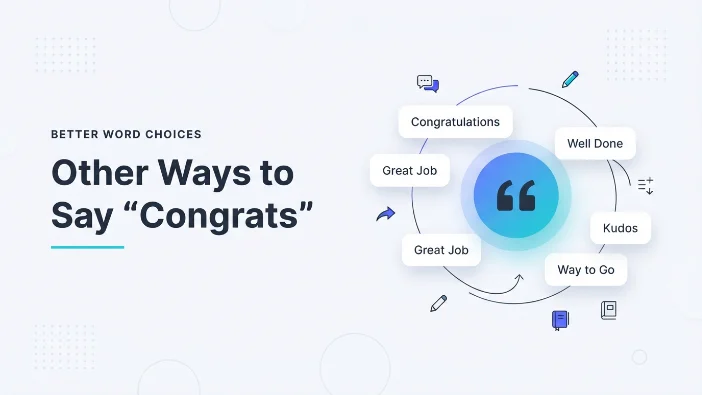
Congratulations, well done, kudos, bravo, hats off to you, fantastic job, way to go, you nailed it, nice work, good for you, keep up the great work, I’m so proud of you, that’s incredible, you deserve this, major props, felicitations, splendid, remarkable, outstanding, cheers, you crushed it, that’s awesome, great stuff, you’re a star, top-notch, commendable, impressive, I salute you, you earned this, all the best.
The phrase “congrats” is the shortened, casual version of “congratulations.” People use it to express praise, admiration, or joy when someone achieves something significant whether it’s a promotion, graduation, wedding, or personal milestone. It’s friendly, quick, and widely understood.
But relying on the same word every time can make your English sound repetitive and limited. Learning alternatives to congrats helps you express excitement in English with greater precision and emotional depth. Whether you’re writing a formal email, giving a toast, or cheering on a friend, having a rich vocabulary of professional reaction phrases and informal expressions in English makes you sound more fluent, confident, and culturally aware.
“The right tone makes your English sound professional and confident.”
Quick Categories
Formal Alternatives to “Congrats”
- Felicitations
- Heartfelt congratulations
- Please accept my warmest congratulations
- I commend you on…
- Bravo
- Splendid job
- Marvelous work
- Outstanding accomplishment
Professional Alternatives to “Congrats”
- Well done
- Kudos to you
- Excellent work
- I want to recognize your achievement
- You should be proud of yourself
- That’s a remarkable achievement
- Keep up the great work
Casual Alternatives to “Congrats”
- Way to go!
- Nice job!
- Good for you!
- You did it!
- That’s awesome!
- Great stuff!
- You’re a star!
Informal / Slang Expressions
- You nailed it!
- You crushed it!
- Major props!
- Hats off to you!
- You killed it!
- That’s incredible!
- I’m so proud of you!
💡 Pro Tip: Match your phrase to the situation. Use formal alternatives in professional emails and speeches. Save casual and slang expressions for friends, family, and relaxed settings. When in doubt, choose a neutral option like “well done.”
What Does “Congrats” Mean?
Congrats is an informal abbreviation of congratulations. It is used to express joy, admiration, or approval for someone’s success or good fortune.
Grammar Note: Congrats is an interjection (exclamation) and is always followed by an exclamation mark in written English. It can also be used as a plural noun (“Send her my congrats”), though this is less common.
Example Sentence: “Congrats on your new job I knew you’d get it!”
When to Use “Congrats”
- Spoken conversations with friends and colleagues
- Text messages and social media posts
- Informal emails to people you know well
- Casual workplace settings with close teammates
- Celebratory occasions like birthdays, promotions, and weddings
When NOT to use it:
- Formal business letters
- Academic or official correspondence
- Speeches at formal events
- Emails to senior executives or clients you don’t know well
Is It Professional or Polite to Say “Congrats”?
Polite? ✔️ Yes it’s friendly and well-intentioned.
Professional? ❌ No in most professional settings, it’s too casual.
While congrats is perfectly polite among peers, it lacks the gravitas needed in formal business communication. For example:
Business Example: “Congrats on closing the deal.” → Better: “Well done on closing the deal your efforts made this possible.”
“Knowing when to be formal or casual is the mark of a confident English speaker.”
Pros and Cons of Using “Congrats”
Pros
- Simple and natural
- Friendly and approachable tone
- Very common and widely understood
- Easy to remember and use
Cons
- Too informal for professional or formal writing
- Overused can feel generic or lazy
- Limited emotional range doesn’t convey depth of feeling
- Not suitable for formal speeches or official correspondence
Common Mistakes When Using “Congrats”
| Mistake | Example | Correction |
|---|---|---|
| Using it in formal writing | “Congrats on your promotion, Mr. Smith.” | “Congratulations on your promotion, Mr. Smith.” |
| Forgetting the preposition “on” | “Congrats your new house!” | “Congrats on your new house!” |
| Using it for sad or serious events | “Congrats on your loss.” | (Never use congrats for sympathy) |
| Overusing it in one conversation | “Congrats! Congrats again! Congrats!” | Vary your language |
| Misspelling as “congrads” | “Congrads on the baby!” | “Congrats on the baby!” |
Other Ways to Say “Congrats”
These alternatives to congrats will help you sound more fluent, confident, and natural in different situations. Use them according to tone, context, and audience to express excitement, admiration, or approval.
1. Phrase: Congratulations
Meaning: A standard expression used to celebrate someone’s success or achievement.
Explanation: This is the most widely accepted and versatile way to congratulate someone. It works well in both formal and professional situations.
Example Sentence: “Congratulations on your well deserved promotion.”
Best Use: Formal writing, professional messages, major achievements
Worst Use: Very casual texting
Tone: Polite, positive, respectful
Context Variability: Formal, professional, spoken, written
2. Phrase: Felicitations
Meaning: A formal expression of congratulations and good wishes.
Explanation: This sophisticated alternative adds an elegant and somewhat traditional feel to your message.
Example Sentence: “Felicitations on your engagement and this wonderful new chapter.”
Best Use: Formal occasions, speeches, ceremonial messages
Worst Use: Casual texts
Tone: Sophisticated, elegant, traditional
Context Variability: Formal, written, ceremonial
3. Phrase: Please Accept My Warmest Congratulations
Meaning: A highly respectful way to congratulate someone on an achievement.
Explanation: This polished expression is especially suitable for official correspondence, formal letters, and professional announcements.
Example Sentence: “Please accept my warmest congratulations on your appointment.”
Best Use: Official letters, formal emails, professional announcements
Worst Use: Casual conversations
Tone: Very formal, respectful, warm
Context Variability: Formal, professional, written
4. Phrase: I Commend You On…
Meaning: A formal way to praise someone for an achievement or accomplishment.
Explanation: This expression emphasizes recognition and respect for someone’s effort, performance, or leadership.
Example Sentence: “I commend you on your outstanding leadership throughout the project.”
Best Use: Professional recognition, formal praise
Worst Use: Casual conversations
Tone: Formal, respectful, appreciative
Context Variability: Professional, formal, written
5. Phrase: Bravo
Meaning: An enthusiastic expression of approval or admiration.
Explanation: Traditionally associated with performances, “Bravo” can also be used to celebrate an impressive presentation, speech, or achievement.
Example Sentence: “Bravo on that presentation. You truly captivated the audience.”
Best Use: Performances, speeches, presentations
Worst Use: Formal business emails
Tone: Enthusiastic, appreciative, expressive
Context Variability: Spoken, casual, semi formal
6. Phrase: Splendid Job
Meaning: A refined way to praise someone for doing excellent work.
Explanation: This phrase communicates strong approval while adding a slightly elegant and traditional touch.
Example Sentence: “Splendid job on the quarterly report. Your analysis was very thorough.”
Best Use: Formal praise, professional recognition
Worst Use: Casual texting
Tone: Elegant, positive, approving
Context Variability: Formal, professional, semi formal
7. Phrase: Marvelous Work
Meaning: A warm expression of admiration for excellent work.
Explanation: This phrase highlights the quality of someone’s work and conveys genuine appreciation.
Example Sentence: “Marvelous work on the project. You exceeded our expectations.”
Best Use: Professional recognition, formal praise
Worst Use: Very informal settings
Tone: Warm, appreciative, polished
Context Variability: Formal, professional, semi formal
8. Phrase: Outstanding Accomplishment
Meaning: An achievement that is particularly impressive or exceptional.
Explanation: This phrase emphasizes the importance and quality of someone’s success, making it ideal for significant accomplishments.
Example Sentence: “Completing the program with such excellent results is an outstanding accomplishment.”
Best Use: Major achievements, professional recognition
Worst Use: Minor everyday successes
Tone: Formal, impressive, respectful
Context Variability: Professional, formal, written
9. Phrase: Well Done
Meaning: A simple and professional way to praise someone’s work or achievement.
Explanation: “Well done” is versatile and easy to use when you want to acknowledge successful performance without sounding overly formal.
Example Sentence: “Well done on securing that important client.”
Best Use: Workplace praise, everyday professional communication
Worst Use: Major formal announcements
Tone: Professional, positive, straightforward
Context Variability: Professional, casual, spoken, written
10. Phrase: Kudos to You
Meaning: An expression of praise and recognition for someone’s achievement.
Explanation: This phrase sounds professional while maintaining a friendly and approachable quality.
Example Sentence: “Kudos to you for leading the team through such a challenging project.”
Best Use: Workplace recognition, team messages
Worst Use: Highly formal documents
Tone: Appreciative, friendly, professional
Context Variability: Professional, casual, spoken, written
11. Phrase: Excellent Work
Meaning: A direct way to praise work that is exceptionally good.
Explanation: This expression focuses on the quality and effectiveness of someone’s work and fits naturally into professional feedback.
Example Sentence: “Excellent work on the financial analysis. Your insights were extremely helpful.”
Best Use: Performance feedback, workplace communication
Worst Use: Personal milestones
Tone: Professional, positive, appreciative
Context Variability: Professional, formal, written
12. Phrase: I Want to Recognize Your Achievement
Meaning: A formal way to acknowledge someone’s success.
Explanation: This expression clearly communicates that someone’s accomplishment deserves attention and appreciation.
Example Sentence: “I want to recognize your achievement in exceeding this year’s targets.”
Best Use: Formal recognition, workplace announcements
Worst Use: Casual conversations
Tone: Formal, respectful, appreciative
Context Variability: Professional, formal, written
13. Phrase: You Should Be Proud of Yourself
Meaning: A warm way to tell someone that their achievement deserves pride.
Explanation: This phrase combines recognition with encouragement and helps someone appreciate their own accomplishments.
Example Sentence: “You should be proud of yourself. This was an impressive accomplishment.”
Best Use: Encouragement, personal achievements
Worst Use: Very formal letters
Tone: Warm, supportive, encouraging
Context Variability: Casual, semi formal, spoken
14. Phrase: That’s a Remarkable Achievement
Meaning: A way to describe a success that is especially impressive or noteworthy.
Explanation: This expression gives stronger emphasis to the significance of someone’s accomplishment.
Example Sentence: “That’s a remarkable achievement, especially considering the tight deadline.”
Best Use: Major accomplishments, professional recognition
Worst Use: Minor everyday successes
Tone: Formal, impressed, respectful
Context Variability: Professional, formal, written, spoken
15. Phrase: Keep Up the Great Work
Meaning: Encouragement to continue performing at a high level.
Explanation: This phrase combines praise with motivation for future success, making it useful for ongoing performance.
Example Sentence: “Keep up the great work. Your contributions have made a real difference.”
Best Use: Workplace feedback, ongoing projects
Worst Use: One time achievements
Tone: Encouraging, positive, professional
Context Variability: Professional, casual, spoken, written
16. Phrase: Way to Go!
Meaning: A cheerful expression of approval and encouragement.
Explanation: This energetic phrase is ideal for celebrating someone’s success in an informal or friendly setting.
Example Sentence: “Way to go! You aced that interview.”
Best Use: Friends, teammates, personal achievements
Worst Use: Formal writing
Tone: Cheerful, enthusiastic, encouraging
Context Variability: Casual, spoken, semi casual
17. Phrase: Nice Job!
Meaning: A simple and friendly compliment for good work.
Explanation: This short expression is natural in everyday conversations and informal workplace interactions.
Example Sentence: “Nice job on the presentation. It was clear and engaging.”
Best Use: Everyday praise, team conversations
Worst Use: Formal occasions
Tone: Friendly, positive, relaxed
Context Variability: Casual, semi professional, spoken
18. Phrase: Good for You!
Meaning: A warm expression showing happiness about someone’s success.
Explanation: This phrase communicates genuine personal support and works especially well when celebrating someone’s individual achievement.
Example Sentence: “Good for you! I knew you could do it.”
Best Use: Personal achievements, friendly conversations
Worst Use: Highly formal professional settings
Tone: Warm, personal, encouraging
Context Variability: Casual, personal, spoken
19. Phrase: You Did It!
Meaning: A celebratory way to acknowledge that someone successfully reached a goal.
Explanation: This enthusiastic phrase focuses on the accomplishment itself and is especially effective for important milestones.
Example Sentence: “You did it! All that hard work finally paid off.”
Best Use: Milestones, personal achievements
Worst Use: Formal writing
Tone: Excited, proud, celebratory
Context Variability: Casual, personal, spoken
20. Phrase: That’s Awesome!
Meaning: An enthusiastic way to express excitement or admiration.
Explanation: This modern expression is perfect for reacting positively to exciting news or an impressive accomplishment.
Example Sentence: “That’s awesome! When do you start your new role?”
Best Use: Exciting news, casual conversations
Worst Use: Formal correspondence
Tone: Enthusiastic, modern, upbeat
Context Variability: Casual, spoken, informal
21. Phrase: Great Stuff!
Meaning: A friendly way to praise something that is very good.
Explanation: This relaxed expression works well when you want to give quick and positive feedback without sounding formal.
Example Sentence: “Great stuff! You’ve made impressive progress with your presentation skills.”
Best Use: Informal praise, friendly conversations
Worst Use: Formal professional writing
Tone: Upbeat, friendly, relaxed
Context Variability: Casual, spoken
22. Phrase: You’re a Star!
Meaning: A warm way to tell someone they have been especially helpful or impressive.
Explanation: This affectionate expression is often used with friends, family members, or people you know well.
Example Sentence: “You’re a star! Thanks for organizing everything so perfectly.”
Best Use: Close friends, family, personal conversations
Worst Use: Formal professional contexts
Tone: Affectionate, warm, cheerful
Context Variability: Casual, personal, spoken
23. Phrase: You Nailed It!
Meaning: You performed something extremely well or successfully.
Explanation: This informal expression suggests that someone handled a task with accuracy, confidence, and skill.
Example Sentence: “You nailed it! That was one of the best presentations I’ve seen.”
Best Use: Presentations, performances, successful tasks
Worst Use: Formal contexts
Tone: Energetic, confident, impressed
Context Variability: Casual, semi casual, spoken
24. Phrase: You Crushed It!
Meaning: You performed exceptionally well.
Explanation: This modern expression communicates high energy and strong admiration for someone’s performance.
Example Sentence: “You crushed it in the meeting today. Everyone was impressed.”
Best Use: High energy praise, peer encouragement
Worst Use: Formal writing
Tone: Energetic, modern, enthusiastic
Context Variability: Casual, spoken
25. Phrase: Major Props!
Meaning: A strong expression of respect and credit for someone’s achievement.
Explanation: This slang phrase is highly informal and works best among friends or peers who are comfortable with casual language.
Example Sentence: “Major props for organizing the entire event by yourself.”
Best Use: Friends, peers, informal conversations
Worst Use: Professional communication
Tone: Slang, enthusiastic, casual
Context Variability: Very casual, spoken
26. Phrase: Hats Off to You!
Meaning: A colorful way to show admiration and respect for someone’s accomplishment.
Explanation: This idiom recognizes that someone has achieved something difficult or impressive.
Example Sentence: “Hats off to you for completing that marathon. Incredible work!”
Best Use: Major achievements, friendly praise
Worst Use: Highly formal writing
Tone: Respectful, enthusiastic, informal
Context Variability: Casual, semi casual, spoken
27. Phrase: You Killed It!
Meaning: A very informal way to say someone performed exceptionally well.
Explanation: Despite the literal wording, this slang expression means that someone did an amazing job.
Example Sentence: “You killed it on stage tonight. The audience loved your performance.”
Best Use: Performances, sports, casual praise
Worst Use: Professional or formal contexts
Tone: High energy, slang, enthusiastic
Context Variability: Very casual, spoken
28. Phrase: That’s Incredible!
Meaning: An enthusiastic expression of amazement and admiration.
Explanation: This phrase is useful when someone’s accomplishment is surprising, impressive, or beyond expectations.
Example Sentence: “That’s incredible! You finished the project two weeks ahead of schedule.”
Best Use: Surprising achievements, exciting news
Worst Use: Highly formal writing
Tone: Amazed, enthusiastic, positive
Context Variability: Casual, semi casual, spoken
29. Phrase: I’m So Proud of You
Meaning: A deeply personal way to express pride in someone’s achievement.
Explanation: This emotional phrase is best suited to people with whom you share a close relationship.
Example Sentence: “I’m so proud of you for pursuing your dream. You truly deserve this.”
Best Use: Close relationships, family, personal achievements
Worst Use: Professional contexts
Tone: Emotional, warm, heartfelt
Context Variability: Personal, casual, spoken
30. Phrase: You Earned This
Meaning: Acknowledges that someone’s success is deserved because of their hard work.
Explanation: This phrase highlights the effort, dedication, and persistence behind an achievement.
Example Sentence: “You earned this promotion. No one worked harder than you.”
Best Use: Career achievements, personal milestones, recognition
Worst Use: Highly formal writing
Tone: Sincere, affirming, supportive
Context Variability: Casual, semi professional, spoken
“Variety in your vocabulary shows fluency. Using the same word repeatedly makes you sound like a beginner.”
Mini Quiz / Self-Check
1. Which phrase is most appropriate for a formal business email?
- A) You crushed it!
- B) Well done
- C) Major props!
- D) You nailed it!
Answer: B) Well done
2. You’re texting a close friend who just got engaged. Which is the best choice?
- A) Please accept my warmest congratulations
- B) Felicitations on your engagement
- C) Congrats! So happy for you!
- D) I commend you on this achievement
Answer: C) Congrats! So happy for you!
3. Your colleague gave an excellent presentation to senior management. What do you say?
- A) You killed it!
- B) Great stuff!
- C) Excellent work very well prepared
- D) Hats off to you!
Answer: C) Excellent work very well prepared
4. Which phrase should you AVOID in a professional email?
- A) Congratulations
- B) Well done
- C) Kudos to you
- D) You’re a star!
Answer: D) You’re a star!
Comparison Table: Top 10 Alternatives
| Phrase | Tone | Best Use |
|---|---|---|
| Congratulations | Formal, standard | All formal contexts |
| Felicitations | Sophisticated, old-fashioned | Formal written occasions |
| Well done | Professional, neutral | Workplace praise |
| Kudos to you | Professional, appreciative | Professional recognition |
| Bravo | Enthusiastic, formal | Performances, speeches |
| Way to go! | Cheerful, encouraging | Friends, teammates |
| You nailed it! | Energetic, impressed | Performance praise |
| Hats off to you! | Respectful, informal | Major achievements |
| I’m so proud of you | Emotional, warm | Close relationships |
| You earned this | Sincere, affirming | Recognition of effort |
FAQs
1. Is “congrats” grammatically correct?
Yes, congrats is a grammatically correct informal abbreviation of congratulations. It’s widely used in spoken English and casual writing.
2. Can I use “congrats” in a professional email?
It depends on your workplace culture. In most professional settings, it’s better to use “congratulations” or “well done” to maintain a professional tone.
3. What is the most formal way to say congratulations?
“Please accept my warmest congratulations” or “I commend you on your achievement” are among the most formal options.
4. What can I say instead of “congrats” to a colleague?
Use “well done,” “excellent work,” “kudos to you,” or “that’s a remarkable achievement.”
5. Is “felicitations” still used today?
Yes, but it’s considered old-fashioned and very formal. It’s best used in formal written correspondence or speeches.
Conclusion
Learning other ways to say congrats transforms your English from repetitive and basic to fluent and expressive. Whether you’re writing a formal email, cheering on a friend, or giving a professional speech, having a rich vocabulary of alternatives to congrats allows you to match your tone to the situation with confidence.
Start practicing today. Choose one new phrase from this list and use it in your next conversation. Pay attention to the tone and context and soon, you’ll instinctively know which professional reaction phrases or informal expressions in English fit every occasion. The more you practice, the more natural your English will sound.
Read More Related Articles:
- Other Ways to Say “This Shows That” | Express Your Ideas with Confidence In 2026
- Other Ways to Say “Which” in English | Beyond the Common Choices In 2026
- Other Ways to Say Also in an Essay | Make Your Writing Shine In 2026

Henry Walker is an American writer and blogger with a keen interest in communication, language and digital content. At TextsResponse.com, he creates informative and reader-focused resources designed to help people communicate with clarity, confidence and authenticity.