Quick Answer
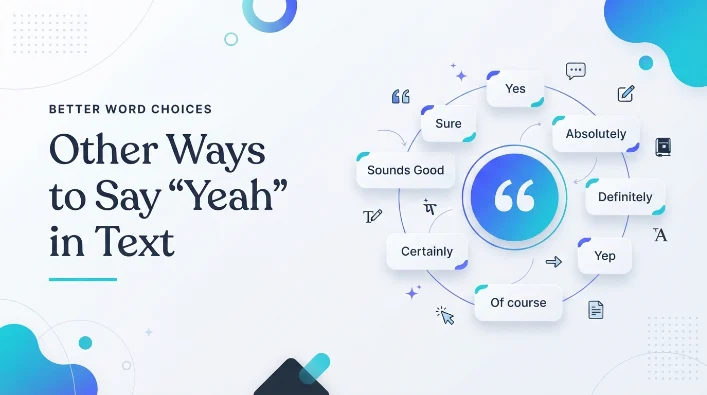
Looking for alternatives to “yeah” that sound more natural, expressive, or professional in text? The best other ways to say “yeah” depend on your tone and audience, whether you want casual, warm, or workplace-appropriate replies. Top five picks: yep, sure thing, totally, for sure, absolutely.
Yeah” is one of the most common informal ways to say yes in English texting and casual conversation. It’s short, relaxed, and instantly understood, which is exactly why it shows up in almost every chat thread, group message, and quick reply.
But relying on “yeah” too often can make your texts feel repetitive or flat. Learning alternatives to “yeah” helps you match your tone to the moment, whether you want to sound enthusiastic, polite, or professional. It also helps you express excitement in English instead of giving a plain, one-word reply every time.
This guide breaks down 30 alternatives to “yeah,” organized by formality and context, so you always know exactly what to text back.
The right tone makes your English sound professional and confident.”
Quick Categories Section
Formal Alternatives to “Yeah”
- Certainly
- Understood
- That is correct
- Absolutely, that works for me
Casual Alternatives
- Yep
- Yup
- Totally
- For sure
Professional Alternatives
- Confirmed
- Sounds good
- Noted, thank you
- Agreed
Informal Expressions
- Sure thing
- Deal
- You got it
- Right on
Pro Tips Box: Match your alternative to your reader. Save casual picks like “yep” or “sure thing” for friends, and switch to “confirmed” or “understood” for coworkers and clients.
Common Mistakes Section
- Using “yeah” in formal emails. Example: “Yeah, I’ll send the report by Friday.” (Should be “Yes, I’ll send the report by Friday.”)
- Overusing the same alternative in every reply. Example: Texting “totally” to every single message until it loses meaning.
- Mixing tones in one conversation. Example: “Certainly! yeah that works lol” mixes formal and casual awkwardly.
- Using slang alternatives with clients or managers. Example: Replying “yup” to a manager’s important request.
- Forgetting punctuation changes tone. Example: “Yeah.” can sound cold, while “Yeah!” sounds warm and engaged.
Small word choices change how confident and clear you sound.
What Does “Yeah” Mean?
“Yeah” is an informal way of saying “yes.” It is used to agree, confirm, or respond positively in casual speech and text.
Grammar note: “Yeah” functions as an adverb or interjection and is grammatically identical to “yes” in usage, just less formal.
Example Sentence: “Are you coming tonight?” “Yeah, I’ll be there around eight.”
When to Use “Yeah”
Spoken vs Written
- Spoken: Extremely common in everyday conversation, especially among friends and family.
- Written: Common in texting and casual chats, but avoided in formal writing.
Formal vs Informal
- Formal: Not appropriate for emails, reports, or professional documents.
- Informal: Perfectly natural in texts, DMs, and casual conversations.
Is It Professional or Polite to Say “Yeah”?
Yeah” is polite in casual settings but generally not considered professional in business communication.
Business-style example: Instead of texting a client “yeah, that works,” a more professional reply would be “Yes, that works well for us.
Polite? Yes Professional? No (in most cases)
Pros and Cons of Using “Yeah”
Pros
- Simple and natural
- Friendly tone
- Common usage
- Easy to understand
Cons
- Too informal for work
- Overused
- Limited emotional range
- Not suitable for formal writing
Fluency isn’t about knowing more words, it’s about knowing the right word at the right time.”
Other Ways to Say “Yeah” in Text
These alternatives will help you sound more fluent, confident, and natural in different situations. Use them according to tone, context, and audience to express excitement, admiration, or approval.
1. Phrase: Yep
Meaning: A quick, casual way to say yes.
Explanation: Common shorthand used in relaxed texting and conversation.
Example Sentence: “Yep, I’ll be there in ten minutes.”
Best Use: Friends, family
Worst Use: Formal emails
Tone: Casual, quick
Context Variability: Casual, spoken
2. Phrase: Yup
Meaning: A relaxed, friendly confirmation.
Explanation: Slightly more playful than “yep” and common in informal conversations.
Example Sentence: “Yup, that’s exactly what I meant.”
Best Use: Texting, chats
Worst Use: Business messages
Tone: Playful, informal
Context Variability: Casual, spoken
3. Phrase: Sure Thing
Meaning: A cheerful way to agree.
Explanation: Shows willingness and a positive attitude toward a request or suggestion.
Example Sentence: “Sure thing, I’ll send it over now.”
Best Use: Friendly requests
Worst Use: Formal writing
Tone: Warm, agreeable
Context Variability: Casual, professional
4. Phrase: Totally
Meaning: Strong agreement or enthusiasm.
Explanation: Adds emphasis to a simple yes and is especially common in casual speech.
Example Sentence: “Totally, that movie was amazing.”
Best Use: Enthusiastic replies
Worst Use: Business emails
Tone: Excited, casual
Context Variability: Casual, spoken
5. Phrase: For Sure
Meaning: A confident, casual way to say yes.
Explanation: Common in modern texting and informal conversations.
Example Sentence: “For sure, count me in.”
Best Use: Group chats
Worst Use: Formal documents
Tone: Confident, relaxed
Context Variability: Casual, spoken
6. Phrase: Absolutely
Meaning: A strong, enthusiastic yes.
Explanation: Expresses confident agreement and can work in both personal and professional situations.
Example Sentence: “Absolutely, I’d love to join.”
Best Use: Excited agreement
Worst Use: Uncertain situations
Tone: Confident, warm
Context Variability: Casual, professional
7. Phrase: Definitely
Meaning: A firm, certain yes.
Explanation: Removes doubt and clearly communicates that you agree or intend to do something.
Example Sentence: “Definitely, let’s meet at noon.”
Best Use: Confirming plans
Worst Use: Casual jokes
Tone: Certain, clear
Context Variability: Casual, professional
8. Phrase: Sounds Good
Meaning: Agreement with a plan or idea.
Explanation: A friendly confirmation that works naturally for schedules, suggestions, and arrangements.
Example Sentence: “Sounds good, see you then.”
Best Use: Scheduling, plans
Worst Use: Emotional topics
Tone: Easygoing, positive
Context Variability: Casual, professional
9. Phrase: Deal
Meaning: Agreement on terms or a plan.
Explanation: Implies that both people have accepted an arrangement or proposal.
Example Sentence: “You bring snacks, I’ll bring drinks. Deal.”
Best Use: Negotiations, plans
Worst Use: One-sided requests
Tone: Friendly, decisive
Context Variability: Casual, spoken
10. Phrase: You Got It
Meaning: Confirms that you understood and will do something.
Explanation: Shows reliability, willingness, and quick agreement.
Example Sentence: “You got it, I’ll handle that today.”
Best Use: Tasks, requests
Worst Use: Formal reports
Tone: Confident, helpful
Context Variability: Casual, professional
11. Phrase: Certainly
Meaning: A polite, formal way to say yes.
Explanation: Commonly used in professional communication and customer service.
Example Sentence: “Certainly, I can arrange that for you.”
Best Use: Client communication
Worst Use: Casual chats
Tone: Formal, polite
Context Variability: Professional
12. Phrase: Understood
Meaning: Confirms comprehension and agreement.
Explanation: Clearly indicates that you have understood an instruction, request, or piece of information.
Example Sentence: “Understood, I’ll update the file now.”
Best Use: Work instructions
Worst Use: Emotional conversations
Tone: Formal, clear
Context Variability: Professional
13. Phrase: That Is Correct
Meaning: A formal confirmation of accuracy.
Explanation: Used to verify that a statement, fact, or piece of information is accurate.
Example Sentence: “That is correct, the meeting is at 3 PM.”
Best Use: Formal verification
Worst Use: Casual texting
Tone: Formal, precise
Context Variability: Professional
14. Phrase: Confirmed
Meaning: An official yes or approval.
Explanation: Commonly used to confirm arrangements, bookings, orders, or business updates.
Example Sentence: “Confirmed, your order will ship tomorrow.”
Best Use: Business updates
Worst Use: Personal chats
Tone: Formal, efficient
Context Variability: Professional
15. Phrase: Agreed
Meaning: Shows shared opinion or decision.
Explanation: A simple and professional way to communicate agreement.
Example Sentence: “Agreed, let’s move forward with the plan.”
Best Use: Meetings, decisions
Worst Use: Casual banter
Tone: Formal, direct
Context Variability: Professional
16. Phrase: Right On
Meaning: An enthusiastic, casual agreement.
Explanation: Adds a friendly and energetic tone to a positive response.
Example Sentence: “Right on, let’s do it.”
Best Use: Excited replies
Worst Use: Serious topics
Tone: Upbeat, informal
Context Variability: Casual, spoken
17. Phrase: Uh-Huh
Meaning: A casual verbal way to say yes.
Explanation: Often used during conversations to show agreement or that you are listening.
Example Sentence: “Uh-huh, I hear you.”
Best Use: Quick spoken replies
Worst Use: Formal written communication
Tone: Casual, relaxed
Context Variability: Spoken
18. Phrase: Indeed
Meaning: A confident, slightly formal way to agree.
Explanation: Adds emphasis while maintaining a polished and respectful tone.
Example Sentence: “Indeed, that’s a great idea.”
Best Use: Thoughtful agreement
Worst Use: Casual slang chats
Tone: Polished, confident
Context Variability: Professional
19. Phrase: Of Course
Meaning: A warm, willing yes.
Explanation: Shows that you are happy to agree, help, or fulfill a request.
Example Sentence: “Of course, I’ll take care of it.”
Best Use: Helpful responses
Worst Use: Sarcastic contexts
Tone: Warm, polite
Context Variability: Casual, professional
20. Phrase: No Doubt
Meaning: Strong agreement without hesitation.
Explanation: Communicates confidence that something is true or correct.
Example Sentence: “No doubt, that’s the right choice.”
Best Use: Confident agreement
Worst Use: Formal writing
Tone: Assured, casual
Context Variability: Casual, spoken
21. Phrase: Right
Meaning: A short confirmation of agreement.
Explanation: A brief and neutral response that can be used in many everyday situations.
Example Sentence: “Right, let’s start the meeting.”
Best Use: Quick confirmations
Worst Use: Emotional replies
Tone: Neutral, direct
Context Variability: Casual, professional
22. Phrase: True
Meaning: Agreement with a statement.
Explanation: Confirms that you believe something is accurate or share the same opinion.
Example Sentence: “True, that makes a lot of sense.”
Best Use: Discussions, opinions
Worst Use: Task confirmations
Tone: Thoughtful, casual
Context Variability: Casual, spoken
23. Phrase: Exactly
Meaning: Strong agreement that emphasizes accuracy.
Explanation: Used when someone’s statement matches precisely what you think or mean.
Example Sentence: “Exactly, that’s what I was thinking.”
Best Use: Confirming ideas
Worst Use: Simple yes/no answers
Tone: Enthusiastic, confident
Context Variability: Casual, professional
24. Phrase: Roger That
Meaning: A playful confirmation of understanding.
Explanation: Borrowed from radio communication and often used humorously to show that a message has been received.
Example Sentence: “Roger that, I’ll be there soon.”
Best Use: Playful confirmations
Worst Use: Serious business communication
Tone: Fun, informal
Context Variability: Casual, spoken
25. Phrase: Alrighty
Meaning: A cheerful, casual way to agree.
Explanation: Adds a lighthearted and friendly feeling to a response.
Example Sentence: “Alrighty, let’s get started.”
Best Use: Friendly chats
Worst Use: Formal settings
Tone: Playful, warm
Context Variability: Casual, spoken
26. Phrase: Affirmative
Meaning: A formal or playful way to say yes.
Explanation: Sounds official and can also be used humorously in casual situations.
Example Sentence: “Affirmative, the task is complete.”
Best Use: Formal or joking contexts
Worst Use: Everyday small talk
Tone: Formal, structured
Context Variability: Professional, casual
27. Phrase: Naturally
Meaning: A confident agreement that implies obviousness.
Explanation: Suggests that the answer or response is expected or self-evident.
Example Sentence: “Naturally, I’ll help you with that.”
Best Use: Confident replies
Worst Use: Uncertain topics
Tone: Polished, assured
Context Variability: Professional
28. Phrase: Without Question
Meaning: A strong and certain yes.
Explanation: Removes any doubt and emphasizes complete confidence in an opinion or decision.
Example Sentence: “Without question, that’s the better option.”
Best Use: Strong endorsements
Worst Use: Light small talk
Tone: Firm, confident
Context Variability: Professional
29. Phrase: I’m In
Meaning: Shows willingness to participate.
Explanation: A common informal expression used when agreeing to join an activity or plan.
Example Sentence: “I’m in, what time do we start?”
Best Use: Invitations, plans
Worst Use: Formal confirmations
Tone: Enthusiastic, casual
Context Variability: Casual, spoken
30. Phrase: Count Me In
Meaning: Confirms enthusiastic participation.
Explanation: Similar to “I’m in,” but slightly more expressive and energetic.
Example Sentence: “Count me in for the weekend trip.”
Best Use: Group activities
Worst Use: Serious agreements
Tone: Excited, friendly
Context Variability: Casual, spoken
“Every alternative you learn adds another shade of tone to your English.”
Every alternative you learn adds another shade of tone to your English.
Mini Quiz / Self-Check
- Which alternative to “yeah” is most appropriate for a formal business email?
A) Yep
B) Confirmed
C) Right on
D) Uh-huh - Your friend invites you to a party. Which response sounds the most enthusiastic?
A) Understood
B) Count me in
C) That is correct
D) Naturally - Which phrase is best for confirming facts in a professional report?
A) Totally
B) Yup
C) That is correct
D) Right on - Which phrase would sound out of place in a casual text to a close friend?
A) Yep
B) Without question
C) Sure thing
D) For sure
Answers: 1-B, 2-B, 3-C, 4-B
Comparison Table: Top Alternatives
| Phrase | Tone | Best Use |
|---|---|---|
| Yep | Casual | Friends, family |
| Sure thing | Warm | Friendly requests |
| Totally | Excited | Enthusiastic replies |
| Absolutely | Confident | Casual or professional |
| Sounds good | Easygoing | Scheduling, plans |
| Certainly | Formal | Client communication |
| Understood | Formal | Work instructions |
| Confirmed | Formal | Business updates |
| Of course | Warm | Helpful responses |
| Count me in | Excited | Group activities |
FAQs
What can I say instead of “yeah” in a text?
You can use alternatives like “yep,” “for sure,” “sounds good,” or “absolutely,” depending on how casual or expressive you want to sound.
Is “yeah” appropriate in professional messages?
No, “yeah” is too informal for professional messages. Use “yes,” “certainly,” or “confirmed” instead.
What is a more professional way to say “yeah”?
Formal alternatives to “yeah” include “certainly,” “understood,” and “confirmed,” which sound more polished in workplace communication.
How can I express excitement in English instead of “yeah”?
Try enthusiastic alternatives like “totally,” “count me in,” or “for sure” to show genuine excitement in your reply.
Why should I learn other ways to say “yeah”?
Learning other ways to say “yeah” helps you sound more fluent, avoid repetition, and match your tone to different situations and audiences.
Conclusion
Learning alternatives to “yeah” gives you more control over how you sound in every conversation, whether you’re texting a friend, replying to a coworker, or writing a professional email. Instead of relying on one word for every situation, you can choose expressions that match your tone, energy, and audience.
Practice using a few new alternatives each day, and pay attention to tone as you switch between casual and professional replies. Over time, this small habit will make your English sound noticeably more natural, confident, and polished.
Read More Related Articles:
- Other Ways to Say “From” in a Letter | For a More Professional Sign-Off In 2026
- Other Ways to Say Be Safe | Upgrade Your Farewells In 2026
- Other Ways to Say Feel Free | Formal Writing and Business Communication In 2026

Victoria Hughes is a content writer dedicated to making communication clearer and more effective. Through TextsResponse.com, she shares practical insights and thoughtfully crafted response ideas that help readers express themselves with confidence.