Quick Answer
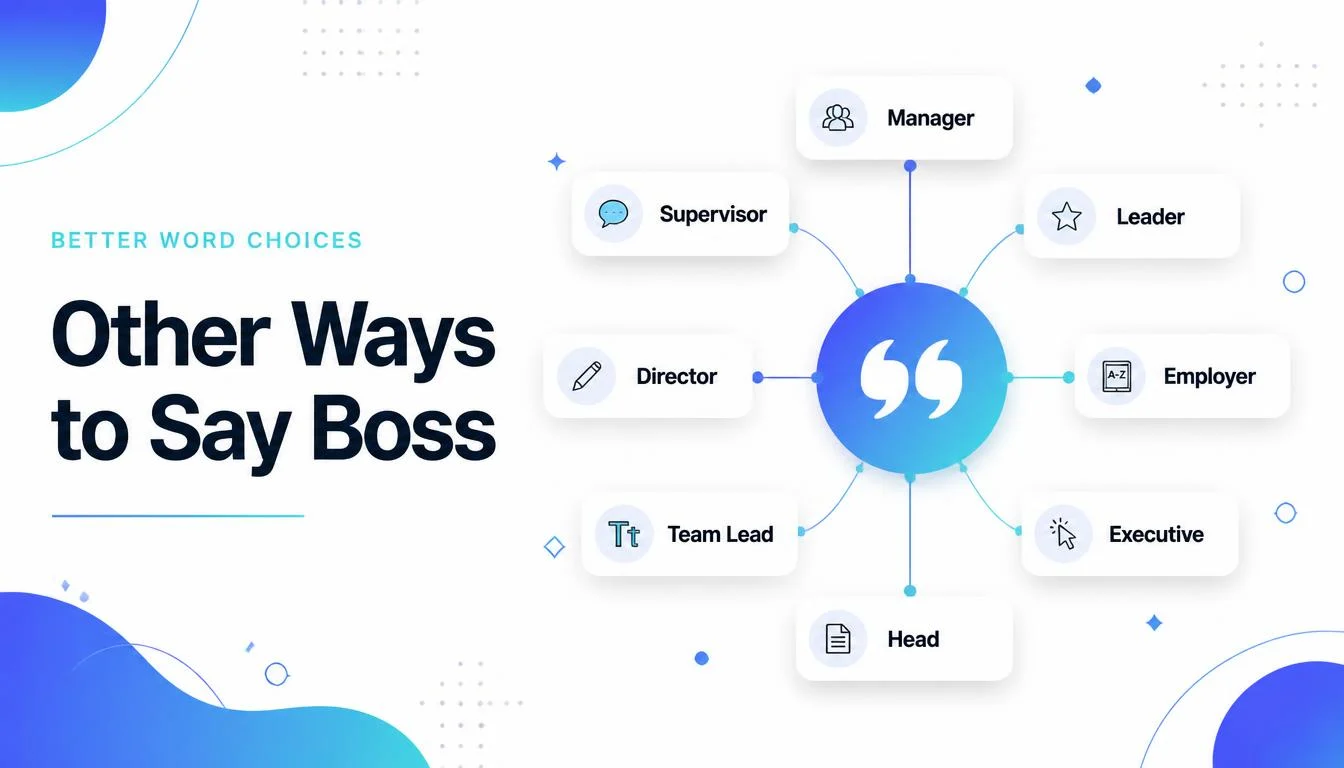
Looking for another way to say boss? The most natural alternatives are supervisor, manager, employer, superior, and department head. Each carries a different tone, from formal workplace language to casual everyday speech, so choosing the right one depends on context and audience.Top 5 alternatives: supervisor, manager, employer, superior, department head
The word boss is one of the most common terms in workplace English. It refers to the person who manages, supervises, or has authority over employees. People use it in casual conversations, office chats, and even in written communication when a more formal term is not required.
Learning alternatives to boss helps English learners and professionals sound more precise and confident. Whether you want to express excitement about a promotion, describe your workplace hierarchy, or simply avoid repeating the same word, having a wider vocabulary makes your English feel natural and polished.
This guide breaks down formal, casual, professional, and informal alternatives to boss, along with meanings, examples, and tone guidance so you always pick the right word for the right moment.
The right tone makes your English sound professional and confident.”
Quick Categories
Formal Alternatives to “Boss”
- Supervisor
- Manager
- Employer
- Superior
Pro Tip: Use formal alternatives in emails, resumes, and official documents to sound polished and respectful.
Casual Alternatives
- The chief
- Head honcho
- Big cheese
- Top dog
Pro Tip: Save casual alternatives for friends, informal chats, or light workplace banter, never for official writing.
Professional Alternatives
- Department head
- Team lead
- Line manager
- Senior manager
Pro Tip: Professional alternatives work best in meetings, performance reviews, and structured business conversations.
Informal Expressions
- Big boss
- The man
- Higher-up
- Top brass
Pro Tip: Informal expressions add personality to speech but can sound unprofessional in written business communication.
Common Mistakes
- Using “boss” in formal writing. Incorrect: “My boss will review the report.” Better: “My supervisor will review the report.”
- Confusing “boss” with “owner.” Incorrect: “He is the boss of the whole building.” Better: “He is the owner of the whole building.”
- Overusing “boss” as a compliment. Incorrect: “You’re such a boss!” in a formal email. Better: Save this expression for casual, spoken English only.
- Using casual alternatives in job interviews. Incorrect: “My head honcho gave me this project.” Better: “My manager assigned me this project.”
- Mixing tone within the same sentence. Incorrect: “My superior is basically the big cheese here.” Better: Choose one consistent tone throughout the sentence.
Consistency in tone is what separates fluent English from awkward English.
What Does “Boss” Mean?
Boss is a noun that refers to a person who is in charge of employees or a workplace. It can also function informally as an adjective meaning excellent or impressive, such as in the phrase “that’s a boss move.
Grammar note: As a noun, boss is countable (a boss, the boss, bosses). It is often paired with possessive pronouns like “my boss” or “your boss.”
Example sentence: “My boss approved the new marketing plan yesterday.”
When to Use “Boss”
- When speaking casually with coworkers about your manager
- When referring to a small business owner informally
- When texting or chatting with friends about work
- In spoken English more than formal written English
- Rarely in official emails, contracts, or professional reports
Is It Professional or Polite to Say “Boss”?
Boss is polite in casual conversation, but it is generally not considered professional in formal business writing. Using more specific titles shows respect and workplace awareness.
Business-style example: Instead of: “I need to check with my boss first.” Use: “I need to check with my supervisor first.”
Polite? Yes Professional? No, in most formal settings
Pros and Cons of Using “Boss”
Pros
- Simple and natural to use
- Friendly, approachable tone
- Common in everyday spoken English
- Easy for beginners to understand
Cons
- Too informal for workplace writing
- Overused in casual conversation
- Limited emotional or descriptive range
- Not suitable for formal or corporate documents
Vocabulary variety is what makes your English sound fluent, not just correct.
Other Ways to Say Boss
These alternatives will help you sound more fluent, confident, and natural in different situations. Use them according to tone, context, and audience to express excitement, admiration, or approval when talking about workplace leadership.
1. Phrase: Supervisor
Meaning: A person who oversees the work of others. Explanation: Common in formal and workplace English. Example Sentence: “My supervisor reviewed my project before submission.” Best Use: Emails, reports Worst Use: Casual chats Tone: Formal, neutral, respectful Context Variability: Professional, written
2. Phrase: Manager
Meaning: Someone who manages a team, department, or project. Explanation: One of the most widely used professional titles. Example Sentence: “The manager scheduled our meeting for Monday.” Best Use: Business settings Worst Use: Very casual speech Tone: Formal, standard, professional Context Variability: Professional, spoken, written
3. Phrase: Employer
Meaning: A person or company that hires employees. Explanation: Often used in legal or contractual contexts. Example Sentence: “My employer offers health insurance benefits.” Best Use: Contracts, HR Worst Use: Daily conversation Tone: Formal, legal, precise Context Variability: Professional, written
4. Phrase: Superior
Meaning: A person of higher rank or authority. Explanation: Slightly more formal and hierarchical than manager. Example Sentence: “She reported the issue to her superior immediately.” Best Use: Formal reports Worst Use: Friendly conversation Tone: Formal, authoritative, respectful Context Variability: Professional, written
5. Phrase: Director
Meaning: A senior leader who oversees departments or major projects. Explanation: Used for higher-level management roles. Example Sentence: “The director approved the annual budget.” Best Use: Corporate settings Worst Use: Small teams Tone: Formal, executive, professional Context Variability: Professional, written
6. Phrase: Executive
Meaning: A high-ranking leader responsible for major decisions. Explanation: Common in large companies and corporate structures. Example Sentence: “The executive presented the new strategy to shareholders.” Best Use: Corporate communication Worst Use: Casual speech Tone: Formal, powerful, corporate Context Variability: Professional, written
7. Phrase: Department Head
Meaning: The leader responsible for a specific department. Explanation: Clarifies exactly which area someone manages. Example Sentence: “The department head assigned new responsibilities to the team.” Best Use: Organizational charts Worst Use: Informal talk Tone: Professional, structured, formal Context Variability: Professional, written
8. Phrase: Team Lead
Meaning: A person who leads a small team or project group. Explanation: Common in modern workplaces and startups. Example Sentence: “Our team lead organized the weekly stand-up meeting.” Best Use: Tech and startup culture Worst Use: Very formal documents Tone: Professional, modern, approachable Context Variability: Professional, spoken
9. Phrase: Line Manager
Meaning: The direct supervisor an employee reports to daily. Explanation: Common in HR and corporate vocabulary. Example Sentence: “I discussed my performance goals with my line manager.” Best Use: HR conversations Worst Use: Casual chats Tone: Formal, structured, professional Context Variability: Professional, written
10. Phrase: Senior Manager
Meaning: A manager with more experience or authority than a standard manager. Explanation: Indicates seniority within management levels. Example Sentence: “The senior manager led the negotiation with the client.” Best Use: Corporate hierarchy Worst Use: Small businesses Tone: Formal, experienced, professional Context Variability: Professional, written
11. Phrase: Chief Executive
Meaning: The top leader responsible for an entire organization. Explanation: Often shortened to CEO in business English. Example Sentence: “The chief executive announced record profits this quarter.” Best Use: Corporate news Worst Use: Small teams Tone: Formal, powerful, executive Context Variability: Professional, written
12. Phrase: Head Honcho
Meaning: The most important or influential person in a group. Explanation: A playful, casual way to describe leadership. Example Sentence: “Everyone knows he’s the head honcho around here.” Best Use: Friendly banter Worst Use: Formal writing Tone: Casual, humorous, light Context Variability: Casual, spoken
13. Phrase: Big Cheese
Meaning: An important or powerful person in an organization. Explanation: Informal expression with a humorous tone. Example Sentence: “The big cheese is visiting our office tomorrow.” Best Use: Casual conversation Worst Use: Business emails Tone: Casual, funny, informal Context Variability: Casual, spoken
14. Phrase: Top Dog
Meaning: The most successful or powerful person in a group. Explanation: Used to highlight dominance or leadership casually. Example Sentence: “She’s the top dog in the sales department.” Best Use: Informal chats Worst Use: Official reports Tone: Casual, confident, playful Context Variability: Casual, spoken
15. Phrase: The Chief
Meaning: A short, informal way of referring to a leader. Explanation: Common in workplaces with a friendly culture. Example Sentence: “I’ll ask the chief before making a decision.” Best Use: Friendly workplaces Worst Use: Legal documents Tone: Casual, friendly, respectful Context Variability: Casual, spoken
16. Phrase: Big Boss
Meaning: A person who holds the highest authority in a workplace. Explanation: Adds emphasis compared to simply saying boss. Example Sentence: “The big boss is coming for inspection today.” Best Use: Informal speech Worst Use: Formal writing Tone: Informal, emphatic, casual Context Variability: Casual, spoken
17. Phrase: The Man
Meaning: Slang term referring to the person in charge. Explanation: Common in American informal speech. Example Sentence: “You need to talk to the man about your schedule.” Best Use: Very casual talk Worst Use: Professional settings Tone: Slang, informal, playful Context Variability: Casual, spoken
18. Phrase: Higher-Up
Meaning: A person with more authority within an organization. Explanation: Often used to describe someone without naming them directly. Example Sentence: “The decision came from someone higher-up.” Best Use: General workplace talk Worst Use: Formal reports Tone: Neutral, informal, vague Context Variability: Casual, spoken
19. Phrase: Top Brass
Meaning: Senior leaders or officials within an organization. Explanation: Originally military slang, now used in business contexts too. Example Sentence: “The top brass approved the new office policy.” Best Use: Organizational discussions Worst Use: Personal conversations Tone: Informal, authoritative, group-focused Context Variability: Professional, spoken
20. Phrase: Overseer
Meaning: A person who supervises workers or a process. Explanation: Slightly formal and less common in modern speech. Example Sentence: “The overseer checked the progress of the construction site.” Best Use: Industrial settings Worst Use: Corporate offices Tone: Formal, authoritative, traditional Context Variability: Professional, written
21. Phrase: Foreman
Meaning: A supervisor in charge of a group of workers, often manual labor. Explanation: Common in construction and factory settings. Example Sentence: “The foreman assigned tasks to the workers each morning.” Best Use: Construction, factories Worst Use: Office environments Tone: Formal, practical, direct Context Variability: Professional, spoken
22. Phrase: Principal
Meaning: The leading or most important person in an organization or school. Explanation: Common in educational or business ownership contexts. Example Sentence: “The principal of the firm signed the final agreement.” Best Use: Education, law firms Worst Use: Casual talk Tone: Formal, authoritative, precise Context Variability: Professional, written
23. Phrase: Administrator
Meaning: A person who manages operations within an organization. Explanation: Focuses more on organizing tasks than direct leadership. Example Sentence: “The administrator handled all scheduling issues.” Best Use: Offices, institutions Worst Use: Informal speech Tone: Formal, organized, neutral Context Variability: Professional, written
24. Phrase: Commander
Meaning: A person who leads or directs others, often decisively. Explanation: Adds a strong, authoritative tone to leadership. Example Sentence: “She commanded the project like a true leader.” Best Use: Leadership discussions Worst Use: Everyday small talk Tone: Formal, strong, authoritative Context Variability: Professional, spoken
25. Phrase: Leader
Meaning: A person who guides or directs a group. Explanation: A broad, versatile term used in many contexts. Example Sentence: “A good leader listens to their team.” Best Use: General leadership talk Worst Use: Legal documents Tone: Neutral, inspiring, versatile Context Variability: Professional, casual, spoken
26. Phrase: Chief
Meaning: The most senior or important person in a group. Explanation: Often used as part of titles like Chief Officer. Example Sentence: “The chief reviewed all department reports personally.” Best Use: Titles, formal roles Worst Use: Random casual talk Tone: Formal, respected, strong Context Variability: Professional, written
27. Phrase: Head
Meaning: The person in charge of a group or department. Explanation: Simple and widely used across industries. Example Sentence: “The head of marketing approved the campaign.” Best Use: Job titles Worst Use: Legal writing Tone: Neutral, professional, simple Context Variability: Professional, written
28. Phrase: Governor
Meaning: A person who oversees or manages an institution, or informally, a boss. Explanation: In British slang, used casually to mean boss. Example Sentence: “Ask the governor if we can leave early.” Best Use: British informal speech Worst Use: American business writing Tone: Informal, regional, friendly Context Variability: Casual, spoken
29. Phrase: Captain
Meaning: A person who leads a team, especially in group efforts. Explanation: Often used metaphorically for workplace leadership. Example Sentence: “He acts as captain whenever the manager is away.” Best Use: Team-based work Worst Use: Formal documents Tone: Informal, motivational, team-focused Context Variability: Casual, spoken
30. Phrase: Ringleader
Meaning: The main organizer of a group, often with a mischievous tone. Explanation: Can be humorous or slightly negative depending on context. Example Sentence: “She’s the ringleader behind all the office pranks.” Best Use: Playful situations Worst Use: Serious professional talk Tone: Informal, playful, cheeky Context Variability: Casual, spoken
“Choosing the right word for your boss shows both fluency and social awareness.”
Mini Quiz
1. Which word is best for a formal business email?
A) Big cheese
B) Supervisor
C) The man
D) Top dog
2. Which phrase would sound too casual in a job interview?
A) Manager
B) Department head
C) Head honcho
D) Supervisor
3. Which word originally comes from British slang for boss?
A) Governor
B) Director
C) Administrator
D) Executive
4. Which alternative best fits a construction site context?
A) Chief executive
B) Foreman
C) Big cheese
D) The man
Answers: 1-B, 2-C, 3-A, 4-B
Comparison Table: Top Alternatives
| Phrase | Tone | Best Use |
|---|---|---|
| Supervisor | Formal | Emails, reports |
| Manager | Formal | Business settings |
| Employer | Formal | Contracts, HR |
| Superior | Formal | Formal reports |
| Director | Formal | Corporate settings |
| Department Head | Professional | Organizational charts |
| Team Lead | Professional | Tech, startups |
| Head Honcho | Casual | Friendly banter |
| Big Boss | Informal | Informal speech |
| Higher-Up | Informal | General workplace talk |
“A strong vocabulary gives you control over tone, not just meaning.”
FAQs
What is a professional way to say boss?
Supervisor, manager, or director are the most professional alternatives to boss, especially in written communication.
Is “boss” considered slang?
No, boss is a standard English word. However, phrases like “big cheese” or “top dog” are considered slang.
What do the British call their boss informally?
In British English, “governor” is a common informal term for boss.
Can “boss” be used as a compliment?
Yes, informally, calling someone a “boss” or saying they are “such a boss” means they are impressive or excellent.
What is another way to say boss in a corporate setting?
In corporate settings, terms like executive, director, or senior manager are more appropriate than boss.
Conclusion
Learning different ways to say boss helps you communicate with greater precision and confidence in both spoken and written English. From formal titles like supervisor and director to casual expressions like top dog and big cheese, each alternative carries its own tone and context.
Practice using these alternatives daily in real conversations, emails, and professional discussions. Paying attention to tone will help you sound more natural, fluent, and professional in every situation.
Read More Related Articles:
- Other Ways to Say “Work Hard” | Say It Better in Work and Life In 2026
- Other Ways to Say Touch Base | Better Phrases for Every Situation In 2026
- Other Ways to Say Happy Sunday | Lovely Wishes Beyond the Usual In 2026

Henry Walker is an American writer and blogger with a keen interest in communication, language and digital content. At TextsResponse.com, he creates informative and reader-focused resources designed to help people communicate with clarity, confidence and authenticity.