Quick Answer
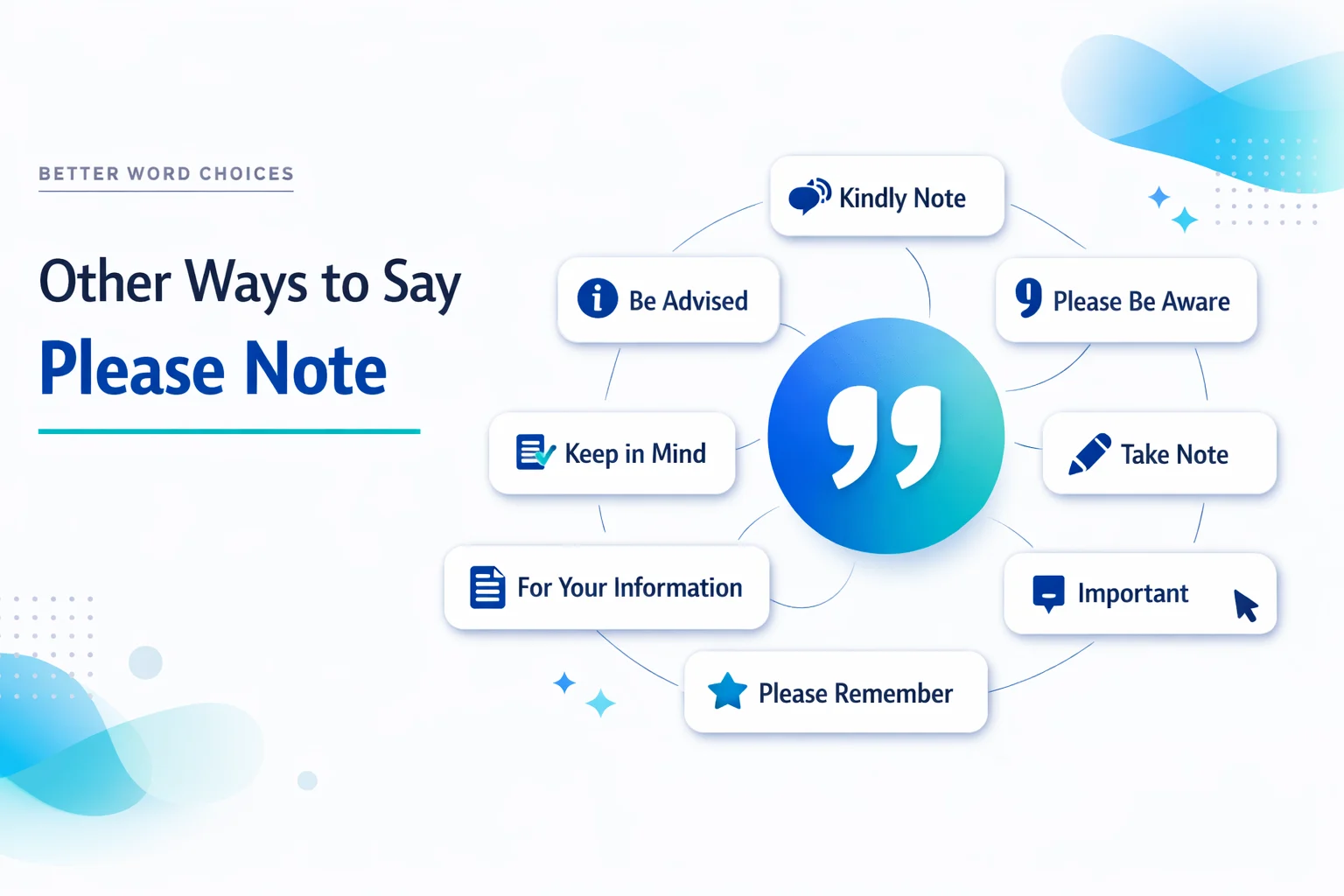
Looking for other ways to say “please note”? The phrase is used to draw attention to important information, but repeating it too often can sound stiff or robotic.Top alternatives include: kindly note, please be aware, be advised, for your information, and just so you know.
Please note” is one of the most common phrases in emails, reports, and instructions. People use it to highlight something the reader must pay attention to, whether it’s a deadline, a rule, or a small correction. It works in both formal and casual settings, which is exactly why it gets overused.
Learning alternatives to “please note” helps your writing feel less repetitive and more natural. It also lets you match your tone to the situation, whether you are writing a formal business email or a quick message to a friend.
Expanding your vocabulary here does more than avoid repetition. It helps you express excitement in English when the news is positive, sound more authoritative when it’s a warning, and stay polite when it’s a gentle reminder.
Quick Categories
Formal alternatives to “please note”
- Please be advised
- Kindly note
- It should be noted
- Please be informed
Pro Tips Box: Use formal alternatives in emails to clients, official documents, and workplace announcements where tone matters as much as content.
Casual alternatives
- Heads up
- Just so you know
- FYI
- Quick note
Pro Tips Box: Save casual alternatives for texts, team chats, or messages to close colleagues. They lose their charm in formal writing.
Professional alternatives
- For your information
- Please be aware
- Kindly be informed
- I want to point out
Pro Tips Box: Professional alternatives work well in meetings and reports because they sound confident without being cold.
Informal expressions
- By the way
- Just a heads up
- Note to self
- Don’t forget
Pro Tips Box: Informal expressions are great for spoken English, but avoid them in written business communication.
Common Mistakes
- Overusing “please note” in one document. Example: “Please note the deadline. Please note the new policy. Please note the attachment.”
- Using it with an aggressive tone. Example: “Please note, you were wrong about the report.”
- Pairing it with vague information. Example: “Please note the changes.” (Which changes?)
- Using casual alternatives in formal emails. Example: “Heads up, the contract needs your signature by Friday.” (too informal for a legal context)
- Forgetting to follow up with a clear action. Example: “Please note the meeting.” (Note what about the meeting?)
What Does “Please Note” Mean?
“Please note” is a polite imperative phrase used to ask someone to pay attention to specific information. Grammatically, it combines the courtesy word “please” with the verb “note,” meaning to observe or take notice of something.
Example Sentence: “Please note that the office will be closed on Monday.”
When to Use “Please Note”
- Announcing schedule changes
- Highlighting policy updates
- Pointing out important details in a document
- Giving instructions that require attention
Spoken vs Written: It appears far more often in written English, such as emails and notices, than in spoken conversation.
Formal vs Informal: It sits comfortably in both formal and semi-formal writing, but sounds slightly stiff in casual speech.
Is It Professional or Polite to Say “Please Note”?
Please note” is both polite and professional in most business contexts. It signals respect for the reader while directing their attention clearly.
Business Example: “Please note that the invoice must be paid within 30 days of receipt.”
Polite? Yes Professional? Yes (in most cases)
Pull Quote: “Small phrases like ‘please note’ carry the tone of your entire message.”
Pros and Cons of Using “Please Note”
Pros
- Simple and clear
- Polite and respectful tone
- Widely understood
- Works in most professional settings
Cons
- Can sound repetitive if overused
- Slightly formal for casual conversations
- Limited emotional range
- Can feel like a warning if misused
Other Ways to Say Please Note
These alternatives will help you sound more fluent, confident, and natural in different situations. Use them according to tone, context, and audience to express excitement, admiration, or approval when the information calls for it.
1. Phrase: Kindly Note
Meaning: A polite request to pay attention to important information.
Explanation: Commonly used in formal emails, workplace communication, and official notices to politely highlight key details.
Example Sentence: “Kindly note that the office hours have changed.”
Best Use: Formal emails
Worst Use: Casual chats
Tone: Polite, formal
Context Variability: Professional, written
2. Phrase: Please Be Advised
Meaning: A formal way to inform someone of important information.
Explanation: Frequently used in legal documents, business correspondence, and official announcements.
Example Sentence: “Please be advised that your account will expire soon.”
Best Use: Legal notices
Worst Use: Texting friends
Tone: Formal, serious
Context Variability: Professional, written
3. Phrase: For Your Information
Meaning: Sharing information the recipient should know.
Explanation: A common expression in emails and workplace communication, often abbreviated as FYI.
Example Sentence: “For your information, the meeting has moved to 3 PM.”
Best Use: Office emails
Worst Use: Formal contracts
Tone: Neutral, helpful
Context Variability: Professional, casual
4. Phrase: Be Advised
Meaning: A direct way to inform someone of important details.
Explanation: Slightly more direct than “Please be advised” and often used in technical or official notices.
Example Sentence: “Be advised, the system will be down for maintenance.”
Best Use: Technical notices
Worst Use: Friendly messages
Tone: Direct, formal
Context Variability: Professional, written
5. Phrase: Take Note
Meaning: Asking someone to pay attention to or remember something important.
Explanation: Slightly more assertive than “Please note” while remaining professional.
Example Sentence: “Take note of the new safety guidelines.”
Best Use: Instructions
Worst Use: Casual texts
Tone: Assertive, clear
Context Variability: Professional, spoken
6. Phrase: It Should Be Noted
Meaning: A formal way to introduce an important point.
Explanation: Frequently used in reports, essays, and academic writing to emphasize key information.
Example Sentence: “It should be noted that results may vary by region.”
Best Use: Reports, essays
Worst Use: Casual chats
Tone: Formal, objective
Context Variability: Professional, written
7. Phrase: Please Take Note
Meaning: A stronger version of “Please note.”
Explanation: Adds emphasis while remaining polite and professional.
Example Sentence: “Please take note of the revised schedule.”
Best Use: Formal instructions
Worst Use: Friendly conversation
Tone: Firm, polite
Context Variability: Professional, written
8. Phrase: Please Understand
Meaning: Asking the reader to acknowledge or accept something.
Explanation: Often used when delivering sensitive information or explaining a policy.
Example Sentence: “Please understand that refunds take five business days.”
Best Use: Customer service
Worst Use: Casual chats
Tone: Polite, empathetic
Context Variability: Professional, written
9. Phrase: For Clarity
Meaning: Introducing information to avoid confusion.
Explanation: Common in business writing, documentation, and instructional content.
Example Sentence: “For clarity, all payments must be made online.”
Best Use: Instructions
Worst Use: Casual texts
Tone: Precise, formal
Context Variability: Professional, written
10. Phrase: Please Be Informed
Meaning: A formal way to notify someone of important information.
Explanation: Commonly appears in official letters, announcements, and workplace communications.
Example Sentence: “Please be informed that the office relocates next month.”
Best Use: Official letters
Worst Use: Text messages
Tone: Formal, respectful
Context Variability: Professional, written
11. Phrase: Worth Noting
Meaning: Highlighting something important or interesting.
Explanation: Slightly less formal than “It should be noted” while still sounding professional.
Example Sentence: “It’s worth noting that sales increased last quarter.”
Best Use: Presentations
Worst Use: Legal notices
Tone: Neutral, informative
Context Variability: Professional, spoken
12. Phrase: I Want to Point Out
Meaning: Introducing a specific detail directly.
Explanation: Creates a more personal and conversational tone than passive expressions.
Example Sentence: “I want to point out that the budget has changed.”
Best Use: Meetings
Worst Use: Formal letters
Tone: Direct, personal
Context Variability: Spoken, professional
13. Phrase: To Clarify
Meaning: Explaining or correcting information.
Explanation: Ideal when clearing up misunderstandings or adding precision.
Example Sentence: “To clarify, the event starts at 6 PM, not 5 PM.”
Best Use: Corrections
Worst Use: Casual banter
Tone: Clear, precise
Context Variability: Professional, spoken
14. Phrase: It’s Important to Note
Meaning: Emphasizing a key detail.
Explanation: Frequently used in reports, presentations, and academic writing to highlight critical information.
Example Sentence: “It’s important to note that prices may vary by season.”
Best Use: Presentations, essays
Worst Use: Casual chats
Tone: Formal, emphatic
Context Variability: Professional, written
15. Phrase: Please Keep in Mind That
Meaning: A polite reminder about something important.
Explanation: Common in customer service messages and instructional writing.
Example Sentence: “Please keep in mind that shipping takes two weeks.
Best Use: Customer service
Worst Use: Casual texts
Tone: Polite, informative
Context Variability: Professional, written
16. Phrase: Note for Reference
Meaning: Highlighting information for future use.
Explanation: Common in manuals, documentation, and reference guides.
Example Sentence: “Note for reference, the login details are in the appendix.”
Best Use: Manuals, guides
Worst Use: Spoken conversation
Tone: Neutral, practical
Context Variability: Professional, written
17. Phrase: As a Reminder
Meaning: Repeating information the reader may have forgotten.
Explanation: Frequently used in follow-up emails and workplace announcements.
Example Sentence: “As a reminder, the report is due by Friday.”
Best Use: Follow-ups
Worst Use: First-time announcements
Tone: Polite, firm
Context Variability: Professional, written
18. Phrase: Please Pay Attention To
Meaning: A direct request to focus on specific information.
Explanation: Stronger and more direct than “Please note.”
Example Sentence: “Please pay attention to section three of the contract.”
Best Use: Instructions
Worst Use: Casual chats
Tone: Direct, formal
Context Variability: Professional, spoken
19. Phrase: Please Recognize
Meaning: Asking the reader to acknowledge a fact or situation.
Explanation: Often used in customer service or sensitive workplace communication.
Example Sentence: “Please recognize that delays are outside our control.”
Best Use: Customer service
Worst Use: Casual chats
Tone: Formal, empathetic
Context Variability: Professional, written
20. Phrase: Just So You Know
Meaning: A casual way to share information.
Explanation: Softer and friendlier than formal alternatives.
Example Sentence: “Just so you know, the parking lot is closed today.”
Best Use: Friendly conversations
Worst Use: Legal documents
Tone: Friendly, casual
Context Variability: Spoken, casual
21. Phrase: Heads Up
Meaning: A quick warning or reminder.
Explanation: Very common in workplace chats and everyday spoken English.
Example Sentence: “Heads up, the client is joining five minutes early.”
Best Use: Team chats
Worst Use: Formal reports
Tone: Casual, quick
Context Variability: Spoken, casual
22. Phrase: Bear in Mind
Meaning: A reminder to keep something in consideration.
Explanation: Softer and more conversational than “Please note.”
Example Sentence: “Bear in mind that the store closes early on Sundays.”
Best Use: Advice, reminders
Worst Use: Legal writing
Tone: Gentle, conversational
Context Variability: Spoken, casual
23. Phrase: Keep in Mind
Meaning: A friendly reminder to remember something important.
Explanation: Works naturally in both casual and professional conversations.
Example Sentence: “Keep in mind that the deadline is Friday, not Monday.”
Best Use: Reminders
Worst Use: Formal contracts
Tone: Friendly, clear
Context Variability: Professional, casual
24. Phrase: Please Remember
Meaning: A gentle reminder about something important.
Explanation: Friendly, polite, and suitable for most everyday situations.
Example Sentence: “Please remember to bring your ID to the exam.”
Best Use: Reminders
Worst Use: Legal documents
Tone: Friendly, polite
Context Variability: Spoken, professional
25. Phrase: Just to Let You Know
Meaning: A casual way to share new information.
Explanation: Frequently used in conversations and informal emails.
Example Sentence: “Just to let you know, the flight got delayed.”
Best Use: Casual updates
Worst Use: Formal reports
Tone: Friendly, casual
Context Variability: Spoken, casual
26. Phrase: One Thing to Note
Meaning: Introducing a single important detail.
Explanation: More conversational than formal alternatives while still being clear.
Example Sentence: “One thing to note, the store accepts cash only.”
Best Use: Casual instructions
Worst Use: Legal writing
Tone: Casual, helpful
Context Variability: Spoken, casual
27. Phrase: FYI
Meaning: Short for “For Your Information.”
Explanation: Common in emails, workplace chats, and informal business communication.
Example Sentence: “FYI, the printer on the third floor is out of order.”
Best Use: Quick emails
Worst Use: Formal presentations
Tone: Casual, brief
Context Variability: Casual, professional
28. Phrase: Quick Note
Meaning: Introducing a short but important update.
Explanation: Friendly and efficient for workplace chats and informal emails.
Example Sentence: “Quick note, the venue address changed.”
Best Use: Team updates
Worst Use: Legal writing
Tone: Casual, efficient
Context Variability: Casual, spoken
29. Phrase: By the Way
Meaning: Introducing an additional or related point.
Explanation: A very common expression in everyday spoken English.
Example Sentence: “By the way, the meeting was moved to Thursday.”
Best Use: Casual conversations
Worst Use: Formal reports
Tone: Casual, friendly
Context Variability: Spoken, casual
30. Phrase: Just a Heads Up
Meaning: A friendly warning or reminder.
Explanation: A softer, more conversational version of “Heads up.”
Example Sentence: “Just a heads up, the elevator is under repair.”
Best Use: Informal notices
Worst Use: Official documents
Tone: Friendly, casual
Context Variability: Spoken, casual
“Fluency isn’t about knowing more words. It’s about knowing which word fits the moment.”
“Alternatives to ‘please note’ let your writing breathe instead of repeat.”
Mini Quiz
1. Which phrase is best for a formal legal notice?
A) Heads up
B) Please be advised
C) By the way
Answer: B) Please be advised
2. Which phrase fits a casual text to a friend?
A) It should be noted
B) Just so you know
C) Please be informed
Answer: B) Just so you know
3. In a business report, which alternative sounds most professional?
A) It’s important to note
B) FYI
C) By the way
Answer: A) It’s important to note
4. Which phrase softens a reminder in customer service writing?
A) Please pay attention to
B) Please keep in mind that
C) Take note
Answer: B) Please keep in mind that
Comparison Table: Top Alternatives
| Phrase | Tone | Best Use |
|---|---|---|
| Kindly note | Polite, formal | Formal emails |
| Please be advised | Formal, serious | Legal notices |
| For your information | Neutral, helpful | Office emails |
| Just so you know | Friendly, casual | Casual conversations |
| Heads up | Casual, quick | Team chats |
| Bear in mind | Gentle, conversational | Advice and reminders |
| It should be noted | Formal, objective | Reports and essays |
| Please take note | Firm, polite | Formal instructions |
| As a reminder | Polite, firm | Follow-up emails |
| FYI | Casual, brief | Quick emails |
FAQs
What is a professional way to say “please note”?
“Please be advised” and “kindly note” are strong professional alternatives for formal emails and documents.
What is a casual way to say “please note”?
Heads up” and “just so you know” work well in informal conversations and quick messages.
Is “please note” too formal for everyday use?
It can sound slightly stiff in casual speech, so informal alternatives like “by the way” often fit better.
Can I use “FYI” instead of “please note” in emails?
Yes, “FYI” works well in casual to semi-formal workplace emails but should be avoided in formal reports.
Why should I learn alternatives to “please note”?
Learning alternatives improves fluency, avoids repetition, and helps you match tone to context in professional English.
Conclusion
Mastering other ways to say “please note” helps your English sound more natural, confident, and varied. Whether you need a formal alternative for a business email or a casual phrase for a quick chat, having options lets you communicate with the right tone every time.
Make it a habit to practice these alternatives daily. Pay attention to tone, context, and audience, and your writing and speaking will steadily become more fluent and professional.
Read More Related Articles:
- Other Ways to Say “First of All” | Make You Sound More Fluent In 2026
- Other Ways to Say That Being Said | Smarter & More Fluent Alternatives In 2026
- Other Ways to Say “In This Article” | That Instantly Elevate Your Writing In 2026

Victoria Hughes is a content writer dedicated to making communication clearer and more effective. Through TextsResponse.com, she shares practical insights and thoughtfully crafted response ideas that help readers express themselves with confidence.