Quick Answer
If you want to say this matters because without repeating it constantly, try phrases like: the reason this matters is, here’s why this counts, this is significant because, this carries weight because, or here’s the bottom line. These alternatives to “this matters because” help you sound more natural, confident, and fluent whether you are writing a report or explaining a decision out loud.
This matters because is a common phrase used to explain the reason or importance behind a statement, decision, or event. People use it in essays, presentations, emails, and everyday conversation to connect an idea to its consequence or value.
Learning alternatives to “this matters because” is useful because relying on one phrase repeatedly can make your writing or speech sound flat and repetitive. Whether you are drafting a business report or trying to express excitement in English about a project’s importance, having several options lets you match your tone to your audience.
Professionals, students, and English learners all benefit from expanding this vocabulary. It shows command of language, improves persuasive writing, and helps you sound more polished in both spoken and written English.
Quick Categories
Formal Alternatives to “This Matters Because”
- The reason this matters is
- This holds significance because
- The significance of this lies in
- This carries considerable weight because
Pro Tip: Use formal alternatives in reports, academic writing, and official emails where a serious, objective tone is expected.
Casual Alternatives
- Here’s why this is a big deal
- Here’s the thing
- This is kind of a big deal because
- Here’s why it counts
Pro Tip: Save casual phrases for friends, social media captions, or relaxed conversations, not client-facing documents.
Professional Alternatives
- This is critical because
- The rationale behind this is
- This has strategic importance because
- This is a key consideration because
Pro Tip: In meetings or presentations, pair professional alternatives with data or examples to strengthen your point.
Informal Expressions
- Here’s why this matters, honestly
- This is a big deal because
- Here’s the deal
- This is worth caring about because
Pro Tip: Informal expressions work well in texts or casual chats, but avoid them in formal writing or job interviews.
The right tone makes your English sound professional and confident.”
Common Mistakes
- Overusing the phrase in every paragraph. Example: “This matters because… This matters because… This matters because of that too.”
- Using informal versions in formal emails. Example: “Here’s the deal, boss, we need this budget approved.”
- Forgetting to follow the phrase with a clear reason. Example: “This matters because.” (no explanation given)
- Mixing tones within the same document. Example: “The rationale behind this is important, and also, here’s the big deal.”
- Using it as a standalone sentence without context. Example: “This matters because. Moving on to the next slide.”
What Does “This Matters Because” Mean?
This matters because is used to introduce a reason or explanation for why something is important, relevant, or worth attention. Grammatically, it functions as an introductory clause followed by a subordinate reason clause.
Example Sentence: This matters because it directly affects our quarterly targets.
When to Use “This Matters Because”
- Explaining the importance of a decision in a meeting
- Writing persuasive essays or reports
- Justifying a request in an email
- Introducing key points in a presentation
- Everyday conversation when explaining priorities
Spoken vs Written: In speech, shorter versions like “here’s why this counts” feel more natural. In writing, fuller phrases like “the reason this matters is” read more polished.
Formal vs Informal: Formal writing favors “this holds significance because,” while informal chats favor “here’s the big deal.”
Is It Professional or Polite to Say “This Matters Because”?
This matters because is polite and neutral, but it is not always the most professional-sounding choice in high-stakes business writing, where more precise alternatives can add authority.
Business Example: “This matters because delayed shipments increase customer churn.” This works fine in most workplaces, though “This is a key consideration because delayed shipments increase customer churn” sounds slightly more formal.
Polite? Yes Professional? No (in most highly formal contexts)
“Politeness keeps a conversation smooth, but precision keeps it credible.”
Pros and Cons of Using “This Matters Because”
Pros:
- Simple and natural
- Friendly tone
- Common usage
- Easy to understand
Cons:
- Too informal for work
- Overused
- Limited emotional range
- Not suitable for formal writing
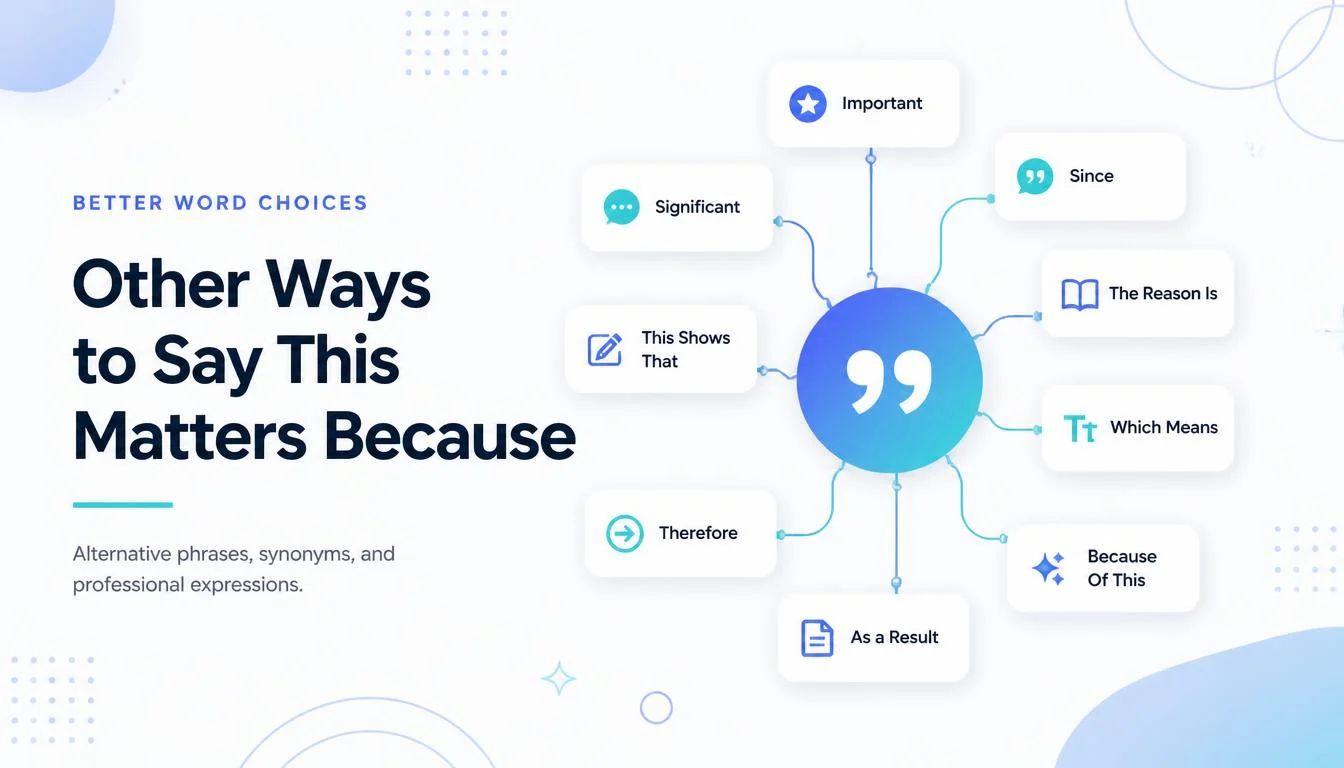
Other Ways to Say This Matters Because
These alternatives will help you sound more fluent, confident, and natural in different situations. Use them according to tone, context, and audience to express excitement, admiration, or approval.
Phrase: That’s important because
Meaning: Introduces a straightforward reason.
Explanation: A simple, everyday way to explain importance.
Example Sentence: That’s important because it affects everyone on the team.
Best Use: casual talk
Worst Use: formal reports
Tone: simple, friendly, direct
Context Variability: casual, spoken
Phrase: The reason this matters is
Meaning: Formally introduces the underlying cause.
Explanation: Common in essays and structured writing.
Example Sentence: The reason this matters is the impact on customer trust.
Best Use: essays, reports
Worst Use: casual texts
Tone: formal, clear, structured
Context Variability: professional, written
Phrase: Here’s why this counts
Meaning: Signals an upcoming explanation of value.
Explanation: A conversational lead in to importance.
Example Sentence: Here’s why this counts for our next launch.
Best Use: presentations
Worst Use: legal writing
Tone: engaging, confident, casual
Context Variability: spoken, professional
Phrase: This is significant because
Meaning: Highlights notable importance.
Explanation: Adds weight and seriousness to a statement.
Example Sentence: This is significant because it changes our timeline.
Best Use: academic writing
Worst Use: small talk
Tone: formal, serious, precise
Context Variability: professional, written
Phrase: The significance lies in
Meaning: Points to where the true value is found.
Explanation: A more analytical phrasing.
Example Sentence: The significance lies in how it affects long term growth.
Best Use: analysis, reports
Worst Use: casual chat
Tone: analytical, formal, thoughtful
Context Variability: professional, written
Phrase: This carries weight because
Meaning: Suggests strong importance or influence.
Explanation: Implies the topic has real consequences.
Example Sentence: This carries weight because investors are watching closely.
Best Use: business talks
Worst Use: texting friends
Tone: serious, confident, strong
Context Variability: professional, spoken
Phrase: Here’s why it’s relevant
Meaning: Connects the topic to the current situation.
Explanation: Useful when linking ideas together.
Example Sentence: Here’s why it’s relevant to today’s meeting.
Best Use: meetings
Worst Use: formal essays
Tone: practical, direct, clear
Context Variability: professional, spoken
Phrase: The reason this counts is
Meaning: Emphasizes the underlying justification.
Explanation: Similar to “matters,” slightly more emphatic.
Example Sentence: The reason this counts is the deadline is fixed.
Best Use: persuasive writing
Worst Use: casual jokes
Tone: firm, clear, persuasive
Context Variability: professional, written
Phrase: This is worth noting because
Meaning: Flags something important to remember.
Explanation: Softer than “matters,” good for adding detail.
Example Sentence: This is worth noting because it changes our approach.
Best Use: notes, summaries
Worst Use: dramatic speeches
Tone: neutral, informative, calm
Context Variability: professional, written
Phrase: This holds importance because
Meaning: Formally states value or relevance.
Explanation: A slightly stiff but professional option.
Example Sentence: This holds importance because it affects compliance.
Best Use: legal, corporate writing
Worst Use: casual conversation
Tone: formal, official, precise
Context Variability: professional, written
Phrase: Here’s why this is crucial
Meaning: Stresses urgency and necessity.
Explanation: Adds emotional emphasis to importance.
Example Sentence: Here’s why this is crucial for our success.
Best Use: motivational talks
Worst Use: neutral reports
Tone: urgent, passionate, strong
Context Variability: spoken, professional
Phrase: The value of this lies in
Meaning: Explains where the benefit comes from.
Explanation: Focuses on the practical worth of something.
Example Sentence: The value of this lies in saving time.
Best Use: proposals
Worst Use: casual talk
Tone: analytical, calm, clear
Context Variability: professional, written
Phrase: This is meaningful because
Meaning: Highlights emotional or personal significance.
Explanation: Good for personal or reflective writing.
Example Sentence: This is meaningful because it honors our history.
Best Use: speeches, reflections
Worst Use: technical reports
Tone: warm, sincere, reflective
Context Variability: spoken, casual
Phrase: Here’s the reason it matters
Meaning: A direct restatement leading into an explanation.
Explanation: Keeps the original meaning but adds variety.
Example Sentence: Here’s the reason it matters to our clients.
Best Use: presentations
Worst Use: academic essays
Tone: direct, confident, plain
Context Variability: spoken, professional
Phrase: This deserves attention because
Meaning: Suggests the topic needs focus or care.
Explanation: Encourages the listener to pay closer attention.
Example Sentence: This deserves attention because it affects everyone.
Best Use: warnings, alerts
Worst Use: casual chit chat
Tone: serious, urgent, formal
Context Variability: professional, written
Phrase: The importance here is
Meaning: Points directly to the key takeaway.
Explanation: Simple and efficient for summaries.
Example Sentence: The importance here is meeting the deadline.
Best Use: summaries
Worst Use: storytelling
Tone: concise, clear, neutral
Context Variability: professional, written
Phrase: This is essential because
Meaning: Marks something as necessary, not optional.
Explanation: Stronger than “important” or “matters.”
Example Sentence: This is essential because safety comes first.
Best Use: instructions, policies
Worst Use: light conversation
Tone: firm, formal, necessary
Context Variability: professional, written
Phrase: Here’s why this is a big deal
Meaning: Casually emphasizes strong importance.
Explanation: Common in spoken, informal English.
Example Sentence: Here’s why this is a big deal for the whole team.
Best Use: casual conversation
Worst Use: formal documents
Tone: casual, energetic, friendly
Context Variability: casual, spoken
Phrase: This makes a difference because
Meaning: Focuses on the practical impact created.
Explanation: Highlights results rather than abstract value.
Example Sentence: This makes a difference because it saves money.
Best Use: impact reports
Worst Use: poetic writing
Tone: practical, positive, clear
Context Variability: professional, spoken
Phrase: The reason behind this is
Meaning: Explains the cause or motivation.
Explanation: A neutral, all purpose transition phrase.
Example Sentence: The reason behind this is rising customer demand.
Best Use: explanations
Worst Use: dramatic speeches
Tone: neutral, clear, logical
Context Variability: professional, written
Phrase: This is critical because
Meaning: Signals urgent, high stakes importance.
Explanation: Common in business and safety contexts.
Example Sentence: This is critical because the system could fail.
Best Use: risk discussions
Worst Use: minor updates
Tone: urgent, formal, intense
Context Variability: professional, spoken
Phrase: Here’s why this counts for something
Meaning: Emphasizes real, tangible value.
Explanation: A slightly more emotional version of “counts.”
Example Sentence: Here’s why this counts for something in the long run.
Best Use: motivational speech
Worst Use: technical manuals
Tone: encouraging, warm, informal
Context Variability: spoken, casual
Phrase: This is noteworthy because
Meaning: Highlights something unusual or important.
Explanation: Often used in reports or reviews.
Example Sentence: This is noteworthy because sales doubled overnight.
Best Use: reports, reviews
Worst Use: casual chats
Tone: formal, observational, precise
Context Variability: professional, written
Phrase: The point here is
Meaning: Directs focus to the main idea.
Explanation: Useful for summarizing key arguments.
Example Sentence: The point here is that quality matters more than speed.
Best Use: debates, discussions
Worst Use: formal legal writing
Tone: direct, confident, clear
Context Variability: spoken, professional
Phrase: This has real impact because
Meaning: Emphasizes measurable or visible effects.
Explanation: Adds credibility through the word “real.”
Example Sentence: This has real impact because it changes daily operations.
Best Use: business cases
Worst Use: casual banter
Tone: confident, factual, strong
Context Variability: professional, written
Phrase: Here’s why this is worth caring about
Meaning: Appeals to emotional or personal investment.
Explanation: Encourages the listener to feel involved.
Example Sentence: Here’s why this is worth caring about for our future.
Best Use: advocacy, speeches
Worst Use: technical documentation
Tone: persuasive, warm, engaging
Context Variability: spoken, casual
Phrase: This is relevant because
Meaning: Connects the point to the current context.
Explanation: Neutral and widely usable.
Example Sentence: This is relevant because it aligns with our goals.
Best Use: meetings, essays
Worst Use: poetic writing
Tone: neutral, clear, professional
Context Variability: professional, written
Phrase: The bigger picture is
Meaning: Shifts focus to the overall context or long term view.
Explanation: Useful when connecting details to a larger goal.
Example Sentence: The bigger picture is long term customer loyalty.
Best Use: strategy talks
Worst Use: small technical notes
Tone: reflective, strategic, calm
Context Variability: professional, spoken
Phrase: This is a priority because
Meaning: Marks something as more urgent than other tasks.
Explanation: Common in project management contexts.
Example Sentence: This is a priority because the client deadline is close.
Best Use: project planning
Worst Use: casual storytelling
Tone: firm, organized, formal
Context Variability: professional, spoken
Phrase: Here’s the bottom line
Meaning: Summarizes the essential takeaway.
Explanation: A punchy way to close an explanation.
Example Sentence: Here’s the bottom line, we need more funding.
Best Use: conclusions, summaries
Worst Use: opening statements
Tone: direct, confident, decisive
Context Variability: professional, spoken
Every strong communicator has more than one way to say the same important thing.
Mini Quiz
Which phrase is best for a formal business report?
a) Here’s the deal
b) The reason this matters is
c) This is kind of a big deal because
Which phrase fits a casual conversation with a friend?
a) This holds significance because
b) Here’s why this is a big deal
c) This carries considerable weight because
Which phrase works well to close a presentation?
a) Here’s the bottom line
b) This is worth noting because
c) The value of this lies in
Which phrase is too informal for a client email?
a) This is essential because
b) Here’s the deal, boss
c) This is relevant because
Answers
1 b, 2 b, 3 a, 4 b
Matching tone to audience is the real secret of fluent English.”
Comparison Table: Top Alternatives
| Phrase | Tone | Best Use |
|---|---|---|
| The reason this matters is | Formal | Reports, essays |
| Here’s why this counts | Conversational | Presentations |
| This is significant because | Formal | Academic writing |
| This carries weight because | Serious | Business talks |
| Here’s why this is a big deal | Casual | Everyday conversation |
| This is critical because | Urgent | Risk discussions |
| This is a priority because | Professional | Project planning |
| The bigger picture is | Strategic | Strategy meetings |
| Here’s the bottom line | Direct | Conclusions |
| This has real impact because | Confident | Business cases |
FAQs
1. What is a professional way to say “this matters because”?
Try “this is a key consideration because” or “the rationale behind this is,” both of which sound polished in workplace communication.
2. Is “this matters because” grammatically correct?
Yes, it is a correct and commonly used introductory clause followed by a reason.
3. What are casual alternatives to “this matters because”?
Phrases like “here’s why this is a big deal” or “here’s the deal” work well in relaxed conversations.
4. How can I express excitement in English while explaining importance?
Combine an alternative phrase with enthusiastic tone, such as “here’s why this is such a big deal for us.”
5. Why should I learn other ways to say “this matters because”?
Learning other ways to say “this matters because” prevents repetition, strengthens persuasive writing, and helps you adjust tone for formal and informal settings.
Conclusion
Learning alternatives to “this matters because” helps you communicate with more precision, confidence, and variety. Whether you need a formal option for a report or a casual phrase for daily conversation, having multiple choices keeps your English sounding fresh and natural.
Practice using these phrases daily in your writing and speech. Pay attention to tone, audience, and context each time, and you will notice your fluency and professional communication improving steadily.
Read More Related Articles:
- Other Ways to Say Rest Well | Simple Phrases with More Feeling In 2026
- Other Ways to Say No Worries | From Casual Replies to Professional Phrases In 2026
- Other Ways to Say Good Idea | Polished Phrases for Every Setting In 2026

Henry Walker is an American writer and blogger with a keen interest in communication, language and digital content. At TextsResponse.com, he creates informative and reader-focused resources designed to help people communicate with clarity, confidence and authenticity.