Quick Answer
Looking for another way to say knowledge? The best alternatives depend on context, but the most common and versatile options are: expertise, understanding, wisdom, insight, and know-how.Top 5 alternatives: expertise, understanding, wisdom, insight, know-how
Knowledge is one of the most frequently used words in English, appearing in academic writing, business communication, and everyday conversation. It refers to the information, facts, skills, and understanding a person gains through experience, education, or study. Because it shows up so often, relying on the same word repeatedly can make your writing or speech feel flat and repetitive.
Learning alternatives to knowledge helps you sound more precise and fluent. For example, “expertise” signals deep professional skill, while “insight” suggests a sudden or valuable understanding. Choosing the right synonym allows you to express excitement in English, show admiration, or sound more professional depending on the situation.
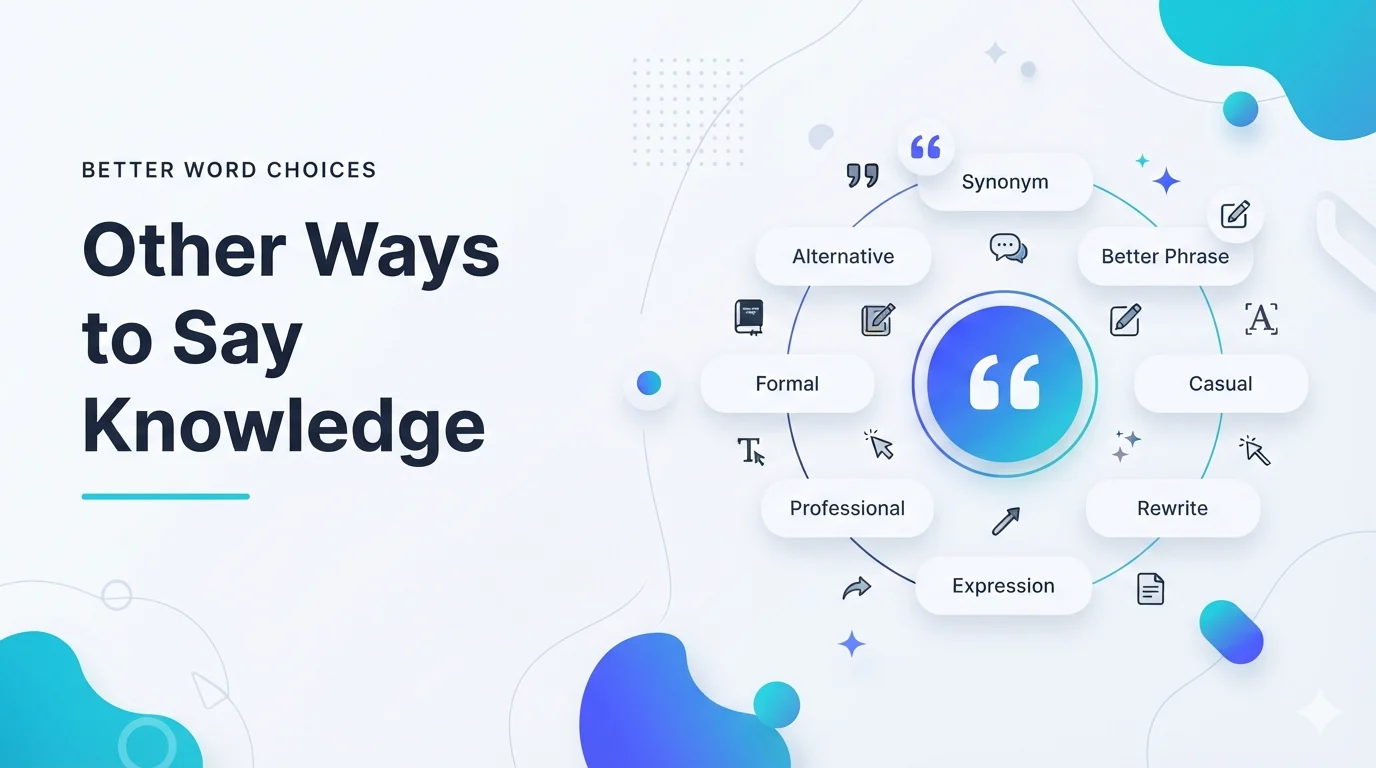
This guide breaks down 30 alternatives to knowledge, organized by tone and context, so you always know which word fits best.
“The right word doesn’t just inform. It shows exactly how much you understand.”
Quick Categories
Formal Alternatives to “Knowledge”
- Expertise – deep, specialized skill in a field
- Comprehension – full understanding of a subject
- Erudition – extensive scholarly knowledge
- Proficiency – skilled competence in a subject
Pro Tip: Use “expertise” in resumes and professional bios; it sounds confident and credible without being boastful.
Casual Alternatives to “Knowledge”
- Know-how – practical skill or ability
- Smarts – natural intelligence or cleverness
- Grasp – basic understanding of something
- Info – short, casual version of “information”
Pro Tip: Save “smarts” and “info” for friendly conversations, not emails to your boss.
Professional Alternatives to “Knowledge”
- Competency – demonstrated skill or ability
- Acumen – sharp judgment in a specific area
- Mastery – complete command of a subject
- Insight – deep or valuable understanding
Pro Tip: “Acumen” works well in performance reviews, especially when paired with a field, like “financial acumen.”
Informal Expressions
- Street smarts – practical knowledge from real-life experience
- A good handle on – a working understanding of something
- Know a thing or two – have some useful knowledge
- Clued in – aware and informed about something
Pro Tip: Informal expressions like “clued in” work great in casual chats but should be avoided in formal reports.
“Fluency isn’t about big words. It’s about the right word at the right moment.”
Common Mistakes
- Overusing “knowledge” in academic writing Mistake: “The study increased knowledge about knowledge gaps.” Fix: “The study increased understanding of existing gaps.”
- Using slang alternatives in formal emails Mistake: “I have decent smarts about this topic.” Fix: “I have a solid understanding of this topic.”
- Confusing “knowledge” with “information” Mistake: “She shared her knowledge about the meeting time.” Fix: “She shared information about the meeting time.”
- Misusing “erudition” in casual speech Mistake: “My friend has real erudition about video games.” Fix: “My friend really knows a lot about video games.”
- Treating “expertise” and “know-how” as identical Mistake: Using “expertise” for basic practical skills. Fix: Use “know-how” for hands-on skills and “expertise” for advanced, specialized skill.
What Does “Knowledge” Mean?
Knowledge is a noun that refers to facts, information, and understanding gained through experience, education, or study. It is uncountable, so it does not take a plural form (you cannot say “knowledges”).
Example Sentence: Her knowledge of ancient history impressed the entire panel.
When to Use “Knowledge”
- Academic writing and research papers
- Professional resumes and interviews
- Everyday conversations about learning or skills
- Discussing expertise in a specific field
Spoken vs Written
- Spoken: Often shortened or replaced with casual terms like “know-how” or “smarts.”
- Written: Typically kept formal, especially in essays, reports, and cover letters.
Formal vs Informal
- Formal: “Her knowledge of the subject was extensive.”
- Informal: “She really knows her stuff.”
Is It Professional or Polite to Say “Knowledge”?
The word “knowledge” itself is neutral, polite, and professional in almost every context. It works well in business emails, presentations, and academic settings.
Business Example: “Your knowledge of market trends will be valuable for this project.”
Polite? ✔️ Yes Professional? ✔️ Yes
Pros and Cons of Using “Knowledge”
Pros
- Simple and natural
- Widely understood across contexts
- Neutral tone suitable for most situations
- Easy to combine with other words (e.g., “prior knowledge,” “expert knowledge”)
Cons
- Can feel repetitive if overused
- Lacks nuance compared to specific synonyms
- Doesn’t always convey depth or level of skill
- May sound generic in creative or persuasive writing
Other Ways to Say Knowledge
These alternatives will help you sound more fluent, confident, and natural in different situations.
Use them according to tone, context, and audience to express excitement, admiration, or approval.
1. Phrase: Expertise
Meaning: Advanced skill or knowledge in a specific area.
Explanation: Used to highlight professional or specialized ability.
Example Sentence: His expertise in cybersecurity made him the top candidate.
Best Use: resumes, interviews
Worst Use: casual chats
Tone: formal, confident, professional
Context Variability: professional
2. Phrase: Understanding
Meaning: The ability to grasp meaning or concepts.
Explanation: A general term for comprehension of a topic or situation.
Example Sentence: A clear understanding of the rules will help you succeed.
Best Use: education, discussions
Worst Use: technical reports
Tone: neutral, clear, accessible
Context Variability: casual, professional, spoken
3. Phrase: Wisdom
Meaning: Deep understanding gained through experience.
Explanation: Suggests maturity and sound judgment, not just facts.
Example Sentence: Her wisdom helped the team make a difficult decision.
Best Use: mentorship, advice
Worst Use: technical writing
Tone: thoughtful, respectful, warm
Context Variability: spoken, professional
4. Phrase: Insight
Meaning: A deep or accurate understanding of something.
Explanation: Often used when someone reveals something valuable or unexpected.
Example Sentence: Her insight into customer behavior boosted our sales strategy.
Best Use: analysis, presentations
Worst Use: small talk
Tone: sharp, valuable, professional
Context Variability: professional, spoken
5. Phrase: Know-how
Meaning: Practical skill or ability to do something.
Explanation: Focuses on hands-on ability rather than theoretical facts.
Example Sentence: You need technical know-how to fix this machine.
Best Use: trades, technical work
Worst Use: academic essays
Tone: practical, casual, direct
Context Variability: casual, spoken
6. Phrase: Comprehension
Meaning: The ability to understand something fully.
Explanation: Common in academic and educational contexts.
Example Sentence: The test measured students’ reading comprehension.
Best Use: education, testing
Worst Use: casual conversation
Tone: formal, academic, precise
Context Variability: professional
7. Phrase: Erudition
Meaning: Extensive knowledge gained through study.
Explanation: A formal, academic word for deep scholarly knowledge.
Example Sentence: The professor’s erudition impressed every student.
Best Use: academic writing
Worst Use: everyday speech
Tone: sophisticated, formal, scholarly
Context Variability: professional
8. Phrase: Proficiency
Meaning: Skilled competence in a particular area.
Explanation: Highlights a measurable level of skill or ability.
Example Sentence: Her proficiency in French helped during negotiations.
Best Use: skills, language
Worst Use: casual chats
Tone: formal, measurable, confident
Context Variability: professional
9. Phrase: Mastery
Meaning: Complete control or command of a subject.
Explanation: Suggests the highest level of skill possible.
Example Sentence: His mastery of chess strategy amazed his opponents.
Best Use: skill achievement
Worst Use: minor topics
Tone: powerful, confident, impressive
Context Variability: professional, spoken
10. Phrase: Acumen
Meaning: Sharp judgment and expertise in a specific field.
Explanation: Often paired with a specific area, like “business acumen.”
Example Sentence: Her financial acumen saved the company millions.
Best Use: business, finance
Worst Use: casual talk
Tone: sharp, professional, respected
Context Variability: professional
11. Phrase: Competency
Meaning: The ability to do something successfully.
Explanation: Common in HR and workplace evaluations.
Example Sentence: Communication competency is essential for this role.
Best Use: workplace reviews
Worst Use: creative writing
Tone: formal, structured, clear
Context Variability: professional
12. Phrase: Familiarity
Meaning: A general understanding gained through exposure.
Explanation: Suggests comfort with a topic rather than deep expertise.
Example Sentence: Her familiarity with the software made training easy.
Best Use: onboarding, training
Worst Use: expert-level discussions
Tone: light, approachable, easy
Context Variability: casual, professional
13. Phrase: Grasp
Meaning: A basic to moderate understanding of a topic.
Explanation: Often used casually to describe partial understanding.
Example Sentence: He has a good grasp of basic economics.
Best Use: casual explanations
Worst Use: formal reports
Tone: simple, direct, friendly
Context Variability: casual, spoken
14. Phrase: Awareness
Meaning: Knowledge or perception of a situation or fact.
Explanation: Focuses on knowing something exists rather than deep detail.
Example Sentence: Public awareness of climate change has increased.
Best Use: social topics
Worst Use: technical skills
Tone: neutral, informative, broad
Context Variability: casual, professional
15. Phrase: Learning
Meaning: Knowledge acquired through study or experience.
Explanation: Can refer to the process or the result of gaining knowledge.
Example Sentence: Years of learning shaped her teaching style.
Best Use: education contexts
Worst Use: technical expertise
Tone: gentle, educational, warm
Context Variability: casual, professional
16. Phrase: Command (of a subject)
Meaning: Strong control or mastery over a topic.
Explanation: Suggests confidence and authority in a subject area.
Example Sentence: He has an impressive command of English grammar.
Best Use: language, public speaking
Worst Use: minor tasks
Tone: authoritative, confident, strong
Context Variability: professional, spoken
17. Phrase: Savvy
Meaning: Practical knowledge and good judgment.
Explanation: Often paired with a field, like “tech savvy” or “street savvy.”
Example Sentence: Her marketing savvy helped the campaign go viral.
Best Use: informal business talk
Worst Use: academic writing
Tone: modern, sharp, casual
Context Variability: casual, professional, spoken
18. Phrase: Insightfulness
Meaning: The quality of showing deep or accurate understanding.
Explanation: Describes a person’s tendency to notice important details.
Example Sentence: Her insightfulness during the meeting impressed everyone.
Best Use: feedback, praise
Worst Use: technical manuals
Tone: thoughtful, admiring, warm
Context Variability: professional, spoken
19. Phrase: Scholarship
Meaning: Academic knowledge and research expertise.
Explanation: Usually refers to formal academic achievement.
Example Sentence: His scholarship in linguistics is widely respected.
Best Use: academic writing
Worst Use: everyday speech
Tone: formal, respected, scholarly
Context Variability: professional
20. Phrase: Enlightenment
Meaning: A state of having gained deep understanding or insight.
Explanation: Often used in philosophical or spiritual contexts.
Example Sentence: Reading that book brought him a sense of enlightenment.
Best Use: philosophy, personal growth
Worst Use: technical documents
Tone: deep, reflective, meaningful
Context Variability: spoken, casual
21. Phrase: Grounding (in a subject)
Meaning: A basic but solid foundation of knowledge.
Explanation: Suggests a strong starting point rather than expert level.
Example Sentence: She has a good grounding in statistics.
Best Use: education, training
Worst Use: expert-level claims
Tone: solid, foundational, neutral
Context Variability: professional
22. Phrase: Street smarts
Meaning: Practical knowledge gained from real-world experience.
Explanation: Contrasts with academic or theoretical knowledge.
Example Sentence: His street smarts helped him navigate tricky negotiations.
Best Use: informal conversation
Worst Use: formal writing
Tone: practical, bold, informal
Context Variability: casual, spoken
23. Phrase: A good handle on
Meaning: A working understanding of a topic or task.
Explanation: A casual phrase for competent, practical understanding.
Example Sentence: She has a good handle on the new software.
Best Use: workplace chats
Worst Use: academic papers
Tone: relaxed, approachable, casual
Context Variability: casual, spoken
24. Phrase: Know a thing or two
Meaning: To have some useful knowledge or experience.
Explanation: An idiomatic, understated way to claim expertise.
Example Sentence: He knows a thing or two about fixing cars.
Best Use: casual conversation
Worst Use: formal presentations
Tone: humble, friendly, informal
Context Variability: casual, spoken
25. Phrase: Clued in
Meaning: Aware and informed about a specific topic.
Explanation: Suggests someone is up to date or well informed.
Example Sentence: She’s clued in on all the latest industry trends.
Best Use: casual updates
Worst Use: formal reports
Tone: modern, casual, direct
Context Variability: casual, spoken
26. Phrase: Smarts
Meaning: Natural intelligence or practical cleverness.
Explanation: An informal way to refer to intelligence or knowledge.
Example Sentence: She used her business smarts to close the deal.
Best Use: informal praise
Worst Use: professional documents
Tone: casual, admiring, friendly
Context Variability: casual, spoken
27. Phrase: Info
Meaning: A short, casual version of “information.”
Explanation: Common in texting and informal speech.
Example Sentence: Send me the info before the meeting starts.
Best Use: texting, casual chat
Worst Use: formal writing
Tone: casual, quick, informal
Context Variability: casual, spoken
28. Phrase: Depth of knowledge
Meaning: The extent or level of understanding someone has.
Explanation: Used to describe how thorough someone’s knowledge is.
Example Sentence: His depth of knowledge on tax law is impressive.
Best Use: professional evaluations
Worst Use: casual talk
Tone: formal, detailed, respectful
Context Variability: professional
29. Phrase: Body of knowledge
Meaning: The complete set of information within a field.
Explanation: Often used to describe an entire academic or professional discipline.
Example Sentence: The body of knowledge in AI research grows every year.
Best Use: academic, research
Worst Use: personal conversations
Tone: formal, broad, academic
Context Variability: professional
30. Phrase: Intellect
Meaning: The capacity for knowledge, reasoning, and understanding.
Explanation: Refers to mental ability rather than specific facts.
Example Sentence: Her sharp intellect made her a valuable team member.
Best Use: praise, descriptions
Worst Use: casual small talk
Tone: elevated, respectful, formal
Context Variability: professional, spoken
“Expertise builds trust. Wisdom builds respect. Choose your word carefully.”
Mini Quiz
1. Which word best fits a formal resume?
a) Smarts
b) Expertise
c) Info
d) Clued in
2. Which phrase suggests practical, hands-on ability?
a) Erudition
b) Scholarship
c) Know-how
d) Enlightenment
3. Which word is most appropriate in casual conversation with friends?
a) Acumen
b) Know a thing or two
c) Comprehension
d) Mastery
4. Complete the sentence: “Her financial ___ helped the company grow.”
a) info
b) acumen
c) grasp
d) smarts
“Answers: 1-b, 2-c, 3-b, 4-b”
Comparison Table: Top Alternatives
| Phrase | Tone | Best Use |
|---|---|---|
| Expertise | Formal | Resumes, interviews |
| Understanding | Neutral | Education, discussions |
| Wisdom | Thoughtful | Mentorship, advice |
| Insight | Sharp | Analysis, presentations |
| Know-how | Practical | Trades, technical work |
| Mastery | Powerful | Skill achievement |
| Acumen | Professional | Business, finance |
| Competency | Formal | Workplace reviews |
| Savvy | Modern | Informal business talk |
| Street smarts | Practical | Informal conversation |
FAQs
1. What is the most professional way to say “knowledge”?
“Expertise” or “proficiency” are the most professional alternatives, especially in resumes and interviews.
2. Is “know-how” formal or informal?
“Know-how” is informal to neutral, best suited for casual or practical workplace conversations.
3. What is a polite synonym for “knowledge” in business emails?
“Understanding” or “insight” work well in polite, professional emails.
4. What is the difference between “wisdom” and “knowledge”?
Knowledge refers to facts and information, while wisdom involves applying that knowledge with good judgment.
5. Can “smarts” be used in formal writing?
No, “smarts” is casual and should be avoided in formal or academic writing.
Conclusion
Expanding your vocabulary beyond the word “knowledge” makes your English sound more natural, precise, and confident. Whether you choose “expertise” for a resume, “insight” for a presentation, or “know-how” for a casual chat, each alternative adds a distinct shade of meaning.
Practice using these alternatives daily in your speaking and writing. Pay attention to tone and context, and you’ll notice your fluency and professionalism improve steadily over time.
Read More Related Articles:
- Other Ways to Say “About Me” | Make Your Introduction Memorable In 2026
- Other Ways to Say Thank You | Say It Better With These Perfect Phrases In 2026
- Other Ways to Say Smoking Weed | Find the Right Phrase for the Situation In 2026

Daniel Murphy is a professional writer and blogger specializing in digital communication and messaging trends. As a contributor to TextsResponse.com, he creates reader-focused content designed to help people find the right words at the right time.