Quick Answer
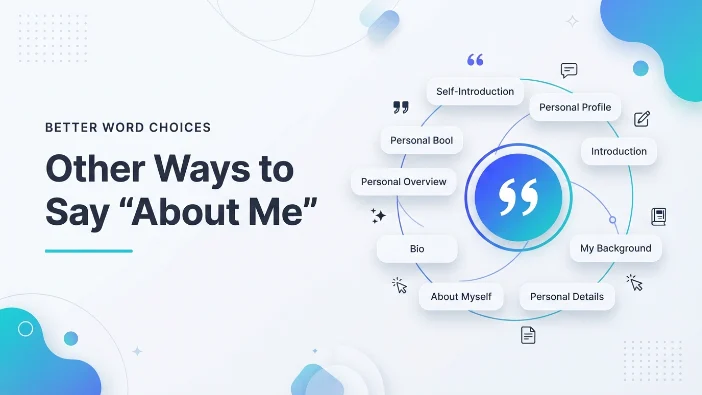
Looking for alternatives to “about me” for your bio, resume, or introduction? The best substitutes are my story, who I am, my background, get to know me, and my profile. Each one shifts the tone slightly, so picking the right phrase depends on whether you’re writing a formal bio, a casual social post, or a professional summary.“My story, who I am, my background, get to know me, my profile.”
“About me” is one of the most common headings in English, used to introduce a person’s identity, background, interests, or professional experience. You’ll see it on resumes, personal websites, social media bios, dating profiles, and networking platforms like LinkedIn.
People rely on this phrase so often that it can start to sound repetitive or generic. Learning alternatives to “about me” helps your writing feel fresh, personal, and tailored to your audience, whether you’re introducing yourself in a job interview or trying to express excitement in English about your own journey.
Knowing multiple ways to introduce yourself also builds fluency. It shows you understand tone, context, and audience, three skills that separate confident English speakers from beginners who rely on the same phrase every time.
Quick Categories
Formal alternatives to “About Me”
- My Background
- Professional Summary
- Who I Am
- A Brief Introduction
Casual alternatives
- Get to Know Me
- A Little About Me
- Here’s My Story
- My Life in a Nutshell
Professional alternatives
- Professional Profile
- Career Overview
- My Journey
- Executive Summary
Informal expressions
- The Deets on Me
- My Vibe
- What Makes Me, Me
- Meet Yours Truly
Pro Tip: Match the phrase to the platform. Use “Professional Summary” on a resume, but save “My Vibe” for casual social bios.
Common Mistakes
Even confident English speakers slip up when replacing “about me.” Here are five common errors.
- Using slang in formal documents Wrong context example: “My Vibe” on a corporate resume header.
- Overusing the exact phrase repeatedly on one page Example: Writing “about me” three times on a single landing page instead of varying it.
- Choosing a phrase that doesn’t match tone Example: Using “The Deets on Me” in a business proposal introduction.
- Forgetting audience expectations Example: Writing “Who I Am” in a playful dating app bio meant to feel fun and light.
- Translating literally from another language Example: “About Myself Information” instead of the natural “About Me.”
Small wording choices shape how people perceive your professionalism.
What Does “About Me” Mean?
About me” is a short introductory phrase used as a heading or opener before a person shares personal information, background, achievements, or interests. Grammatically, “about” functions as a preposition, and “me” is the object pronoun it governs, together forming a noun phrase used as a title or topic marker.
Example Sentence: “In the About Me section, I shared my career goals and hobbies.”
When to Use “About Me”
- Resumes and CVs: as a section heading for a personal summary
- Personal websites: to introduce the site owner
- Social media bios: Instagram, Twitter, LinkedIn profiles
- Dating apps: to describe personality and interests
- Spoken introductions: less common, usually replaced with “Let me tell you about myself”
Spoken vs Written: In writing, “About Me” works well as a heading. In speech, people usually say “Let me tell you a bit about myself” instead.
Formal vs Informal: The phrase itself is neutral, but the content under it can shift from casual storytelling to a formal professional summary.
Is It Professional or Polite to Say “About Me”?
About me” is polite and widely accepted in almost every setting. However, it is not always the most professional choice for formal business documents, where terms like “Professional Summary” or “Executive Summary” carry more weight.
Business Example: “Please review the Professional Summary section before our interview” sounds more polished than “Please review the About Me section.”
Polite? Yes Professional? No, in most formal business contexts
Pros and Cons of Using “About Me”
Pros
- Simple and natural
- Friendly tone
- Common usage
- Easy to understand
Cons
- Too informal for work
- Overused
- Limited emotional range
- Not suitable for formal writing
“Confidence in English comes from knowing when, not just what, to say.”
Other Ways to Say “About Me”
These alternatives will help you sound more fluent, confident, and natural in different situations. Use them according to tone, context, and audience to express excitement, admiration, or approval when introducing yourself.
1. Phrase: My Story
- Meaning: A personal narrative introduction.
- Explanation: Frames your background as a journey rather than a list of facts.
- Example Sentence: “My Story: From a small town to running my own company.”
- Best Use: Personal websites, blogs
- Worst Use: Legal documents
- Tone: Warm, personal
- Context Variability: Casual, spoken, professional
2. Phrase: Who I Am
- Meaning: A direct statement of identity.
- Explanation: Emphasizes character and values over achievements.
- Example Sentence: “Who I Am: A designer passionate about accessible technology.”
- Best Use: Personal branding
- Worst Use: Technical resumes
- Tone: Confident, reflective
- Context Variability: Professional, casual
3. Phrase: My Background
- Meaning: A summary of education, experience, or history.
- Explanation: Common on resumes and professional bios.
- Example Sentence: “My Background includes five years in digital marketing.”
- Best Use: Resumes, LinkedIn
- Worst Use: Dating profiles
- Tone: Formal, factual
- Context Variability: Professional, written
4. Phrase: Get to Know Me
- Meaning: An invitation for the reader to learn more.
- Explanation: Feels welcoming and conversational.
- Example Sentence: “Get to Know Me: I love hiking and building apps on weekends.”
- Best Use: Social media bios
- Worst Use: Formal reports
- Tone: Friendly, inviting
- Context Variability: Casual, spoken
5. Phrase: A Little About Me
- Meaning: A modest, informal self-introduction.
- Explanation: Softens the tone before sharing personal details.
- Example Sentence: “A Little About Me: I’m a teacher who loves painting.”
- Best Use: Personal blogs
- Worst Use: Corporate bios
- Tone: Humble, friendly
- Context Variability: Casual, spoken
6. Phrase: My Journey
- Meaning: A narrative of personal or career growth.
- Explanation: Highlights progress and transformation over time.
- Example Sentence: “My Journey started as an intern and led to becoming CEO.”
- Best Use: Motivational content
- Worst Use: Short bios
- Tone: Inspiring, reflective
- Context Variability: Professional, spoken
7. Phrase: Professional Summary
- Meaning: A concise overview of career qualifications.
- Explanation: Standard resume heading favored by recruiters.
- Example Sentence: “Professional Summary: Marketing specialist with 7 years of experience.”
- Best Use: Resumes, CVs
- Worst Use: Casual bios
- Tone: Formal, precise
- Context Variability: Professional, written
8. Phrase: Executive Summary
- Meaning: A brief, high-level overview typically for senior roles.
- Explanation: Used in business or leadership-focused documents.
- Example Sentence: “Executive Summary: Strategic leader with a record of scaling startups.”
- Best Use: Leadership resumes
- Worst Use: Student profiles
- Tone: Authoritative, formal
- Context Variability: Professional
9. Phrase: Career Overview
- Meaning: A snapshot of professional experience.
- Explanation: Focuses purely on work history and skills.
- Example Sentence: “Career Overview: Software engineer specializing in cloud systems.”
- Best Use: LinkedIn, resumes
- Worst Use: Personal blogs
- Tone: Factual, professional
- Context Variability: Professional, written
10. Phrase: A Brief Introduction
- Meaning: A short, formal self-presentation.
- Explanation: Suitable for official or academic contexts.
- Example Sentence: “A Brief Introduction: I am a researcher focused on renewable energy.”
- Best Use: Academic bios
- Worst Use: Dating apps
- Tone: Formal, polite
- Context Variability: Professional, spoken
11. Phrase: Here’s My Story
- Meaning: A casual lead-in to a personal narrative.
- Explanation: Sounds conversational and approachable.
- Example Sentence: “Here’s My Story: I switched careers at 30 and never looked back.”
- Best Use: Podcasts, blogs
- Worst Use: Cover letters
- Tone: Casual, engaging
- Context Variability: Casual, spoken
12. Phrase: My Life in a Nutshell
- Meaning: A quick, simplified summary of one’s life.
- Explanation: Uses an idiom to suggest brevity and lightness.
- Example Sentence: “My Life in a Nutshell: coffee, code, and constant curiosity.”
- Best Use: Social bios
- Worst Use: Formal writing
- Tone: Playful, light
- Context Variability: Casual
13. Phrase: Meet Yours Truly
- Meaning: A playful way to introduce oneself.
- Explanation: Adds humor and personality to an introduction.
- Example Sentence: “Meet Yours Truly: baker by day, gamer by night.”
- Best Use: Informal bios
- Worst Use: Business settings
- Tone: Humorous, informal
- Context Variability: Casual, spoken
14. Phrase: My Profile
- Meaning: A structured personal or professional summary.
- Explanation: Common on networking and social platforms.
- Example Sentence: “My Profile highlights my skills in graphic design.”
- Best Use: LinkedIn, apps
- Worst Use: Creative writing
- Tone: Neutral, structured
- Context Variability: Professional, casual
15. Phrase: What Makes Me, Me
- Meaning: A description of unique personal traits.
- Explanation: Focuses on individuality and personality.
- Example Sentence: “What Makes Me, Me: curiosity, honesty, and a love for travel.”
- Best Use: Creative bios
- Worst Use: Technical resumes
- Tone: Expressive, personal
- Context Variability: Casual, spoken
16. Phrase: My Vibe
- Meaning: A slang term describing personality or energy.
- Explanation: Very informal and popular among younger audiences.
- Example Sentence: “My Vibe: laid-back, creative, and always up for adventure.”
- Best Use: Social media
- Worst Use: Professional settings
- Tone: Trendy, informal
- Context Variability: Casual
17. Phrase: The Deets on Me
- Meaning: A slang phrase meaning “the details about me.”
- Explanation: Very casual and playful, with “deets” meaning details.
- Example Sentence: “The Deets on Me: dog lover, foodie, and weekend hiker.”
- Best Use: Casual bios
- Worst Use: Business documents
- Tone: Playful, slang
- Context Variability: Casual
18. Phrase: Personal Overview
- Meaning: A structured but informal summary of oneself.
- Explanation: Sits between a formal and casual tone.
- Example Sentence: “Personal Overview: Creative thinker with a passion for design.”
- Best Use: Portfolios
- Worst Use: Dating apps
- Tone: Balanced, clear
- Context Variability: Professional, casual
19. Phrase: Introducing Myself
- Meaning: A direct, polite self-introduction.
- Explanation: Common as an opener in spoken and written contexts.
- Example Sentence: “Introducing Myself: I’m a project manager with a global team background.”
- Best Use: Interviews, meetings
- Worst Use: Social media
- Tone: Polite, formal
- Context Variability: Professional, spoken
20. Phrase: My Background Story
- Meaning: A combination of personal history and narrative.
- Explanation: Slightly more descriptive than “my background.”
- Example Sentence: “My Background Story includes years of volunteering abroad.”
- Best Use: Personal websites
- Worst Use: Technical CVs
- Tone: Warm, descriptive
- Context Variability: Casual, professional
21. Phrase: Behind the Name
- Meaning: A creative way to introduce personal identity.
- Explanation: Adds intrigue, often used in branding.
- Example Sentence: “Behind the Name: The story of how I started this business.”
- Best Use: Branding, blogs
- Worst Use: Formal reports
- Tone: Creative, engaging
- Context Variability: Casual
22. Phrase: My Path
- Meaning: A description of one’s career or life direction.
- Explanation: Suggests growth and intentional choices.
- Example Sentence: “My Path led me from teaching to tech entrepreneurship.”
- Best Use: Motivational bios
- Worst Use: Short summaries
- Tone: Reflective, inspiring
- Context Variability: Professional, spoken
23. Phrase: Snapshot of Me
- Meaning: A quick, visual-style summary of oneself.
- Explanation: Implies brevity and clarity.
- Example Sentence: “Snapshot of Me: analyst, traveler, and coffee enthusiast.”
- Best Use: Social bios
- Worst Use: Formal writing
- Tone: Light, concise
- Context Variability: Casual
24. Phrase: My Professional Journey
- Meaning: A focused narrative of career development.
- Explanation: Combines storytelling with professional detail.
- Example Sentence: “My Professional Journey spans finance, tech, and consulting.”
- Best Use: LinkedIn summaries
- Worst Use: Casual chats
- Tone: Formal, narrative
- Context Variability: Professional
25. Phrase: Say Hello
- Meaning: A friendly, casual greeting-style introduction.
- Explanation: Common as a website or bio heading.
- Example Sentence: “Say Hello: I’m a photographer based in Lahore.”
- Best Use: Personal websites
- Worst Use: Resumes
- Tone: Friendly, casual
- Context Variability: Casual, spoken
26. Phrase: My Credentials
- Meaning: A summary of qualifications and achievements.
- Explanation: Focuses strictly on formal accomplishments.
- Example Sentence: “My Credentials include a master’s degree and two certifications.”
- Best Use: Academic, formal bios
- Worst Use: Social media
- Tone: Formal, factual
- Context Variability: Professional
27. Phrase: My Personal Brand
- Meaning: A description of one’s professional identity and image.
- Explanation: Common in marketing and business contexts.
- Example Sentence: “My Personal Brand centers on honesty and innovation.”
- Best Use: Business profiles
- Worst Use: Casual introductions
- Tone: Strategic, professional
- Context Variability: Professional
28. Phrase: Who’s Behind This
- Meaning: A casual way to reveal the person behind a brand or page.
- Explanation: Often used on business or blog “About” pages.
- Example Sentence: “Who’s Behind This: A small team of passionate designers.”
- Best Use: Business websites
- Worst Use: Resumes
- Tone: Casual, curious
- Context Variability: Casual
29. Phrase: A Bit of Background
- Meaning: A modest lead-in to sharing personal history.
- Explanation: Softer and more conversational than “my background.”
- Example Sentence: “A Bit of Background: I grew up in a family of teachers.”
- Best Use: Interviews, blogs
- Worst Use: Executive resumes
- Tone: Humble, conversational
- Context Variability: Casual, spoken
30. Phrase: My Introduction
- Context Variability: Professional, casual, spoken
- Meaning: A straightforward opening statement about oneself.
- Explanation: Neutral and versatile across contexts.
- Example Sentence: “My Introduction: A curious mind with a love for problem-solving.”
- Best Use: Interviews, bios
- Worst Use: None; highly flexible
- Tone: Neutral, clear
“Every phrase carries a mood. Choose the one that matches your intention.”
Mini Quiz
1. Which phrase is best for a corporate resume heading?
- A) My Vibe
- B) Professional Summary
- C) The Deets on Me
Answer: B) Professional Summary
2. Which phrase fits a casual Instagram bio best?
- A) Executive Summary
- B) My Credentials
- C) Get to Know Me
Answer: C) Get to Know Me
3. True or False: “My Vibe” is appropriate for a formal business proposal.
Answer: False
4. Which phrase works well for both spoken interviews and written bios?
- A) My Introduction
- B) The Deets on Me
- C) Behind the Name
Answer: A) My Introduction
5. Which phrase is best for a personal website or blog?
- A) My Story
- B) Executive Summary
- C) My Credentials
Answer: A) My Story
“Great English isn’t about knowing more words. It’s about knowing which word fits the moment.”
Comparison Table: Top Alternatives
| Phrase | Tone | Best Use |
|---|---|---|
| My Story | Warm, personal | Personal websites, blogs |
| Who I Am | Confident, reflective | Personal branding |
| My Background | Formal, factual | Resumes, LinkedIn |
| Get to Know Me | Friendly, inviting | Social media bios |
| Professional Summary | Formal, precise | Resumes, CVs |
| Executive Summary | Authoritative, formal | Leadership resumes |
| Career Overview | Factual, professional | LinkedIn, resumes |
| Here’s My Story | Casual, engaging | Podcasts, blogs |
| My Vibe | Trendy, informal | Social media |
| My Introduction | Neutral, clear | Interviews, bios |
FAQs
What is the most professional way to say “about me”?
“Professional Summary” or “Career Overview” are the most professional alternatives, especially for resumes and LinkedIn profiles.
What is a casual way to say “about me”?
“Get to Know Me” or “A Little About Me” work well for social media and personal blogs.
Can I use “who I am” instead of “about me” on a resume?
Yes, but it works best for personal branding sections rather than traditional resume headings.
Is “about me” too informal for a job application?
Not necessarily, but “Professional Summary” often sounds more polished for formal applications.
Why should I use different ways to say “about me”?
Using varied phrases improves fluency, keeps your writing engaging, and helps you match tone to your audience and platform.
Conclusion
Learning multiple ways to say “about me” gives you more control over how you present yourself in different situations, from job applications to social media bios. Whether you need something formal like “Professional Summary” or something playful like “My Vibe,” choosing the right phrase strengthens how clearly and confidently you communicate.
Practice using these alternatives daily in your writing and conversations. Pay attention to tone, audience, and context each time, and you’ll naturally develop the fluency and confidence that fluent English speakers rely on every day.
Read More Related Articles:
- Other Ways to Say “This Shows That” | Express Your Ideas with Confidence In 2026
- Other Ways to Say “Which” in English | Beyond the Common Choices In 2026
- Other Ways to Say Also in an Essay | Make Your Writing Shine In 2026

Henry Walker is an American writer and blogger with a keen interest in communication, language and digital content. At TextsResponse.com, he creates informative and reader-focused resources designed to help people communicate with clarity, confidence and authenticity.