Quick Answer
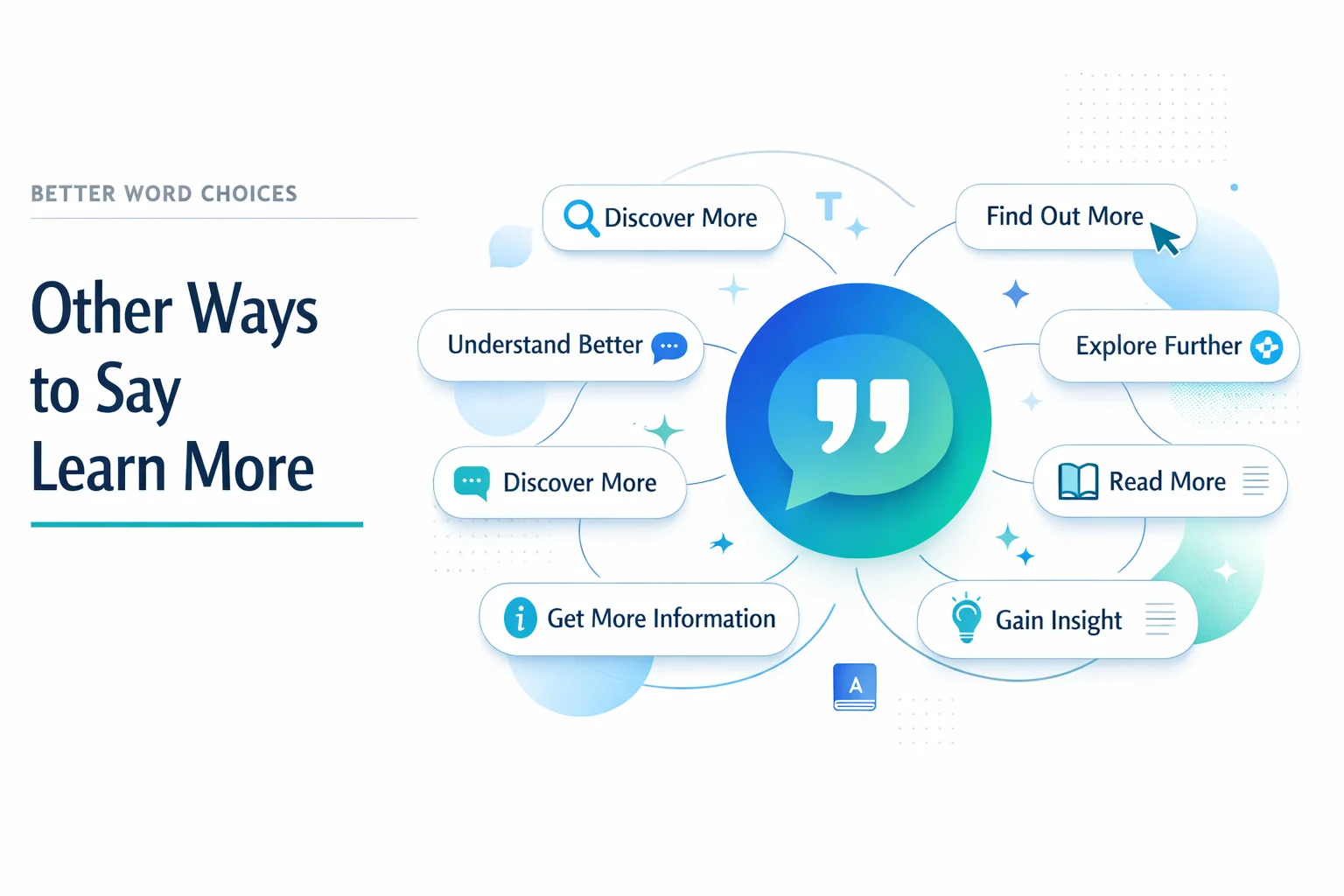
Looking for alternatives to “learn more”?The most common substitutes are: discover more, find out more, explore further, get more details, and dive deeper. Each carries a slightly different tone, so choosing the right one depends on whether you are writing a formal report, a casual message, or a marketing call-to-action.
Learn more” is one of the most common phrases in English writing. It appears in emails, websites, advertisements, and everyday conversation whenever someone wants to invite another person to gain additional knowledge or information about a topic.
People use this phrase because it is simple, direct, and universally understood. However, repeating the same expression again and again can make your writing feel flat or robotic. This is why knowing several other ways to say “learn more” is so valuable, especially for professionals writing marketing copy, business emails, or educational content.
Expanding your vocabulary with fresh alternatives also helps you express excitement in English more naturally, match your tone to your audience, and avoid sounding repetitive. Whether you need a formal phrase for a corporate report or a casual expression for a text message, this guide covers it all.
The right tone makes your English sound professional and confident.
Quick Categories
Formal Alternatives to “Learn More”
- Obtain further information
- Acquire additional knowledge
- Gain further insight
- Access detailed information
Pro Tips Box: In formal writing, pair these phrases with a clear subject, such as “Readers may obtain further information regarding the policy changes,” to keep sentences professional and precise.
Casual Alternatives
- Check it out
- Dig deeper
- Get the full scoop
- See what it’s all about
Pro Tips Box: Casual alternatives work best in social media captions and friendly emails, but avoid them in formal reports or client-facing documents.
Professional Alternatives
- Explore further details
- Review additional resources
- Access more information
- Consult the full documentation
Pro Tips Box: Professional alternatives sound polished in workplace emails and presentations because they suggest a clear, actionable next step.
Informal Expressions
- Nose around a bit more
- Poke around for details
- Get the lowdown
- Snoop around the topic
Pro Tips Box: Save informal expressions for conversations with friends or casual online communities, since they can sound unprofessional in business settings.
Small word choices create a big difference in how confident you sound.
Common Mistakes People Make
- Overusing the exact phrase repeatedly Example: “Learn more here. Learn more about pricing. Learn more today.” This repetition feels robotic and reduces reader engagement.
- Using casual alternatives in formal writing Example: “Check it out for the quarterly report” sounds too informal for a business audience.
- Choosing vague alternatives without context Example: “Find out” alone, without an object, leaves the sentence incomplete and unclear.
- Ignoring audience tone Example: Using “get the lowdown” in a legal document confuses the professional tone the writer intended.
- Forgetting a call-to-action structure Example: “More info” without a verb weakens the invitation compared to “Discover more information here.”
What Does “Learn More” Mean?
“Learn more” is a verb phrase that invites someone to gain additional knowledge or details about a specific subject. Grammatically, it combines the verb learn with the comparative adverb more, and it is often followed by a preposition such as “about” or “on.”
Example Sentence: “Visit our website to learn more about the upcoming event.”
When to Use “Learn More”
Common contexts include:
- Marketing calls-to-action on websites and ads
- Educational platforms encouraging further study
- Email newsletters directing readers to additional content
- Customer service replies offering more details
Spoken vs Written
In spoken English, people often use casual alternatives like “check it out” or “dig deeper.” In written English, especially formal documents, phrases like “obtain further information” or “review additional resources” are more appropriate.
Formal vs Informal
Formal writing favors precise, professional alternatives, while informal conversations allow relaxed expressions such as “get the scoop” or “poke around.”
Is It Professional or Polite to Say “Learn More”?
“Learn more” is polite and widely accepted in everyday communication, but it is only moderately professional. In formal business writing, more specific alternatives often sound stronger.
Business Example: Instead of “Learn more about our services,” a formal report might say, “Stakeholders may consult the attached documentation for further details.
Polite? ✔️ Yes Professional? ❌ No (in most formal contexts)
Pros and Cons of Using “Learn More”
Pros:
- Simple and natural
- Friendly tone
- Common usage
- Easy to understand
Cons:
- Too informal for work
- Overused
- Limited emotional range
- Not suitable for formal writing
“Fluency comes from variety, not repetition.”
Other Ways to Say Learn More
These alternatives will help you sound more fluent, confident, and natural in different situations. Use them according to tone, context, and audience to express excitement, admiration, or approval while inviting someone to explore a topic further.
1. Discover More
Meaning: Learn additional information about a topic.
Explanation: An engaging phrase that encourages readers to continue exploring and uncover new insights.
Example Sentence: Discover more about our latest collection on our website.
Best Use: Marketing campaigns, websites
Worst Use: Legal documents
Tone: Inviting, engaging
Context Variability: Casual, professional
2. Find Out More
Meaning: Learn additional details about something.
Explanation: A versatile phrase that works well in both casual and professional communication.
Example Sentence: Find out more by contacting our support team.
Best Use: Customer service, websites
Worst Use: Academic research papers
Tone: Friendly, clear
Context Variability: Casual, professional, spoken
3. Explore Further
Meaning: Examine a topic in greater depth.
Explanation: Encourages readers to continue learning beyond the basics.
Example Sentence: Explore further to understand how the system works.
Best Use: Educational content, tutorials
Worst Use: Quick text messages
Tone: Professional, thoughtful
Context Variability: Professional, spoken
4. Get More Details
Meaning: Receive additional specific information.
Explanation: Focuses on obtaining clear facts or explanations.
Example Sentence: Get more details by reviewing the attached brochure.
Best Use: Business communication
Worst Use: Casual conversations
Tone: Direct, professional
Context Variability: Professional
5. Dive Deeper
Meaning: Study a topic more thoroughly.
Explanation: Suggests taking a closer and more detailed look at a subject.
Example Sentence: Let’s dive deeper into the quarterly results.
Best Use: Presentations, discussions
Worst Use: Formal legal correspondence
Tone: Engaging, energetic
Context Variability: Casual, professional, spoken
6. Gain More Insight
Meaning: Develop a deeper understanding.
Explanation: Highlights learning and improved comprehension.
Example Sentence: This workshop will help you gain more insight into leadership.
Best Use: Training, education
Worst Use: Casual text messages
Tone: Professional, reflective
Context Variability: Professional
7. Obtain Further Information
Meaning: Acquire additional information.
Explanation: A highly formal expression commonly used in official communication.
Example Sentence: Applicants may obtain further information from the admissions office.
Best Use: Official notices, legal writing
Worst Use: Social media posts
Tone: Formal, precise
Context Variability: Professional, written
8. Check It Out
Meaning: Take a look at something.
Explanation: A relaxed expression that invites someone to explore something interesting.
Example Sentence: Our new collection is live—check it out!
Best Use: Social media, casual conversations
Worst Use: Business reports
Tone: Casual, playful
Context Variability: Casual, spoken
9. Dig Deeper
Meaning: Investigate something more thoroughly.
Explanation: Encourages careful research beyond surface-level information.
Example Sentence: Dig deeper to uncover the reasons behind the decline.
Best Use: Research, investigative content
Worst Use: Formal proposals
Tone: Curious, engaging
Context Variability: Casual, professional
10. Get the Full Scoop
Meaning: Learn the complete story or details.
Explanation: An informal expression that creates curiosity.
Example Sentence: Read the article to get the full scoop on the merger.
Best Use: Blogs, entertainment news
Worst Use: Academic papers
Tone: Informal, fun
Context Variability: Casual, spoken
11. See What It’s All About
Meaning: Understand the overall idea or purpose.
Explanation: Invites someone to explore and learn more in a conversational way.
Example Sentence: Watch the demo and see what it’s all about.
Best Use: Entertainment, product pages
Worst Use: Legal documents
Tone: Casual, curious
Context Variability: Casual, spoken
12. Access Detailed Information
Meaning: View comprehensive information.
Explanation: Commonly used in technical, educational, and official documents.
Example Sentence: Users can access detailed information in the user guide.
Best Use: Technical documentation
Worst Use: Casual conversations
Tone: Formal, informative
Context Variability: Professional
13. Review Additional Resources
Meaning: Examine extra materials for further learning.
Explanation: Encourages readers to continue studying a topic.
Example Sentence: Review additional resources before completing the assignment.
Best Use: Education, training
Worst Use: Social media captions
Tone: Professional, instructional
Context Variability: Professional
14. Consult the Full Documentation
Meaning: Refer to complete official instructions.
Explanation: Directs readers to comprehensive documentation for detailed guidance.
Example Sentence: Consult the full documentation for installation instructions.
Best Use: Technical support
Worst Use: Casual chats
Tone: Formal, technical
Context Variability: Professional
15. Nose Around a Bit More
Meaning: Casually look for additional information.
Explanation: A playful way to encourage further exploration.
Example Sentence: Nose around a bit more and you’ll find some hidden gems.
Best Use: Blogs, lifestyle content
Worst Use: Business emails
Tone: Playful, informal
Context Variability: Casual
16. Poke Around for Details
Meaning: Search casually for more information.
Explanation: Suggests a relaxed, informal investigation.
Example Sentence: I poked around for details before booking the trip.
Best Use: Personal blogs
Worst Use: Official reports
Tone: Relaxed, conversational
Context Variability: Casual, spoken
17. Get the Lowdown
Meaning: Learn the essential facts.
Explanation: An informal phrase commonly used in everyday conversation.
Example Sentence: Ask Sarah to get the lowdown on the new policy.
Best Use: Informal discussions
Worst Use: Professional reports
Tone: Casual, friendly
Context Variability: Casual, spoken
18. Snoop Around the Topic
Meaning: Explore a subject informally.
Explanation: Suggests casually investigating something out of curiosity.
Example Sentence: Feel free to snoop around the topic in our community forum.
Best Use: Online communities
Worst Use: Professional emails
Tone: Playful, informal
Context Variability: Casual
19. Uncover More
Meaning: Discover additional or hidden information.
Explanation: Creates a sense of curiosity and discovery.
Example Sentence: Uncover more about the history behind this tradition.
Best Use: Marketing, storytelling
Worst Use: Technical manuals
Tone: Engaging, intriguing
Context Variability: Casual, professional
20. Delve into the Details
Meaning: Examine something carefully and thoroughly.
Explanation: A polished phrase suited to professional discussions.
Example Sentence: Let’s delve into the details of the proposal.
Best Use: Meetings, reports
Worst Use: Casual texting
Tone: Analytical, formal
Context Variability: Professional
21. Broaden Your Understanding
Meaning: Expand your knowledge of a subject.
Explanation: Encourages continuous learning and deeper comprehension.
Example Sentence: This course will broaden your understanding of economics.
Best Use: Education, training
Worst Use: Quick notifications
Tone: Reflective, encouraging
Context Variability: Professional
22. Get Up to Speed
Meaning: Become fully informed about a topic.
Explanation: Frequently used in workplaces when helping someone catch up quickly.
Example Sentence: Read this summary to get up to speed on the project.
Best Use: Workplace communication
Worst Use: Academic essays
Tone: Practical, professional
Context Variability: Professional, spoken
23. Expand Your Knowledge
Meaning: Increase your understanding of a subject.
Explanation: Motivates continued learning and skill development.
Example Sentence: Attend the seminar to expand your knowledge of digital marketing.
Best Use: Training, education
Worst Use: Casual small talk
Tone: Encouraging, professional
Context Variability: Professional
24. Take a Closer Look
Meaning: Examine something more carefully.
Explanation: Encourages thoughtful observation before making a decision.
Example Sentence: Take a closer look at the results before making a decision.
Best Use: Reviews, reports
Worst Use: Slang-heavy conversations
Tone: Neutral, careful
Context Variability: Casual, professional
25. Get the Details
Meaning: Receive specific information.
Explanation: A simple, flexible alternative suitable for many situations.
Example Sentence: Call our office to get the details about membership plans.
Best Use: Customer inquiries
Worst Use: Literary writing
Tone: Direct, neutral
Context Variability: Casual, professional
26. Investigate Further
Meaning: Examine something more thoroughly.
Explanation: Suggests a careful and systematic review before reaching a conclusion.
Example Sentence: The committee will investigate further before issuing a statement.
Best Use: Journalism, business reports
Worst Use: Casual conversations
Tone: Formal, serious
Context Variability: Professional
27. Get Informed
Meaning: Learn important facts about a topic.
Explanation: Encourages people to educate themselves before making decisions.
Example Sentence: Get informed before voting on the proposal.
Best Use: Awareness campaigns
Worst Use: Technical manuals
Tone: Encouraging, neutral
Context Variability: Casual, professional
28. Peek Behind the Scenes
Meaning: Discover hidden or exclusive information.
Explanation: Suggests gaining access to information that isn’t usually visible.
Example Sentence: Peek behind the scenes of our production process.
Best Use: Marketing, storytelling
Worst Use: Formal proposals
Tone: Exciting, informal
Context Variability: Casual
29. Learn the Ins and Outs
Meaning: Understand every important detail about a subject.
Explanation: Implies becoming thoroughly familiar with how something works.
Example Sentence: This guide will help you learn the ins and outs of budgeting.
Best Use: Tutorials, guides
Worst Use: Legal contracts
Tone: Friendly, informative
Context Variability: Casual, professional
30. Gather More Information
Meaning: Collect additional facts before making a decision.
Explanation: A neutral phrase that encourages informed decision-making.
Example Sentence: Gather more information before signing the contract.
Best Use: Business decisions, research
Worst Use: Casual banter
Tone: Neutral, practical
Context Variability: Casual, professional
“Every alternative you learn adds a new shade of tone to your English.”
Mini Quiz: Self-Check
1. Which phrase is most appropriate for a formal legal document?
A) Get the lowdown
B) Obtain further information
C) Check it out
D) Nose around a bit more <details> <summary><strong>Answer</strong></summary>
✅ B) Obtain further information
2. Which phrase works best in a friendly social media post?
A) Consult the full documentation
B) Investigate further
C) Check it out
D) Access detailed information <details> <summary><strong>Answer</strong></summary>
✅ C) Check it out
3. In a workplace email asking a colleague to catch up on recent updates, which phrase is the best choice?
A) Get up to speed
B) Snoop around the topic
C) Get the lowdown
D) Poke around for details <details> <summary><strong>Answer</strong></summary>
✅ A) Get up to speed
4. Which phrase best expresses a careful, in-depth analysis during a business meeting?
A) Get the full scoop
B) Delve into the details
C) See what it’s all about
D) Nose around a bit more <details> <summary><strong>Answer</strong></summary>
✅ B) Delve into the details
Comparison Table: Top Alternatives
| Phrase | Tone | Best Use |
|---|---|---|
| Discover more | Exciting, inviting | Marketing, websites |
| Find out more | Friendly, clear | Customer service |
| Explore further | Thoughtful, professional | Educational content |
| Get more details | Direct, formal | Business communication |
| Dive deeper | Energetic, engaging | Presentations |
| Gain more insight | Reflective, professional | Training sessions |
| Obtain further information | Formal, precise | Legal, formal writing |
| Check it out | Casual, playful | Social media |
| Delve into the details | Analytical, formal | Meetings, reports |
| Get up to speed | Practical, professional | Workplace communication |
FAQs
What is a formal way to say “learn more”?
A strong formal option is “obtain further information,” which fits well in reports, legal writing, and official communication.
What is a casual way to say “learn more”?
“Check it out” or “dig deeper” work well in relaxed, everyday conversations and social media posts.
Can “learn more” be used in professional emails?
Yes, but stronger professional alternatives to “learn more” like “review additional resources” or “consult the full documentation” often sound more polished.
Why should I use alternatives to “learn more”?
Using other ways to say “learn more” prevents repetition, improves fluency, and helps you match your tone to different audiences.
Is “learn more” grammatically correct in all contexts?
Yes, it is grammatically correct, but its tone is neutral, so it may not always suit highly formal or highly casual writing.
Conclusion
Learning multiple alternatives to “learn more” helps you communicate with greater precision, confidence, and variety. Whether you need a formal phrase for a report or a casual expression for a chat, having options allows your English to sound natural in any situation.
Practice using these phrases daily in your writing and conversations. Paying close attention to tone, audience, and context will help you sound more fluent and professional every time you choose the right words.
Read More Related Articles:
- Other Ways to Say “Similarly” | Smart Synonyms You’ll Use Every Day In 2026
- Other Ways to Say I Agree | Fit Every Situation Perfectly In 2026
- Other Ways to Say That Being Said | Smarter & More Fluent Alternatives In 2026

Henry Walker is an American writer and blogger with a keen interest in communication, language and digital content. At TextsResponse.com, he creates informative and reader-focused resources designed to help people communicate with clarity, confidence and authenticity.