Quick Answer
“I was wondering” is a polite, common phrase used to ask questions, make requests, or express curiosity in a soft, non-pushy way. If you want variety, try these five alternatives: I was curious if, I’ve been meaning to ask, Could I ask, I’d like to know, and I had a question about.
I was wondering” is one of the most widely used phrases in spoken and written English. People use it to soften a question, make a request feel less direct, or gently introduce curiosity about something. It appears constantly in emails, casual conversations, interviews, and customer service exchanges because it takes the pressure off both the speaker and the listener.
Learning alternatives to “I was wondering” helps you avoid sounding repetitive and allows you to match your tone to the situation, whether that means sounding more formal in a business email or more relaxed with friends. It also helps you express excitement in English when curiosity turns into genuine interest, since the right phrase can carry more energy or more professionalism depending on your needs.
Below, you will find formal, casual, professional, and informal alternatives, along with examples, common mistakes, a quiz, and a full comparison table to help you sound more fluent and confident.
The right tone makes your English sound professional and confident.
Quick Categories
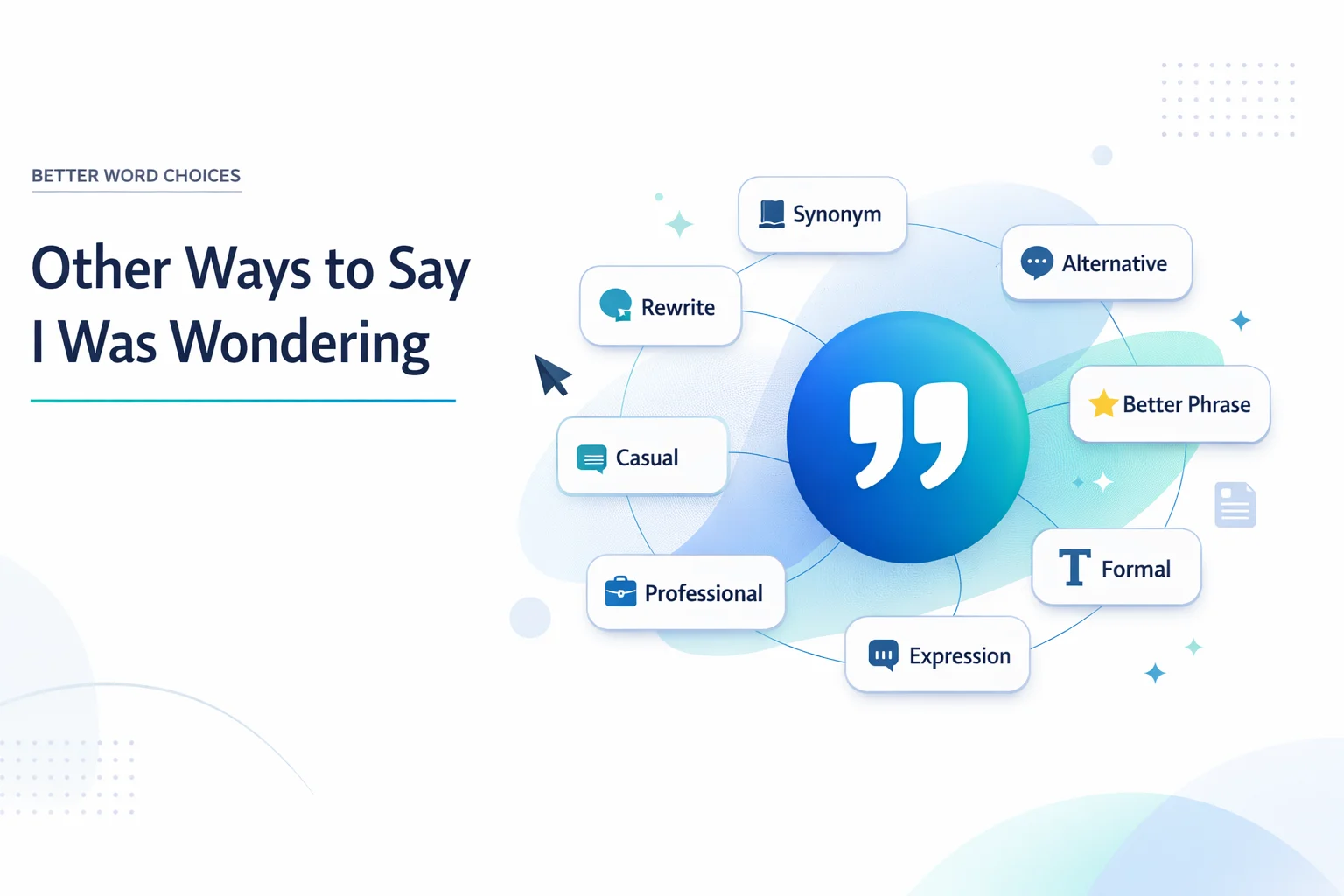
Formal Alternatives to “I Was Wondering”
- I would like to inquire
- May I ask
- I am writing to ask
- Would you be able to clarify
Pro Tip: Formal alternatives work best in emails, official letters, and workplace communication where politeness and professionalism matter most.
Casual Alternatives
- I was curious if
- Just out of curiosity
- I was thinking, maybe you know
- I wanted to ask
Pro Tip: Use casual alternatives with friends, family, or classmates when the conversation is relaxed and informal.
Professional Alternatives
- I had a question about
- I wanted to check
- Could you confirm
- I’d like to know
Pro Tip: Professional alternatives keep your tone respectful while still sounding confident, ideal for meetings and client conversations.
Informal Expressions
- I’ve been meaning to ask
- I was toying with the idea of asking
- I’ve been trying to figure out
- I was musing about
Pro Tip: Save informal expressions for texting or casual chats, since they can sound too relaxed in professional writing.
Matching tone to context is the real secret to sounding fluent.”
Common Mistakes
- Overusing it in every sentence.
Repeating “I was wondering” too often makes speech sound robotic. Example: “I was wondering… I was wondering… I was wondering if you’re free.” - Using it in urgent situations.
The phrase is soft and indirect, so it can weaken urgent requests. Example: “I was wondering if the building is on fire” sounds unnatural. - Mixing tenses incorrectly.
Many learners forget the past continuous structure. Example: Incorrect: “I wonder if you was free.” Correct: “I was wondering if you were free.” - Using it in formal written reports.
It can sound too conversational for academic or business documents. Example: A report should say “This study examines whether…” not “I was wondering whether…” - Following it with the wrong question structure.
Learners often keep the question word order instead of statement order. Example: Incorrect: “I was wondering, are you free?” Correct: “I was wondering if you are free.”
What Does “I Was Wondering” Mean?
“I was wondering” means you are politely introducing a question, request, or curiosity about something. Grammatically, it uses the past continuous tense of the verb “wonder,” which softens the tone and makes the sentence feel less direct than a plain question.
Example Sentence: I was wondering if you could send me the report by Friday.
When to Use “I Was Wondering”
- To politely ask a favor or request information
- To introduce a question without sounding demanding
- To express mild curiosity about a topic or situation
- To open a conversation gently, especially with someone you don’t know well
Spoken vs Written
- Spoken: Very common in daily conversation, interviews, and phone calls.
- Written: Common in emails and messages, though formal reports prefer more direct phrasing.
Formal vs Informal
- Formal: Works in professional emails when paired with polite structures like “I was wondering if you might be available.”
- Informal: Works naturally in texts and casual chats, often shortened to “wondering if…
“Softening your questions doesn’t mean sounding unsure, it means sounding thoughtful.”
Is It Professional or Polite to Say “I Was Wondering”?
“I was wondering” is polite, but it is not always professional on its own. In business writing, it can sound slightly informal unless paired with clear, respectful phrasing.
Business Example: “I was wondering if we could reschedule our meeting to Thursday afternoon.”
Polite? Yes Professional? No, in most strictly formal contexts, unless softened further with formal alternatives.
Pros and Cons of Using “I Was Wondering”
Pros:
- Simple and natural to use
- Friendly, non-confrontational tone
- Common in everyday spoken English
- Easy for learners to understand and remember
Cons:
- Too informal for strictly formal writing
- Overused in daily conversation
- Limited emotional range compared to other expressions
- Not ideal for urgent or high-stakes requests
Other Ways to Say I Was Wondering
These alternatives will help you sound more fluent, confident, and natural in different situations. Use them according to tone, context, and audience to express excitement, admiration, or genuine curiosity.
1. I’ve Been Curious About
Meaning: Expresses an ongoing interest in learning about something.
Explanation: Shows that your curiosity has developed over time rather than appearing suddenly.
Example Sentence: I’ve been curious about how you became fluent in three languages.
Best Use: Casual conversations
Worst Use: Formal reports
Tone: Curious, friendly
Context Variability: Casual, spoken
2. I Was Curious If
Meaning: Politely introduces a question or request.
Explanation: A friendly and conversational alternative to I was wondering if.
Example Sentence: I was curious if you’d like to join us for lunch.
Best Use: Everyday conversations
Worst Use: Legal documents
Tone: Light, approachable
Context Variability: Casual, professional
3. It Occurred to Me That
Meaning: Introduces a thought or realization.
Explanation: Suggests an idea suddenly came to mind.
Example Sentence: It occurred to me that we never confirmed the meeting venue.
Best Use: Meetings, discussions
Worst Use: Casual texting
Tone: Reflective, thoughtful
Context Variability: Professional, written
4. I Couldn’t Help but Wonder
Meaning: Expresses strong curiosity about something.
Explanation: Adds emotional emphasis, making the question feel more personal.
Example Sentence: I couldn’t help but wonder why you left the event so early.
Best Use: Storytelling, conversations
Worst Use: Quick requests
Tone: Expressive, thoughtful
Context Variability: Casual, spoken
5. I’ve Been Meaning to Ask
Meaning: Shows you’ve wanted to ask a question for some time.
Explanation: Indicates delayed curiosity or a forgotten question.
Example Sentence: I’ve been meaning to ask—how did your interview go?
Best Use: Catching up with someone
Worst Use: Formal emails
Tone: Warm, conversational
Context Variability: Casual, spoken
6. Could I Ask
Meaning: Politely requests permission to ask a question.
Explanation: A respectful phrase commonly used in professional settings.
Example Sentence: Could I ask what time the meeting begins?
Best Use: Workplace communication
Worst Use: Close friendships
Tone: Polite, professional
Context Variability: Professional, spoken
7. I’d Like to Know
Meaning: Clearly states your desire for information.
Explanation: More direct and confident than I was wondering.
Example Sentence: I’d like to know the total cost before we proceed.
Best Use: Negotiations, business discussions
Worst Use: Casual chats
Tone: Confident, direct
Context Variability: Professional, written
8. I Was Thinking About Whether
Meaning: Introduces a thought involving a decision or possibility.
Explanation: Often used when considering different options.
Example Sentence: I was thinking about whether we should postpone the trip.
Best Use: Planning discussions
Worst Use: Quick questions
Tone: Thoughtful, cautious
Context Variability: Casual, professional
9. Do You Happen to Know
Meaning: Politely asks whether someone has specific information.
Explanation: A gentle way to ask a question without assuming the other person knows the answer.
Example Sentence: Do you happen to know where the nearest pharmacy is?
Best Use: Asking strangers or acquaintances
Worst Use: Close personal conversations
Tone: Polite, neutral
Context Variability: Casual, professional
10. I Was Pondering
Meaning: Describes careful, thoughtful consideration.
Explanation: Suggests slow and reflective thinking.
Example Sentence: I was pondering the best way to explain this concept.
Best Use: Writing, reflection
Worst Use: Quick conversations
Tone: Thoughtful, formal
Context Variability: Written, professional
11. I’ve Been Asking Myself
Meaning: Expresses personal reflection or self-questioning.
Explanation: Indicates you’re thinking deeply about your own situation.
Example Sentence: I’ve been asking myself whether this job is right for me.
Best Use: Personal reflection
Worst Use: Business emails
Tone: Personal, sincere
Context Variability: Casual, spoken
12. I Was Curious to Find Out
Meaning: Expresses eagerness to learn something.
Explanation: Highlights genuine interest in discovering information.
Example Sentence: I was curious to find out how the project turned out.
Best Use: Follow-ups, updates
Worst Use: Legal documents
Tone: Friendly, eager
Context Variability: Casual, professional
13. May I Ask
Meaning: Politely requests permission to ask a question.
Explanation: A formal and respectful expression commonly used in customer service and professional settings.
Example Sentence: May I ask why the shipment was delayed?
Best Use: Customer service, formal conversations
Worst Use: Casual texting
Tone: Formal, respectful
Context Variability: Professional, spoken
14. I Wanted to Check
Meaning: Introduces a request for confirmation.
Explanation: Frequently used in professional emails and follow-ups.
Example Sentence: I wanted to check whether the invoice was received.
Best Use: Follow-up emails
Worst Use: Emotional discussions
Tone: Neutral, professional
Context Variability: Professional, written
15. I Was Mulling Over
Meaning: Describes thinking carefully about a decision.
Explanation: Suggests weighing different possibilities before deciding.
Example Sentence: I was mulling over which university to choose.
Best Use: Decision-making
Worst Use: Small talk
Tone: Reflective, serious
Context Variability: Written, professional
16. I Had a Question About
Meaning: Introduces a specific question.
Explanation: A simple and professional way to request clarification.
Example Sentence: I had a question about the updated company policy.
Best Use: Meetings, emails
Worst Use: Emotional conversations
Tone: Clear, professional
Context Variability: Professional, written
17. I Was Reflecting on Whether
Meaning: Expresses thoughtful consideration.
Explanation: Suggests deeper reflection before making a decision.
Example Sentence: I was reflecting on whether this approach is sustainable.
Best Use: Essays, reports
Worst Use: Casual conversations
Tone: Formal, thoughtful
Context Variability: Written, professional
18. Just Out of Curiosity
Meaning: Introduces a casual question.
Explanation: Makes the question feel relaxed and free from pressure.
Example Sentence: Just out of curiosity, how old is this building?
Best Use: Casual conversations
Worst Use: Formal writing
Tone: Relaxed, friendly
Context Variability: Casual, spoken
19. I Was Wondering If You Could Tell Me
Meaning: Politely asks someone for information.
Explanation: A courteous phrase often used in customer service and professional communication.
Example Sentence: I was wondering if you could tell me your office hours.
Best Use: Customer service, formal inquiries
Worst Use: Quick text messages
Tone: Polite, respectful
Context Variability: Professional, spoken
20. I’ve Been Trying to Figure Out
Meaning: Shows you’ve been making an effort to understand something.
Explanation: Implies ongoing problem-solving or curiosity.
Example Sentence: I’ve been trying to figure out why the code isn’t working.
Best Use: Troubleshooting
Worst Use: Formal presentations
Tone: Honest, conversational
Context Variability: Casual, professional
21. I Was Contemplating
Meaning: Describes serious, careful thought.
Explanation: A formal expression often used in reflective writing.
Example Sentence: I was contemplating a career change last year.
Best Use: Essays, interviews
Worst Use: Casual conversations
Tone: Formal, reflective
Context Variability: Written, professional
22. I Was Hoping You Could Clarify
Meaning: Politely asks someone to explain something.
Explanation: Commonly used when instructions or information are unclear.
Example Sentence: I was hoping you could clarify the deadline for this project.
Best Use: Workplace communication
Worst Use: Casual banter
Tone: Polite, professional
Context Variability: Professional, written
23. I Was Speculating About
Meaning: Describes making an educated guess.
Explanation: Suggests thinking about possibilities without confirmed facts.
Example Sentence: I was speculating about the reasons behind the delay.
Best Use: Discussions, analysis
Worst Use: Direct requests
Tone: Analytical, thoughtful
Context Variability: Professional, written
24. I Was Musing About
Meaning: Describes light or reflective thinking.
Explanation: Often used in personal or creative writing.
Example Sentence: I was musing about how quickly this year has passed.
Best Use: Personal writing
Worst Use: Business settings
Tone: Reflective, relaxed
Context Variability: Casual, written
25. I Wanted to Ask
Meaning: Introduces a straightforward question.
Explanation: A simple, versatile phrase suitable for many situations.
Example Sentence: I wanted to ask if you’re free this weekend.
Best Use: Everyday conversations
Worst Use: Highly formal writing
Tone: Friendly, neutral
Context Variability: Casual, professional
26. I Was Intrigued by Whether
Meaning: Expresses strong curiosity about a possibility.
Explanation: Conveys fascination while introducing a question.
Example Sentence: I was intrigued by whether the theory would hold true.
Best Use: Academic discussions
Worst Use: Casual requests
Tone: Curious, formal
Context Variability: Professional, written
27. I Was Thinking Maybe You Know
Meaning: Casually asks whether someone has information.
Explanation: A relaxed and conversational way to ask for help.
Example Sentence: I was thinking maybe you know a good place to eat nearby.
Best Use: Friendly conversations
Worst Use: Professional emails
Tone: Casual, easygoing
Context Variability: Casual, spoken
28. I Was Curious as to Whether
Meaning: Politely expresses curiosity about a possibility.
Explanation: A slightly more formal version of I was curious if.
Example Sentence: I was curious as to whether the results had been finalized.
Best Use: Workplace inquiries
Worst Use: Texting friends
Tone: Polite, formal
Context Variability: Professional, written
29. I Wanted to Find Out
Meaning: Expresses a desire to learn something.
Explanation: A clear and natural phrase that works in many situations.
Example Sentence: I wanted to find out if the tickets are still available.
Best Use: Everyday requests
Worst Use: Academic writing
Tone: Friendly, clear
Context Variability: Casual, professional
30. I Was Toying with the Idea of Asking
Meaning: Suggests hesitation before asking a question.
Explanation: Adds a playful or uncertain tone to your curiosity.
Example Sentence: I was toying with the idea of asking for a raise.
Best Use: Personal reflection
Worst Use: Formal requests
Tone: Playful, hesitant
Context Variability: Casual, spoken
“Alternatives to a phrase are not just synonyms, they are tools for tone control.”
Mini Quiz
1. Which phrase is most appropriate in a formal business email?
A) Just out of curiosity B) I was hoping you could clarify C) I was toying with the idea of asking D) I was musing about
2. Which phrase best fits a casual chat with a friend?
A) May I ask B) I was curious as to whether C) I was thinking, maybe you know D) I was reflecting on whether
3. Which sentence uses correct grammar?
A) I wanted to check B) I couldn’t help but wonder C) I had a question about D) Could I ask
Answers: 1-B, 2-C, 3-B, 4-B
“Small tone shifts create big impressions in professional English.”
Comparison Table: Top Alternatives
| Phrase | Tone | Best Use |
|---|---|---|
| I’ve been curious about | curious, friendly | casual chats |
| I was curious if | light, approachable | everyday talk |
| It occurred to me that | reflective, formal | meetings |
| I couldn’t help but wonder | expressive, thoughtful | storytelling |
| I’ve been meaning to ask | casual, warm | catching up |
| Could I ask | polite, formal | workplace |
| I’d like to know | confident, direct | negotiations |
| Do you happen to know | polite, neutral | asking strangers |
| May I ask | formal, respectful | customer service |
| I was hoping you could clarify | polite, professional | workplace clarification |
FAQs
What can I say instead of “I was wondering” in an email?
Use phrases like “I was hoping you could clarify” or “I wanted to check” for a professional tone.
Is “I was wondering” grammatically correct?
Yes, it uses the past continuous tense and is grammatically correct when followed by “if” or “whether” plus a statement.
What are formal alternatives to “I was wondering”?
Formal options include “I would like to inquire,” “May I ask,” and “Would you be able to clarify.”
Can I use “I was wondering” in professional English?
Yes, but pair it with polite, clear phrasing to keep it appropriate for professional reaction phrases.
What is a casual way to say “I was wondering”?
Try “Just out of curiosity” or “I was thinking, maybe you know” for relaxed, informal expressions in English.
Conclusion
Learning alternatives to “I was wondering” gives you more control over tone, whether you need something formal, professional, casual, or informal. These alternatives help you avoid repetition and express curiosity, respect, or excitement depending on the situation.
Practice using a few new phrases every day, paying close attention to context and audience. Over time, this small habit will make your spoken and written English sound more natural, confident, and polished.
Read More Related Articles:
- Other Ways to Say “Similarly” | Smart Synonyms You’ll Use Every Day In 2026
- Other Ways to Say I Agree | Fit Every Situation Perfectly In 2026
- Other Ways to Say That Being Said | Smarter & More Fluent Alternatives In 2026

Victoria Hughes is a content writer dedicated to making communication clearer and more effective. Through TextsResponse.com, she shares practical insights and thoughtfully crafted response ideas that help readers express themselves with confidence.