Quick Answer
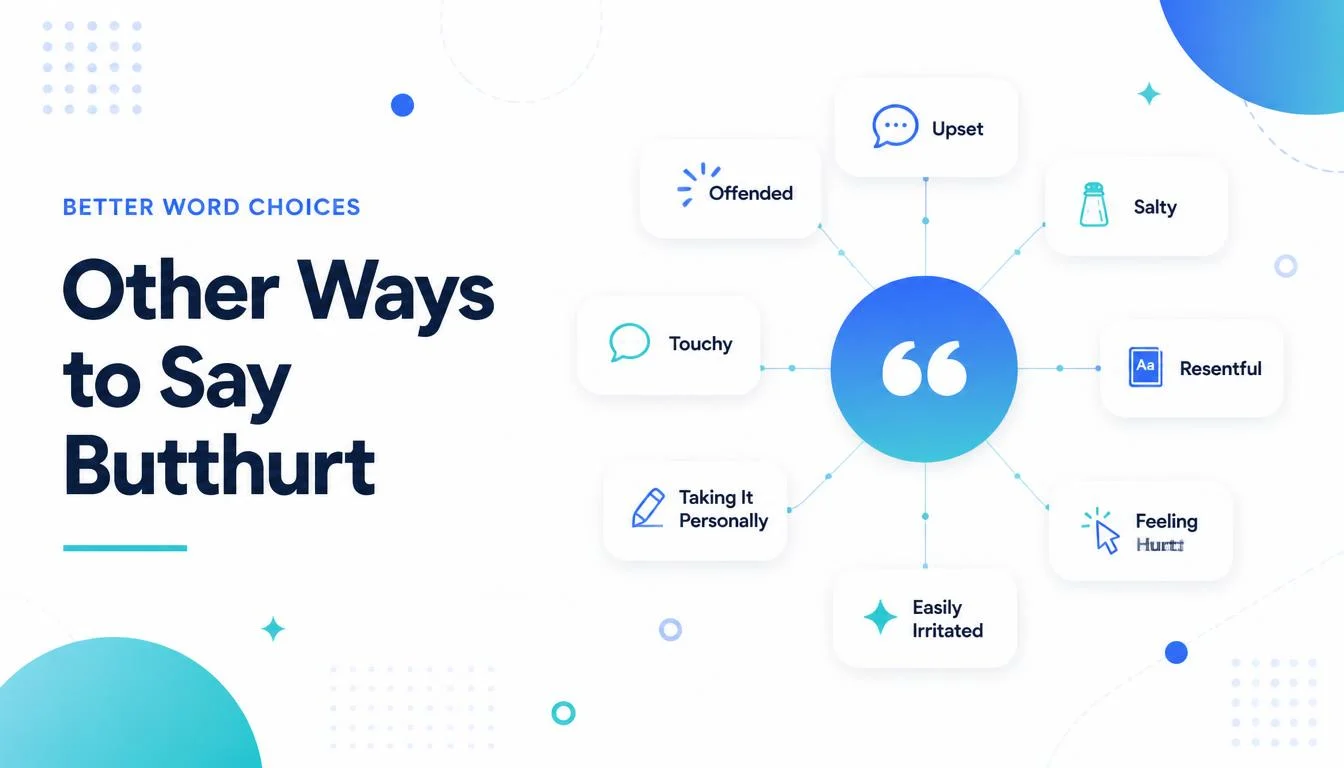
Other ways to say butthurt include offended, upset, salty, touchy, resentful, and taking it personally. Choose an alternative based on whether you want to sound casual, humorous, or respectful.
Learning other ways to say butthurt can help you express feelings of offense, frustration, or embarrassment more naturally in English. This informal slang term usually describes someone who feels upset or takes a comment, criticism, or situation personally.
Depending on the context, you can replace “butthurt” with words like “offended,” “bothered,” “salty,” or “taking it personally.” Some alternatives are suitable for friendly conversations, while others work better in professional or sensitive situations. Understanding these differences will help you communicate your feelings clearly without sounding unnecessarily rude or disrespectful.
What Is “Butthurt”? Meaning, Grammar and Real Use
Imagine a colleague receiving constructive feedback during a meeting. Instead of discussing the suggestion, they become defensive and stop participating. In an informal conversation, someone might say the colleague is butthurt. However, that word can sound mocking or dismissive, especially when the person genuinely feels embarrassed or hurt.
Understanding other ways to say butthurt helps you describe emotional reactions more accurately. Sometimes a person feels offended by criticism. In other situations, they may be disappointed, resentful, embarrassed, or sensitive to a particular comment. These feelings overlap, but they are not identical.
The expression is common in online discussions, casual conversations, gaming communities, and social media. It can communicate frustration quickly, but it may also make the speaker sound judgmental. More precise vocabulary allows English learners to discuss disagreements without unnecessarily escalating them. Learning these alternatives also supports professional communication and helps you express excitement in English when the situation calls for a positive reaction rather than an expression of hurt.
Definition: Butthurt is an informal slang adjective describing someone who seems excessively offended, upset, or resentful, often because of criticism, teasing, or a perceived insult.
Grammar note: It is an adjective, commonly used in expressions such as “get butthurt” or “be butthurt.” It is strongly informal and may sound insulting.
Example: “He got offended when his suggestion was rejected.”
People mainly use the original expression in speech, online comments, memes, and informal writing. In professional or sensitive situations, words such as upset, offended, and disappointed usually communicate the intended meaning more constructively.
When Should You Use “Butthurt”?
The best expression depends on your relationship with the listener, the seriousness of the situation, and whether you want to describe feelings or criticize someone’s reaction.
Common contexts
- Everyday disagreements: Use upset or offended when someone reacts negatively to a comment.
- Personal criticism: Use taking it personally when feedback feels like a personal attack.
- Unresolved conflict: Use resentful when negative feelings continue over time.
- Embarrassing situations: Use embarrassed when someone feels uncomfortable after public criticism.
- Online arguments: Informal expressions may appear in gaming chats, forums, and social media, but they can intensify conflict.
- Workplace conversations: Prefer neutral language that describes the reaction without belittling the person.
Spoken vs. written English
In casual speech, a little upset or taking it personally sounds more natural and less confrontational than calling someone butthurt.
In writing, especially emails, reports, and professional messages, describe observable behavior or specific concerns rather than assigning an insulting label.
Formal vs. informal English
Formal communication favors expressions such as offended, displeased, emotionally affected, and resentful. Informal conversation allows salty, touchy, or butthurt, depending on the audience and relationship.
Is It Professional or Just Polite?
Politeness involves showing consideration for another person’s feelings. Professionalism involves communicating respectfully, accurately, and appropriately for the situation.
Calling a colleague butthurt may express your frustration, but it can also sound dismissive. Even among friendly coworkers, the term risks turning a disagreement into a personal judgment.
Business-style example:
“Jordan appeared disappointed by the feedback, so I suggested we discuss the concerns privately and clarify the next steps.”
- Polite? ✔️ Yes, when discussing the person’s reaction respectfully.
- Professional? ❌ No, when using butthurt to label a colleague in a work conversation.
For more workplace-ready language, read the Professional English Communication Guide.
Pros and Cons of Using “Butthurt”
Pros
- Concise: Communicates offense or resentment in a single word.
- Expressive: Can convey annoyance or disapproval in informal conversation.
- Recognizable: Familiar to many English speakers, especially online.
- Contextually humorous: May sound playful among close friends who share the same sense of humor.
Cons
- Too informal for work: It is unsuitable for most professional emails and reports.
- Potentially insulting: It can imply that someone’s feelings are unreasonable.
- Limited precision: It does not clearly distinguish embarrassment, disappointment, hurt, and anger.
- Risk of conflict: It can dismiss genuine concerns instead of encouraging a useful conversation.
The expression can work in a narrow range of casual situations, but more precise alternatives give you greater control over tone and meaning.
Common Mistakes People Make
Learning alternatives is not just about replacing one word with another. You also need to recognize differences in meaning, grammar, and emotional intensity.
1. Using slang in a formal email
❌ “The client got butthurt about the revised proposal.”
✔️ “The client was dissatisfied with the revised proposal.”
Why it matters: The revised version sounds objective and suitable for business communication.
2. Confusing offense with disappointment
❌ “She was offended because the event was canceled, even though she was mainly disappointed.”
✔️ “She was disappointed that the event was canceled.”
Why it matters: Disappointed describes an unmet expectation, while offended suggests that someone feels insulted or disrespected.
3. Treating every emotional reaction as overreacting
❌ “He was butthurt when his work was criticized, so his concerns did not matter.”
✔️ “He was upset by the criticism, and we discussed his concerns.”
Why it matters: Someone can feel hurt and still have a valid concern.
4. Using “resentful” for a brief reaction
❌ “I felt resentful for five seconds when she corrected me.”
✔️ “I felt embarrassed when she corrected me.”
Why it matters: Resentful often suggests lingering bitterness, while embarrassed can describe an immediate uncomfortable reaction.
5. Confusing “sensitive” with “offended”
❌ “She is sensitive, so she must be offended by every suggestion.”
✔️ “She is sensitive to criticism, although she considers feedback carefully.”
Why it matters: Sensitivity describes a tendency or susceptibility. It does not automatically mean that a person feels offended.
“Small tone mistakes can make confident English sound careless.”
Alternatives by Category
These categories offer a quick preview of useful replacements. The same phrases appear in the complete list below, where each receives an explanation and example.
Formal alternatives to “butthurt”
- Offended
- Displeased
- Resentful
Pro Tip: In formal writing, describe the specific concern or reaction instead of judging whether someone’s feelings are justified.
Casual alternatives
- Upset
- Hurt
- Taking it personally
Pro Tip: Use a neutral phrase first when you are unsure how seriously the other person has taken a comment.
Professional alternatives
- Disappointed
- Dissatisfied
- Concerned
Pro Tip: In workplace conversations, connect the emotion to the situation, such as disagreement with feedback or disappointment with an outcome.
Informal expressions
- Salty
- Touchy
- Butthurt about it
Pro Tip: Reserve slang for audiences who understand your tone and are unlikely to interpret it as a personal attack.
“Formal and informal English aren’t about correctness. They’re about context.”
Other Ways to Say “Butthurt”: 30 Alternatives with Examples
These 30 alternatives build vocabulary for describing hurt feelings, frustration, offense, and resentment. Choose the expression that best matches the situation and the tone you want to convey.
Formal and neutral alternatives
1. Phrase: Offended
Meaning: Feeling insulted or disrespected.
Explanation: A clear, neutral choice for situations involving an insulting remark or action.
Example Sentence: “She felt offended by the personal comment.”
Best Use: Respectful discussion
Worst Use: Playful teasing
Tone: Neutral, serious
Context Variability: Casual / professional / spoken
2. Phrase: Upset
Meaning: Feeling unhappy, worried, or distressed.
Explanation: A versatile word that describes emotional discomfort without accusing anyone of overreacting.
Example Sentence: “He was upset about the negative feedback.”
Best Use: Everyday conversation
Worst Use: Precise diagnosis
Tone: Neutral, empathetic
Context Variability: Casual / professional / spoken
3. Phrase: Hurt
Meaning: Emotionally pained by someone’s words or actions.
Explanation: Emphasizes emotional impact rather than blame or anger.
Example Sentence: “I felt hurt by what she said.”
Best Use: Personal conversations
Worst Use: Comic insults
Tone: Honest, vulnerable
Context Variability: Casual / professional / spoken
4. Phrase: Displeased
Meaning: Dissatisfied or unhappy about something.
Explanation: More formal than upset, making it useful for measured descriptions of negative reactions.
Example Sentence: “The manager was displeased with the response.”
Best Use: Formal feedback
Worst Use: Intimate reassurance
Tone: Formal, restrained
Context Variability: Casual / professional / spoken
5. Phrase: Resentful
Meaning: Feeling bitterness about perceived unfair treatment.
Explanation: Suggests that frustration or hurt may persist instead of disappearing quickly.
Example Sentence: “She became resentful after being repeatedly overlooked.”
Best Use: Ongoing conflict
Worst Use: Brief surprise
Tone: Serious, negative
Context Variability: Casual / professional / spoken
6. Phrase: Disappointed
Meaning: Unhappy because expectations were not met.
Explanation: Best when a result, decision, or response falls short of what someone hoped for.
Example Sentence: “He was disappointed that his proposal was rejected.”
Best Use: Unmet expectations
Worst Use: Direct insults
Tone: Measured, sincere
Context Variability: Casual / professional / spoken
7. Phrase: Dissatisfied
Meaning: Not content with a situation or outcome.
Explanation: Focuses on a problem or result rather than a person’s emotional sensitivity.
Example Sentence: “The customer was dissatisfied with the service.”
Best Use: Customer feedback
Worst Use: Emotional intimacy
Tone: Professional, neutral
Context Variability: Casual / professional / spoken
8. Phrase: Aggrieved
Meaning: Feeling that one has been treated unfairly.
Explanation: A formal option that emphasizes perceived injustice or a legitimate grievance.
Example Sentence: “Several employees felt aggrieved by the decision.”
Best Use: Formal complaints
Worst Use: Light banter
Tone: Formal, serious
Context Variability: Casual / professional / written
Casual alternatives
9. Phrase: Taking It Personally
Meaning: Interpreting a remark as a personal criticism.
Explanation: Useful when someone connects general feedback or a disagreement to their own worth or character.
Example Sentence: “Try not to take the suggestion personally.”
Best Use: Giving advice
Worst Use: Sensitive disputes
Tone: Conversational, direct
Context Variability: Casual / professional / spoken
10. Phrase: Feeling Put Out
Meaning: Feeling inconvenienced or annoyed.
Explanation: Describes irritation when plans, expectations, or personal comfort are disrupted.
Example Sentence: “He felt put out when the meeting changed.”
Best Use: Minor inconvenience
Worst Use: Serious grief
Tone: Mildly negative
Context Variability: Casual / professional / spoken
11. Phrase: Feeling Snubbed
Meaning: Feeling deliberately ignored or slighted.
Explanation: Appropriate when someone believes they were excluded or treated with less attention than others.
Example Sentence: “She felt snubbed when nobody acknowledged her contribution.”
Best Use: Social exclusion
Worst Use: Routine feedback
Tone: Personal, disappointed
Context Variability: Casual / professional / spoken
12. Phrase: Feeling Slighted
Meaning: Feeling that someone has shown insufficient respect.
Explanation: A restrained expression for perceived disrespect, exclusion, or unfair treatment.
Example Sentence: “He felt slighted when his idea was dismissed.”
Best Use: Social disagreements
Worst Use: Major emergencies
Tone: Measured, sensitive
Context Variability: Casual / professional / spoken
13. Phrase: Bothered
Meaning: Troubled, annoyed, or concerned about something.
Explanation: A mild alternative that does not assume the person is excessively emotional.
Example Sentence: “She seemed bothered by the remark.”
Best Use: Mild irritation
Worst Use: Formal accusations
Tone: Neutral, understated
Context Variability: Casual / professional / spoken
14. Phrase: Touchy
Meaning: Easily upset by certain subjects or comments.
Explanation: Describes sensitivity around a topic, but can sound judgmental when applied to a person.
Example Sentence: “He gets touchy whenever the subject comes up.”
Best Use: Informal observations
Worst Use: Formal evaluations
Tone: Casual, critical
Context Variability: Casual / professional / spoken
15. Phrase: Sensitive to Criticism
Meaning: Easily affected by negative feedback.
Explanation: More specific than upset and often more constructive than a mocking slang label.
Example Sentence: “She is sensitive to criticism but welcomes practical advice.”
Best Use: Constructive feedback
Worst Use: Public shaming
Tone: Descriptive, considerate
Context Variability: Casual / professional / written
16. Phrase: Embarrassed
Meaning: Feeling uncomfortable or self-conscious.
Explanation: Best when a remark or situation causes someone to feel exposed, awkward, or ashamed.
Example Sentence: “He felt embarrassed after the mistake was mentioned.”
Best Use: Awkward moments
Worst Use: Lingering bitterness
Tone: Personal, sympathetic
Context Variability: Casual / professional / spoken
17. Phrase: Defensive
Meaning: Protecting oneself against perceived criticism or attack.
Explanation: Describes a reaction in which someone argues, justifies their actions, or resists feedback.
Example Sentence: “She became defensive when questioned about the decision.”
Best Use: Feedback discussions
Worst Use: Simple sadness
Tone: Analytical, critical
Context Variability: Casual / professional / spoken
18. Phrase: Irritated
Meaning: Feeling annoyed or impatient.
Explanation: Appropriate when the dominant emotion is frustration rather than hurt or humiliation.
Example Sentence: “He sounded irritated by the repeated questions.”
Best Use: Repeated annoyances
Worst Use: Deep disappointment
Tone: Direct, restrained
Context Variability: Casual / professional / spoken
19. Phrase: Frustrated
Meaning: Feeling upset because something is difficult or unsuccessful.
Explanation: Focuses on obstacles and unmet goals rather than personal offense.
Example Sentence: “She felt frustrated when her concerns went unanswered.”
Best Use: Difficult situations
Worst Use: Playful compliments
Tone: Honest, practical
Context Variability: Casual / professional / spoken
20. Phrase: Wounded
Meaning: Emotionally hurt by a remark or action.
Explanation: More expressive than hurt, often suggesting a significant personal impact.
Example Sentence: “He looked wounded by the harsh criticism.”
Best Use: Emotional storytelling
Worst Use: Routine updates
Tone: Emotional, serious
Context Variability: Casual / professional / written
21. Phrase: Humiliated
Meaning: Feeling deeply ashamed or degraded.
Explanation: Use this when a person experiences a strong loss of dignity, particularly in front of others.
Example Sentence: “She felt humiliated by the public accusation.”
Best Use: Serious embarrassment
Worst Use: Minor disagreement
Tone: Intense, serious
Context Variability: Casual / professional / spoken
22. Phrase: Bitter
Meaning: Feeling persistent anger or disappointment.
Explanation: Suggests negative feelings that have developed over time because of an upsetting experience.
Example Sentence: “He remained bitter about the unfair decision.”
Best Use: Lasting resentment
Worst Use: Brief annoyance
Tone: Negative, forceful
Context Variability: Casual / professional / written
23. Phrase: Agitated
Meaning: Emotionally disturbed, restless, or visibly upset.
Explanation: Useful when frustration or distress appears in someone’s words, movements, or behavior.
Example Sentence: “She became agitated during the disagreement.”
Best Use: Visible distress
Worst Use: Light humor
Tone: Observational, serious
Context Variability: Casual / professional / spoken
24. Phrase: Annoyed
Meaning: Mildly angry or irritated.
Explanation: A common everyday word for an unpleasant reaction to a comment, action, or inconvenience.
Example Sentence: “He was annoyed when his suggestion was interrupted.”
Best Use: Minor conflicts
Worst Use: Severe distress
Tone: Casual, direct
Context Variability: Casual / professional / spoken
25. Phrase: Put Off
Meaning: Made uncomfortable or less interested.
Explanation: Describes a negative reaction that reduces someone’s willingness or enthusiasm to engage.
Example Sentence: “She was put off by his dismissive attitude.”
Best Use: Negative impressions
Worst Use: Deep grief
Tone: Casual, restrained
Context Variability: Casual / professional / spoken
26. Phrase: Out of Sorts
Meaning: Feeling unsettled, unhappy, or not quite oneself.
Explanation: A gentle expression when someone seems emotionally off without a clear or specific cause.
Example Sentence: “He seemed out of sorts after the discussion.”
Best Use: Mild unease
Worst Use: Formal complaints
Tone: Gentle, understated
Context Variability: Casual / professional / spoken
27. Phrase: Salty
Meaning: Informally annoyed or resentful.
Explanation: Slang commonly used when someone appears bitter about losing, being criticized, or not getting their way.
Example Sentence: “He was salty about losing the game.”
Best Use: Friendly banter
Worst Use: Business correspondence
Tone: Playful, mocking
Context Variability: Casual / professional / spoken
28. Phrase: Miffed
Meaning: Slightly offended or annoyed.
Explanation: A mild, sometimes humorous word for irritation over a relatively small matter.
Example Sentence: “She was miffed that nobody invited her.”
Best Use: Minor slights
Worst Use: Serious harm
Tone: Light, informal
Context Variability: Casual / professional / spoken
29. Phrase: Ruffled
Meaning: Disturbed, unsettled, or annoyed.
Explanation: Often used in the expression get someone’s feathers ruffled, meaning to upset or irritate them.
Example Sentence: “The unexpected criticism ruffled his confidence.”
Best Use: Mild disruption
Worst Use: Severe trauma
Tone: Figurative, light
Context Variability: Casual / professional / spoken
30. Phrase: Butthurt About It
Meaning: Informally resentful or offended about something.
Explanation: Retains the original slang but makes the subject of the reaction explicit. It can still sound dismissive or insulting.
Example Sentence: “He was butthurt about the joke.”
Best Use: Casual banter
Worst Use: Formal meetings
Tone: Slang, mocking
Context Variability: Casual / professional / spoken
Comparison Table: Top 10 Alternatives at a Glance
Use this table to choose an expression quickly. These options cover common reactions in personal conversations, workplace discussions, and everyday writing.
| Phrase | Tone | Best Use |
|---|---|---|
| Offended | Neutral | Describing perceived insults |
| Upset | Neutral | General emotional reactions |
| Hurt | Empathetic | Personal conversations |
| Disappointed | Measured | Unmet expectations |
| Resentful | Serious | Lingering bitterness |
| Taking It Personally | Direct | Explaining defensive reactions |
| Dissatisfied | Professional | Complaints and feedback |
| Embarrassed | Sympathetic | Awkward situations |
| Defensive | Analytical | Responses to criticism |
| Salty | Slang | Casual banter |
For a professional audience, dissatisfied, disappointed, and concerned can communicate concerns without labeling a person’s emotional response.
Quick Self-Check: Mini Quiz
Test your understanding of tone and context before using these expressions in everyday English.
You are writing a formal report about a customer who disliked a service outcome. Which phrase is most appropriate?
1 of 4
AThe customer was touchy
BThe customer was dissatisfied
CThe customer was salty
DThe customer was butthurt
Next
FAQs
1. What are the best alternatives to “butthurt”?
Offended, upset, hurt, resentful, and taking it personally are useful alternatives. The best choice depends on the emotion and how formal the conversation needs to be.
2. Is “butthurt” a rude word?
It can be. The term is informal slang that often mocks someone for feeling offended. Its impact depends on the relationship, tone, and context.
3. How do you say “butthurt” professionally?
Use upset, disappointed, dissatisfied, or concerned, depending on the situation. These words describe a reaction without ridiculing the person.
4. What is a polite way to say someone is taking things personally?
You could say, “I think the feedback may have felt personal,” or “I hope my comment did not come across as a personal criticism.” Both options sound more considerate.
5. What is the difference between “offended,” “upset,” and “resentful”?
Offended suggests perceived disrespect, upset describes a broad range of negative feelings, and resentful suggests lingering bitterness about perceived unfairness.
Conclusion
Choosing the right alternative helps you describe emotional reactions more accurately and communicate with greater confidence. Words such as offended, disappointed, and resentful express different feelings, while informal expressions such as salty are better suited to casual conversations.
Practice these phrases in real situations, paying attention to your audience and the effect your words may have. When you understand tone, you can express yourself clearly without making a disagreement more personal than necessary.
Read More Related Articles:
- Other Ways to Say Circle Back | Improve Your Workplace Communication In 2026
- Other Ways to Say Welcome to the Team | Warm First Impression In 2026
- Other Ways to Say I Hope All Is Well | Make a Better First Impression In 2026

Daniel Murphy is a professional writer and blogger specializing in digital communication and messaging trends. As a contributor to TextsResponse.com, he creates reader-focused content designed to help people find the right words at the right time.