Quick Answer
Looking for alternatives to “talks about”? Try these five first: discusses, covers, addresses, touches on, and explores. Each one shifts the tone slightly, so choose based on whether you need a formal, casual, or professional voice.
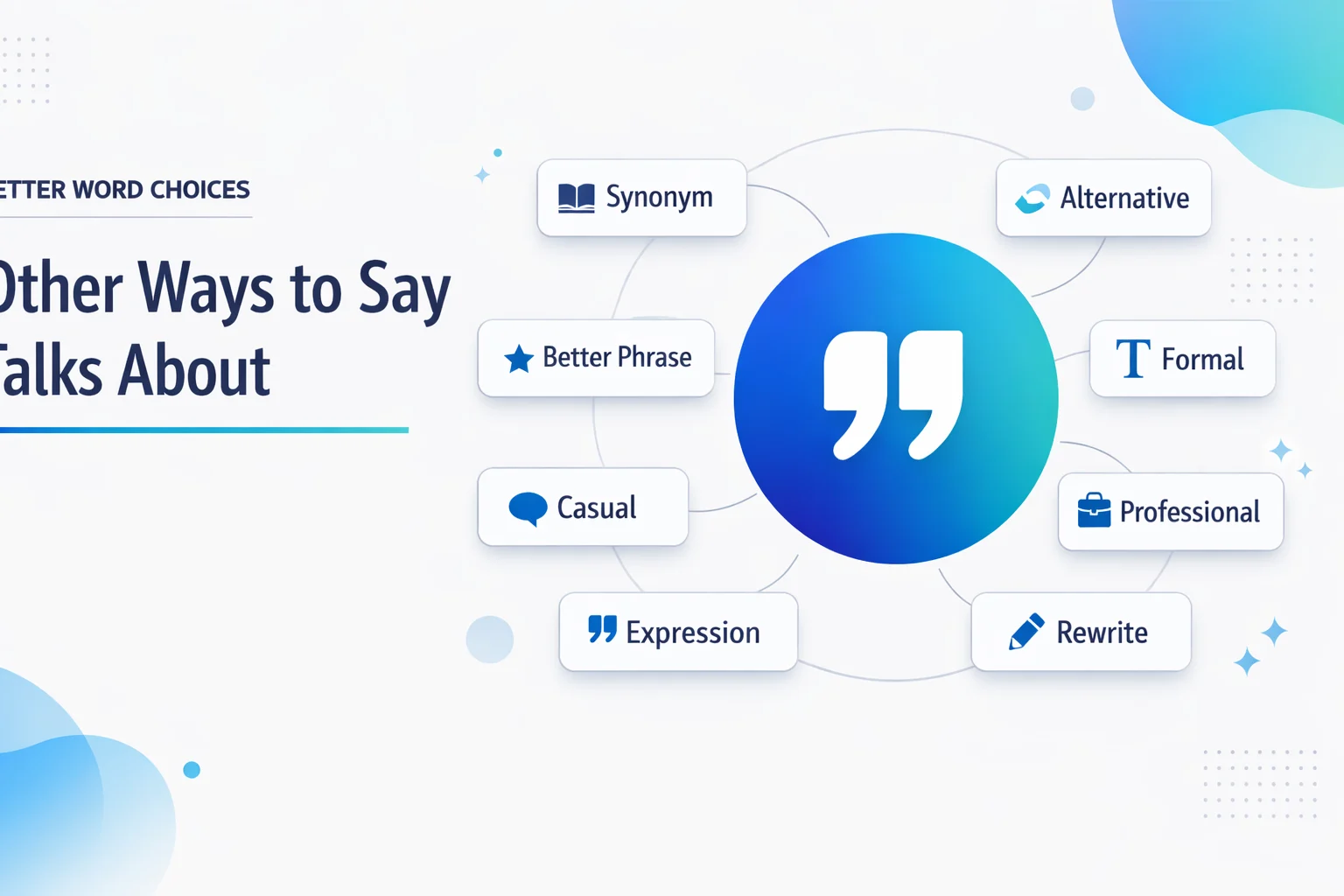
Talks about” is one of the most common phrases in English. People use it to describe a conversation, a lecture, an article, or a presentation that focuses on a particular subject. It is simple, direct, and understood by nearly everyone, which is exactly why it shows up so often in both speech and writing. Learn more about Other Ways to Say Talks About here in this article.
The problem is repetition. If every sentence in your essay, email, or report says “talks about,” your writing starts to sound flat and unpolished. Learning alternatives to talks about helps you match your tone to your audience, whether that means sounding more formal in a business report or more natural when you express excitement in English about a topic you love.
This guide breaks down 30 alternatives to “talks about,” organized by formality, along with meanings, examples, and tips so you always pick the right word for the right moment.
The right tone makes your English sound professional and confident.”
Quick Categories
Formal Alternatives to “Talks About”
- Addresses used in reports, speeches, and academic writing
- Discusses the most common formal substitute
- Examines implies careful analysis
- Explores suggests depth and open-ended inquiry
Pro Tip: Use “addresses” or “examines” in academic and business writing when you want to sound analytical rather than conversational.
Casual Alternatives to “Talks About”
- Goes on about
- Chats about
- Brings up
- Rambles on about
Pro Tip: Save “goes on about” and “rambles on about” for informal speech, they can sound negative if used in professional writing.
Professional Alternatives to “Talks About”
- Covers
- Outlines
- Highlights
- Focuses on
Pro Tip: “Covers” and “outlines” work well in meeting summaries, presentations, and professional emails because they sound structured and clear.
Informal Expressions
- Yaks about
- Chews the fat about
- Shoots the breeze about
- Gets into
Pro Tip: These informal expressions in English are best kept for friendly, spoken conversation, not for resumes or client emails.
Common Mistakes When Using “Talks About”
- Overusing it in formal writing. Wrong tone example: “This report talks about the company’s financial losses.” Better: “This report addresses the company’s financial losses.”
- Repeating it multiple times in one paragraph. Example: “The book talks about war. It also talks about love and talks about loss.” Vary your verbs instead.
- Using it with the wrong preposition. Incorrect: “She talks on the new policy.” Correct: “She talks about the new policy.”
- Confusing it with “talks to.” “Talks about” means discussing a topic; “talks to” means speaking with a person. Example mistake: “He talks about his manager” when the speaker actually means “He talks to his manager.”
- Using it in academic titles or headings. Weak: “This essay talks about climate change.” Stronger: “This essay examines the causes of climate change.
What Does “Talks About” Mean?
“Talks about” is a phrasal verb structure made of the verb “talk” plus the preposition “about.” It means to discuss, mention, or focus on a specific subject in speech or writing.
Grammar note: It is always followed by a noun, noun phrase, or gerund, never a bare infinitive. For example: “talks about the weather” or “talks about traveling.”
Example sentence: “The teacher talks about ancient history every Monday.”
When to Use “Talks About”
- Describing everyday conversations between friends or family
- Summarizing the topic of a book, movie, podcast, or article
- Introducing a speaker’s subject in casual settings
- Explaining what a meeting or lecture will cover, in informal contexts
Spoken vs Written
- Spoken: Very common and natural, used constantly in daily conversation
- Written: Acceptable in casual writing, blogs, and emails to friends, but weaker in formal reports or academic essays
Formal vs Informal
- Formal contexts: Prefer “addresses,” “discusses,” or “examines”
- Informal contexts: “Talks about” fits naturally alongside phrases like “chats about” or “brings up
Is It Professional or Polite to Say “Talks About”?
“Talks about” is polite and completely acceptable in everyday conversation, but it often sounds too casual for formal business communication.
Business example: Instead of writing, “This email talks about our new pricing plan,” a more professional version would be, “This email outlines our new pricing plan.”
Polite? Yes Professional? No, in most formal business contexts
Pros and Cons of Using “Talks About”
Pros
- Simple and natural to use in everyday speech
- Friendly, approachable tone
- Extremely common, so listeners always understand it
- Easy to understand for English learners at any level
Cons
- Too informal for professional or academic writing
- Overused, which can make writing sound repetitive
- Limited emotional range compared to words like “explores” or “highlights
- Not suitable for formal reports, resumes, or research papers
“Variety in vocabulary is what separates good English from great English.”
Other Ways to Say Talks About
These alternatives will help you sound more fluent, confident, and natural in different situations. Use them according to tone, context, and audience to express excitement, admiration, or approval, or simply to sound more precise.
1. Discusses
Meaning: To talk about a topic in detail, often with analysis.
Explanation: A neutral and formal alternative suitable for almost any professional or academic context.
Example Sentence: The panel discusses renewable energy policies.
Best Use: Reports, meetings
Worst Use: Casual chats
Tone: Formal, neutral
Context Variability: Professional, written, spoken
2. Addresses
Meaning: To formally speak about or deal with a subject.
Explanation: Commonly used in speeches, essays, reports, and official documents.
Example Sentence: The CEO addresses employee concerns in her memo.
Best Use: Speeches, essays
Worst Use: Casual conversation
Tone: Formal, authoritative
Context Variability: Professional, written
3. Covers
Meaning: To include or deal with a topic as part of broader content.
Explanation: Useful for describing what a document, course, presentation, or article includes.
Example Sentence: This chapter covers the basics of grammar.
Best Use: Summaries, syllabi
Worst Use: Emotional topics
Tone: Neutral, clear
Context Variability: Professional, spoken
4. Explores
Meaning: To examine a topic in an open, thoughtful, or in-depth way.
Explanation: Suggests curiosity and deeper investigation, making it ideal for academic and creative writing.
Example Sentence: The documentary explores the effects of climate change.
Best Use: Essays, documentaries
Worst Use: Quick updates
Tone: Thoughtful, analytical
Context Variability: Written, professional
5. Examines
Meaning: To look at a subject closely and critically.
Explanation: Implies careful and methodical analysis, especially in research and academic contexts.
Example Sentence: The study examines the impact of sleep on productivity.
Best Use: Research, reports
Worst Use: Small talk
Tone: Analytical, formal
Context Variability: Professional, written
6. Focuses On
Meaning: To concentrate attention on one specific subject.
Explanation: Indicates that a piece of content centers around a main idea.
Example Sentence: This article focuses on time management tips.
Best Use: Introductions, summaries
Worst Use: Broad overviews
Tone: Neutral, clear
Context Variability: Professional, spoken, written
7. Highlights
Meaning: To draw attention to important points.
Explanation: Best used when emphasizing key information rather than discussing every detail.
Example Sentence: The report highlights three major risks.
Best Use: Summaries, presentations
Worst Use: Casual storytelling
Tone: Professional, precise
Context Variability: Professional, written
8. Outlines
Meaning: To present the main points in an organized way.
Explanation: Suggests structure and clarity, making it common in business and academic writing.
Example Sentence: The proposal outlines the project timeline.
Best Use: Proposals, plans
Worst Use: Emotional topics
Tone: Organized, formal
Context Variability: Professional, written
9. Delves Into
Meaning: To discuss or research a topic in great detail.
Explanation: Suggests going beyond the surface to provide deeper insight.
Example Sentence: The podcast delves into the history of jazz music.
Best Use: Interviews, essays
Worst Use: Brief updates
Tone: Curious, thorough
Context Variability: Written, spoken
10. Touches On
Meaning: To mention a topic briefly.
Explanation: Used when a subject is introduced without extensive discussion.
Example Sentence: The speech touches on economic reform but doesn’t go into detail.
Best Use: Brief mentions
Worst Use: Detailed analysis
Tone: Light, neutral
Context Variability: Spoken, written
11. Deals With
Meaning: To have a particular subject as its topic.
Explanation: A versatile phrase suitable for both formal and semi-formal writing.
Example Sentence: This novel deals with themes of loss and identity.
Best Use: Literature, reviews
Worst Use: Technical reports
Tone: Neutral, descriptive
Context Variability: Written, professional
12. Centers On
Meaning: To have a specific subject as the primary focus.
Explanation: Emphasizes that one topic forms the core of the discussion.
Example Sentence: The debate centers on healthcare reform.
Best Use: Debates, essays
Worst Use: Quick remarks
Tone: Formal, focused
Context Variability: Written, professional
13. Elaborates On
Meaning: To explain something in greater detail.
Explanation: Used when expanding on an idea that has already been introduced.
Example Sentence: The manager elaborates on the new project goals.
Best Use: Meetings, presentations
Worst Use: First introductions
Tone: Detailed, formal
Context Variability: Professional, spoken
14. Reflects On
Meaning: To think or speak thoughtfully about a subject.
Explanation: Commonly used for discussing personal experiences or past events.
Example Sentence: The author reflects on her childhood in the memoir.
Best Use: Memoirs, interviews
Worst Use: Technical documents
Tone: Personal, reflective
Context Variability: Written, spoken
15. Chats About
Meaning: To talk about something in a relaxed and friendly way.
Explanation: A casual alternative ideal for informal conversations.
Example Sentence: We chatted about our weekend plans.
Best Use: Friendly conversations
Worst Use: Business reports
Tone: Casual, friendly
Context Variability: Spoken, casual
16. Brings Up
Meaning: To introduce a topic into a conversation.
Explanation: Often suggests that the subject is mentioned for the first time.
Example Sentence: He brought up the topic of salary during lunch.
Best Use: Conversations, meetings
Worst Use: Formal essays
Tone: Neutral, conversational
Context Variability: Spoken, casual
17. Goes On About
Meaning: To talk about something for a long time, often repeatedly.
Explanation: Usually carries a slightly humorous or negative meaning.
Example Sentence: My friend always goes on about her new diet.
Best Use: Storytelling, humor
Worst Use: Professional writing
Tone: Informal, playful
Context Variability: Spoken, casual
18. Rambles On About
Meaning: To talk at length in an unfocused way.
Explanation: Suggests poor organization or excessive talking.
Example Sentence: He rambled on about his vacation for an hour.
Best Use: Casual storytelling
Worst Use: Presentations
Tone: Informal, critical
Context Variability: Spoken, casual
19. Gets Into
Meaning: To begin discussing something in greater depth.
Explanation: A conversational expression often used before detailed explanations.
Example Sentence: Let’s get into the details of the plan.
Best Use: Casual meetings
Worst Use: Formal writing
Tone: Casual, direct
Context Variability: Spoken, professional-casual
20. Comments On
Meaning: To give an opinion or remark about a subject.
Explanation: Appropriate when expressing viewpoints rather than providing a full explanation.
Example Sentence: The critic comments on the film’s weak plot.
Best Use: Reviews, opinions
Worst Use: Neutral summaries
Tone: Evaluative, neutral
Context Variability: Written, professional
21. Speaks On
Meaning: To deliver a speech or presentation about a topic.
Explanation: Commonly used when referring to lectures, conferences, or public speaking.
Example Sentence: The professor speaks on ethics in modern medicine.
Best Use: Lectures, conferences
Worst Use: Casual chats
Tone: Formal, authoritative
Context Variability: Professional, spoken
22. Sheds Light On
Meaning: To provide new understanding or clarity.
Explanation: Suggests revealing information that was previously unclear.
Example Sentence: The interview sheds light on the company’s struggles.
Best Use: Investigations, articles
Worst Use: Simple summaries
Tone: Insightful, formal
Context Variability: Written, professional
23. Investigates
Meaning: To examine a topic carefully to discover facts.
Explanation: Commonly used in journalism, research, and academic writing.
Example Sentence: The article investigates rising housing costs.
Best Use: Journalism, research
Worst Use: Casual talk
Tone: Formal, analytical
Context Variability: Written, professional
24. Considers
Meaning: To think and speak about a subject carefully.
Explanation: Suggests a balanced and thoughtful discussion.
Example Sentence: The essay considers both sides of the argument.
Best Use: Essays, debates
Worst Use: Quick updates
Tone: Balanced, formal
Context Variability: Written, professional
25. Tackles
Meaning: To deal directly with a difficult or complex topic.
Explanation: Implies determination in addressing challenging issues.
Example Sentence: The show tackles issues like mental health and addiction.
Best Use: Media, reviews
Worst Use: Light topics
Tone: Bold, direct
Context Variability: Written, spoken
26. Recounts
Meaning: To tell or describe an event or experience.
Explanation: Best suited to storytelling and personal narratives.
Example Sentence: She recounts her travels through Southeast Asia.
Best Use: Storytelling, memoirs
Worst Use: Technical writing
Tone: Narrative, personal
Context Variability: Written, spoken
27. Yaks About
Meaning: To talk casually and often excessively about something.
Explanation: A slang expression used in relaxed and humorous conversations.
Example Sentence: They yakked about celebrity gossip all afternoon.
Best Use: Humor, casual conversation
Worst Use: Professional settings
Tone: Slang, playful
Context Variability: Spoken, casual
28. Chews the Fat About
Meaning: To have a long, relaxed conversation about something.
Explanation: An old-fashioned informal expression for friendly chatting.
Example Sentence: The neighbors chewed the fat about the local news.
Best Use: Informal storytelling
Worst Use: Written communication
Tone: Informal, old-fashioned
Context Variability: Spoken, casual
29. Shoots the Breeze About
Meaning: To chat casually without a serious purpose.
Explanation: Describes a relaxed and unstructured conversation.
Example Sentence: We shot the breeze about sports before the meeting started.
Best Use: Casual small talk
Worst Use: Professional emails
Tone: Relaxed, informal
Context Variability: Spoken, casual
30. Weighs In On
Meaning: To give an opinion on a topic, especially during a discussion or debate.
Explanation: Suggests joining an existing conversation by sharing a viewpoint.
Example Sentence: The senator weighs in on the proposed tax reform.
Best Use: Debates, interviews
Worst Use: Neutral summaries
Tone: Opinionated, engaged
Context Variability: Written, professional
Small word choices create big impressions in professional communication.
Mini Quiz: Test Your Understanding
1. Which word best fits a formal business report?
A) Yaks about
B) Addresses
C) Chews the fat about
D) Rambles on about
Correct Answer: B) Addresses
2. Which phrase suggests only a brief mention of a topic?
A) Delves into
B) Touches on
C) Examines
D) Investigates
Correct Answer: B) Touches on
3. Which phrase fits best in a casual conversation with friends?
A) Outlines
B) Chats about
C) Sheds light on
D) Considers
Correct Answer: B) Chats about
4. Which word implies deep, critical analysis in academic writing?
A) Gets into
B) Brings up
C) Examines
D) Goes on about
Correct Answer: C) Examines
“Choosing the right synonym is choosing the right impression.”
Comparison Table: Top Alternatives
| Phrase | Tone | Best Use |
|---|---|---|
| Discusses | Formal, neutral | Reports, meetings |
| Addresses | Formal, authoritative | Speeches, essays |
| Covers | Neutral, clear | Summaries, syllabi |
| Explores | Thoughtful, analytical | Essays, documentaries |
| Examines | Analytical, formal | Research, reports |
| Highlights | Professional, precise | Presentations |
| Outlines | Organized, formal | Proposals, plans |
| Touches on | Light, neutral | Brief mentions |
| Chats about | Casual, friendly | Everyday conversation |
| Delves into | Curious, thorough | Interviews, essays |
FAQs
What is a formal way to say “talks about”?
“Addresses,” “discusses,” and “examines” are strong formal alternatives to talks about, commonly used in reports, essays, and speeches.
What is a casual way to say “talks about”?
“Chats about,” “brings up,” and “gets into” are natural, casual alternatives suited for everyday conversation.
Is “talks about” grammatically correct?
Yes, “talks about” is correct when followed by a noun or gerund, such as “talks about traveling” or “talks about the weather.”
Can I use “talks about” in a resume or cover letter?
It’s better to avoid it. Use professional alternatives like “outlines,” “highlights,” or “addresses” instead for stronger, more polished writing.
Why should I learn other ways to say “talks about”?
Learning other ways to say talks about improves fluency, prevents repetition, and helps you express excitement in English or professionalism depending on context.
Conclusion
Mastering alternatives to “talks about” instantly improves how confident and fluent your English sounds, whether you are writing a report, giving a presentation, or simply chatting with a friend. From formal choices like “addresses” and “examines” to casual expressions like “chats about” and “brings up,” each phrase carries its own tone and context.
Make it a habit to practice a few new alternatives each week. Over time, your vocabulary will feel natural, your writing will read more professionally, and your spoken English will sound noticeably more confident. For more vocabulary building, check out our related guide on professional reaction phrases and our other “Other Ways to Say” articles for continued practice.

Henry Walker is an American writer and blogger with a keen interest in communication, language and digital content. At TextsResponse.com, he creates informative and reader-focused resources designed to help people communicate with clarity, confidence and authenticity.