Quick Answer
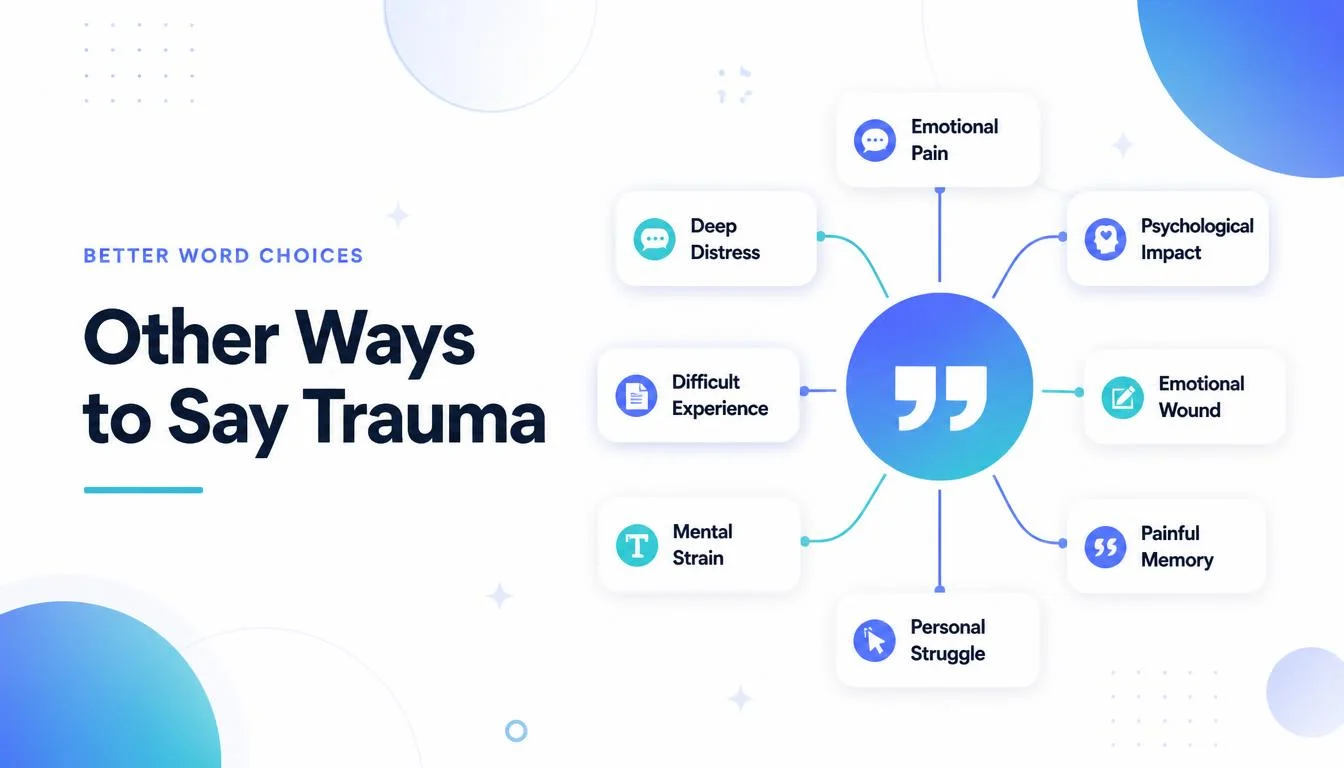
Other ways to say trauma include emotional distress, psychological wounds, deep hurt, and a painful experience. The best alternative depends on the context and severity of the experience.
Learning other ways to say trauma can help you describe difficult experiences with greater clarity and sensitivity. Whether you are writing an essay, sharing a personal experience, or discussing emotional struggles, choosing appropriate words can make your message more thoughtful and respectful.
Words such as “emotional distress,” “psychological wounds,” and “painful experience” can describe certain aspects of trauma, depending on the situation. However, these expressions are not always exact synonyms. Understanding their meanings and contexts helps you communicate effectively without minimizing someone’s experiences or feelings.
Quick Categories: Alternatives to Trauma
Formal alternatives to “trauma”
- Psychological injury
- Emotional disturbance
- Psychological distress
- Traumatic experience
Pro Tip: Use precise terminology in academic writing and formal discussions. Avoid using clinical terms as diagnoses unless you have appropriate evidence.
Casual alternatives
- Emotional pain
- Deep hurt
- A painful experience
- A difficult time
Pro Tip: Choose everyday expressions when talking with friends or describing personal feelings. Simple language often sounds warmer and more natural.
Professional alternatives
- Psychological impact
- Emotional distress
- Adverse experience
- Lasting emotional effects
Pro Tip: In workplace communication, focus on the person’s experience and needs rather than asking for unnecessary personal details.
Informal expressions
- Emotional wounds
- Deep scars
- A rough experience
- Something deeply upsetting
Pro Tip: These informal expressions can communicate empathy, but make sure the person is comfortable discussing the experience before using emotionally intense language.
“The right words can communicate compassion without requiring someone to share more than they wish.”
Common Mistakes When Using “Trauma”
Understanding other ways to say trauma also means knowing when a substitute is inaccurate or insensitive.
1. Using trauma for every disappointment
Incorrect: “Missing the bus was a terrible trauma for me.”
Better: “Missing the bus was really frustrating.”
Why: Trauma generally refers to a deeply distressing or harmful experience, although its meaning varies by context.
2. Confusing sadness with trauma
Incorrect: “I felt sad after the movie, so I experienced trauma.”
Better: “The movie left me feeling upset.”
Why: Sadness is a normal emotion and does not automatically indicate trauma.
3. Using clinical language without context
Incorrect: “She definitely has psychological trauma because she changed jobs.”
Better: “Changing jobs seems to have been emotionally difficult for her.”
Why: Do not assume a person’s psychological condition from a single event.
4. Making someone’s experience sound unimportant
Incorrect: “It was just a little emotional issue.”
Better: “It was a difficult experience, and it affected them deeply.”
Why: Dismissive wording can minimize another person’s feelings.
5. Using the same expression in every situation
Incorrect: “The accident caused emotional pain” in every personal, academic, and clinical context.
Better: Choose among emotional distress, lasting psychological effects, and a painful experience according to the intended meaning.
Why: Different contexts require different levels of precision.
What Does “Trauma” Mean?
Trauma is a deeply distressing or disturbing experience, or the physical or psychological effects that may follow such an experience.
The word has two common uses:
- Physical trauma: Bodily injury caused by an accident, violence, or another harmful event.
- Psychological trauma: Emotional or mental effects associated with an overwhelming or frightening experience.
Grammar explanation
Trauma is usually an uncountable noun when discussing the general concept or its effects. It can also be countable when referring to a particular traumatic event or type of experience.
Examples:
- General: “Trauma can affect a person’s sense of safety.”
- Specific: “The accident was a traumatic experience.”
Related forms include traumatic (adjective) and traumatized (adjective or past participle).
When to Use “Trauma”
The word and its alternatives appear in several contexts.
- Personal conversations: Discussing painful memories or difficult experiences.
- Academic writing: Exploring the psychological effects of adverse events.
- Healthcare discussions: Describing physical injuries or psychological effects with appropriate professional context.
- Workplace communication: Explaining why a difficult event may affect someone’s well-being.
- Creative writing: Describing a character’s painful past or emotional struggles.
- Educational settings: Discussing resilience, coping strategies, and the effects of distressing experiences.
Spoken vs. written English
| Context | Suggested expression |
|---|---|
| Everyday speech | A painful experience |
| Personal writing | Emotional wounds |
| Academic writing | Psychological distress |
| Professional communication | Psychological impact |
| Clinical discussion | Trauma-related symptoms, when appropriate |
Formal vs. informal language
Formal language favors precision, such as psychological injury or adverse experience. Informal language often uses expressions such as deep hurt or a rough experience.
Remember that these alternatives are not interchangeable in every situation.
“Empathetic communication starts with describing the experience accurately, not making assumptions about it.”
Is It Professional or Polite to Say “Trauma”?
Polite? ✔️ Yes, when used sensitively.
Professional? ✔️ Yes, when relevant and accurate.
The word trauma is appropriate in professional settings when discussing an experience or its effects. However, it can feel intrusive if used to question someone’s personal history or make assumptions about their mental health.
Business-style example
“Following the incident, the team may benefit from additional support to address its emotional impact.”
This sentence communicates concern without labeling anyone or requiring them to disclose personal information.
Tips for professional communication
- Respect privacy and personal boundaries.
- Describe observed effects rather than assuming a diagnosis.
- Use neutral language when the details are unknown.
- Follow appropriate confidentiality and support procedures.
Pros and Cons of Using “Trauma”
Pros
- Simple and natural: Widely understood in everyday and professional English.
- Clear meaning: Can communicate the seriousness of an experience.
- Common usage: Appears in educational, personal, and healthcare discussions.
- Easy to understand: Helps introduce conversations about difficult experiences.
Cons
- Potentially too strong: May exaggerate an ordinary setback if used carelessly.
- Can be overused: Repeated use may weaken the intended meaning.
- Limited emotional detail: Does not explain the exact feelings or effects involved.
- Not always suitable for formal precision: Specialized writing may require a more specific description.
Other Ways to Say Trauma With Examples
These alternatives will help you communicate more fluently, confidently, and naturally in different situations.
Use each phrase according to tone, context, and audience to describe distressing experiences, emotional pain, or lasting effects respectfully.
1. Emotional Distress
Meaning: A state of significant emotional discomfort.
Explanation: This phrase emphasizes difficult feelings rather than the event itself.
Example Sentence: “The incident caused considerable emotional distress among the employees.”
Best Use: Professional discussions
Worst Use: Physical injuries
Tone: Neutral, professional, empathetic
Context Variability: Casual: “She was distressed by what happened.” Professional: “The event caused emotional distress.” Spoken: “He is still upset about the incident.”
2. Psychological Injury
Meaning: Harm affecting a person’s psychological well-being.
Explanation: This formal expression emphasizes mental or emotional harm.
Example Sentence: “The report examined the potential psychological injuries associated with prolonged exposure to violence.”
Best Use: Formal discussions
Worst Use: Light disappointment
Tone: Serious, formal, precise
Context Variability: Casual: “It affected him deeply.” Professional: “The event may cause psychological injury.” Spoken: “The experience left a lasting impact.”
3. Emotional Pain
Meaning: Deep sadness, hurt, or suffering.
Explanation: This expression focuses on the feelings someone experiences.
Example Sentence: “She needed time and support to process her emotional pain.”
Best Use: Personal conversations
Worst Use: Technical diagnosis
Tone: Warm, empathetic, accessible
Context Variability: Casual: “That really hurt.” Professional: “The experience caused emotional pain.” Spoken: “I can understand how painful that was.”
4. Traumatic Experience
Meaning: An event that causes intense distress or overwhelming reactions.
Explanation: This phrase identifies the event rather than necessarily describing its lasting effects.
Example Sentence: “The survivor received support after the traumatic experience.”
Best Use: Personal narratives
Worst Use: Minor inconvenience
Tone: Serious, descriptive, sensitive
Context Variability: Casual: “It was a frightening experience.” Professional: “The individual reported a traumatic experience.” Spoken: “That must have been a difficult experience.”
5. Psychological Distress
Meaning: Significant mental or emotional strain.
Explanation: It is useful when discussing the psychological effects of a difficult situation.
Example Sentence: “Researchers examined the relationship between prolonged uncertainty and psychological distress.”
Best Use: Academic writing
Worst Use: Casual greetings
Tone: Formal, objective, measured
Context Variability: Casual: “She has been under a lot of stress.” Professional: “The circumstances contributed to psychological distress.” Spoken: “The situation has been mentally exhausting.”
6. Deep Emotional Hurt
Meaning: Strong feelings of sadness or pain caused by an upsetting experience.
Explanation: This phrase is accessible and emphasizes the personal impact of an event.
Example Sentence: “His words caused deep emotional hurt that took time to address.”
Best Use: Personal conversations
Worst Use: Medical reports
Tone: Personal, sincere, empathetic
Context Variability: Casual: “That really hurt me.” Professional: “The exchange caused considerable emotional discomfort.” Spoken: “I know those words hurt you deeply.”
7. Emotional Wounds
Meaning: Lingering emotional pain caused by difficult experiences.
Explanation: This metaphor describes feelings that may take time to heal.
Example Sentence: “Open communication helped them begin addressing old emotional wounds.”
Best Use: Reflective writing
Worst Use: Technical documentation
Tone: Compassionate, expressive, reflective
Context Variability: Casual: “Those memories still hurt.” Professional: “Past experiences may continue to affect well-being.” Spoken: “Some emotional wounds take time to heal.”
8. Lasting Emotional Effects
Meaning: Emotional consequences that continue after an event.
Explanation: This phrase emphasizes duration without automatically suggesting a clinical diagnosis.
Example Sentence: “The accident had lasting emotional effects on the family.”
Best Use: Formal reports
Worst Use: Brief annoyance
Tone: Neutral, clear, measured
Context Variability: Casual: “It stayed with her.” Professional: “The event had lasting emotional effects.” Spoken: “It affected him long after it happened.”
9. Adverse Experience
Meaning: An event or circumstance that has a harmful or negative effect.
Explanation: This broad phrase works when the details are sensitive or not fully known.
Example Sentence: “The program helps participants discuss adverse experiences in a supportive environment.”
Best Use: Formal writing
Worst Use: Positive events
Tone: Neutral, formal, restrained
Context Variability: Casual: “Something difficult happened.” Professional: “The participant reported an adverse experience.” Spoken: “It was a difficult thing to go through.”
10. A Painful Experience
Meaning: An event that causes emotional or physical suffering.
Explanation: This is a natural alternative when you want to avoid clinical terminology.
Example Sentence: “Losing a close friend was a painful experience for him.”
Best Use: Everyday conversation
Worst Use: Technical diagnosis
Tone: Natural, compassionate, simple
Context Variability: Casual: “It was really painful.” Professional: “The event was a painful experience.” Spoken: “I know that was difficult for you.”
11. Emotional Suffering
Meaning: Significant distress experienced over a period of time.
Explanation: The expression emphasizes the intensity of someone’s feelings.
Example Sentence: “The organization provides resources for people experiencing emotional suffering.”
Best Use: Support discussions
Worst Use: Minor frustration
Tone: Serious, compassionate, descriptive
Context Variability: Casual: “She has been hurting emotionally.” Professional: “The individual reported emotional suffering.” Spoken: “I am sorry you have been going through this.”
12. Mental Strain
Meaning: Pressure that affects a person’s mental well-being.
Explanation: It often describes the burden created by prolonged difficulties.
Example Sentence: “Managing several crises at once placed considerable mental strain on the team.”
Best Use: Workplace discussions
Worst Use: Physical injury
Tone: Practical, neutral, professional
Context Variability: Casual: “It has been mentally exhausting.” Professional: “The workload created substantial mental strain.” Spoken: “You have been dealing with a lot.”
13. Emotional Turmoil
Meaning: A state of intense and conflicting emotions.
Explanation: This expression is useful when someone feels overwhelmed by several emotions.
Example Sentence: “She experienced emotional turmoil after the unexpected announcement.”
Best Use: Personal narratives
Worst Use: Routine updates
Tone: Expressive, intense, descriptive
Context Variability: Casual: “She was emotionally overwhelmed.” Professional: “The change caused considerable emotional upheaval.” Spoken: “I imagine you have mixed feelings about it.”
14. Psychological Impact
Meaning: The effect an event or situation has on mental well-being.
Explanation: This versatile expression focuses on consequences rather than assumptions about a person’s condition.
Example Sentence: “The study explored the psychological impact of prolonged displacement.”
Best Use: Academic writing
Worst Use: Unrelated details
Tone: Objective, formal, analytical
Context Variability: Casual: “It affected her mentally.” Professional: “We assessed the psychological impact.” Spoken: “How has the experience affected you?”
15. Deeply Disturbing Experience
Meaning: An event that causes strong discomfort, fear, or upset.
Explanation: This phrase describes an event without necessarily labeling its long-term effects.
Example Sentence: “Witnessing the accident was a deeply disturbing experience.”
Best Use: Personal accounts
Worst Use: Minor setbacks
Tone: Serious, descriptive, direct
Context Variability: Casual: “It was really upsetting.” Professional: “The witness described a deeply disturbing experience.” Spoken: “That sounds like it was very upsetting.”
16. Emotional Scars
Meaning: Lingering emotional effects associated with painful experiences.
Explanation: This metaphor suggests that the impact may remain even after the event has passed.
Example Sentence: “The character’s emotional scars influenced how she trusted others.”
Best Use: Creative writing
Worst Use: Clinical assessment
Tone: Figurative, reflective, emotional
Context Variability: Casual: “It still affects him.” Professional: “The experience may have lasting consequences.” Spoken: “Some memories can leave a lasting mark.”
17. Psychological Harm
Meaning: Damage or negative effects on psychological well-being.
Explanation: This phrase is appropriate when emphasizing potential or actual harm.
Example Sentence: “The investigation considered whether the repeated harassment caused psychological harm.”
Best Use: Formal reports
Worst Use: Light frustration
Tone: Serious, formal, direct
Context Variability: Casual: “It affected her badly.” Professional: “The conduct may cause psychological harm.” Spoken: “That kind of treatment can have a serious effect.”
18. Emotional Upheaval
Meaning: A period of intense emotional disturbance or change.
Explanation: This phrase works when an event disrupts a person’s emotional stability.
Example Sentence: “The sudden family changes brought considerable emotional upheaval.”
Best Use: Personal writing
Worst Use: Simple preferences
Tone: Descriptive, serious, expressive
Context Variability: Casual: “Everything felt overwhelming.” Professional: “The transition caused emotional upheaval.” Spoken: “It sounds like a lot changed at once.”
19. A Distressing Event
Meaning: An event that causes worry, sadness, fear, or upset.
Explanation: This neutral phrase describes an incident without assuming a particular outcome.
Example Sentence: “Employees were offered support after the distressing event.”
Best Use: Workplace communication
Worst Use: Celebrations
Tone: Neutral, sensitive, professional
Context Variability: Casual: “Something upsetting happened.” Professional: “The distressing event was documented.” Spoken: “Would you like to talk about what happened?”
20. Severe Emotional Distress
Meaning: A high level of emotional suffering.
Explanation: The word severe adds intensity and should be used when supported by the situation.
Example Sentence: “The emergency team provided assistance to people experiencing severe emotional distress.”
Best Use: Support services
Worst Use: Minor disappointment
Tone: Serious, precise, compassionate
Context Variability: Casual: “He was extremely upset.” Professional: “The individual showed signs of severe emotional distress.” Spoken: “It sounds as though you have been struggling.”
21. A Disturbing Memory
Meaning: A remembered experience that causes discomfort or distress.
Explanation: This expression focuses on the memory rather than the entire experience.
Example Sentence: “The disturbing memory continued to trouble her years later.”
Best Use: Personal narratives
Worst Use: Unrelated memories
Tone: Reflective, sensitive, descriptive
Context Variability: Casual: “I still remember how upsetting it was.” Professional: “The individual described a disturbing memory.” Spoken: “Does that memory still bother you?”
22. A Painful Memory
Meaning: A recollection associated with sadness or emotional hurt.
Explanation: This phrase is appropriate when the emotional difficulty comes from remembering an event.
Example Sentence: “He found it difficult to discuss the painful memory.”
Best Use: Reflective writing
Worst Use: Neutral recollections
Tone: Gentle, personal, empathetic
Context Variability: Casual: “It is hard to think about.” Professional: “The memory remains emotionally difficult.” Spoken: “You do not have to discuss it if you are uncomfortable.”
23. A Difficult Experience
Meaning: An event that creates significant challenges or discomfort.
Explanation: This broad, understated phrase is useful when you do not want to make assumptions about the experience.
Example Sentence: “Relocating during the crisis was a difficult experience for the family.”
Best Use: General conversation
Worst Use: Precise diagnosis
Tone: Neutral, understated, respectful
Context Variability: Casual: “It was a tough time.” Professional: “The individual experienced significant challenges.” Spoken: “That must have been difficult.”
24. Emotional Hardship
Meaning: A period of emotional difficulty or suffering.
Explanation: This phrase emphasizes an ongoing struggle rather than a single event.
Example Sentence: “The support group helps people navigate emotional hardship.”
Best Use: Support discussions
Worst Use: Brief irritation
Tone: Compassionate, serious, accessible
Context Variability: Casual: “She has been having a hard time.” Professional: “The person is experiencing emotional hardship.” Spoken: “I am here if you need support.”
25. Psychological Aftereffects
Meaning: Mental or emotional consequences that remain after an event.
Explanation: This phrase highlights what happens following a distressing experience.
Example Sentence: “The researchers examined the psychological aftereffects of the disaster.”
Best Use: Academic writing
Worst Use: Immediate reactions only
Tone: Formal, analytical, precise
Context Variability: Casual: “It continued to affect him.” Professional: “The event produced psychological aftereffects.” Spoken: “Have you noticed any effects since it happened?”
26. Lasting Psychological Effects
Meaning: Mental or emotional consequences that persist over time.
Explanation: This expression is useful when duration is an important part of the discussion.
Example Sentence: “The report discussed the lasting psychological effects of prolonged exposure to violence.”
Best Use: Research writing
Worst Use: Unverified claims
Tone: Formal, descriptive, objective
Context Variability: Casual: “It stayed with her.” Professional: “The event may have lasting psychological effects.” Spoken: “It seems the experience has continued to affect you.”
27. A Painful Chapter
Meaning: A difficult period in someone’s life.
Explanation: This metaphor presents a challenging time as one part of a larger life story.
Example Sentence: “He eventually moved forward after a painful chapter in his life.”
Best Use: Personal storytelling
Worst Use: Clinical reports
Tone: Reflective, hopeful, figurative
Context Variability: Casual: “It was a hard time.” Professional: “The period presented significant personal challenges.” Spoken: “That chapter of your life sounds difficult.”
28. An Overwhelming Experience
Meaning: An event that feels too intense or difficult to manage.
Explanation: This phrase emphasizes the person’s sense of being unable to cope with the situation at the time.
Example Sentence: “The evacuation was an overwhelming experience for many residents.”
Best Use: Personal accounts
Worst Use: Minor inconvenience
Tone: Empathetic, descriptive, accessible
Context Variability: Casual: “It was too much to handle.” Professional: “Participants described the event as overwhelming.” Spoken: “I can understand why it felt like too much.”
29. Emotional Vulnerability
Meaning: A state in which a person feels emotionally exposed or sensitive.
Explanation: This phrase describes a condition or feeling, not necessarily the harm caused by a traumatic event.
Example Sentence: “Creating a supportive environment can help people discuss emotional vulnerability.”
Best Use: Supportive conversations
Worst Use: Assuming weakness
Tone: Gentle, reflective, empathetic
Context Variability: Casual: “I felt exposed.” Professional: “The discussion involved emotional vulnerability.” Spoken: “It is okay to acknowledge how you feel.”
30. A Life-Altering Experience
Meaning: An event that significantly changes a person’s life or perspective.
Explanation: This phrase emphasizes the scale of a change without automatically implying psychological trauma.
Example Sentence: “The accident became a life-altering experience for the entire family.”
Best Use: Personal narratives
Worst Use: Minor setbacks
Tone: Reflective, serious, descriptive
Context Variability: Casual: “It changed everything.” Professional: “The incident was a life-altering experience.” Spoken: “That experience seems to have changed your perspective.”
Scroll-Stopping Pull Quotes
“Choose words that describe the experience without defining the person by it.”
“Professional English is not just about sounding formal. It is about being accurate, respectful, and clear.”
“A painful experience, emotional distress, and psychological trauma are related expressions, but they do not always mean the same thing.”
Mini Quiz: Test Your Understanding
Check your knowledge of these alternatives.
1. Which phrase is most appropriate for an academic report about mental health effects?A rough experiencePsychological distressA painful chapter
2. Which expression describes an event without automatically implying lasting psychological harm?A distressing eventA clinical diagnosisSevere emotional distress
3. Which phrase is most natural in an empathetic everyday conversation?Psychological aftereffectsEmotional painPsychological injury
4. A colleague says a recent event has been difficult. What is a respectful response?You definitely have trauma.That sounds difficult. Would support help?It was probably nothing.
Score: 0 / 4Try again
Comparison Table: Top 10 Alternatives
| Phrase | Tone | Best Use |
|---|---|---|
| Emotional distress | Professional, empathetic | Formal discussions |
| Psychological injury | Serious, formal | Specialized contexts |
| Emotional pain | Warm, personal | Everyday conversations |
| Traumatic experience | Serious, descriptive | Personal narratives |
| Psychological distress | Objective, formal | Academic writing |
| Emotional wounds | Reflective, expressive | Creative writing |
| Lasting emotional effects | Neutral, precise | Reports and essays |
| Adverse experience | Formal, restrained | Research and education |
| A painful experience | Natural, empathetic | General conversation |
| Psychological impact | Analytical, professional | Reports and presentations |
FAQs
1. What is another word for trauma?
Depending on the context, alternatives include emotional distress, psychological injury, emotional pain, and traumatic experience. Each expression emphasizes a different aspect of the experience.
2. What is a more professional way to say trauma?
Psychological impact, psychological distress, and adverse experience may be suitable in professional writing. Choose the expression that accurately reflects the situation.
3. What is a simple way to describe emotional trauma?
You could say deep emotional pain, a painful experience, or lasting emotional effects. These expressions are easy to understand and avoid unnecessary technical language.
4. What is the difference between trauma and emotional distress?
Trauma can refer to an overwhelming event or its physical or psychological effects. Emotional distress describes a state of emotional suffering and does not necessarily mean a person has experienced trauma.
5. Can I use alternatives to trauma in academic writing?
Yes. Terms such as psychological distress, adverse experience, and lasting psychological effects can be appropriate. Define specialized terms when necessary and avoid using them interchangeably without considering their meanings.
Conclusion
Learning other ways to say trauma expands your vocabulary and helps you discuss difficult experiences with greater sensitivity. Expressions such as emotional distress, psychological impact, and a painful experience allow you to adjust your language to personal conversations, academic writing, and professional communication.
Practice using these expressions in example sentences and pay attention to the audience, tone, and context. The goal is not simply to replace one word with another, but to communicate accurately and respectfully. Share your favorite alternative in the comments and keep building your English vocabulary with practical examples.
Read More Related Articles:
- Other Ways to Say Circle Back | Improve Your Workplace Communication In 2026
- Other Ways to Say Welcome to the Team | Warm First Impression In 2026
- Other Ways to Say I Hope All Is Well | Make a Better First Impression In 2026

Henry Walker is an American writer and blogger with a keen interest in communication, language and digital content. At TextsResponse.com, he creates informative and reader-focused resources designed to help people communicate with clarity, confidence and authenticity.