Quick Answer
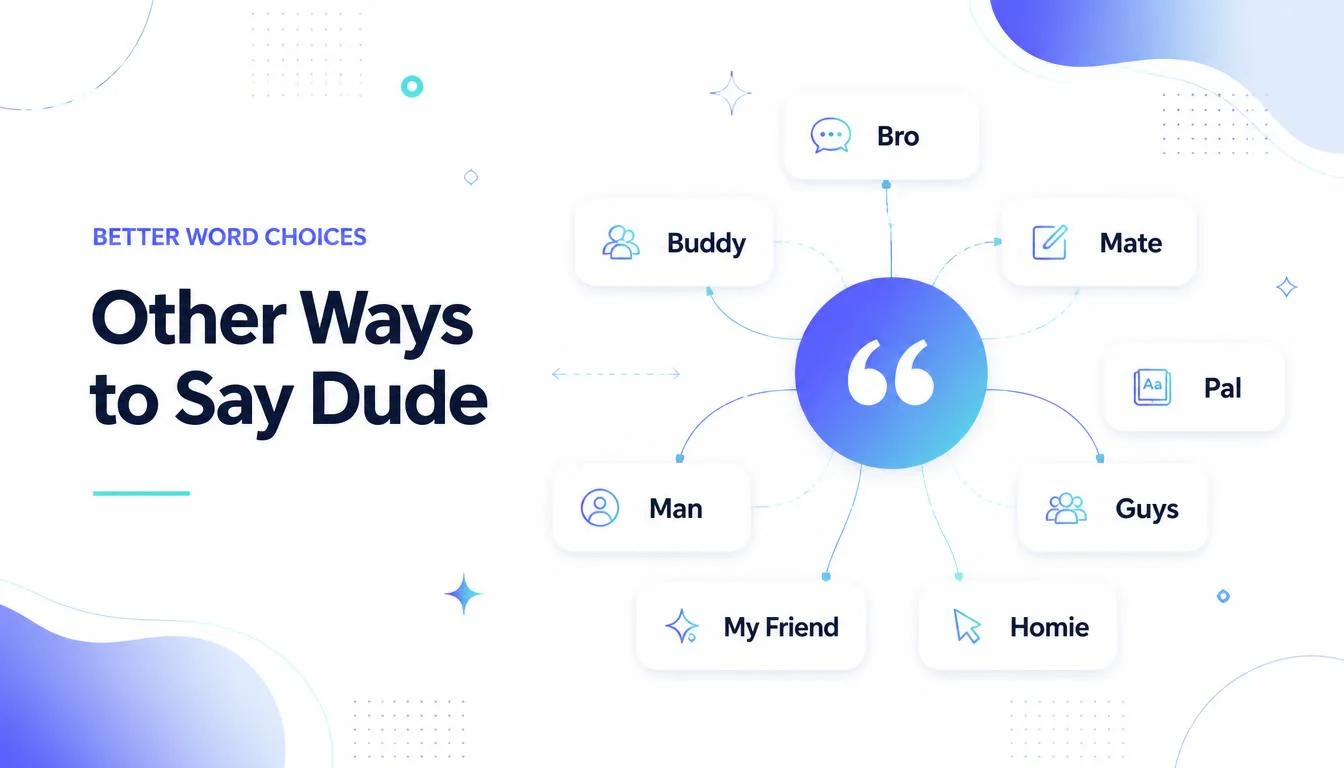
Other ways to say dude include buddy, bro, man, pal, mate, friend, and guy. Choose the best alternative based on your relationship, tone, and conversation.
Learning other ways to say dude can make your English sound more natural, expressive, and engaging. Whether you are chatting with friends, texting someone, or having a casual conversation, using alternatives like “buddy,” “bro,” or “mate” helps you vary your vocabulary and match the situation.
The word “dude” is a popular informal expression used to address someone, show surprise, or express excitement. However, not every alternative fits every situation. Understanding the differences between friendly, funny, and professional expressions can help you communicate confidently and choose the right words for different people and settings.
What Is “Dude”? (Meaning, Grammar & Real Use)
Imagine meeting a friend after a long day, reacting to surprising news, or greeting someone you know well. You might naturally say, “Dude, you won’t believe what happened!” The word communicates familiarity, excitement, surprise, or frustration without requiring a lengthy explanation.
Dude is a popular informal English term used to address someone, usually in friendly conversations. Although it traditionally refers to a man, many speakers use it more broadly among friends, regardless of gender. Its meaning depends on the relationship, tone, and situation.
People searching for alternatives to dude often want to sound less repetitive, more respectful, or more professional. Learning different expressions also helps English learners express excitement in English without relying on the same conversational vocabulary.
Grammatically, dude is primarily a noun used as a form of direct address. It belongs to informal English and is common in spoken conversations, text messages, and social media.
For example: “Dude, that was an amazing performance!”
People use it because it is short, familiar, and expressive. However, it may sound too casual in formal emails, interviews, or conversations with unfamiliar clients.
When Should You Use “Dude”?
The word works best when the relationship and setting support an informal tone. Choosing an alternative can help you communicate more clearly across different social and professional situations.
Common contexts
- Talking with friends: Use dude, buddy, or man when the relationship is comfortable and informal.
- Greeting someone: Choose hey, mate, or friend when a relaxed greeting feels appropriate.
- Reacting to surprising news: Use man, buddy, or a person’s name to convey surprise naturally.
- Addressing a group: Use everyone, folks, or team instead of calling several people dude.
- Communicating at work: Prefer colleague, team, or the person’s name when addressing coworkers professionally.
- Writing emails: Use the recipient’s name or a suitable greeting instead of dude in formal correspondence.
Spoken vs. written English
In spoken English, dude often communicates emotion through facial expressions, voice, and timing. It can sound friendly, excited, annoyed, or disapproving.
In writing, especially emails and reports, the same word may appear overly casual. In personal messages and informal online discussions, however, it can feel completely natural.
Formal vs. informal English
Informal English includes dude, buddy, pal, and mate. These terms are useful with friends and familiar acquaintances.
More formal communication favors names, professional titles, colleagues, or neutral group greetings. Remember that mate is common in British and Australian English but may sound less natural in some other varieties of English.
Is It Professional or Just Polite?
Dude can be friendly without being professionally appropriate. Politeness concerns how respectfully you treat someone, while professionalism also involves matching your language to workplace expectations.
For example, instead of writing, “Dude, can you send me the report?” write, “Hi Alex, could you please send me the report when you have a moment?”
The second version is clear, respectful, and suitable for most workplace situations.
- Polite? ✔️ Yes, in the right relationship and context.
- Professional? ❌ No, not as a general choice for formal business communication.
In relaxed workplaces, colleagues may use dude comfortably with one another. However, it is safer to begin with neutral language until you understand the team’s communication culture.
Pros and Cons of Using “Dude”
Pros
- Simple and memorable: The word is short and easy to use in conversation.
- Friendly tone: It can communicate familiarity and connection between friends.
- Common usage: Many English speakers recognize it, especially in informal settings.
- Expressive meaning: Depending on delivery, it can convey excitement, surprise, disbelief, or frustration.
Cons
- Too informal for work: It may sound inappropriate in formal emails, interviews, or client meetings.
- Can become repetitive: Overusing dude can make conversations sound less varied.
- Limited emotional precision: It does not always communicate exactly what you feel or mean.
- Not universally appropriate: Some people dislike being addressed this way, and the term may carry gendered assumptions.
Common Mistakes People Make
Learning alternative expressions is useful, but using them correctly requires attention to grammar, audience, and cultural expectations.
1. Using “dude” in formal emails
Incorrect: Dude, please review the attached proposal.
Correct: Hi Jordan, please review the attached proposal.
2. Assuming everyone likes the term
Incorrect: Hey dude! (when addressing an unfamiliar client without knowing their preferences)
Correct: Hello, Jordan. It’s nice to meet you.
3. Using “buddy” in a patronizing way
Incorrect: Listen, buddy, you need to fix this immediately.
Correct: Could you please correct this issue as soon as possible?
4. Confusing “mate” with universally natural English
Incorrect: Hey mate! (assuming it is equally natural in every English-speaking region)
Correct: Hi! How are you? (a broadly understood alternative)
5. Addressing a group with a singular term
Incorrect: Dude, please take your seats. (when addressing an entire audience)
Correct: Everyone, please take your seats.
Small tone mistakes can make confident English sound careless.
Alternatives by Category
These selected phrases provide a preview of the different tones available. Each category contains expressions that also appear in the complete list below.
Formal alternatives to “Dude”
- Colleague: Suitable when referring to someone you work with.
- Sir: A respectful form of address in certain formal situations.
- Everyone: Appropriate for addressing a group in meetings or presentations.
Pro Tip: Use a person’s name or professional title when you need to establish respect without sounding distant.
Casual alternatives
- Friend: Friendly and broadly understandable.
- Buddy: Warm and familiar, especially in informal conversation.
- Mate: Common in British and Australian English.
Pro Tip: Choose a term your conversation partner already uses or seems comfortable hearing.
Professional alternatives
- Colleague: Appropriate when discussing a coworker.
- Team: Useful when addressing a work group.
- Everyone: A neutral choice for meetings, presentations, and announcements.
Pro Tip: In professional messages, prioritize names, clear requests, and courteous greetings over casual labels.
Informal expressions
- Man: Common in relaxed conversations and emotional reactions.
- Bro: Familiar and highly informal.
- Pal: Friendly, although it can sound old-fashioned or sarcastic in some contexts.
Pro Tip: Pay attention to your listener’s reaction and switch to a neutral expression if a term feels uncomfortable.
Formal and informal English aren’t about correctness. They’re about context.
Other Ways to Say “Dude”: 30 Alternatives With Examples
These 30 alternatives help you build conversational fluency and choose expressions that communicate friendliness, familiarity, excitement, or approval according to the situation.
1. Friend
Meaning: A person you know and like.
Explanation: A friendly, widely understood alternative.
Example Sentence: Thanks for helping me, friend.
Best Use: Friendly conversations
Worst Use: Formal correspondence
Tone: Warm and neutral
Context Variability: casual / spoken
2. Buddy
Meaning: A friend or companion.
Explanation: An informal term that communicates familiarity and warmth.
Example Sentence: Hey, buddy, how was your weekend?
Best Use: Close friendships
Worst Use: Formal meetings
Tone: Warm and casual
Context Variability: casual / spoken
3. Pal
Meaning: A friend or companion.
Explanation: Friendly in some contexts, but occasionally sarcastic depending on delivery.
Example Sentence: Thanks for the advice, pal.
Best Use: Casual exchanges
Worst Use: Tense discussions
Tone: Friendly or sarcastic
Context Variability: casual / spoken
4. Mate
Meaning: A friend or familiar person.
Explanation: Especially common in British and Australian English.
Example Sentence: How are you doing, mate?
Best Use: Informal greetings
Worst Use: Formal introductions
Tone: Relaxed and friendly
Context Variability: casual / spoken
5. Man
Meaning: An informal form of address.
Explanation: Often used to express surprise, excitement, or frustration.
Example Sentence: Man, that concert was incredible!
Best Use: Emotional reactions
Worst Use: Formal presentations
Tone: Expressive and casual
Context Variability: casual / spoken
6. Bro
Meaning: A brother or close friend.
Explanation: Popular in informal conversations, particularly among familiar peers.
Example Sentence: Bro, you have to see this video.
Best Use: Close friendships
Worst Use: Client communication
Tone: Very informal
Context Variability: casual / spoken
7. Brother
Meaning: A male sibling or close companion.
Explanation: Can express solidarity, friendship, or affection without literally indicating family.
Example Sentence: Thanks for standing by me, brother.
Best Use: Strong friendships
Worst Use: Formal emails
Tone: Supportive and warm
Context Variability: casual / spoken
8. Everyone
Meaning: Every person in a group.
Explanation: A neutral alternative when addressing multiple people.
Example Sentence: Everyone, let’s begin the meeting.
Best Use: Group announcements
Worst Use: Individual greetings
Tone: Neutral and inclusive
Context Variability: professional / spoken
9. Folks
Meaning: People, often addressed as a group.
Explanation: Friendly and approachable, especially in community or workplace communication.
Example Sentence: Hi, folks, thanks for joining us.
Best Use: Group greetings
Worst Use: Highly formal writing
Tone: Friendly and relaxed
Context Variability: casual / professional
10. Team
Meaning: A group working toward a shared goal.
Explanation: A practical way to address coworkers or project members.
Example Sentence: Team, let’s review our priorities.
Best Use: Workplace discussions
Worst Use: Personal greetings
Tone: Collaborative and professional
Context Variability: professional / spoken
11. Colleague
Meaning: Someone you work with.
Explanation: More suitable for professional contexts than a casual term of address.
Example Sentence: My colleague helped me prepare the presentation.
Best Use: Workplace references
Worst Use: Close-friend banter
Tone: Neutral and professional
Context Variability: professional / written
12. Sir
Meaning: A respectful form of address.
Explanation: Useful in certain formal interactions, though expectations vary by culture and workplace.
Example Sentence: Certainly, sir. I’ll check that for you.
Best Use: Formal interactions
Worst Use: Casual friendships
Tone: Respectful and formal
Context Variability: professional / spoken
13. Gentleman
Meaning: A polite term for a man.
Explanation: Often used when referring to someone rather than greeting a friend directly.
Example Sentence: The gentleman at reception can assist you.
Best Use: Formal references
Worst Use: Casual greetings
Tone: Courteous and formal
Context Variability: professional / written
14. Partner
Meaning: Someone associated with you in a shared activity or relationship.
Explanation: Can refer to a business partner, teammate, or personal companion.
Example Sentence: My partner and I will handle the presentation.
Best Use: Shared projects
Worst Use: Unclear relationships
Tone: Cooperative and neutral
Context Variability: professional / casual
15. Associate
Meaning: A person connected with a business or organization.
Explanation: More formal than dude and commonly used in professional settings.
Example Sentence: An associate will contact you shortly.
Best Use: Business communication
Worst Use: Close friendships
Tone: Formal and neutral
Context Variability: professional / written
16. Companion
Meaning: Someone who accompanies another person.
Explanation: Emphasizes company or shared experiences rather than casual familiarity.
Example Sentence: He was a reliable companion during the trip.
Best Use: Personal descriptions
Worst Use: Workplace greetings
Tone: Neutral and warm
Context Variability: casual / written
17. Comrade
Meaning: A companion united by a shared activity, cause, or experience.
Explanation: Appropriate in certain political, historical, or solidarity-based contexts, but not a universal synonym for dude.
Example Sentence: The comrades worked together toward their goal.
Best Use: Shared causes
Worst Use: Everyday business
Tone: Serious and collective
Context Variability: formal / written
18. Chief
Meaning: An informal nickname suggesting leadership or importance.
Explanation: Sometimes friendly, but it can sound sarcastic or overly familiar.
Example Sentence: What’s the plan, chief?
Best Use: Casual banter
Worst Use: Formal introductions
Tone: Playful or ironic
Context Variability: casual / spoken
19. Boss
Meaning: A supervisor or an informal term of address.
Explanation: Can express friendliness or admiration, but may sound overly familiar.
Example Sentence: Thanks for sorting that out, boss.
Best Use: Friendly exchanges
Worst Use: Formal negotiations
Tone: Casual and respectful
Context Variability: casual / spoken
20. My Friend
Meaning: A friendly way to address someone.
Explanation: Adds warmth and can soften a request, though tone determines whether it sounds sincere.
Example Sentence: My friend, let me explain what happened.
Best Use: Warm conversations
Worst Use: Strictly formal emails
Tone: Warm and personal
Context Variability: casual / spoken
21. Guys
Meaning: An informal way to address a group.
Explanation: Widely used conversationally, though some audiences prefer gender-neutral alternatives.
Example Sentence: Guys, are we ready to leave?
Best Use: Casual groups
Worst Use: Formal announcements
Tone: Relaxed and familiar
Context Variability: casual / spoken
22. Y’all
Meaning: A plural form of you.
Explanation: Common in Southern American English and increasingly familiar in other informal settings.
Example Sentence: Y’all did a fantastic job today.
Best Use: Friendly groups
Worst Use: Formal reports
Tone: Conversational and regional
Context Variability: casual / spoken
23. Homie
Meaning: A close friend, often from the same community.
Explanation: Informal slang associated with familiarity and loyalty.
Example Sentence: I’ve known my homie for years.
Best Use: Close friendships
Worst Use: Business correspondence
Tone: Familiar and informal
Context Variability: casual / spoken
24. Pal Buddy
Meaning: A combination of two friendly address terms.
Explanation: This is not a standard expression in most varieties of English. Use pal or buddy individually for more natural wording.
Example Sentence: Better: “Thanks, buddy, for helping me.”
Best Use: Language practice
Worst Use: Natural conversation
Tone: Awkward when combined
Context Variability: casual / spoken
25. Sunshine
Meaning: An affectionate nickname.
Explanation: Can sound playful or caring, but may feel patronizing or overly intimate.
Example Sentence: Morning, sunshine! Ready for the day?
Best Use: Familiar relationships
Worst Use: Client meetings
Tone: Affectionate and playful
Context Variability: casual / spoken
26. Rockstar
Meaning: A person admired for excellent performance.
Explanation: An upbeat compliment, especially when recognizing someone’s effort or achievement.
Example Sentence: You finished the project early. Thanks, rockstar!
Best Use: Informal praise
Worst Use: Formal evaluations
Tone: Enthusiastic and encouraging
Context Variability: casual / professional
27. Legend
Meaning: Someone greatly admired for an achievement or helpful action.
Explanation: Common in informal praise, particularly in British and Australian English.
Example Sentence: You saved the presentation. You’re a legend!
Best Use: Friendly appreciation
Worst Use: Formal reports
Tone: Admiring and casual
Context Variability: casual / spoken
28. Matey
Meaning: An informal, playful term related to mate.
Explanation: Can sound old-fashioned, joking, or exaggerated rather than naturally conversational.
Example Sentence: All right, matey, let’s get moving.
Best Use: Playful banter
Worst Use: Formal introductions
Tone: Playful and informal
Context Variability: casual / spoken
29. Dude Friend
Meaning: An informal combination describing a male friend.
Explanation: Understandable but unnatural as a direct form of address. Prefer friend, buddy, or the person’s name.
Example Sentence: Better: “Hey, buddy, how have you been?”
Best Use: Vocabulary comparison
Worst Use: Everyday greetings
Tone: Awkward and informal
Context Variability: casual / spoken
30. My Man
Meaning: An informal expression of familiarity, approval, or solidarity.
Explanation: Often used among friends, especially when celebrating an achievement or expressing support.
Example Sentence: You did it! That’s my man!
Best Use: Friendly encouragement
Worst Use: Formal workplaces
Tone: Supportive and casual
Context Variability: casual / spoken
Comparison Table: Top 10 Alternatives at a Glance
The best choice depends on whether you are speaking to a friend, addressing a group, or communicating at work.
| Phrase | Tone | Best Use |
|---|---|---|
| Friend | Warm and neutral | Friendly conversations |
| Buddy | Familiar and casual | Informal greetings |
| Mate | Relaxed and friendly | British or Australian conversations |
| Man | Expressive and casual | Reactions and surprises |
| Bro | Very informal | Close friendships |
| Everyone | Neutral and inclusive | Group announcements |
| Folks | Friendly and approachable | Group greetings |
| Team | Collaborative and professional | Workplace discussions |
| Colleague | Neutral and professional | Work-related references |
| Sir | Respectful and formal | Formal interactions |
Quick Self-Check (Mini Quiz)
Test your understanding by choosing the most appropriate expression for each situation.
1. You are emailing a client about a report. Which opening is most appropriate?
A. Dude, here’s your report.
B. Hi Jordan, please find the report attached.
C. Bro, check this out.
Correct answer: B. It is polite, clear, and suitable for professional communication.
2. You are greeting a close friend in a casual conversation. Which option sounds natural?
A. Hey, buddy!
B. Dear esteemed associate.
C. Respected gentleman, greetings.
Correct answer: A. Buddy works well when the relationship is familiar and friendly.
3. You need to address everyone at the beginning of a meeting. Which expression is best?
A. Bro, let’s begin.
B. Everyone, let’s begin.
C. Homie, let’s begin.
Correct answer: B. Everyone is neutral and inclusive.
4. A coworker has completed an impressive project, and your workplace is relaxed. Which response expresses informal appreciation?
A. You’re a legend!
B. Dear colleague, your existence is acknowledged.
C. Sir, your informal designation is impressive.
Correct answer: A. It expresses enthusiasm and appreciation, although a more formal compliment may be preferable in a traditional workplace.
FAQs
1. What are the best other ways to say dude?
Friend, buddy, mate, man, and pal are useful alternatives for informal conversations. For professional situations, use a person’s name, colleague, or team when appropriate.
2. Is dude a formal or informal word?
Dude is informal. It is common among friends and familiar acquaintances but is generally unsuitable for formal business emails, academic writing, and official correspondence.
3. Can I use dude in a professional conversation?
You can use it in a relaxed workplace if colleagues are comfortable with the term. However, names and neutral greetings are safer when addressing clients, managers, or unfamiliar coworkers.
4. What is a gender-neutral alternative to dude?
Friend, everyone, folks, and team can be useful gender-neutral options, depending on whether you are addressing an individual or a group.
5. How can I improve my vocabulary for casual English?
Learn expressions in context, listen to natural conversations, and practice choosing words for different relationships. Reading examples aloud can also help you recognize differences in tone.
Conclusion
Learning alternatives to dude helps you communicate with greater flexibility and confidence. Friendly expressions such as buddy, mate, and friend suit many casual conversations, while colleague, team, and neutral greetings are generally better for professional settings.
Practice these expressions in everyday conversations, messages, and workplace scenarios. Pay attention to your audience, regional differences, and the relationship you share with the listener. The goal is not simply to memorize synonyms but to choose language that sounds natural and respectful.
Read More Related Articles:
- Other Ways to Say You’re Beautiful | Beyond the Ordinary Compliment In 2026
- Other Ways to Say I Love You in Spanish | Beyond the Usual Phrase In 2026
- Other Ways to Say I Love You in Other Languages | Beyond the Classic Three Words In 2026

Daniel Murphy is a professional writer and blogger specializing in digital communication and messaging trends. As a contributor to TextsResponse.com, he creates reader-focused content designed to help people find the right words at the right time.