Quick Answer:
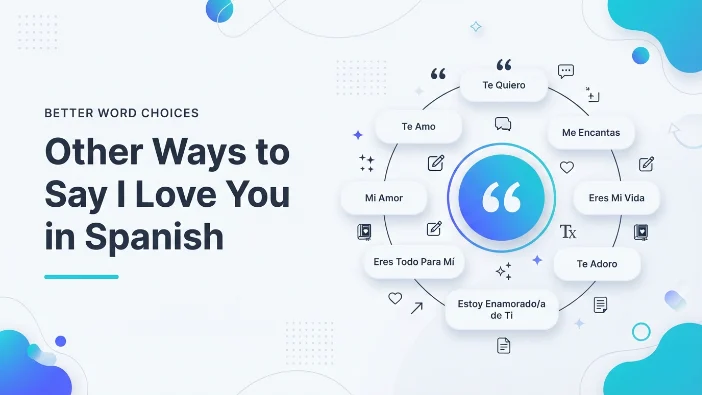
The most common ways to say “I love you” in Spanish are te quiero (everyday affection), te amo (deep romantic love), te adoro (I adore you), estoy enamorado/a de ti (I’m in love with you), and me encantas (I’m wildabout you).
Expressing love in Spanish isn’t as simple as memorizing one phrase. While English speakers use “I love you” for everything from pizza to partners, Spanish distinguishes between different depths of affection. The phrase you choose signals everything from casual warmth to lifelong commitment.
Learning alternatives to i love you in spanish transforms your ability to communicate naturally across relationships. Whether you’re speaking with family, a romantic partner, or close friends, using the right expression shows emotional intelligence and cultural awareness. Mastering these variations helps you express excitement in English and Spanish with equal fluency.
Quick Categories
Formal Alternatives to “I Love You” in Spanish
- Te amo deep, romantic love
- Te quiero warm, respectful affection
- Le quiero formal version (usted)
Casual Alternatives
- Te quiero mucho I love you a lot
- Te adoro I adore you
- Me encantas I’m wild about you
Professional Alternatives
- Aprecio mucho su ___ I greatly appreciate your ___
- Le tengo mucho cariño I hold great affection for you
- Valoro su ___ I value your ___
Informal Expressions
- Estoy loco/a por ti I’m wild about you
- Eres mi todo You’re my everything
- Me vuelves loco/a You drive me wild
What Does “I Love You” Mean in Spanish?
In Spanish, “I love you” translates to two primary phrases: te quiero and te amo. Both express love, but they occupy different emotional territories.
Te quiero (literally “I want you”) actually means “I love you” in a warm, affectionate, everyday sense. It’s used with family, friends, and romantic partners in casual contexts.
Te amo comes from the verb amar (to love deeply) and expresses profound, passionate, romantic love. It’s reserved for serious relationships and carries the weight of a major emotional declaration.
Example Sentence: Te quiero, mamá. Te amo, mi amor. “I love you, mom. I love you, my love.”
When to Use “I Love You” in Spanish
Common contexts for expressing love in Spanish:
- Romantic relationships from early dating to lifelong partnership
- Family members parents, children, siblings, grandparents
- Close friendships expressing deep platonic affection
- Special occasions birthdays, anniversaries, holidays
- Everyday moments saying goodbye, expressing gratitude
Spoken vs Written: Both te quiero and te amo appear in speech and writing. Written forms often appear in cards, letters, and text messages.
Formal vs Informal: Te quiero is informal (tú form). The formal version (le quiero) uses usted and is appropriate for showing respect to elders or in professional contexts.
Is It Professional or Polite to Say “I Love You”?
Polite? ✔️ Yes when used appropriately with family, friends, and romantic partners.
Professional? ❌ No in most workplace contexts, direct declarations of love are inappropriate.
Business-style example: Le agradezco mucho su apoyo y colaboración. “I greatly appreciate your support and collaboration.” (This expresses warmth without crossing professional boundaries.)
Pros and Cons of Using “I Love You” in Spanish
Pros:
- Simple and natural in the right context
- Conveys a friendly, warm tone
- Common usage across all Spanish-speaking regions
- Easy to understand and remember
Cons:
- Too informal for professional settings
- Can be overused or lose impact
- Limited emotional range with just one phrase
- Not suitable for formal writing or business communication
Common Mistakes When Saying “I Love You” in Spanish
1. Using te amo too early in a relationship
Saying te amo on a second date can scare someone off. Stick with te quiero or me gustas in early stages.
2. Saying te amo to a friend
Te amo is for romantic partners. Using it with friends sounds strange and overly intense.
3. Confusing te quiero with “I want you”
While querer can mean “to want,” te quiero directed at a person means “I love you” not “I want you” in a possessive sense.
4. Using the wrong gendered form of enamorado
Estoy enamorado (male) vs. Estoy enamorada (female). Use the correct ending based on your gender.
5. Overusing te amo in everyday conversation
In Spain especially, te amo can sound overly dramatic or poetic. Te quiero is the everyday choice.
30 Other Ways to Say “I Love You” in Spanish
These alternatives will help you sound more fluent, confident, and natural in different situations. Use them according to tone, context, and audience to express excitement, admiration, or approval.
1. Phrase: Te quiero
Meaning: I love you (everyday affection).
Explanation: The most common and versatile way to express love in Spanish, used with family, friends, and partners.
Example Sentence: Te quiero mucho, abuela. “I love you very much, grandma.”
Best Use: Family & friends
Worst Use: Formal writing
Tone: Warm, affectionate
Context Variability: Casual / Spoken
2. Phrase: Te amo
Meaning: I love you (deep romantic love).
Explanation: A profound declaration reserved for serious romantic relationships and intense emotional commitment.
Example Sentence: Te amo con todo mi corazón. “I love you with all my heart.”
Best Use: Romantic partners
Worst Use: Friends or early dating
Tone: Passionate, intense
Context Variability: Romantic / Written
3. Phrase: Te adoro
Meaning: I adore you.
Explanation: Expresses deep admiration and affection, stronger than te quiero but less intense than te amo.
Example Sentence: Te adoro, cariño. “I adore you, darling.”
Best Use: Partners & family
Worst Use: Professional settings
Tone: Affectionate, admiring
Context Variability: Casual / Romantic
4. Phrase: Estoy enamorado/a de ti
Meaning: I’m in love with you.
Explanation: A clear confession of romantic love, used when you want to declare your feelings directly.
Example Sentence: Estoy enamorado de ti desde el primer día. “I’ve been in love with you since the first day.”
Best Use: Romantic confessions
Worst Use: Casual friendships
Tone: Romantic, sincere
Context Variability: Romantic / Spoken
5. Phrase: Me encantas
Meaning: I’m wild about you / You enchant me.
Explanation: A flirty, affectionate way to express strong attraction without the weight of te amo.
Example Sentence: Me encantas, eres increíble. “I’m wild about you, you’re incredible.”
Best Use: Early dating
Worst Use: Family members
Tone: Flirty, enthusiastic
Context Variability: Casual / Romantic
6. Phrase: Te quiero mucho
Meaning: I love you very much.
Explanation: Adds emphasis to te quiero, showing stronger everyday affection.
Example Sentence: Te quiero mucho, hermana. “I love you very much, sister.”
Best Use: Close relationships
Worst Use: Formal contexts
Tone: Warm, emphatic
Context Variability: Casual / Spoken
7. Phrase: Te amo con todo mi corazón
Meaning: I love you with all my heart.
Explanation: A passionate, heartfelt declaration that intensifies te amo.
Example Sentence: Te amo con todo mi corazón y siempre lo haré. “I love you with all my heart and always will.”
Best Use: Serious relationships
Worst Use: New relationships
Tone: Deeply romantic
Context Variability: Romantic / Written
8. Phrase: Eres el amor de mi vida
Meaning: You are the love of my life.
Explanation: A powerful statement declaring someone as your ultimate romantic partner.
Example Sentence: Eres el amor de mi vida y no puedo imaginar mi vida sin ti. “You are the love of my life and I can’t imagine my life without you.”
Best Use: Long-term partners
Worst Use: Early dating
Tone: Eternal, committed
Context Variability: Romantic / Written
9. Phrase: Te quiero a morir
Meaning: I love you to death.
Explanation: A dramatic, passionate way to express intense love, often used in poetic contexts.
Example Sentence: Te quiero a morir, mi vida. “I love you to death, my life.”
Best Use: Romantic partners
Worst Use: Professional settings
Tone: Dramatic, passionate
Context Variability: Romantic / Spoken
10. Phrase: Eres mi media naranja
Meaning: You are my soulmate / my other half.
Explanation: A poetic Spanish expression meaning you are someone’s perfect match.
Example Sentence: Desde que te conocí, supe que eres mi media naranja. “Since I met you, I knew you are my soulmate.”
Best Use: Committed partners
Worst Use: New relationships
Tone: Poetic, romantic
Context Variability: Romantic / Written
11. Phrase: Mi corazón es tuyo
Meaning: My heart is yours.
Explanation: A romantic way to express emotional devotion and commitment.
Example Sentence: Mi corazón es tuyo, siempre. “My heart is yours, always.”
Best Use: Romantic partners
Worst Use: Casual friendships
Tone: Devoted, romantic
Context Variability: Romantic / Written
12. Phrase: Tienes todo mi corazón
Meaning: You have all my heart.
Explanation: A stronger version of mi corazón es tuyo, expressing complete emotional surrender.
Example Sentence: Tienes todo mi corazón y eso nunca cambiará. “You have all my heart and that will never change.”
Best Use: Serious relationships
Worst Use: Early dating
Tone: Total devotion
Context Variability: Romantic / Written
13. Phrase: Te deseo
Meaning: I desire you.
Explanation: Expresses physical desire and romantic attraction, often used in intimate contexts.
Example Sentence: Te deseo con toda mi alma. “I desire you with all my soul.”
Best Use: Intimate partners
Worst Use: Professional contexts
Tone: Passionate, desirous
Context Variability: Romantic / Intimate
14. Phrase: Me gustas
Meaning: I like you (romantically).
Explanation: The first step in expressing romantic interest, used in early dating stages.
Example Sentence: Me gustas mucho, ¿quieres salir conmigo? “I really like you, do you want to go out with me?”
Best Use: Early dating
Worst Use: Long-term partners
Tone: Crush, interested
Context Variability: Casual / Romantic
15. Phrase: Me gustas mucho
Meaning: I really like you.
Explanation: A stronger version of me gustas, showing significant romantic interest.
Example Sentence: Me gustas mucho y quiero conocerte mejor. “I really like you and I want to get to know you better.”
Best Use: Developing relationships
Worst Use: Family members
Tone: Interested, warm
Context Variability: Casual / Romantic
16. Phrase: Me caes bien
Meaning: I like you / I get along with you.
Explanation: A friendly way to say you like someone platonically, not romantically.
Example Sentence: Me caes bien, eres muy divertido. “I like you, you’re very funny.”
Best Use: Friends & acquaintances
Worst Use: Romantic contexts
Tone: Friendly, casual
Context Variability: Casual / Spoken
17. Phrase: Eres mi todo
Meaning: You are my everything.
Explanation: Expresses that someone is the most important person in your life.
Example Sentence: Eres mi todo, no sé qué haría sin ti. “You are my everything, I don’t know what I’d do without you.”
Best Use: Serious partners
Worst Use: Casual relationships
Tone: Deeply devoted
Context Variability: Romantic / Spoken
18. Phrase: Te quiero con locura
Meaning: I love you crazily / madly.
Explanation: Expresses intense, overwhelming love and passion.
Example Sentence: Te quiero con locura, no puedo dejar de pensar en ti. “I love you madly, I can’t stop thinking about you.”
Best Use: Passionate partners
Worst Use: Professional contexts
Tone: Intense, passionate
Context Variability: Romantic / Spoken
19. Phrase: Eres mi razón de ser
Meaning: You are my reason for being.
Explanation: A poetic way to say someone gives your life meaning and purpose.
Example Sentence: Eres mi razón de ser, todo lo que hago es por ti. “You are my reason for being, everything I do is for you.”
Best Use: Life partners
Worst Use: Early dating
Tone: Profound, poetic
Context Variability: Romantic / Written
20. Phrase: Te quiero más que a mi vida
Meaning: I love you more than my life.
Explanation: A dramatic expression of love that places the other person above everything else.
Example Sentence: Te quiero más que a mi vida, nunca te dejaré. “I love you more than my life, I will never leave you.”
Best Use: Deeply committed partners
Worst Use: Casual contexts
Tone: Dramatic, devoted
Context Variability: Romantic / Spoken
21. Phrase: Eres especial para mí
Meaning: You are special to me.
Explanation: A warm way to express that someone holds a unique place in your heart.
Example Sentence: Eres muy especial para mí, valoro cada momento contigo. “You are very special to me, I cherish every moment with you.”
Best Use: Close relationships
Worst Use: Romantic declarations
Tone: Warm, appreciative
Context Variability: Casual / Spoken
22. Phrase: Te llevo en el corazón
Meaning: I carry you in my heart.
Explanation: Expresses that someone is always in your thoughts and emotions.
Example Sentence: Aunque estemos lejos, te llevo en el corazón. “Even though we’re far apart, I carry you in my heart.”
Best Use: Long-distance relationships
Worst Use: Professional contexts
Tone: Nostalgic, affectionate
Context Variability: Romantic / Written
23. Phrase: Eres la luz de mi vida
Meaning: You are the light of my life.
Explanation: A poetic way to say someone brightens your existence and brings you joy.
Example Sentence: Eres la luz de mi vida, todo es mejor cuando estás aquí. “You are the light of my life, everything is better when you’re here.”
Best Use: Romantic partners
Worst Use: Casual friendships
Tone: Poetic, radiant
Context Variability: Romantic / Written
24. Phrase: Me haces feliz
Meaning: You make me happy.
Explanation: A simple, sincere way to express that someone brings you joy.
Example Sentence: Me haces muy feliz, gracias por estar en mi vida. “You make me very happy, thank you for being in my life.”
Best Use: All close relationships
Worst Use: Professional contexts
Tone: Sincere, grateful
Context Variability: Casual / Spoken
25. Phrase: No puedo vivir sin ti
Meaning: I can’t live without you.
Explanation: Expresses deep emotional dependence and the importance of someone in your life.
Example Sentence: No puedo vivir sin ti, eres parte de mí. “I can’t live without you, you’re part of me.”
Best Use: Serious partners
Worst Use: Early dating
Tone: Deeply dependent
Context Variability: Romantic / Spoken
26. Phrase: Eres mi sueño hecho realidad
Meaning: You are my dream come true.
Explanation: A romantic way to say someone is everything you ever wished for.
Example Sentence: Eres mi sueño hecho realidad, siempre te he esperado. “You are my dream come true, I’ve always waited for you.”
Best Use: Committed partners
Worst Use: Casual contexts
Tone: Romantic, idealistic
Context Variability: Romantic / Written
27. Phrase: Te quiero un montón
Meaning: I love you a ton / a lot.
Explanation: A casual, enthusiastic way to express strong affection.
Example Sentence: ¡Te quiero un montón, amiga! “I love you a ton, friend!”
Best Use: Friends & family
Worst Use: Professional settings
Tone: Enthusiastic, casual
Context Variability: Casual / Spoken
28. Phrase: Estoy loco/a por ti
Meaning: I’m wild about you.
Explanation: Expresses intense infatuation or passionate love.
Example Sentence: Estoy loco por ti, no puedo dejar de pensar en ti. “I’m wild about you, I can’t stop thinking about you.”
Best Use: Passionate relationships
Worst Use: Family members
Tone: Intense, infatuated
Context Variability: Romantic / Spoken
29. Phrase: Eres mi alma gemela
Meaning: You are my soulmate.
Explanation: A powerful declaration that someone is your destined perfect match.
Example Sentence: Sé que eres mi alma gemela, lo siento en el corazón. “I know you are my soulmate, I feel it in my heart.”
Best Use: Deeply committed partners
Worst Use: Early dating
Tone: Destined, profound
Context Variability: Romantic / Written
30. Phrase: Te quiero, mi amor
Meaning: I love you, my love.
Explanation: Combines a term of endearment with te quiero for extra warmth.
Example Sentence: Te quiero, mi amor. Buenas noches. “I love you, my love. Goodnight.”
Best Use: Romantic partners
Worst Use: Professional contexts
Tone: Affectionate, intimate
Context Variability: Romantic / Spoken
The right tone makes your English sound professional and confident and the same applies to Spanish.
Comparison Table: Top 10 Alternatives
| Phrase | Tone | Best Use |
|---|---|---|
| Te quiero | Warm, affectionate | Family, friends, partners |
| Te amo | Passionate, intense | Serious romantic relationships |
| Te adoro | Admiring, affectionate | Partners & close family |
| Estoy enamorado/a de ti | Romantic, sincere | Confessing romantic love |
| Me encantas | Flirty, enthusiastic | Early dating |
| Eres el amor de mi vida | Eternal, committed | Long-term partners |
| Te quiero mucho | Warm, emphatic | Close relationships |
| Me gustas | Interested, crush | Early dating |
| Eres mi media naranja | Poetic, romantic | Soulmates |
| Te deseo | Passionate, desirous | Intimate partners |
Spanish has more than one way to say ‘I love you’ and each one carries a different emotional weight.
Mini Quiz / Self-Check
1. You’ve been dating someone for two weeks. Which phrase should you use?
A) Te amo
B) Te quiero
C) Me gustas
Answer: C) Me gustas or B) Te quiero Te amo is usually too intense for the early stages of a relationship.
2. Your grandmother just gave you a heartfelt gift. Which expression is most appropriate?
A) Te amo con todo mi corazón
B) Te quiero mucho, abuela
C) Eres mi media naranja
Answer: B) Te quiero mucho, abuela It’s warm, affectionate, and perfectly suited for a family member.
3. You want to confess your love to your partner of three years. Which phrase carries the most weight?
A) Me caes bien
B) Te amo
C) Me gustas
Answer: B) Te amo This phrase expresses deep, committed romantic love.
4. A colleague has been incredibly supportive. How do you express appreciation professionally?
A) Te quiero
B) Te amo
C) Agradezco mucho su apoyo
Answer: C) Agradezco mucho su apoyo A respectful and professional way to express sincere appreciation in the workplace.
Understanding when to use each Spanish expression helps you communicate naturally while respecting cultural and social contexts.
FAQs
1. What is the difference between te quiero and te amo?
Te quiero is a warm, everyday expression of love used with family, friends, and partners. Te amo is a deep, passionate declaration reserved for serious romantic relationships.
2. Can I say te amo to my family?
In some Latin American countries, yes but in Spain and many other regions, te amo is typically reserved for romantic partners. Te quiero is the safer choice for family.
3. Is te quiero romantic or platonic?
Both! Te quiero can be used romantically with a partner or platonically with family and friends. The context and relationship determine its meaning.
4. How do I respond when someone says te amo?
If you feel the same, say Yo también te amo (“I love you too”). If you’re not ready, say Eres muy especial para mí (“You’re very special to me”).
5. What’s a flirty way to say “I like you” in Spanish?
Me encantas (“I’m wild about you”) or Me gustas mucho (“I really like you”) are both flirty and affectionate without being overly serious.
Conclusion
Learning other ways to say i love you in spanish transforms your ability to connect with Spanish speakers across all relationships. From the warm everyday affection of te quiero to the profound commitment of te amo, each phrase carries its own emotional weight and cultural significance.
The key to sounding natural and confident is understanding the context who you’re speaking to, how close you are, and what level of emotion you want to convey. Practice these alternatives daily, and you’ll soon express love in Spanish with the same ease and fluency as a native speaker.
Read More Related Articles:
- Other Ways to Say Circle Back | Improve Your Workplace Communication In 2026
- Other Ways to Say Welcome to the Team | Warm First Impression In 2026
- Other Ways to Say I Hope All Is Well | Make a Better First Impression In 2026

Victoria Hughes is a content writer dedicated to making communication clearer and more effective. Through TextsResponse.com, she shares practical insights and thoughtfully crafted response ideas that help readers express themselves with confidence.