Quick Answer
Looking for alternatives to “amazing”? The word is overused in everyday English, so swapping it out helps you sound more precise and confident.Top picks: incredible, astonishing, phenomenal, breathtaking, extraordinary.
Amazing” is one of the most common words in English. It describes something that causes surprise, wonder, or strong admiration. People use it in conversation, social media captions, reviews, and casual writing to react quickly to something impressive.
Because it is used so often, “amazing” can start to sound generic or even lazy, especially in professional or written English. Learning other ways to say amazing helps you match your tone to the situation, whether you want to sound casual with friends or polished in a business email.
Building a wider vocabulary also helps you express excitement in English more naturally. Instead of repeating the same word, you can choose a phrase that fits the exact level of surprise, admiration, or professionalism you want to communicate.
The right tone makes your English sound professional and confident.
Quick Categories
Formal Alternatives to “Amazing”
- Extraordinary
- Remarkable
- Exceptional
- Outstanding
Pro Tip: Use formal alternatives in reports, emails, and presentations where “amazing” would sound too casual.
Casual Alternatives
- Awesome
- Incredible
- Unreal
- Wow-worthy
Pro Tip: Save casual alternatives for texting, social media, or relaxed conversations with friends.
Professional Alternatives
- Impressive
- Exceptional
- Outstanding
- Noteworthy
Pro Tip: In meetings or performance reviews, “impressive” and “exceptional” sound polished without seeming exaggerated.
Small word choices shape how competent and credible you sound.
Informal Expressions
- Epic
- Insane (in a good way)
- Crazy good
- Mind-blowing
Pro Tip: Informal expressions work well in spoken English, but avoid them in written business communication.
Common Mistakes When Using “Amazing”
- Overusing it for everything. Using “amazing” to describe a coffee, a movie, and a coworker in one conversation weakens its impact.
- Example: “This coffee is amazing, my day is amazing, you’re amazing!”
- Using it in formal writing. “Amazing” can feel too casual in reports or academic work.
- Example: “The amazing results proved the hypothesis.” (better: “remarkable results”)
- Confusing “amazing” with “amazed.” “Amazing” describes the thing; “amazed” describes the person’s reaction.
- Example: Incorrect: “I am amazing by this view.” Correct: “I am amazed by this view.”
- Using casual synonyms in professional emails. Words like “epic” or “insane” can seem unprofessional at work.
- Example: “The epic sales numbers this quarter…” sounds out of place in a report.
- Repeating the same word throughout an essay. Using “amazing” five times in one paragraph reduces writing quality.
- Example: “It was an amazing trip with amazing food and amazing people.”
What Does “Amazing” Mean?
Amazing” is an adjective that describes something causing great surprise or wonder, usually in a positive way.
Grammar note: “Amazing” comes from the verb “amaze.” As an adjective, it describes the source of surprise (the -ing form), while “amazed” describes the person experiencing the surprise (the -ed form).
Example sentence: “The view from the mountain was amazing.”
When to Use “Amazing”
- Reacting to something impressive in conversation
- Writing casual social media captions
- Complimenting food, travel, or experiences
- Describing an unexpected or wonderful event
Spoken vs Written: Common in spoken English and casual writing; less suitable for formal written documents.
Formal vs Informal: Mostly informal; formal writing usually calls for words like “remarkable” or “exceptional.
Is It Professional or Polite to Say “Amazing”?
“Amazing” is polite and friendly, but it is not always professional. It can sound too casual or vague in business contexts where precise, measured language is expected.
Business example: Instead of “Your amazing work helped us close the deal,” a more professional version would be “Your exceptional work contributed directly to closing the deal.”
Polite? ✔️ Yes Professional? ❌ No (in most cases)
Pros and Cons of Using “Amazing”
Pros
- Simple and natural
- Friendly tone
- Common usage
- Easy to understand
Cons
- Too informal for work
- Overused
- Limited emotional range
- Not suitable for formal writing
Variety in vocabulary is what separates fluent speakers from advanced learners.
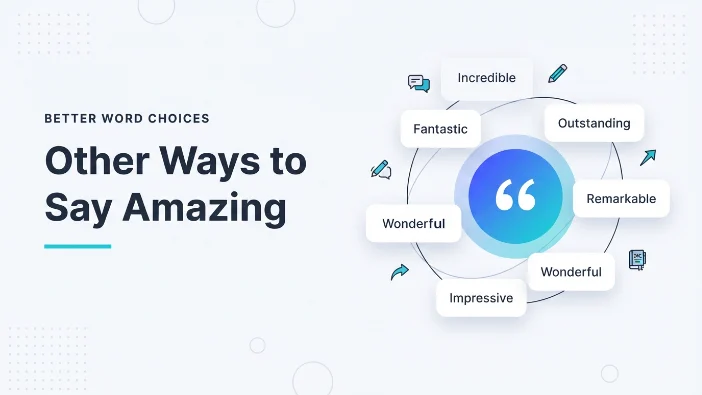
Other Ways to Say Amazing
These alternatives will help you sound more fluent, confident, and natural in different situations. Use them according to tone, context, and audience to express excitement, admiration, or approval.
1. Phrase: Incredible
Meaning: Difficult to believe because of how impressive it is.
Explanation: Used for things that exceed expectations.
Example Sentence: “The concert was incredible from start to finish.”
Best Use: Reviews, conversation
Worst Use: Legal documents
Tone: Enthusiastic, warm
Context Variability: Casual, spoken
2. Phrase: Astonishing
Meaning: Causing great surprise or wonder.
Explanation: Slightly more formal than “amazing.”
Example Sentence: “The team achieved astonishing results this quarter.”
Best Use: Reports, essays
Worst Use: Texting friends
Tone: Formal, impressed
Context Variability: Professional, written
3. Phrase: Phenomenal
Meaning: Extremely impressive or remarkable.
Explanation: Adds intensity and admiration to praise.
Example Sentence: “She gave a phenomenal presentation today.”
Best Use: Compliments, reviews
Worst Use: Everyday small talk
Tone: Strong, admiring
Context Variability: Professional, spoken
4. Phrase: Breathtaking
Meaning: So impressive it takes your breath away.
Explanation: Common for describing scenery or visuals.
Example Sentence: “The sunset over the mountains was breathtaking.”
Best Use: Travel, descriptions
Worst Use: Office memos
Tone: Poetic, vivid
Context Variability: Casual, written
5. Phrase: Extraordinary
Meaning: Very unusual or remarkable, beyond the ordinary.
Explanation: Common in formal or professional writing.
Example Sentence: “He showed extraordinary leadership during the crisis.”
Best Use: Formal writing, reviews
Worst Use: Casual chats
Tone: Formal, respectful
Context Variability: Professional, written
6. Phrase: Remarkable
Meaning: Worthy of attention because it is unusual or special.
Explanation: A safe, professional way to praise achievements.
Example Sentence: “The company made remarkable progress this year.”
Best Use: Business reports
Worst Use: Casual excitement
Tone: Measured, respectful
Context Variability: Professional, written
7. Phrase: Outstanding
Meaning: Exceptionally good, standing out from others.
Explanation: Frequently used in workplace evaluations.
Example Sentence: “Your outstanding performance earned you a promotion.”
Best Use: Performance reviews
Worst Use: Everyday small talk
Tone: Formal, complimentary
Context Variability: Professional, written
8. Phrase: Exceptional
Meaning: Unusually good; above the normal standard.
Explanation: Common in academic and professional settings.
Example Sentence: “The chef prepared an exceptional meal for the guests.”
Best Use: Formal praise
Worst Use: Casual conversation
Tone: Polished, precise
Context Variability: Professional, spoken
9. Phrase: Impressive
Meaning: Causing admiration through size, quality, or skill.
Explanation: Slightly understated but still professional.
Example Sentence: “That was an impressive pitch to investors.”
Best Use: Business, presentations
Worst Use: Poetic writing
Tone: Confident, professional
Context Variability: Professional, spoken
10. Phrase: Marvelous
Meaning: Causing great wonder; excellent.
Explanation: Slightly old-fashioned but still charming.
Example Sentence: “We had a marvelous time at the wedding.”
Best Use: Warm compliments
Worst Use: Technical reports
Tone: Cheerful, gracious
Context Variability: Casual, spoken
11. Phrase: Spectacular
Meaning: Impressive in a dramatic or visually striking way.
Explanation: Often used for events or performances.
Example Sentence: “The fireworks display was spectacular.”
Best Use: Events, entertainment
Worst Use: Everyday tasks
Tone: Dramatic, exciting
Context Variability: Casual, spoken
12. Phrase: Stunning
Meaning: Extremely impressive, often visually.
Explanation: Common for appearance, design, or scenery.
Example Sentence: “Her stunning design won first place.”
Best Use: Visual compliments
Worst Use: Written contracts
Tone: Admiring, vivid
Context Variability: Casual, professional
13. Phrase: Awesome
Meaning: Very impressive or exciting.
Explanation: Extremely common in casual American English.
Example Sentence: “That movie was awesome!”
Best Use: Friends, texting
Worst Use: Formal emails
Tone: Casual, energetic
Context Variability: Casual, spoken
14. Phrase: Fantastic
Meaning: Extremely good; excellent.
Explanation: Works in both casual and semi-professional settings.
Example Sentence: “You did a fantastic job on this project.”
Best Use: General compliments
Worst Use: Legal writing
Tone: Warm, encouraging
Context Variability: Casual, professional
15. Phrase: Wonderful
Meaning: Inspiring delight or admiration.
Explanation: Softer and warmer than “amazing.”
Example Sentence: “It was wonderful to see you again.”
Best Use: Personal messages
Worst Use: Technical reviews
Tone: Warm, friendly
Context Variability: Casual, spoken
16. Phrase: Mind-Blowing
Meaning: So impressive it overwhelms the mind.
Explanation: Very informal and highly expressive.
Example Sentence: “The plot twist was mind-blowing.”
Best Use: Casual reactions
Worst Use: Business writing
Tone: Excited, intense
Context Variability: Casual, spoken
17. Phrase: Jaw-Dropping
Meaning: Astonishing to the point of shock.
Explanation: Used for visuals or unexpected reveals.
Example Sentence: “The magician’s trick was jaw-dropping.”
Best Use: Entertainment, reactions
Worst Use: Formal reports
Tone: Shocked, thrilled
Context Variability: Casual, spoken
18. Phrase: Unbelievable
Meaning: Too extraordinary to seem real.
Explanation: Can express positive or negative surprise depending on tone.
Example Sentence: “The comeback win was unbelievable.”
Best Use: Sports, reactions
Worst Use: Precise reporting
Tone: Excited, surprised
Context Variability: Casual, spoken
19. Phrase: Superb
Meaning: Excellent; of very high quality.
Explanation: Slightly formal and polished.
Example Sentence: “The hotel service was superb.”
Best Use: Reviews, formal praise
Worst Use: Slang-heavy chats
Tone: Refined, approving
Context Variability: Professional, written
20. Phrase: Terrific
Meaning: Very good or enjoyable.
Explanation: Friendly and slightly dated but widely understood.
Example Sentence: “You did a terrific job hosting the event.”
Best Use: Encouraging feedback
Worst Use: Technical documents
Tone: Cheerful, supportive
Context Variability: Casual, spoken
21. Phrase: Magnificent
Meaning: Impressively beautiful, elaborate, or grand.
Explanation: Common for architecture, nature, or achievements.
Example Sentence: “The palace was absolutely magnificent.”
Best Use: Descriptions, travel
Worst Use: Small everyday compliments
Tone: Grand, majestic
Context Variability: Casual, written
22. Phrase: Sensational
Meaning: Causing great excitement or interest.
Explanation: Often used in media or performance contexts.
Example Sentence: “Her sensational debut surprised critics.”
Best Use: Media, reviews
Worst Use: Quiet formal settings
Tone: Bold, exciting
Context Variability: Casual, professional
23. Phrase: Wondrous
Meaning: Inspiring a feeling of wonder.
Explanation: Poetic and literary in tone.
Example Sentence: “They explored a wondrous underwater world.”
Best Use: Creative writing
Worst Use: Business communication
Tone: Poetic, imaginative
Context Variability: Written, casual
24. Phrase: Epic
Meaning: Impressively large, heroic, or memorable.
Explanation: Popular in informal and online conversation.
Example Sentence: “That road trip was epic.”
Best Use: Casual storytelling
Worst Use: Professional emails
Tone: Fun, energetic
Context Variability: Casual, spoken
25. Phrase: Unreal
Meaning: So impressive it seems impossible.
Explanation: Very casual, often used among friends.
Example Sentence: “Your new apartment is unreal.”
Best Use: Friendly conversation
Worst Use: Written reports
Tone: Casual, amazed
Context Variability: Casual, spoken
26. Phrase: Out of This World
Meaning: Extraordinarily good.
Explanation: An idiomatic expression for strong praise.
Example Sentence: “The dessert was out of this world.”
Best Use: Food, casual praise
Worst Use: Formal documents
Tone: Playful, enthusiastic
Context Variability: Casual, spoken
27. Phrase: Noteworthy
Meaning: Deserving attention or notice.
Explanation: A measured, professional way to highlight achievement.
Example Sentence: “The report includes several noteworthy findings.”
Best Use: Academic, business writing
Worst Use: Casual excitement
Tone: Neutral, professional
Context Variability: Professional, written
28. Phrase: Awe-Inspiring
Meaning: Causing a feeling of respect and wonder.
Explanation: Suitable for grand or moving experiences.
Example Sentence: “The ceremony was awe-inspiring.”
Best Use: Formal descriptions
Worst Use: Quick casual replies
Tone: Reverent, powerful
Context Variability: Professional, written
29. Phrase: Dazzling
Meaning: Impressive because of skill, brilliance, or beauty.
Explanation: Often used for performances or visuals.
Example Sentence: “The dancer gave a dazzling performance.”
Best Use: Arts, entertainment
Worst Use: Technical writing
Tone: Bright, impressive
Context Variability: Casual, professional
30. Phrase: First-Rate
Meaning: Of the best quality; excellent.
Explanation: A professional way to describe high standards.
Example Sentence: “The clinic offers first-rate patient care.”
Best Use: Business, services
Worst Use: Casual small talk
Tone: Confident, formal
Context Variability: Professional, written
“Choosing the right synonym is choosing the right impression.”
Mini Quiz: Self-Check
1. Which word fits best in a formal business report?
A) Awesome
B) Epic
C) Exceptional
D) Unreal
2. Which sentence uses the correct form?
A) “I am amazing by the view.”
B) “I am amazed by the view.”
3. Which phrase is best for describing a sunset?
A) First-rate
B) Breathtaking
C) Noteworthy
D) Superb
4. Which alternative would sound out of place in a professional email?
A) Impressive
B) Outstanding
C) Mind-blowing
D) Exceptional
Answers:
Comparison Table: Top Alternatives
| Phrase | Tone | Best Use |
|---|---|---|
| Incredible | Enthusiastic, warm | Reviews, conversation |
| Extraordinary | Formal, respectful | Formal writing |
| Outstanding | Formal, complimentary | Performance reviews |
| Exceptional | Polished, precise | Formal praise |
| Impressive | Confident, professional | Business, presentations |
| Awesome | Casual, energetic | Friends, texting |
| Breathtaking | Poetic, vivid | Travel, descriptions |
| Stunning | Admiring, vivid | Visual compliments |
| Spectacular | Dramatic, exciting | Events, entertainment |
| Noteworthy | Neutral, professional | Academic, business writing |
FAQs
1. What is the most professional way to say “amazing”?
Exceptional,” “outstanding,” or “remarkable” are strong professional alternatives to “amazing.
2. Is “amazing” too casual for a resume?
Yes, resumes usually call for more precise words like “exceptional” or “notable” instead of “amazing.”
3. What is a stronger word than “amazing”?
“Phenomenal” and “extraordinary” both express a higher intensity than “amazing.”
4. Can I use “amazing” in academic writing?
It’s best avoided in academic writing; use “remarkable,” “noteworthy,” or “significant” instead.
5. What is a fun, casual way to say “amazing”?
“Epic,” “unreal,” or “mind-blowing” work well in casual, spoken conversation.
Conclusion
Learning alternatives to “amazing” helps you sound more precise, confident, and fluent in both spoken and written English. Instead of relying on one word for every situation, you can choose language that matches the tone, whether formal, professional, or casual.
Practice using a few new alternatives each day in real conversations or writing. Paying attention to tone will help your English sound natural and appropriate for any audience.
Read More Related Articles:
- Other Ways to Say Gorgeous | Flirty, Formal and Everyday Conversations In 2026
- Other Ways to Say Handsome | Make Every Compliment More Memorable In 2026
- Other Ways to Say I Love You in Other Languages | Beyond the Classic Three Words In 2026

Daniel Murphy is a professional writer and blogger specializing in digital communication and messaging trends. As a contributor to TextsResponse.com, he creates reader-focused content designed to help people find the right words at the right time.