Quick Answer
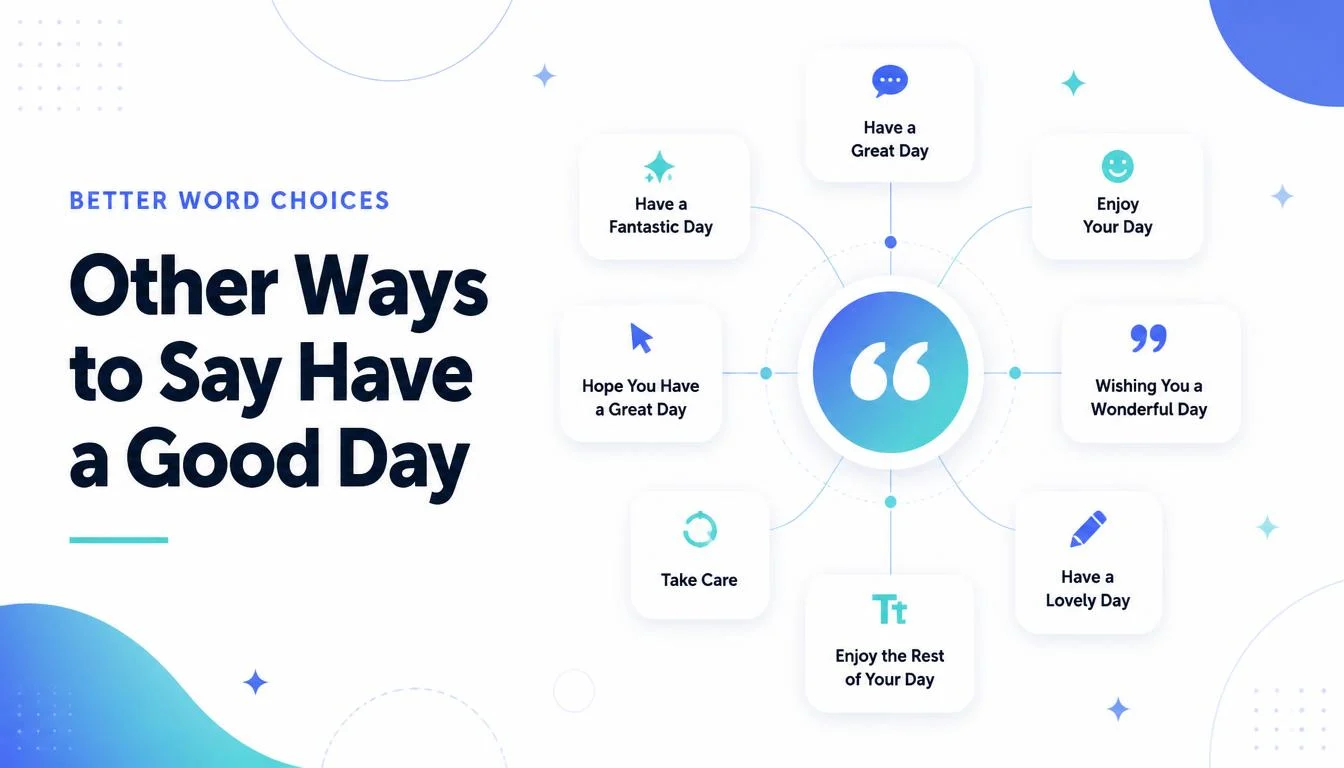
Other ways to say have a good day include enjoy your day, have a wonderful day, take care, have a great one, and wishing you a pleasant day.
Looking for other ways to say have a good day? Whether you’re ending a conversation, writing a professional message, or wishing someone well, choosing the right expression can make your words sound more natural and thoughtful.
There are many other ways to say have a good day, ranging from casual and friendly phrases to polite and professional alternatives. The best choice depends on your relationship with the person and the tone you want to convey.
Quick Categories
Formal Alternatives to “Have a good day”
- I wish you a pleasant day.
- Have a wonderful day.
- Wishing you all the best.
Pro Tip: Use these when speaking to clients, elders, or superiors to show respect and maintain a professional distance.
Casual Alternatives
- Have a great one.
- Take it easy.
- Catch you later.
Pro Tip: Keep these for friends and peers. They are relaxed and imply a friendly, ongoing relationship.
Professional Alternatives
- I hope the rest of your day goes well.
- Looking forward to our next meeting.
- Have a productive day.
Pro Tip: In business, focus on the other person’s productivity or future collaboration rather than just their general mood.
Informal Expressions
- Have a good one.
- See ya.
- Later!
Pro Tip: These are perfect for quick goodbyes but avoid them in written emails or formal letters.
Common Mistakes
- Using it in a formal email signature.
Example: “Sincerely, John. Have a good day.” (This can feel too casual for a formal contract email.) - Saying it to someone who is leaving for a negative reason.
Example: Saying “Have a good day” to a coworker who was just fired. (This is insensitive.) - Overusing it in the same conversation.
Example: “Thanks, have a good day. Bye, have a good day!” (Repetitive and awkward.) - Using it when you are the one leaving.
Example: You are leaving the office and say to your boss, “Have a good day.” (It is better to say, “Have a good evening” if you are leaving them behind.) - Mismatching the tone.
Example: Saying “Have a good day” to a close friend in a crisis. (It sounds dismissive.)
What Does “Have a good day” Mean?
Definition: It is an imperative sentence used as a farewell to wish someone happiness or success for the remainder of their day.
Grammar: It is in the imperative mood, meaning you are giving a command or instruction, but here it functions as a polite wish. The subject “You” is implied.
Example: “Thanks for the coffee, have a good day!”
When to Use “Have a good day”
- Common Contexts: Retail transactions, ending a phone call, leaving a meeting, saying goodbye to a neighbor.
- Spoken vs Written: Extremely common in spoken English. Acceptable in informal written notes or chat.
- Formal vs Informal: It sits in the middle. It is polite enough for strangers but too casual for high-stakes formal writing.
Is It Professional or Polite to Say “Have a good day”?
Polite? Yes. It is a standard courtesy.
Professional? Not exactly. In many business contexts, it is considered slightly informal or generic. It lacks the specificity of a professional closing.
Business-style example:
Instead of “Have a good day,” a professional might say: “I hope you have a productive afternoon. I look forward to our next steps.”
“Professional English is not just about grammar; it is about choosing the right level of formality.”
Pros and Cons of Using “Have a good day”
Pros:
- Simple and natural.
- Friendly tone.
- Common usage (everyone understands it).
- Easy to understand.
Cons:
- Too informal for high-level work.
- Overused (sounds robotic).
- Limited emotional range.
- Not suitable for formal writing.
Other Ways to Say “Have a good day” (With Examples)
These alternatives will help you sound more fluent, confident, and natural in different situations. Use them according to tone, context, and audience to express excitement, admiration, or approval.
1. Phrase: Have a wonderful day
Meaning: A slightly more enthusiastic version of the original.
Explanation: Adds a bit more warmth and energy.
Example Sentence: “Thanks for all your help, Sarah. Have a wonderful day!”
Best Use: Warm farewells
Worst Use: Angry emails
Tone: Warm, polite, positive
Context Variability: Casual: Yes / Professional: Yes
2. Phrase: I wish you a pleasant day
Meaning: A formal and courteous way to wish someone well.
Explanation: “Pleasant” is a softer, more formal adjective than “good.”
Example Sentence: “It was a pleasure meeting you. I wish you a pleasant day.”
Best Use: Formal meetings
Worst Use: Texting friends
Tone: Formal, polite, distant
Context Variability: Casual: No / Professional: Yes
3. Phrase: Have a great one
Meaning: A very casual, friendly goodbye.
Explanation: “One” replaces “day” in informal speech.
Example Sentence: “I’m heading out. Have a great one!”
Best Use: Friends and peers
Worst Use: Job interviews
Tone: Casual, friendly, relaxed
Context Variability: Casual: Yes / Professional: No
4. Phrase: Take care
Meaning: A caring farewell that implies looking after oneself.
Explanation: It is broader than “have a good day” and implies safety.
Example Sentence: “See you next week. Take care!”
Best Use: General goodbyes
Worst Use: Formal reports
Tone: Caring, neutral, brief
Context Variability: Casual: Yes / Professional: Yes (as a soft closer)
5. Phrase: I hope the rest of your day goes well
Meaning: A specific wish for the remaining hours.
Explanation: This is highly professional and specific.
Example Sentence: “Thank you for your time. I hope the rest of your day goes well.”
Best Use: After meetings
Worst Use: Quick texts
Tone: Professional, considerate
Context Variability: Casual: No / Professional: Yes
6. Phrase: Have a productive day
Meaning: Wishing someone success in their work.
Explanation: Focuses on output rather than general happiness.
Example Sentence: “Good luck with the project. Have a productive day.”
Best Use: Workplace
Worst Use: Vacations
Tone: Business, focused, motivating
Context Variability: Casual: No / Professional: Yes
7. Phrase: Enjoy the rest of your day
Meaning: A polite instruction to enjoy what is left.
Explanation: Very similar to the original but slightly more specific.
Example Sentence: “Thanks for stopping by. Enjoy the rest of your day.”
Best Use: Retail/Service
Worst Use: Deep conversations
Tone: Polite, standard, friendly
Context Variability: Casual: Yes / Professional: Yes
8. Phrase: Wishing you all the best
Meaning: A comprehensive wish for success and happiness.
Explanation: Often used when parting ways for a longer time.
Example Sentence: “Goodbye, John. Wishing you all the best in your new role.”
Best Use: Farewells
Worst Use: Daily goodbyes
Tone: Sincere, formal, warm
Context Variability: Casual: No / Professional: Yes
9. Phrase: Have a lovely day
Meaning: A sweet, slightly more feminine or gentle version.
Explanation: “Lovely” implies beauty and charm.
Example Sentence: “Thanks for the tea. Have a lovely day!”
Best Use: Friendly service
Worst Use: Aggressive negotiations
Tone: Sweet, polite, gentle
Context Variability: Casual: Yes / Professional: Sometimes
10. Phrase: Catch you later
Meaning: A casual way to say goodbye, implying you will meet again.
Explanation: It focuses on the future meeting, not the day itself.
Example Sentence: “I’ve got to run. Catch you later!”
Best Use: Friends
Worst Use: Clients
Tone: Informal, casual, quick
Context Variability: Casual: Yes / Professional: No
11. Phrase: Have a blessed day
Meaning: A farewell with religious connotations.
Explanation: Common in some cultures, implies divine favor.
Example Sentence: “Thank you for your kindness. Have a blessed day.”
Best Use: Religious contexts
Worst Use: Secular business
Tone: Spiritual, kind, sincere
Context Variability: Casual: Yes / Professional: Rarely
12. Phrase: I hope your day is as nice as you are
Meaning: A flattering, personal compliment.
Explanation: Combines a wish with a compliment.
Example Sentence: “It was great chatting. I hope your day is as nice as you are!”
Best Use: Flirting/Friendly
Worst Use: Professional emails
Tone: Charming, personal, flirty
Context Variability: Casual: Yes / Professional: No
13. Phrase: See you soon
Meaning: A farewell implying a near future meeting.
Explanation: Focuses on the relationship, not the day.
Example Sentence: “Let’s grab lunch next week. See you soon!”
Best Use: Acquaintances
Worst Use: Final goodbyes
Tone: Friendly, hopeful, brief
Context Variability: Casual: Yes / Professional: Yes
14. Phrase: Have a safe trip
Meaning: Used when someone is traveling.
Explanation: Specific to travel contexts.
Example Sentence: “Text me when you land. Have a safe trip!”
Best Use: Travel
Worst Use: Office departure
Tone: Caring, concerned, specific
Context Variability: Casual: Yes / Professional: Yes
15. Phrase: Take it easy
Meaning: A relaxed goodbye telling someone to calm down.
Explanation: Often used when someone is stressed or leaving work.
Example Sentence: “You’ve worked hard today. Take it easy.”
Best Use: End of workday
Worst Use: High-energy events
Tone: Relaxed, calm, informal
Context Variability: Casual: Yes / Professional: No
16. Phrase: Have a fantastic day
Meaning: High energy version of “good day.”
Explanation: “Fantastic” is stronger than “good.”
Example Sentence: “Enjoy the party! Have a fantastic day!”
Best Use: Celebrations
Worst Use: Somber events
Tone: Enthusiastic, upbeat
Context Variability: Casual: Yes / Professional: Yes
17. Phrase: Rest well
Meaning: Wishing someone good sleep or relaxation.
Explanation: Usually used later in the day.
Example Sentence: “You look tired. Go home and rest well.”
Best Use: Evening farewells
Worst Use: Morning greetings
Tone: Caring, concerned
Context Variability: Casual: Yes / Professional: Sometimes
18. Phrase: Have a pleasant evening
Meaning: Specific to the time of day.
Explanation: More formal than “good night.”
Example Sentence: “Dinner was great. Have a pleasant evening.”
Best Use: Evening events
Worst Use: Morning meetings
Tone: Formal, polite
Context Variability: Casual: No / Professional: Yes
19. Phrase: Good luck
Meaning: Wishing success for a specific task.
Explanation: Focuses on an upcoming challenge.
Example Sentence: “Your exam is tomorrow? Good luck!”
Best Use: Before challenges
Worst Use: Relaxing days
Tone: Supportive, direct
Context Variability: Casual: Yes / Professional: Yes
20. Phrase: I hope you have a great day
Meaning: A polite, full-sentence version.
Explanation: Adds “I hope” to soften the command.
Example Sentence: “It was nice seeing you. I hope you have a great day.”
Best Use: General polite
Worst Use: Close friends (too formal)
Tone: Polite, standard
Context Variability: Casual: Yes / Professional: Yes
21. Phrase: Enjoy your day
Meaning: A direct instruction to enjoy.
Explanation: Shorter and punchier than “Have a good day.”
Example Sentence: “Bye now! Enjoy your day.”
Best Use: Quick goodbyes
Worst Use: Formal letters
Tone: Friendly, brisk
Context Variability: Casual: Yes / Professional: Yes
22. Phrase: Have a good one
Meaning: Very casual, gender-neutral goodbye.
Explanation: “One” refers to the day.
Example Sentence: “See you around. Have a good one.”
Best Use: Acquaintances
Worst Use: Formal speeches
Tone: Casual, cool
Context Variability: Casual: Yes / Professional: No
23. Phrase: All the best
Meaning: A short, professional sign-off.
Explanation: Common in emails and letters.
Example Sentence: “Thanks for your application. All the best.”
Best Use: Email sign-offs
Worst Use: Spoken conversation
Tone: Professional, concise
Context Variability: Casual: No / Professional: Yes
24. Phrase: Have a peaceful day
Meaning: Wishing calm and tranquility.
Explanation: Good for someone who needs a break.
Example Sentence: “I know you’ve been stressed. Have a peaceful day.”
Best Use: Stressful times
Worst Use: Parties
Tone: Calm, soothing
Context Variability: Casual: Yes / Professional: Sometimes
25. Phrase: Make it a great day
Meaning: Empowering the other person to create their own joy.
Explanation: Active voice, implies agency.
Example Sentence: “Go out there and make it a great day!”
Best Use: Motivational
Worst Use: Somber news
Tone: Motivating, energetic
Context Variability: Casual: Yes / Professional: Yes
26. Phrase: Have a great rest of your week
Meaning: Extends the wish beyond just one day.
Explanation: Useful on Wednesdays or Thursdays.
Example Sentence: “See you Monday. Have a great rest of your week.”
Best Use: Mid-week
Worst Use: Fridays
Tone: Thoughtful, professional
Context Variability: Casual: No / Professional: Yes
27. Phrase: I hope you enjoy the rest of your day
Meaning: A polite, indirect version.
Explanation: Very soft and respectful.
Example Sentence: “Thank you for your patience. I hope you enjoy the rest of your day.”
Best Use: Customer service
Worst Use: Friends
Tone: Respectful, formal
Context Variability: Casual: No / Professional: Yes
28. Phrase: Stay safe
Meaning: Wishing protection from harm.
Explanation: Became popular during the pandemic but used generally.
Example Sentence: “It’s raining hard. Stay safe!”
Best Use: Bad weather/Crisis
Worst Use: Sunny days
Tone: Concerned, caring
Context Variability: Casual: Yes / Professional: Yes
29. Phrase: Until next time
Meaning: A formal way to say goodbye until you meet again.
Explanation: Implies a scheduled or likely future meeting.
Example Sentence: “It was a productive meeting. Until next time.”
Best Use: Business meetings
Worst Use: Random encounters
Tone: Formal, professional
Context Variability: Casual: No / Professional: Yes
30. Phrase: Have a blessed evening
Meaning: A formal, spiritual goodbye for the evening.
Explanation: Combines “blessed” with a time-specific greeting.
Example Sentence: “Good night and have a blessed evening.”
Best Use: Religious settings
Worst Use: Secular offices
Tone: Spiritual, formal
Context Variability: Casual: Rare / Professional: Rare
“Learning professional reaction phrases helps you navigate business English with ease.”
Mini Quiz / Self-Check
- Scenario: You are leaving a job interview. Which is the best phrase?
A) Catch you later
B) I hope the rest of your day goes well
C) Have a good one
Answer: B (Professional and polite). - Scenario: You are texting your best friend. Which is most natural?
A) I wish you a pleasant day
B) Have a great one
C) All the best
Answer: B (Casual and friendly). - Scenario: Which phrase implies a religious context?
A) Have a blessed day
B) Have a productive day
C) Take it easy
Answer: A. - Scenario: You are writing a formal email to a client. Which sign-off is best?
A) See ya
B) All the best
C) Have a good one
Answer: B (Standard professional closing).
Comparison Table: Top Alternatives
| Phrase | Tone | Best Use |
|---|---|---|
| Have a wonderful day | Warm, polite | Retail, acquaintances |
| I wish you a pleasant day | Formal, distant | Business, strangers |
| Have a great one | Casual, cool | Friends, peers |
| Take care | Caring, neutral | General goodbyes |
| I hope the rest of your day goes well | Professional, considerate | After meetings |
| Have a productive day | Business, focused | Workplace |
| Enjoy the rest of your day | Polite, standard | Service industry |
| Wishing you all the best | Sincere, formal | Farewells, new jobs |
| Catch you later | Informal, quick | Friends |
| All the best | Professional, concise | Email sign-offs |
FAQs
1. What is a formal way to say “have a good day”?
“I wish you a pleasant day” or “Wishing you all the best” are excellent formal alternatives suitable for business emails and professional meetings.
2. Can I say “have a good day” in a professional email?
It is acceptable but considered slightly casual. For a more professional tone, use “I hope the rest of your day goes well” or “All the best.”
3. What is a fun way to say “have a good day”?
“Make it a great day” or “Have a fantastic day” are energetic and fun ways to wish someone well.
4. How do you say goodbye in a casual way?
“Have a great one,” “Catch you later,” or “Take it easy” are perfect for casual settings with friends and peers.
5. Is “Have a blessed day” appropriate for work?
It depends on the workplace culture. In secular or corporate environments, it may be inappropriate. It is best used in personal or religious contexts
Conclusion
Expanding your vocabulary beyond “have a good day” is a simple but powerful way to improve your English fluency. Whether you need formal alternatives for a business email or casual phrases for a friend, having a variety of options allows you to express yourself more precisely.
Read More Related Articles:
- Other Ways to Say “From” in a Letter | For a More Professional Sign-Off In 2026
- Other Ways to Say Be Safe | Upgrade Your Farewells In 2026
- Other Ways to Say Feel Free | Formal Writing and Business Communication In 2026

Daniel Murphy is a professional writer and blogger specializing in digital communication and messaging trends. As a contributor to TextsResponse.com, he creates reader-focused content designed to help people find the right words at the right time.