Quick Answer
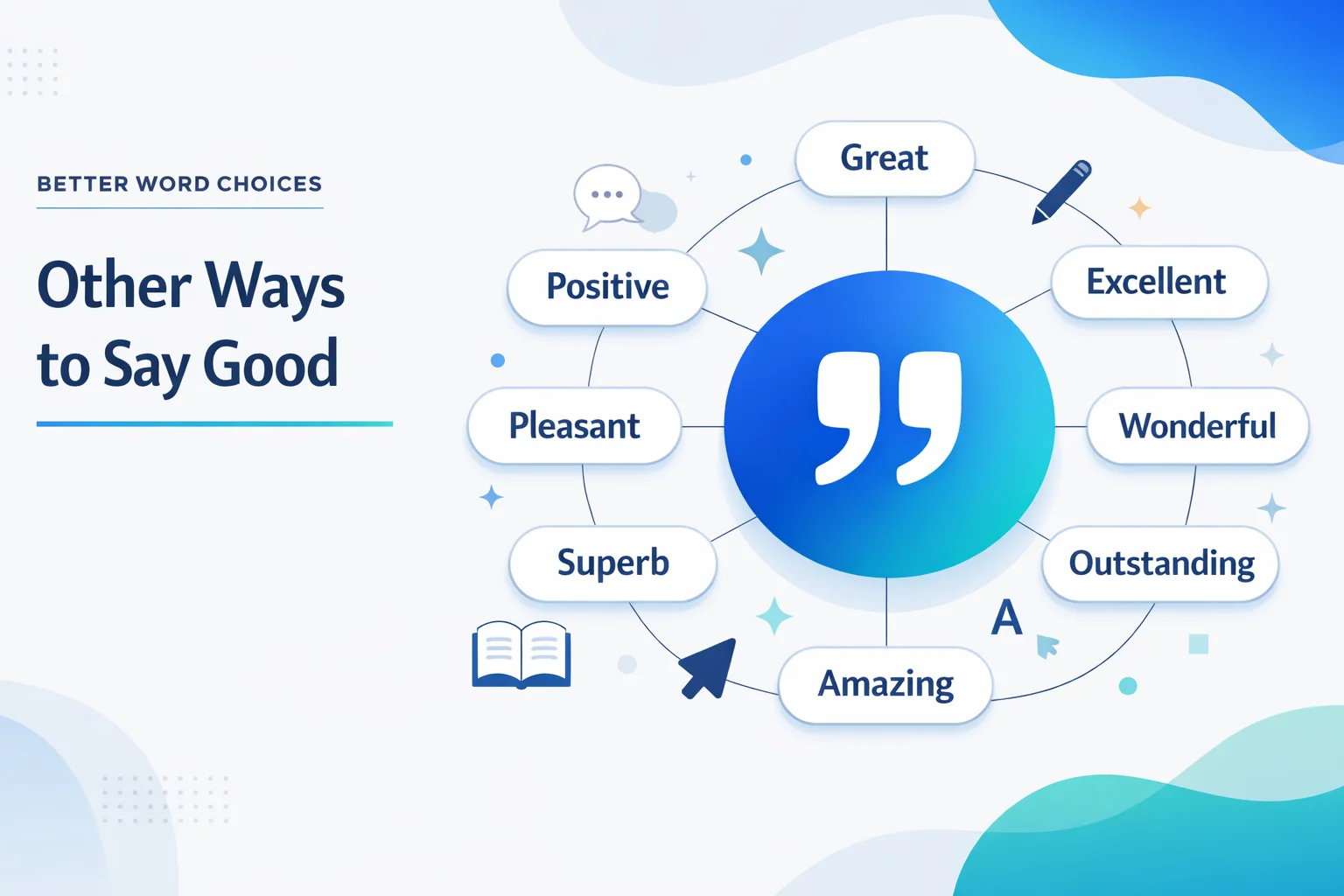
Excellent, superb, outstanding, exceptional, top-notch, fine, splendid, marvelous, terrific, fantastic, great, nice, pleasant, satisfactory, commendable, admirable, superior, first-rate, wonderful, amazing, awesome, brilliant, decent, acceptable, favorable, strong, impressive, stellar, capable, proficient.
The word good is one of the most frequently used adjectives in English. It appears in everyday conversation, professional emails, academic writing, and casual chats. But here is the truth: relying on good too often makes your English sound repetitive, vague, and uninspired.
Learning alternatives to good transforms your communication. It adds precision, emotional depth, and professional polish. Whether you want to express excitement in English or deliver measured feedback in a boardroom, the right word makes all the difference. This guide gives you 30 powerful alternatives with real examples, tone guidance, and practical tips to help you choose the perfect word every time.
Quick Categories
Formal alternatives to “good”
- Excellent
- Superior
- Commendable
- Satisfactory
Casual alternatives
- Great
- Nice
- Awesome
- Brilliant
Professional alternatives
- Outstanding
- Exceptional
- Top-notch
- Impressive
Informal expressions
- Amazing
- Fantastic
- Terrific
- Stellar
Pro Tip: Match your word to your audience. Formal settings demand precision; casual settings reward energy. When in doubt, choose a neutral option like excellent or impressive.
Common Mistakes People Make Using “Good”
- Using good as an adverb
- ❌ She did good on the test.
- ✅ She did well on the test.
- Overusing good in professional writing
- ❌ We had a good quarter.
- ✅ We had a strong quarter.
- Using good when a more specific adjective exists
- ❌ The food was good.
- ✅ The food was delicious.
- Using good to describe skill level vaguely
- ❌ He is good at coding.
- ✅ He is proficient at coding.
- Relying on good in formal feedback
- ❌ Your performance was good.
- ✅ Your performance was commendable.
What Does “Good” Mean?
Good is an adjective that generally describes something pleasant, satisfactory, competent, or morally virtuous. It can refer to quality (a good meal), skill (a good writer), health (feel good), or character (a good person). While versatile, its broad meaning often lacks the specificity needed for precise communication.
Example: You did a good job on the presentation.
When to Use “Good”
- Everyday conversations with friends and family
- Casual written communication (texts, social media)
- General praise without need for precision
- Situations where simplicity is valued over specificity
Spoken vs Written: Good appears frequently in both, but written English especially professional writing benefits from more precise alternatives.
Formal vs Informal: Good leans informal. In formal contexts, stronger adjectives communicate greater professionalism.
Is It Professional or Polite to Say “Good”?
Polite? ✅ Yes good is universally polite and inoffensive.
Professional? ❌ No in most professional contexts, good lacks the specificity and impact required for effective business communication.
Business Example: The proposal looks good. (vague) → The proposal looks impressive. (professional)
“The right tone makes your English sound professional and confident.”
Pros and Cons of Using “Good”
Pros
- Simple and natural easy for any speaker to use
- Friendly tone approachable and warm
- Common usage understood by all English speakers
- Easy to understand requires no advanced vocabulary
Cons
- Too informal for work lacks professional weight
- Overused becomes invisible and forgettable
- Limited emotional range fails to convey enthusiasm or depth
- Not suitable for formal writing academic and business contexts demand precision
Other Ways to Say Good
These 30 alternatives will help you sound more fluent, confident, and natural in different situations. Use them according to tone, context, and audience to express excitement, admiration, or approval with precision.
1. Phrase: Excellent
Meaning: Extremely good; of the highest quality.
Explanation: A strong, formal alternative suitable for professional and academic contexts.
Example Sentence: Your presentation was excellent clear, concise, and compelling.
Best Use: Professional praise
Worst Use: Casual conversation (sounds too stiff)
Tone: Formal, strong, professional
Context Variability: Professional: The quarterly results are excellent. | Casual: That movie was excellent!
2. Phrase: Superb
Meaning: Magnificent; impressively excellent.
Explanation: Conveys a sense of grandeur and high quality.
Example Sentence: The team delivered a superb performance under pressure.
Best Use: High praise
Worst Use: Everyday minor compliments
Tone: Formal, grand, complimentary
Context Variability: Professional: Superb work on the merger. | Spoken: The food was superb.
3. Phrase: Outstanding
Meaning: Exceptionally good; clearly superior.
Explanation: Suggests something stands out from the rest.
Example Sentence: Her leadership during the crisis was outstanding.
Best Use: Recognizing exceptional effort
Worst Use: Routine, everyday situations
Tone: Professional, emphatic, laudatory
Context Variability: Professional: Outstanding contribution to the project. | Spoken: You did an outstanding job.
4. Phrase: Exceptional
Meaning: Unusually excellent; out of the ordinary.
Explanation: Highlights rarity and remarkable quality.
Example Sentence: He has exceptional analytical skills.
Best Use: Describing unique talent or quality
Worst Use: Overuse diminishes its impact
Tone: Formal, distinguished, precise
Context Variability: Professional: Exceptional attention to detail. | Casual: She’s an exceptional cook.
5. Phrase: Top-notch
Meaning: Of the highest quality; excellent.
Explanation: A slightly informal but widely accepted professional term.
Example Sentence: The engineering team delivered top-notch work on the prototype.
Best Use: Professional but friendly praise
Worst Use: Extremely formal academic writing
Tone: Professional-casual, appreciative
Context Variability: Professional: Top-notch customer service. | Spoken: That restaurant is top-notch.
6. Phrase: Fine
Meaning: Of high quality; satisfactory.
Explanation: A neutral, understated alternative.
Example Sentence: That is a fine example of strategic thinking.
Best Use: When you want to be polite but not overly enthusiastic
Worst Use: Expressing genuine excitement
Tone: Neutral, measured, polite
Context Variability: Professional: A fine proposal. | Spoken: I’m fine, thank you.
7. Phrase: Splendid
Meaning: Magnificent; very impressive.
Explanation: Carries a slightly old-fashioned but elegant tone.
Example Sentence: We had a splendid time at the conference.
Best Use: Formal or semi-formal praise
Worst Use: Modern, casual texts
Tone: Elegant, refined, warm
Context Variability: Professional: A splendid achievement. | Spoken: Splendid idea!
8. Phrase: Marvelous
Meaning: Causing great wonder; extraordinary.
Explanation: Expresses genuine delight and admiration.
Example Sentence: The feedback from clients has been marvelous.
Best Use: Expressing delight
Worst Use: Neutral, factual statements
Tone: Enthusiastic, warm, expressive
Context Variability: Professional: Marvelous results. | Spoken: That’s marvelous news!
9. Phrase: Terrific
Meaning: Extremely good; excellent.
Explanation: Energetic and positive, suitable for both professional and casual use.
Example Sentence: You did a terrific job on the report.
Best Use: Enthusiastic praise
Worst Use: Formal academic writing
Tone: Energetic, positive, friendly
Context Variability: Professional: Terrific presentation. | Spoken: That’s terrific!
10. Phrase: Fantastic
Meaning: Extraordinarily good or attractive.
Explanation: Expresses strong approval and excitement.
Example Sentence: The team’s collaboration was fantastic.
Best Use: Celebrating success
Worst Use: Understated or neutral contexts
Tone: Enthusiastic, vibrant, upbeat
Context Variability: Professional: Fantastic effort, everyone. | Spoken: Fantastic!
11. Phrase: Great
Meaning: Very good; remarkable.
Explanation: A step up from good still common but more positive.
Example Sentence: That’s a great suggestion for the campaign.
Best Use: Everyday praise
Worst Use: When you need formal precision
Tone: Friendly, positive, accessible
Context Variability: Professional: Great work on the project. | Spoken: That’s great!
12. Phrase: Nice
Meaning: Pleasant; agreeable.
Explanation: A softer, friendlier alternative.
Example Sentence: We had a nice discussion about the partnership.
Best Use: Light, friendly contexts
Worst Use: Professional praise requiring strength
Tone: Warm, pleasant, gentle
Context Variability: Professional: Nice presentation. | Spoken: That’s nice.
13. Phrase: Pleasant
Meaning: Giving a sense of happy satisfaction.
Explanation: Polite and agreeable, though somewhat mild.
Example Sentence: It was a pleasant experience working with your team.
Best Use: Polite, formal contexts
Worst Use: Expressing strong enthusiasm
Tone: Polite, mild, agreeable
Context Variability: Professional: A pleasant working relationship. | Spoken: The weather is pleasant.
14. Phrase: Satisfactory
Meaning: Fulfilling expectations; adequate.
Explanation: A neutral, professional term indicating requirements were met.
Example Sentence: The quality of the deliverables was satisfactory.
Best Use: Formal evaluations
Worst Use: Enthusiastic praise
Tone: Neutral, professional, measured
Context Variability: Professional: Satisfactory performance review. | Spoken: The service was satisfactory.
15. Phrase: Commendable
Meaning: Deserving praise.
Explanation: Formal and respectful, ideal for professional recognition.
Example Sentence: Your dedication to the project is commendable.
Best Use: Formal praise and recognition
Worst Use: Casual conversation
Tone: Formal, respectful, appreciative
Context Variability: Professional: Commendable effort. | Spoken: That’s commendable.
16. Phrase: Admirable
Meaning: Arousing respect or approval.
Explanation: Suggests genuine respect for someone’s actions or qualities.
Example Sentence: She showed admirable resilience throughout the process.
Best Use: Respectful recognition
Worst Use: Minor, everyday compliments
Tone: Respectful, formal, sincere
Context Variability: Professional: Admirable leadership. | Spoken: That’s admirable.
17. Phrase: Superior
Meaning: Higher in quality; better than average.
Explanation: Indicates something surpasses others in quality.
Example Sentence: We offer superior customer support compared to competitors.
Best Use: Comparative statements
Worst Use: When you don’t want to sound competitive
Tone: Formal, comparative, confident
Context Variability: Professional: Superior product quality. | Spoken: Superior craftsmanship.
18. Phrase: First-rate
Meaning: Of the highest quality.
Explanation: A classic, respected term for excellence.
Example Sentence: The consultant provided first-rate advice.
Best Use: Professional praise
Worst Use: Modern, casual contexts
Tone: Professional, classic, complimentary
Context Variability: Professional: First-rate analysis. | Spoken: A first-rate performance.
19. Phrase: Wonderful
Meaning: Inspiring delight, pleasure, or admiration.
Explanation: Warm, heartfelt, and expressive.
Example Sentence: It was wonderful to collaborate with such a talented group.
Best Use: Expressing genuine appreciation
Worst Use: Neutral, factual statements
Tone: Warm, expressive, heartfelt
Context Variability: Professional: Wonderful presentation. | Spoken: Wonderful!
20. Phrase: Amazing
Meaning: Causing great surprise or wonder.
Explanation: Strong, enthusiastic, and widely used in casual and semi-professional settings.
Example Sentence: The engagement on our new campaign has been amazing.
Best Use: Expressing excitement
Worst Use: Formal writing
Tone: Enthusiastic, vibrant, modern
Context Variability: Professional: Amazing results. | Spoken: That’s amazing!
21. Phrase: Awesome
Meaning: Extremely impressive or daunting; inspiring awe.
Explanation: A popular, energetic alternative in casual contexts.
Example Sentence: That’s an awesome opportunity for the team.
Best Use: Casual enthusiasm
Worst Use: Professional or formal writing
Tone: Casual, energetic, modern
Context Variability: Professional: Awesome work (startup culture). | Spoken: Awesome!
22. Phrase: Brilliant
Meaning: Exceptionally clever or impressive.
Explanation: Particularly effective for praising ideas or intelligence.
Example Sentence: That’s a brilliant solution to the problem.
Best Use: Praising ideas or intellect
Worst Use: Describing routine tasks
Tone: Intelligent, admiring, vibrant
Context Variability: Professional: Brilliant strategy. | Spoken: Brilliant!
23. Phrase: Decent
Meaning: Satisfactory; acceptable.
Explanation: A modest, understated alternative for adequate quality.
Example Sentence: The feedback from the client was decent room for improvement.
Best Use: Moderate praise
Worst Use: Expressing strong approval
Tone: Modest, understated, measured
Context Variability: Professional: Decent quarterly growth. | Spoken: That’s decent.
24. Phrase: Acceptable
Meaning: Able to be agreed on; adequate.
Explanation: Neutral and professional suggests minimum standards met.
Example Sentence: The proposal is acceptable to all stakeholders.
Best Use: Formal, neutral evaluations
Worst Use: Enthusiastic praise
Tone: Neutral, formal, measured
Context Variability: Professional: Acceptable terms. | Spoken: That’s acceptable.
25. Phrase: Favorable
Meaning: Showing approval; advantageous.
Explanation: Often used in professional or analytical contexts.
Example Sentence: The market conditions are favorable for expansion.
Best Use: Analytical or professional contexts
Worst Use: Personal, emotional praise
Tone: Analytical, professional, neutral-positive
Context Variability: Professional: Favorable review. | Spoken: Favorable outcome.
26. Phrase: Strong
Meaning: Powerful; effective; robust.
Explanation: A professional upgrade for good in business contexts.
Example Sentence: We had a strong performance in the third quarter.
Best Use: Business and professional settings
Worst Use: Emotional or personal praise
Tone: Professional, robust, confident
Context Variability: Professional: Strong sales figures. | Spoken: A strong effort.
27. Phrase: Impressive
Meaning: Evoking admiration through quality or skill.
Explanation: An elevated, objective way to say something is good.
Example Sentence: The speed of your response was impressive.
Best Use: Professional recognition
Worst Use: Overused reserve for truly impressive things
Tone: Professional, respectful, admiring
Context Variability: Professional: Impressive portfolio. | Spoken: That’s impressive!
28. Phrase: Stellar
Meaning: Exceptionally good; outstanding.
Explanation: Suggests star-quality performance.
Example Sentence: The team delivered stellar results this quarter.
Best Use: High praise in professional contexts
Worst Use: Everyday, minor achievements
Tone: Professional, enthusiastic, high-impact
Context Variability: Professional: Stellar performance. | Spoken: Stellar job!
29. Phrase: Capable
Meaning: Having the ability or skill to do something.
Explanation: Focuses on competence rather than general positivity.
Example Sentence: She is a capable project manager.
Best Use: Describing skill and competence
Worst Use: Expressing general approval
Tone: Professional, measured, descriptive
Context Variability: Professional: Capable team member. | Spoken: He’s capable.
30. Phrase: Proficient
Meaning: Competent or skilled in a particular area.
Explanation: A formal term for skill and expertise.
Example Sentence: He is proficient in three programming languages.
Best Use: Describing technical or specialized skills
Worst Use: General, everyday praise
Tone: Formal, skill-focused, professional
Context Variability: Professional: Proficient in data analysis. | Spoken: She’s proficient.
“Precision in word choice is the mark of a confident English speaker.”
Mini Quiz / Self-Check
1. You are writing a performance review. Which word is most professional?
- A) Good
- B) Nice
- C) Commendable
- D) Awesome
Answer: C Commendable is formal and respectful.
2. A colleague shares exciting news. Which response shows genuine enthusiasm?
- A) That’s satisfactory.
- B) That’s fantastic!
- C) That’s acceptable.
- D) That’s fine.
Answer: B Fantastic conveys genuine excitement.
3. You are describing a colleague’s technical skills in a formal report. Which word is best?
- A) Nice
- B) Proficient
- C) Great
- D) Awesome
Answer: B Proficient is formal and skill-specific.
4. Which word is too informal for a boardroom presentation?
- A) Excellent
- B) Outstanding
- C) Awesome
- D) Superior
Answer: C Awesome is casual and inappropriate for formal settings.
Comparison Table: Top 10 Alternatives
| Phrase | Tone | Best Use |
|---|---|---|
| Excellent | Formal, strong | Professional praise, academic writing |
| Superb | Formal, grand | High-quality work, elegant contexts |
| Outstanding | Professional, emphatic | Recognizing exceptional effort |
| Exceptional | Formal, distinguished | Unique talent or rare quality |
| Top-notch | Professional-casual | Friendly but professional praise |
| Commendable | Formal, respectful | Official recognition, performance reviews |
| Impressive | Professional, admiring | Professional achievements |
| Strong | Professional, robust | Business and corporate settings |
| Brilliant | Intelligent, vibrant | Praising ideas and intellect |
| Fantastic | Enthusiastic, upbeat | Celebrating success, casual contexts |
FAQs
1. What are other ways to say good in professional emails?
Use excellent, outstanding, impressive, or commendable for professional emails. These alternatives convey respect and precision without sounding overly casual.
2. Is it unprofessional to say good at work?
Not unprofessional, but it is vague. In most business settings, good lacks the specificity needed for effective communication. Upgrade to strong, impressive, or exceptional for greater impact.
3. What are casual alternatives to good?
Great, awesome, fantastic, terrific, and amazing are excellent casual alternatives. Use them in conversations with friends, colleagues, or in informal writing.
4. How can I express excitement in English without saying good?
Use fantastic, amazing, brilliant, terrific, or wonderful. These words convey genuine enthusiasm and emotional depth.
5. What is the most formal synonym for good?
Commendable, superior, and exceptional are among the most formal synonyms. They are ideal for academic writing, official reports, and professional correspondence.
Conclusion
Expanding your vocabulary beyond good is one of the simplest ways to elevate your English. It makes your speech more precise, your writing more professional, and your overall communication more engaging. The 30 alternatives in this guide give you the tools to match your tone to any audience from casual chats to boardroom presentations.
Start small. Choose two or three alternatives and practice them this week. Pay attention to context and tone. Over time, these words will become natural, and you will wonder why you ever relied so heavily on good.
Read More Related Articles:
- Other Ways to Say “This Shows That” | Express Your Ideas with Confidence In 2026
- Other Ways to Say “Which” in English | Beyond the Common Choices In 2026
- Other Ways to Say Also in an Essay | Make Your Writing Shine In 2026
Victoria Hughes is a content writer dedicated to making communication clearer and more effective. Through TextsResponse.com, she shares practical insights and thoughtfully crafted response ideas that help readers express themselves with confidence.