Quick Answer
“Dress to impress” means wearing clothing chosen specifically to look attractive, confident, or successful in front of others. Five popular alternatives are: look sharp, put together, dressed to kill, polished appearance, and well groomed.
Dress to impress” is one of the most common phrases in English used to describe intentional, confident dressing for an important occasion. People use it before job interviews, dates, weddings, business meetings, and social events where appearance matters.
Learning alternatives to dress to impress helps English learners avoid repeating the same phrase and sound more natural in daily conversation. It also allows speakers to match their tone to the situation, whether they want to express excitement in English about a big event or describe a calm, professional look at work.
This guide breaks down formal, casual, professional, and informal expressions, explains grammar and usage, and gives real example sentences so you can choose the right phrase every time.
The right tone makes your English sound professional and confident.”
Quick Categories
Formal alternatives to “Dress to Impress”
- Present oneself impeccably
- Dress in a polished manner
- Appear immaculately attired
- Maintain a professional presentation
Pro Tips Box: Use formal alternatives in resumes, business emails, and interview coaching to sound refined without sounding stiff.
Casual alternatives
- Look sharp
- Glam up
- Dress to the nines
- Put on your best
Pro Tips Box: Casual alternatives work well with friends or on social media captions where a relaxed tone feels natural.
Professional alternatives
- Maintain a polished appearance
- Dress for success
- Project a confident image
- Uphold workplace dress standards
Pro Tips Box: In corporate settings, pair these phrases with specific details like “polished appearance for the client meeting” to sound intentional.
Informal expressions
- Dressed to kill
- Looking fly
- All dolled up
- Suited and booted
Pro Tips Box: Save informal expressions for texting or chatting with close friends, since they rarely fit formal writing.
“Choosing the right phrase shows fluency, not just vocabulary.”
Common Mistakes
- Using it in overly formal writing. Wrong: “Candidates must dress to impress for the board meeting.” Better: “Candidates should maintain a polished, professional appearance for the board meeting.
- Overusing the same phrase repeatedly. Wrong: “She always dresses to impress, and he dresses to impress too.” Better: Vary with “look sharp” or “put together.”
- Confusing it with overdressing. Wrong: “I dressed to impress in a ballgown for a casual lunch.” Better: Match the phrase to context appropriateness.
- Using it as a literal instruction without context. Wrong: “Dress to impress.” (no occasion mentioned) Better: “Dress to impress for tonight’s award ceremony.”
- Pairing it with the wrong tone. Wrong: “Dress to impress, sir, for this solemn occasion.” Better: Use a more formal phrase like “present yourself impeccably.”
What Does “Dress to Impress” Mean?
Dress to impress” means choosing clothes deliberately to create a strong, positive impression on others. It is an infinitive phrase functioning as an instruction or description of intent, commonly used as advice or a description of someone’s behavior.
Example Sentence: She decided to dress to impress before walking into her first client presentation.
When to Use “Dress to Impress”
- Job interviews and networking events
- First dates or special social occasions
- Weddings, parties, and formal celebrations
- Client meetings or public speaking engagements
Spoken Use: Common in everyday conversation, coaching advice, and casual encouragement.
Written Use: Appears in blogs, style guides, and informal emails, but rarely in strict business documents.
Formal Contexts: Better replaced with phrases like “present a polished appearance.”
Informal Contexts: Works naturally in texts, social captions, and casual chats.
Is It Professional or Polite to Say “Dress to Impress”?
“Dress to impress” is polite and friendly but not always professional, since it can sound casual in serious business writing.
Business Example: “Please remember to dress to impress for tomorrow’s product launch.” This works in an internal team chat but should be replaced with “maintain a polished appearance” in an official memo.
Polite? Yes Professional? No, in most formal writing
Pros and Cons of Using “Dress to Impress”
Pros:
- Simple and natural
- Friendly tone
- Common usage
- Easy to understand
Cons:
- Too informal for work
- Overused
- Limited emotional range
- Not suitable for formal writing
“Fluency is not about big words. It is about choosing the right word at the right moment.”
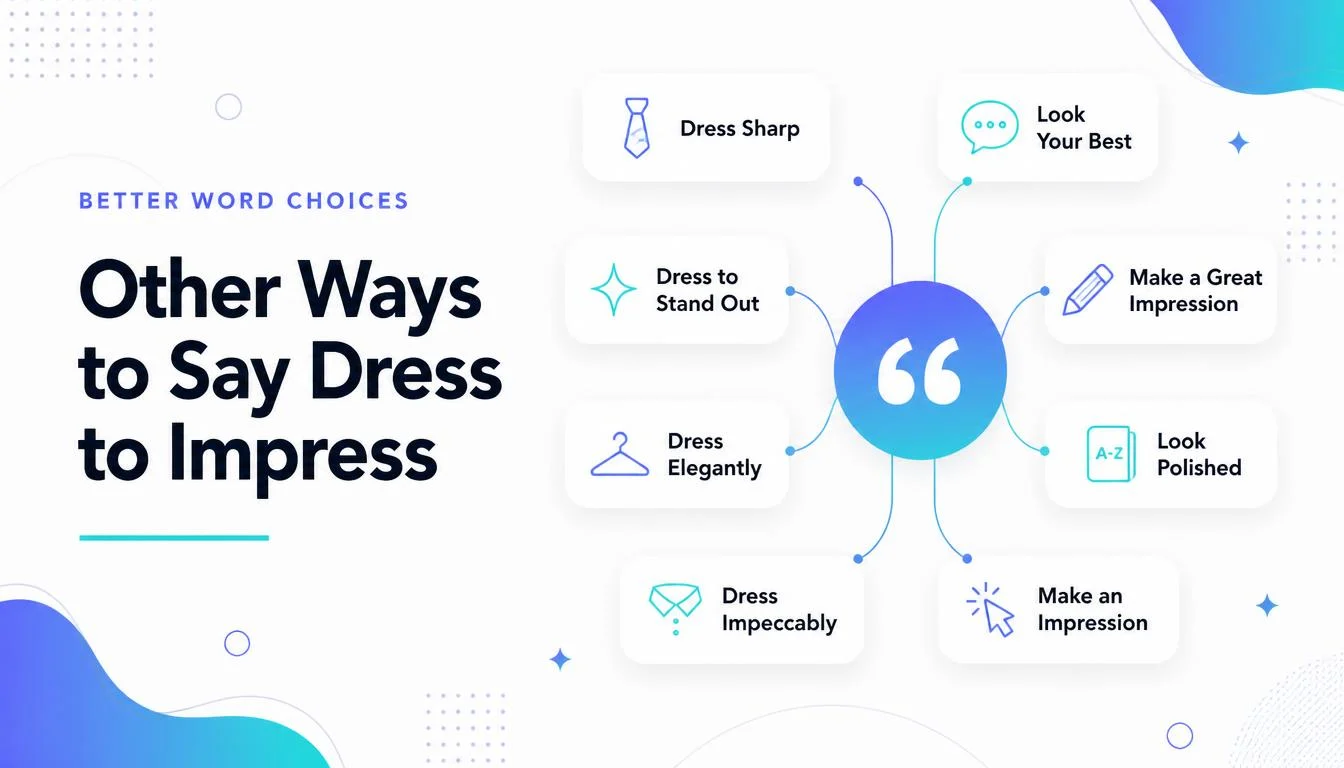
Other Ways to Say Dress to Impress
These alternatives will help you sound more fluent, confident, and natural in different situations. Use them according to tone, context, and audience to express excitement, admiration, or approval.
1. Phrase: Look sharp
Meaning: To appear neat, stylish, and confident.
Explanation: Used to describe someone who looks well dressed and put together.
Example Sentence: He always looks sharp in his tailored suits.
Best Use: casual compliments
Worst Use: formal reports
Tone: confident, friendly
Context Variability: casual, spoken
2. Phrase: Put together
Meaning: To look neat, coordinated, and stylish.
Explanation: Describes an outfit that looks well planned and organized.
Example Sentence: Her outfit looked completely put together for the interview.
Best Use: everyday conversation
Worst Use: legal documents
Tone: neutral, approving
Context Variability: casual, professional
3. Phrase: Dressed to kill
Meaning: To dress in an extremely attractive or striking way.
Explanation: An idiom describing bold, eye-catching fashion choices.
Example Sentence: She walked in dressed to kill for the award show.
Best Use: social events
Worst Use: office memos
Tone: bold, dramatic
Context Variability: informal, spoken
4. Phrase: Polished appearance
Meaning: A neat, professional, and refined look.
Explanation: Common in workplace and business contexts.
Example Sentence: He maintained a polished appearance throughout the conference.
Best Use: business settings
Worst Use: casual texting
Tone: formal, professional
Context Variability: professional, written
5. Phrase: Dress for success
Meaning: To wear clothing associated with achievement and confidence.
Explanation: Often used as career or interview advice.
Example Sentence: Career coaches always advise candidates to dress for success.
Best Use: career advice
Worst Use: casual chats
Tone: motivational, professional
Context Variability: professional, spoken
6. Phrase: All dolled up
Meaning: To dress in an elaborate, glamorous way.
Explanation: Informal expression often used for special occasions.
Example Sentence: She got all dolled up for the birthday party.
Best Use: social gatherings
Worst Use: business writing
Tone: playful, casual
Context Variability: informal, spoken
7. Phrase: Suited and booted
Meaning: Fully dressed in smart, formal attire.
Explanation: A British informal expression describing sharp dressing.
Example Sentence: He was suited and booted for the wedding ceremony.
Best Use: casual banter
Worst Use: academic writing
Tone: cheerful, informal
Context Variability: informal, spoken
8. Phrase: Present oneself impeccably
Meaning: To appear flawlessly neat and professional.
Explanation: A formal way to describe careful, polished presentation.
Example Sentence: Employees are expected to present themselves impeccably at client events.
Best Use: corporate policies
Worst Use: casual texting
Tone: formal, precise
Context Variability: professional, written
9. Phrase: Glam up
Meaning: To make oneself look glamorous and stylish.
Explanation: A casual verb phrase for enhancing appearance for an event.
Example Sentence: We glammed up for the New Year’s party.
Best Use: casual planning
Worst Use: formal reports
Tone: fun, casual
Context Variability: casual, spoken
10. Phrase: Dress to the nines
Meaning: To dress in the finest and most elegant clothing possible.
Explanation: An idiom for extremely stylish, elaborate dressing.
Example Sentence: They dressed to the nines for the gala dinner.
Best Use: formal celebrations
Worst Use: office emails
Tone: elegant, dramatic
Context Variability: casual, spoken
11. Phrase: Look the part
Meaning: To dress appropriately for a specific role or situation.
Explanation: Suggests that clothing matches expectations for a job or event.
Example Sentence: As a manager, she always looks the part in tailored blazers.
Best Use: workplace advice
Worst Use: casual chats
Tone: practical, confident
Context Variability: professional, spoken
12. Phrase: Turn heads
Meaning: To attract attention because of an impressive appearance.
Explanation: Describes clothing so striking that people notice immediately.
Example Sentence: Her red dress turned heads at the gala.
Best Use: social commentary
Worst Use: formal documents
Tone: admiring, vivid
Context Variability: casual, spoken
13. Phrase: Well groomed
Meaning: Neat, clean, and carefully maintained in appearance.
Explanation: Focuses on hygiene and neatness alongside clothing.
Example Sentence: Interviewers appreciate candidates who are well groomed and punctual.
Best Use: professional advice
Worst Use: playful banter
Tone: neutral, professional
Context Variability: professional, written
14. Phrase: Dressed to the T
Meaning: Dressed perfectly and precisely for an occasion.
Explanation: An informal idiom emphasizing precision in styling.
Example Sentence: He was dressed to the T for his graduation photos.
Best Use: casual storytelling
Worst Use: business proposals
Tone: approving, casual
Context Variability: informal, spoken
15. Phrase: Maintain a professional image
Meaning: To consistently dress and behave in a business appropriate way.
Explanation: Common in corporate guidelines and HR communication.
Example Sentence: Staff are required to maintain a professional image during client visits.
Best Use: HR policies
Worst Use: casual conversation
Tone: formal, structured
Context Variability: professional, written
16. Phrase: Spruce up
Meaning: To improve one’s appearance quickly before an event.
Explanation: Often used for last minute style improvements.
Example Sentence: She spruced up before heading to the reunion.
Best Use: quick preparation talk
Worst Use: formal writing
Tone: light, casual
Context Variability: casual, spoken
17. Phrase: Elegant ensemble
Meaning: A sophisticated, well coordinated outfit.
Explanation: A descriptive phrase highlighting refined fashion choices.
Example Sentence: She wore an elegant ensemble to the charity dinner.
Best Use: fashion writing
Worst Use: everyday texting
Tone: sophisticated, formal
Context Variability: professional, written
18. Phrase: Show up in style
Meaning: To arrive somewhere looking impressive and fashionable.
Explanation: A casual way to describe a memorable entrance.
Example Sentence: They showed up in style at the premiere.
Best Use: social storytelling
Worst Use: legal writing
Tone: upbeat, casual
Context Variability: casual, spoken
19. Phrase: Immaculately attired
Meaning: Dressed with complete neatness and precision.
Explanation: A formal, almost literary way to describe flawless dressing.
Example Sentence: The ambassador was immaculately attired for the summit.
Best Use: formal writing
Worst Use: casual chats
Tone: formal, elevated
Context Variability: professional, written
20. Phrase: Rock a look
Meaning: To wear an outfit confidently and successfully.
Explanation: A modern casual phrase praising someone’s style choice.
Example Sentence: She really rocked that look at the concert.
Best Use: social media captions
Worst Use: business emails
Tone: trendy, casual
Context Variability: casual, spoken
21. Phrase: Dress the part
Meaning: To wear clothing suited to a specific image or role.
Explanation: Similar to look the part, emphasizing intentional styling.
Example Sentence: He always dresses the part for leadership meetings.
Best Use: career coaching
Worst Use: informal texting
Tone: practical, confident
Context Variability: professional, spoken
22. Phrase: Look fly
Meaning: To look extremely stylish and attractive.
Explanation: A slang expression popular among younger speakers.
Example Sentence: You look fly in that jacket tonight.
Best Use: friendly compliments
Worst Use: formal presentations
Tone: playful, slang
Context Variability: informal, spoken
23. Phrase: Uphold a polished image
Meaning: To consistently maintain a neat, professional appearance.
Explanation: Common in corporate communication and branding language.
Example Sentence: Executives are expected to uphold a polished image publicly.
Best Use: corporate branding
Worst Use: casual conversation
Tone: formal, controlled
Context Variability: professional, written
24. Phrase: Get gussied up
Meaning: To dress up elaborately for a special occasion.
Explanation: An informal, slightly old fashioned expression still used casually.
Example Sentence: We got gussied up for grandma’s anniversary party.
Best Use: family storytelling
Worst Use: professional emails
Tone: warm, casual
Context Variability: informal, spoken
25. Phrase: Present a confident image
Meaning: To dress and carry oneself in a self assured manner.
Explanation: Focuses on confidence conveyed through appearance.
Example Sentence: She presents a confident image in every client meeting.
Best Use: professional coaching
Worst Use: casual banter
Tone: confident, formal
Context Variability: professional, written
26. Phrase: Step out in style
Meaning: To go out looking fashionable and impressive.
Explanation: A casual, upbeat phrase for social outings.
Example Sentence: The couple stepped out in style for date night.
Best Use: lifestyle writing
Worst Use: formal reports
Tone: cheerful, casual
Context Variability: casual, spoken
27. Phrase: Business ready appearance
Meaning: An appearance suitable and prepared for work environments.
Explanation: Used specifically to describe workplace appropriate styling.
Example Sentence: New hires receive guidance on maintaining a business ready appearance.
Best Use: onboarding materials
Worst Use: party invitations
Tone: formal, practical
Context Variability: professional, written
28. Phrase: Looking fresh
Meaning: To appear clean, stylish, and current.
Explanation: A casual compliment describing an updated, sharp look.
Example Sentence: You are looking fresh with that new haircut and outfit.
Best Use: friendly compliments
Worst Use: business documents
Tone: casual, trendy
Context Variability: informal, spoken
29. Phrase: Dressed for the occasion
Meaning: Wearing clothing appropriate and impressive for a specific event.
Explanation: A balanced, versatile phrase suitable for many contexts.
Example Sentence: Everyone was dressed for the occasion at the annual dinner.
Best Use: general descriptions
Worst Use: highly casual slang chats
Tone: neutral, versatile
Context Variability: casual, professional
30. Phrase: Command attention with style
Meaning: To draw admiration and focus through an impressive appearance.
Explanation: A vivid, expressive phrase for standout fashion moments.
Example Sentence: She commanded attention with style at the fashion show.
Best Use: descriptive writing
Worst Use: formal memos
Tone: vivid, expressive
Context Variability: casual, written
Vocabulary variety is the secret ingredient of natural sounding English.
Mini Quiz / Self-Check
1. Which phrase is best for a formal business memo about appearance standards?
A) Dressed to kill
B) Maintain a professional image
C) Get gussied up
D) Look fly
2. Which expression is most appropriate for a casual text to a friend before a party?
A) Present oneself impeccably
B) Uphold a polished image
C) Glam up
D) Immaculately attired
3. True or False: “Dress to impress” is fully appropriate in an official corporate policy document.
4. Which phrase best fits a career coaching session about interview appearance?
A) Dress for success
B) All dolled up
C) Suited and booted
D) Look fly
“Answers: 1-B, 2-C, 3-False, 4-A”
Comparison Table: Top Alternatives
| Phrase | Tone | Best Use |
|---|---|---|
| Look sharp | Confident, friendly | Casual compliments |
| Put together | Neutral, approving | Everyday conversation |
| Dressed to kill | Bold, dramatic | Social events |
| Polished appearance | Formal, professional | Business settings |
| Dress for success | Motivational, professional | Career advice |
| Present oneself impeccably | Formal, precise | Corporate policies |
| Dress to the nines | Elegant, dramatic | Formal celebrations |
| Look the part | Practical, confident | Workplace advice |
| Well groomed | Neutral, professional | Professional advice |
| Maintain a professional image | Formal, structured | HR policies |
FAQs
1. What is the most professional way to say dress to impress?
“Maintain a polished appearance” or “present a professional image” are the most suitable formal alternatives.
2. Is “dress to impress” grammatically an idiom?
It functions as a fixed infinitive phrase rather than a true idiom, but it is used idiomatically in everyday English.
3. Can I use “dress to impress” in a resume?
No, it is too casual for a resume. Use phrases like “maintain a polished, professional appearance” instead.
4. What is a fun, informal way to say dress to impress?
“Get gussied up,” “dressed to the nines,” and “look fly” are popular informal expressions.
5. Why is learning alternatives to dress to impress useful?
Learning other ways to say dress to impress helps you sound fluent, avoid repetition, and match your tone to formal, casual, or professional situations.
Conclusion
Learning alternatives to dress to impress gives English learners the flexibility to sound natural in casual chats, confident in professional settings, and polished in formal writing. Instead of repeating the same phrase, you now have thirty options that match different tones, audiences, and occasions.
Practice using a few new phrases every day, pay close attention to tone, and notice how native speakers switch between formal and informal expressions. With consistent practice, choosing the right words will start to feel effortless.
Read More Related Articles:
- Other Ways to Say “Shut Up” | When You Need a Better Phrase In 2026
- Other Ways to Say Fuck You | Alternatives for Any Situation In 2026
- Other Ways to Say Thank God | Natural Expressions for a Sigh of Relief In 2026

Henry Walker is an American writer and blogger with a keen interest in communication, language and digital content. At TextsResponse.com, he creates informative and reader-focused resources designed to help people communicate with clarity, confidence and authenticity.