Quick Answer
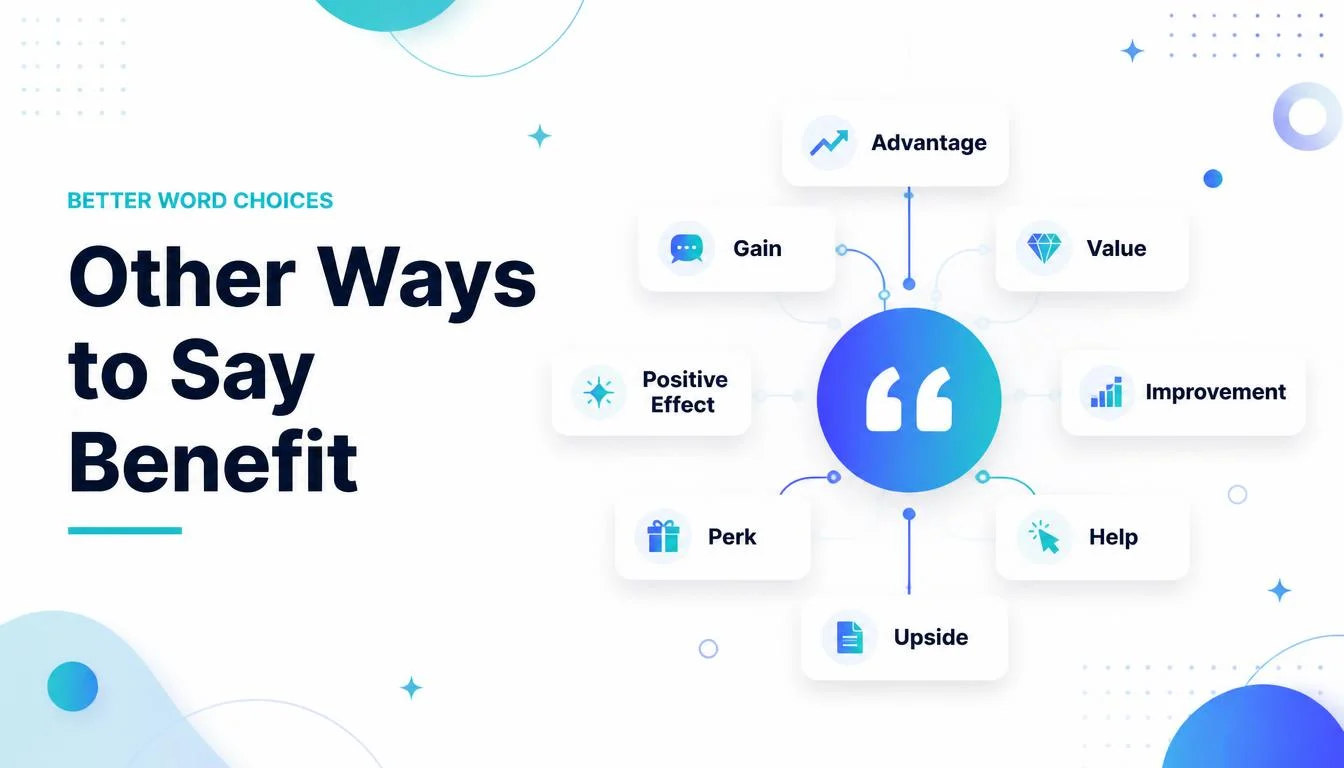
Other ways to say benefit include advantage, gain, value, positive effect, and reward. Choose the expression based on your context and tone.
“Benefit” is a useful English word for describing an advantage, positive result, or helpful effect. However, using alternatives to benefit can make your writing more precise and engaging.
Whether you are writing an essay, speaking professionally, or having a casual conversation, knowing other ways to say benefit helps you express positive outcomes naturally and confidently.
What Is “Benefit”? (Meaning, Grammar & Real Use)
Imagine explaining why a new training program is worth the investment. You might say, “The benefit is better employee performance,” but repeating the same word can make your writing sound basic. Knowing alternatives to benefit helps you describe advantages, positive results, value, and improvements with greater precision.
The word benefit generally refers to something helpful, valuable, or advantageous that results from an action, decision, product, or situation. It is common in everyday conversations, business communication, academic writing, marketing, and professional discussions.
Grammatically, benefit can be a noun or a verb. As a noun, it refers to an advantage or positive result. As a verb, it means to gain an advantage from something.
Example: “Employees benefit from flexible working hours.”
In professional communication, selecting a more specific expression can make your message clearer. For example, “positive outcome” emphasizes a result, while “advantage” highlights a favorable feature. These distinctions are useful when you want to express excitement in English without sounding repetitive.
When Should You Use “Benefit”?
You can use benefit when discussing something that creates value, improves a situation, or provides an advantage.
- Everyday conversations: Discussing helpful results or advantages.
- Business communication: Explaining the value of a service, policy, or strategy.
- Academic writing: Describing positive effects or outcomes.
- Marketing: Highlighting why a product or service is useful.
- Workplace discussions: Explaining how a decision helps employees or organizations.
- Health and lifestyle writing: Describing positive effects of habits or activities.
Spoken vs Written
In spoken English, benefit, advantage, and value sound natural and accessible. In formal writing, phrases such as positive outcome, favorable effect, and added value can provide more precision.
Formal vs Informal
Benefit works across formal and informal settings. However, the best alternative depends on your intended meaning and audience.
Is It Professional or Just Polite?
Benefit is both polite and professional. It is especially common in business, academic, financial, and workplace communication.
Politeness concerns how respectfully you communicate. Professionalism concerns whether your language is appropriate, precise, and suitable for a work context.
Business example: “This strategy offers several benefits for long-term growth.”
- Polite? ✔️ Yes
- Professional? ✔️ Yes
Pros and Cons of Using “Benefit”
Pros
- Clear: Most English speakers understand it immediately.
- Versatile: It works as both a noun and a verb.
- Professional: It fits business and academic contexts.
- Broad: It can describe many types of positive results.
Cons
- Can be repetitive: Frequent use may make writing predictable.
- Sometimes vague: It does not always explain what kind of advantage is involved.
- Limited precision: Other terms can better describe specific results.
- May sound generic: More precise alternatives can make professional writing stronger.
Common Mistakes People Make
1. Using “benefit” when you mean “advantage”
❌ “The main benefit of this feature is that it is cheaper.”
✔️ “The main advantage of this feature is that it is cheaper.”
2. Confusing “benefit from” and “benefit”
❌ “Employees benefit flexible schedules.”
✔️ “Employees benefit from flexible schedules.”
3. Using the wrong verb structure
❌ “The new system benefits to customers.”
✔️ “The new system benefits customers.”
4. Using “benefit” for a negative result
❌ “The policy had several benefits, including higher costs.”
✔️ “The policy had several drawbacks, including higher costs.”
5. Repeating “benefit” too often
❌ “The benefit of the course is a benefit for students because of its benefits.”
✔️ “The course offers valuable advantages and improves students’ practical skills.”
“Small tone mistakes can make confident English sound careless.”
Alternatives by Category
Formal alternatives to “Benefit”
- Advantage
- Positive effect
- Favorable outcome
Pro Tip: Use a more specific term when formal writing needs to explain exactly how something creates value.
Casual alternatives
- Good thing
- Help
- Plus
Pro Tip: Choose short, familiar expressions when speaking with friends or in relaxed conversations.
Professional alternatives
- Added value
- Business advantage
- Positive outcome
Pro Tip: In workplace writing, select the phrase that identifies the actual type of value being discussed.
Informal expressions
- Perk
- Upside
- Bonus
Pro Tip: Use these expressions in relaxed speech, but choose more neutral terms for formal reports and business documents.
“Formal and informal English aren’t about correctness. They’re about context.”
Other Ways to Say “Benefit” (Full List with Examples)
These 30 alternatives build fluency and help you express advantages, positive effects, or value more naturally depending on tone and context.
1. Phrase: Advantage
Meaning: A favorable feature.
Explanation: Highlights why something is better.
Example Sentence: “The main advantage is flexibility.”
Best Use: Formal comparison
Worst Use: Emotional reaction
Tone: Clear, professional
Context Variability: professional / spoken / written
2. Phrase: Positive Effect
Meaning: A helpful result.
Explanation: Focuses on an improvement caused by something.
Example Sentence: “Exercise has a positive effect on mood.”
Best Use: Academic writing
Worst Use: Casual chatting
Tone: Neutral, formal
Context Variability: professional / academic / written
3. Phrase: Positive Outcome
Meaning: A favorable result.
Explanation: Emphasizes what happens after an action.
Example Sentence: “The changes produced a positive outcome.”
Best Use: Business reporting
Worst Use: Casual speech
Tone: Professional, neutral
Context Variability: professional / written / spoken
4. Phrase: Gain
Meaning: Something valuable obtained.
Explanation: Emphasizes what someone receives or achieves.
Example Sentence: “The company gained significant value.”
Best Use: Business results
Worst Use: Personal compliments
Tone: Direct, professional
Context Variability: professional / written / spoken
5. Phrase: Value
Meaning: Usefulness or worth.
Explanation: Highlights the practical importance of something.
Example Sentence: “The training provides considerable value.”
Best Use: Business communication
Worst Use: Simple requests
Tone: Professional, confident
Context Variability: professional / spoken / written
6. Phrase: Added Value
Meaning: Extra usefulness or worth.
Explanation: Shows that something contributes more than expected.
Example Sentence: “The feature adds value for customers.”
Best Use: Business discussions
Worst Use: Casual storytelling
Tone: Professional, polished
Context Variability: professional / written / spoken
7. Phrase: Perk
Meaning: An extra advantage.
Explanation: Usually describes an additional benefit, especially at work.
Example Sentence: “Flexible hours are a great perk.”
Best Use: Workplace conversation
Worst Use: Academic writing
Tone: Casual, friendly
Context Variability: casual / professional / spoken
8. Phrase: Upside
Meaning: A positive aspect.
Explanation: Commonly contrasts with a disadvantage or downside.
Example Sentence: “The upside is greater flexibility.”
Best Use: Casual discussion
Worst Use: Formal reports
Tone: Casual, natural
Context Variability: casual / spoken / professional
9. Phrase: Bonus
Meaning: An extra advantage.
Explanation: Suggests something additional and welcome.
Example Sentence: “Free support is an added bonus.”
Best Use: Informal discussion
Worst Use: Academic analysis
Tone: Friendly, informal
Context Variability: casual / spoken / professional
10. Phrase: Help
Meaning: Assistance or improvement.
Explanation: A simple alternative when something makes a situation easier.
Example Sentence: “The new tool helps employees work faster.”
Best Use: Everyday speech
Worst Use: Formal analysis
Tone: Simple, friendly
Context Variability: casual / spoken / professional
11. Phrase: Improvement
Meaning: A positive change.
Explanation: Focuses on something becoming better.
Example Sentence: “The update resulted in a noticeable improvement.”
Best Use: Performance discussion
Worst Use: Financial perks
Tone: Neutral, professional
Context Variability: professional / written / spoken
12. Phrase: Positive Change
Meaning: A favorable development.
Explanation: Describes improvement resulting from an action.
Example Sentence: “The policy created positive change.”
Best Use: Social discussion
Worst Use: Simple comparisons
Tone: Neutral, positive
Context Variability: professional / spoken / written
13. Phrase: Favorable Effect
Meaning: A beneficial result.
Explanation: A formal expression for a positive impact.
Example Sentence: “The treatment had a favorable effect.”
Best Use: Formal writing
Worst Use: Casual conversation
Tone: Formal, precise
Context Variability: professional / academic / written
14. Phrase: Positive Impact
Meaning: A helpful influence.
Explanation: Emphasizes the effect something has on a situation.
Example Sentence: “The program made a positive impact.”
Best Use: Professional writing
Worst Use: Minor advantages
Tone: Professional, positive
Context Variability: professional / written / spoken
15. Phrase: Improvement in Results
Meaning: Better performance or outcomes.
Explanation: Specifies that results have become stronger.
Example Sentence: “The strategy led to an improvement in results.”
Best Use: Performance reports
Worst Use: Casual conversation
Tone: Analytical, formal
Context Variability: professional / written / spoken
16. Phrase: Return
Meaning: Value received from an investment or action.
Explanation: Common in finance and business contexts.
Example Sentence: “The investment generated a strong return.”
Best Use: Financial analysis
Worst Use: Everyday favors
Tone: Technical, professional
Context Variability: professional / written / spoken
17. Phrase: Reward
Meaning: Something valuable received as a result.
Explanation: Often suggests that effort produced a positive result.
Example Sentence: “The reward for persistence was significant growth.”
Best Use: Motivational writing
Worst Use: Technical reports
Tone: Positive, expressive
Context Variability: casual / professional / written
18. Phrase: Payoff
Meaning: A valuable result from effort.
Explanation: Often refers to a worthwhile outcome after investment or work.
Example Sentence: “The extra preparation had a clear payoff.”
Best Use: Informal discussion
Worst Use: Formal research
Tone: Casual, confident
Context Variability: casual / spoken / professional
19. Phrase: Utility
Meaning: Practical usefulness.
Explanation: Emphasizes how useful something is.
Example Sentence: “The software has considerable utility.”
Best Use: Technical writing
Worst Use: Friendly conversation
Tone: Technical, formal
Context Variability: professional / academic / written
20. Phrase: Merit
Meaning: A quality that makes something worthwhile.
Explanation: Highlights why something deserves consideration.
Example Sentence: “The proposal has several merits.”
Best Use: Formal evaluation
Worst Use: Casual speech
Tone: Formal, analytical
Context Variability: professional / academic / written
21. Phrase: Strength
Meaning: A favorable quality.
Explanation: Identifies something that makes an option effective.
Example Sentence: “One strength of the plan is its flexibility.”
Best Use: Evaluation
Worst Use: Financial returns
Tone: Clear, professional
Context Variability: professional / written / spoken
22. Phrase: Upside Potential
Meaning: Possible future advantage.
Explanation: Focuses on potential positive results.
Example Sentence: “The project has significant upside potential.”
Best Use: Business analysis
Worst Use: Basic conversations
Tone: Professional, analytical
Context Variability: professional / written / spoken
23. Phrase: Practical Value
Meaning: Real-world usefulness.
Explanation: Emphasizes how something helps in practice.
Example Sentence: “The course offers practical value.”
Best Use: Education and work
Worst Use: Emotional topics
Tone: Professional, clear
Context Variability: professional / academic / spoken
24. Phrase: Contribution
Meaning: Something that helps produce a result.
Explanation: Focuses on how something adds to an outcome.
Example Sentence: “Her contribution improved the project.”
Best Use: Workplace evaluation
Worst Use: Simple product features
Tone: Professional, positive
Context Variability: professional / written / spoken
25. Phrase: Advantageous Result
Meaning: A favorable outcome.
Explanation: Provides a formal way to describe a helpful result.
Example Sentence: “The changes produced an advantageous result.”
Best Use: Formal analysis
Worst Use: Casual conversation
Tone: Formal, precise
Context Variability: professional / academic / written
26. Phrase: Improvement
Meaning: A better condition or result.
Explanation: Useful when the positive change itself matters.
Example Sentence: “The new process brought significant improvement.”
Best Use: Performance review
Worst Use: Employee perks
Tone: Neutral, professional
Context Variability: professional / written / spoken
27. Phrase: Good Thing
Meaning: Something favorable.
Explanation: A simple expression for an advantage in casual speech.
Example Sentence: “The good thing is that we have more time.”
Best Use: Casual conversation
Worst Use: Formal reports
Tone: Informal, friendly
Context Variability: casual / spoken / professional
28. Phrase: Positive Contribution
Meaning: Helpful addition.
Explanation: Emphasizes someone’s or something’s constructive role.
Example Sentence: “The initiative made a positive contribution.”
Best Use: Professional writing
Worst Use: Casual chatting
Tone: Formal, positive
Context Variability: professional / written / spoken
29. Phrase: Favorable Outcome
Meaning: A desirable result.
Explanation: Highlights successful consequences.
Example Sentence: “Negotiations ended with a favorable outcome.”
Best Use: Business communication
Worst Use: Everyday favors
Tone: Professional, formal
Context Variability: professional / written / spoken
30. Phrase: Advantageous Effect
Meaning: A helpful influence or result.
Explanation: Describes an effect that improves a situation.
Example Sentence: “The changes had an advantageous effect on productivity.”
Best Use: Formal analysis
Worst Use: Casual speech
Tone: Formal, precise
Context Variability: professional / academic / written
Comparison Table: Top 10 Alternatives at a Glance
| Phrase | Tone | Best Use |
|---|---|---|
| Advantage | Professional | Comparisons |
| Positive Effect | Formal | Academic writing |
| Positive Outcome | Professional | Business reports |
| Gain | Professional | Business results |
| Value | Professional | Business communication |
| Added Value | Professional | Marketing |
| Perk | Casual | Workplace conversation |
| Upside | Casual | Informal discussion |
| Improvement | Neutral | Performance discussions |
| Positive Impact | Professional | Reports and presentations |
Quick Self-Check (Mini Quiz)
1. Which phrase best fits a formal business report?
A. Good thing
B. Perk
C. Positive outcome
D. Bonus
Answer: C. Positive outcome
2. Which phrase sounds most natural in casual workplace conversation?
A. Perk
B. Favorable effect
C. Utility
D. Advantageous result
Answer: A. Perk
3. Complete the sentence: “One major _____ of remote work is flexibility.”
A. advantage
B. reward
C. utility
D. payoff
Answer: A. advantage
4. Which phrase emphasizes practical usefulness?
A. Practical value
B. Bonus
C. Upside
D. Reward
Answer: A. Practical value
FAQs
What are the best alternatives to “benefit”?
The most versatile alternatives include advantage, positive effect, positive outcome, value, gain, improvement, and positive impact.
What is a professional way to say “benefit”?
In professional English, you can use advantage, added value, positive outcome, positive impact, favorable outcome, or practical value, depending on the context.
What is a casual way to say “benefit”?
Casual alternatives include perk, upside, bonus, good thing, and plus. These work best in relaxed conversations.
Is “advantage” the same as “benefit”?
They are closely related, but advantage often emphasizes why something is better, while benefit usually focuses on the positive result or value received.
How can I avoid repeating “benefit” in professional writing?
Choose a more precise term based on your meaning. Use advantage for comparisons, positive outcome for results, value for usefulness, and positive impact for influence.
conclusion
Learning different expressions for benefit helps you communicate more precisely. Instead of repeating one word, you can choose advantage, value, positive outcome, practical value, perk, or another phrase that matches your audience and purpose.
The key is to practice these expressions in real sentences. Pay attention to whether you are speaking casually, writing professionally, comparing options, or describing a result.
Read More Related Articles:
- Other Ways to Say “Let’s Go Team” | Games, Work and More In 2026
- Other Ways to Say Problem Solving Skills | Make Your Resume Stronger In 2026
- Other Ways to Say No in Spanish | Simple Ways to Sound Fluent In 2026

Victoria Hughes is a content writer dedicated to making communication clearer and more effective. Through TextsResponse.com, she shares practical insights and thoughtfully crafted response ideas that help readers express themselves with confidence.