Quick Answer
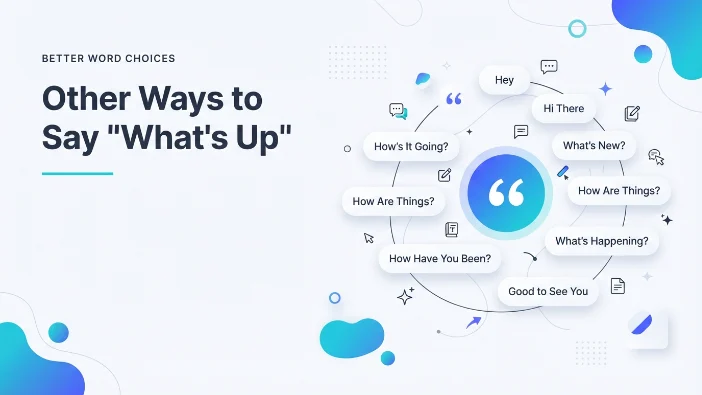
Looking for alternatives to “what’s up”?The best substitutes depend on tone and setting, but these five work almost everywhere: how’s it going, what’s new, how are you doing, what’s happening, and how have you been. Each one shifts the mood slightly, from casual to warm to professional.
Other ways to say What’s Up can help you sound more natural, friendly, and adaptable in everyday conversations. While “What’s Up” is a common greeting, using different expressions keeps your communication fresh and engaging.
Whether you’re texting a friend, greeting a coworker, or starting a conversation with someone new, learning other ways to say What’s Up gives you more confidence and helps you match the right tone for every situation.
What Is “What’s Up” and Why Learn Alternatives
“What’s up” is one of the most common greetings in spoken English. People use it to say hello, check in on a friend, or open a casual conversation. It works well with friends, classmates, and coworkers you know well, but it can sound too relaxed in formal writing or business settings.
Learning other ways to say what’s up helps you match your greeting to the situation. A greeting that fits the room instantly makes you sound more fluent and socially aware, whether you are chatting with a friend or trying to express excitement in English during a reunion.
This guide breaks down formal, casual, professional, and informal alternatives, explains when to use each one, and shows you exactly how native speakers greet each other in real conversations.
The right greeting sets the tone before you say another word.”
Quick Categories
Formal alternatives to “what’s up”
- How are you today?
- How do you do?
- Good to see you
- How have you been?
Pro Tip: Formal greetings work best paired with a handshake, eye contact, or a professional title, especially in first meetings.
Casual alternatives
- What’s new?
- How’s it going?
- What’s happening?
- Sup?
Pro Tip: Save these for friends and peers. Using them with a manager or client can come across as too relaxed.
Professional alternatives
- How are you doing today?
- Good morning, how are things?
- How has your day been so far?
- Hope you’re doing well
Pro Tip: In emails or meetings, pair a professional greeting with a quick follow-up question about work to keep the tone focused.
Informal expressions
- Yo, what’s good?
- Hey, what’s cracking?
- What’s shaking?
- Long time no see, what’s up with you?
Pro Tip: Informal expressions work great in texting and voice messages, but they rarely fit written business communication.
“Casual doesn’t mean careless, it means comfortable with the right audience.”
Common Mistakes
- Using it in formal emails. Wrong: “What’s up, Mr. Johnson, regarding the contract?” Right: “I hope this email finds you well.”
- Answering literally when it’s just a greeting. Wrong: giving a long factual answer about the sky or the news. Right: “Not much, just relaxing. You?”
- Overusing it in every interaction. Repeating “what’s up” in every message can sound repetitive and low-effort.
- Using it with someone much older or in authority without context. This can come across as disrespectful in some cultures.
- Mixing formal and informal tone in the same sentence. Wrong: “What’s up, I wanted to formally request a meeting.” Right: pick one register and stay consistent.
What Does “What’s Up” Mean?
“What’s up” is an informal greeting phrase, often functioning as a casual substitute for “hello” or “how are you.” Grammatically, it is a contraction of “what is up,” originally asking about a situation or state of affairs, though today it rarely expects a literal answer.
Example Sentence: “Hey, what’s up? Haven’t seen you in a while!”
When to Use “What’s Up”
- Spoken: Common in everyday conversation between friends, classmates, and family
- Written: Appears in texts, casual emails, and social media messages
- Formal settings: Avoid in job interviews, official emails, or client-facing communication
- Informal settings: Ideal for greeting close friends, peers, or younger coworkers you know well
Is It Professional or Polite to Say “What’s Up”?
“What’s up” is friendly and polite among peers, but it is not considered professional in business communication, presentations, or formal writing.
Business Example (Not Recommended): “What’s up, team, let’s start the quarterly review.” A more professional version would be: “Good morning, everyone. Let’s begin the quarterly review.”
Polite? Yes Professional? No, in most cases
Pros and Cons of Using “What’s Up”
Pros
- Simple and natural
- Friendly tone
- Common usage among peers
- Easy to understand
Cons
- Too informal for work
- Overused in casual speech
- Limited emotional range
- Not suitable for formal writing
Other Ways to Say “How Are You?”
Whether you’re greeting a friend, starting a professional email, or catching up with someone you haven’t seen in a while, using different ways to say “How are you?” makes your conversations sound more natural and engaging. Here are 30 excellent alternatives organized by context and tone.
1. How’s It Going?
Meaning: A friendly way to ask how someone is doing.
Explanation: One of the most common everyday greetings in English, especially among friends, coworkers, and acquaintances.
Example Sentence: Hey, Sam! How’s it going?
Best Use: Casual conversations
Avoid Using: Formal interviews
Tone: Friendly, relaxed
Context: Casual, spoken
2. What’s New?
Meaning: Asking if anything interesting has happened recently.
Explanation: Perfect for reconnecting with someone after some time apart.
Example Sentence: It’s been a while! What’s new with you?
Best Use: Catching up with friends
Avoid Using: Business emails
Tone: Curious, warm
Context: Casual, spoken
3. How Are You Doing?
Meaning: A general question about someone’s wellbeing.
Explanation: Slightly more polite than What’s up? and suitable for both casual and professional settings.
Example Sentence: Hi, Maria. How are you doing today?
Best Use: Everyday greetings
Avoid Using: None it’s highly versatile.
Tone: Warm, neutral
Context: Casual, professional, spoken
4. What’s Happening?
Meaning: A casual way to ask what someone is doing.
Explanation: Common among close friends and younger speakers.
Example Sentence: Hey! What’s happening this weekend?
Best Use: Friends and casual conversations
Avoid Using: Client meetings
Tone: Casual, energetic
Context: Casual, spoken
5. How Have You Been?
Meaning: Asking about someone’s wellbeing over a period of time.
Explanation: Ideal when you haven’t seen or spoken to someone recently.
Example Sentence: It’s so good to see you! How have you been?
Best Use: Reunions
Avoid Using: First-time meetings
Tone: Warm, genuine
Context: Casual, professional, spoken
6. Good to See You
Meaning: A friendly expression showing you’re pleased to meet someone.
Explanation: Works as a complete greeting without asking a question.
Example Sentence: Good to see you! Come on in.
Best Use: Face-to-face meetings
Avoid Using: Phone conversations
Tone: Warm, polite
Context: Professional, spoken
7. How Do You Do?
Meaning: A traditional greeting used when meeting someone for the first time.
Explanation: Rare in modern English but still appropriate in very formal situations.
Example Sentence: How do you do? It’s a pleasure to meet you.
Best Use: Formal introductions
Avoid Using: Texting friends
Tone: Formal, polite
Context: Professional
8. How Are You Today?
Meaning: A polite daily greeting.
Explanation: Frequently heard in customer service, healthcare, and workplace settings.
Example Sentence: Good morning! How are you today?
Best Use: Workplace greetings
Avoid Using: None
Tone: Courteous, professional
Context: Professional, spoken
9. Hope You’re Doing Well
Meaning: A polite expression of goodwill.
Explanation: One of the most common openings in professional emails.
Example Sentence: Hope you’re doing well. I wanted to follow up on our previous conversation.
Best Use: Email introductions
Avoid Using: Casual face-to-face greetings
Tone: Professional, considerate
Context: Professional, written
10. How Has Your Day Been?
Meaning: Asking about someone’s day so far.
Explanation: A thoughtful question often used later in the day.
Example Sentence: Hi! How has your day been so far?
Best Use: Afternoon or evening conversations
Avoid Using: Quick passing greetings
Tone: Warm, attentive
Context: Casual, professional
A thoughtful greeting can make even a brief conversation feel more personal and welcoming.
11. Sup?
Meaning: A shortened version of What’s up?
Explanation: Extremely casual and mainly used in texting.
Example Sentence: Sup? You free later?
Best Use: Close friends
Avoid Using: Professional settings
Tone: Slang, relaxed
Context: Casual, spoken
12. What’s Good?
Meaning: A trendy way to ask how someone is doing.
Explanation: Popular in casual conversations and urban slang.
Example Sentence: Yo! What’s good?
Best Use: Informal friend groups
Avoid Using: Workplace communication
Tone: Upbeat, casual
Context: Casual, spoken
13. What’s Cracking?
Meaning: A playful way to ask what’s happening.
Explanation: Regional slang that’s less common but still understood.
Example Sentence: What’s cracking? Been a while!
Best Use: Close friends
Avoid Using: Professional settings
Tone: Playful, informal
Context: Casual, spoken
14. What’s Shaking?
Meaning: A friendly slang greeting meaning What’s going on?
Explanation: Slightly old-fashioned but still recognizable.
Example Sentence: Hey! What’s shaking?
Best Use: Informal conversations
Avoid Using: Formal writing
Tone: Playful
Context: Casual, spoken
15. Long Time No See How Are You?
Meaning: A greeting for someone you haven’t seen in quite a while.
Explanation: Combines recognition with a genuine check-in.
Example Sentence: Long time no see! How are you?
Best Use: Reunions
Avoid Using: Daily greetings
Tone: Warm, nostalgic
Context: Casual
16. Good Morning, How Are Things?
Meaning: A professional morning greeting.
Explanation: Frequently used in office conversations and meetings.
Example Sentence: Good morning! How are things going on your end?
Best Use: Workplace mornings
Avoid Using: Evening conversations
Tone: Professional, courteous
Context: Professional
17. How’s Everything?
Meaning: A broad question about someone’s overall situation.
Explanation: Friendly without being overly personal.
Example Sentence: Hey! How’s everything going?
Best Use: Casual catch-ups
Avoid Using: Formal presentations
Tone: Warm, easygoing
Context: Casual, professional
18. How’s Life?
Meaning: Asking about someone’s overall wellbeing.
Explanation: Invites a more personal conversation than a simple greeting.
Example Sentence: How’s life treating you lately?
Best Use: Friends and acquaintances
Avoid Using: Brief workplace greetings
Tone: Curious, relaxed
Context: Casual
19. What Have You Been Up To?
Meaning: Asking what someone has been doing recently.
Explanation: Encourages a detailed conversation.
Example Sentence: What have you been up to since graduation?
Best Use: Reconnecting with friends
Avoid Using: Quick greetings
Tone: Curious, engaged
Context: Casual
20. How’s Your Day Going?
Meaning: Asking how someone’s day is progressing.
Explanation: A common daytime greeting suitable for many situations.
Example Sentence: Hi there! How’s your day going?
Best Use: Workplace and casual conversations
Avoid Using: Formal reports
Tone: Friendly, neutral
Context: Casual, professional
21. Yo
Meaning: A very casual greeting.
Explanation: Common among close friends and younger speakers.
Example Sentence: Yo! Good to see you.
Best Use: Friends
Avoid Using: Professional environments
Tone: Slang, casual
Context: Casual
22. Howdy
Meaning: A warm, informal greeting.
Explanation: Most commonly associated with the southern United States.
Example Sentence: Howdy! Great to see you again.
Best Use: Friendly conversations
Avoid Using: Formal international meetings
Tone: Warm, regional
Context: Casual
23. Hiya
Meaning: A cheerful alternative to Hi.
Explanation: Frequently heard in British English.
Example Sentence: Hiya! How’ve you been?
Best Use: Friends and family
Avoid Using: Professional emails
Tone: Cheerful, casual
Context: Casual
24. How’s Your Week Been?
Meaning: Asking about the past several days.
Explanation: Great for weekly catch-ups with coworkers or friends.
Example Sentence: Hey! How’s your week been so far?
Best Use: Weekly check-ins
Avoid Using: First introductions
Tone: Friendly, attentive
Context: Casual, professional
25. Pleasure to See You Again
Meaning: A polished greeting for someone you’ve met before.
Explanation: Appropriate in business and formal social settings.
Example Sentence: Pleasure to see you again. Thank you for coming.
Best Use: Business meetings
Avoid Using: Texting friends
Tone: Formal, gracious
Context: Professional
26. How’s Business?
Meaning: Asking how someone’s work or company is doing.
Explanation: Common at networking events and business gatherings.
Example Sentence: Good to see you. How’s business been lately?
Best Use: Professional networking
Avoid Using: Personal social gatherings
Tone: Professional, curious
Context: Professional
27. What’s the Word?
Meaning: A casual way to ask if there’s any news.
Explanation: An old-school slang expression that’s still used occasionally.
Example Sentence: What’s the word? Anything exciting happening?
Best Use: Friends
Avoid Using: Formal communication
Tone: Casual, curious
Context: Casual
28. How Goes It?
Meaning: A relaxed alternative to How’s it going?
Explanation: Informal but widely understood.
Example Sentence: Hey! How goes it today?
Best Use: Everyday conversations
Avoid Using: Formal presentations
Tone: Easygoing
Context: Casual
29. Anything New with You?
Meaning: Asking if anything has changed recently.
Explanation: Encourages the other person to share updates.
Example Sentence: Anything new with you since we last talked?
Best Use: Friendly catch-ups
Avoid Using: Formal greetings
Tone: Curious, warm
Context: Casual
30. It’s Great to See You How Are Things?
Meaning: A welcoming greeting combined with a check-in.
Explanation: Works well in both personal and semi-formal settings.
Example Sentence: It’s great to see you! How are things going?
Best Use: Reunions, networking events
Avoid Using: Brief hallway encounters
Tone: Warm, welcoming
Context: Casual, professional
The best greetings don’t just start conversations they help build stronger relationships from the very first words.
“A great greeting isn’t just polite, it’s the first sign of real fluency.”
Mini Quiz: Self-Check
Test Your Knowledge
1. Which phrase is most appropriate in a formal business email opener?
A) Sup?
B) Hope you’re doing well
C) What’s cracking?
2. You are catching up with an old friend you haven’t seen in years. Which phrase fits best?
A) How do you do?
B) How have you been?
C) How’s business?
3. Which phrase would sound out of place during a first formal introduction?
A) How do you do?
B) Yo
C) Pleasure to see you again
4. In a casual text to a close friend, which phrase fits naturally?
A) What’s good?
B) Good morning, how are things?
C) How has your day been?
Answers: 1-B, 2-B, 3-B, 4-A
Matching tone to context is the real secret to sounding fluent.”
Comparison Table: Top Alternatives
| Phrase | Tone | Best Use |
|---|---|---|
| How’s it going? | friendly, relaxed | casual chats |
| What’s new? | curious, warm | catching up |
| How are you doing? | warm, neutral | everyday greetings |
| How have you been? | warm, genuine | reunions |
| Good to see you | polite, warm | in-person meetings |
| How do you do? | formal, polite | formal introductions |
| Hope you’re doing well | professional, considerate | email openers |
| Sup? | slang, relaxed | texting friends |
| What’s good? | slang, upbeat | informal friend groups |
| How’s your day going? | friendly, neutral | midday greetings |
FAQs
Is “what’s up” rude to say to a stranger?
No, it is not rude, but it may sound too casual for a first impression in professional or formal settings.
What can I say instead of “what’s up” in a work email?
Use professional openers like “Hope you’re doing well” or “How has your day been so far?”
Is “what’s up” only used by young people?
No, it is common across age groups, though it is more frequent in casual and younger speech communities.
Can I use “what’s up” with my boss?
It depends on your workplace culture. In more relaxed offices it may be fine, but formal alternatives are safer with senior staff.
What is the most professional alternative to “what’s up”?
“How are you doing today?” or “Hope you’re doing well” are both strong professional alternatives.
Conclusion
Learning other ways to say what’s up gives you flexibility to greet anyone with the right tone, whether you are texting a friend, meeting a client, or writing a professional email. Small changes in wording can make a big difference in how confident and polished your English sounds.
Practice using a few of these alternatives daily, paying attention to context and audience each time. Over time, choosing the right greeting will feel natural, and your spoken and written English will sound noticeably more fluent and professional.
Read More Related Articles:
- Other Ways to Say Get Well Soon | Brighten Someone’s Day In 2026
- Other Ways to Say Have a Great Weekend | Upgrade Your Friday Emails In 2026
- Other Ways to Say I Look Forward to Meeting You | Leave a Lasting First Impression In 2026

Daniel Murphy is a professional writer and blogger specializing in digital communication and messaging trends. As a contributor to TextsResponse.com, he creates reader-focused content designed to help people find the right words at the right time.