Quick Answer
If you want alternatives to good morning, choose a phrase that matches your tone and audience. Formal settings need polite, complete greetings, while casual settings allow short and friendly ones.Top 5 alternatives: Good day, Morning everyone, Rise and shine, Wishing you a wonderful morning, Hope you slept well
“Good morning” is the standard English greeting used before noon. People say it to family, classmates, colleagues, and strangers as a sign of warmth and respect.
Using the same greeting every day can sound repetitive. Learning other ways to say good morning helps you match your tone to the person and place. These alternatives to good morning also help you express excitement in English when you are happy to see someone.
“The right greeting sets the tone for the whole conversation.”
Quick Categories
Formal alternatives to “Good Morning”
- Good day
- Greetings
- Wishing you a wonderful morning
- A very good morning to you
Pro Tip: Use complete sentences in formal emails and speeches. Avoid short forms like “Morning” with senior leaders or clients you do not know.
Casual alternatives
- Morning
- Hey there
- Hi, how are you today?
- Morning, sunshine
Pro Tip: Casual greetings work best with friends and close coworkers. Match the energy of the person you are greeting.
Professional alternatives
- Morning, team
- Hello, everyone
- Hope your morning is going well
- Good day to you
Pro Tip: Add the person’s name or title to sound respectful. “Morning, Ms. Khan” sounds warmer than “Morning.”
Informal expressions
- Rise and shine
- Up bright and early?
- Hey, early bird
- Top of the morning to you
Pro Tip: Save playful expressions for people who know your sense of humor. They can feel odd in a serious workplace.
Tone matters as much as vocabulary in every greeting.”
Common Mistakes
Here are five common errors people make with “good morning.”
- Using it after noon. Wrong: “Good morning” at 3 PM. Better: “Good afternoon, everyone.”
- Saying it as a goodbye. Wrong: “Good morning, see you tomorrow.” Better: “Have a good day, see you tomorrow.
- Forgetting the article or word order. Wrong: “Morning good, sir.” Better: “Good morning, sir.
- Using “Good mourning.” Wrong: “Good mourning, Ali.” Better: “Good morning, Ali.”
- Being too casual with senior people. Wrong: “Yo, morning!” to a client. Better: “Good morning, Mr. Ahmed.”
What Does “Good Morning” Mean?
“Good morning” is a greeting used from sunrise until around noon. It means “I hope your morning is pleasant.”
Grammatically, it is a fixed expression that works as an interjection. It often appears at the start of a sentence and is followed by a comma and a name.
Example: Good morning, Sara. Did you sleep well?
When to Use “Good Morning”
Common contexts
- Greeting family at breakfast
- Starting a work meeting or video call
- Opening an email sent in the morning
- Greeting classmates or teachers
- Welcoming customers in a shop or office
Spoken vs. written
- Spoken: Often shortened to “Morning.”
- Written: Usually kept in full, especially in emails and letters.
Formal vs. informal
- Formal: “Good morning, Dr. Rahman.”
- Informal: “Morning! How are you?”
Is It Professional or Polite to Say “Good Morning”?
Saying “good morning” is always polite, and it is safe in almost every situation. It becomes less professional only when it is too short or too casual, such as a quick “Morning” to a new client.
Business example: “Good morning, Mr. Hassan. Thank you for joining the call.”
Polite? Yes
Professional? Mostly yes, but a more polished phrase can be stronger in very formal settings.
“Being polite is easy. Being polite and professional takes practice.”
Pros and Cons of Using “Good Morning”
Pros
- Simple and natural
- Friendly tone
- Common usage everywhere
- Easy to understand
Cons
- Too basic when you want to stand out
- Overused in daily routines
- Limited emotional range
- Not always suitable when you want a warmer or more formal effect
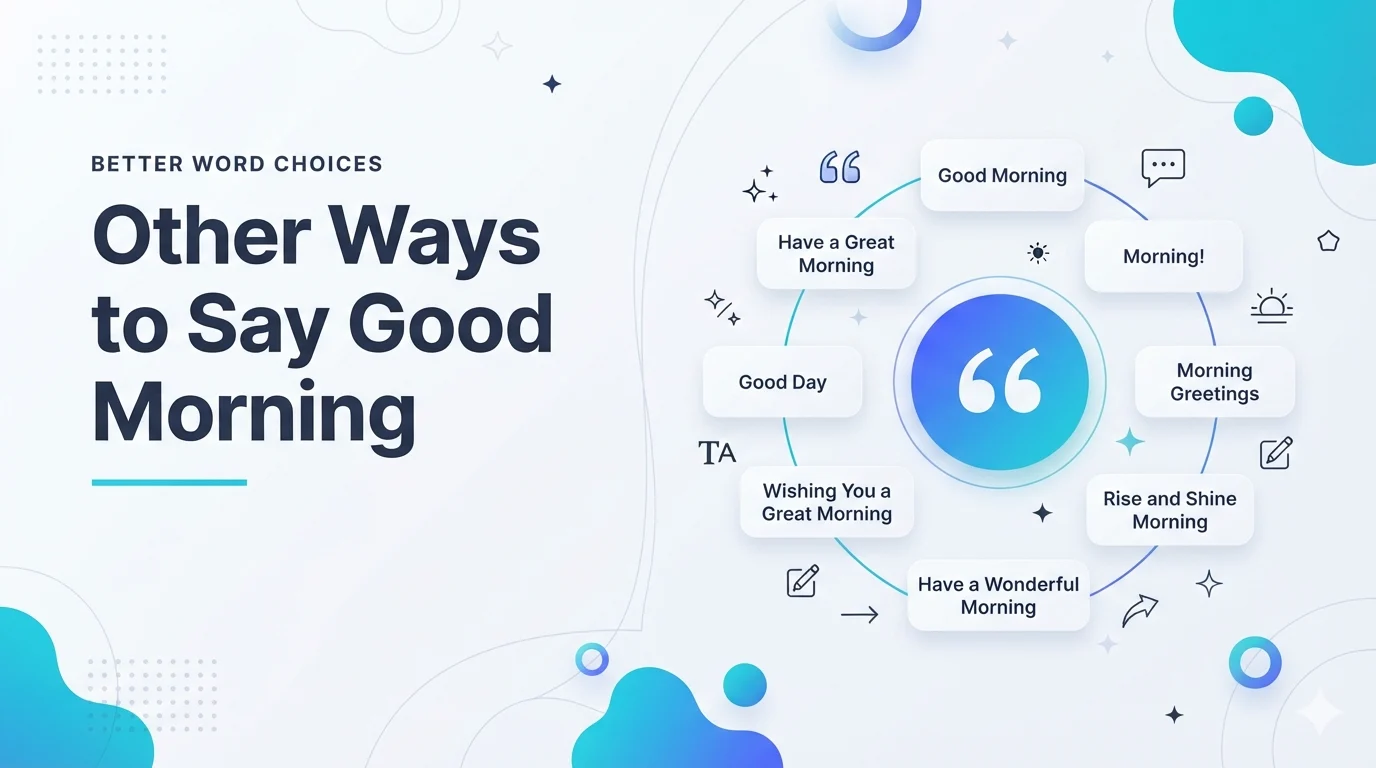
Other Ways to Say Good Morning
These alternatives will help you sound more fluent, confident, and natural in different situations.
Use them according to tone, context, and audience to express excitement, admiration, or approval.
1. Phrase: Morning
Meaning: A short version of the standard greeting.
Explanation: It drops the first word to sound quick and relaxed.
Example Sentence: “Morning, Tom! Coffee is ready.”
Best Use: Friends, coworkers
Worst Use: Formal letters
Tone: Quick, friendly
Context Variability:
- Casual: “Morning! Ready for the weekend?”
- Professional: “Morning, Ahmed. Do you have the report?”
- Spoken: “Morning!” said with a smile in the hallway.
2. Phrase: Good day
Meaning: A polite greeting used at any time of the day.
Explanation: It sounds formal and slightly old fashioned in a pleasant way.
Example Sentence: “Good day, Mr. Wilson. How may I help you?”
Best Use: Formal meetings, customer service
Worst Use: Texting friends
Tone: Polite, formal
Context Variability:
- Casual: “Good day, my friend!”
- Professional: “Good day, and welcome to our office.”
- Spoken: “Good day to you, madam.”
3. Phrase: Top of the morning to you
Meaning: A traditional Irish style morning greeting.
Explanation: It sounds cheerful and playful, and is rarely used in serious business.
Example Sentence: “Top of the morning to you, Grandpa!”
Best Use: Family, jokes
Worst Use: Corporate emails
Tone: Cheerful, playful
Context Variability:
- Casual: “Top of the morning to you, neighbor!”
- Professional: “Top of the morning to you, team” (only in a friendly office).
- Spoken: Said with a warm accent for fun.
4. Phrase: Rise and shine
Meaning: A cheerful way to tell someone to wake up.
Explanation: It is usually said to encourage someone who is still in bed.
Example Sentence: “Rise and shine, kids! Breakfast is ready.”
Best Use: Waking family
Worst Use: Formal greetings
Tone: Energetic, playful
Context Variability:
- Casual: “Rise and shine, sleepyhead!”
- Professional: “Rise and shine, team, big day ahead” (light workplace humor).
- Spoken: Called loudly from the kitchen.
5. Phrase: Morning, everyone
Meaning: A greeting for a group of people.
Explanation: It is short, polite, and inclusive.
Example Sentence: “Morning, everyone. Let us begin the meeting.”
Best Use: Meetings, classrooms
Worst Use: One person greetings
Tone: Friendly, inclusive
Context Variability:
- Casual: “Morning, everyone! Who wants tea?”
- Professional: “Morning, everyone. Thanks for joining.”
- Spoken: Said as you enter the room.
6. Phrase: Hello
Meaning: A neutral greeting for any time of day.
Explanation: It works when you are unsure of the exact time or setting.
Example Sentence: “Hello, Ms. Lee. Nice to see you.”
Best Use: Any situation
Worst Use: Close friends (too plain)
Tone: Neutral, polite
Context Variability:
- Casual: “Hello, you!”
- Professional: “Hello, Mr. Davis. Thank you for coming.”
- Spoken: “Hello!” on the phone.
7. Phrase: Hi there
Meaning: A friendly, open greeting.
Explanation: It feels warm without being too personal.
Example Sentence: “Hi there! Welcome to our store.”
Best Use: Customer service, new people
Worst Use: Very formal speeches
Tone: Warm, approachable
Context Variability:
- Casual: “Hi there, how was your night?”
- Professional: “Hi there, how can I assist you today?”
- Spoken: Said with a smile at the door.
8. Phrase: Hey
Meaning: A very casual greeting.
Explanation: It is short and used mostly with people you know well.
Example Sentence: “Hey, did you sleep well?”
Best Use: Close friends
Worst Use: Bosses, clients
Tone: Casual, relaxed
Context Variability:
- Casual: “Hey! You are up early.”
- Professional: “Hey, Sam, quick question.” (only with close coworkers)
- Spoken: “Hey!” shouted across the street.
9. Phrase: Good to see you this morning
Meaning: A greeting that shows you are happy to meet someone.
Explanation: It adds warmth by showing personal interest.
Example Sentence: “Good to see you this morning, Priya.”
Best Use: Colleagues, guests
Worst Use: Strangers in a rush
Tone: Warm, sincere
Context Variability:
- Casual: “Good to see you this morning, buddy!”
- Professional: “Good to see you this morning, Director.”
- Spoken: Said with a handshake.
10. Phrase: Have a great morning
Meaning: A wish for someone to enjoy their morning.
Explanation: It works as a greeting and also as a friendly goodbye.
Example Sentence: “Have a great morning, and see you at noon.”
Best Use: Farewells, service settings
Worst Use: First meeting greeting
Tone: Kind, positive
Context Variability:
- Casual: “Have a great morning, my friend!”
- Professional: “Have a great morning, and thank you again.”
- Spoken: Said while leaving a shop.
11. Phrase: Hope you slept well
Meaning: A caring question about someone’s night.
Explanation: It shows concern and starts a friendly chat.
Example Sentence: “Hope you slept well, Grandma.”
Best Use: Family, guests
Worst Use: Formal meetings
Tone: Caring, personal
Context Variability:
- Casual: “Hope you slept well, sleepyhead.”
- Professional: “Hope you slept well after the long flight.”
- Spoken: Said over breakfast.
12. Phrase: Happy morning
Meaning: A cheerful wish for a pleasant morning.
Explanation: It sounds bright and works well in messages.
Example Sentence: “Happy morning! Sending you good vibes.”
Best Use: Texts, social posts
Worst Use: Formal letters
Tone: Cheerful, light
Context Variability:
- Casual: “Happy morning, love!”
- Professional: “Happy morning, team.” (friendly office chat)
- Spoken: Said with a big smile.
13. Phrase: Wishing you a wonderful morning
Meaning: A polite and warm greeting with good wishes.
Explanation: It is complete, elegant, and works well in writing.
Example Sentence: “Wishing you a wonderful morning, Dr. Ali.”
Best Use: Emails, cards
Worst Use: Quick hallway chats
Tone: Warm, elegant
Context Variability:
- Casual: “Wishing you a wonderful morning, dear friend.”
- Professional: “Wishing you a wonderful morning as we begin the workshop.”
- Spoken: Said at a formal event.
14. Phrase: Up bright and early?
Meaning: A friendly comment on someone waking early.
Explanation: It acts as a greeting and a light conversation starter.
Example Sentence: “Up bright and early? Big day today?”
Best Use: Coworkers, neighbors
Worst Use: Strangers, clients
Tone: Friendly, chatty
Context Variability:
- Casual: “Up bright and early, huh?”
- Professional: “You are here bright and early, Sam.”
- Spoken: Said with a smile at the office door.
15. Phrase: Good morning to you
Meaning: A polite, slightly warmer version of the standard greeting.
Explanation: Adding “to you” makes it more personal.
Example Sentence: “Good morning to you, Professor.”
Best Use: Teachers, elders
Worst Use: Text chats with friends
Tone: Respectful, warm
Context Variability:
- Casual: “Good morning to you, my dear!”
- Professional: “Good morning to you, Ms. Carter.”
- Spoken: Said with a small nod.
16. Phrase: Morning, team
Meaning: A greeting for coworkers in a group.
Explanation: It sounds friendly and leadership focused.
Example Sentence: “Morning, team. Here is today’s plan.”
Best Use: Team meetings
Worst Use: Talking to a client
Tone: Confident, friendly
Context Variability:
- Casual: “Morning, team! Donuts are here.”
- Professional: “Morning, team. Let us review our goals.”
- Spoken: Said at the start of a call.
17. Phrase: Greetings
Meaning: A formal way to say hello.
Explanation: It fits letters, speeches, and official notes.
Example Sentence: “Greetings, esteemed guests.”
Best Use: Speeches, formal letters
Worst Use: Casual chats
Tone: Formal, respectful
Context Variability:
- Casual: “Greetings, my friend!” (playful)
- Professional: “Greetings, Mr. Chairman.”
- Spoken: Said at a ceremony.
18. Phrase: Warm morning wishes
Meaning: A kind greeting that sends good feelings.
Explanation: It is common in cards and messages.
Example Sentence: “Warm morning wishes to you and your family.”
Best Use: Cards, messages
Worst Use: Quick spoken hello
Tone: Kind, heartfelt
Context Variability:
- Casual: “Warm morning wishes, dear cousin.”
- Professional: “Warm morning wishes to our valued partners.”
- Spoken: Rarely spoken, mostly written.
19. Phrase: I hope your morning is going well
Meaning: A polite check on how someone’s morning is going.
Explanation: It is ideal after the first greeting or in follow up emails.
Example Sentence: “I hope your morning is going well, Mr. Khan.”
Best Use: Emails, follow ups
Worst Use: First words at the door
Tone: Polite, considerate
Context Variability:
- Casual: “Hope your morning is going well, pal.”
- Professional: “I hope your morning is going well as we begin the project.”
- Spoken: Said on a phone call.
20. Phrase: Hope you are having a good start to your day
Meaning: A wish for a pleasant beginning of the day.
Explanation: It is longer, so it feels thoughtful and sincere.
Example Sentence: “Hope you are having a good start to your day, Anna.”
Best Use: Emails, messages
Worst Use: Quick greetings
Tone: Thoughtful, kind
Context Variability:
- Casual: “Hope you are having a good start to your day!”
- Professional: “I hope you are having a good start to your day before we begin.”
- Spoken: Said on a friendly call.
21. Phrase: Lovely morning, isn’t it?
Meaning: A greeting that comments on the weather or mood.
Explanation: It invites small talk and feels polite.
Example Sentence: “Lovely morning, isn’t it? The air feels fresh.”
Best Use: Neighbors, small talk
Worst Use: Urgent business
Tone: Pleasant, relaxed
Context Variability:
- Casual: “Lovely morning, isn’t it, Bob?”
- Professional: “Lovely morning, isn’t it? Shall we begin?”
- Spoken: Said while walking outdoors.
22. Phrase: Fresh start today
Meaning: A positive remark about a new day.
Explanation: It encourages a hopeful mood.
Example Sentence: “Fresh start today, everyone. Let us do our best.”
Best Use: Motivation, teams
Worst Use: Formal greetings
Tone: Hopeful, motivating
Context Variability:
- Casual: “Fresh start today, buddy!”
- Professional: “Fresh start today, team. New goals ahead.”
- Spoken: Said before work begins.
23. Phrase: Hello and good day
Meaning: A double greeting that sounds polite and complete.
Explanation: It is useful on calls and in customer service.
Example Sentence: “Hello and good day. How may I assist you?”
Best Use: Phone calls, help desks
Worst Use: Friends
Tone: Polite, professional
Context Variability:
- Casual: “Hello and good day, folks!”
- Professional: “Hello and good day, this is Sara from support.”
- Spoken: Said in a call center.
24. Phrase: Welcome, everyone
Meaning: A greeting that also invites people in.
Explanation: It is ideal for hosts and event leaders.
Example Sentence: “Welcome, everyone. Please take a seat.”
Best Use: Events, classes
Worst Use: Private chats
Tone: Welcoming, confident
Context Variability:
- Casual: “Welcome, everyone, make yourselves at home!”
- Professional: “Welcome, everyone, to today’s seminar.”
- Spoken: Said at the start of a session.
25. Phrase: Morning, sunshine
Meaning: An affectionate greeting for someone cheerful or sleepy.
Explanation: It is personal and used with people you like.
Example Sentence: “Morning, sunshine! Did you sleep well?”
Best Use: Family, partners
Worst Use: Workplace with strangers
Tone: Affectionate, playful
Context Variability:
- Casual: “Morning, sunshine, tea is ready.”
- Professional: Not recommended in formal settings.
- Spoken: Said softly at home.
26. Phrase: Hey, early bird
Meaning: A friendly nickname for someone who wakes up early.
Explanation: It is playful and fits people who arrive first.
Example Sentence: “Hey, early bird! You beat everyone again.”
Best Use: Coworkers, friends
Worst Use: Formal events
Tone: Playful, friendly
Context Variability:
- Casual: “Hey, early bird, save me a seat.”
- Professional: “Early bird today, Ali. Thanks for opening the office.”
- Spoken: Said with a laugh.
27. Phrase: Nice to see you bright and early
Meaning: A pleased greeting for someone who arrives early.
Explanation: It compliments the person while greeting them.
Example Sentence: “Nice to see you bright and early, Mr. Green.”
Best Use: Workplace, appointments
Worst Use: Late afternoon
Tone: Appreciative, warm
Context Variability:
- Casual: “Nice to see you bright and early, mate.”
- Professional: “Nice to see you bright and early for the interview.”
- Spoken: Said with a handshake.
28. Phrase: Beautiful morning to you
Meaning: A poetic greeting that praises the morning.
Explanation: It adds kindness and a touch of style.
Example Sentence: “Beautiful morning to you, Mrs. Ray.
Best Use: Cards, gentle chats
Worst Use: Fast business talk
Tone: Gentle, poetic
Context Variability:
- Casual: “Beautiful morning to you, love.”
- Professional: “Beautiful morning to you and your team.”
- Spoken: Said in a garden or on a walk.
29. Phrase: A very good morning to you
Meaning: A stronger, more respectful version of the standard greeting.
Explanation: Adding “very” increases warmth and formality.
Example Sentence: “A very good morning to you, everyone.”
Best Use: Speeches, ceremonies
Worst Use: Casual texts
Tone: Formal, gracious
Context Variability:
- Casual: “A very good morning to you, Grandma!”
- Professional: “A very good morning to you all, and welcome.”
- Spoken: Said at the start of a talk.
30. Phrase: Wishing you a productive morning
Meaning: A greeting that hopes someone gets a lot done.
Explanation: It suits workplaces where focus and results matter.
Example Sentence: “Wishing you a productive morning, Hira.”
Best Use: Work emails, teams
Worst Use: Family breakfast
Tone: Supportive, professional
Context Variability:
- Casual: “Wishing you a productive morning, buddy!”
- Professional: “Wishing you a productive morning ahead of the deadline.”
- Spoken: Said before a busy shift.
Small changes in wording can make your English sound far more natural.”
Mini Quiz
1. You are writing to a new client at 9 AM. Which greeting is best?
A) Yo, morning!
B) Good morning, Mr. Shah.
C) Hey, early bird!
D) Rise and shine!
Answer: B. It is polite, clear, and professional.
2. Which phrase is best for waking up your child?
A) Greetings
B) Good day, sir
C) Rise and shine
D) Wishing you a productive morning
Answer: C. It is playful and used for waking someone.
3. You want to greet your whole team in a meeting. What can you say?
A) Hey you
B) Morning, team
C) Top of the morning, madam
D) Warm morning wishes
Answer: B. It is friendly and suits group settings.
4. Which phrase sounds the most formal?
A) Hey
B) Morning
C) A very good morning to you
D) Hi there
Answer: C. It is the fullest and most respectful option.
Comparison Table: Top Alternatives
| Phrase | Tone | Best Use |
|---|---|---|
| Good day | Formal, polite | Customer service |
| Morning, team | Confident, friendly | Team meetings |
| Rise and shine | Playful, energetic | Waking family |
| Greetings | Formal, respectful | Speeches, letters |
| Hi there | Warm, approachable | Shops, support |
| Hey | Casual, relaxed | Close friends |
| Wishing you a wonderful morning | Warm, elegant | Emails, cards |
| Hope you slept well | Caring, personal | Family, guests |
| Good to see you this morning | Sincere, warm | Colleagues |
| Morning, sunshine | Affectionate, playful | Partners, family |
FAQs
What is a professional way to say good morning?
Try “Good day,” “Good morning to you,” or “Wishing you a wonderful morning.” Adding the person’s name makes it warmer and more respectful.
What are casual alternatives to good morning?
Casual options include “Morning,” “Hey there,” “Hi,” and “Morning, sunshine.” They work best with friends, family, and close coworkers.
Can I say good morning after noon?
No. After noon, use “Good afternoon,” and use “Good evening” later in the day. “Good day” is a flexible formal option for any time.
Is “Top of the morning to you” still used?
It is used mostly for fun or as a nod to Irish tradition. It is not common in everyday professional English.
How can I make my greeting sound more natural?
Match your tone to the person, add their name, and follow the greeting with a short question such as “How are you today?”
Confidence in English grows with every greeting you practice.
Conclusion
Learning other ways to say good morning makes your English richer, more flexible, and more natural. Formal, casual, professional, and informal expressions each give you a different tool for different people and places.
Practice one new greeting every day, at home, at work, or in messages. Stay aware of tone, and your daily English will sound more confident and polite.
Read More Related Articles:
- Other Ways to Say “It Was a Pleasure Meeting You” | Make a Strong Final Impression In 2026
- Other Ways to Say Looking Forward to Seeing You | Leave a Great Impression In 2026
- Other Ways to Say “LOL” | When Something Is Actually Hilarious In 2026
Victoria Hughes is a content writer dedicated to making communication clearer and more effective. Through TextsResponse.com, she shares practical insights and thoughtfully crafted response ideas that help readers express themselves with confidence.