Quick Answer
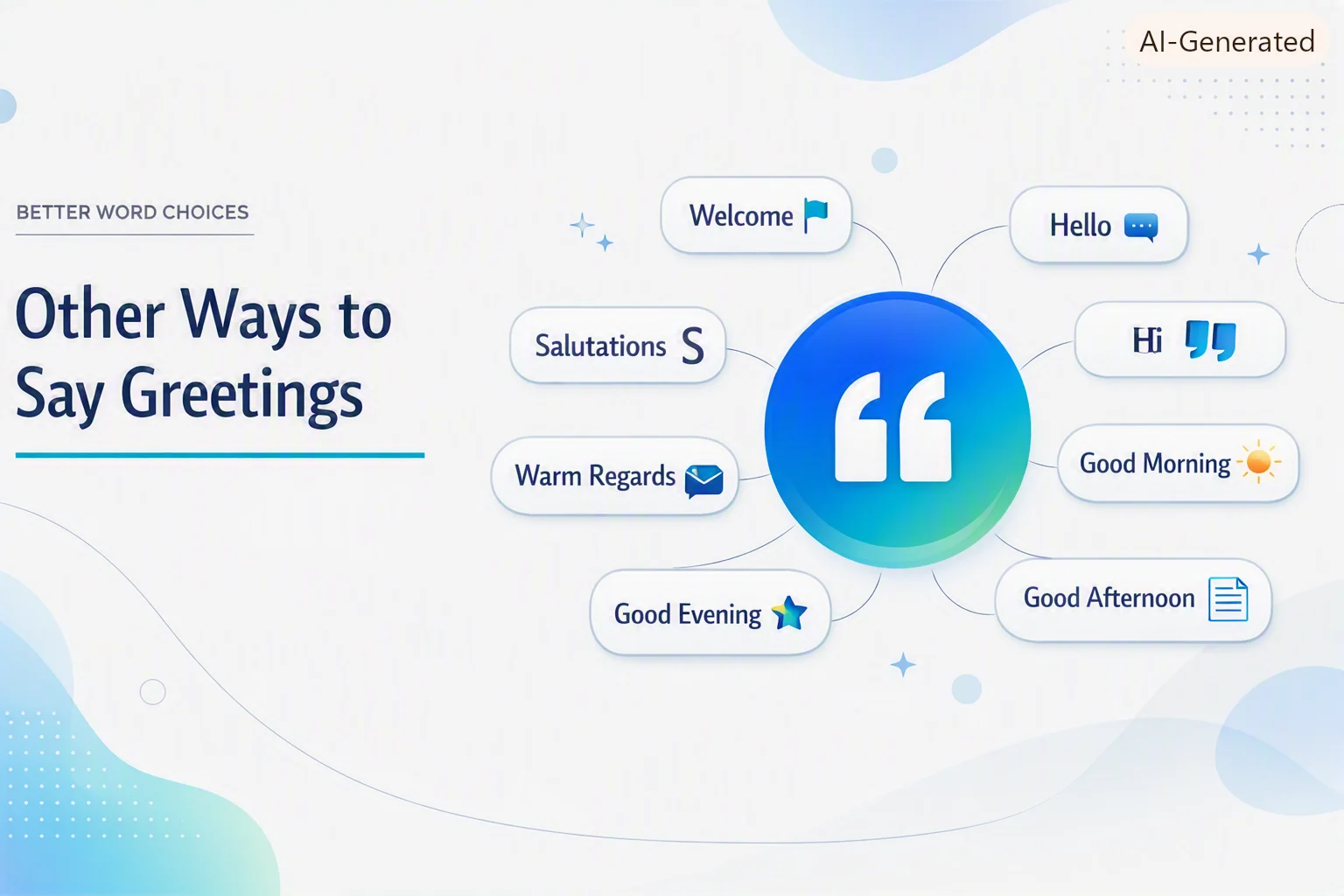
Looking for other ways to say greetings? The most common alternatives are salutations, welcome, hello, regards, and best wishes. Each carries a slightly different tone, so the right choice depends on whether you are speaking, writing an email, or greeting someone casually.Top 5 alternatives: Salutations, Welcome, Hello, Regards, Best wishes
The word “greetings” refers to a friendly expression used to welcome someone or acknowledge their presence. It can appear at the start of a conversation, a letter, an email, or a public announcement. People use greetings to open communication politely, show respect, and set a warm or professional tone before the main message begins.
Learning alternatives to greetings helps English learners avoid repetition and sound more natural in different situations. Whether you want to express excitement in English when meeting someone, or you need a calm, formal opening line for a business email, having a wide vocabulary of greetings gives you flexibility and confidence.
This guide breaks down 30 alternatives to greetings, organized by tone and context, so you always know which one fits your situation best.
Quick Categories
Formal alternatives to “greetings”
- Salutations
- Good day
- Warm regards
- Respectful greetings
Pro Tip: Use formal greetings in emails, official letters, and business introductions to sound polished and respectful.
Casual alternatives
- Hey there
- Hiya
- What’s up
- Howdy
Pro Tip: Save casual greetings for friends, family, and relaxed social settings, not workplace communication.
Professional alternatives
- Good morning/afternoon
- Welcome
- Best regards
- Pleased to meet you
Pro Tip: Professional greetings work best when paired with a clear purpose statement right after the opening line.
Informal expressions
- Yo
- Sup
- Hi ya
- Hey hey
Pro Tip: Informal expressions are great for texting friends but can seem unprofessional in written business communication.
Small greeting choices can shape how confident and fluent you sound.”
Common Mistakes
People often misuse “greetings” or its alternatives in everyday English. Here are five common errors:
- Using “greetings” in casual texting. Example: “Greetings! Wanna grab coffee later?” sounds overly formal for a text to a friend.
- Mixing formal and informal tone in one sentence. Example: “Warm regards, what’s up?” confuses the reader with two different tones.
- Overusing “hello” in every context. Example: Repeating “hello” in every email opening makes writing feel repetitive and dull.
- Using slang greetings in professional emails. Example: “Sup, please find attached the report.” feels inappropriate for a business message.
- Forgetting cultural context. Example: Using “howdy” in a formal international business meeting can sound out of place.
What Does “Greetings” Mean?
“Greetings” is a plural noun used as a polite expression to acknowledge someone at the beginning of an interaction. It can function as an interjection or as part of a closing line in letters and cards.
Grammar note: “Greetings” is almost always used in plural form as a fixed expression, even though it refers to one act of greeting.
Example sentence: “Greetings from the entire team, we are excited to welcome you aboard.”
When to Use “Greetings”
- Opening a formal letter or email
- Introducing yourself at an event
- Starting a presentation or speech
- Welcoming someone to a group or organization
Spoken vs Written
- Spoken: Common in formal introductions, ceremonies, and announcements.
- Written: Frequently used in emails, greeting cards, and official letters.
Formal vs Informal
- Formal: “Greetings and welcome to our annual conference.”
- Informal: Rarely used casually, since alternatives like “hi” or “hey” are preferred in daily speech.
Is It Professional or Polite to Say “Greetings”?
“Greetings” is polite and works well in professional writing, though it can feel slightly stiff in everyday spoken English. In business emails, it signals respect and formality without being overly personal.
Business example: “Greetings, thank you for reaching out regarding our services.”
Polite? ✔️ Yes Professional? ✔️ Yes (in written communication)
Politeness opens the door, but the right tone keeps the conversation going.
Pros and Cons of Using “Greetings”
Pros
- Simple and natural
- Friendly tone
- Common usage
- Easy to understand
Cons
- Too informal for work if overused casually
- Overused in generic templates
- Limited emotional range
- Not suitable for close, personal conversations
Other Ways to Say Greetings
These alternatives will help you sound more fluent, confident, and natural in different situations. Use them according to tone, context, and audience to express excitement, admiration, or approval when greeting someone.
1. Phrase: Salutations
Meaning: A formal way to greet someone in writing or speech. Explanation: Often used in official letters or ceremonial introductions. Example Sentence: “Salutations to all the distinguished guests joining us today.” Best Use: formal letters Worst Use: casual texting Tone: formal, respectful, traditional Context Variability: formal writing, ceremonies, spoken introductions
2. Phrase: Welcome
Meaning: An expression used to greet someone arriving somewhere. Explanation: Suitable for both spoken and written greetings across contexts. Example Sentence: “Welcome to our office, please make yourself comfortable.” Best Use: hosting guests Worst Use: none really Tone: warm, friendly, inviting Context Variability: casual, professional, spoken
3. Phrase: Hello
Meaning: The most common universal greeting in English. Explanation: Neutral and works in almost every situation. Example Sentence: “Hello, how has your day been so far?” Best Use: everyday conversation Worst Use: highly formal ceremonies Tone: neutral, friendly, simple Context Variability: casual, professional, spoken
4. Phrase: Regards
Meaning: A polite closing greeting used in written communication. Explanation: Common at the end of emails and letters to show respect. Example Sentence: “Regards, I look forward to your response.” Best Use: email closings Worst Use: spoken conversation Tone: formal, professional, polite Context Variability: professional, written
5. Phrase: Best wishes
Meaning: A warm greeting used to express goodwill. Explanation: Often used to greet someone on special occasions or in letters. Example Sentence: “Best wishes on your first day at the new job.” Best Use: celebrations Worst Use: strict business reports Tone: warm, kind, encouraging Context Variability: casual, professional, written
6. Phrase: Good day
Meaning: A formal greeting used to acknowledge someone politely. Explanation: Common in traditional or old-fashioned formal speech. Example Sentence: “Good day, may I help you find something?” Best Use: customer service Worst Use: texting friends Tone: formal, polite, classic Context Variability: professional, spoken
7. Phrase: Hi there
Meaning: A friendly, relaxed way to say hello. Explanation: Slightly more casual and personal than a plain “hello.” Example Sentence: “Hi there, thanks so much for waiting.” Best Use: friendly conversation Worst Use: formal ceremonies Tone: friendly, casual, warm Context Variability: casual, spoken
8. Phrase: Good morning
Meaning: A time-specific greeting used before noon. Explanation: Common in both professional and personal settings. Example Sentence: “Good morning, let’s begin today’s meeting.” Best Use: morning meetings Worst Use: evening conversations Tone: professional, polite, energetic Context Variability: professional, spoken, written
9. Phrase: Good afternoon
Meaning: A time-specific greeting used in the afternoon hours. Explanation: Frequently used in business and formal introductions. Example Sentence: “Good afternoon, thank you for joining the call.” Best Use: afternoon meetings Worst Use: morning greetings Tone: professional, formal, respectful Context Variability: professional, spoken
10. Phrase: Good evening
Meaning: A time-specific greeting used after sunset. Explanation: Common at dinners, formal events, and evening speeches. Example Sentence: “Good evening, we are delighted to have you here.” Best Use: evening events Worst Use: morning meetings Tone: formal, elegant, warm Context Variability: formal, spoken
11. Phrase: Howdy
Meaning: An informal, friendly greeting popular in casual American English. Explanation: Often associated with a relaxed, cheerful tone. Example Sentence: “Howdy, mind if I sit here?” Best Use: casual chats Worst Use: business meetings Tone: informal, cheerful, regional Context Variability: casual, spoken
12. Phrase: Hiya
Meaning: A shortened, playful version of “hi there.” Explanation: Popular among younger speakers in informal settings. Example Sentence: “Hiya, how was your weekend?” Best Use: friendly texting Worst Use: formal emails Tone: playful, casual, light Context Variability: casual, spoken
13. Phrase: What’s up
Meaning: A casual greeting asking how someone is doing. Explanation: Common among friends and peers in relaxed settings. Example Sentence: “What’s up, ready for the game tonight?” Best Use: friend groups Worst Use: job interviews Tone: casual, energetic, friendly Context Variability: casual, spoken
14. Phrase: Yo
Meaning: A very informal, brief greeting. Explanation: Common in youth culture and close friendships. Example Sentence: “Yo, you free later?” Best Use: close friends Worst Use: professional settings Tone: slang, casual, blunt Context Variability: casual, spoken
15. Phrase: Sup
Meaning: A shortened form of “what’s up.” Explanation: Extremely casual, often used in texting. Example Sentence: “Sup, long time no see.” Best Use: texting friends Worst Use: business emails Tone: slang, informal, brief Context Variability: casual, spoken
16. Phrase: Pleased to meet you
Meaning: A polite phrase used when meeting someone for the first time. Explanation: Common in professional introductions and networking. Example Sentence: “Pleased to meet you, I’ve heard great things about your work.” Best Use: first meetings Worst Use: casual hangouts Tone: formal, polite, respectful Context Variability: professional, spoken
17. Phrase: Nice to meet you
Meaning: A friendly way to greet someone new. Explanation: Slightly less formal than “pleased to meet you.” Example Sentence: “Nice to meet you, I’m looking forward to working together.” Best Use: networking events Worst Use: written formal letters Tone: friendly, warm, professional Context Variability: professional, casual, spoken
18. Phrase: Warm regards
Meaning: A friendly, respectful closing greeting. Explanation: Often used at the end of professional emails. Example Sentence: “Warm regards, thank you again for your time.” Best Use: email sign-offs Worst Use: spoken greetings Tone: warm, formal, courteous Context Variability: professional, written
19. Phrase: Kind regards
Meaning: A polite, slightly formal closing phrase. Explanation: Common in professional correspondence across industries. Example Sentence: “Kind regards, I appreciate your quick response.” Best Use: business emails Worst Use: casual conversation Tone: polite, formal, professional Context Variability: professional, written
20. Phrase: Cheers
Meaning: An informal greeting or farewell, common in British English. Explanation: Can be used both as a greeting and a casual thank you. Example Sentence: “Cheers, see you at the meeting later.” Best Use: informal workplace chats Worst Use: formal ceremonies Tone: casual, friendly, light Context Variability: casual, professional, spoken
21. Phrase: Hey hey
Meaning: A playful, repeated informal greeting. Explanation: Used to show enthusiasm when greeting someone familiar. Example Sentence: “Hey hey, look who’s back in town.” Best Use: close friends Worst Use: professional emails Tone: playful, energetic, casual Context Variability: casual, spoken
22. Phrase: Welcome aboard
Meaning: A greeting used to welcome someone joining a team or group. Explanation: Common in workplaces when welcoming new employees. Example Sentence: “Welcome aboard, we’re excited to have you on the team.” Best Use: onboarding new employees Worst Use: casual daily greetings Tone: warm, professional, encouraging Context Variability: professional, spoken, written
23. Phrase: Season’s greetings
Meaning: A festive greeting used during holiday periods. Explanation: Common in cards and messages during winter holidays. Example Sentence: “Season’s greetings to you and your family.” Best Use: holiday cards Worst Use: everyday conversation Tone: festive, warm, formal Context Variability: written, formal
24. Phrase: Long time no see
Meaning: An informal greeting used when meeting someone after a while. Explanation: Common among friends or acquaintances reconnecting. Example Sentence: “Long time no see, how have you been?” Best Use: reunions Worst Use: first-time introductions Tone: casual, friendly, nostalgic Context Variability: casual, spoken
25. Phrase: How’s it going
Meaning: A casual greeting asking about someone’s wellbeing. Explanation: Common in everyday informal conversations. Example Sentence: “How’s it going, did you finish the project?” Best Use: casual check-ins Worst Use: formal presentations Tone: casual, conversational, friendly Context Variability: casual, spoken
26. Phrase: Greetings and salutations
Meaning: A humorous, exaggerated formal greeting. Explanation: Often used playfully to mimic old-fashioned formality. Example Sentence: “Greetings and salutations, fellow travelers.” Best Use: playful writing Worst Use: serious business emails Tone: humorous, formal-sounding, exaggerated Context Variability: casual, written
27. Phrase: Respectful greetings
Meaning: A formal way to acknowledge someone with respect. Explanation: Common in diplomatic or ceremonial contexts. Example Sentence: “Respectful greetings to the honorable members of the panel.” Best Use: formal ceremonies Worst Use: everyday chats Tone: formal, respectful, ceremonial Context Variability: formal, spoken
28. Phrase: G’day
Meaning: An informal Australian English greeting. Explanation: Casual and regionally recognized as friendly and warm. Example Sentence: “G’day mate, how’s the weather treating you?” Best Use: casual Australian conversation Worst Use: formal international meetings Tone: casual, regional, friendly Context Variability: casual, spoken
29. Phrase: Hail
Meaning: An old-fashioned, formal way to greet someone. Explanation: Rarely used today except in literary or historical contexts. Example Sentence: “Hail, noble travelers, welcome to our land.” Best Use: literary writing Worst Use: modern conversation Tone: archaic, formal, dramatic Context Variability: written, formal
30. Phrase: Top of the morning
Meaning: A cheerful, traditional Irish greeting. Explanation: Used to wish someone a good start to the day. Example Sentence: “Top of the morning to you, ready for a great day?” Best Use: cheerful morning greetings Worst Use: formal business settings Tone: cheerful, traditional, warm Context Variability: casual, spoken
“Every greeting sets the tone for the conversation that follows.
“Confidence in English starts with choosing the right words at the right moment.”
Mini Quiz / Self-Check
Quick Quiz
1. Which greeting is best suited for a formal business email closing?
A) Yo
B) Kind regards
C) Sup
D) Hiya
Answer: B) Kind regards
Explanation: “Kind regards” is a professional, courteous email closing commonly used in business communication. The other options are too informal.
2. You are welcoming a new employee to the team. Which phrase fits best?
A) Welcome aboard
B) Sup
C) Hail
D) G’day
Answer: A) Welcome aboard
Explanation: “Welcome aboard” is a friendly and professional expression often used to greet new employees and make them feel part of the team.
3. Which greeting is time-specific and used only before noon?
A) Cheers
B) Good morning
C) Long time no see
D) Hey hey
Answer: B) Good morning
Explanation: “Good morning” is specifically used before noon, while the other expressions are not tied to a particular time of day.
4. Which alternative would sound out of place in a formal international meeting?
A) Salutations
B) Good afternoon
C) Howdy
D) Pleased to meet you
Answer: C) Howdy
Explanation: “Howdy” is an informal regional greeting, primarily associated with American English, and is generally unsuitable for formal international business meetings.
Comparison Table: Top Alternatives
| Phrase | Tone | Best Use |
|---|---|---|
| Salutations | Formal, respectful | Formal letters |
| Welcome | Warm, inviting | Hosting guests |
| Hello | Neutral, friendly | Everyday conversation |
| Regards | Formal, professional | Email closings |
| Best wishes | Warm, kind | Celebrations |
| Good morning | Professional, polite | Morning meetings |
| Hi there | Friendly, casual | Friendly conversation |
| Pleased to meet you | Formal, polite | First meetings |
| Warm regards | Warm, formal | Email sign-offs |
| Welcome aboard | Warm, professional | Onboarding new employees |
FAQs
What is the most common way to say greetings in English?
“Hello” is the most common and universally accepted greeting across casual and semi-formal situations.
What are formal alternatives to greetings for business emails?
Formal alternatives to greetings include salutations, warm regards, kind regards, and good day.
Are casual greetings like “hey” appropriate for the workplace?
Casual greetings like “hey” are fine among close colleagues but should be avoided in formal written communication.
How can I express excitement in English when greeting someone?
You can express excitement in English with enthusiastic phrases like “hey hey,” “long time no see,” or “welcome aboard.
What is a polite way to greet someone in a professional email?
A polite, professional way to greet someone in an email is “Dear [Name], warm regards” or “Good morning, kind regards.”
Conclusion
Learning different other ways to say greetings allows you to communicate with more precision, warmth, and professionalism depending on your audience. Instead of relying on the same word repeatedly, you can choose expressions that match the tone of each situation, whether it is a formal email, a business meeting, or a casual chat with friends.
Practicing these alternatives daily will help you build fluency and confidence naturally. Pay close attention to tone, context, and audience every time you greet someone, and your English will sound noticeably more polished and professional over time.
Read More Related Articles:
- Other Ways to Say Thanks for Letting Me Know | Leave a Better Impression In 2026
- Other Ways to Say Thank You for Your Business | Customers Truly Appreciate In 2026
- Other Ways to Say “I Hope You’re Doing Well” | People Actually Enjoy Reading In 2026

Daniel Murphy is a professional writer and blogger specializing in digital communication and messaging trends. As a contributor to TextsResponse.com, he creates reader-focused content designed to help people find the right words at the right time.