Quick Answer
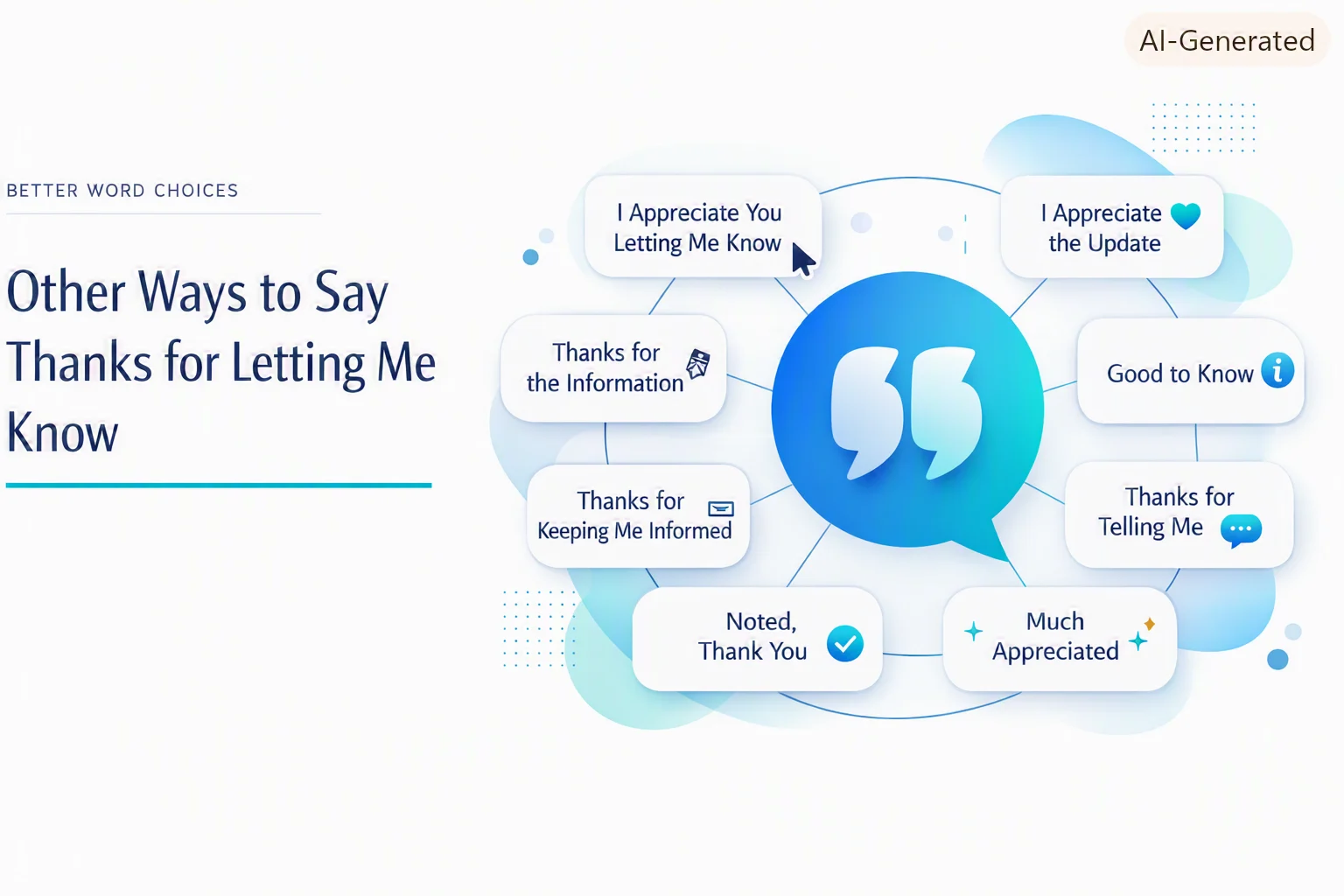
“Thanks for letting me know” is a common phrase used to acknowledge new information politely. It works in casual chats and everyday emails, but it can sound repetitive if overused.Top alternatives include: thank you for the update, thanks for the heads-up, I appreciate you informing me, thank you for keeping me posted, and noted with thanks.
Thanks for letting me know” is one of the most common acknowledgment phrases in English. People use it to confirm they received information and to show appreciation for being informed, whether it is a schedule change, a status update, or a small piece of news.
This phrase appears constantly in emails, texts, and workplace conversations. However, using the same expression repeatedly can make your English sound flat. Learning alternatives to “thanks for letting me know” helps you sound more natural and adaptable in different situations.
Knowing multiple ways to respond also helps you express excitement in English, show professionalism, or simply vary your tone depending on who you are speaking with. This article breaks down 30 alternatives, organized by formality, so you can choose the right one every time.
Quick Categories
Formal Alternatives to “Thanks for Letting Me Know”
- Thank you for informing me
- Thank you for bringing this to my attention
- Thank you for the notification
- I appreciate you keeping me informed
Pro Tip: Use formal alternatives in emails to clients, supervisors, or anyone outside your close team.
Casual Alternatives
- Thanks for the heads-up
- Good to know, thanks
- Thanks for filling me in
- Appreciate the heads-up
Pro Tip: Save casual phrases for friends, close colleagues, or relaxed team chats.
Professional Alternatives
- Thank you for the update
- Thanks for keeping me posted
- I appreciate the clarification
- Thank you for the timely update
Pro Tip: Professional alternatives work best in workplace emails where you want to sound polished but still warm.
Informal Expressions
- Noted, thanks
- Thanks for sharing that
- Good looking out
- Thanks, appreciate it
Pro Tip: Informal expressions suit texting and instant messaging, not formal business documents.
Small phrase changes create a big difference in how confident you sound.”
Common Mistakes
- Overusing the same phrase in every email. Example: Writing “Thanks for letting me know” five times in one thread sounds repetitive.
- Using casual phrases in formal emails. Example: Writing “Thanks for the heads-up, boss!” in a formal report is too informal.
- Forgetting to match tone with the sender’s message. Example: Replying casually to a serious HR announcement can seem careless.
- Leaving out context after saying thanks. Example: Just writing “Thanks for letting me know” without a follow-up action looks incomplete.
- Using it when a more specific response is needed. Example: Saying “Thanks for letting me know” instead of confirming next steps in a project update.
What Does “Thanks for Letting Me Know” Mean?
Thanks for letting me know” is a polite acknowledgment phrase used to thank someone for sharing information with you.
Grammar note: It follows the structure “Thanks for + verb-ing,” where “letting me know” functions as a gerund phrase acting as the object of the preposition “for.
Example sentence: “Thanks for letting me know about the schedule change.”
When to Use “Thanks for Letting Me Know”
- Confirming receipt of an update or announcement
- Responding to a colleague who shared new information
- Acknowledging a change in plans
- Replying to a notification or reminder
Spoken vs Written: In speech, it is often shortened to “thanks for letting me know” with a relaxed tone. In writing, it can be expanded with more detail, such as “Thank you very much for letting me know about this change.”
Formal vs Informal: It works in both settings, but formal contexts often benefit from slightly more elaborate phrasing, such as “Thank you for informing me.
Is It Professional or Polite to Say “Thanks for Letting Me Know”?
Polite? Yes Professional? Yes, in most everyday workplace contexts, though very formal documents may prefer alternatives like “Thank you for the notification.
Business example: “Thanks for letting me know about the delay. I will adjust the timeline accordingly.”
Pros and Cons of Using “Thanks for Letting Me Know”
Pros
- Simple and natural
- Friendly tone
- Common usage
- Easy to understand
Cons
- Too informal for very formal writing
- Overused
- Limited emotional range
- Not suitable for highly formal reports
“Confident English is about choosing the right words, not just correct words.”
Other Ways to Say Thanks for Letting Me Know
These alternatives will help you sound more fluent, confident, and natural in different situations. Use them according to tone, context, and audience to express excitement, admiration, or approval.
1. Phrase: Thank You for the Update
Meaning: Acknowledges new information received.
Explanation: A neutral, professional way to confirm that you received the news.
Example Sentence: “Thank you for the update on the project timeline.”
Best Use: Workplace emails
Worst Use: Casual texting
Tone: Polite, professional
Context Variability: Professional, spoken
2. Phrase: Thanks for the Heads-Up
Meaning: Thanks someone for giving you an early warning.
Explanation: Casual and friendly, commonly used among coworkers.
Example Sentence: “Thanks for the heads-up about the meeting change.”
Best Use: Casual chats
Worst Use: Formal reports
Tone: Friendly, casual
Context Variability: Casual, spoken
3. Phrase: I Appreciate You Letting Me Know
Meaning: Expresses gratitude with a warmer, more personal touch.
Explanation: Sounds more sincere than a simple “thank you.
Example Sentence: “I appreciate you letting me know before the deadline.”
Best Use: Professional emails
Worst Use: Quick texts
Tone: Sincere, warm
Context Variability: Professional, written
4. Phrase: Thank You for Informing Me
Meaning: A formal acknowledgment of shared information.
Explanation: Appropriate for official or business communication.
Example Sentence: “Thank you for informing me about the policy update.”
Best Use: Formal letters
Worst Use: Friendly chats
Tone: Formal, respectful
Context Variability: Formal, written
5. Phrase: Thanks for Keeping Me Posted
Meaning: Thanks someone for providing ongoing updates.
Explanation: Implies continuous communication rather than a one-time update.
Example Sentence: “Thanks for keeping me posted on the shipment status.”
Best Use: Project updates
Worst Use: One-time announcements
Tone: Appreciative, professional
Context Variability: Professional, spoken
6. Phrase: I Appreciate the Update
Meaning: A concise way to thank someone for new information.
Explanation: Short, professional, and suitable for business communication.
Example Sentence: “I appreciate the update on the client meeting.”
Best Use: Business emails
Worst Use: Casual conversation
Tone: Professional, brief
Context Variability: Professional, written
7. Phrase: Thank You for the Notification
Meaning: Formally acknowledges an alert or announcement.
Explanation: Commonly used in official correspondence or system-generated messages.
Example Sentence: “Thank you for the notification regarding the account change.”
Best Use: Formal correspondence
Worst Use: Casual texts
Tone: Formal, neutral
Context Variability: Formal, written
8. Phrase: Thanks for the Info
Meaning: A short, casual way to express gratitude for information.
Explanation: Frequently used in text messages and quick conversations.
Example Sentence: “Thanks for the info, I’ll check it out.”
Best Use: Text messages
Worst Use: Formal reports
Tone: Casual, quick
Context Variability: Casual, spoken
9. Phrase: Good to Know, Thanks
Meaning: Confirms understanding while expressing appreciation.
Explanation: A relaxed response commonly used in everyday conversations.
Example Sentence: “Good to know, thanks for telling me.”
Best Use: Casual conversations
Worst Use: Formal documents
Tone: Relaxed, friendly
Context Variability: Casual, spoken
10. Phrase: Thanks for the Heads Up
Meaning: Thanks someone for giving advance notice.
Explanation: A spelling variation of “heads-up” with the same casual meaning.
Example Sentence: “Thanks for the heads up on the road closure.”
Best Use: Casual messages
Worst Use: Formal writing
Tone: Casual, appreciative
Context Variability: Casual, spoken
11. Phrase: I Appreciate You Telling Me
Meaning: A warm acknowledgment of shared information.
Explanation: Sounds personal and sincere, especially in close relationships.
Example Sentence: “I appreciate you telling me before I found out elsewhere.”
Best Use: Personal conversations
Worst Use: Formal business letters
Tone: Sincere, warm
Context Variability: Personal, spoken
12. Phrase: Thank You for Bringing This to My Attention
Meaning: Acknowledges an important or sensitive update.
Explanation: Frequently used when someone points out an issue or concern.
Example Sentence: “Thank you for bringing this to my attention immediately.”
Best Use: Formal issues
Worst Use: Casual news
Tone: Formal, serious
Context Variability: Formal, written
13. Phrase: Thanks for the Notice
Meaning: Acknowledges advance information or notice.
Explanation: Slightly formal and suitable for workplace communication.
Example Sentence: “Thanks for the notice about the office closure.”
Best Use: Workplace notices
Worst Use: Casual chats
Tone: Neutral, polite
Context Variability: Professional, written
14. Phrase: Noted, Thank You
Meaning: Briefly confirms understanding.
Explanation: Efficient and commonly used in fast-paced professional environments.
Example Sentence: “Noted, thank you for the update.”
Best Use: Quick professional replies
Worst Use: Personal conversations
Tone: Brief, professional
Context Variability: Professional, written
15. Phrase: Thank You for the Reminder
Meaning: Thanks someone for reminding you of something important.
Explanation: Best used when the information serves as a reminder.
Example Sentence: “Thank you for the reminder about tomorrow’s deadline.”
Best Use: Task-related updates
Worst Use: Unrelated news
Tone: Appreciative, polite
Context Variability: Professional, spoken
16. Phrase: Thanks for Sharing That
Meaning: A general thank-you for shared information.
Explanation: Suitable for both personal and professional conversations.
Example Sentence: “Thanks for sharing that, it’s very helpful.”
Best Use: Informal discussions
Worst Use: Formal reports
Tone: Friendly, casual
Context Variability: Casual, spoken
17. Phrase: I Appreciate the Notice
Meaning: A formal expression of gratitude for advance information.
Explanation: Often used in professional or legal communication.
Example Sentence: “I appreciate the notice regarding the schedule change.”
Best Use: Business correspondence
Worst Use: Casual chats
Tone: Formal, respectful
Context Variability: Formal, written
18. Phrase: Thank You for Flagging This
Meaning: Thanks someone for pointing out an issue or concern.
Explanation: Common in workplace and project management settings.
Example Sentence: “Thank you for flagging this before the deadline.”
Best Use: Project management
Worst Use: Casual personal news
Tone: Professional, appreciative
Context Variability: Professional, written
19. Phrase: Thanks for Filling Me In
Meaning: Thanks someone for providing missing details.
Explanation: Casual and conversational, often used after missing an event or discussion.
Example Sentence: “Thanks for filling me in on what happened.”
Best Use: Casual updates
Worst Use: Formal writing
Tone: Casual, friendly
Context Variability: Casual, spoken
20. Phrase: I Appreciate You Keeping Me in the Loop
Meaning: Thanks someone for providing ongoing updates.
Explanation: Commonly used in team and project communication.
Example Sentence: “I appreciate you keeping me in the loop on this project.”
Best Use: Team communication
Worst Use: One-time notices
Tone: Warm, professional
Context Variability: Professional, spoken
21. Phrase: Thank You for the Clarification
Meaning: Thanks someone for clearing up confusion.
Explanation: Used when an explanation resolves a question or misunderstanding.
Example Sentence: “Thank you for the clarification on the new policy.”
Best Use: Professional queries
Worst Use: Casual small talk
Tone: Formal, precise
Context Variability: Professional, written
22. Phrase: Thanks, Good to Know
Meaning: A brief acknowledgment of useful information.
Explanation: Common in quick conversations and messages.
Example Sentence: “Thanks, good to know about the change.”
Best Use: Casual messages
Worst Use: Formal documents
Tone: Casual, brief
Context Variability: Casual, spoken
23. Phrase: Appreciate the Heads-Up
Meaning: A casual way to thank someone for advance notice.
Explanation: Frequently used in workplace chats and messaging platforms.
Example Sentence: “Appreciate the heads-up, I’ll prepare accordingly.”
Best Use: Team chats
Worst Use: Formal letters
Tone: Casual, professional
Context Variability: Casual, written
24. Phrase: Thank You for the Timely Update
Meaning: Expresses appreciation for receiving information promptly.
Explanation: Highlights that the timing of the update was especially helpful.
Example Sentence: “Thank you for the timely update on the budget changes.”
Best Use: Business reports
Worst Use: Casual news
Tone: Formal, appreciative
Context Variability: Formal, written
25. Phrase: Thanks for Letting Us Know
Meaning: A group-oriented version of thanking someone for sharing information.
Explanation: Common when replying on behalf of a team or organization.
Example Sentence: “Thanks for letting us know about the policy update.”
Best Use: Team responses
Worst Use: Individual replies
Tone: Professional, collective
Context Variability: Professional, written
26. Phrase: I Appreciate Being Informed
Meaning: A formal expression of gratitude for receiving information.
Explanation: Often used in corporate or official communication.
Example Sentence: “I appreciate being informed about the upcoming changes.”
Best Use: Corporate emails
Worst Use: Casual speech
Tone: Formal, polished
Context Variability: Formal, written
27. Phrase: Thank You for Reaching Out to Inform Me
Meaning: Thanks someone for making the effort to share information.
Explanation: Suitable for formal correspondence when someone contacts you personally.
Example Sentence: “Thank you for reaching out to inform me personally.”
Best Use: Formal correspondence
Worst Use: Quick texts
Tone: Formal, gracious
Context Variability: Formal, written
28. Phrase: Thanks for the Update on This
Meaning: Acknowledges a specific update on an ongoing matter.
Explanation: Commonly used in workplace emails and project discussions.
Example Sentence: “Thanks for the update on this matter.”
Best Use: Workplace emails
Worst Use: Casual chats
Tone: Professional, direct
Context Variability: Professional, written
29. Phrase: Noted with Thanks
Meaning: A formal and concise acknowledgment.
Explanation: Frequently used in business and administrative communication.
Example Sentence: “Noted with thanks, I will proceed accordingly.”
Best Use: Formal emails
Worst Use: Casual conversations
Tone: Formal, concise
Context Variability: Formal, written
30. Phrase: Thank You for Making Me Aware
Meaning: Thanks someone for informing you about something previously unknown.
Explanation: Commonly used when someone points out an important issue or concern.
Example Sentence: “Thank you for making me aware of this issue.”
Best Use: Formal or serious matters
Worst Use: Casual small talk
Tone: Formal, sincere
Context Variability: Formal, written
“Great communicators do not repeat words, they choose them.”
Mini Quiz / Self-Check
1. Which phrase is best for a formal business email?
A) Thanks for the heads-up
B) Thank you for informing me
C) Good to know, thanks
Answer: B
2. Which phrase fits a casual text message?
A) Noted with thanks
B) Thanks for filling me in
C) I appreciate being informed
Answer: B
3. Your manager shares an important policy change. Which response is most professional?
A) Thanks for the info
B) Thank you for bringing this to my attention
C) Good looking out
Answer: B
4. Which phrase implies continuous updates over time?
A) Thanks for keeping me posted
B) Thanks for the notice
C) Noted, thank you
Answer: A
Comparison Table: Top Alternatives
| Phrase | Tone | Best Use |
|---|---|---|
| Thank you for the update | Professional | Workplace emails |
| Thanks for the heads-up | Casual | Team chats |
| I appreciate you letting me know | Warm | Professional emails |
| Thank you for informing me | Formal | Official letters |
| Thanks for keeping me posted | Appreciative | Project updates |
| Noted, thank you | Brief | Quick professional replies |
| Thank you for bringing this to my attention | Formal | Serious issues |
| Thanks for filling me in | Casual | Informal updates |
| I appreciate the clarification | Formal | Professional queries |
| Thank you for the timely update | Formal | Business reports |
FAQs
1. What is a more formal way to say “thanks for letting me know”?
“Thank you for informing me” or “Thank you for the notification” are strong formal alternatives.
2. What can I say instead of “thanks for letting me know” in a text message?
Casual options like “Thanks for the heads-up” or “Good to know, thanks” work well for texting.
3. Is “thanks for letting me know” appropriate for work emails?
Yes, it is generally acceptable, though “Thank you for the update” sounds slightly more polished for professional emails.
4. How can I avoid repeating “thanks for letting me know” too often?
Rotate between formal, professional, and casual alternatives depending on the audience and setting.
5. Does “thanks for letting me know” sound polite?
Yes, it is considered polite and friendly in almost all everyday situations.
Conclusion
Learning alternatives to “thanks for letting me know” helps you avoid repetition and sound more fluent in both spoken and written English. Whether you need a formal reply for a client or a quick casual response for a friend, having a variety of phrases ready makes your communication more natural.
Practice using these alternatives daily, paying close attention to tone and context. Small adjustments in word choice can make a big difference in how professional, confident, and polished your English sounds.
Read More Related Articles:
- Other Ways to Say Circle Back | Improve Your Workplace Communication In 2026
- Other Ways to Say Welcome to the Team | Warm First Impression In 2026
- Other Ways to Say I Hope All Is Well | Make a Better First Impression In 2026

Victoria Hughes is a content writer dedicated to making communication clearer and more effective. Through TextsResponse.com, she shares practical insights and thoughtfully crafted response ideas that help readers express themselves with confidence.