Quick Answer
Looking for fresh alternatives to “good job” to students? Try these 5 top options: Well done, Excellent work, Keep it up, I’m proud of your effort, and You nailed it.
The phrase “good job” is one of the most common ways to praise students in English. Teachers, tutors, and even parents use it daily to acknowledge effort, improvement, or achievement. It’s simple, friendly, and gets the point across.
However, relying on the same phrase over and over can make your praise feel hollow or automatic. Students especially intermediate to advanced English learners benefit from hearing varied alternatives to “good job” that match different tones, contexts, and levels of formality. Learning these alternatives will help you express excitement in English more naturally and sound more fluent, confident, and professional.
Quick Categories
Formal Alternatives to “Good Job”
- Excellent work
- Outstanding performance
- Commendable effort
- You should be proud
- Remarkable achievement
Casual Alternatives
- Nice going
- Way to go
- You crushed it
- Good stuff
- You’re on fire
Professional Alternatives
- Impressive work
- Well executed
- Top-notch effort
- Very professional
- First-class work
Informal Expressions
- You nailed it
- You rocked it
- Awesome job
- Killing it
- You’re a star
“The right tone makes your English sound professional and confident.”
Common Mistakes Using “Good Job”
1. Overusing it in formal writing
- Mistake: “Good job on the quarterly report.”
- Better: “Excellent work on the quarterly report.”
2. Using it when specific feedback is needed
- Mistake: “Good job!” (after a complex project)
- Better: “Your analysis was thorough and well-structured.”
3. Using it sarcastically
- Mistake: “Good job…” (with a flat tone)
- Better: Avoid sarcasm entirely when giving genuine praise.
4. Using it for big achievements
- Mistake: “Good job on winning the competition.”
- Better: “Outstanding achievement you should be incredibly proud.”
5. Using it without naming the student
- Mistake: “Good job.”
- Better: “Good job, Sarah your presentation was clear and engaging.”
“Specific praise is more meaningful than generic praise.”
What Does “Good Job” Mean?
Definition: “Good job” is an informal expression used to acknowledge and praise someone for completing a task well, achieving a goal, or demonstrating effort.
Grammar: It functions as an interjection or a noun phrase. You can use it alone (“Good job!”) or with “on” + the specific task (“Good job on the assignment”).
Example Sentence: “Good job on your presentation you spoke clearly and confidently.”
When to Use “Good Job”
- After a student completes a task or assignment
- When acknowledging improvement or effort
- In casual conversations with classmates or friends
- In spoken English more than written English
- In informal settings (classroom, study groups, casual feedback)
- When you want quick, simple encouragement
Spoken vs Written: Primarily spoken. In writing, it’s best reserved for informal emails or messages.
Formal vs Informal: Decidedly informal. Avoid in academic papers, formal reports, or professional correspondence.
Is It Professional or Polite to Say “Good Job”?
Polite? ✔️ Yes It’s courteous and encouraging.
Professional? ❌ No (in most cases) It lacks the specificity and formality expected in professional environments.
Business-Style Example: “Good job on the presentation” → Better: “Your presentation was well-researched and delivered with confidence.”
Pros and Cons of Using “Good Job”
Pros:
- Simple and natural
- Friendly and warm tone
- Common and universally understood
- Easy for English learners to use
Cons:
- Too informal for professional or academic writing
- Overused and can feel generic
- Limited emotional range
- Not suitable for formal praise or official feedback
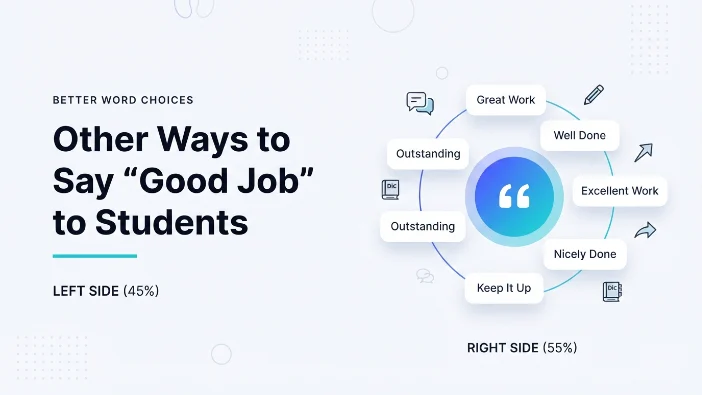
Other Ways to Say “Good Job” to Students
These 30 alternatives will help you sound more fluent, confident, and natural in different situations. Use them according to tone, context, and audience to express excitement, admiration, or approval.
Category 1: Formal & Professional Alternatives
1. Phrase: Excellent work
- Meaning: A strong, respectful way to praise high-quality output.
- Explanation: This phrase elevates the praise beyond casual approval.
- Example Sentence: “Excellent work on your research paper your arguments were well-supported.”
- Best Use: Academic feedback
- Worst Use: Casual chat with friends
- Tone: Respectful, professional
- Context Variability: Professional
2. Phrase: Outstanding performance
- Meaning: Praise for exceptional results or effort.
- Explanation: Suggests the student’s work stood out from the rest.
- Example Sentence: “Outstanding performance in the debate competition.”
- Best Use: Formal recognition
- Worst Use: Everyday classroom praise
- Tone: Admiring, formal
- Context Variability: Professional
3. Phrase: Commendable effort
- Meaning: Acknowledges that the student’s hard work is worthy of praise.
- Explanation: Often used in written feedback or reports.
- Example Sentence: “Your commitment to this project is truly commendable.”
- Best Use: Written feedback
- Worst Use: Quick verbal praise
- Tone: Formal, appreciative
- Context Variability: Professional / Written
4. Phrase: You should be proud of yourself
- Meaning: Encourages the student to recognize their own achievement.
- Explanation: Shifts the focus from external validation to internal pride.
- Example Sentence: “You should be proud of yourself you’ve improved so much this semester.”
- Best Use: Personal encouragement
- Worst Use: Group settings
- Tone: Warm, sincere
- Context Variability: Casual / Professional
5. Phrase: Remarkable achievement
- Meaning: Highlights that the accomplishment is unusual and impressive.
- Explanation: Best used for significant milestones.
- Example Sentence: “Winning the science fair is a remarkable achievement.”
- Best Use: Major accomplishments
- Worst Use: Small daily tasks
- Tone: Formal, admiring
- Context Variability: Professional
6. Phrase: Very professional
- Meaning: Praises the student’s mature, work-ready approach.
- Explanation: Useful when students demonstrate workplace skills.
- Example Sentence: “Your email to the client was very professional.”
- Best Use: Business or internship settings
- Worst Use: Creative or artistic work
- Tone: Professional, approving
- Context Variability: Professional
7. Phrase: First-class work
- Meaning: Work that is of the highest quality.
- Explanation: Implies the student’s output is among the best.
- Example Sentence: “First-class work on the group project everyone was impressed.”
- Best Use: High-quality output
- Worst Use: Routine assignments
- Tone: Formal, complimentary
- Context Variability: Professional
8. Phrase: Well executed
- Meaning: The student carried out the task skillfully.
- Explanation: Focuses on the process and delivery.
- Example Sentence: “Your experiment was well executed from start to finish.”
- Best Use: Practical or technical tasks
- Worst Use: Creative writing
- Tone: Professional, precise
- Context Variability: Professional
“Praising effort, not just ability, builds a growth mindset in students.”
Category 2: Casual & Friendly Alternatives
9. Phrase: Nice going
- Meaning: A relaxed way to acknowledge a job well done.
- Explanation: Common in informal conversations among peers.
- Example Sentence: “Nice going on the quiz you aced it!”
- Best Use: Friends or classmates
- Worst Use: Formal settings
- Tone: Friendly, casual
- Context Variability: Casual
10. Phrase: Way to go
- Meaning: An encouraging cheer for a success.
- Explanation: Often used with enthusiasm and a smile.
- Example Sentence: “Way to go you finished the marathon!”
- Best Use: Celebrating achievements
- Worst Use: Written feedback
- Tone: Enthusiastic, casual
- Context Variability: Casual
11. Phrase: You crushed it
- Meaning: You did an amazing job.
- Explanation: Informal and energetic great for younger students or peers.
- Example Sentence: “You crushed it in the spelling bee!”
- Best Use: Peers or younger students
- Worst Use: Professional settings
- Tone: Energetic, informal
- Context Variability: Casual
12. Phrase: Good stuff
- Meaning: A short, friendly way to say something was good.
- Explanation: Very casual and common in spoken English.
- Example Sentence: “Good stuff on the homework keep it up.”
- Best Use: Quick verbal praise
- Worst Use: Formal writing
- Tone: Casual, warm
- Context Variability: Casual
13. Phrase: You’re on fire
- Meaning: You are performing exceptionally well repeatedly.
- Explanation: Used when a student has a streak of success.
- Example Sentence: “Three correct answers in a row you’re on fire!”
- Best Use: Classroom games or quick wins
- Worst Use: Serious or formal contexts
- Tone: Playful, enthusiastic
- Context Variability: Casual
14. Phrase: Awesome job
- Meaning: A slightly more enthusiastic version of “good job.”
- Explanation: Common among younger speakers and in informal settings.
- Example Sentence: “Awesome job on the art project it looks fantastic.”
- Best Use: Creative or fun tasks
- Worst Use: Professional reports
- Tone: Enthusiastic, friendly
- Context Variability: Casual
15. Phrase: You rock
- Meaning: You are impressive or excellent.
- Explanation: Very informal; often used among friends.
- Example Sentence: “You rock thanks for helping everyone today.”
- Best Use: Peer encouragement
- Worst Use: Professional or academic settings
- Tone: Cool, informal
- Context Variability: Casual
“Variety in praise keeps students motivated and engaged.”
Category 3: Effort-Focused Alternatives
16. Phrase: Keep up the good work
- Meaning: Encourages the student to continue their current level of effort.
- Explanation: Suggests consistency and ongoing improvement.
- Example Sentence: “Keep up the good work you’re making great progress.”
- Best Use: Ongoing encouragement
- Worst Use: One-time achievements
- Tone: Encouraging, supportive
- Context Variability: Casual / Professional
17. Phrase: I can see your hard work
- Meaning: Acknowledges that the student put in significant effort.
- Explanation: Focuses on the process rather than the result.
- Example Sentence: “I can see your hard work in this essay it’s thorough and thoughtful.”
- Best Use: Process-oriented praise
- Worst Use: Quick verbal praise
- Tone: Observant, sincere
- Context Variability: Professional / Casual
18. Phrase: Your effort is paying off
- Meaning: The student’s hard work is leading to positive results.
- Explanation: Reinforces the value of persistence.
- Example Sentence: “Your effort is paying off your grades are improving steadily.”
- Best Use: Encouraging struggling students
- Worst Use: Praise for natural talent
- Tone: Encouraging, motivational
- Context Variability: Casual / Professional
19. Phrase: You’re making great strides
- Meaning: You are making significant progress.
- Explanation: Highlights improvement over time.
- Example Sentence: “You’re making great strides in your writing skills.”
- Best Use: Long-term progress
- Worst Use: One-off tasks
- Tone: Encouraging, formal
- Context Variability: Professional
20. Phrase: I’m impressed by your dedication
- Meaning: Acknowledges the student’s commitment and focus.
- Explanation: Emphasizes character traits like perseverance.
- Example Sentence: “I’m impressed by your dedication to mastering this topic.”
- Best Use: Recognizing sustained effort
- Worst Use: Casual settings
- Tone: Sincere, formal
- Context Variability: Professional
Category 4: Specific & Descriptive Alternatives
21. Phrase: That was really well done
- Meaning: A more specific way to say “good job.”
- Explanation: Adds emphasis to the quality of the work.
- Example Sentence: “That was really well done your research was comprehensive.”
- Best Use: Detailed feedback
- Worst Use: Quick praise
- Tone: Appreciative, specific
- Context Variability: Casual / Professional
22. Phrase: You handled that brilliantly
- Meaning: You managed the situation or task with skill.
- Explanation: Often used for presentations, debates, or challenging tasks.
- Example Sentence: “You handled that difficult question brilliantly.”
- Best Use: Challenging situations
- Worst Use: Routine tasks
- Tone: Admiring, formal
- Context Variability: Professional
23. Phrase: That’s a great improvement
- Meaning: Acknowledges progress from a previous level.
- Explanation: Encourages students who are developing their skills.
- Example Sentence: “That’s a great improvement from your last draft.”
- Best Use: Tracking progress
- Worst Use: First-time achievements
- Tone: Encouraging, specific
- Context Variability: Professional / Casual
24. Phrase: You’ve outdone yourself
- Meaning: You have performed better than your previous best.
- Explanation: Compares the student’s current work to their own past performance.
- Example Sentence: “You’ve outdone yourself with this painting it’s stunning.”
- Best Use: Personal bests
- Worst Use: Group work
- Tone: Impressed, warm
- Context Variability: Casual / Professional
25. Phrase: That’s top-notch
- Meaning: Of the highest quality.
- Explanation: Informal but still respectful.
- Example Sentence: “That’s top-notch work you should be proud.”
- Best Use: High-quality output
- Worst Use: Routine tasks
- Tone: Complimentary, casual
- Context Variability: Casual
26. Phrase: Your work stands out
- Meaning: The student’s work is noticeably better or different.
- Explanation: Highlights uniqueness and quality.
- Example Sentence: “Your work stands out among all the submissions.”
- Best Use: Competitive or comparative settings
- Worst Use: Individual praise
- Tone: Impressed, formal
- Context Variability: Professional
“Descriptive praise helps students understand exactly what they did well.”
Category 5: Encouragement & Motivation
27. Phrase: You’re on the right track
- Meaning: The student is progressing correctly.
- Explanation: Encourages continued effort in the right direction.
- Example Sentence: “You’re on the right track keep practicing and you’ll master it.”
- Best Use: Learning new skills
- Worst Use: Completed tasks
- Tone: Encouraging, supportive
- Context Variability: Casual / Professional
28. Phrase: I knew you could do it
- Meaning: Expresses confidence in the student’s ability.
- Explanation: Builds trust and self-belief.
- Example Sentence: “I knew you could do it you’ve been working so hard.”
- Best Use: After a challenge
- Worst Use: Easy tasks
- Tone: Supportive, warm
- Context Variability: Casual
29. Phrase: You should be proud
- Meaning: Encourages the student to feel good about their achievement.
- Explanation: Shifts the focus to internal satisfaction.
- Example Sentence: “You should be proud this is your best work yet.”
- Best Use: Personal milestones
- Worst Use: Group achievements
- Tone: Warm, sincere
- Context Variability: Casual / Professional
30. Phrase: Keep pushing forward
- Meaning: Encourages continued effort despite challenges.
- Explanation: Motivates students to persist.
- Example Sentence: “You’ve come so far keep pushing forward.”
- Best Use: Long-term goals
- Worst Use: Short-term tasks
- Tone: Motivational, supportive
- Context Variability: Casual / Professional
Comparison Table: Top 10 Alternatives
| Phrase | Tone | Best Use |
|---|---|---|
| Excellent work | Professional | Academic feedback |
| Outstanding performance | Formal | Major achievements |
| Keep up the good work | Encouraging | Ongoing effort |
| You nailed it | Casual | Quick wins |
| I’m proud of your effort | Warm | Personal encouragement |
| Well executed | Professional | Technical tasks |
| Nice going | Friendly | Peer praise |
| You’re on fire | Playful | Classroom games |
| Your work stands out | Formal | Competitive settings |
| You should be proud | Sincere | Personal milestones |
Mini Quiz / Self-Check
1. Which phrase is most appropriate for a formal academic report?
- A) You crushed it
- B) Excellent work
- C) Nice going
- Answer: B) Excellent work
2. You want to encourage a student who is struggling but improving. What should you say?
- A) You’re on fire
- B) Your effort is paying off
- C) Way to go
- Answer: B) Your effort is paying off
3. Which phrase is too informal for a professional email?
- A) Well executed
- B) Outstanding performance
- C) You rock
- Answer: C) You rock
4. A student just gave a great presentation. Which response is most specific?
- A) Good job
- B) You handled that brilliantly
- C) Awesome job
- Answer: B) You handled that brilliantly
“The best praise is specific, sincere, and tailored to the student and the situation.”
FAQs
1. What are some other ways to say “good job” to students?
You can say “Excellent work,” “Well done,” “Keep it up,” “You nailed it,” or “I’m proud of your effort.” Choose based on the context and level of formality.
2. How do you praise a student professionally?
Use phrases like “Outstanding performance,” “Commendable effort,” or “Your work stands out.” These are respectful and suitable for written feedback or formal settings.
3. Is “good job” appropriate for academic feedback?
“Good job” is acceptable for informal feedback but lacks the specificity and professionalism needed for formal academic reports or official evaluations.
4. What can I say instead of “good job” to encourage effort?
Say “Your effort is paying off,” “Keep pushing forward,” or “I can see your hard work.” These phrases focus on the process rather than just the outcome.
5. How can I make my praise more specific?
Instead of a generic “good job,” mention what the student did well. For example: “Your introduction was clear and engaging excellent work.”
Conclusion
Learning alternatives to “good job” is one of the simplest ways to elevate your English communication. Whether you’re a teacher, a tutor, or a student giving peer feedback, varying your praise makes your language more engaging, precise, and professional.
Start by choosing 3–5 new phrases from this list and practice using them this week. Pay attention to tone, context, and the student you’re addressing. With consistent practice, these other ways to say “good job” to students will become second nature and your praise will feel more meaningful and impactful.
Read More Related Articles:
- Other Ways to Say Circle Back | Improve Your Workplace Communication In 2026
- Other Ways to Say Welcome to the Team | Warm First Impression In 2026
- Other Ways to Say I Hope All Is Well | Make a Better First Impression In 2026

Henry Walker is an American writer and blogger with a keen interest in communication, language and digital content. At TextsResponse.com, he creates informative and reader-focused resources designed to help people communicate with clarity, confidence and authenticity.