Quick Answer
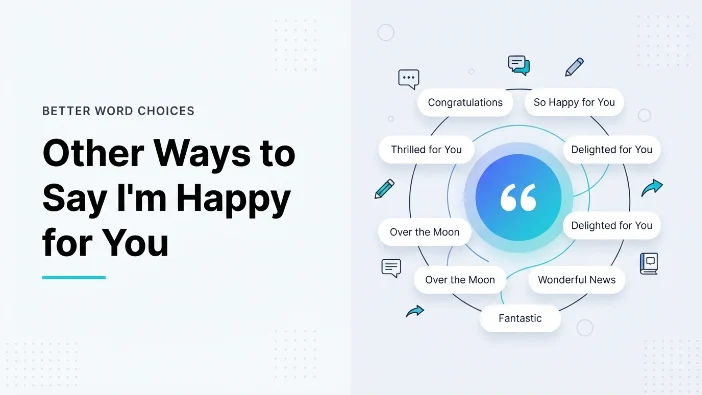
Looking for alternatives to “I’m happy for you”? Try these five first: I’m thrilled for you, so proud of you, that’s wonderful news, you deserve this, and I’m delighted to hear that. Each one carries a slightly different tone, so choosing the right phrase depends on your audience and the situation.
I’m happy for you” is one of the most common phrases in English used to celebrate someone else’s success, good news, or happiness. People use it after hearing about a promotion, an engagement, an achievement, or simply good fortune. It signals warmth, support, and genuine goodwill toward another person.
However, repeating the same phrase over and over can make your English sound flat or predictable. Learning alternatives to “I’m happy for you” helps you express excitement in English with more variety, precision, and emotional depth. It also allows you to adjust your tone for different settings, from casual conversations with friends to formal workplace communication.
This guide breaks down thirty alternative expressions, organized by tone and context, so you can sound more fluent, natural, and confident in any situation.
The right tone makes your English sound professional and confident.
Quick Categories
Formal alternatives to “I’m happy for you”
- I am delighted for you
- Please accept my sincere congratulations
- I am pleased to hear of your success
- My warmest congratulations to you
Casual alternatives
- So happy for you
- That’s awesome news
- Yay, good for you
- I’m so glad
Professional alternatives
- Congratulations on this achievement
- Well deserved
- This is fantastic news for the team
- I’m glad to see your hard work pay off
Informal expressions
- You go, girl or boy
- That’s huge
- Look at you go
- I’m hyped for you
Pro Tip: Match your phrase to your relationship with the listener. Formal alternatives work best in emails and professional settings, while casual and informal expressions suit friends, family, and everyday conversation.
Common Mistakes
- Using it too formally in casual settings Example: Saying “I am delighted for you” to a close friend can sound stiff and distant.
- Repeating the same phrase constantly Example: Saying “I’m happy for you” after every piece of good news makes conversation sound robotic.
- Using informal expressions in professional emails Example: Writing “That’s huge, congrats!” in a formal work email sounds unprofessional.
- Missing the emotional context Example: Saying “I’m happy for you” flatly, without warmth, can sound insincere even if the words are correct.
- Confusing “happy for you” with “happy with you” Example: Saying “I’m happy with you” instead of “I’m happy for you” changes the meaning entirely and can confuse the listener.
“Small phrase choices carry big emotional meaning.”
What Does “I’m Happy for You” Mean?
I’m happy for you” means you feel joy or satisfaction because of someone else’s good news, success, or happiness, rather than your own. Grammatically, it follows the structure subject + be verb + happy + for + object, where “for” indicates the reason behind your emotion is tied to the other person.
Example Sentence: “You got the job? I’m happy for you!”
When to Use “I’m Happy for You”
- After someone shares good news, such as a new job or engagement
- When congratulating a friend, colleague, or family member
- In both spoken and written English, though tone should be adjusted
- In formal settings like emails, or informal settings like text messages
- When you want to express support without making the moment about yourself
Is It Professional or Polite to Say “I’m Happy for You”?
I’m happy for you” is polite and warm, but it is not always the most professional choice in formal business communication. In workplace settings, phrases like “Congratulations on this achievement” or “Well deserved” tend to sound more polished and appropriate.
Business Example: “Congratulations on your promotion. Well deserved, and I look forward to working with you in your new role.”
Polite? Yes Professional? No, in most formal business contexts
Pros and Cons of Using “I’m Happy for You”
Pros
- Simple and natural to say
- Friendly, warm tone
- Common usage across most English-speaking regions
- Easy for learners to understand and remember
Cons
- Too informal for certain formal writing
- Overused in everyday conversation
- Limited emotional range compared to more specific phrases
- Not ideal for high-level professional correspondence
Fluency isn’t about knowing more words, it’s about choosing the right one.
Other Ways to Say I’m Happy for You
These alternatives will help you sound more fluent, confident, and natural in different situations. Use them according to tone, context, and audience to express excitement, admiration, or approval.
1. I’m Thrilled for You
Meaning: You feel great excitement about someone’s good news.
Explanation: A stronger, more energetic version of “happy for you.”
Example Sentence: “You passed the exam? I’m thrilled for you!”
Best Use: Friends, celebrations
Worst Use: Formal emails
Tone: Warm, energetic
Context Variability: Casual, spoken
2. I’m So Proud of You
Meaning: You feel admiration for someone’s achievement.
Explanation: Focuses on the person’s effort rather than just the outcome.
Example Sentence: “You finished the marathon. I’m so proud of you.”
Best Use: Personal relationships
Worst Use: Professional emails
Tone: Affectionate, sincere
Context Variability: Casual, spoken
3. That’s Wonderful News
Meaning: A reaction expressing that the news is very good.
Explanation: Slightly more neutral and works across many settings.
Example Sentence: “You’re getting married? That’s wonderful news.”
Best Use: Mixed settings
Worst Use: Very informal chats
Tone: Warm, polished
Context Variability: Casual, professional
4. You Deserve This
Meaning: The person has earned their success through effort.
Explanation: Highlights the fairness and hard work behind the achievement.
Example Sentence: “You got the promotion. You deserve this.”
Best Use: Encouragement, support
Worst Use: First time introductions
Tone: Sincere, affirming
Context Variability: Casual, professional
5. I’m Delighted to Hear That
Meaning: A formal way to express happiness about someone’s news.
Explanation: Common in professional or polite written English.
Example Sentence: “I’m delighted to hear that your project was approved.”
Best Use: Emails, formal speech
Worst Use: Casual texting
Tone: Formal, polite
Context Variability: Professional, written
6. Congratulations on This Achievement
Meaning: A formal recognition of someone’s success.
Explanation: Common in workplace and academic settings.
Example Sentence: “Congratulations on this achievement. It’s well earned.”
Best Use: Work, academics
Worst Use: Informal chats
Tone: Respectful, formal
Context Variability: Professional, written
7. Well Deserved
Meaning: The outcome matches the person’s effort or ability.
Explanation: Short, professional, and widely used in workplace praise.
Example Sentence: “You got the award. Well deserved.”
Best Use: Workplace praise
Worst Use: Emotional personal news
Tone: Brief, professional
Context Variability: Professional, spoken
8. This Is Fantastic News for the Team
Meaning: The success benefits a group, not just one person.
Explanation: Useful when celebrating shared or team based wins.
Example Sentence: “This is fantastic news for the team. Great work, everyone.”
Best Use: Workplace announcements
Worst Use: Personal one on one news
Tone: Professional, inclusive
Context Variability: Professional, spoken
9. I’m Glad to See Your Hard Work Pay Off
Meaning: You recognize the effort behind the success.
Explanation: Common in mentorship or supervisor feedback.
Example Sentence: “I’m glad to see your hard work pay off this quarter.”
Best Use: Mentorship, feedback
Worst Use: Casual friend chats
Tone: Encouraging, professional
Context Variability: Professional, written
10. So Happy for You
Meaning: A shortened, casual version of “I’m happy for you.”
Explanation: Very common in texting and spoken conversation.
Example Sentence: “So happy for you. This is amazing!”
Best Use: Texting, friends
Worst Use: Formal writing
Tone: Casual, friendly
Context Variability: Casual, spoken
11. That’s Awesome News
Meaning: An enthusiastic, informal reaction to good news.
Explanation: Common among younger speakers and in informal settings.
Example Sentence: “You’re moving to a new city? That’s awesome news.”
Best Use: Friends, social media
Worst Use: Business emails
Tone: Excited, informal
Context Variability: Casual, spoken
12. Yay, Good for You
Meaning: A playful, informal expression of happiness for someone.
Explanation: Light and cheerful, often used with close friends.
Example Sentence: “Yay, good for you. You totally earned it!”
Best Use: Friendly banter
Worst Use: Professional settings
Tone: Playful, casual
Context Variability: Casual, spoken
13. I’m So Glad
Meaning: A simple, warm way to show happiness for someone.
Explanation: Slightly softer and more understated than other options.
Example Sentence: “I’m so glad things worked out for you.”
Best Use: Everyday conversation
Worst Use: Formal announcements
Tone: Gentle, warm
Context Variability: Casual, spoken
14. You Go, Girl or Boy
Meaning: An enthusiastic cheer for someone’s success or confidence.
Explanation: Popular slang used to encourage and celebrate someone.
Example Sentence: “You started your own business? You go, girl!”
Best Use: Close friends, social media
Worst Use: Formal or professional contexts
Tone: Bold, energetic
Context Variability: Casual, spoken
15. That’s Huge
Meaning: The news is significant or impressive.
Explanation: Emphasizes the scale of the achievement in a casual way.
Example Sentence: “You got into your dream school? That’s huge!”
Best Use: Informal celebration
Worst Use: Written business communication
Tone: Excited, informal
Context Variability: Casual, spoken
16. Look at You Go
Meaning: A playful way to acknowledge someone’s progress or success.
Explanation: Often used with a light, teasing tone among friends.
Example Sentence: “Three promotions in two years. Look at you go!”
Best Use: Friendly teasing, encouragement
Worst Use: Formal writing
Tone: Playful, affectionate
Context Variability: Casual, spoken
17. I’m Hyped for You
Meaning: A very enthusiastic, energetic reaction to good news.
Explanation: Popular among younger speakers in casual contexts.
Example Sentence: “You’re going on tour? I’m hyped for you!”
Best Use: Social media, close friends
Worst Use: Professional emails
Tone: Energetic, informal
Context Variability: Casual, spoken
18. I Am Delighted for You
Meaning: A formal, elevated way to express shared happiness.
Explanation: Often used in polite British English or formal writing.
Example Sentence: “I am delighted for you and your family.”
Best Use: Formal letters, speeches
Worst Use: Texting friends
Tone: Formal, gracious
Context Variability: Professional, written
19. Please Accept My Sincere Congratulations
Meaning: A very formal and respectful way to congratulate someone.
Explanation: Common in official letters and ceremonial speeches.
Example Sentence: “Please accept my sincere congratulations on your graduation.”
Best Use: Formal ceremonies, letters
Worst Use: Casual daily conversation
Tone: Formal, respectful
Context Variability: Professional, written
20. I Am Pleased to Hear of Your Success
Meaning: A formal acknowledgment of someone’s achievement.
Explanation: Suitable for professional or academic correspondence.
Example Sentence: “I am pleased to hear of your success in the competition.”
Best Use: Formal emails, references
Worst Use: Casual chats
Tone: Formal, composed
Context Variability: Professional, written
21. My Warmest Congratulations to You
Meaning: A heartfelt, formal way of celebrating someone’s news.
Explanation: Blends warmth with professionalism, making it useful for cards or speeches.
Example Sentence: “My warmest congratulations to you on this milestone.”
Best Use: Cards, formal speeches
Worst Use: Quick text messages
Tone: Warm, formal
Context Variability: Professional, written
22. That’s a Wonderful Achievement
Meaning: Recognizes the significance of someone’s accomplishment.
Explanation: Balanced between formal and warm, so it works in many settings.
Example Sentence: “Publishing your first book? That’s a wonderful achievement.”
Best Use: Mixed formal and personal settings
Worst Use: Extremely casual texting
Tone: Sincere, respectful
Context Variability: Professional, casual
23. I Couldn’t Be Happier for You
Meaning: Expresses maximum happiness about someone’s news.
Explanation: A stronger emotional statement than the standard “happy for you.”
Example Sentence: “I couldn’t be happier for you and your new family.”
Best Use: Close relationships, big news
Worst Use: Minor everyday updates
Tone: Heartfelt, sincere
Context Variability: Casual, spoken
24. This Made My Day
Meaning: The good news brought you personal joy.
Explanation: Shifts the focus slightly to your own emotional reaction.
Example Sentence: “Hearing about your engagement made my day.”
Best Use: Personal messages
Worst Use: Formal reports
Tone: Warm, personal
Context Variability: Casual, written
25. What Great News
Meaning: A simple exclamation showing positive surprise and happiness.
Explanation: Works well as an opening reaction before elaborating further.
Example Sentence: “What great news! Tell me everything.”
Best Use: Conversation openers
Worst Use: Formal closing statements
Tone: Enthusiastic, natural
Context Variability: Casual, spoken
26. I’m Rooting for You and This Proves It
Meaning: Confirms your ongoing support was justified by their success.
Explanation: Useful when you supported someone before their achievement.
Example Sentence: “I’m rooting for you, and this proves it. Well done!”
Best Use: Mentorship, long term support
Worst Use: First time acquaintances
Tone: Supportive, sincere
Context Variability: Casual, professional
27. You Earned Every Bit of This
Meaning: Emphasizes that success came from genuine effort.
Explanation: Reinforces admiration for the person’s hard work.
Example Sentence: “You earned every bit of this promotion.”
Best Use: Workplace, personal encouragement
Worst Use: Unearned or lucky outcomes
Tone: Respectful, affirming
Context Variability: Professional, casual
28. Sending You My Congratulations
Meaning: A polite, slightly formal way to congratulate someone remotely.
Explanation: Common in written messages, cards, and emails.
Example Sentence: “Sending you my congratulations on your new role.”
Best Use: Emails, cards
Worst Use: Face to face casual talk
Tone: Polite, warm
Context Variability: Professional, written
29. I’m Over the Moon for You
Meaning: An idiomatic way to express extreme happiness for someone.
Explanation: Colorful and expressive, and particularly common in British English.
Example Sentence: “I’m over the moon for you. This is incredible!”
Best Use: Close friends, exciting news
Worst Use: Formal business writing
Tone: Expressive, warm
Context Variability: Casual, spoken
30. Cheers to Your Success
Meaning: A celebratory phrase often used when toasting or congratulating someone.
Explanation: Works well in spoken toasts and celebratory written messages.
Example Sentence: “Cheers to your success! You’ve worked so hard for this.”
Best Use: Celebrations, toasts
Worst Use: Everyday small updates
Tone: Celebratory, warm
Context Variability: Casual, professional
“Every phrase carries a slightly different shade of feeling, choose the one that matches the moment.
Mini Quiz
1. Formal Promotion Email
You are writing a formal email to a colleague who has been promoted. Which phrase fits best?
A) That’s huge
B) Congratulations on this achievement
C) You go, girl
D) I’m hyped for you
Answer: B) Congratulations on this achievement
2. Congratulating a Close Friend
Your close friend just got engaged and texts you the news. Which response best matches the tone?
A) I am pleased to hear of your success
B) So happy for you
C) Please accept my sincere congratulations
D) I am delighted for you
Answer: B) So happy for you
3. Focusing on Effort
Which phrase focuses specifically on someone’s effort rather than the outcome?
A) That’s wonderful news
B) You earned every bit of this
C) What great news
D) Cheers to your success
Answer: B) You earned every bit of this
4. Happy for You vs. Happy With You
True or False: “I’m happy for you” and “I’m happy with you” mean the same thing.
A) True
B) False
Answer: B) False
Comparison Table: Top Alternatives
| Phrase | Tone | Best Use |
|---|---|---|
| I’m thrilled for you | warm, energetic | friends, celebrations |
| I’m so proud of you | affectionate, sincere | personal relationships |
| That’s wonderful news | warm, polished | mixed settings |
| You deserve this | sincere, affirming | encouragement |
| I’m delighted to hear that | formal, polite | emails, formal speech |
| Congratulations on this achievement | respectful, formal | work, academics |
| Well deserved | brief, professional | workplace praise |
| So happy for you | casual, friendly | texting, friends |
| I couldn’t be happier for you | heartfelt, sincere | close relationships |
| I’m over the moon for you | expressive, warm | close friends, exciting news |
FAQs
1. What is a formal way to say “I’m happy for you”?
rmal options include “I am delighted for you,” “I am pleased to hear of your success,” or “Please accept my sincere congratulations.”
2. What is a casual way to say “I’m happy for you”?
Casual options include “So happy for you,” “That’s awesome news,” or “Look at you go.”
3. Is “I’m happy for you” appropriate in a professional email?
It is acceptable but slightly informal. Phrases like “Congratulations on this achievement” sound more professional in business writing.
4. How can I express excitement in English without repeating the same phrase?
Rotate between formal, casual, and professional alternatives depending on the setting, and match the intensity of the phrase to the news itself.
5. What is the difference between “I’m happy for you” and “congratulations”?
“I’m happy for you” focuses on your own emotional reaction, while “congratulations” is a direct acknowledgment of the person’s achievement.
Conclusion
Learning multiple other ways to say “I’m happy for you” helps you sound more natural, fluent, and emotionally precise in English. Instead of relying on one phrase for every situation, you can now choose expressions that match formal writing, casual conversation, or professional communication.
Practice using these alternatives daily, paying close attention to tone and context. Over time, this awareness will help your spoken and written English feel more authentic, confident, and connected to the moment.
Read More Related Articles:
- Other Ways to Say You’re Beautiful | Beyond the Ordinary Compliment In 2026
- Other Ways to Say I Love You in Spanish | Beyond the Usual Phrase In 2026
- Other Ways to Say I Love You in Other Languages | Beyond the Classic Three Words In 2026

Victoria Hughes is a content writer dedicated to making communication clearer and more effective. Through TextsResponse.com, she shares practical insights and thoughtfully crafted response ideas that help readers express themselves with confidence.