Quick Answer
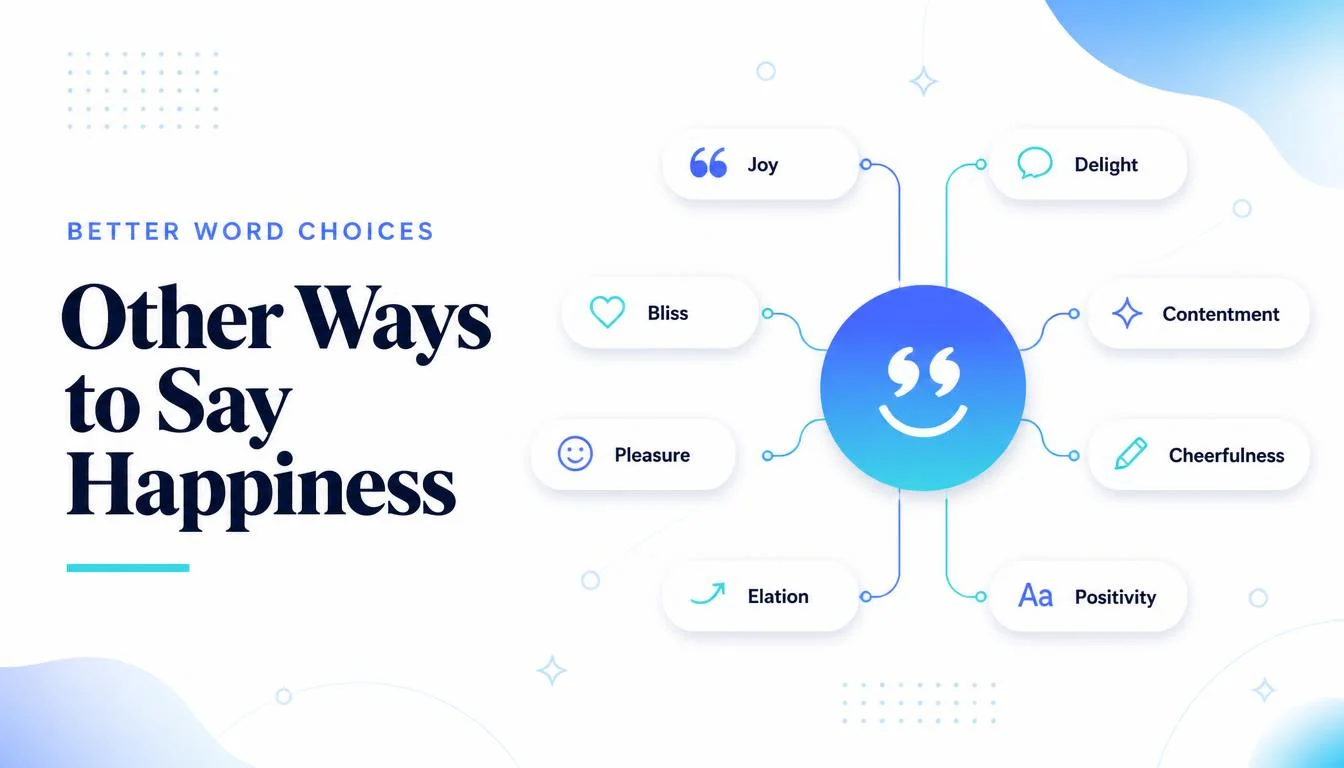
Other ways to say happiness include joy, delight, contentment, pleasure, bliss, and cheerfulness. These alternatives help you express positive emotions naturally in everyday conversations and writing.
Finding other ways to say happiness can make your English more expressive and engaging. Whether you are describing a wonderful experience, celebrating an achievement, or sharing your feelings with someone, choosing the right word helps you communicate emotions more clearly. Words such as joy, delight, and contentment each express a slightly different kind of happiness.
Learning different expressions for happiness can also improve your vocabulary and writing style. In essays, personal messages, creative writing, and professional communication, using varied words instead of repeating “happiness” makes your sentences more interesting. By exploring these alternatives, you can describe everything from a moment of excitement to a deep sense of peace and satisfaction.
What Is “Happiness”? (Meaning, Grammar & Real Use)
Imagine receiving good news, spending time with people you love, or finally achieving a goal you have worked toward for months. You might describe your feelings by saying, “I am happy.” Although this sentence is perfectly correct, English offers many other expressions that communicate your emotions more precisely.
Learning alternatives to happiness helps you explain whether you feel peaceful, excited, satisfied, grateful, or deeply fulfilled. The right expression makes your writing more engaging and helps your conversations sound natural. It also gives you more ways to express excitement in English without repeating the same basic words.
Happiness is a positive emotional state associated with pleasure, satisfaction, well-being, or enjoyment. It can describe a temporary feeling, a response to a particular event, or a broader sense of contentment with life.
Grammatically, happiness is an uncountable noun. Its adjective form is happy, while happily is the corresponding adverb. The word is suitable for everyday conversation, personal writing, academic discussions, and professional contexts.
For example: “Her happiness was evident when she received the promotion.”
People use this word when discussing relationships, achievements, celebrations, personal goals, and emotional well-being. However, choosing a more specific expression can make your message clearer and more memorable.
When Should You Use “Happiness”?
Different situations call for different expressions. Some words communicate excitement, while others suggest peaceful satisfaction or long-term well-being.
- Everyday conversations: Use joy, delight, or pleasure when talking about enjoyable experiences.
- Personal relationships: Choose bliss, contentment, or happiness when describing meaningful moments with loved ones.
- Professional achievements: Use satisfaction, fulfillment, or a sense of accomplishment to discuss successful projects or career milestones.
- Academic writing: Consider subjective well-being, life satisfaction, or emotional well-being when discussing psychological or social topics.
- Creative writing: Use euphoria, elation, or exhilaration to describe especially intense positive emotions.
- Gratitude and appreciation: Choose expressions that explain why an experience matters to you.
Spoken vs Written
In spoken English, short expressions such as “I am delighted” and “I feel great” sound natural. In written English, contentment, fulfillment, and life satisfaction may communicate ideas more precisely.
Formal vs Informal
Formal writing benefits from specific and measured language. Casual conversations allow warmer expressions, such as “over the moon” or “on cloud nine,” when the situation calls for enthusiasm.
Is It Professional or Just Polite?
The word happiness is both professional and appropriate in polite conversation. It is not inherently informal. However, a more specific term can communicate your reaction more effectively in a workplace setting.
Politeness concerns showing consideration and respect. Professionalism concerns communicating appropriately, clearly, and respectfully in a work environment.
Business example: “I am pleased with the team’s progress and satisfied with the results of the project.”
- Polite? ✔️ Yes
- Professional? ✔️ Yes
For workplace emails, reports, and meetings, expressions such as pleased, satisfied, and gratified can sound more precise than repeatedly using happy.
Pros and Cons of Using “Happiness”
Pros
- Easy to understand: The word communicates a positive emotional state clearly.
- Broad applicability: It works in conversations, essays, speeches, and professional discussions.
- Positive tone: It helps communicate warmth, appreciation, and emotional well-being.
- Recognizable vocabulary: English learners can use it confidently without complicated grammar.
Cons
- Limited precision: It may not explain whether someone feels excited, peaceful, grateful, or accomplished.
- Potential repetition: Reusing it throughout an essay can make your writing less varied.
- Context matters: The general word may not capture the intensity of an extraordinary experience.
- Abstract meaning: In academic or professional writing, a more specific expression may communicate your point more clearly.
Common Mistakes People Make
Choosing the right word involves more than finding a synonym. Grammar, intensity, and context also matter.
1. Confusing “Happy” With “Happiness”
❌ Incorrect: “I feel happiness today” when you simply want to describe your current mood naturally.
✔️ Correct: “I feel happy today.”
Use happy after verbs such as feel, seem, and look when describing someone’s state.
2. Using “Bliss” for Every Positive Feeling
❌ Incorrect: “I felt bliss when I finished a routine email.”
✔️ Correct: “I felt satisfied when I finished the email.”
Bliss usually suggests profound happiness, often associated with a particularly wonderful experience.
3. Confusing “Contentment” With Excitement
❌ Incorrect: “I was full of contentment when the roller coaster started, and I could not stop shouting with excitement.”
✔️ Correct: “I felt exhilarated when the roller coaster started.”
Contentment describes peaceful satisfaction, while exhilaration suggests energetic excitement.
4. Using Informal Idioms in Formal Reports
❌ Incorrect: “The whole department was on cloud nine after meeting its quarterly targets.”
✔️ Correct: “The department was delighted with its quarterly results.”
Informal idioms can work in team conversations, but straightforward language is usually better for formal reports.
5. Treating “Happiness” and “Pleasure” as Identical
❌ Incorrect: “My happiness is to meet your professional requirements.”
✔️ Correct: “It is my pleasure to help you.”
The expression my pleasure is a natural way to respond politely when helping someone. Happiness does not fit that particular expression.
Small tone mistakes can make confident English sound careless.
Alternatives by Category
The following curated selection previews some of the most useful expressions in the complete list below. Choose according to the situation, the intensity of the emotion, and your intended audience.
Formal alternatives to “Happiness”
- Contentment: A peaceful sense of satisfaction.
- Fulfillment: A feeling that comes from meaningful achievements or activities.
- Well-being: A broader state of positive physical, mental, or emotional health.
Pro Tip: In essays and formal reports, choose the term that describes the specific outcome or emotional state you mean.
Casual alternatives
- Joy: A strong, positive feeling.
- Delight: Happiness caused by something especially pleasing.
- Feeling great: A natural expression for a positive mood.
Pro Tip: In conversation, connect the expression to the event that caused the feeling to make your message more personal.
Professional alternatives
- Satisfaction: A positive assessment of a result or experience.
- Pleased: A courteous expression of approval.
- A sense of accomplishment: Happiness associated with completing a goal.
Pro Tip: When discussing work, name the achievement or result that explains your positive reaction.
Informal expressions
- Over the moon: Extremely happy.
- On cloud nine: Feeling exceptionally happy.
- Thrilled to bits: Very excited and pleased.
Pro Tip: Reserve these expressions for friendly conversations, personal messages, and informal storytelling rather than formal reports.
“Formal and informal English aren’t about correctness. They’re about context.”
Other Ways to Say “Happiness” (Full List with Examples)
These 30 alternatives help you describe joy, satisfaction, excitement, gratitude, and emotional well-being with greater precision. Each expression has a slightly different meaning, so consider the tone and situation before choosing one.
1. Phrase: Joy
Meaning: A strong feeling of happiness.
Explanation: Suitable for both everyday speech and meaningful emotional experiences.
Example Sentence: Her joy was obvious when she saw her family.
Best Use: Personal experiences
Worst Use: Technical reports
Tone: Warm and positive
Context Variability: casual / professional / spoken
2. Phrase: Delight
Meaning: Great pleasure or happiness.
Explanation: Expresses a positive reaction to something pleasing or unexpected.
Example Sentence: The children watched the performance with delight.
Best Use: Positive reactions
Worst Use: Neutral instructions
Tone: Warm and expressive
Context Variability: casual / professional / spoken
3. Phrase: Contentment
Meaning: A peaceful feeling of satisfaction.
Explanation: Suggests that someone feels comfortable and satisfied rather than intensely excited.
Example Sentence: She found contentment in her simple daily routine.
Best Use: Personal reflection
Worst Use: Intense celebrations
Tone: Calm and thoughtful
Context Variability: casual / professional / written
4. Phrase: Bliss
Meaning: Perfect or profound happiness.
Explanation: Describes an exceptionally pleasant emotional state.
Example Sentence: Spending a quiet afternoon with her newborn felt like bliss.
Best Use: Special moments
Worst Use: Routine tasks
Tone: Intense and warm
Context Variability: casual / professional / spoken
5. Phrase: Fulfillment
Meaning: Satisfaction from meaningful experiences or achievements.
Explanation: Often describes a lasting sense of purpose rather than a brief burst of pleasure.
Example Sentence: Teaching gives him a deep sense of fulfillment.
Best Use: Career achievements
Worst Use: Minor pleasures
Tone: Reflective and mature
Context Variability: casual / professional / written
6. Phrase: Pleasure
Meaning: Enjoyment or satisfaction.
Explanation: Works for activities, experiences, and courteous expressions.
Example Sentence: It was a pleasure to work with your team.
Best Use: Courteous communication
Worst Use: Serious complaints
Tone: Polite and positive
Context Variability: casual / professional / spoken
7. Phrase: Satisfaction
Meaning: A feeling that expectations or needs have been met.
Explanation: Particularly useful when discussing results, services, or completed tasks.
Example Sentence: Completing the project on time gave us great satisfaction.
Best Use: Successful outcomes
Worst Use: Emotional celebrations
Tone: Measured and professional
Context Variability: casual / professional / written
8. Phrase: Euphoria
Meaning: An intense feeling of happiness or excitement.
Explanation: Use it for unusually powerful positive emotions, not ordinary contentment.
Example Sentence: A wave of euphoria swept over her after the final announcement.
Best Use: Extraordinary moments
Worst Use: Routine updates
Tone: Intense and vivid
Context Variability: casual / professional / written
9. Phrase: Elation
Meaning: A feeling of great happiness and excitement.
Explanation: Often follows a victory, achievement, or welcome announcement.
Example Sentence: He could barely contain his elation after winning the competition.
Best Use: Major achievements
Worst Use: Neutral reports
Tone: Excited and elevated
Context Variability: casual / professional / written
10. Phrase: Exhilaration
Meaning: A thrilling sense of excitement and happiness.
Explanation: Suggests energetic enjoyment, often linked to an adventurous or stimulating experience.
Example Sentence: She felt exhilaration as the plane lifted into the sky.
Best Use: Thrilling experiences
Worst Use: Quiet reflection
Tone: Energetic and vivid
Context Variability: casual / professional / spoken
11. Phrase: Cheerfulness
Meaning: A noticeably positive and upbeat mood.
Explanation: Describes a person’s general manner rather than one particular achievement.
Example Sentence: His cheerfulness made the long meeting more enjoyable.
Best Use: Everyday interactions
Worst Use: Solemn occasions
Tone: Friendly and upbeat
Context Variability: casual / professional / spoken
12. Phrase: Glee
Meaning: Unrestrained happiness or excitement.
Explanation: Often communicates playful delight in a fun or amusing situation.
Example Sentence: The students shouted with glee when the school announced a holiday.
Best Use: Playful occasions
Worst Use: Formal correspondence
Tone: Playful and energetic
Context Variability: casual / professional / spoken
13. Phrase: Gratification
Meaning: Pleasure or satisfaction from achieving or receiving something desirable.
Explanation: Often emphasizes the rewarding feeling that follows an action or result.
Example Sentence: Helping a struggling student brought her considerable gratification.
Best Use: Meaningful achievements
Worst Use: Casual greetings
Tone: Formal and reflective
Context Variability: casual / professional / written
14. Phrase: Well-being
Meaning: A state of positive overall health and welfare.
Explanation: Refers to broader life quality, not simply a moment of happiness.
Example Sentence: Regular exercise can support emotional well-being.
Best Use: Health discussions
Worst Use: Brief reactions
Tone: Neutral and professional
Context Variability: casual / professional / written
15. Phrase: Life Satisfaction
Meaning: A person’s overall evaluation of their life.
Explanation: Particularly useful in discussions about personal goals, psychology, and quality of life.
Example Sentence: Strong relationships can contribute to greater life satisfaction.
Best Use: Academic discussions
Worst Use: Casual exclamations
Tone: Analytical and measured
Context Variability: casual / professional / written
16. Phrase: Feeling Great
Meaning: Feeling very good or happy.
Explanation: A natural everyday expression for a positive physical or emotional state.
Example Sentence: I am feeling great after a relaxing weekend.
Best Use: Casual conversations
Worst Use: Formal reports
Tone: Friendly and upbeat
Context Variability: casual / professional / spoken
17. Phrase: Being Pleased
Meaning: Feeling happy or satisfied with something.
Explanation: A versatile expression for communicating approval without sounding overly emotional.
Example Sentence: We are pleased with the final presentation.
Best Use: Workplace updates
Worst Use: Extreme excitement
Tone: Courteous and measured
Context Variability: casual / professional / spoken
18. Phrase: A Sense of Accomplishment
Meaning: Satisfaction from completing something worthwhile.
Explanation: Emphasizes achievement and personal progress.
Example Sentence: Finishing her first book gave her a strong sense of accomplishment.
Best Use: Completed goals
Worst Use: Routine greetings
Tone: Positive and reflective
Context Variability: casual / professional / written
19. Phrase: Inner Peace
Meaning: A calm feeling of emotional balance.
Explanation: Highlights tranquility rather than excitement or outward celebration.
Example Sentence: Meditation helps him maintain a sense of inner peace.
Best Use: Personal reflection
Worst Use: Competitive victories
Tone: Calm and thoughtful
Context Variability: casual / professional / written
20. Phrase: Ecstasy
Meaning: An overwhelming state of happiness or pleasure.
Explanation: A highly intense expression reserved for exceptional emotional experiences.
Example Sentence: She was filled with ecstasy when she reunited with her family.
Best Use: Intense emotions
Worst Use: Routine situations
Tone: Dramatic and intense
Context Variability: casual / professional / written
21. Phrase: Jubilation
Meaning: Great happiness expressed through celebration.
Explanation: Commonly describes a collective response to success or victory.
Example Sentence: Jubilation filled the stadium after the team scored the winning goal.
Best Use: Public celebrations
Worst Use: Private reflection
Tone: Energetic and celebratory
Context Variability: casual / professional / written
22. Phrase: Optimism
Meaning: A hopeful attitude about the future.
Explanation: Optimism is not happiness itself, but it can accompany or encourage positive feelings.
Example Sentence: Her optimism helped the team face the challenge confidently.
Best Use: Future planning
Worst Use: Describing pure delight
Tone: Hopeful and constructive
Context Variability: casual / professional / spoken
23. Phrase: Gratitude
Meaning: Thankfulness for something valuable or appreciated.
Explanation: Gratitude is related to happiness but emphasizes appreciation rather than pleasure alone.
Example Sentence: He felt deep gratitude for the support of his colleagues.
Best Use: Expressing appreciation
Worst Use: Describing excitement alone
Tone: Warm and respectful
Context Variability: casual / professional / spoken
24. Phrase: Thrilled to Bits
Meaning: Extremely happy and excited.
Explanation: An informal expression that emphasizes an enthusiastic reaction.
Example Sentence: I was thrilled to bits when I received the invitation.
Best Use: Friendly messages
Worst Use: Formal reports
Tone: Informal and enthusiastic
Context Variability: casual / professional / spoken
25. Phrase: Over the Moon
Meaning: Extremely happy about something.
Explanation: A common idiom used when a person receives wonderful news or experiences a major success.
Example Sentence: She was over the moon about her new job.
Best Use: Exciting personal news
Worst Use: Formal documents
Tone: Informal and joyful
Context Variability: casual / professional / spoken
26. Phrase: On Cloud Nine
Meaning: Feeling exceptionally happy.
Explanation: Describes a state of intense delight that may last after a special event.
Example Sentence: He was on cloud nine after his graduation ceremony.
Best Use: Special achievements
Worst Use: Business reports
Tone: Casual and expressive
Context Variability: casual / professional / spoken
27. Phrase: Walking on Air
Meaning: Feeling lighthearted and extremely happy.
Explanation: Suggests that happiness makes someone feel almost weightless.
Example Sentence: She was walking on air after her successful interview.
Best Use: Personal milestones
Worst Use: Formal presentations
Tone: Figurative and cheerful
Context Variability: casual / professional / spoken
28. Phrase: A Heart Full of Joy
Meaning: A deep and heartfelt sense of happiness.
Explanation: A descriptive expression that works well in personal writing and emotional storytelling.
Example Sentence: She had a heart full of joy as she welcomed her friends.
Best Use: Emotional writing
Worst Use: Technical documents
Tone: Warm and expressive
Context Variability: casual / professional / written
29. Phrase: Pure Delight
Meaning: Complete or uncomplicated pleasure.
Explanation: Highlights an experience that feels especially enjoyable.
Example Sentence: Watching the children discover the garden was pure delight.
Best Use: Enjoyable experiences
Worst Use: Neutral assessments
Tone: Positive and descriptive
Context Variability: casual / professional / written
30. Phrase: A Feeling of Warmth
Meaning: A comforting sense of affection or emotional closeness.
Explanation: Useful when happiness comes from kindness, belonging, or meaningful relationships.
Example Sentence: Her thoughtful message gave me a feeling of warmth.
Best Use: Meaningful connections
Worst Use: Intense excitement
Tone: Gentle and affectionate
Context Variability: casual / professional / written
Comparison Table: Top 10 Alternatives at a Glance
Use this table to compare versatile expressions and select the one that best matches your situation.
| Phrase | Tone | Best Use |
|---|---|---|
| Joy | Warm and positive | Personal experiences |
| Delight | Friendly and expressive | Positive reactions |
| Contentment | Calm and thoughtful | Personal reflection |
| Fulfillment | Mature and reflective | Career achievements |
| Pleasure | Polite and positive | Courteous communication |
| Satisfaction | Professional and measured | Successful outcomes |
| Cheerfulness | Friendly and upbeat | Everyday interactions |
| Feeling great | Casual and natural | Spoken conversations |
| Being pleased | Courteous and measured | Workplace updates |
| A sense of accomplishment | Reflective and positive | Completed goals |
Quick Self-Check (Mini Quiz)
Test your understanding by choosing the expression that best fits each situation.
Question 1
You have completed a difficult project at work and want to describe the satisfaction you feel from achieving your goal. Which expression fits best?
A. Inner peace
B. A sense of accomplishment
C. Glee
Correct answer: B. A sense of accomplishment.
Question 2
You are writing an academic paragraph about how people evaluate their overall quality of life. Which term is most suitable?
A. Life satisfaction
B. On cloud nine
C. Thrilled to bits
Correct answer: A. Life satisfaction.
Question 3
Your friend has just received wonderful news and is extremely excited. Which expression sounds natural in an informal conversation?
A. Subjective well-being
B. Over the moon
C. Gratification
Correct answer: B. Over the moon.
Question 4
You want to tell a client that you are happy with the team’s final results in a professional email. Which sentence is best?
A. “We are pleased with the final results.”
B. “We are on cloud nine about the final results.”
C. “We are thrilled to bits about the final results.”
Correct answer: A. “We are pleased with the final results.”
FAQs
1. What are the best alternatives to happiness?
Some of the best alternatives are joy, delight, contentment, fulfillment, bliss, and satisfaction. Choose according to whether you mean excitement, peaceful satisfaction, or meaningful achievement.
2. What is a formal word for happiness?
Contentment, fulfillment, and satisfaction can work well in formal contexts. For academic discussions of overall quality of life, life satisfaction and well-being may be more precise.
3. How can I describe happiness without using the word “happy”?
You can say “I feel delighted,” “I am thrilled,” “I feel fulfilled,” or “I am pleased with the outcome.” Select an expression that matches the intensity and context of your feelings.
4. What are some informal expressions for happiness?
Common informal expressions include “over the moon,” “on cloud nine,” “walking on air,” and “thrilled to bits.” These are particularly suitable for conversations, friendly messages, and personal storytelling.
5. How can I use alternatives to happiness in professional English?
Use expressions such as pleased, satisfied, and a sense of accomplishment when discussing work outcomes.
Conclusion
Building a wider vocabulary helps you communicate your feelings with accuracy, variety, and confidence. Instead of relying on the same familiar word, choose expressions such as joy, contentment, delight, or fulfillment to match the emotion you want to describe. The most effective choice depends on your message, audience, and purpose.
Practise these expressions in short conversations, journal entries, workplace emails, and everyday observations. Pay attention to the difference between peaceful satisfaction and intense excitement so your English sounds natural in different situations.
Read More Related Articles:
- Other Ways to Say Keep in Mind | From Casual to Professional Phrases In 2026
- Other Ways to Say Tell Me More | Fresh Phrases for Any Situation In 2026
- Other Ways to Say “Works for Me” | Say Yes Without Repeating Yourself In 2026

Daniel Murphy is a professional writer and blogger specializing in digital communication and messaging trends. As a contributor to TextsResponse.com, he creates reader-focused content designed to help people find the right words at the right time.