Quick Answer
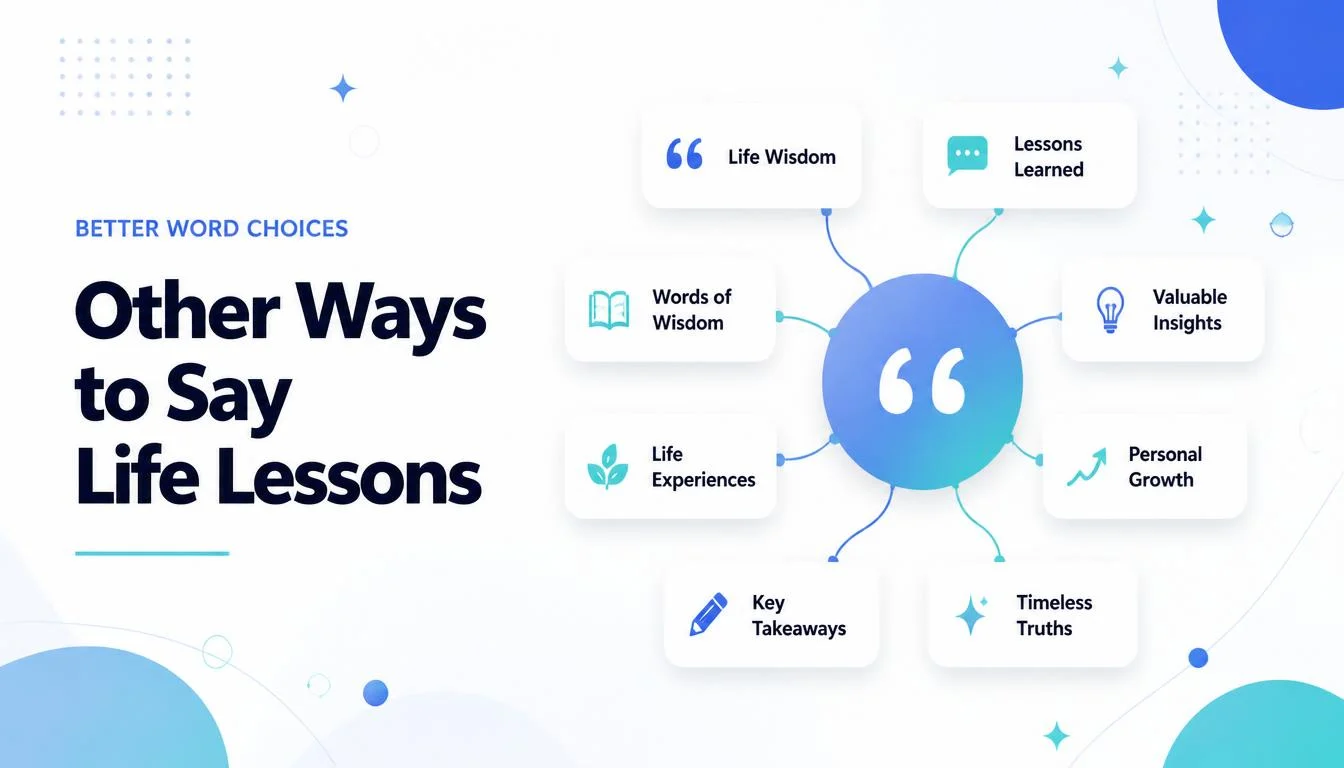
Other ways to say life lessons include lessons learned, valuable insights, life teachings, words of wisdom, and lessons from experience. These phrases help you express personal growth and meaningful experiences naturally.
Learning other ways to say life lessons can make your writing more meaningful, expressive, and engaging. Whether you are sharing personal experiences, writing an essay, or offering advice, choosing the right phrase helps you communicate wisdom and important takeaways more effectively.
Life lessons often come from challenges, mistakes, relationships, and everyday experiences. Expressions such as “lessons learned,” “valuable insights,” and “wisdom gained through experience” can help you describe these moments in different ways. Using these alternatives can enrich your vocabulary and make your conversations, stories, and social media posts more memorable.
What Is “Life Lessons”? (Meaning, Grammar & Real Use)
Imagine a student who fails an important exam, changes their study habits, and eventually succeeds. The experience teaches them patience, discipline, and resilience. These valuable insights are life lessons because they help the student make better decisions in the future.
People use this expression when discussing personal development, relationships, careers, education, and difficult experiences. However, repeating the same phrase can make your writing sound predictable. Learning alternatives to life lessons gives you more precise ways to describe personal discoveries, practical wisdom, and meaningful changes.
For English learners, understanding these expressions improves storytelling, reflective essays, interviews, and everyday conversations. It also helps you express excitement in English when describing an important achievement or a discovery that changed your perspective.
Definition: Life lessons are valuable ideas, principles, or insights gained through experiences that influence how someone thinks, behaves, or makes decisions.
Grammar note: “Life lessons” is a plural noun phrase. It works in formal and informal English, although specific alternatives may suit particular contexts better.
Example: One of the most important life lessons I learned was to value my time.
People use this expression in spoken conversations, personal essays, motivational speeches, educational discussions, and professional development settings.
When Should You Use “Life Lessons”?
The phrase works in many situations, but the best alternative depends on what you want to communicate.
Common contexts
- Personal development: Describe how experiences improve your character or decision-making.
- Education: Explain what students learn beyond academic subjects.
- Relationships: Discuss trust, communication, forgiveness, and boundaries.
- Career development: Describe professional growth, leadership, and lessons from workplace challenges.
- Motivational writing: Share insights that encourage others to learn from experience.
- Reflective essays: Explain how an event changed your perspective.
Spoken vs. Written
Spoken English: Use natural expressions such as “lessons learned,” “things I’ve learned,” or “what experience taught me.
Written English: Consider “valuable insights,” “personal reflections,” or “lessons drawn from experience” when a more polished tone is appropriate.
Formal vs. Informal
Formal: “The project provided valuable insights into effective leadership.”
Informal: “That experience taught me a lot.”
Use the formal option in reports, academic writing, and workplace discussions. Choose conversational expressions when speaking with friends or sharing personal stories.
Is It Professional or Just Polite?
“Life lessons” is both professional and appropriate in the right context. It can communicate reflection, maturity, and personal development. However, the phrase may sound too general when a business document requires specific findings or recommendations.
Politeness vs. Professionalism
Politeness concerns respect and consideration for others. Professionalism concerns clarity, relevance, and appropriate language. An expression can be polite without being sufficiently precise for a workplace report.
Business-style example:
The project provided valuable insights into team communication and helped us identify opportunities for improvement.”
This sentence communicates practical learning more precisely than simply saying the project taught the team several life lessons.
Verdict:
- Polite? ✔️ Yes
- Professional? ✔️ Yes, when relevant to the context
For more workplace vocabulary, read the Professional English Communication Guide.
Pros and Cons of Using “Life Lessons”
Pros
- Easy to understand: Most English speakers recognize the expression immediately.
- Meaningful: It connects personal experiences with growth and wisdom.
- Versatile: It works in conversations, essays, speeches, and reflective writing.
- Relatable: It helps people share experiences that others can learn from.
Cons
- Can sound general: It may not explain exactly what someone learned.
- Sometimes repetitive: Frequent use can weaken the impact of personal writing.
- Limited precision: It does not distinguish between practical skills, emotional growth, and factual discoveries.
- May sound sentimental: In technical or business reports, more specific wording may be preferable.
The solution is not to avoid the phrase entirely. Instead, choose a more precise alternative when the context calls for it.
Common Mistakes People Make
English learners sometimes use expressions about learning and experience interchangeably. These five mistakes show how to communicate the intended meaning more accurately.
1. Using “Experience” When You Mean “Lesson”
❌ Incorrect: “My experience was to be more patient.”
✔️ Correct: “My experience taught me to be more patient.”
Why: An experience is an event or situation. A lesson is the insight gained from it.
2. Using “Advice” as a Direct Synonym
❌ Incorrect: “The accident gave me an advice about safety.”
✔️ Correct: “The accident taught me an important lesson about safety.”
Why: “Advice” is generally uncountable in English. More importantly, advice is guidance offered to someone, while a lesson can be learned through experience.
3. Using “Wisdom” for Every Small Discovery
❌ Incorrect: “I gained great wisdom about where I parked my car.”
✔️ Correct: “I learned to remember where I park my car.”
Why: Wisdom usually suggests deeper judgment or understanding. A simple practical discovery does not always require such a strong word.
4. Choosing an Overly Casual Expression in Formal Writing
❌ Incorrect: “The project taught us a bunch of stuff.”
✔️ Correct: “The project provided several valuable insights.”
Why: Formal writing benefits from precise language that identifies the value of the experience.
5. Forgetting the Difference Between Learning and Improvement
❌ Incorrect: “My communication skills were lessons from the workshop.
✔️ Correct: “The workshop taught me valuable lessons that improved my communication skills.”
Why: Lessons are insights or principles. Skills are abilities developed through practice and learning.
Small tone mistakes can make confident English sound careless.
Alternatives by Category
Different situations call for different expressions. The following categories offer a preview of useful choices before the complete list.
Formal alternatives to “Life Lessons”
- Valuable insights
- Lessons drawn from experience
- Practical wisdom
Pro Tip: Use precise expressions that identify what a person learned when writing academic reflections, reports, or formal speeches.
Casual alternatives
- Lessons learned
- Things I’ve learned
- What experience taught me
Pro Tip: In conversation, connect the phrase to a specific event so your meaning feels natural and personal.
Professional alternatives
- Key takeaways
- Professional insights
- Lessons learned
Pro Tip: In workplace writing, explain how the learning influenced a decision, improved a process, or changed future behavior.
Informal expressions
- Hard-earned wisdom
- Learning the hard way
- Things life has taught me
Pro Tip: Choose expressions that match the emotional tone of your story, especially when discussing mistakes or difficult experiences.
“Formal and informal English aren’t about correctness. They’re about context.”
Other Ways to Say “Life Lessons”: 30 Alternatives With Examples
These 30 alternatives build vocabulary and help you describe personal growth, valuable discoveries, and practical wisdom with greater precision. Each expression has a slightly different meaning, so choose according to your audience and purpose.
1. Phrase: Valuable Insights
Meaning: Important understanding gained through experience.
Explanation: A polished alternative for professional and personal reflection.
Example Sentence: The internship gave me valuable insights into leadership.
Best Use: Professional writing
Worst Use: Casual banter
Tone: Formal, thoughtful
Context Variability: casual / professional / spoken
2. Phrase: Lessons Learned
Meaning: Knowledge gained from an experience.
Explanation: A versatile expression for personal reflections and workplace reviews.
Example Sentence: One of the lessons learned was the importance of preparation.
Best Use: Project reviews
Worst Use: Empty repetition
Tone: Neutral, professional
Context Variability: casual / professional / spoken
3. Phrase: Personal Growth
Meaning: Development in character, abilities, or understanding.
Explanation: Emphasizes how experiences help someone develop.
Example Sentence: Traveling alone contributed to my personal growth.
Best Use: Self-reflection
Worst Use: Specific findings
Tone: Positive, reflective
Context Variability: casual / professional / spoken
4. Phrase: Wisdom Gained
Meaning: Better judgment developed through experience.
Explanation: Highlights deeper understanding rather than simple factual knowledge.
Example Sentence: The wisdom gained from failure helped her approach challenges differently.
Best Use: Personal essays
Worst Use: Technical reports
Tone: Reflective, mature
Context Variability: casual / professional / spoken
5. Phrase: Meaningful Experiences
Meaning: Events that have lasting personal significance.
Explanation: Focuses on the importance of an experience rather than a specific lesson.
Example Sentence: Volunteering gave me meaningful experiences that shaped my values.
Best Use: Personal storytelling
Worst Use: Exact findings
Tone: Warm, reflective
Context Variability: casual / professional / spoken
6. Phrase: Practical Wisdom
Meaning: Useful judgment that can guide real decisions.
Explanation: Suitable for advice, leadership, and lessons that can be applied.
Example Sentence: My mentor shared practical wisdom about handling workplace conflicts.
Best Use: Career guidance
Worst Use: Casual updates
Tone: Professional, thoughtful
Context Variability: casual / professional / spoken
7. Phrase: Key Takeaways
Meaning: The most important points learned from an experience.
Explanation: Common in meetings, training sessions, presentations, and reviews.
Example Sentence: My key takeaways from the seminar were patience and clear communication.
Best Use: Meeting summaries
Worst Use: Emotional storytelling
Tone: Professional, concise
Context Variability: casual / professional / spoken
8. Phrase: Lessons From Experience
Meaning: Insights acquired by going through real situations.
Explanation: Makes the connection between experience and learning explicit.
Example Sentence: The lessons from experience helped him become a better manager.
Best Use: Career reflections
Worst Use: Brief greetings
Tone: Neutral, reflective
Context Variability: casual / professional / spoken
9. Phrase: Hard-Earned Wisdom
Meaning: Understanding gained through effort, hardship, or mistakes.
Explanation: Emphasizes that learning came at a personal cost.
Example Sentence: She shared hard-earned wisdom about building lasting relationships.
Best Use: Personal narratives
Worst Use: Routine reports
Tone: Earnest, reflective
Context Variability: casual / professional / spoken
10. Phrase: Personal Insights
Meaning: Individual understanding developed through reflection.
Explanation: Useful when explaining how an experience changed your perspective.
Example Sentence: My personal insights helped me understand the value of patience.
Best Use: Reflective essays
Worst Use: Objective summaries
Tone: Thoughtful, neutral
Context Variability: casual / professional / spoken
11. Phrase: Valuable Experiences
Meaning: Experiences that provide useful learning or development.
Explanation: Focuses on the benefit of an event rather than the lesson itself.
Example Sentence: My first job gave me valuable experiences in teamwork.
Best Use: Job interviews
Worst Use: Detailed analysis
Tone: Positive, professional
Context Variability: casual / professional / spoken
12. Phrase: Lessons in Life
Meaning: General principles learned while living through different situations.
Explanation: A natural alternative for reflective conversations and inspirational writing.
Example Sentence: Patience and honesty are important lessons in life.
Best Use: Motivational writing
Worst Use: Technical documents
Tone: Reflective, accessible
Context Variability: casual / professional / spoken
13. Phrase: What Experience Taught Me
Meaning: A direct description of knowledge gained from an event.
Explanation: Works especially well when introducing a personal story.
Example Sentence: What experience taught me is that preparation matters.
Best Use: Personal storytelling
Worst Use: Formal headings
Tone: Conversational, sincere
Context Variability: casual / professional / spoken
14. Phrase: Lessons Drawn From Experience
Meaning: Conclusions reached after examining an experience.
Explanation: A formal phrase suited to analytical and reflective writing.
Example Sentence: The lessons drawn from experience informed our future strategy.
Best Use: Formal analysis
Worst Use: Casual chat
Tone: Formal, analytical
Context Variability: casual / professional / spoken
15. Phrase: Life’s Teachings
Meaning: Principles learned through the events and challenges of life.
Explanation: A reflective expression often found in inspirational writing.
Example Sentence: Life’s teachings reminded him to appreciate what he had.
Best Use: Inspirational writing
Worst Use: Business reports
Tone: Philosophical, reflective
Context Variability: casual / professional / spoken
16. Phrase: Important Realizations
Meaning: Significant discoveries about yourself, others, or a situation.
Explanation: Emphasizes the moment you understand something important.
Example Sentence: Moving away brought important realizations about independence.
Best Use: Personal reflection
Worst Use: Routine summaries
Tone: Reflective, personal
Context Variability: casual / professional / spoken
17. Phrase: Growth Through Adversity
Meaning: Development resulting from difficult circumstances.
Explanation: Specifically highlights the positive changes that can follow hardship.
Example Sentence: Her growth through adversity inspired the entire team.
Best Use: Resilience stories
Worst Use: Minor discoveries
Tone: Encouraging, serious
Context Variability: casual / professional / spoken
18. Phrase: Lessons From Mistakes
Meaning: Insights gained by recognizing and correcting errors.
Explanation: A clear choice when discussing accountability and improvement.
Example Sentence: The lessons from mistakes helped us prevent similar problems.
Best Use: Performance reviews
Worst Use: Celebratory messages
Tone: Constructive, practical
Context Variability: casual / professional / spoken
19. Phrase: Real-World Lessons
Meaning: Practical knowledge gained from actual situations.
Explanation: Contrasts hands-on learning with purely theoretical knowledge.
Example Sentence: The internship taught students real-world lessons about teamwork.
Best Use: Education discussions
Worst Use: Abstract philosophy
Tone: Practical, direct
Context Variability: casual / professional / spoken
20. Phrase: Life Experiences That Shape Us
Meaning: Events that influence identity, values, or behavior.
Explanation: Highlights the long-term impact of personal experiences.
Example Sentence: Our life experiences that shape us often influence our choices.
Best Use: Reflective storytelling
Worst Use: Short reports
Tone: Thoughtful, personal
Context Variability: casual / professional / spoken
21. Phrase: Lessons for the Future
Meaning: Insights that can guide future decisions.
Explanation: Useful when turning past experience into an action plan.
Example Sentence: The review identified important lessons for the future.
Best Use: Planning sessions
Worst Use: Informal greetings
Tone: Practical, forward-looking
Context Variability: casual / professional / spoken
22. Phrase: Professional Insights
Meaning: Understanding developed through work or industry experience.
Explanation: More specific than a general reference to personal learning.
Example Sentence: Her professional insights helped the team improve its workflow.
Best Use: Workplace discussions
Worst Use: Family stories
Tone: Professional, precise
Context Variability: casual / professional / spoken
23. Phrase: Character-Building Experiences
Meaning: Events that develop resilience, responsibility, or integrity.
Explanation: Emphasizes changes in character rather than factual knowledge.
Example Sentence: Working with diverse teams provided valuable character-building experiences.
Best Use: Personal development
Worst Use: Technical analysis
Tone: Positive, reflective
Context Variability: casual / professional / spoken
24. Phrase: Valuable Discoveries
Meaning: Important things learned or recognized.
Explanation: Works when an experience reveals something previously unknown.
Example Sentence: The project led to valuable discoveries about our customers.
Best Use: Research summaries
Worst Use: Emotional advice
Tone: Neutral, informative
Context Variability: casual / professional / spoken
25. Phrase: Hard Lessons
Meaning: Difficult insights learned through unpleasant experiences.
Explanation: Communicates the emotional or practical cost of learning.
Example Sentence: Missing the deadline taught us some hard lessons about planning.
Best Use: Cautionary stories
Worst Use: Celebrations
Tone: Serious, direct
Context Variability: casual / professional / spoken
26. Phrase: Lessons in Resilience
Meaning: Insights about recovering from difficulty.
Explanation: Useful when discussing persistence and adapting to setbacks.
Example Sentence: The recovery process offered lessons in resilience and patience.
Best Use: Motivational speeches
Worst Use: Routine updates
Tone: Encouraging, thoughtful
Context Variability: casual / professional / spoken
27. Phrase: Things I’ve Learned
Meaning: Knowledge gained through personal experience.
Explanation: A natural, conversational expression for sharing individual discoveries.
Example Sentence: One of the things I’ve learned is to listen carefully.
Best Use: Everyday conversation
Worst Use: Formal reports
Tone: Casual, sincere
Context Variability: casual / professional / spoken
28. Phrase: Lessons From Past Experiences
Meaning: Insights gained by reflecting on earlier events.
Explanation: Connects previous situations with present choices.
Example Sentence: Lessons from past experiences helped her make a better decision.
Best Use: Decision-making
Worst Use: Quick greetings
Tone: Reflective, neutral
Context Variability: casual / professional / spoken
29. Phrase: A Deeper Understanding
Meaning: More complete knowledge of a subject or situation.
Explanation: Best when an experience changes how well you understand something.
Example Sentence: The discussion gave me a deeper understanding of human behavior.
Best Use: Academic reflection
Worst Use: Simple instructions
Tone: Thoughtful, formal
Context Variability: casual / professional / spoken
30. Phrase: Things Life Has Taught Me
Meaning: Personal insights gained over time.
Explanation: A warm expression for reflective conversations, speeches, and personal writing.
Example Sentence: One of the things life has taught me is to value genuine friendships.
Best Use: Personal storytelling
Worst Use: Technical reports
Tone: Warm, reflective
Context Variability: casual / professional / spoken
Comparison Table: Top 10 Alternatives at a Glance
| Phrase | Tone | Best Use |
|---|---|---|
| Valuable insights | Formal | Professional writing |
| Lessons learned | Neutral | Project reviews |
| Personal growth | Reflective | Self-development |
| Wisdom gained | Thoughtful | Personal essays |
| Meaningful experiences | Warm | Personal storytelling |
| Practical wisdom | Professional | Career guidance |
| Key takeaways | Concise | Meetings and training |
| Lessons from experience | Neutral | Career reflections |
| Hard-earned wisdom | Reflective | Personal narratives |
| Personal insights | Thoughtful | Reflective writing |
Quick Self-Check (Mini Quiz)
Test your understanding by choosing the most appropriate expression for each situation.
Question 1
You are writing a professional report about improvements identified after a project. Which expression is best?
A. A bunch of stuff we learned
B. Key takeaways
C. Things life has taught me
Correct answer: B. Key takeaways
It is concise and appropriate for professional summaries.
Question 2
You want to describe an important personal discovery after moving to a new city. Which phrase fits best?
A. Important realizations
B. Routine procedures
C. Technical specifications
Correct answer: A. Important realizations
It emphasizes a meaningful change in understanding.
Question 3
You are speaking with a friend about a mistake that taught you to be more careful. Which expression sounds natural?
A. Lessons drawn from experience
B. Things I’ve learned
C. Professional insights
Correct answer: B. Things I’ve learned
It is conversational and suitable for sharing a personal story.
Question 4
You are describing knowledge gained during an internship in a job interview. Which phrase is most suitable?
A. Valuable experiences
B. A bunch of stuff
C. Life’s teachings
Correct answer: A. Valuable experiences
It presents your learning in a positive and professional way.
FAQs
1. What are the best alternatives to life lessons?
Some useful options are valuable insights, lessons learned, personal growth, wisdom gained, and lessons from experience. The best choice depends on your intended meaning and audience.
2. What is a formal way to say life lessons?
“Lessons drawn from experience,” “valuable insights,” and “practical wisdom” work well in formal writing. For workplace reports, “key takeaways” is also effective.
3. How can I describe life lessons in an essay?
Explain the experience, identify what you learned, and describe how it changed your perspective or behavior. Expressions such as “important realizations” and “lessons from past experiences” can help.
4. What is a professional phrase for lessons learned?
Key takeaways,” “professional insights,” and “lessons learned” are suitable professional expressions. Choose one that reflects the actual findings or improvements.
5. How can I use alternatives to life lessons in everyday English?
Use natural phrases such as “things I’ve learned,” “what experience taught me,” and “hard lessons.” Connect each phrase to a real event to make your meaning clear.
Conclusion
Expanding your vocabulary gives you more precise ways to describe personal experiences, professional development, and meaningful discoveries. The best alternative depends on whether you want to emphasize wisdom, practical knowledge, emotional growth, or a specific realization.
Practice using one or two expressions each day in conversations, journal entries, essays, or workplace discussions. Pay attention to your audience and choose wording that sounds natural for the situation.
Read More Related Articles:
- Other Ways to Say Thanks for Letting Me Know | Leave a Better Impression In 2026
- Other Ways to Say Thank You for Your Business | Customers Truly Appreciate In 2026
- Other Ways to Say “I Hope You’re Doing Well” | People Actually Enjoy Reading In 2026

Victoria Hughes is a content writer dedicated to making communication clearer and more effective. Through TextsResponse.com, she shares practical insights and thoughtfully crafted response ideas that help readers express themselves with confidence.