Quick Answer
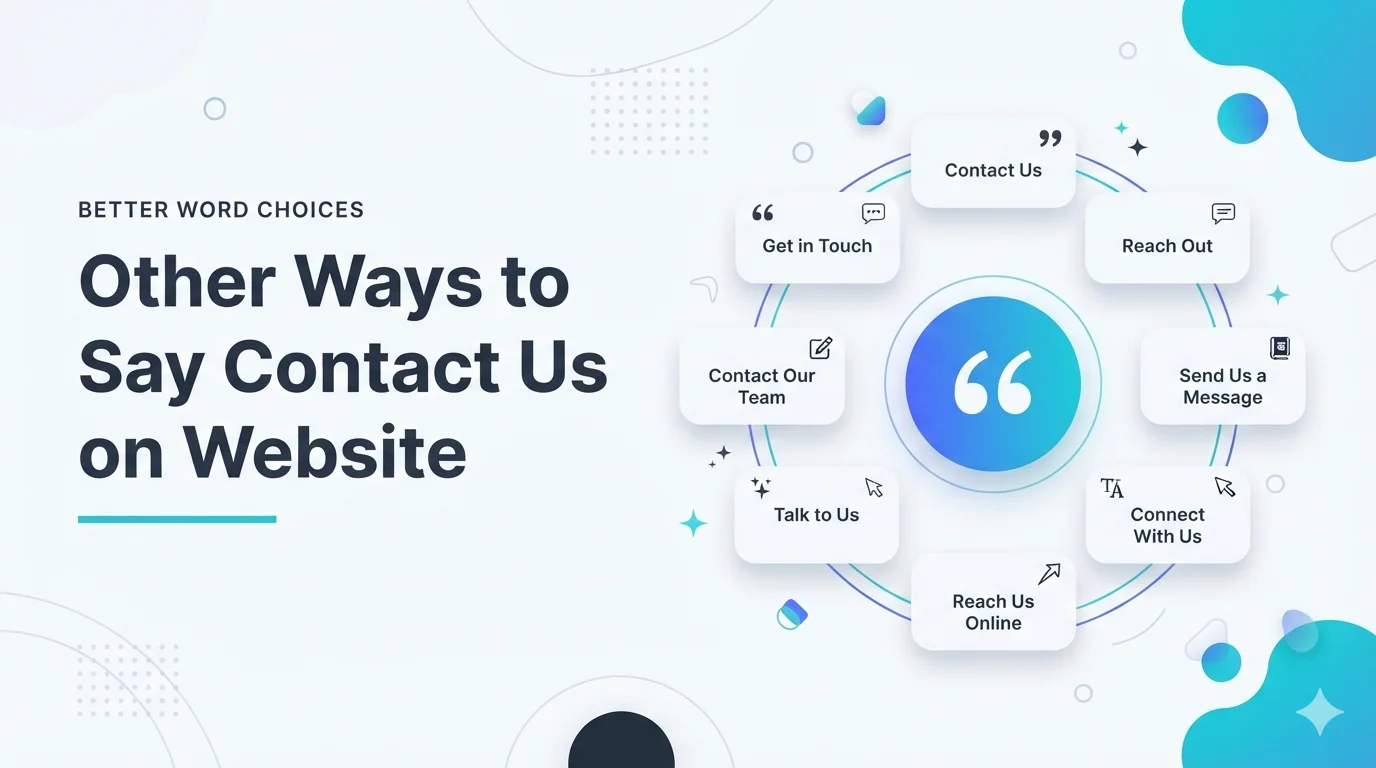
Looking for alternatives to “Contact Us” on your website? Try these top picks: Get in Touch, Reach Out, Connect With Us, We’re Here to Help, and Let’s Talk. Each phrase shifts the tone from formal to friendly, depending on your brand voice.
“Contact Us” is one of the most common phrases on any website. It tells visitors where to go when they need help, have questions, or want to start a conversation. But using the same two words on every page gets boring fast. Learning alternatives to “Contact Us” on website helps you match your tone to your audience, whether you want to express excitement in English or sound more professional.
For English learners and professionals, knowing multiple ways to invite contact is a practical skill. You can use these phrases in emails, landing pages, social media bios, and even spoken conversations. The right phrase builds trust and makes people want to reach out.
This guide gives you 30 fresh options, sorted by tone, so you always have the perfect phrase ready.
Quick Categories
Formal Alternatives to “Contact Us on Website”
- Inquire Within
- Submit an Inquiry
- Direct Your Correspondence
- Request Information
Pro Tip: Use formal alternatives on legal pages, corporate sites, or B2B platforms where authority matters.
Casual Alternatives
- Say Hello
- Drop Us a Line
- Hit Us Up
- Chat With Us
Pro Tip: Casual phrases work best on personal blogs, creative portfolios, or social media.
Professional Alternatives
- Get in Touch
- Reach Out
- Connect With Us
- Let’s Talk
Pro Tip: Professional alternatives balance warmth and credibility. They suit most business websites.
Informal Expressions
- Ping Us
- Give Us a Shout
- Holler at Us
- Slide Into Our Inbox
Pro Tip: Informal expressions in English add personality but avoid them on formal or sensitive pages.
Common Mistakes Section
- Using “Contact Us” everywhere without variation.
Example: Every page says “Contact Us” and the site feels robotic. - Mixing formal and slang on the same page.
Example: “Submit an Inquiry” next to “Hit Us Up” confuses the tone. - Forgetting the action word.
Example: Just “Us” or “Contact” alone leaves visitors unsure what to do. - Using aggressive or pushy language.
Example: “Contact Us Now or Miss Out” feels spammy and desperate. - Ignoring mobile readability.
Example: Long phrases like “Direct Your Correspondence” wrap awkwardly on phones.
“Tone is not decoration. It is the message before the message.”
What Does “Contact Us on Website” Mean?
Definition: “Contact Us on Website” refers to a page, button, or link that directs visitors to a form, email, phone number, or chat feature so they can communicate with the site owner.
Grammar Note: “Contact” is a verb here. “Us” is the object. Together they form an imperative phrase, a command or invitation.
Example Sentence: Please use the Contact Us page to send your feedback.
When to Use “Contact Us on Website”
- Homepage footer: Standard and expected
- Dedicated contact page: Clear and functional
- Email signatures: Links to your site
- Social media bios: Directs followers
- Landing pages: For lead generation
Spoken vs Written:
- Spoken: Rarely said aloud unless reading from a screen
- Written: Extremely common in digital text
Formal vs Informal:
- Formal: Acceptable but bland
- Informal: Too stiff for casual brands
Is It Professional or Polite to Say “Contact Us on Website”?
Polite? ✔️ Yes. It is neutral and clear.
Professional? ❌ No, in most cases. It is functional but lacks warmth or personality.
Business Example: “For partnership opportunities, please Contact Us.” This works but feels cold compared to “Let’s Talk” or “Get in Touch.
Pros and Cons of Using “Contact Us on Website”
Pros:
- Simple and natural
- Friendly enough for general use
- Common usage, everyone understands it
- Easy to understand for all reading levels
Cons:
- Too informal for some corporate contexts
- Overused and forgettable
- Limited emotional range
- Not suitable for formal writing like legal notices
“Choose phrases that invite, not just instruct.”
Other Ways to Say Contact Us on Website
These alternatives will help you sound more fluent, confident, and natural in different situations. Use them according to tone, context, and audience.
1. Phrase: Get in Touch
Meaning: A warm invitation to communicate.
Explanation: Friendly yet professional, works almost everywhere.
Example Sentence: We would love to hear from you. Get in Touch today.
Best Use: Business websites
Worst Use: Legal disclaimers
Tone: Warm, professional, inviting
Context Variability: Professional, spoken, written
2. Phrase: Reach Out
Meaning: To initiate contact.
Explanation: Modern and action-oriented.
Example Sentence: Have a question? Reach Out to our support team anytime.
Best Use: SaaS and startups
Worst Use: Formal government sites
Tone: Friendly, proactive, modern
Context Variability: Professional, casual, spoken
3. Phrase: Connect With Us
Meaning: To establish a relationship.
Explanation: Emphasizes relationship over transaction.
Example Sentence: Connect With Us on LinkedIn or send a message here.
Best Use: Social media pages
Worst Use: Customer complaint forms
Tone: Social, warm, engaging
Context Variability: Professional, casual
4. Phrase: We’re Here to Help
Meaning: Signals support and availability.
Explanation: Puts the visitor at ease.
Example Sentence: No question is too small. We’re Here to Help.
Best Use: Support pages
Worst Use: Sales-only pages
Tone: Supportive, kind, reassuring
Context Variability: Professional, casual, spoken
5. Phrase: Let’s Talk
Meaning: Invitation to a conversation.
Explanation: Collaborative and open.
Example Sentence: Ready to start your project? Let’s Talk.
Best Use: Consulting websites
Worst Use: Automated chat pages
Tone: Collaborative, direct, friendly
Context Variability: Professional, spoken
6. Phrase: Say Hello
Meaning: A casual, friendly greeting.
Explanation: Low-pressure and personable.
Example Sentence: New here? Say Hello and tell us what you need.
Best Use: Personal blogs
Worst Use: Banking or finance sites
Tone: Casual, warm, playful
Context Variability: Casual, spoken
7. Phrase: Drop Us a Line
Meaning: Send a short message.
Explanation: Classic idiom, still widely used.
Example Sentence: Got feedback? Drop Us a Line anytime.
Best Use: Creative portfolios
Worst Use: Medical websites
Tone: Casual, nostalgic, friendly
Context Variability: Casual, spoken
8. Phrase: Submit an Inquiry
Meaning: Formally send a question.
Explanation: Very formal and process-oriented.
Example Sentence: For bulk orders, please Submit an Inquiry via our form.
Best Use: B2B and wholesale
Worst Use: Personal blogs
Tone: Formal, serious, official
Context Variability: Professional, written
9. Phrase: Ping Us
Meaning: Send a quick message.
Explanation: Tech-inspired and informal.
Example Sentence: Need a quick fix? Ping Us on chat.
Best Use: Tech startups
Worst Use: Legal or academic sites
Tone: Informal, techy, quick
Context Variability: Casual, spoken
10. Phrase: Give Us a Shout
Meaning: Call or message loudly and clearly.
Explanation: Energetic and casual.
Example Sentence: If you need help, Give Us a Shout.
Best Use: Entertainment sites
Worst Use: Corporate reports
Tone: Energetic, casual, bold
Context Variability: Casual, spoken
11. Phrase: Holler at Us
Meaning: Contact us informally.
Explanation: Regional and very casual.
Example Sentence: Questions? Holler at Us on social media.
Best Use: Youth-oriented brands
Worst Use: Professional services
Tone: Very casual, regional, fun
Context Variability: Casual, spoken
12. Phrase: Slide Into Our Inbox
Meaning: Send a direct message.
Explanation: Playful, social-media inspired.
Example Sentence: Got a collab idea? Slide Into Our Inbox.
Best Use: Influencer pages
Worst Use: Law firms
Tone: Playful, trendy, informal
Context Variability: Casual, spoken
13. Phrase: Chat With Us
Meaning: Have a real-time conversation.
Explanation: Implies live support.
Example Sentence: Need instant help? Chat With Us now.
Best Use: E-commerce sites
Worst Use: Static informational pages
Tone: Immediate, friendly, helpful
Context Variability: Casual, professional, spoken
14. Phrase: Request Information
Meaning: Ask for details formally.
Explanation: Direct and professional.
Example Sentence: To learn more about pricing, Request Information here.
Best Use: Lead generation
Worst Use: Casual blogs
Tone: Formal, direct, neutral
Context Variability: Professional, written
15. Phrase: Inquire Within
Meaning: Ask inside this place or form.
Explanation: Slightly old-fashioned but clear.
Example Sentence: For job opportunities, Inquire Within.
Best Use: Storefronts and local business
Worst Use: Global tech platforms
Tone: Formal, traditional, clear
Context Variability: Professional, written
16. Phrase: Direct Your Correspondence
Meaning: Send your messages to a specific place.
Explanation: Extremely formal, almost legal.
Example Sentence: For press matters, Direct Your Correspondence to our media team.
Best Use: Legal and press pages
Worst Use: Casual brand sites
Tone: Very formal, official, stiff
Context Variability: Professional, written
17. Phrase: We’d Love to Hear From You
Meaning: Expresses enthusiasm for feedback.
Explanation: Warm and appreciative.
Example Sentence: Your opinion matters. We’d Love to Hear From You.
Best Use: Feedback forms
Worst Use: Complaint departments
Tone: Warm, appreciative, open
Context Variability: Professional, casual, spoken
18. Phrase: Get Support
Meaning: Access help services.
Explanation: Functional and clear.
Example Sentence: Having trouble? Get Support from our team.
Best Use: Help centers
Worst Use: Sales pages
Tone: Functional, direct, helpful
Context Variability: Professional, written
19. Phrase: Ask Us Anything
Meaning: Open invitation for questions.
Explanation: Friendly and unlimited.
Example Sentence: Curious about our process? Ask Us Anything.
Best Use: Q&A pages
Worst Use: Restricted legal pages
Tone: Open, friendly, curious
Context Variability: Casual, professional
20. Phrase: Book a Call
Meaning: Schedule a phone conversation.
Explanation: Action-oriented and specific.
Example Sentence: Ready to grow? Book a Call with our strategist.
Best Use: Coaching and consulting
Worst Use: Retail sites
Tone: Direct, professional, actionable
Context Variability: Professional, spoken
21. Phrase: Send Us a Message
Meaning: Use a form or email to write.
Explanation: Simple and universal.
Example Sentence: Fill out the form below to Send Us a Message.
Best Use: Contact pages
Worst Use: Phone-only businesses
Tone: Neutral, clear, simple
Context Variability: Professional, casual, written
22. Phrase: Start a Conversation
Meaning: Begin an ongoing dialogue.
Explanation: Emphasizes two-way communication.
Example Sentence: Have an idea? Start a Conversation with us.
Best Use: Community platforms
Worst Use: One-way announcement pages
Tone: Open, collaborative, friendly
Context Variability: Professional, spoken
23. Phrase: Tell Us What You Think
Meaning: Invite opinions and feedback.
Explanation: Feedback-focused and inclusive.
Example Sentence: We value your input. Tell Us What You Think.
Best Use: Survey pages
Worst Use: Emergency contact pages
Tone: Inclusive, curious, respectful
Context Variability: Casual, professional
24. Phrase: Need Help? Ask Away
Meaning: Encourage questions without hesitation.
Explanation: Reassuring and casual.
Example Sentence: Stuck on something? Need Help? Ask Away.
Best Use: FAQ and support
Worst Use: Formal legal pages
Tone: Reassuring, casual, supportive
Context Variability: Casual, spoken
25. Phrase: Reach Our Team
Meaning: Contact a group of people.
Explanation: Professional and team-oriented.
Example Sentence: For partnerships, Reach Our Team directly.
Best Use: Corporate sites
Worst Use: Solo blogs
Tone: Professional, team-focused, direct
Context Variability: Professional, written
26. Phrase: Get Answers
Meaning: Find solutions to questions.
Explanation: Outcome-focused.
Example Sentence: Confused about pricing? Get Answers here.
Best Use: Knowledge bases
Worst Use: Social pages
Tone: Solution-oriented, clear, helpful
Context Variability: Professional, written
27. Phrase: We’re All Ears
Meaning: Ready to listen.
Explanation: Idiomatic and warm.
Example Sentence: Have feedback? We’re All Ears.
Best Use: Podcast and media sites
Worst Use: Technical documentation
Tone: Warm, idiomatic, attentive
Context Variability: Casual, spoken
28. Phrase: Open a Ticket
Meaning: Create a formal support request.
Explanation: Technical and process-driven.
Example Sentence: For technical issues, Open a Ticket.
Best Use: IT and software support
Worst Use: Creative portfolios
Tone: Technical, formal, procedural
Context Variability: Professional, written
29. Phrase: Let’s Connect
Meaning: Build a professional relationship.
Explanation: Networking-focused.
Example Sentence: Looking for a partner? Let’s Connect.
Best Use: LinkedIn and B2B
Worst Use: Personal blogs
Tone: Professional, social, warm
Context Variability: Professional, spoken
30. Phrase: Your Voice Matters
Meaning: We value your input.
Explanation: Empowering and respectful.
Example Sentence: Share your thoughts. Your Voice Matters.
Best Use: Community feedback
Worst Use: Sales funnels
Tone: Respectful, empowering, inclusive
Context Variability: Professional, casual
“A great call to action does not demand. It invites.”
Mini Quiz / Self-Check
1. Which phrase is best for a formal B2B website?
A) Hit Us Up
B) Submit an Inquiry
C) Slide Into Our Inbox
Correct Answer: B
2. You run a creative blog for young readers. Which fits best?
A) Direct Your Correspondence
B) Say Hello
C) Request Information
Correct Answer: B
3. Which phrase works on a support page for a software company?
A) We’re All Ears
B) Open a Ticket
C) Drop Us a Line
Correct Answer: B
4. What tone does “Let’s Talk” convey?
A) Aggressive
B) Collaborative
C) Overly formal
Correct Answer: B
Comparison Table: Top Alternatives
| Phrase | Tone | Best Use |
| Get in Touch | Warm, professional | Business websites |
| Reach Out | Friendly, modern | SaaS and startups |
| Connect With Us | Social, engaging | Social media |
| We’re Here to Help | Supportive, kind | Support pages |
| Let’s Talk | Collaborative, direct | Consulting |
| Say Hello | Casual, warm | Personal blogs |
| Drop Us a Line | Casual, friendly | Creative portfolios |
| Submit an Inquiry | Formal, official | B2B and wholesale |
| Chat With Us | Immediate, friendly | E-commerce |
| We’d Love to Hear From You | Warm, appreciative | Feedback forms |
FAQs
1. What is a good alternative to “Contact Us” on a website?
“Get in Touch” is a versatile alternative that works for most business websites.
2. Is “Contact Us” too informal for professional sites?
It is not informal, but it is bland. Professional alternatives like “Let’s Connect” or “Reach Our Team” sound more engaging.
3. Can I use slang like “Hit Us Up” on a business website?
Only if your brand voice is very casual and your audience expects it. Avoid it on formal or corporate sites.
4. How do I choose the right phrase for my website?
Match the phrase to your brand tone, audience expectations, and page purpose. Formal pages need formal phrases.
5. What are other ways to say “Contact Us” in an email signature?
Try “Reach Out,” “Connect With Us,” or “We’d Love to Hear From You” linked to your contact page.
Conclusion
Learning alternatives to “Contact Us” on website gives you flexibility and control over your tone. You can sound formal, friendly, professional, or playful, depending on your audience. These 30 phrases help you express excitement in English and build stronger connections with visitors.
Practice using one new phrase each week. Pay attention to tone awareness and context. The more you experiment, the more natural your English will sound.
“Your words are your brand’s handshake. Make them count.”
Read More Related Articles:
- Other Ways to Say Keep in Mind | From Casual to Professional Phrases In 2026
- Other Ways to Say Tell Me More | Fresh Phrases for Any Situation In 2026
- Other Ways to Say “Works for Me” | Say Yes Without Repeating Yourself In 2026

Henry Walker is an American writer and blogger with a keen interest in communication, language and digital content. At TextsResponse.com, he creates informative and reader-focused resources designed to help people communicate with clarity, confidence and authenticity.