Quick Answer
Instead of repeating “I like you,” you can use phrases such as I’m fond of you, I have feelings for you, I’m into you, I care about you, and I’m drawn to you.
“I like you” is one of the most common expressions in English, used to show affection, interest, or appreciation toward another person. People use it in romantic conversations, friendships, and even casual workplace interactions when they want to express warmth without sounding too intense.
Learning different alternatives to “I like you” helps you avoid sounding repetitive and gives you the flexibility to match your words to the moment. Whether you want to express excitement in English about a new friendship or communicate genuine romantic interest, the right phrase makes your message clearer and more authentic.
This guide breaks down formal, casual, professional, and informal ways to say “I like you,” along with examples, common mistakes, and a self-check quiz to help you practice.
The right tone makes your English sound professional and confident.”
Quick Categories
Formal Alternatives to “I Like You”
- I’m fond of you
- I have great affection for you
- I hold you in high regard
- I esteem you highly
Pro Tip: Formal alternatives work best in written messages, letters, or situations where you want to sound respectful and composed.
Casual Alternatives
- I’m into you
- I’ve got a thing for you
- You’re growing on me
- I dig you
Pro Tip: Save casual phrases for close friends or informal conversations, since they can sound too relaxed in professional settings.
Professional Alternatives
- I appreciate your company
- I value our working relationship
- I respect and admire you
- I enjoy collaborating with you
Pro Tip: In professional environments, focus on appreciation and respect rather than personal or romantic language.
Informal Expressions
- I’m crushing on you
- I’ve got feelings for you
- You make my day
- I’m smitten with you
Pro Tip: Informal expressions are great for texting or talking with close friends, but avoid them in emails or business contexts.
Choosing the wrong phrase can change the entire meaning of your message.
Common Mistakes
- Using romantic phrases in professional settings Example: Saying “I’m smitten with you” to a coworker instead of “I enjoy working with you.
- Overusing “I like you” in every context Example: Repeating “I like you” in a formal email instead of “I appreciate your effort.”
- Confusing formal and informal tone Example: Writing “I dig you” in a business message instead of a casual chat.
- Ignoring cultural context Example: Using overly direct phrases like “I have feelings for you” in cultures where indirect language is preferred.
- Mixing platonic and romantic meanings Example: Saying “I’m attracted to you” to a friend when you mean simple appreciation.
What Does “I Like You” Mean?
“I like you” is a simple expression showing that you enjoy someone’s company, personality, or presence. Grammatically, it follows a subject + verb + object structure (I + like + you), making it easy to use in everyday speech.
Example Sentence: “I like you, and I enjoy spending time together.”
When to Use “I Like You”
- Expressing early romantic interest
- Complimenting a friend’s personality
- Responding warmly to kindness
- Building rapport in casual conversations
Spoken vs Written: It works naturally in spoken conversation but can sound too casual in formal written communication.
Formal vs Informal: It leans informal, so professional settings usually call for a more measured alternative.
Is It Professional or Polite to Say “I Like You”?
“I like you” is polite in personal and social contexts, but it is rarely considered professional. In business communication, it can sound overly personal or even inappropriate.
Business Example: Instead of “I like you as a colleague,” say “I appreciate working with you.
Polite? Yes Professional? No (in most cases)
Pros and Cons of Using “I Like You”
Pros
- Simple and natural
- Friendly tone
- Common usage
- Easy to understand
Cons
- Too informal for work
- Overused
- Limited emotional range
- Not suitable for formal writing
“Fluency isn’t about knowing more words, it’s about knowing which word fits the moment.”
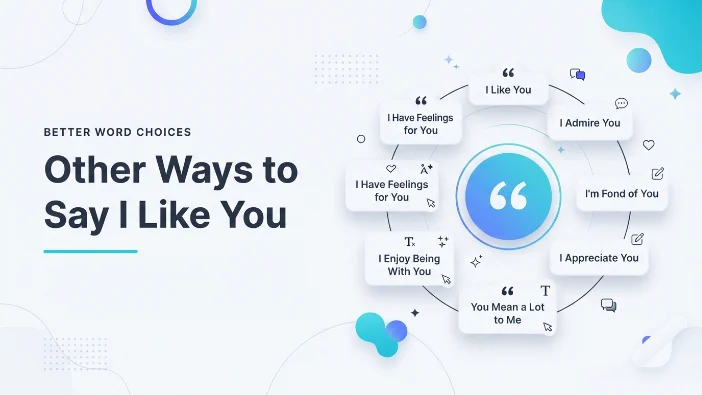
Other Ways to Say “I Like You”
These alternatives help you express affection, admiration, or interest more naturally. Whether you’re speaking to a friend, a romantic partner, or a colleague, choosing the right phrase makes your message sound more genuine and appropriate.
1. Phrase: I’m Fond of You
Meaning: I have warm affection for you.
Explanation: A gentle, sincere expression that conveys affection without sounding overly intense.
Example Sentence: “I’m fond of you and always enjoy spending time together.”
Best Use: Friendships, sincere conversations
Worst Use: Casual texting with someone you barely know
Tone: Warm, gentle, affectionate
Context Variability: Casual, spoken, semi-formal
2. Phrase: I Have Feelings for You
Meaning: I have romantic emotions toward you.
Explanation: A direct and honest way to reveal romantic interest.
Example Sentence: “I’ve been meaning to tell you I have feelings for you.”
Best Use: Romantic conversations
Worst Use: Professional communication
Tone: Sincere, direct, romantic
Context Variability: Casual, spoken
3. Phrase: I’m Into You
Meaning: I’m romantically interested in you.
Explanation: A modern, informal expression often used while dating.
Example Sentence: “I won’t lie I’m really into you.”
Best Use: Dating, casual conversations
Worst Use: Formal writing
Tone: Casual, confident, playful
Context Variability: Casual, spoken
4. Phrase: I Care About You
Meaning: You matter to me.
Explanation: Expresses concern, affection, and emotional support in both romantic and platonic relationships.
Example Sentence: “I care about you and want the best for you.”
Best Use: Friends, family, relationships
Worst Use: Business meetings
Tone: Caring, sincere, gentle
Context Variability: Casual, spoken, semi-formal
5. Phrase: I’m Attracted to You
Meaning: I feel emotionally or physically drawn to you.
Explanation: A straightforward way to express romantic attraction.
Example Sentence: “I’m attracted to you because of your kindness and confidence.”
Best Use: Romantic relationships
Worst Use: Workplace conversations
Tone: Honest, romantic, direct
Context Variability: Casual, spoken
6. Phrase: I Enjoy Your Company
Meaning: I like spending time with you.
Explanation: A polite, friendly expression that can be romantic or platonic depending on the context.
Example Sentence: “I always enjoy your company whenever we meet.”
Best Use: Social and professional settings
Worst Use: Deep romantic confessions
Tone: Friendly, polite, neutral
Context Variability: Professional, casual
7. Phrase: I Think You’re Wonderful
Meaning: I admire who you are.
Explanation: A heartfelt compliment that expresses appreciation without being overly romantic.
Example Sentence: “I think you’re wonderful, and I’m lucky to know you.”
Best Use: Compliments, friendships, relationships
Worst Use: Formal reports
Tone: Positive, warm, uplifting
Context Variability: Casual, spoken
8. Phrase: I Have a Crush on You
Meaning: I have romantic feelings for you.
Explanation: A common expression for a playful or developing attraction.
Example Sentence: “I think I have a crush on you.”
Best Use: Casual dating, texting
Worst Use: Professional settings
Tone: Playful, lighthearted
Context Variability: Casual, spoken
9. Phrase: I Really Like You
Meaning: My feelings for you are genuine.
Explanation: A simple, natural alternative that works in many romantic situations.
Example Sentence: “I really like you and enjoy being with you.”
Best Use: Romantic conversations
Worst Use: Professional communication
Tone: Warm, sincere
Context Variability: Casual, spoken
10. Phrase: I’ve Fallen for You
Meaning: I’ve developed deep romantic feelings.
Explanation: Suggests your emotions have grown stronger over time.
Example Sentence: “Somewhere along the way, I realized I’d fallen for you.”
Best Use: Romantic moments
Worst Use: Workplace conversations
Tone: Emotional, heartfelt
Context Variability: Casual, spoken
11. Phrase: You Mean a Lot to Me
Meaning: You are very important to me.
Explanation: Shows appreciation and emotional closeness.
Example Sentence: “You mean a lot to me, and I’m grateful you’re in my life.”
Best Use: Close friendships, relationships
Worst Use: Casual introductions
Tone: Warm, emotional
Context Variability: Casual, spoken
12. Phrase: I’m Drawn to You
Meaning: I naturally feel attracted to you.
Explanation: A thoughtful, romantic way to describe a strong emotional connection.
Example Sentence: “There’s something about you that I’m naturally drawn to.”
Best Use: Romantic conversations
Worst Use: Professional settings
Tone: Romantic, reflective
Context Variability: Casual, spoken
13. Phrase: I Adore You
Meaning: I love and admire you deeply.
Explanation: Stronger than “I like you,” expressing deep affection.
Example Sentence: “I adore you more than words can say.”
Best Use: Serious relationships
Worst Use: Business communication
Tone: Affectionate, romantic
Context Variability: Casual, spoken
14. Phrase: I Love Being Around You
Meaning: I enjoy your presence.
Explanation: A natural way to express that someone makes you feel comfortable and happy.
Example Sentence: “I love being around you because you always make me smile.”
Best Use: Friendships, dating
Worst Use: Formal introductions
Tone: Friendly, warm
Context Variability: Casual, spoken
15. Phrase: You’re Growing on Me
Meaning: I’m beginning to like you more over time.
Explanation: Suggests affection has developed gradually.
Example Sentence: “I didn’t expect it, but you’re really growing on me.”
Best Use: New friendships, early relationships
Worst Use: Formal communication
Tone: Honest, playful
Context Variability: Casual, spoken
16. Phrase: I Appreciate You
Meaning: I value you and your efforts.
Explanation: A versatile phrase suitable for both personal and professional relationships.
Example Sentence: “I truly appreciate everything you do.”
Best Use: Workplace, friendships
Worst Use: Romantic confessions
Tone: Respectful, warm
Context Variability: Professional, casual
17. Phrase: I’m Smitten with You
Meaning: I’m deeply attracted to you.
Explanation: A charming expression often used in romantic conversations.
Example Sentence: “I’m completely smitten with you.”
Best Use: Romantic relationships
Worst Use: Business settings
Tone: Romantic, playful
Context Variability: Casual, spoken
18. Phrase: I Have a Soft Spot for You
Meaning: I feel special affection toward you.
Explanation: Suggests gentle fondness and emotional warmth.
Example Sentence: “I’ve always had a soft spot for you.”
Best Use: Friends, family, relationships
Worst Use: Formal writing
Tone: Gentle, affectionate
Context Variability: Casual, spoken
19. Phrase: I Value Your Friendship
Meaning: Your friendship is important to me.
Explanation: A thoughtful, non-romantic expression of appreciation.
Example Sentence: “I truly value your friendship.”
Best Use: Friendships, workplace relationships
Worst Use: Romantic confessions
Tone: Respectful, sincere
Context Variability: Professional, casual
20. Phrase: I Hold You in High Regard
Meaning: I respect and admire you greatly.
Explanation: A formal expression suitable for professional or respectful situations.
Example Sentence: “I hold you in high regard for your integrity and leadership.”
Best Use: Professional communication
Worst Use: Casual texting
Tone: Formal, respectful
Context Variability: Professional, written
21. Phrase: I’m Keen on You
Meaning: I really like you.
Explanation: A common British English expression for romantic interest.
Example Sentence: “I have to admit, I’m quite keen on you.”
Best Use: Dating, casual conversations
Worst Use: Formal reports
Tone: Warm, informal
Context Variability: Casual, spoken
22. Phrase: I Admire You
Meaning: I respect and appreciate your qualities.
Explanation: Expresses admiration without necessarily implying romance.
Example Sentence: “I admire your determination and kindness.”
Best Use: Professional and personal conversations
Worst Use: None very versatile
Tone: Respectful, sincere
Context Variability: Professional, casual
23. Phrase: You’ve Caught My Attention
Meaning: You’ve become someone I’m interested in.
Explanation: A subtle way to hint at growing attraction.
Example Sentence: “You’ve definitely caught my attention.”
Best Use: Early dating
Worst Use: Business communication
Tone: Casual, confident
Context Variability: Casual, spoken
24. Phrase: I Find You Charming
Meaning: I think you’re attractive and pleasant.
Explanation: Compliments someone’s personality and appeal.
Example Sentence: “I find you incredibly charming.”
Best Use: Romantic compliments
Worst Use: Workplace settings
Tone: Warm, polite
Context Variability: Casual, spoken
25. Phrase: I’m Taken with You
Meaning: I’m deeply impressed or attracted to you.
Explanation: A slightly elegant expression of romantic admiration.
Example Sentence: “From the moment we met, I was taken with you.”
Best Use: Romantic storytelling
Worst Use: Business communication
Tone: Romantic, sincere
Context Variability: Spoken, written
26. Phrase: I Respect and Admire You
Meaning: I appreciate both your character and achievements.
Explanation: A professional-friendly phrase expressing genuine respect.
Example Sentence: “I respect and admire your leadership.”
Best Use: Workplace recognition
Worst Use: Romantic confessions
Tone: Respectful, professional
Context Variability: Professional, written
27. Phrase: I Feel a Connection with You
Meaning: I feel emotionally close to you.
Explanation: Suggests a meaningful bond beyond simple attraction.
Example Sentence: “I feel a real connection with you whenever we talk.”
Best Use: Meaningful conversations
Worst Use: Casual small talk
Tone: Emotional, sincere
Context Variability: Casual, spoken
28. Phrase: I’m Falling for You
Meaning: My romantic feelings are becoming stronger.
Explanation: A heartfelt way to express growing love.
Example Sentence: “I think I’m falling for you.”
Best Use: Serious romantic relationships
Worst Use: Professional settings
Tone: Romantic, vulnerable
Context Variability: Casual, spoken
29. Phrase: You Make Me Happy
Meaning: Being with you brings me joy.
Explanation: A simple yet meaningful way to express affection.
Example Sentence: “You make me happy every single day.”
Best Use: Relationships, close friendships
Worst Use: Formal writing
Tone: Warm, heartfelt
Context Variability: Casual, spoken
30. Phrase: I Treasure Our Friendship
Meaning: I deeply value our friendship.
Explanation: A respectful, non-romantic expression of appreciation.
Example Sentence: “I truly treasure our friendship and all the memories we’ve shared.”
Best Use: Friendships, appreciation messages
Worst Use: Romantic confessions
Tone: Sincere, respectful
Context Variability: Professional, casual
“The right words don’t just express your feelings they strengthen your connections.
Mini Quiz
1. Which phrase is most appropriate for thanking a colleague in a professional email?
A) I’m smitten with you
B) I appreciate you
C) I have a crush on you
D) I’ve fallen for you
2. Which phrase best expresses developing romantic feelings?
A) I’m falling for you
B) I value your friendship
C) I hold you in high regard
D) I admire you
3. Which expression fits best in a casual conversation with a close friend?
A) I esteem you highly
B) I respect and admire you
C) I really like being around you
D) I hold you in high regard
4. Which phrase would be inappropriate in a business meeting?
A) I appreciate your support
B) I’m into you
C) I respect and admire your work
D) I value your contribution
Answers
1. B
2. A
3. C
4. B
Comparison Table: Top Alternatives
| Phrase | Tone | Best Use |
|---|---|---|
| I’m fond of you | Warm, formal | Sincere personal messages |
| I have feelings for you | Sincere, romantic | Romantic confessions |
| I’m into you | Casual, confident | Dating conversations |
| I care about you | Gentle, sincere | Friendships and relationships |
| I enjoy your company | Polite, neutral | Social and professional settings |
| I appreciate you | Respectful, warm | Professional appreciation |
| I’m smitten with you | Charming, romantic | Playful romantic talk |
| I value your friendship | Sincere, respectful | Platonic relationships |
| I respect and admire you | Professional, sincere | Workplace recognition |
| I’m falling for you | Romantic, vulnerable | Serious romantic moments |
FAQs
What is a formal way to say “I like you”?
“I’m fond of you” or “I hold you in high regard” are polite, formal alternatives suited for respectful communication.
How do you say “I like you” professionally?
Use professional reaction phrases like “I appreciate you” or “I respect and admire you” instead of personal or romantic language.
What are casual ways to say “I like you”?
Casual options include “I’m into you,” “I dig you,” or “You’re growing on me,” which work well in relaxed conversations.
Is “I like you” the same as “I love you”?
No, “I like you” expresses milder affection or interest, while “I love you” conveys a deeper, stronger emotional bond.
How can I express romantic interest without saying “I like you”?
Try phrases such as “I’m drawn to you,” “I’m falling for you,” or “I’ve caught feelings,” which naturally convey romantic interest.
Conclusion
Learning different alternatives to “I like you” gives you the flexibility to communicate more precisely, whether you’re expressing romantic interest, professional respect, or simple friendship. These informal expressions in English and formal options together help you sound more natural, confident, and emotionally accurate in every conversation.
Practice using a few new phrases each day and pay attention to tone, context, and audience. Over time, choosing the right words instead of always saying “I like you” will make your English feel more authentic and fluent.
Read More Related Articles:
- Other Ways to Say “From” in a Letter | For a More Professional Sign-Off In 2026
- Other Ways to Say Be Safe | Upgrade Your Farewells In 2026
- Other Ways to Say Feel Free | Formal Writing and Business Communication In 2026

Henry Walker is an American writer and blogger with a keen interest in communication, language and digital content. At TextsResponse.com, he creates informative and reader-focused resources designed to help people communicate with clarity, confidence and authenticity.