Quick Answer
If you want fresh ways to say tell me more, try these five alternatives right away: tell me everything, go on, I’d love to hear more, elaborate please, and fill me in. Each phrase works well when you want a conversation to continue, but the right choice depends on how formal or casual the moment is.
Tell me more is one of the most common phrases in spoken English. People use it to show interest, invite someone to continue a story, or ask for extra details during a conversation. It works in almost any setting, but repeating the same phrase again and again can make your English sound repetitive and flat.
Learning alternatives to tell me more helps you sound more natural, more engaged, and more fluent. It also allows you to match your tone to the situation, whether you are in a business meeting, a casual chat with friends, or trying to express excitement in English about something exciting someone just shared.
This guide breaks down formal, casual, professional, and informal expressions in English so you always have the right phrase ready, no matter who you are talking to.
The right tone makes your English sound professional and confident.”
Quick Categories
These quick categories give you a fast overview before the full breakdown later in this article. Each category includes short, easy-to-remember alternatives to tell me more.
Formal alternatives to “Tell Me More”
- Could you expand on that?
- Please elaborate on that point.
- I would appreciate further details.
- Could you provide additional context?
Pro Tip: In formal settings, always pair these phrases with a polite tone and open body language. It signals genuine professional interest, not just curiosity.
Casual alternatives
- Tell me everything
- Go on
- What happened next?
- I’m curious to hear more
Pro Tip: Casual alternatives work best with friends or close colleagues. Save the more formal versions for meetings, interviews, or emails.
Professional alternatives
- Could you walk me through the details?
- I’d appreciate more context on this.
- Can you break that down further?
- What else should I know about this?
Pro Tip: In professional English, framing your request as a specific question, rather than a vague command, sounds more polished and shows active listening.
Informal expressions
- Spill the details
- Dish
- What’s the scoop?
- Do tell
Pro Tip: These informal expressions in English are great for social conversations, but they can sound too playful for workplace communication.
Common Mistakes Section
People often use tell me more or its alternatives incorrectly. Here are five common mistakes to watch out for.
- Using casual phrases in formal emails. Incorrect example: “Dish the details on the merger, please.” A formal request needs a formal phrase instead.
- Overusing tell me more in every conversation. Repeating the same phrase can sound robotic, so rotate other ways to say tell me more.
- Mismatching tone and context. Saying “I’m all ears” during a serious business review can undercut the seriousness of the discussion.
- Forgetting politeness markers. Simply saying “Go on” to a stranger can sound abrupt without adding please or a warmer tone.
- Using slang with unfamiliar audiences. Saying “What’s the scoop?” to a client you just met may confuse non-native speakers or sound unprofessional.
“Small changes in tone can completely shift how professional your message sounds.”
What Does “Tell Me More” Mean?
Tell me more is an imperative expression used to ask someone to continue sharing information, details, or a story. Grammatically, it combines the imperative verb tell with the indirect object me and the comparative phrase more, functioning as a polite command or request.
Example Sentence: “That sounds interesting, tell me more about your trip.”
When to Use “Tell Me More”
- When you want to show genuine interest in what someone is saying
- During casual conversations with friends, family, or coworkers
- When encouraging someone to continue a story or explanation
- In spoken English far more often than in formal written English
- In informal settings rather than legal, academic, or highly formal writing
Is It Professional or Polite to Say “Tell Me More”?
Tell me more is polite in everyday conversation, but it is not always professional enough for formal business communication. In a business setting, a more structured phrase often sounds more polished.
Business Example: Instead of “Tell me more about the proposal,” a professional alternative would be “Could you provide additional details about the proposal?”
Polite: Yes Professional: No, in most formal business contexts
Pros and Cons of Using “Tell Me More”
Pros
- Simple and natural to say
- Friendly, warm tone
- Very common in everyday usage
- Easy for English learners to understand
Cons
- Too informal for many workplace settings
- Overused in everyday conversation
- Limited emotional range compared to other phrases
- Not suitable for formal written communication
Fluency is not about knowing more words, it is about choosing the right word at the right time.”
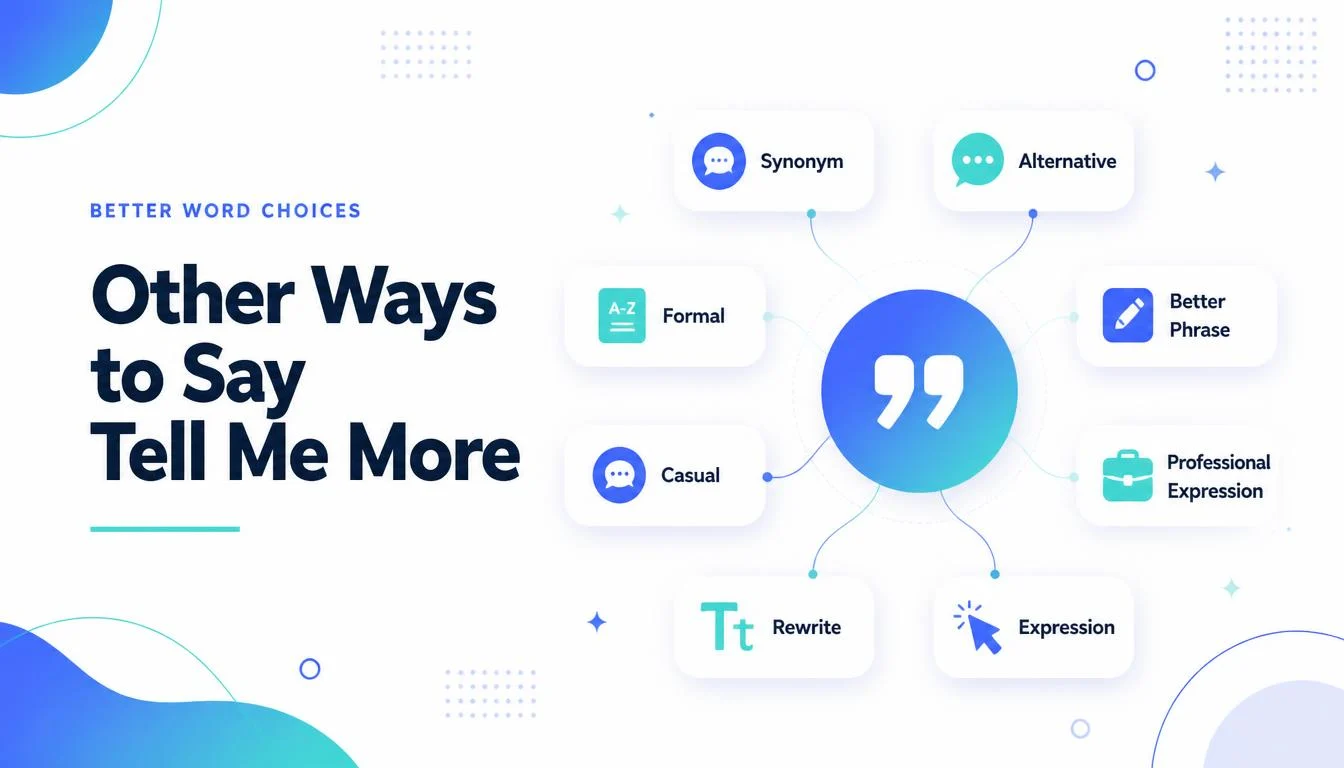
Other Ways to Say Tell Me More
These alternatives will help you sound more fluent, confident, and natural in different situations. Use them according to tone, context, and audience to express curiosity, enthusiasm, interest, or a desire for more information.
1. Phrase: Tell Me Everything
- Meaning: A request for complete details about something.
- Explanation: Shows strong enthusiasm and genuine interest in hearing the whole story.
- Example Sentence: “You got the job? Tell me everything!”
- Best Use: Excited, casual chats
- Worst Use: Formal meetings
- Tone: Excited, warm, informal
- Context Variability: Casual, spoken
2. Phrase: Go On
- Meaning: An invitation to continue speaking.
- Explanation: A short and direct way to encourage someone to keep talking.
- Example Sentence: “Go on, I’m listening.”
- Best Use: Everyday conversation
- Worst Use: Written formal reports
- Tone: Casual, attentive
- Context Variability: Casual, spoken
3. Phrase: I’d Love to Hear More
- Meaning: A polite way to express genuine interest.
- Explanation: Softer and warmer than directly asking someone to continue.
- Example Sentence: “That’s fascinating. I’d love to hear more.”
- Best Use: Social and semi-formal conversations
- Worst Use: Very casual slang settings
- Tone: Warm, polite, engaged
- Context Variability: Professional, casual, spoken
4. Phrase: Elaborate, Please
- Meaning: A request to explain something in greater detail.
- Explanation: A concise and formal way to ask someone to provide additional information.
- Example Sentence: “Could you elaborate, please, on the second point?”
- Best Use: Meetings, presentations
- Worst Use: Casual texting
- Tone: Formal, precise
- Context Variability: Professional, spoken
5. Phrase: Could You Expand on That?
- Meaning: A formal request for additional information.
- Explanation: Useful when you want someone to explain or develop a particular point further.
- Example Sentence: “Could you expand on that last point about the budget?”
- Best Use: Interviews, formal meetings
- Worst Use: Casual social chats
- Tone: Formal, respectful
- Context Variability: Professional, spoken, written
6. Phrase: What Else Can You Tell Me?
- Meaning: A direct question asking for further details.
- Explanation: Works well when you want additional facts or information about a topic.
- Example Sentence: “What else can you tell me about the new policy?”
- Best Use: Interviews, discussions
- Worst Use: Very casual gossip
- Tone: Neutral, curious
- Context Variability: Professional, casual
7. Phrase: I’m All Ears
- Meaning: An expression showing full attention and readiness to listen.
- Explanation: A friendly and slightly playful way to invite someone to continue talking.
- Example Sentence: “Go ahead, I’m all ears.”
- Best Use: Friendly conversations
- Worst Use: Formal business writing
- Tone: Playful, attentive
- Context Variability: Casual, spoken
8. Phrase: Keep Going
- Meaning: A short encouragement to continue talking.
- Explanation: Simple and natural when you want someone to continue a story or explanation.
- Example Sentence: “That’s a great story. Keep going.”
- Best Use: Casual storytelling
- Worst Use: Written professional emails
- Tone: Encouraging, informal
- Context Variability: Casual, spoken
9. Phrase: Please Continue
- Meaning: A polite request to keep speaking.
- Explanation: A slightly more formal alternative to “keep going.”
- Example Sentence: “Please continue; this is very helpful.”
- Best Use: Meetings, interviews
- Worst Use: Casual texting
- Tone: Polite, formal
- Context Variability: Professional, spoken
10. Phrase: Give Me the Details
- Meaning: A request for specific facts or information.
- Explanation: Direct and clear, especially when asking someone for a detailed update.
- Example Sentence: “Give me the details of the new project timeline.”
- Best Use: Work updates
- Worst Use: Emotional conversations
- Tone: Direct, neutral
- Context Variability: Professional, casual
11. Phrase: Walk Me Through It
- Meaning: A request for a step-by-step explanation.
- Explanation: Common when you want someone to explain a process, plan, or situation clearly.
- Example Sentence: “Can you walk me through it from the beginning?”
- Best Use: Training, presentations
- Worst Use: Quick casual chats
- Tone: Professional, clear
- Context Variability: Professional, spoken
12. Phrase: Fill Me In
- Meaning: A request to be updated on information you missed.
- Explanation: Particularly useful when you arrive late or miss part of a conversation.
- Example Sentence: “I just got here. Can you fill me in?”
- Best Use: Catching up quickly
- Worst Use: Formal written reports
- Tone: Casual, friendly
- Context Variability: Casual, spoken
13. Phrase: What Happened Next?
- Meaning: A direct question about the following event in a story.
- Explanation: Shows that you are following the story closely and want to know what happened afterward.
- Example Sentence: “What happened next? I need to know.”
- Best Use: Storytelling
- Worst Use: Formal business talk
- Tone: Curious, engaged
- Context Variability: Casual, spoken
14. Phrase: I Want to Know More
- Meaning: A direct statement expressing strong curiosity.
- Explanation: Clear and honest, making it suitable for many everyday conversations.
- Example Sentence: “That project sounds interesting. I want to know more.”
- Best Use: General conversation
- Worst Use: Very formal writing
- Tone: Sincere, curious
- Context Variability: Professional, casual
15. Phrase: Can You Explain Further?
- Meaning: A polite request for a deeper explanation.
- Explanation: Useful when someone has given an explanation but you need more information.
- Example Sentence: “Can you explain further how the system works?”
- Best Use: Meetings, classes
- Worst Use: Casual gossip
- Tone: Polite, formal
- Context Variability: Professional, spoken, written
16. Phrase: Say More About That
- Meaning: A relaxed invitation to continue explaining.
- Explanation: Encourages someone to explore a particular idea or experience in greater depth.
- Example Sentence: “Say more about that. I want to understand fully.”
- Best Use: Coaching, deep talks
- Worst Use: Quick casual updates
- Tone: Thoughtful, warm
- Context Variability: Professional, casual
17. Phrase: I’m Curious to Hear More
- Meaning: A polite way to express genuine curiosity.
- Explanation: This sounds respectful and interested without being too direct.
- Example Sentence: “I’m curious to hear more about your research.”
- Best Use: Academic, professional conversations
- Worst Use: Very casual slang
- Tone: Curious, respectful
- Context Variability: Professional, spoken
18. Phrase: Break It Down for Me
- Meaning: A request to simplify or explain something step by step.
- Explanation: Especially useful when a topic is complex or difficult to understand.
- Example Sentence: “Break it down for me so I understand the process.”
- Best Use: Training, explanations
- Worst Use: Formal written reports
- Tone: Direct, friendly
- Context Variability: Casual, professional
19. Phrase: Give Me the Full Picture
- Meaning: A request for a complete overview of a situation.
- Explanation: Asks for context and background rather than just isolated facts.
- Example Sentence: “Before I decide, give me the full picture.”
- Best Use: Decision-making, meetings
- Worst Use: Casual small talk
- Tone: Serious, thorough
- Context Variability: Professional, spoken
20. Phrase: Paint Me a Picture
- Meaning: A request for a vivid, detailed description.
- Explanation: Often used when you want someone to describe a situation, experience, or idea in an engaging way.
- Example Sentence: “Paint me a picture of what the new office will look like.”
- Best Use: Creative discussions
- Worst Use: Strict formal writing
- Tone: Imaginative, engaged
- Context Variability: Casual, professional
21. Phrase: Spill the Details
- Meaning: An informal request for exciting or secret information.
- Explanation: Often used when someone is eager to hear gossip, news, or interesting details.
- Example Sentence: “You met them already? Spill the details!”
- Best Use: Friendly gossip
- Worst Use: Business meetings
- Tone: Playful, informal
- Context Variability: Casual, spoken
22. Phrase: Dish
- Meaning: A slang request to share juicy or interesting details.
- Explanation: Very informal and generally used among close friends when discussing personal or entertaining news.
- Example Sentence: “Okay, dish. How did the date go?”
- Best Use: Casual friend talk
- Worst Use: Any professional setting
- Tone: Playful, slangy
- Context Variability: Casual, spoken
23. Phrase: What’s the Scoop?
- Meaning: An informal question asking for the latest news or details.
- Explanation: A playful way to ask what is happening or what someone knows about a situation.
- Example Sentence: “What’s the scoop on the new manager?”
- Best Use: Casual workplace chat
- Worst Use: Formal presentations
- Tone: Curious, informal
- Context Variability: Casual, spoken
24. Phrase: Do Tell
- Meaning: A short, slightly playful invitation to continue.
- Explanation: Shows curiosity while adding a lighthearted or sometimes teasing tone.
- Example Sentence: “You have news? Do tell.”
- Best Use: Friendly banter
- Worst Use: Serious business talk
- Tone: Playful, light
- Context Variability: Casual, spoken
25. Phrase: I’m Intrigued, Go On
- Meaning: An expression of curiosity combined with encouragement.
- Explanation: Shows that something has caught your attention and you want to hear the rest.
- Example Sentence: “I’m intrigued. Go on, tell me the rest.”
- Best Use: Engaging conversations
- Worst Use: Formal written documents
- Tone: Curious, engaged
- Context Variability: Casual, professional
26. Phrase: Could You Clarify Further?
- Meaning: A formal request for more precise information.
- Explanation: Useful when an explanation is unclear, incomplete, or open to interpretation.
- Example Sentence: “Could you clarify further what the deadline actually means?”
- Best Use: Business emails, meetings
- Worst Use: Casual chats
- Tone: Formal, precise
- Context Variability: Professional, written
27. Phrase: Please Share More Details
- Meaning: A polite, formal request for additional information.
- Explanation: Works particularly well in professional written communication.
- Example Sentence: “Please share more details about the project scope.”
- Best Use: Emails, reports
- Worst Use: Casual spoken chat
- Tone: Formal, polite
- Context Variability: Professional, written
28. Phrase: I’d Appreciate More Context
- Meaning: A polite way to ask for background information.
- Explanation: This phrase is useful when you need additional information before making a decision or forming an opinion.
- Example Sentence: “I’d appreciate more context before making a decision.”
- Best Use: Workplace discussions
- Worst Use: Casual storytelling
- Tone: Polite, professional
- Context Variability: Professional, spoken, written
29. Phrase: Take Me Through the Details
- Meaning: A request for a thorough, organized explanation.
- Explanation: Useful when reviewing a plan, report, process, or proposal.
- Example Sentence: “Take me through the details of the marketing plan.”
- Best Use: Reviews, presentations
- Worst Use: Light casual chat
- Tone: Professional, structured
- Context Variability: Professional, spoken
30. Phrase: Expand on That for Me
- Meaning: A direct but polite request for more depth.
- Explanation: Common in teaching, coaching, interviews, and feedback sessions when you want someone to develop an idea further.
- Example Sentence: “Can you expand on that for me before we move on?”
- Best Use: Teaching, feedback
- Worst Use: Very casual texting
- Tone: Polite, clear
- Context Variability: Professional, spoken
“Every phrase carries its own tone; choose wisely and your English will sound effortless.”
Mini Quiz: Test Yourself
1. Which phrase is best suited for a formal business email?
A. Dish
B. Please share more details
C. What’s the scoop?
2. You are catching up with a close friend about their weekend. Which phrase fits best?
A. Could you clarify further?
B. Spill the details
C. I’d appreciate more context
3. During a job interview, the interviewer wants you to expand on your answer. Which phrase might they use?
A. Could you expand on that?
B. Do tell
C. What’s the scoop?
4. Which phrase works well in both casual and professional settings?
A. Dish
B. I’m curious to hear more
C. Spill the details
Pull Quote
“Practicing tone awareness daily is the fastest way to sound naturally fluent.”
Comparison Table: Top Alternatives
| Phrase | Tone | Best Use |
|---|---|---|
| Tell me everything | Excited, warm | Casual chats |
| Could you expand on that? | Formal, respectful | Interviews, meetings |
| I’d love to hear more | Warm, polite | Social and semi-formal talks |
| Elaborate, please | Formal, precise | Presentations |
| Fill me in | Casual, friendly | Catching up |
| Walk me through it | Professional, clear | Training, presentations |
| Spill the details | Playful, informal | Friendly gossip |
| Please share more details | Formal, polite | Emails, reports |
| I’d appreciate more context | Polite, professional | Workplace discussions |
| Do tell | Playful, light | Friendly banter |
FAQs
1. What is a professional way to say tell me more?
A professional alternative is “Could you expand on that?” or “I’d appreciate more context.” Both sound polished in meetings and emails.
2. Is tell me more too casual for work emails?
It can sound too casual in formal written communication, so using “Please share more details” is a safer professional alternative.
3. What are some informal expressions in English similar to tell me more?
Informal expressions in English include spill the details, dish, and what’s the scoop, which work well among friends.
4. How can I express excitement in English while asking for details?
Phrases like “Tell me everything” or “I’m all ears” naturally combine excitement with a request for more information.
5. What is the best alternative to tell me more for an interview?
“Could you elaborate on that?” or “Can you explain further?” are strong, professional choices for interviews.
Conclusion
Learning different ways to say tell me more helps you sound more confident, natural, and fluent in everyday conversation. Whether you need a formal alternative for a meeting or a casual phrase for friends, having a variety of options keeps your English sounding fresh and engaging.
Practice using these alternatives daily, paying close attention to tone and context. Over time, choosing the right phrase for the right moment will become second nature, making your spoken and written English noticeably more professional and confident.
Read More Related Articles:
- Other Ways to Say Circle Back | Improve Your Workplace Communication In 2026
- Other Ways to Say Welcome to the Team | Warm First Impression In 2026
- Other Ways to Say I Hope All Is Well | Make a Better First Impression In 2026

Henry Walker is an American writer and blogger with a keen interest in communication, language and digital content. At TextsResponse.com, he creates informative and reader-focused resources designed to help people communicate with clarity, confidence and authenticity.