Quick Answer
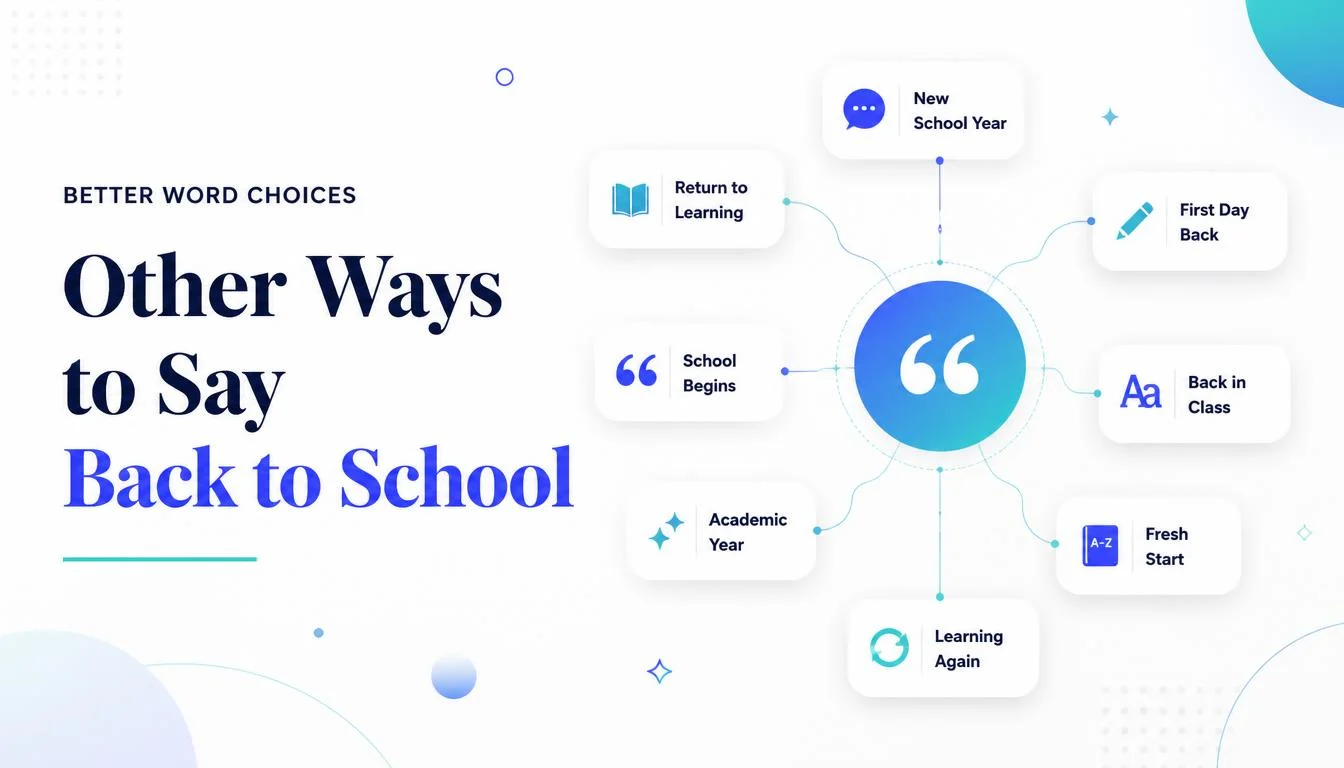
Other ways to say back to school include returning to the classroom, heading back to class, a new school year, the start of classes, and returning to learning.
Finding other ways to say back to school can make your writing more creative, engaging, and suitable for different situations. Whether you are creating school captions, writing educational content, or preparing messages for students and teachers, the right phrase can make your message more memorable.
The phrase “back to school” usually refers to returning to classes after a break or starting a new academic year. Alternatives such as “a fresh academic start,” “returning to the classroom,” and “the beginning of a new school year” help you express the same idea in different ways. These expressions work well for social media captions, school announcements, blog posts, and everyday conversations.
What Is “Back to School”? (Meaning, Grammar & Real Use)
Imagine a student enjoying the final days of summer vacation while a parent prepares notebooks, uniforms, and school supplies. Soon, both may talk about the same event using different expressions. One might say, “It’s time to go back to school,” while another announces, “Classes resume next Monday.” Both communicate a return to education, but their wording suits different situations.
The phrase back to school commonly refers to returning to school after a break or preparing for a new academic year. It appears in conversations, school newsletters, advertisements, educational websites, and social media captions.
Learning alternatives to this phrase helps English learners describe academic transitions more precisely. The right wording can make a message sound formal, friendly, encouraging, or informative. Although this topic differs from expressions used to express excitement in English, the same principle applies: choose words that match your audience and purpose.
Definition: Back to school describes returning to school after a break or preparing for a new period of study.
Grammar note: The phrase functions as an expression of return or an adjective-like modifier in phrases such as back-to-school shopping. In ordinary sentences, back to school is generally written without hyphens.
Example: “The students are going back to school next week.”
People use it in spoken English, written announcements, school communications, educational marketing, and informal conversations. More specific alternatives can clarify whether students are returning, classes are restarting, or a new academic year is beginning.
When Should You Use “Back to School”?
Choose an alternative according to the situation and the message you want to communicate.
Common contexts
- School announcements: Use classes resume or the new term begins to communicate dates and schedules.
- Parent conversations: Use returning to school when discussing a child’s return after vacation.
- Student conversations: Use going back to classes for natural, everyday communication.
- Educational marketing: Use back-to-school season when promoting school supplies, clothing, or learning resources.
- Academic planning: Use starting a new academic year when referring to a new period of study.
- Social media captions: Use school is back in session for a cheerful, attention-grabbing update.
Spoken vs. written English
Spoken English: “I’m heading back to school next week” sounds natural in everyday conversation. “Classes start again on Monday” is another simple option.
Written English: “Classes will resume on Monday” suits a school email or formal notice. “The new academic term begins next week” is appropriate for official communications.
Formal vs. informal English
Formal expressions communicate dates, policies, and schedules clearly. Informal phrases make conversations sound relaxed and personal.
For example, a principal might write, “Students will return to the classroom on September 1,” while a student might say, “School starts again next week.”
Is It Professional or Just Polite?
The phrase back to school is both acceptable and professional in educational communication. It is widely understood and suitable for school websites, newsletters, announcements, and education-related marketing.
Politeness vs. professionalism
- Politeness means using considerate, friendly language that respects the reader.
- Professionalism means communicating clearly and appropriately for the audience and purpose.
Business-style example: “Our back-to-school program will provide students with the resources they need for the upcoming academic year.”
- Polite? ✔️ Yes
- Professional? ✔️ Yes
For more workplace and formal communication tips, read the Professional English Communication Guide.
Pros and Cons of Using “Back to School”
Pros
- Simple and familiar: Most English speakers understand the phrase immediately.
- Friendly tone: It works naturally in parent conversations and student discussions.
- Broad usage: It suits school announcements, advertising, newsletters, and casual messages.
- Easy to remember: Learners can use it in many everyday situations without complicated grammar.
Cons
- Limited specificity: It does not always clarify whether someone is returning after vacation or beginning a new academic year.
- Potential repetition: Using it repeatedly can make articles and announcements sound monotonous.
- Less precise in formal notices: Phrases such as classes resume communicate a specific event more clearly.
- Context-dependent meaning: It can refer to preparation, shopping, or an actual return to classes.
Common Mistakes People Make
1. Confusing preparation with the actual return
❌ “The students are back to school supplies.”
✔️ “The students are preparing for their return to school.”
Use back-to-school supplies when referring to items purchased for school.
2. Using informal wording in an official announcement
❌ “Hey everyone, school is starting up again soon!” in a formal administrative notice.
✔️ “Classes will resume next Monday.”
Choose wording that matches the audience and purpose.
3. Using the wrong verb with the phrase
❌ “I am return to school tomorrow.”
✔️ “I am returning to school tomorrow.”
Use returning after am when describing an action in progress or a planned return.
4. Confusing a new term with a new academic year
❌ “The new academic year begins Monday” when only a new term is starting.
✔️ “The new term begins Monday.”
A term is usually one division of an academic year, so choose the expression that matches the actual schedule.
5. Overusing the same phrase in an article
❌ “Back to school is exciting. Back to school shopping starts soon. Back to school preparation matters.”
✔️ “Returning to classes can be exciting. School shopping starts soon, and preparation helps students feel ready.”
Vary your vocabulary while keeping the meaning clear.
Small tone mistakes can make confident English sound careless.
Alternatives by Category
The following phrases are a preview of the complete list. Each one also appears among the 30 alternatives below.
Formal alternatives to “back to school”
- Returning to school
- Resuming classes
- Beginning a new academic term
Pro Tip: Use formal wording when communicating official dates, schedules, policies, or academic plans.
Casual alternatives
- Going back to classes
- School starts again
- Heading back to school
Pro Tip: Choose familiar expressions for conversations with classmates, friends, and family.
Professional alternatives
- Classes will resume
- The academic term begins
- Returning to the classroom
Pro Tip: Include the exact date or time whenever your message needs to communicate a practical schedule.
Informal expressions
- School is back in session
- Back to the books
- Time to hit the books
Pro Tip: Reserve playful expressions for captions, friendly messages, or motivational content rather than official notices.
“Formal and informal English aren’t about correctness. They’re about context.”
Other Ways to Say “Back to School”: 30 Alternatives With Examples
These 30 alternatives help you describe returning to education, beginning a new term, and preparing for classes. They vary in tone, so choose the phrase that fits the intended meaning.
1. Phrase: Returning to School
Meaning: Going back to school after a break.
Explanation: A clear, versatile expression for students resuming their education.
Example Sentence: “Students are returning to school next week.
Best Use: General communication
Worst Use: Casual slogans
Tone: Neutral, clear
Context Variability: casual / professional / spoken
2. Phrase: Going Back to Classes
Meaning: Resuming attendance at classes.
Explanation: A natural conversational alternative that emphasizes lessons rather than the school building.
Example Sentence: “I’m going back to classes on Monday.”
Best Use: Everyday conversation
Worst Use: Official notices
Tone: Casual, natural
Context Variability: casual / spoken / personal
3. Phrase: Resuming Classes
Meaning: Starting classes again after a pause.
Explanation: A concise, formal expression for school schedules and announcements.
Example Sentence: “Classes will resume after the winter break.”
Best Use: School announcements
Worst Use: Casual captions
Tone: Formal, informative
Context Variability: professional / written / spoken
4. Phrase: Starting a New School Year
Meaning: Beginning another year of school.
Explanation: Use this when students are entering a new academic year rather than simply returning after a short holiday.
Example Sentence: “She’s starting a new school year in September.”
Best Use: Academic planning
Worst Use: Midterm returns
Tone: Neutral, positive
Context Variability: casual / professional / spoken
5. Phrase: Returning to the Classroom
Meaning: Going back to classroom learning.
Explanation: This phrase emphasizes in-person learning or classroom attendance.
Example Sentence: “Students are returning to the classroom after the break.”
Best Use: School communications
Worst Use: Online-only learning
Tone: Professional, descriptive
Context Variability: professional / written / spoken
6. Phrase: Heading Back to School
Meaning: Preparing to return to school.
Explanation: A friendly expression that works well in conversations, blogs, and personal updates.
Example Sentence: “We’re heading back to school next Tuesday.”
Best Use: Personal updates
Worst Use: Formal policies
Tone: Casual, friendly
Context Variability: casual / spoken / social
7. Phrase: School Starts Again
Meaning: School activities begin after a break.
Explanation: A straightforward expression that is easy for learners to use in conversation.
Example Sentence: “School starts again in two weeks.”
Best Use: Everyday speech
Worst Use: Academic reports
Tone: Simple, conversational
Context Variability: casual / spoken / personal
8. Phrase: Beginning a New Academic Term
Meaning: Starting a new period in the academic calendar.
Explanation: Suitable for institutions that divide the academic year into terms or semesters.
Example Sentence: “The university is beginning a new academic term.”
Best Use: Academic announcements
Worst Use: Casual chatting
Tone: Formal, academic
Context Variability: professional / written / spoken
9. Phrase: Resuming Studies
Meaning: Continuing education after a break.
Explanation: A broader expression that can refer to school, college, university, or independent learning.
Example Sentence: “She is resuming her studies after a semester off.”
Best Use: Education updates
Worst Use: School shopping
Tone: Neutral, formal
Context Variability: casual / professional / written
10. Phrase: Returning After the Holidays
Meaning: Going back to school following a holiday period.
Explanation: This phrase identifies the reason for the return when the break is relevant.
Example Sentence: “Students will return after the holidays on January 8.”
Best Use: Holiday schedules
Worst Use: First enrollment
Tone: Neutral, informative
Context Variability: casual / professional / spoken
11. Phrase: Back in the Classroom
Meaning: Present in the classroom again.
Explanation: A concise phrase for describing the return to in-person lessons.
Example Sentence: “After months of remote learning, students are back in the classroom.”
Best Use: Education updates
Worst Use: Future schedules
Tone: Neutral, descriptive
Context Variability: casual / professional / written
12. Phrase: School Is Back in Session
Meaning: School has officially resumed.
Explanation: Common in announcements and social media captions when classes are operating again.
Example Sentence: “Summer is over, and school is back in session.”
Best Use: School announcements
Worst Use: Individual study
Tone: Friendly, declarative
Context Variability: casual / professional / spoken
13. Phrase: Returning to Academic Life
Meaning: Rejoining the routines of education.
Explanation: Emphasizes the broader experience of studying, assignments, and campus activities.
Example Sentence: “After the summer break, he’s returning to academic life.”
Best Use: Student reflections
Worst Use: Simple reminders
Tone: Reflective, formal
Context Variability: professional / written / spoken
14. Phrase: Getting Ready for School
Meaning: Preparing for school to begin.
Explanation: Focuses on preparation, including supplies, clothing, schedules, and routines, rather than the actual return.
Example Sentence: “We’re getting ready for school this weekend.”
Best Use: Family planning
Worst Use: Return confirmation
Tone: Friendly, practical
Context Variability: casual / spoken / social
15. Phrase: Preparing for the New School Year
Meaning: Getting ready for a new academic year.
Explanation: Useful for school checklists, parent guides, and educational articles.
Example Sentence: “The school shared tips for preparing for the new school year.”
Best Use: Preparation guides
Worst Use: Midyear updates
Tone: Helpful, informative
Context Variability: professional / written / spoken
16. Phrase: Returning to Learning
Meaning: Beginning educational activities again.
Explanation: A broad phrase suitable for classroom learning, training, and other educational settings.
Example Sentence: “The students are returning to learning after the holiday.”
Best Use: Educational messaging
Worst Use: Specific timetables
Tone: Encouraging, neutral
Context Variability: professional / educational / spoken
17. Phrase: Reopening for the New Term
Meaning: Opening an educational institution for another term.
Explanation: Appropriate when a school or educational facility resumes operations.
Example Sentence: “The school is reopening for the new term on Monday.”
Best Use: Institutional notices
Worst Use: Individual returns
Tone: Formal, administrative
Context Variability: professional / written / spoken
18. Phrase: The New Term Begins
Meaning: A new academic term starts.
Explanation: A concise announcement phrase for school calendars, emails, and notices.
Example Sentence: “The new term begins on September 3.”
Best Use: Academic calendars
Worst Use: Informal storytelling
Tone: Formal, clear
Context Variability: professional / written / spoken
19. Phrase: Returning to Schoolwork
Meaning: Starting assignments and academic tasks again.
Explanation: Focuses on studying and completing schoolwork rather than physically attending school.
Example Sentence: “After the break, I’m returning to schoolwork with a fresh plan.”
Best Use: Study planning
Worst Use: Arrival notices
Tone: Practical, neutral
Context Variability: casual / professional / written
20. Phrase: Back to the Books
Meaning: Returning to studying.
Explanation: An idiomatic expression that emphasizes reading, studying, and academic effort.
Example Sentence: “Vacation is over, so it’s back to the books.”
Best Use: Motivational captions
Worst Use: Formal notices
Tone: Informal, motivating
Context Variability: casual / spoken / social
21. Phrase: Time to Hit the Books
Meaning: Time to begin studying seriously.
Explanation: A familiar idiom about studying. It is not a direct synonym for physically returning to school.
Example Sentence: “My exams are approaching, so it’s time to hit the books.”
Best Use: Study motivation
Worst Use: Official announcements
Tone: Informal, energetic
Context Variability: casual / spoken / social
22. Phrase: Returning to Campus
Meaning: Going back to a school or university campus.
Explanation: Particularly appropriate for college and university students returning to campus life.
Example Sentence: “Students are returning to campus after the summer break.”
Best Use: University updates
Worst Use: Remote schooling
Tone: Neutral, professional
Context Variability: casual / professional / written
23. Phrase: Resuming Academic Activities
Meaning: Starting educational activities again.
Explanation: A formal phrase that can cover classes, laboratories, seminars, and other academic events.
Example Sentence: “The university will resume academic activities next week.”
Best Use: Official communications
Worst Use: Casual conversation
Tone: Formal, administrative
Context Variability: professional / written / spoken
24. Phrase: Starting Classes Again
Meaning: Beginning lessons after a break.
Explanation: A natural, accessible expression suitable for students and families.
Example Sentence: “We’re starting classes again on Monday.”
Best Use: Everyday conversation
Worst Use: Formal reports
Tone: Simple, conversational
Context Variability: casual / spoken / personal
25. Phrase: Returning to Formal Education
Meaning: Going back to structured educational study.
Explanation: Useful when someone resumes school, college, or another recognized educational program.
Example Sentence: “She is returning to formal education after several years away.”
Best Use: Education planning
Worst Use: Casual captions
Tone: Formal, descriptive
Context Variability: professional / written / spoken
26. Phrase: The School Term Is Starting
Meaning: A school term is about to begin.
Explanation: A conversational statement that highlights the upcoming start of the term.
Example Sentence: “The school term is starting next week, so we need to buy supplies.”
Best Use: Family conversations
Worst Use: Formal policies
Tone: Neutral, conversational
Context Variability: casual / spoken / written
27. Phrase: A Fresh Start at School
Meaning: A new beginning in school life.
Explanation: Emphasizes new goals, habits, friendships, or opportunities rather than the return itself.
Example Sentence: “The new term offers a fresh start at school.”
Best Use: Student encouragement
Worst Use: Date announcements
Tone: Positive, encouraging
Context Variability: casual / professional / social
28. Phrase: Kicking Off the School Year
Meaning: Beginning a school year or its activities.
Explanation: A lively expression suited to welcome events, newsletters, and school campaigns.
Example Sentence: “We’re kicking off the school year with an orientation event.”
Best Use: Welcome events
Worst Use: Formal legal notices
Tone: Energetic, informal
Context Variability: casual / professional / spoken
29. Phrase: Resuming the Academic Schedule
Meaning: Returning to the established academic timetable.
Explanation: Useful when an institution restarts its planned classes and academic activities.
Example Sentence: “The college will resume the academic schedule on Monday.”
Best Use: Administrative updates
Worst Use: Friendly captions
Tone: Formal, precise
Context Variability: professional / written / spoken
30. Phrase: Embarking on a New School Year
Meaning: Beginning a new year of education.
Explanation: A polished, optimistic expression that highlights the opportunities and experiences ahead.
Example Sentence: “Students are embarking on a new school year filled with opportunities to learn.”
Best Use: Welcome speeches
Worst Use: Brief reminders
Tone: Inspirational, formal
Context Variability: professional / written / spoken
Comparison Table: Top 10 Alternatives at a Glance
| Phrase | Tone | Best Use |
|---|---|---|
| Returning to school | Neutral | General communication |
| Going back to classes | Casual | Everyday conversation |
| Resuming classes | Formal | School announcements |
| Starting a new school year | Positive | Academic planning |
| Returning to the classroom | Professional | Education updates |
| Heading back to school | Friendly | Personal updates |
| School starts again | Conversational | Student discussions |
| Beginning a new academic term | Academic | Official communications |
| Getting ready for school | Practical | Family planning |
| School is back in session | Friendly | Announcements and captions |
Quick Self-Check: Mini Quiz
Test your understanding by choosing the most suitable expression for each situation.
Question 1
A school administrator is announcing that lessons will restart after the winter break. Which phrase is best?
- A. Time to hit the books
- B. Classes will resume
- C. Kicking off the school year
Question 2
A student wants to post an informal caption about studying again after vacation. Which expression fits best?
- A. Resuming academic activities
- B. Resuming the academic schedule
- C. Back to the books
Question 3
A university student is returning to the university grounds after summer vacation. Which phrase is most precise?
- A. Returning to campus
- B. School starts again
- C. A fresh start at school
Question 4
A parent is buying stationery, uniforms, and notebooks before school begins. Which expression best describes the activity?
- A. Resuming classes
- B. Getting ready for school
- C. Returning to the classroom
Question 1A. Time to hit the booksB. Classes will resumeC. Kicking off the school year
Question 2A. Resuming academic activitiesB. Resuming the academic scheduleC. Back to the books
Question 3A. Returning to campusB. School starts againC. A fresh start at school
Question 4A. Resuming classesB. Getting ready for schoolC. Returning to the classroom
Check answersReset
FAQs
1. What are other ways to say back to school?
You can say returning to school, going back to classes, resuming classes, or starting a new school year. Choose according to whether you mean returning, restarting lessons, or beginning a new academic year.
2. What is a formal way to say back to school?
Resuming classes, beginning a new academic term, and resuming academic activities are professional alternatives suitable for school announcements and official communications.
3. What is a catchy phrase for back to school?
Back to the books, a fresh start at school, and kicking off the school year are engaging options for captions, newsletters, and motivational content.
4. Is back to school grammatically correct?
Yes. Back to school is a standard English expression. In compound modifiers such as back-to-school shopping, hyphens are commonly used.
5. What is the difference between back to school and resuming classes?
Back to school is a broad expression that can refer to returning or preparing for school. Resuming classes specifically means lessons are starting again after a break.
Conclusion
Learning alternatives to this phrase helps you communicate more naturally in school conversations, academic announcements, newsletters, and educational content. Expressions such as returning to school are versatile, while resuming classes is more formal and back to the books is more conversational.
Practice using a few alternatives in your daily writing. Pay attention to whether you are describing preparation, an actual return, or the beginning of a new term so that your English.
Read More Related Articles:
- Other Ways to Say You’re Beautiful | Beyond the Ordinary Compliment In 2026
- Other Ways to Say I Love You in Spanish | Beyond the Usual Phrase In 2026
- Other Ways to Say I Love You in Other Languages | Beyond the Classic Three Words In 2026

Victoria Hughes is a content writer dedicated to making communication clearer and more effective. Through TextsResponse.com, she shares practical insights and thoughtfully crafted response ideas that help readers express themselves with confidence.