Quick Answer
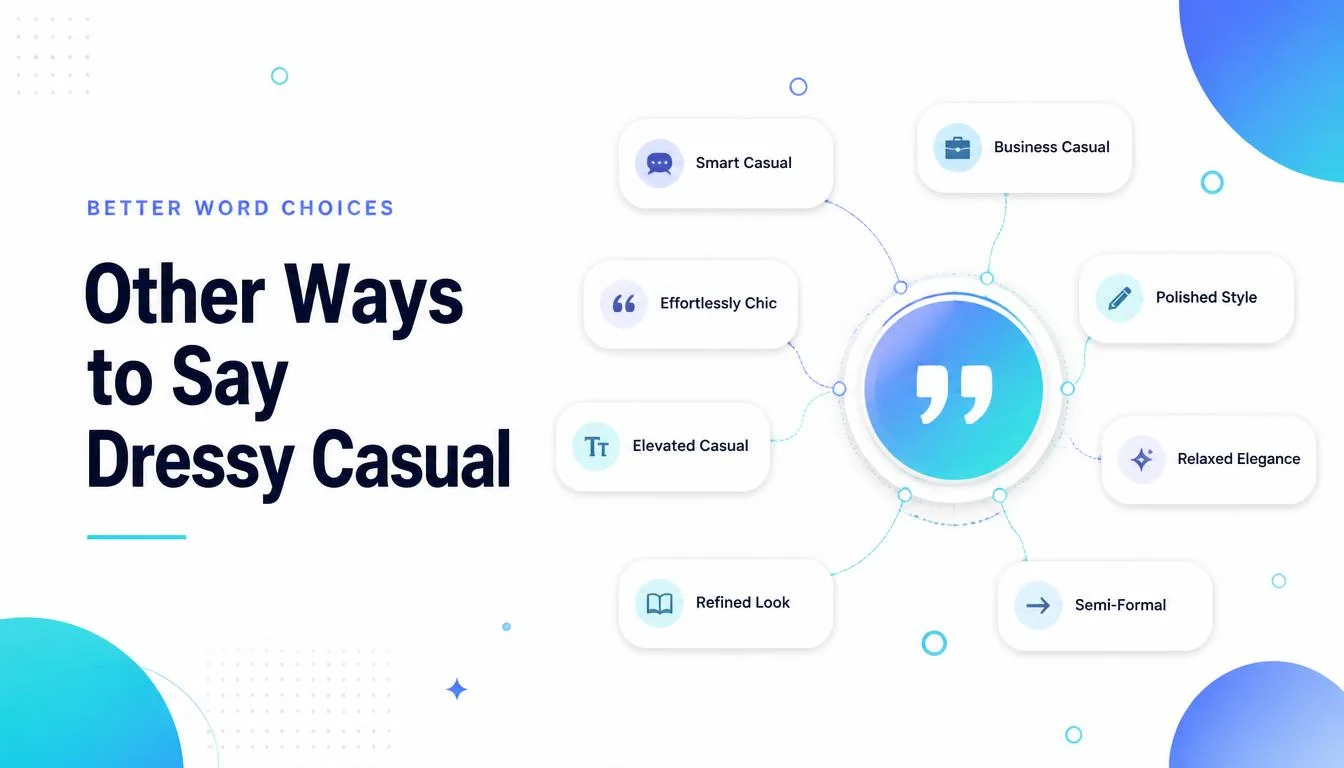
Other ways to say dressy casual include smart casual, polished casual, elevated casual, relaxed elegance, and informal chic. These phrases describe outfits that look stylish and put-together without being overly formal.
Finding other ways to say dressy casual helps you describe clothing expectations more clearly for parties, weddings, dinners, workplace gatherings, and special occasions. Whether you are writing an invitation or choosing an outfit, the right phrase makes the dress code easier to understand.
The phrase “dressy casual” combines the comfort of everyday clothing with the polished appearance of more formal attire. Alternatives such as “smart casual,” “elevated casual,” and “relaxed elegance” offer slightly different ways to communicate this style. Understanding these expressions can help you sound more natural, confident, and fashionable in conversations and written communication.
What Is “Dressy Casual”? (Meaning, Grammar & Real Use)
Imagine receiving an invitation to a dinner party that says “dressy casual.” You want to look stylish, but you do not want to overdress. Should you wear jeans, a blazer, a dress, or formal trousers? Understanding this dress code helps you choose an outfit that feels comfortable while still looking intentional.
Dressy casual describes clothing that combines the comfort of everyday wear with the neat, sophisticated appearance of a more formal outfit. It often includes tailored trousers, elegant tops, smart jeans when permitted, dresses, blazers, and polished shoes.
Learning alternatives to dressy casual helps you understand invitations, communicate clothing expectations, and describe personal style more accurately. Just as people choose different words to express excitement in English, they can select different dress-code expressions to communicate the desired level of formality.
Definition: Dressy casual is a dress code that balances relaxed clothing with polished, occasion-appropriate style.
Grammar note: Dressy casual is an adjective phrase commonly used before a noun or as a standalone dress-code label. It is generally neutral and suitable for invitations, fashion discussions, and event planning.
Example: “The invitation requests dressy casual attire.”
People use this expression in wedding invitations, restaurants, office events, parties, and social gatherings. The exact expectations vary, so it is helpful to consider the venue, occasion, weather, and host’s instructions.
When Should You Use “Dressy Casual”?
Different settings call for different descriptions of clothing. Choosing a suitable expression helps guests, employees, and event organizers understand what to wear.
Common contexts
- Dinner parties: Suggest neat trousers, a stylish blouse, a dress, or a blazer.
- Weddings: Communicate a polished but less formal standard than black tie or formal attire.
- Work events: Describe clothing that looks professional without requiring a traditional suit.
- Restaurants: Help guests understand whether everyday jeans and sneakers are appropriate.
- Networking events: Encourage a presentable appearance without excessive formality.
- Celebrations: Offer guests flexibility while maintaining a coordinated, stylish atmosphere.
Spoken vs. written English
Spoken English: You might say, “Wear something smart but comfortable,” when giving a friend outfit advice.
Written English: Invitations and event announcements may use expressions such as “smart casual attire” or “polished casual dress code” to communicate expectations clearly.
Formal vs. informal English
Formal wording such as “smart casual attire” works well in invitations and workplace communications. Informal wording such as “dress up your everyday outfit” sounds natural when speaking with friends.
Remember that dress codes are not universally standardized. When the occasion is important, provide specific clothing examples instead of relying on a label alone.
Is It Professional or Just Polite?
Dressy casual is both a legitimate dress-code description and a useful phrase in professional communication. It communicates an expected appearance without necessarily requiring a suit, tie, or formal dress.
Politeness vs. professionalism
- Politeness: Giving guests clear, considerate guidance about what to wear.
- Professionalism: Describing the expected standard of appearance accurately and consistently.
Business-style example: “For Friday’s networking reception, please wear smart casual attire appropriate for a professional setting.”
- Polite? ✔️ Yes.
- Professional? ✔️ Yes.
For more workplace vocabulary, see Professional English Communication Guide.
Pros and Cons of Using “Dressy Casual”
Pros
- Flexible: Allows a range of outfits rather than requiring a uniform look.
- Approachable: Sounds less intimidating than formal or black-tie attire.
- Versatile: Works for dinners, celebrations, and many social events.
- Practical: Balances comfort with a polished appearance.
Cons
- Ambiguous: Different hosts may have different expectations.
- Venue-dependent: An outfit suitable for a restaurant may not suit a corporate reception.
- Potentially misleading: Some guests may assume jeans and sneakers are always acceptable.
- Difficult to standardize: The phrase does not specify fabrics, footwear, or acceptable garment styles.
Common Mistakes People Make
1. Assuming dressy casual means completely casual
❌ “Wear your oldest T-shirt and gym shorts.”
✔️ “Choose clean, well-fitting clothes with a polished finish.”
2. Confusing smart casual with business casual
❌ “Smart casual and business casual always mean exactly the same thing.”
✔️ “Both are polished dress codes, but business casual usually emphasizes workplace appropriateness.
3. Assuming jeans are always acceptable
❌ “Any pair of jeans is appropriate for a dressy casual wedding.”
✔️ “Choose neat, well-fitting jeans only if the host and venue permit them.”
4. Wearing overly formal clothing
❌ “A tuxedo is the standard choice for every dressy casual event.”
✔️ “Choose a blazer, tailored trousers, or a polished dress unless the invitation specifies formalwear.
5. Ignoring footwear
❌ “The outfit is dressy casual, so worn-out athletic shoes will always work.”
✔️ “Choose clean loafers, flats, dress shoes, or refined sneakers if the occasion allows them.”
Small tone mistakes can make confident English sound careless.
Alternatives by Category
These curated phrases provide a preview of the complete list below. Each phrase appears again in the collection of 30 alternatives.
Formal alternatives to “dressy casual”
- Smart casual attire
- Semi-formal casual
- Refined casual
- Polished casual
Pro Tip: Use a recognizable dress-code label in formal invitations, then add examples if guests might interpret it differently.
Casual alternatives
- Elevated casual
- Relaxed elegance
- Stylish everyday wear
- Dressed-up casual
Pro Tip: When speaking with friends, describe the desired look rather than relying on a label they may interpret differently.
Professional alternatives
- Business casual
- Professional casual
- Office-appropriate casual
- Smart professional attire
Pro Tip: Check workplace norms before recommending a dress code, especially when clients or senior leaders will attend.
Informal expressions
- Smart but comfortable
- Casual with a polished touch
- Neat and stylish
- Dress up your everyday look
Pro Tip: Use short, concrete descriptions when giving outfit advice by text or in conversation.
“Formal and informal English aren’t about correctness. They’re about context.”
Other Ways to Say Dressy Casual: 30 Alternatives With Examples
These alternatives help you describe clothing expectations with greater precision. Some are established dress-code labels, while others are descriptive phrases that communicate a similar style.
1. Phrase: Smart Casual
Meaning: Relaxed but polished clothing.
Explanation: A widely recognized dress code combining everyday comfort with a neat appearance.
Example Sentence: “The restaurant recommends smart casual attire.”
Best Use: Dinner events
Worst Use: Black-tie occasions
Tone: Neutral, polished
Context Variability: casual / professional / spoken
2. Phrase: Polished Casual
Meaning: Casual clothing with a refined appearance.
Explanation: Emphasizes neatness, coordination, and attention to detail.
Example Sentence: “Choose polished casual clothing for the reception.”
Best Use: Social receptions
Worst Use: Formal ceremonies
Tone: Refined, approachable
Context Variability: casual / professional / spoken
3. Phrase: Elevated Casual
Meaning: Everyday clothing styled to look more sophisticated.
Explanation: Suggests upgrading simple garments with tailored pieces or quality accessories.
Example Sentence: “Her elevated casual outfit included trousers and a structured jacket.”
Best Use: Dinner parties
Worst Use: Strict formal events
Tone: Modern, stylish
Context Variability: casual / professional / spoken
4. Phrase: Relaxed Elegance
Meaning: An elegant appearance without excessive formality.
Explanation: Highlights graceful styling and comfortable clothing.
Example Sentence: “The garden party calls for relaxed elegance.”
Best Use: Garden celebrations
Worst Use: Uniformed workplaces
Tone: Sophisticated, relaxed
Context Variability: casual / professional / spoken
5. Phrase: Business Casual
Meaning: Professional clothing less formal than a traditional business suit.
Explanation: Common in workplaces, although acceptable garments vary by organization.
Example Sentence: “Employees may wear business casual clothing on Fridays.”
Best Use: Office settings
Worst Use: Formal galas
Tone: Professional, practical
Context Variability: professional / written / spoken
6. Phrase: Semi-Formal Casual
Meaning: A blend of relaxed clothing and semi-formal styling.
Explanation: A descriptive phrase rather than a universally standardized dress code. Clarify expectations when using it on invitations.
Example Sentence: “The host described the evening’s style as semi-formal casual.”
Best Use: Informal invitations
Worst Use: Strict dress codes
Tone: Neutral, descriptive
Context Variability: casual / professional / spoken
7. Phrase: Refined Casual
Meaning: Casual clothing with tasteful styling.
Explanation: Suggests simple, coordinated pieces that look intentional rather than overly relaxed.
Example Sentence: “Refined casual attire is ideal for the anniversary dinner.”
Best Use: Dinner occasions
Worst Use: Athletic activities
Tone: Elegant, understated
Context Variability: casual / professional / written
8. Phrase: Stylish Everyday Wear
Meaning: Regular clothing chosen and styled thoughtfully.
Explanation: A friendly description that focuses on personal style instead of a strict dress code.
Example Sentence: “The invitation encourages stylish everyday wear.”
Best Use: Friendly gatherings
Worst Use: Formal receptions
Tone: Friendly, modern
Context Variability: casual / spoken / written
9. Phrase: Dressed-Up Casual
Meaning: Casual clothing made more polished.
Explanation: Usually involves adding a blazer, refined footwear, accessories, or a more structured garment.
Example Sentence: “Go for a dressed-up casual look at the birthday dinner.”
Best Use: Birthday dinners
Worst Use: Black-tie events
Tone: Conversational, relaxed
Context Variability: casual / spoken / personal
10. Phrase: Professional Casual
Meaning: Comfortable clothing suitable for a professional environment.
Explanation: A flexible description for workplaces where traditional business attire is unnecessary.
Example Sentence: “The company encourages professional casual clothing.”
Best Use: Modern offices
Worst Use: Formal ceremonies
Tone: Professional, approachable
Context Variability: professional / written / spoken
11. Phrase: Office-Appropriate Casual
Meaning: Casual clothing that meets workplace standards.
Explanation: Emphasizes suitability for an office rather than fashion or formality alone.
Example Sentence: “Choose office-appropriate casual clothing for the team meeting.”
Best Use: Office meetings
Worst Use: Evening galas
Tone: Practical, professional
Context Variability: professional / written / spoken
12. Phrase: Smart Professional Attire
Meaning: Well-presented clothing suitable for professional settings.
Explanation: More workplace-focused than a general casual dress code.
Example Sentence: “Smart professional attire is recommended for client presentations.”
Best Use: Client presentations
Worst Use: Beach outings
Tone: Formal, polished
Context Variability: professional / written / spoken
13. Phrase: Smart but Comfortable
Meaning: Neat clothing that remains comfortable.
Explanation: An accessible expression that communicates the balance between style and ease.
Example Sentence: “Wear something smart but comfortable for dinner.”
Best Use: Friendly invitations
Worst Use: Formal policies
Tone: Friendly, clear
Context Variability: casual / spoken / personal
14. Phrase: Casual With a Polished Touch
Meaning: Relaxed clothing with one or more refined details.
Explanation: Helps people understand that ordinary garments should look neat and coordinated.
Example Sentence: “Aim for casual with a polished touch at the reception.”
Best Use: Social receptions
Worst Use: Strict ceremonies
Tone: Relaxed, stylish
Context Variability: casual / spoken / written
15. Phrase: Neat and Stylish
Meaning: Clean, well-presented, fashionable clothing.
Explanation: Simple wording that communicates appearance without imposing a precise dress code.
Example Sentence: “Please arrive looking neat and stylish.”
Best Use: Casual events
Worst Use: Black-tie invitations
Tone: Friendly, direct
Context Variability: casual / spoken / written
16. Phrase: Dress Up Your Everyday Look
Meaning: Make ordinary clothing look more sophisticated.
Explanation: An instruction rather than a formal dress-code label, useful when advising someone on outfit choices.
Example Sentence: “Dress up your everyday look with a blazer and loafers.”
Best Use: Outfit advice
Worst Use: Formal policies
Tone: Encouraging, informal
Context Variability: casual / spoken / personal
17. Phrase: Relaxed Smartwear
Meaning: Comfortable clothing with a smart appearance.
Explanation: A descriptive fashion expression suitable for informal discussions about contemporary style.
Example Sentence: “Relaxed smartwear works well for the networking lunch.”
Best Use: Networking lunches
Worst Use: Strict ceremonies
Tone: Modern, understated
Context Variability: casual / professional / spoken
18. Phrase: Semi-Formal Attire
Meaning: Clothing suitable for an event with a semi-formal dress code.
Explanation: Generally more formal than dressy casual. It may include cocktail dresses or suits, depending on the occasion.
Example Sentence: “The invitation specifies semi-formal attire.”
Best Use: Evening celebrations
Worst Use: Very casual picnics
Tone: Formal, conventional
Context Variability: professional / written / spoken
19. Phrase: Refined Everyday Style
Meaning: An everyday look with sophisticated details.
Explanation: Emphasizes tasteful styling without suggesting that special-occasion clothing is required.
Example Sentence: “Her refined everyday style combines simple dresses and elegant flats.”
Best Use: Fashion descriptions
Worst Use: Strict workplace rules
Tone: Sophisticated, neutral
Context Variability: casual / written / spoken
20. Phrase: Elevated Everyday Wear
Meaning: Everyday clothing styled to look more polished.
Explanation: Similar to elevated casual, with greater emphasis on wearable daily outfits.
Example Sentence: “Elevated everyday wear is perfect for a stylish brunch.”
Best Use: Weekend brunches
Worst Use: Formal ceremonies
Tone: Modern, approachable
Context Variability: casual / written / spoken
21. Phrase: Casual Elegance
Meaning: An elegant look that avoids excessive formality.
Explanation: Often used for restaurants, parties, and events where graceful styling is encouraged.
Example Sentence: “The evening’s theme is casual elegance.”
Best Use: Evening dinners
Worst Use: Athletic events
Tone: Elegant, relaxed
Context Variability: casual / professional / written
22. Phrase: Contemporary Smart Casual
Meaning: A modern interpretation of smart casual dressing.
Explanation: Suggests current styling while maintaining a neat, occasion-appropriate appearance.
Example Sentence: “The gallery opening calls for contemporary smart casual clothing.”
Best Use: Gallery openings
Worst Use: Traditional ceremonies
Tone: Modern, polished
Context Variability: casual / professional / written
23. Phrase: Relaxed Business Attire
Meaning: Professional clothing with a less formal feel.
Explanation: Useful for workplaces or events where a traditional suit is unnecessary, but a presentable appearance remains important.
Example Sentence: “Relaxed business attire is appropriate for the internal workshop.”
Best Use: Workplace workshops
Worst Use: Black-tie events
Tone: Professional, relaxed
Context Variability: professional / written / spoken
24. Phrase: Casual Chic
Meaning: Casual clothing styled with fashionable sophistication.
Explanation: Common in fashion writing and social invitations. It focuses on style rather than specific garment rules.
Example Sentence: “The rooftop gathering has a casual chic dress code.”
Best Use: Fashion events
Worst Use: Strict office rules
Tone: Fashionable, relaxed
Context Variability: casual / written / spoken
25. Phrase: Effortlessly Stylish
Meaning: Attractive styling that appears natural rather than overly elaborate.
Explanation: Describes the desired result more than a specific clothing category.
Example Sentence: “Aim for an effortlessly stylish outfit for the lunch.”
Best Use: Personal styling
Worst Use: Formal policies
Tone: Modern, complimentary
Context Variability: casual / spoken / written
26. Phrase: Understated Elegance
Meaning: Sophisticated style without flashy details.
Explanation: Suitable for occasions where simplicity, tasteful fabrics, and carefully chosen accessories are preferred.
Example Sentence: “The reception encourages understated elegance.”
Best Use: Elegant receptions
Worst Use: Themed parties
Tone: Refined, subtle
Context Variability: casual / professional / written
27. Phrase: Occasion-Appropriate Casual
Meaning: Casual clothing suited to a particular event.
Explanation: Emphasizes that the venue and occasion determine how relaxed an outfit can be.
Example Sentence: “Choose occasion-appropriate casual clothing for the family celebration.”
Best Use: Family celebrations
Worst Use: Exact uniform rules
Tone: Neutral, practical
Context Variability: casual / professional / written
28. Phrase: Polished Everyday Style
Meaning: Everyday clothing that looks neat and coordinated.
Explanation: Useful for describing a practical wardrobe that remains presentable without becoming overly formal.
Example Sentence: “A blazer can add polish to your everyday style.”
Best Use: Everyday outfits
Worst Use: Formal dress codes
Tone: Practical, refined
Context Variability: casual / spoken / written
29. Phrase: Smart Social Attire
Meaning: Neat, stylish clothing for a social gathering.
Explanation: A descriptive phrase that suits invitations when the host wants guests to look presentable without specifying formalwear.
Example Sentence: “Smart social attire is recommended for the evening reception.”
Best Use: Social receptions
Worst Use: Outdoor sports
Tone: Polished, neutral
Context Variability: casual / professional / written
30. Phrase: Relaxed Sophistication
Meaning: A sophisticated appearance with a comfortable feel.
Explanation: Highlights a balance between elegance and ease, particularly for stylish social events.
Example Sentence: “The dinner party calls for relaxed sophistication.”
Best Use: Dinner parties
Worst Use: Strict uniforms
Tone: Elegant, understated
Context Variability: casual / professional / spoken
Comparison Table: Top 10 Alternatives at a Glance
| Phrase | Tone | Best Use |
|---|---|---|
| Smart casual | Neutral, polished | Restaurants and events |
| Polished casual | Refined, approachable | Social receptions |
| Elevated casual | Modern, stylish | Dinner parties |
| Relaxed elegance | Sophisticated, relaxed | Garden celebrations |
| Business casual | Professional, practical | Offices |
| Refined casual | Elegant, understated | Dinner occasions |
| Dressed-up casual | Conversational, relaxed | Birthday dinners |
| Casual chic | Fashionable, relaxed | Fashion events |
| Casual elegance | Elegant, relaxed | Evening dinners |
| Smart but comfortable | Friendly, clear | Informal invitations |
Quick Self-Check: Mini Quiz
Test your understanding of dress-code vocabulary with these practical scenarios.
Question 1
Your manager invites you to a workplace networking event and requests a professional but relaxed outfit. Which phrase fits best?
A. Black-tie attire
B. Business casual
C. Beachwear
Question 2
A friend is hosting a stylish dinner and wants guests to wear comfortable but polished outfits. Which description is most suitable?
A. Relaxed elegance
B. Athletic wear
C. Formal evening wear
Question 3
You are writing an invitation for an event and want to suggest neat, modern clothing without requiring a suit. Which phrase is clearest?
A. Smart casual attire
B. Strict formalwear
C. Sports uniform
Question 4
A host writes “semi-formal attire” on an invitation. What should guests generally expect?
A. Clothing that is always more casual than everyday wear
B. Clothing that may be more formal than dressy casual
C. Gym clothes and athletic shoes
Answer Key
- B. Business casual
- A. Relaxed elegance
- A. Smart casual attire
- B. Clothing that may be more formal than dressy casual
FAQs
1. What are other ways to say dressy casual?
Common alternatives include smart casual, polished casual, elevated casual, refined casual, and casual elegance. The best choice depends on the occasion and expected level of formality.
2. Is dressy casual the same as smart casual?
They overlap considerably, but expectations can vary. Smart casual is a widely recognized dress-code label, while dressy casual often emphasizes dressing up everyday clothing.
3. What is a more formal term for dressy casual?
Smart casual attire, refined casual, and polished casual can work in formal invitations. For greater clarity, include examples of acceptable clothing.
4. Can you wear jeans to a dressy casual event?
Sometimes. Dark, well-fitting jeans may be acceptable at relaxed events, but the venue, invitation, and host’s expectations should guide your decision.
5. What should you wear to a dressy casual event?
Consider tailored trousers, a blouse, a polished dress, a blazer, loafers, or refined shoes. Choose an outfit that matches the venue, weather, and occasion.
Conclusion
Learning different ways to describe dressy casual helps you understand invitations, discuss fashion, and communicate expectations with confidence. Expressions such as smart casual, elevated casual, and relaxed elegance offer useful alternatives, but each carries slightly different implications.
Practice using these phrases in conversations, invitations, and outfit descriptions. Pay attention to the audience and occasion, and remember that clear examples are often more helpful than a dress-code label alone.
Read More Related Articles:
- Other Ways to Say Circle Back | Improve Your Workplace Communication In 2026
- Other Ways to Say Welcome to the Team | Warm First Impression In 2026
- Other Ways to Say I Hope All Is Well | Make a Better First Impression In 2026

Henry Walker is an American writer and blogger with a keen interest in communication, language and digital content. At TextsResponse.com, he creates informative and reader-focused resources designed to help people communicate with clarity, confidence and authenticity.