Quick Answer
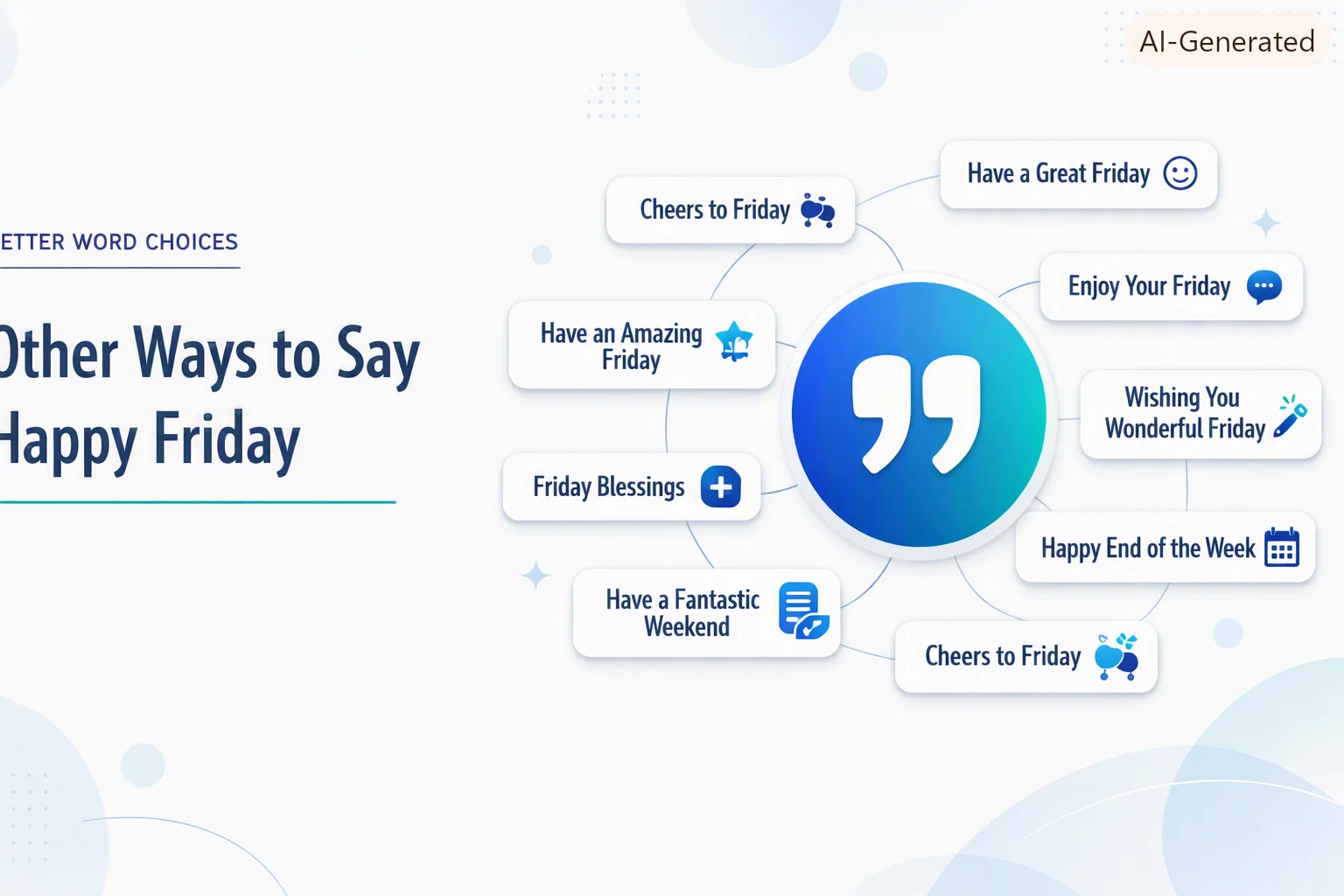
“Happy Friday” is a casual, upbeat greeting used to celebrate the end of the work week.If you want fresh alternatives, try: TGIF, Enjoy your weekend, Almost there, Weekend vibes, and Cheers to Friday. Each fits a slightly different tone, from playful to professional.
Happy Friday” is a friendly greeting people use to mark the final workday of the week. It signals relief, excitement, and a shared sense of accomplishment among coworkers, friends, and family. You will hear it in office chats, team meetings, group texts, and social media posts.
Learning alternatives to “Happy Friday” helps you sound more natural and adaptable in different settings. A casual coffee chat calls for a different phrase than a formal client email. Expanding your vocabulary also helps you express excitement in English without repeating the same phrase every week.
This guide breaks down formal, casual, professional, and informal alternatives, explains when to use each one, and shows you how tone changes meaning. By the end, you will have 30 fresh ways to greet your colleagues, friends, and clients every Friday.
The right tone makes your English sound professional and confident.”
Quick Categories
Formal Alternatives to “Happy Friday”
- Wishing you a pleasant end to the week
- I hope you have a restful weekend ahead
- Enjoy the remainder of your week
- Best wishes for a smooth weekend
Pro Tips Box: Use formal alternatives in emails to clients, managers, or anyone outside your close work circle. They keep your tone respectful without sounding cold.
Casual Alternatives
- Happy Friday, everyone
- Yay, it’s Friday
- Finally Friday
- Friday feeling
Pro Tips Box: Casual phrases work best in team chats or with people you know well. Save them for informal group settings.
Professional Alternatives
- Wishing everyone a productive close to the week
- Hope your week wraps up smoothly
- Looking forward to a well-earned weekend
- Thank you all for a great week
Pro Tips Box: Professional alternatives are ideal for team-wide emails or meetings where you want warmth without losing credibility.
Informal Expressions
- TGIF
- Weekend vibes
- Almost there
- Freedom is close
Pro Tips Box: Informal expressions are perfect for texts, social media captions, or casual banter with friends and close coworkers.
Small changes in wording can completely shift how professional you sound.
Common Mistakes People Make Using “Happy Friday”
- Using it in formal client emails. It can sound too casual for business correspondence. Example: “Happy Friday, please find the attached invoice” feels mismatched in tone.
- Repeating it every single week without variation. This makes your communication feel repetitive. Example: Saying “Happy Friday” in every weekly team update loses its impact over time.
- Using it with someone you have never met. It can feel overly familiar too soon. Example: Opening a first email to a new client with “Happy Friday” may seem unprofessional.
- Forgetting cultural context. Not every culture celebrates the end of the work week the same way. Example: Sending “Happy Friday” to an international client whose work week ends on a different day.
- Overusing exclamation marks or emojis. This can undercut a professional tone. Example: “Happy Friday!!! 🎉🎉🎉” in a formal report feels out of place.
What Does “Happy Friday” Mean?
“Happy Friday” is an informal greeting used to express relief and enthusiasm that the work week is ending. Grammatically, it functions as an exclamatory phrase, often standing alone as a short sentence or greeting.
Example Sentence: “Happy Friday, team! Let’s finish strong.”
When to Use “Happy Friday”
- Sending a casual message to coworkers you know well
- Wrapping up a team meeting on a Friday
- Posting on social media at the start of the weekend
- Greeting friends or family in a relaxed setting
Spoken vs Written: It works well both in spoken greetings and casual written messages like texts or chat apps.
Formal vs Informal: It leans informal and is best avoided in official business documents or first-time client communication.
Is It Professional or Polite to Say “Happy Friday”?
“Happy Friday” is polite, but it is not always professional. It shows warmth and friendliness, which makes it socially appropriate in many settings. However, in formal business writing, it can seem too casual.
Business-style example: “Happy Friday! Just confirming our call is still set for 3 PM” mixes a friendly tone with a professional request, which works well internally but less so with new external clients.
Polite? ✔️ Yes Professional? ❌ No (in most cases)
Pros and Cons of Using “Happy Friday”
Pros:
- Simple and natural
- Friendly tone
- Common usage
- Easy to understand
Cons:
- Too informal for work
- Overused
- Limited emotional range
- Not suitable for formal writing
“Fluency isn’t about knowing more words. It’s about knowing the right word for the moment.”
Other Ways to Say Happy Friday
These alternatives will help you sound more fluent, confident, and natural in different situations. Use them according to tone, context, and audience to express excitement, admiration, or approval.
1. TGIF
Meaning: A popular abbreviation for “Thank God It’s Friday,” expressing excitement that the workweek is over.
Explanation: Widely used in casual conversations, texts, and social media to celebrate the arrival of Friday.
Example Sentence: TGIF! Let’s grab dinner after work.
Best Use: Text messages, casual conversations, social media
Avoid Using: Formal emails or professional reports
Tone: Playful, energetic
Context: Casual, spoken
2. Enjoy Your Weekend
Meaning: A polite way to wish someone an enjoyable and relaxing weekend.
Explanation: A versatile expression that works well in both professional and personal conversations.
Example Sentence: Enjoy your weekend, and I’ll see you on Monday.
Best Use: Emails, meetings, workplace conversations
Avoid Using: Very casual group chats where a shorter phrase may sound more natural
Tone: Warm, respectful
Context: Professional, casual
3. Almost There
Meaning: A phrase that reminds others the workweek is nearly over.
Explanation: Often used to motivate coworkers or friends as Friday approaches.
Example Sentence: Almost there, everyone—just one last meeting to go!
Best Use: Team chats, workplace motivation
Avoid Using: Client-facing emails
Tone: Encouraging, motivating
Context: Professional, casual
4. Weekend Vibes
Meaning: Refers to the relaxed and cheerful feeling that comes with the approaching weekend.
Explanation: Frequently used on social media and in casual conversations.
Example Sentence: Weekend vibes are already kicking in.
Best Use: Social media posts, casual chats
Avoid Using: Business documents
Tone: Relaxed, fun
Context: Casual, spoken
5. Cheers to Friday
Meaning: A celebratory expression recognizing the arrival of Friday.
Explanation: Creates a positive, upbeat atmosphere and often follows a successful workweek.
Example Sentence: Cheers to Friday and another productive week!
Best Use: Team celebrations, casual workplace conversations
Avoid Using: Formal reports
Tone: Celebratory, upbeat
Context: Casual, professional
6. Finally Friday
Meaning: Expresses relief that Friday has finally arrived.
Explanation: Highlights the feeling that the workweek seemed especially long.
Example Sentence: Finally Friday! Time to relax.
Best Use: Personal conversations
Avoid Using: Client communication
Tone: Relieved, casual
Context: Casual, spoken
7. Wishing You a Pleasant End to the Week
Meaning: A formal way to wish someone well as the workweek concludes.
Explanation: Ideal for professional emails, letters, and business correspondence.
Example Sentence: Wishing you a pleasant end to the week and a wonderful weekend.
Best Use: Formal emails
Avoid Using: Text messages
Tone: Formal, respectful
Context: Professional
8. Hope Your Week Wraps Up Smoothly
Meaning: A courteous wish for a stress-free finish to the week.
Explanation: Commonly used as a professional email closing.
Example Sentence: Hope your week wraps up smoothly before the weekend begins.
Best Use: Business emails
Avoid Using: Casual texting
Tone: Polite, professional
Context: Professional
9. Freedom Is Close
Meaning: A humorous way to say the weekend is almost here.
Explanation: Often used among coworkers and friends to build excitement.
Example Sentence: Freedom is close—just a few more hours!
Best Use: Friendly conversations
Avoid Using: Client meetings
Tone: Humorous, lighthearted
Context: Casual
10. Have a Great Weekend Ahead
Meaning: A friendly farewell before the weekend begins.
Explanation: A common closing phrase in both professional and personal settings.
Example Sentence: Have a great weekend ahead, and see you next week.
Best Use: Emails, meetings
Avoid Using: Very casual group chats
Tone: Polite, warm
Context: Professional, casual
11. Friday Feeling
Meaning: The excitement and positive mood people often experience on Fridays.
Explanation: Frequently appears in captions, comments, and casual conversations.
Example Sentence: That Friday feeling has finally arrived.
Best Use: Social media
Avoid Using: Formal writing
Tone: Cheerful, casual
Context: Casual
12. Looking Forward to a Well-Earned Weekend
Meaning: Expresses anticipation for a relaxing weekend after working hard.
Explanation: Recognizes effort while maintaining a professional tone.
Example Sentence: I’m looking forward to a well-earned weekend after finishing this project.
Best Use: Team updates
Avoid Using: First-time client emails
Tone: Appreciative, professional
Context: Professional
13. Thank You All for a Great Week
Meaning: Shows appreciation for everyone’s contributions during the week.
Explanation: Frequently used by managers and team leaders before the weekend.
Example Sentence: Thank you all for a great week. Enjoy your weekend!
Best Use: Team meetings, company messages
Avoid Using: Casual conversations with friends
Tone: Appreciative, professional
Context: Professional
14. It’s the Weekend, Finally
Meaning: Expresses excitement that the weekend has arrived.
Explanation: A casual phrase that emphasizes relief after a busy week.
Example Sentence: It’s the weekend, finally! Time to unwind.
Best Use: Personal conversations
Avoid Using: Business emails
Tone: Relieved, casual
Context: Casual
15. Wrapping Up the Week Strong
Meaning: Encourages finishing the workweek with focus and determination.
Explanation: Commonly used as workplace motivation.
Example Sentence: Let’s finish the week strong!
Best Use: Team communication
Avoid Using: Casual texting
Tone: Motivating, professional
Context: Professional
16. Happy Weekend
Meaning: A simple greeting wishing someone an enjoyable weekend.
Explanation: Broader than Happy Friday because it refers to the entire weekend.
Example Sentence: Happy weekend! See you next week.
Best Use: Friendly greetings
Avoid Using: Formal documents
Tone: Friendly, casual
Context: Casual, professional
17. Rest Well This Weekend
Meaning: A thoughtful wish encouraging someone to relax and recharge.
Explanation: Often used with coworkers, friends, or family.
Example Sentence: Rest well this weekend—you’ve earned it.
Best Use: Supportive messages
Avoid Using: Marketing emails
Tone: Caring, warm
Context: Professional, casual
18. Weekend Mode Activated
Meaning: A playful way to announce that it’s time to relax.
Explanation: Popular in social media captions and informal conversations.
Example Sentence: Weekend mode activated!
Best Use: Social media
Avoid Using: Client communication
Tone: Playful, modern
Context: Casual
19. One More Day to Go
Meaning: Reminds others that the weekend is almost here.
Explanation: Builds anticipation and motivation near the end of the week.
Example Sentence: One more day to go before the weekend!
Best Use: Team chats
Avoid Using: Formal reports
Tone: Encouraging, casual
Context: Casual, professional
20. End-of-Week Wishes
Meaning: A general expression for sending positive thoughts before the weekend.
Explanation: Neutral wording suitable for workplace communication.
Example Sentence: Sending end-of-week wishes to everyone on the team.
Best Use: Group emails
Avoid Using: Personal text messages
Tone: Neutral, polite
Context: Professional
21. Let the Weekend Begin
Meaning: An enthusiastic announcement that the weekend has started.
Explanation: Often used to celebrate the end of the workweek.
Example Sentence: Let the weekend begin!
Best Use: Social gatherings, casual conversations
Avoid Using: Business proposals
Tone: Excited, celebratory
Context: Casual
22. Wishing You a Smooth Weekend
Meaning: A calm and thoughtful way to wish someone a pleasant weekend.
Explanation: Suitable for professional emails and business communication.
Example Sentence: Wishing you a smooth and enjoyable weekend.
Best Use: Professional emails
Avoid Using: Informal chats
Tone: Calm, respectful
Context: Professional
23. Happy Friday Vibes
Meaning: A fun expression celebrating the positive energy of Friday.
Explanation: Commonly paired with social media posts and photos.
Example Sentence: Happy Friday vibes all around!
Best Use: Social media
Avoid Using: Formal writing
Tone: Fun, upbeat
Context: Casual
24. Great Job This Week, Enjoy Your Break
Meaning: Combines appreciation with a weekend farewell.
Explanation: Often used by managers to recognize employees’ efforts.
Example Sentence: Great job this week—enjoy your break!
Best Use: Leadership messages
Avoid Using: First-time client communication
Tone: Appreciative, professional
Context: Professional
25. Ready for the Weekend
Meaning: Expresses excitement for the weekend to begin.
Explanation: A simple phrase that reflects eagerness after a busy week.
Example Sentence: I’m definitely ready for the weekend.
Best Use: Friendly conversations
Avoid Using: Business writing
Tone: Eager, casual
Context: Casual
26. Fridays Are the Best
Meaning: A cheerful statement celebrating Fridays.
Explanation: Expresses personal enthusiasm for the end of the workweek.
Example Sentence: Fridays are the best!
Best Use: Personal conversations
Avoid Using: Professional reports
Tone: Cheerful, casual
Context: Casual
27. Wishing Everyone a Productive Close to the Week
Meaning: A professional message encouraging a strong finish to the workweek.
Explanation: Combines motivation with a positive closing.
Example Sentence: Wishing everyone a productive close to the week.
Best Use: Company-wide emails
Avoid Using: Casual texting
Tone: Professional, encouraging
Context: Professional
28. See You on the Other Side of the Weekend
Meaning: A humorous way to say goodbye until Monday.
Explanation: A lighthearted farewell commonly used among coworkers.
Example Sentence: See you on the other side of the weekend!
Best Use: Friendly workplace farewells
Avoid Using: Client emails
Tone: Witty, casual
Context: Casual
29. Wrapping Things Up for the Week
Meaning: Indicates that work is coming to an end before the weekend.
Explanation: A neutral phrase commonly used in workplace updates.
Example Sentence: I’m just wrapping things up for the week.
Best Use: Work updates
Avoid Using: Social media captions
Tone: Neutral, professional
Context: Professional
30. Happy Almost Weekend
Meaning: A playful greeting used shortly before the weekend begins.
Explanation: Most commonly used on Thursdays or early Fridays to build excitement.
Example Sentence: Happy almost weekend—just one more day to go!
Best Use: Casual greetings
Avoid Using: Formal writing
Tone: Light, playful
Context: Casual
Variety in language keeps your communication fresh, engaging, and genuine.
Mini Quiz / Self-Check
Quick Quiz
1. Which phrase is most appropriate for a formal client email?
a) TGIF
b) Wishing you a pleasant end to the week
c) Weekend mode activated
d) Friday feeling
Answer: b) Wishing you a pleasant end to the week
2. Which phrase is best suited for a social media caption?
a) Hope your week wraps up smoothly
b) Weekend vibes
c) Wishing everyone a productive close to the week
d) End of week wishes
Answer: b) Weekend vibes
3. True or False: “Happy Friday” is considered fully professional in all business writing.
Answer: False
Explanation: While “Happy Friday” is acceptable in many friendly workplace settings, it can be too informal for formal client emails or highly professional business communication.
4. Which phrase would fit best in a team meeting to acknowledge hard work?
a) Freedom is close
b) Thank you all for a great week
c) TGIF
d) Fridays are the best
Answer: b) Thank you all for a great week
“Mastering tone is the difference between sounding casual and sounding careless.”
Comparison Table: Top Alternatives
| Phrase | Tone | Best Use |
|---|---|---|
| TGIF | Playful, energetic | Texts, casual chats |
| Enjoy your weekend | Warm, respectful | Emails, meetings |
| Almost there | Encouraging | Team chats |
| Weekend vibes | Relaxed, fun | Social media |
| Cheers to Friday | Celebratory | Team celebrations |
| Wishing you a pleasant end to the week | Formal | Formal emails |
| Hope your week wraps up smoothly | Polite | Business emails |
| Have a great weekend ahead | Polite, warm | Emails, meetings |
| Looking forward to a well-earned weekend | Professional | Team updates |
| Wishing everyone a productive close to the week | Professional | Company-wide emails |
FAQs
Is “Happy Friday” appropriate for work emails?
It depends on your workplace culture. It works well in internal, casual emails but should be avoided in formal client communication.
What is a more professional way to say “Happy Friday”?
Try phrases like “Wishing you a pleasant end to the week” or “Hope your week wraps up smoothly” for a professional tone.
Can I use “TGIF” in a business setting?
TGIF is very casual and best reserved for internal team chats rather than official business writing.
What are some fun alternatives to “Happy Friday”?
Options like “Weekend vibes,” “Weekend mode activated,” and “Fridays are the best” add a playful tone.
Why should I learn different ways to say “Happy Friday”?
Using varied phrases helps you sound more fluent, avoids repetition, and lets you match your tone to different audiences.
Conclusion
Learning multiple alternatives to “Happy Friday” gives you the flexibility to match your tone with any audience, whether you are messaging a close friend or writing a formal email to a client. Understanding formal, casual, professional, and informal expressions builds real confidence in everyday English communication.
Make it a habit to practice these phrases weekly. Pay attention to tone, context, and audience each time you choose a phrase. Small, consistent practice will help these alternatives become a natural part of your vocabulary.
Read More Related Articles:
- Other Ways to Say “The Author Says” | Like a Skilled Academic Writer In 2026
- Other Ways to Say “In Summary” | Clearer and Stronger Conclusions In 2026
- Other Ways to Say “Similarly” | Smart Synonyms You’ll Use Every Day In 2026

Henry Walker is an American writer and blogger with a keen interest in communication, language and digital content. At TextsResponse.com, he creates informative and reader-focused resources designed to help people communicate with clarity, confidence and authenticity.