Quick Answer
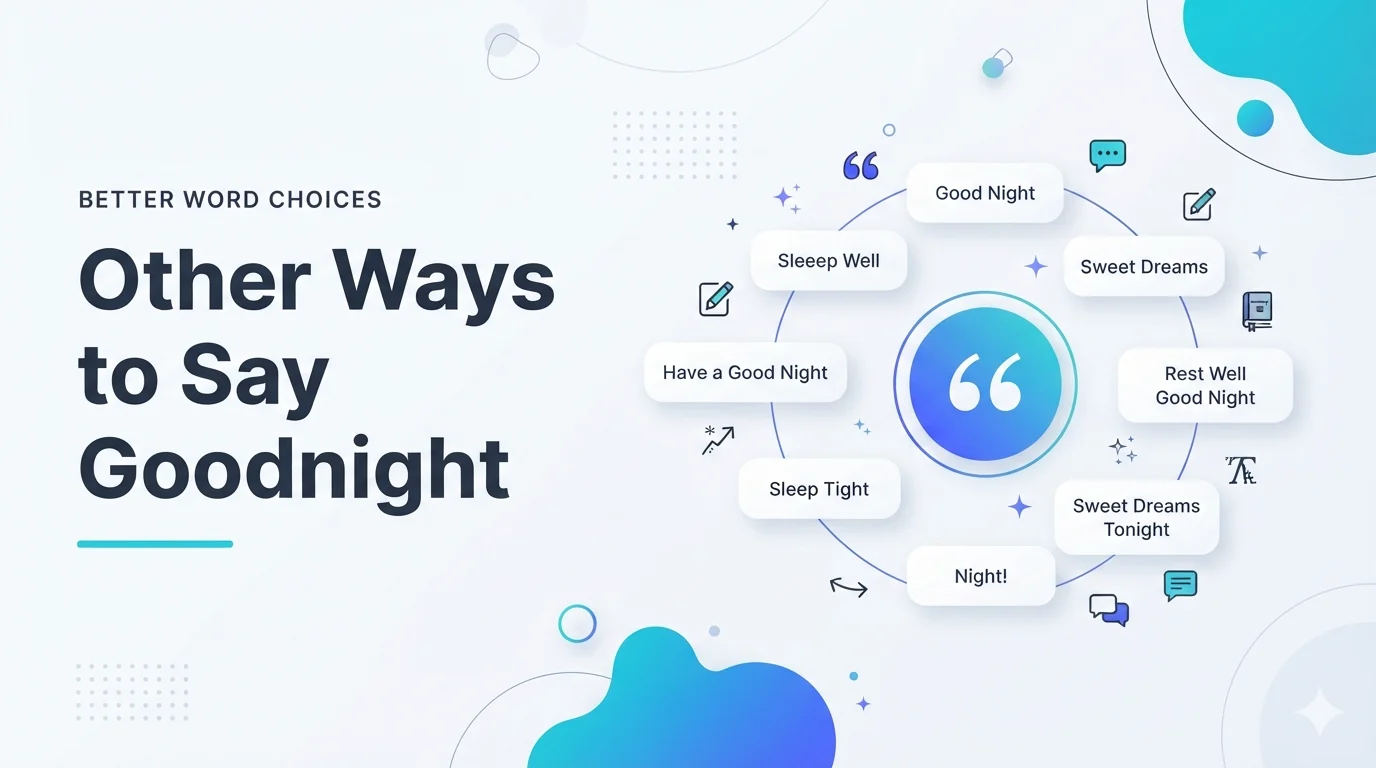
You can say goodnight in many ways depending on tone, audience, and setting. Choose warm phrases for friends and family, and polished phrases for colleagues and clients.Top 5 alternatives: Sleep well, Sweet dreams, Have a restful evening, Rest well, Talk to you tomorrow
Goodnight is the most common way to end an evening conversation. People use it when they leave a room, end a call, sign off a message, or head to bed. It is polite, simple, and understood everywhere.
Using the same phrase every time can sound repetitive. Learning alternatives to goodnight helps you match your tone to the person and the situation. It also builds fluency, because native speakers naturally vary their farewells. When you want to express excitement in English about seeing someone again, a phrase like “See you tomorrow” carries more energy than a plain goodnight.
Below you will find 30 phrases with meanings, examples, and tone guidance. Use them in texts, emails, calls, and daily conversations.
The right tone makes your English sound professional and confident.”
Quick Categories
Formal Alternatives to “Goodnight”
- Wishing you a restful evening
- I wish you a peaceful night
- Have a pleasant evening
Pro Tips Box: Use full sentences in formal settings. They sound more respectful than short farewells.
Casual Alternatives
- Sleep tight
- Sweet dreams
- Nighty night
Pro Tips Box: Match the warmth of your phrase to how close you are to the person. Save cute phrases for friends and family.
Professional Alternatives
- Have a great evening
- Talk to you tomorrow
- Rest well
Pro Tips Box: In workplace messages, pair your farewell with a next step, such as “Talk to you tomorrow.”
Informal Expressions
- Time to hit the hay
- Off to bed
- Lights out
Pro Tips Box: Informal expressions in English work best in speech and quick messages. Avoid them in reports and formal emails.
Common Mistakes
Here are five common errors people make when using “goodnight.”
- Using it as a greeting. Goodnight means goodbye, not hello.
- Incorrect: “Goodnight, everyone,” said while entering a dinner party.
- Correct: “Good evening, everyone.”
- Saying it too early in the day. It fits late evening, not afternoon.
- Incorrect: “Goodnight!” at 4 p.m. when leaving the office.
- Correct: “Have a good evening!”
- Using casual versions with senior colleagues. Phrases like “Nighty night” can sound unprofessional.
- Incorrect: “Nighty night, Mr. Ahmed.”
- Correct: “Have a restful evening, Mr. Ahmed.”
- Writing it in text speak in formal messages. Shortcuts reduce credibility.
- Incorrect: “Gud nite, team.”
- Correct: “Goodnight, team.”
- Repeating the same phrase in every message. It can sound automatic and cold.
- Weak: “Goodnight.” “Goodnight.” “Goodnight.”
- Better: “Sleep well,” followed by “Talk to you tomorrow.”
What Does “Goodnight” Mean?
Goodnight is a farewell expression used in the evening or at bedtime. It wishes the other person a peaceful night or marks the end of a conversation.
Grammatically, it works as an interjection. It is written as one word (“goodnight”) or two words (“good night”), and both are accepted. Many style guides prefer “good night” as a farewell phrase and “goodnight” as a noun or adjective, but modern usage accepts both.
Example: “Goodnight, Sara. I will see you in the morning.”
When to Use “Goodnight”
- Bedtime: Leaving family or roommates to sleep
- End of a call: Finishing a late evening phone or video call
- Text messages: Signing off a chat with friends or family
- Workplace evenings: Leaving after a late shift or meeting
- Spoken vs written: Most natural in speech, common in short messages, less common in formal letters
- Formal vs informal: Fine in both, but formal settings prefer expanded phrases like “Have a pleasant evening
A good farewell leaves the other person feeling respected and remembered.
Is It Professional or Polite to Say “Goodnight”?
Goodnight is polite because it shows care and closes a conversation kindly. It is less professional when it feels too personal, especially in first contact or formal writing.
Business example: “Thank you for the update. Goodnight, and I will follow up tomorrow.”
Polite? Yes
Professional? No (in most cases)
In business, a phrase like “Have a pleasant evening” gives the same warmth with more polish.
Pros and Cons of Using “Goodnight”
Pros
- Simple and natural
- Friendly tone
- Common usage
- Easy to understand
Cons
- Too informal for work in some settings
- Overused
- Limited emotional range
- Not suitable for formal writing
“Variety in your farewells shows control of tone, and control of tone shows fluency.”
Other Ways to Say Goodnight
These alternatives will help you sound more fluent, confident, and natural in different situations.
Use them according to tone, context, and audience to express excitement, admiration, or approval.
1. Phrase: Sleep well
- Meaning: A wish for good, restful sleep.
- Explanation: It is a gentle, universal replacement for goodnight.
- Example Sentence: “It has been a long day, so sleep well.”
- Best Use: Family, friends
- Worst Use: Formal letters
- Tone: Warm, caring
- Context Variability:
- Casual: “Sleep well, buddy.”
- Professional: “Sleep well, and see you at the meeting.”
- Spoken: “Sleep well, talk soon.”
2. Phrase: Sweet dreams
- Meaning: A wish for pleasant dreams.
- Explanation: It is affectionate and often used with loved ones.
- Example Sentence: “Sweet dreams, sweetheart.”
- Best Use: Loved ones, children
- Worst Use: Business emails
- Tone: Tender, affectionate
- Context Variability:
- Casual: “Sweet dreams, everyone.”
- Professional: Rarely suitable
- Spoken: “Sweet dreams, see you tomorrow.”
3. Phrase: Sleep tight
- Meaning: A wish for deep, comfortable sleep.
- Explanation: It is a traditional bedtime phrase.
- Example Sentence: “Sleep tight, and I will call you in the morning.”
- Best Use: Bedtime chats, family
- Worst Use: Workplace messages
- Tone: Cozy, playful
- Context Variability:
- Casual: “Sleep tight, kiddo.”
- Professional: Avoid
- Spoken: “Sleep tight, love.”
4. Phrase: Have a restful night
- Meaning: A wish for a night of good rest.
- Explanation: It is polite and works in many settings.
- Example Sentence: “Thanks for your help today. Have a restful night.”
- Best Use: Colleagues, guests
- Worst Use: Close friend jokes
- Tone: Polite, considerate
- Context Variability:
- Casual: “Have a restful night, my friend.”
- Professional: “Have a restful night, and thank you.”
- Spoken: “Have a restful night, see you soon.”
5. Phrase: Rest well
- Meaning: A wish for the person to recover and relax.
- Explanation: It is short, kind, and suitable for tired people.
- Example Sentence: “You worked hard today, so rest well.
- Best Use: After busy days
- Worst Use: Playful banter
- Tone: Supportive, calm
- Context Variability:
- Casual: “Rest well, you earned it.”
- Professional: “Rest well, and we will continue tomorrow.”
- Spoken: “Rest well, talk tomorrow.”
6. Phrase: Wishing you a peaceful night
- Meaning: A formal wish for calm and comfort overnight.
- Explanation: It sounds thoughtful and complete.
- Example Sentence: “Thank you for the evening. Wishing you a peaceful night.”
- Best Use: Formal notes, hosts
- Worst Use: Quick texts
- Tone: Graceful, sincere
- Context Variability:
- Casual: “Wishing you a peaceful night, dear friend.”
- Professional: “Wishing you a peaceful night, Ms. Khan.”
- Spoken: “Wishing you a peaceful night, take care.”
7. Phrase: Have a good evening
- Meaning: A wish for a pleasant rest of the evening.
- Explanation: It works before people go home, not only at bedtime.
- Example Sentence: “Thanks for the call. Have a good evening.”
- Best Use: Work farewells
- Worst Use: Bedtime moments
- Tone: Neutral, courteous
- Context Variability:
- Casual: “Have a good evening, guys.”
- Professional: “Have a good evening, and thank you.”
- Spoken: “Have a good evening, see you tomorrow.”
8. Phrase: Nighty night
- Meaning: A playful, cute way to say goodnight.
- Explanation: It is used mostly with children and close partners.
- Example Sentence: “Nighty night, little one.”
- Best Use: Kids, partners
- Worst Use: Workplace
- Tone: Cute, playful
- Context Variability:
- Casual: “Nighty night, sleepyhead.”
- Professional: Avoid
- Spoken: “Nighty night, love you.”
9. Phrase: Catch you in the morning
- Meaning: A promise to talk or meet the next morning.
- Explanation: It ends the day while looking forward.
- Example Sentence: “I am heading out now. Catch you in the morning.”
- Best Use: Friends, teammates
- Worst Use: Formal letters
- Tone: Relaxed, friendly
- Context Variability:
- Casual: “Catch you in the morning, mate.”
- Professional: “Catch you in the morning at the stand up.”
- Spoken: “Catch you in the morning, bye.”
10. Phrase: Time to hit the hay
- Meaning: It is time to go to bed.
- Explanation: It is an idiom used by the speaker about themselves.
- Example Sentence: “It is late, so time to hit the hay.”
- Best Use: Casual chats
- Worst Use: Business talks
- Tone: Informal, cheerful
- Context Variability:
- Casual: “Time to hit the hay, see you all.”
- Professional: Avoid
- Spoken: “Time to hit the hay, night everyone.”
11. Phrase: See you tomorrow
- Meaning: A promise to meet again the next day.
- Explanation: It sounds positive and expresses excitement in English about future plans.
- Example Sentence: “Great session today. See you tomorrow.”
- Best Use: School, work
- Worst Use: Long goodbyes
- Tone: Upbeat, friendly
- Context Variability:
- Casual: “See you tomorrow, guys.”
- Professional: “See you tomorrow at nine.”
- Spoken: “See you tomorrow, bye.”
12. Phrase: Have a pleasant evening
- Meaning: A polite wish for an enjoyable evening.
- Explanation: It is a safe formal choice.
- Example Sentence: “Thank you for visiting. Have a pleasant evening.”
- Best Use: Customers, clients
- Worst Use: Close friends
- Tone: Formal, courteous
- Context Variability:
- Casual: “Have a pleasant evening, folks.”
- Professional: “Have a pleasant evening, Mr. Rana.”
- Spoken: “Have a pleasant evening, take care.”
13. Phrase: Wishing you a restful evening
- Meaning: A formal wish for relaxation after the day.
- Explanation: It suits polite emails and letters.
- Example Sentence: “Thank you for your time. Wishing you a restful evening.”
- Best Use: Email sign offs
- Worst Use: Text banter
- Tone: Polished, respectful
- Context Variability:
- Casual: “Wishing you a restful evening, my friend.”
- Professional: “Wishing you a restful evening, and best regards.”
- Spoken: “Wishing you a restful evening, goodbye.”
14. Phrase: Good night and take care
- Meaning: A caring farewell that adds a wish for safety.
- Explanation: It is useful when someone is traveling or leaving late.
- Example Sentence: “Drive safely. Good night and take care.”
- Best Use: Travel, late exits
- Worst Use: Playful chats
- Tone: Caring, sincere
- Context Variability:
- Casual: “Good night and take care, pal.”
- Professional: “Good night and take care, Dr. Ali.”
- Spoken: “Good night and take care, message me when you arrive.”
15. Phrase: Talk to you tomorrow
- Meaning: A promise to continue the conversation the next day.
- Explanation: It is one of the most useful professional reaction phrases for closing chats.
- Example Sentence: “Let us pause here. Talk to you tomorrow.”
- Best Use: Work chats, calls
- Worst Use: Bedtime wishes
- Tone: Practical, friendly
- Context Variability:
- Casual: “Talk to you tomorrow, dude.”
- Professional: “Talk to you tomorrow about the proposal.”
- Spoken: “Talk to you tomorrow, bye.”
16. Phrase: Get some rest
- Meaning: A suggestion to sleep or relax.
- Explanation: It shows concern for the other person.
- Example Sentence: “You look tired. Get some rest.”
- Best Use: Tired friends
- Worst Use: Formal notes
- Tone: Concerned, gentle
- Context Variability:
- Casual: “Get some rest, you need it.”
- Professional: “Please get some rest before tomorrow.”
- Spoken: “Get some rest, okay?”
17. Phrase: Don’t let the bed bugs bite
- Meaning: A playful wish for undisturbed sleep.
- Explanation: It is a rhyming bedtime saying.
- Example Sentence: “Sleep tight, and do not let the bed bugs bite.”
- Best Use: Children, jokes
- Worst Use: Any formal setting
- Tone: Playful, humorous
- Context Variability:
- Casual: “Do not let the bed bugs bite, buddy.”
- Professional: Avoid
- Spoken: “Night night, do not let the bed bugs bite.”
18. Phrase: Off to bed
- Meaning: I am going to sleep now.
- Explanation: It is a quick exit line about yourself.
- Example Sentence: “It is almost midnight, so I am off to bed.”
- Best Use: Chats, calls
- Worst Use: Business emails
- Tone: Casual, direct
- Context Variability:
- Casual: “Off to bed, catch you later.”
- Professional: Avoid
- Spoken: “Off to bed, night all.”
19. Phrase: Rest up
- Meaning: Relax and recover your energy.
- Explanation: It is friendly and often used before a big day.
- Example Sentence: “Big day tomorrow, so rest up.”
- Best Use: Before events
- Worst Use: Formal letters
- Tone: Encouraging, casual
- Context Variability:
- Casual: “Rest up, champ.”
- Professional: “Please rest up before the presentation.”
- Spoken: “Rest up, we start early.”
20. Phrase: Until tomorrow
- Meaning: Goodbye until the next day.
- Explanation: It sounds slightly formal and elegant.
- Example Sentence: “Thank you all. Until tomorrow.”
- Best Use: Meetings, classes
- Worst Use: Casual texting
- Tone: Polished, calm
- Context Variability:
- Casual: “Until tomorrow, my friends.”
- Professional: “Until tomorrow, team.”
- Spoken: “Until tomorrow, goodbye.”
21. Phrase: Have a great night
- Meaning: A cheerful wish for a good night.
- Explanation: It can suit going out or going home.
- Example Sentence: “Thanks for dinner. Have a great night.”
- Best Use: Social events
- Worst Use: Formal writing
- Tone: Cheerful, positive
- Context Variability:
- Casual: “Have a great night, everyone.”
- Professional: “Have a great night, and thank you.”
- Spoken: “Have a great night, see you soon.”
22. Phrase: Enjoy your evening
- Meaning: A wish for the person to enjoy their free time.
- Explanation: It fits when someone is leaving for plans or rest.
- Example Sentence: “The work is done. Enjoy your evening.”
- Best Use: After work
- Worst Use: Bedtime
- Tone: Light, friendly
- Context Variability:
- Casual: “Enjoy your evening, folks.”
- Professional: “Enjoy your evening, Ms. Noor.”
- Spoken: “Enjoy your evening, bye.”
23. Phrase: Wishing you a good rest
- Meaning: A gentle wish for proper rest.
- Explanation: It is a soft and thoughtful phrase for messages.
- Example Sentence: “You had a tough week. Wishing you a good rest.”
- Best Use: Messages, cards
- Worst Use: Quick exits
- Tone: Kind, thoughtful
- Context Variability:
- Casual: “Wishing you a good rest, friend.”
- Professional: “Wishing you a good rest after a long week.”
- Spoken: “Wishing you a good rest, take care.”
24. Phrase: Sleep peacefully
- Meaning: A wish for calm, undisturbed sleep.
- Explanation: It is soothing and slightly poetic.
- Example Sentence: “The storm has passed, so sleep peacefully.”
- Best Use: Comforting someone
- Worst Use: Work chats
- Tone: Soothing, gentle
- Context Variability:
- Casual: “Sleep peacefully, dear.”
- Professional: Rarely suitable
- Spoken: “Sleep peacefully, all is fine.”
25. Phrase: Night night
- Meaning: A short, friendly version of goodnight.
- Explanation: It is lighter than the standard phrase.
- Example Sentence: “Night night, see you at breakfast.”
- Best Use: Family, friends
- Worst Use: Clients
- Tone: Soft, casual
- Context Variability:
- Casual: “Night night, everyone.”
- Professional: Avoid
- Spoken: “Night night, sleep well.”
26. Phrase: Lights out
- Meaning: It is time to turn off the lights and sleep.
- Explanation: It is a direct, playful bedtime call.
- Example Sentence: “It is late, so lights out.”
- Best Use: Shared rooms, camps
- Worst Use: Formal talks
- Tone: Firm, playful
- Context Variability:
- Casual: “Lights out, team.”
- Professional: Avoid
- Spoken: “Lights out, night all.”
27. Phrase: Turning in for the night
- Meaning: I am going to bed now.
- Explanation: It is a polite, slightly refined way to say you are leaving to sleep.
- Example Sentence: “I am turning in for the night, so I will reply tomorrow.”
- Best Use: Chats, messages
- Worst Use: Excited banter
- Tone: Calm, courteous
- Context Variability:
- Casual: “Turning in for the night, catch you later.”
- Professional: “I am turning in for the night and will respond in the morning.”
- Spoken: “Turning in for the night, take care.”
28. Phrase: Have a lovely night
- Meaning: A warm wish for a pleasant night.
- Explanation: It is friendly and common in British English.
- Example Sentence: “Thanks for coming over. Have a lovely night.”
- Best Use: Hosts, friends
- Worst Use: Tense meetings
- Tone: Warm, gracious
- Context Variability:
- Casual: “Have a lovely night, dear.”
- Professional: “Have a lovely night, and thank you.”
- Spoken: “Have a lovely night, see you soon.”
29. Phrase: Sweet dreams and see you soon
- Meaning: A wish for good dreams plus a promise to meet again.
- Explanation: It combines affection with a future connection.
- Example Sentence: “Sweet dreams and see you soon, Grandma.”
- Best Use: Family, close friends
- Worst Use: Business
- Tone: Affectionate, hopeful
- Context Variability:
- Casual: “Sweet dreams and see you soon, sis.”
- Professional: Avoid
- Spoken: “Sweet dreams and see you soon, bye.”
30. Phrase: Good night, and thank you for today
- Meaning: A farewell that also shows gratitude.
- Explanation: It adds appreciation to a simple goodnight.
- Example Sentence: “Good night, and thank you for today. It meant a lot.”
- Best Use: Teams, mentors
- Worst Use: Casual jokes
- Tone: Grateful, sincere
- Context Variability:
- Casual: “Good night, and thank you for today, mate.”
- Professional: “Good night, and thank you for today, team.”
- Spoken: “Good night, and thank you for today, really.”
“Adding thanks or a next step turns a simple farewell into a memorable one.”
See also: Other Ways to Say Good Morning (30+ Examples)
See also: Professional English Guide: How to Close Emails and Calls Politely
Mini Quiz and Self Check
Question 1. Your manager works late with you. Which phrase is the most appropriate?
A) Nighty night
B) Have a restful evening
C) Lights out
D) Time to hit the hay
Question 2. Which phrase promises a future meeting?
A) Sleep tight
B) Sweet dreams
C) See you tomorrow
D) Rest well
Question 3. You are texting your younger cousin at bedtime. Which fits best?
A) Wishing you a peaceful night
B) Sweet dreams
C) Have a pleasant evening
D) Until tomorrow
Question 4. Which phrase is best for saying thank you and goodbye in the evening?
A) Off to bed
B) Night night
C) Good night, and thank you for today
D) Lights out
Answers
C
B
C
B
Comparison Table: Top Alternatives
| Phrase | Tone | Best Use |
|---|---|---|
| Sleep well | Warm, caring | Family, friends |
| Sweet dreams | Tender, affectionate | Loved ones |
| Have a restful evening | Polite, courteous | Colleagues, clients |
| Rest well | Supportive, calm | After busy days |
| Talk to you tomorrow | Practical, friendly | Work chats |
| See you tomorrow | Upbeat, friendly | School, work |
| Wishing you a peaceful night | Graceful, sincere | Formal notes |
| Have a lovely night | Warm, gracious | Hosts, friends |
| Nighty night | Cute, playful | Kids, partners |
| Good night, and thank you for today | Grateful, sincere | Teams, mentors |
FAQs
What is a formal way to say goodnight?
Try “Have a pleasant evening” or “Wishing you a restful evening.” Both sound polite and professional.
Is it correct to write goodnight as one word or two?
Both forms are accepted. “Good night” is common as a farewell, and “goodnight” is common as a noun, adjective, or in casual writing.
What can I say instead of goodnight in a work email?
Use “Have a good evening,” “Talk to you tomorrow,” or “Best regards, and have a pleasant evening.”
What is a sweet way to say goodnight to someone you love?
Sweet dreams,” “Sleep tight,” and “Sweet dreams and see you soon” all sound warm and affectionate.
Can I say goodnight in the afternoon?
No. Use “Have a good evening” or “See you tomorrow” instead, because goodnight fits late evening or bedtime.
Conclusion
Learning alternatives to goodnight gives you more control over tone, warmth, and professionalism. You can now choose a phrase that fits family, friends, colleagues, or clients, and your English will sound more natural and confident.
Practice one new phrase each day, first in speech and then in writing. Always check the setting before you choose, because tone awareness is what separates a good speaker from a great one. Try one new goodnight alternative tonight and share your favorite in the comments.
Read More Related Articles:
- Other Ways to Say “From” in a Letter | For a More Professional Sign-Off In 2026
- Other Ways to Say Be Safe | Upgrade Your Farewells In 2026
- Other Ways to Say Feel Free | Formal Writing and Business Communication In 2026

Henry Walker is an American writer and blogger with a keen interest in communication, language and digital content. At TextsResponse.com, he creates informative and reader-focused resources designed to help people communicate with clarity, confidence and authenticity.