Quick Answer
Saying goodbye does not always need the same word. The best choice depends on your tone, your audience, and how long you will be apart.
Here are five top alternatives you can use right away
Take care, See you later, Farewell, Until next time, All the best
Goodbye” is the standard way to end a conversation, a call, a visit, or a message. People use it at work, at school, at home, and while travelling. It is polite and clear, but repeating it every time can make your English sound flat.
Learning alternatives to goodbye helps you match your words to the moment. A manager, a close friend, and a new client each expect a different closing. You can also express excitement in English when you will meet again soon, using phrases like “Can’t wait to see you again.
Knowing many other ways to say goodbye builds fluency and confidence. You will sound more natural in meetings, emails, phone calls, and everyday chats.
The right closing line leaves a lasting impression long after the conversation ends.
Quick Categories
Formal Alternatives to “Goodbye”
- Farewell
- Until we meet again
- Wishing you all the best
- It was a pleasure meeting you
Pro Tip: Use formal closings in speeches, official letters, and first meetings. Keep the sentence complete and calm.
Casual Alternatives
- See you later
- Catch you later
- Take it easy
- Talk later
Pro Tip: Casual phrases work best with friends, classmates, and family. Pair them with a smile or a friendly tone.
Professional Alternatives
- Kind regards
- Best wishes
- Speak soon
- Warm regards
Pro Tip: In business emails, place the closing phrase on its own line, followed by your name. This looks clean and polite.
Informal Expressions
- Bye for now
- Cheerio
- Ciao
- So long
Pro Tip: Informal expressions in English can sound different across countries. Use “Cheerio” mostly for a light, British style.
Common Mistakes
Here are five common errors people make when using “goodbye”:
- Using it in a written email closing. Example: “Goodbye, John.” Better: “Kind regards, John.”
- Saying it when you will meet again very soon. Example: “Goodbye, see you in ten minutes.” Better: “See you in a bit.
- Adding extra words that change the tone. Example: “Goodbye forever!” sounds dramatic unless you mean it.
- Using a slang closing in a formal setting. Example: “Catch you later, Mr. Ahmed.” Better: “Have a good day, Mr. Ahmed.”
- Mixing tones in one sentence. Example: “Farewell, dude.” Better: “Farewell, my friend” or “Later, dude.
The right tone makes your English sound professional and confident.”
What Does “Goodbye” Mean?
- Goodbye” is an expression used when leaving someone or ending a conversation. It signals that the interaction is over, either for now or for a longer period.
- It is a interjection in grammar, so it can stand alone or come at the end of a sentence. It can also be used as a noun, as in “We said our goodbyes.”
Example: “I have to leave now, so goodbye, and thank you for your help.”
When to Use “Goodbye”
- Ending a phone call: clear and polite
- Leaving a meeting: safe and neutral
- Parting at an airport or station: warm and sincere
- Saying farewell to a colleague or teacher: respectful
- Speaking: very common and natural
- Writing: acceptable in stories and letters, but less common in emails
- Formal situations: works well, especially with a courteous phrase added
- Informal situations: works, but shorter options like “Bye” or “See you” are more usual
“Choosing the right words for the moment matters more than choosing complicated words.”
Is It Professional or Polite to Say “Goodbye”?
“Goodbye” is polite because it is respectful and clear. It is professional in many spoken settings, but it can feel too plain or final in written business communication, where a warmer closing is preferred.
Business example:
“Thank you for your time today. Goodbye, and I look forward to our next meeting.”
Polite? Yes
Professional? Yes in speech, but often better replaced in emails.
Pros and Cons of Using “Goodbye”
Pros
- Simple and natural
- Friendly tone
- Common usage
- Easy to understand
Cons
- Too plain for warm business emails
- Overused
- Limited emotional range
- Can sound final or cold in writing
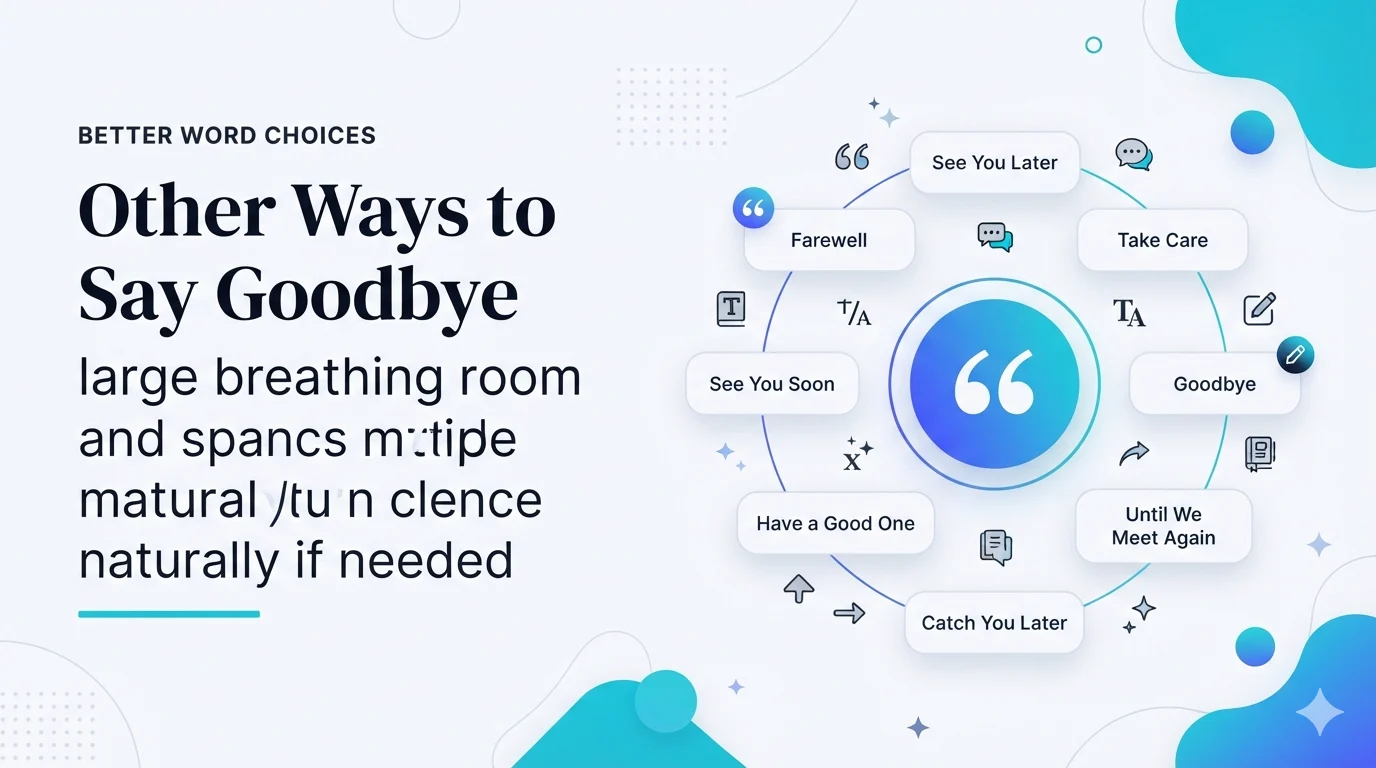
Other Ways to Say Goodbye
These alternatives will help you sound more fluent, confident, and natural in different situations.
Use them according to tone, context, and audience to express warmth, respect, or friendliness.
1. Phrase: Farewell
- Meaning: A formal way to say goodbye, often for a long separation.
- Explanation: It sounds elegant and slightly emotional.
- Example Sentence: “We wish you a happy retirement. Farewell, and thank you for everything.”
- Best Use: Speeches, ceremonies
- Worst Use: Quick texts
- Tone: Formal, heartfelt
- Context Variability:
- Casual: “Farewell, my friend, until the next adventure.”
- Professional: “Farewell, and best of luck in your new role.”
- Spoken: “Farewell, everyone.”
2. Phrase: Take care
- Meaning: A kind way to wish someone well as you part.
- Explanation: It shows concern for the other person.
- Example Sentence: “It was great talking to you. Take care.”
- Best Use: Friends, colleagues
- Worst Use: Legal letters
- Tone: Warm, caring
- Context Variability:
- Casual: “Take care, and message me later.”
- Professional: “Thank you for the update. Take care.”
- Spoken: “Okay, take care!”
3. Phrase: See you later
- Meaning: A friendly way to say you will meet again.
- Explanation: It suggests a short separation.
- Example Sentence: “I have a class now, so see you later.”
- Best Use: Friends, classmates
- Worst Use: Formal emails
- Tone: Friendly, relaxed
- Context Variability:
- Casual: “See you later at the cafe.”
- Professional: “See you later at the afternoon session.”
- Spoken: “See you later, guys.”
4. Phrase: See you soon
- Meaning: A phrase that shows you expect to meet again shortly.
- Explanation: It adds warmth and a sense of anticipation.
- Example Sentence: “Thanks for visiting. See you soon.”
- Best Use: Family, clients
- Worst Use: Permanent partings
- Tone: Warm, hopeful
- Context Variability:
- Casual: “See you soon, and bring your sister.”
- Professional: “We hope to see you soon at our office.
- Spoken: “See you soon!”
5. Phrase: Catch you later
- Meaning: A relaxed way of saying you will see or talk again.
- Explanation: It fits fast and casual chats.
- Example Sentence: “I need to run now. Catch you later.”
- Best Use: Close friends, teammates
- Worst Use: Formal meetings
- Tone: Casual, easygoing
- Context Variability:
- Casual: “Catch you later at the gym.”
- Professional: “Catch you later in the team chat.”
- Spoken: “Catch you later, mate.”
6. Phrase: Talk to you soon
- Meaning: A phrase that promises future contact.
- Explanation: It works for calls, messages, and meetings.
- Example Sentence: “Thanks for the call. Talk to you soon.”
- Best Use: Phone calls, chats
- Worst Use: In person parting
- Tone: Friendly, reliable
- Context Variability:
- Casual: “Talk to you soon, love you.”
- Professional: “Thank you, and talk to you soon.”
- Spoken: “Alright, talk to you soon.”
7. Phrase: Until next time
- Meaning: A phrase that closes a meeting while pointing to the next one.
- Explanation: It sounds polished and positive.
- Example Sentence: “It was a lovely evening. Until next time.”
- Best Use: Events, hosts
- Worst Use: Urgent situations
- Tone: Polite, pleasant
- Context Variability:
- Casual: “Until next time, my friend.”
- Professional: “Until next time, and thank you for joining us.”
- Spoken: “Until next time, everyone.”
8. Phrase: So long
- Meaning: An older, friendly way to say goodbye.
- Explanation: It has a classic and slightly nostalgic feel.
- Example Sentence: “Well, so long, and thanks for the coffee.”
- Best Use: Casual talk, storytelling
- Worst Use: Business emails
- Tone: Classic, friendly
- Context Variability:
- Casual: “So long, see you at the game.”
- Professional: “So long, and good luck with the project.”
- Spoken: “So long, folks.”
9. Phrase: Have a great day
- Meaning: A kind wish for the rest of someone’s day.
- Explanation: It works with both friends and strangers.
- Example Sentence: “Thanks for your help. Have a great day.”
- Best Use: Customer service, shops
- Worst Use: Late night talks
- Tone: Cheerful, polite
- Context Variability:
- Casual: “Have a great day at school.”
- Professional: “Thank you for calling. Have a great day.”
- Spoken: “You too, have a great day!”
10. Phrase: Have a good evening
- Meaning: A polite wish for the evening ahead.
- Explanation: It is ideal at the end of a working day.
- Example Sentence: “The meeting is over. Have a good evening.”
- Best Use: Office, events
- Worst Use: Morning meetings
- Tone: Courteous, calm
- Context Variability:
- Casual: “Have a good evening, you two.”
- Professional: “Have a good evening, and see you tomorrow.”
- Spoken: “Have a good evening!”
11. Phrase: All the best
- Meaning: A phrase that wishes someone success or happiness.
- Explanation: It is suitable when someone is starting something new.
- Example Sentence: “You are moving to a new city. All the best.”
- Best Use: Emails, farewells
- Worst Use: Very short chats
- Tone: Supportive, sincere
- Context Variability:
- Casual: “All the best with your exams.”
- Professional: “All the best in your new position.”
- Spoken: “All the best, Sara!”
12. Phrase: Best wishes
- Meaning: A polite closing that expresses good hopes.
- Explanation: It is common in letters and cards.
- Example Sentence: “Best wishes for your future.”
- Best Use: Cards, emails
- Worst Use: Casual voice chats
- Tone: Polite, kind
- Context Variability:
- Casual: “Best wishes to you and your family.”
- Professional: “Best wishes, and thank you for your support.”
- Spoken: “Best wishes for the journey.”
13. Phrase: Kind regards
- Meaning: A respectful closing used in written communication.
- Explanation: It is a safe and polished choice.
- Example Sentence: “Please find the report attached. Kind regards, Ali.”
- Best Use: Business emails
- Worst Use: Text messages
- Tone: Formal, respectful
- Context Variability:
- Casual: “Kind regards, and enjoy the weekend.”
- Professional: “Kind regards, Sales Team.”
- Spoken: “Please pass on my kind regards.”
14. Phrase: Warm regards
- Meaning: A friendly but professional closing.
- Explanation: It adds warmth without losing respect.
- Example Sentence: “Thank you again for your time. Warm regards, Mina.”
- Best Use: Client emails
- Worst Use: Casual chats
- Tone: Warm, professional
- Context Variability:
- Casual: “Warm regards to your family.”
- Professional: “Warm regards, and I look forward to your reply.”
- Spoken: “Please give him my warm regards.”
15. Phrase: Wishing you all the best
- Meaning: A complete phrase that sends good hopes.
- Explanation: It feels thoughtful and personal.
- Example Sentence: “Wishing you all the best in your new journey.”
- Best Use: Farewell notes
- Worst Use: Quick greetings
- Tone: Sincere, formal
- Context Variability:
- Casual: “Wishing you all the best, buddy.”
- Professional: “Wishing you all the best in your career.”
- Spoken: “We are wishing you all the best.”
16. Phrase: Safe travels
- Meaning: A wish for a safe journey.
- Explanation: It fits when someone is leaving on a trip.
- Example Sentence: “Your flight is tonight. Safe travels.”
- Best Use: Airports, trips
- Worst Use: Ending an office call
- Tone: Caring, warm
- Context Variability:
- Casual: “Safe travels, and text me when you land.”
- Professional: “Safe travels, and thank you for visiting us.”
- Spoken: “Safe travels, everyone!”
17. Phrase: Take it easy
- Meaning: A relaxed wish for someone to rest or stay calm.
- Explanation: It is a laid back way of parting.
- Example Sentence: “Long day, huh? Take it easy.”
- Best Use: Friends, peers
- Worst Use: Formal events
- Tone: Relaxed, friendly
- Context Variability:
- Casual: “Take it easy this weekend.”
- Professional: “Take it easy, and see you Monday.”
- Spoken: “Take it easy, man.”
18. Phrase: Bye for now
- Meaning: A light way to say goodbye for a short time.
- Explanation: It suggests that you will speak again.
- Example Sentence: “I need to log off. Bye for now.”
- Best Use: Chats, calls
- Worst Use: Formal speeches
- Tone: Light, friendly
- Context Variability:
- Casual: “Bye for now, sweetie.”
- Professional: “Bye for now, and thanks again.”
- Spoken: “Bye for now!”
19. Phrase: I have to get going
- Meaning: A polite way to explain that you must leave.
- Explanation: It gives a reason and softens the exit.
- Example Sentence: “I have to get going, but thank you for lunch.”
- Best Use: Social events
- Worst Use: Written closings
- Tone: Polite, natural
- Context Variability:
- Casual: “I have to get going, my bus is here.”
- Professional: “I have to get going, but I will follow up by email.”
- Spoken: “I have to get going, sorry!”
20. Phrase: I will let you go
- Meaning: A considerate way to end a call.
- Explanation: It shows respect for the other person’s time.
- Example Sentence: “I know you are busy, so I will let you go.”
- Best Use: Phone calls
- Worst Use: Face to face exits
- Tone: Considerate, gentle
- Context Variability:
- Casual: “I will let you go, get some rest.”
- Professional: “I will let you go now, thank you for your time.”
- Spoken: “Okay, I will let you go.”
21. Phrase: Talk later
- Meaning: A short way to say you will speak again.
- Explanation: It is quick and common in daily chats.
- Example Sentence: “Got a meeting now. Talk later.”
- Best Use: Texts, quick calls
- Worst Use: Formal letters
- Tone: Quick, casual
- Context Variability:
- Casual: “Talk later, okay?”
- Professional: “Talk later this afternoon.”
- Spoken: “Talk later!”
22. Phrase: Goodnight
- Meaning: A parting phrase used in the evening or before sleep.
- Explanation: It is soft and universal at night.
- Example Sentence: “It is late, so goodnight, and sleep well.”
- Best Use: Evenings, family
- Worst Use: Daytime meetings
- Tone: Gentle, warm
- Context Variability:
- Casual: “Goodnight, sweet dreams.”
- Professional: “Goodnight, and see you in the morning.”
- Spoken: “Goodnight, everyone.”
23. Phrase: Have a wonderful weekend
- Meaning: A kind wish shared before the weekend.
- Explanation: It is perfect for Friday goodbyes.
- Example Sentence: “See you Monday. Have a wonderful weekend.”
- Best Use: Fridays, offices
- Worst Use: Midweek
- Tone: Cheerful, warm
- Context Variability:
- Casual: “Have a wonderful weekend, you deserve it.”
- Professional: “Have a wonderful weekend, team.”
- Spoken: “Have a wonderful weekend!”
24. Phrase: Until we meet again
- Meaning: A sincere line that looks forward to a future meeting.
- Explanation: It sounds warm and slightly poetic.
- Example Sentence: “Thank you for everything. Until we meet again.”
- Best Use: Long partings
- Worst Use: Everyday exits
- Tone: Sincere, elegant
- Context Variability:
- Casual: “Until we meet again, stay well.”
- Professional: “Until we meet again, I wish you success.”
- Spoken: “Until we meet again, my friends.”
25. Phrase: It was a pleasure meeting you
- Meaning: A polite closing after meeting someone for the first time.
- Explanation: It leaves a positive first impression.
- Example Sentence: “It was a pleasure meeting you, and I hope we speak again.”
- Best Use: Networking, interviews
- Worst Use: Old friends
- Tone: Polite, professional
- Context Variability:
- Casual: “It was a pleasure meeting you, Lina.”
- Professional: “It was a pleasure meeting you at the conference.”
- Spoken: “It was a pleasure meeting you!”
26. Phrase: Speak soon
- Meaning: A brief promise to talk again shortly.
- Explanation: It is popular in business messages.
- Example Sentence: “Thanks for your message. Speak soon.”
- Best Use: Work emails, calls
- Worst Use: Formal speeches
- Tone: Professional, friendly
- Context Variability:
- Casual: “Speak soon, my friend.”
- Professional: “Speak soon, and have a productive week.”
- Spoken: “Speak soon!”
27. Phrase: Cheerio
- Meaning: A cheerful British way to say goodbye.
- Explanation: It sounds old fashioned and charming.
- Example Sentence: “Well, cheerio, and thanks for the tea.”
- Best Use: Light conversation
- Worst Use: Serious meetings
- Tone: Cheerful, British
- Context Variability:
- Casual: “Cheerio, see you Sunday.”
- Professional: “Cheerio, and thank you for your time.”
- Spoken: “Cheerio, lads!”
28. Phrase: Adieu
- Meaning: A French borrowed word meaning farewell.
- Explanation: It is dramatic and rarely used in daily English.
- Example Sentence: “She waved and said adieu.”
- Best Use: Stories, poetry
- Worst Use: Daily chats
- Tone: Dramatic, literary
- Context Variability:
- Casual: “Adieu, my dear friend.”
- Professional: “Adieu, and thank you for your service.”
- Spoken: “Adieu, until we meet again.”
29. Phrase: Ciao
- Meaning: An Italian word used to say hello or goodbye.
- Explanation: It is short, stylish, and internationally known.
- Example Sentence: “See you tomorrow. Ciao!”
- Best Use: Friends, travel
- Worst Use: Formal reports
- Tone: Stylish, friendly
- Context Variability:
- Casual: “Ciao, everyone!”
- Professional: “Ciao for now, and thank you.”
- Spoken: “Ciao, see you soon.”
30. Phrase: Good luck
- Meaning: A wish for success as someone leaves for a challenge.
- Explanation: It fits exams, interviews, and new jobs.
- Example Sentence: “Your interview starts soon. Good luck!”
- Best Use: Exams, interviews
- Worst Use: Sad partings
- Tone: Encouraging, kind
- Context Variability:
- Casual: “Good luck, you will do great.”
- Professional: “Good luck with your presentation.”
- Spoken: “Good luck out there!”
“Small changes in your closing words can turn a simple exit into a memorable one.”
Mini Quiz: Self Check
1. You are ending a business email to a new client. Which closing fits best?
A. Later
B. Kind regards
C. Catch you later
D. Ciao
2. Which phrase is best when a friend is about to travel abroad?
A. Safe travels
B. Kind regards
C. Speak soon
D. I will let you go
3. Which expression sounds the most dramatic and literary?
A. Talk later
B. See you soon
C. Adieu
D. Take care
4. You are ending a phone call and want to respect the other person’s time. What do you say?
A. Cheerio
B. I will let you go
C. Farewell forever
D. Catch you on the flip side
Answers: 1. B, 2. A, 3. C, 4. B
Comparison Table: Top Alternatives
| Phrase | Tone | Best Use |
|---|---|---|
| Farewell | Formal, heartfelt | Speeches, ceremonies |
| Take care | Warm, caring | Friends, colleagues |
| See you later | Friendly, relaxed | Classmates, friends |
| Until next time | Polite, pleasant | Events, hosts |
| All the best | Supportive, sincere | Farewell notes |
| Kind regards | Formal, respectful | Business emails |
| Warm regards | Warm, professional | Client emails |
| Speak soon | Professional, friendly | Work calls |
| Safe travels | Caring, warm | Trips, airports |
| Good luck | Encouraging, kind | Exams, interviews |
FAQs
What is the most polite way to say goodbye?
“Take care” and “Have a good day” are both polite and widely accepted. In formal writing, “Kind regards” is a safe choice.
What can I say instead of goodbye in an email?
Use “Best wishes,” “Kind regards,” “Warm regards,” or “Speak soon.” These professional reaction phrases keep your message polite and clear.
Is it rude to say bye without goodbye?
No, “Bye” is natural in everyday speech. Add a friendly phrase like “Take care” if you want to sound warmer.
What are casual ways to say goodbye to friends?
Try “See you later,” “Catch you later,” “Talk later,” or “Take it easy.” These informal expressions in English are relaxed and friendly.
Which goodbye phrases suit a long separation?
“Farewell,” “Until we meet again,” and “Wishing you all the best” express care for longer partings.
Conclusion
Learning alternatives to goodbye gives you more control over tone, warmth, and professionalism. You can choose a formal closing for a meeting, a warm phrase for a friend, and a polite line for a client. This makes your English sound natural and confident.
Practice one new phrase every day. Use it in a message, a call, or a conversation, and pay attention to how the other person responds. Always check your tone, because the right words in the wrong setting can feel out of place.
Read More Related Articles:
- Other Ways to Say Also in an Essay | Make Your Writing Shine In 2026
- Other Ways to Say “This Shows That” | Express Your Ideas with Confidence In 2026
- Other Ways to Say “Which” in English | Beyond the Common Choices In 2026

Victoria Hughes is a content writer dedicated to making communication clearer and more effective. Through TextsResponse.com, she shares practical insights and thoughtfully crafted response ideas that help readers express themselves with confidence.