Quick Answer
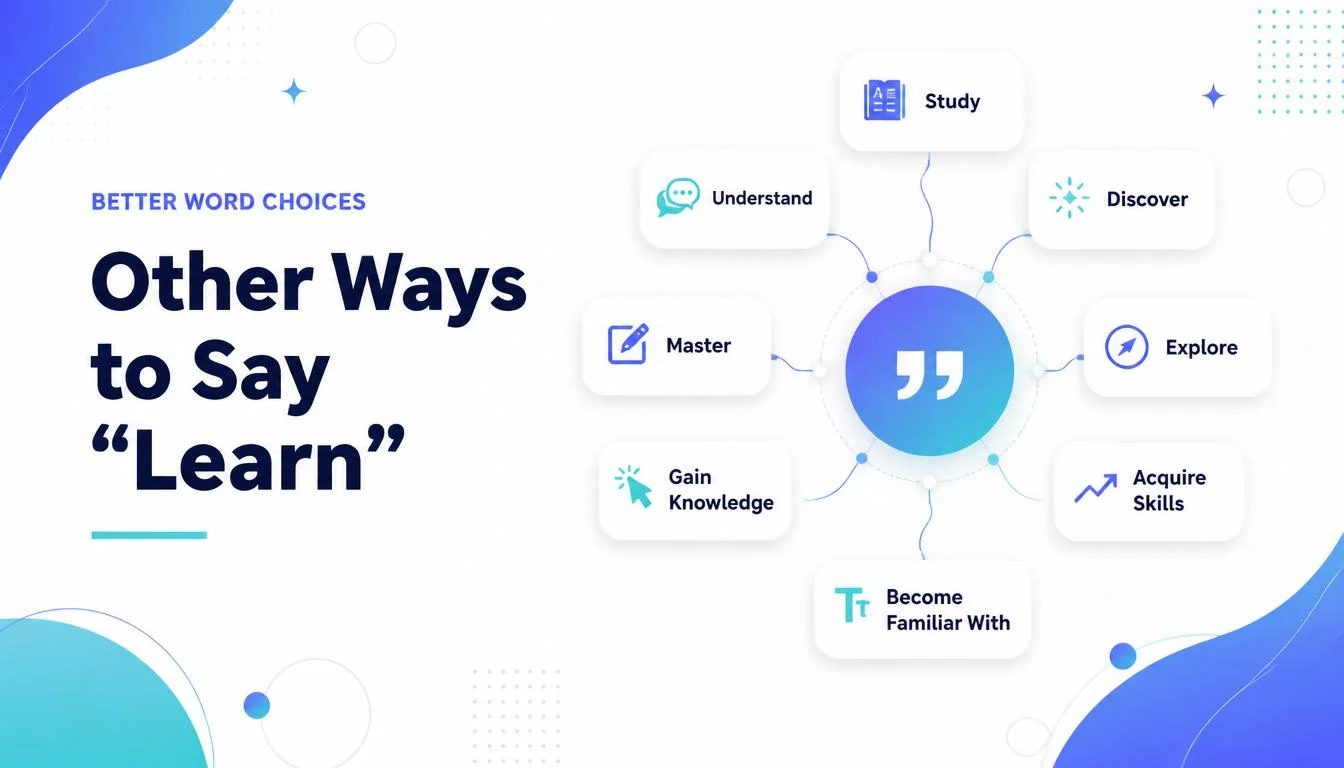
Looking for alternatives to learn? Here are 5 top options: acquire, master, pick up, grasp, and absorb. These alternatives to “learn” will help you sound more fluent and confident in any situation.
The word “learn” is one of the most frequently used verbs in English. It describes the process of gaining knowledge, understanding, or skill through study, experience, or teaching. While it is perfectly correct and widely understood, relying on it too heavily can make your speech and writing sound repetitive and simplistic.
Learning alternatives to “learn” is essential for fluency. When you expand your vocabulary, you gain the ability to express excitement in English with precision and nuance. Whether you are writing a professional email, giving a presentation, or having a casual conversation, using varied language demonstrates confidence and linguistic sophistication.
Quick Categories
- Formal alternatives to “learn” acquire, ascertain, comprehend, assimilate, educate oneself
- Casual alternatives pick up, catch on, get the hang of, figure out, soak up
- Professional alternatives master, develop expertise, upskill, train, familiarize
- Informal expressions hit the books, learn the ropes, get the picture, live and learn, bone up on
Common Mistakes People Make Using “Learn”
1. Overusing “learn” in formal writing
- Mistake: Repeating “learn” multiple times in a single paragraph.
- Example: “I learned marketing, learned sales, and learned management.”
- Fix: “I acquired marketing skills, mastered sales techniques, and developed management expertise.”
2. Using informal synonyms in professional contexts
- Mistake: “I picked up project management on the job.”
- Fix: “I developed project management expertise through hands-on experience.”
3. Confusing “learn” with “teach”
- Mistake: “Can you learn me how to use this?”
- Fix: “Can you teach me how to use this?” or “Can you show me?”
4. Using “learn” when you mean “find out”
- Mistake: “I learned that the meeting was canceled.”
- Fix: “I found out that the meeting was canceled.” (Use “learn” for skills and deeper knowledge.)
5. Misusing formal alternatives in casual conversation
- Mistake: “I ascertained the recipe from my grandmother.”
- Fix: “I learned the recipe from my grandmother.”
What Does “Learn” Mean?
Learn (verb) means to gain knowledge, understanding, or skill through study, experience, or being taught. It is one of the most fundamental verbs in the English language and can be used in almost any context.
- Grammar: Irregular verb – learn / learned (or learnt) / learned (or learnt)
- Example Sentence: “Children learn languages more easily than adults.”
When to Use “Learn”
Common contexts:
- Describing formal education and academic study
- Talking about skill development and training
- Sharing personal experiences and discoveries
- Discussing professional growth and career development
- Explaining how you gained knowledge about something
Spoken vs Written:
- Spoken: Very common in everyday conversation
- Written: Acceptable but can become repetitive
Formal vs Informal:
- Formal: Suitable for most contexts but may sound simplistic in academic writing
- Informal: Works perfectly in casual speech
Is It Professional or Polite to Say “Learn”?
- Polite? ✔️ Yes It is neutral and respectful.
- Professional? ❌ No (in most cases) While acceptable, it lacks the precision and sophistication expected in high-level professional communication.
Business-style Example:
- Basic: “I learned about our new system.”
- Professional: “I familiarized myself with our new system.”
Pros and Cons of Using “Learn”
Pros:
- Simple and natural everyone understands it
- Friendly tone approachable and warm
- Common usage widely accepted in all contexts
- Easy to understand no confusion about meaning
Cons:
- Too informal for work lacks professional weight
- Overused can make your writing repetitive
- Limited emotional range doesn’t convey enthusiasm or depth
- Not suitable for formal writing lacks academic sophistication
“Mastering alternatives to common words is the hallmark of an advanced English speaker.”
Formal Alternatives to “Learn”
These alternatives to “learn” are ideal for academic writing, business reports, and professional correspondence. They convey precision and intellectual rigor.
1. Phrase: Acquire
- Meaning: To gain knowledge, skill, or information through effort.
- Explanation: This term emphasizes active pursuit and deliberate effort in gaining new understanding.
- Example Sentence: “Over the past year, I have acquired advanced project management skills.”
- Best Use: Professional contexts
- Worst Use: Casual conversation
- Tone: Formal, deliberate
- Context Variability: Professional: “She acquired fluency in three languages.” / Casual: “I acquired a taste for coffee.”
2. Phrase: Ascertain
- Meaning: To find out or determine something with certainty through investigation.
- Explanation: This formal verb suggests careful inquiry and verification of facts.
- Example Sentence: “The research team ascertained the cause of the equipment failure.”
- Best Use: Reports, investigations
- Worst Use: Everyday chat
- Tone: Precise, investigative
- Context Variability: Professional: “We must ascertain the facts before proceeding.” / Spoken: Less common in speech.
3. Phrase: Comprehend
- Meaning: To understand something fully and completely.
- Explanation: This word goes beyond surface understanding to indicate deep mental grasp.
- Example Sentence: “It took me several weeks to comprehend the complexity of the new software.”
- Best Use: Academic writing
- Worst Use: Casual texts
- Tone: Intellectual, thorough
- Context Variability: Professional: “Do you comprehend the implications?” / Spoken: “I can’t comprehend why he did that.”
4. Phrase: Assimilate
- Meaning: To absorb and integrate new information or ideas into existing knowledge.
- Explanation: This suggests not just learning but making new knowledge part of your understanding.
- Example Sentence: “New employees need time to assimilate the company’s culture and procedures.”
- Best Use: Training, onboarding
- Worst Use: Quick updates
- Tone: Absorptive, integrative
- Context Variability: Professional: “She assimilated the training materials quickly.” / Casual: Less common.
5. Phrase: Educate oneself
- Meaning: To gain knowledge through self-directed study and effort.
- Explanation: This phrase emphasizes personal initiative and responsibility in learning.
- Example Sentence: “He educated himself on investment strategies through online courses.”
- Best Use: Self-development
- Worst Use: Group settings
- Tone: Self-motivated, proactive
- Context Variability: Professional: “I educated myself on the new regulations.” / Casual: “I educated myself on how to fix it.”
6. Phrase: Apprehend
- Meaning: To understand or grasp mentally, often something abstract.
- Explanation: This formal term suggests capturing the meaning of complex ideas.
- Example Sentence: “The students struggled to apprehend the philosophical concepts.”
- Best Use: Intellectual topics
- Worst Use: Simple instructions
- Tone: Abstract, scholarly
- Context Variability: Professional: “He apprehended the theory immediately.” / Spoken: Rare.
7. Phrase: Familiarize oneself with
- Meaning: To make oneself knowledgeable about a subject or procedure.
- Explanation: This phrase suggests becoming comfortable and acquainted with new information.
- Example Sentence: “Please familiarize yourself with the new safety protocols before Monday.”
- Best Use: Onboarding, training
- Worst Use: Deep expertise
- Tone: Introductory, preparatory
- Context Variability: Professional: “Familiarize yourself with the handbook.” / Casual: “I need to familiarize myself with this app.”
Pro Tip: Use formal alternatives like acquire and ascertain in written communication such as reports, proposals, and academic papers. They signal intellectual sophistication and attention to detail.
Casual Alternatives to “Learn”
These alternatives to “learn” are perfect for everyday conversation, friendly emails, and informal writing. They sound natural and approachable.
8. Phrase: Pick up
- Meaning: To learn something casually or by exposure rather than formal study.
- Explanation: This phrase implies effortless, often incidental learning through experience.
- Example Sentence: “I picked up a few phrases of Spanish during my trip to Madrid.”
- Best Use: Casual learning
- Worst Use: Formal reports
- Tone: Effortless, natural
- Context Variability: Casual: “She picked up cooking from her grandmother.” / Professional: Less appropriate.
9. Phrase: Catch on
- Meaning: To begin to understand or grasp something, often after initial difficulty.
- Explanation: This phrasal verb suggests a moment of realization or understanding.
- Example Sentence: “It took a while, but eventually I caught on to how the system works.”
- Best Use: Friendly chats
- Worst Use: Business writing
- Tone: Relatable, gradual
- Context Variability: Casual: “He caught on quickly.” / Professional: “She caught on to the new process.” (borderline)
10. Phrase: Get the hang of
- Meaning: To become proficient or comfortable with something through practice.
- Explanation: This informal phrase emphasizes the process of gaining skill and confidence.
- Example Sentence: “Don’t worry you’ll get the hang of driving a manual car soon.”
- Best Use: Encouragement
- Worst Use: Formal contexts
- Tone: Encouraging, supportive
- Context Variability: Casual: “I’m getting the hang of this game.” / Professional: “She got the hang of the new software.”
11. Phrase: Figure out
- Meaning: To discover or understand something through reasoning or investigation.
- Explanation: This casual verb suggests problem-solving and independent discovery.
- Example Sentence: “I need to figure out how to use this new editing software.”
- Best Use: Everyday problems
- Worst Use: Academic writing
- Tone: Curious, problem-solving
- Context Variability: Casual: “I figured out the answer.” / Professional: “We need to figure out a solution.”
12. Phrase: Soak up
- Meaning: To absorb knowledge or information eagerly and naturally.
- Explanation: This vivid verb suggests effortless, almost sponge-like learning.
- Example Sentence: “Children soak up new languages much faster than adults.”
- Best Use: Enthusiastic tone
- Worst Use: Formal reports
- Tone: Absorptive, eager
- Context Variability: Casual: “She soaks up everything her mentor says.” / Professional: “He soaked up the training material.”
13. Phrase: Brush up on
- Meaning: To refresh or improve existing knowledge or skills.
- Explanation: This phrase implies revisiting and refining what you already know.
- Example Sentence: “I need to brush up on my French before our trip to Paris.”
- Best Use: Refreshing skills
- Worst Use: New topics
- Tone: Refreshing, revisiting
- Context Variability: Casual: “I brushed up on my math skills.” / Professional: “She brushed up on presentation techniques.”
14. Phrase: Pick up on
- Meaning: To notice or become aware of something, often subtle cues.
- Explanation: This suggests learning through observation and awareness.
- Example Sentence: “She quickly picked up on the team’s unspoken rules.”
- Best Use: Social contexts
- Worst Use: Technical learning
- Tone: Observant, perceptive
- Context Variability: Casual: “He picked up on her sarcasm.” / Professional: “She picked up on the client’s concerns.”
Pro Tip: Casual alternatives work best in spoken English and informal writing. Use them to sound friendly and approachable, but avoid them in formal business documents or academic papers.
Professional Alternatives to “Learn”
These professional reaction phrases are tailored for the workplace, resumes, and business communication. They convey competence and career-mindedness.
15. Phrase: Master
- Meaning: To become highly skilled or proficient in a subject or activity.
- Explanation: This powerful verb suggests achieving a high level of expertise and control.
- Example Sentence: “She mastered the art of negotiations within her first year.”
- Best Use: Resumes, achievements
- Worst Use: Modest claims
- Tone: Confident, expert
- Context Variability: Professional: “He mastered the software.” / Casual: “I mastered this recipe.”
16. Phrase: Develop expertise in
- Meaning: To build specialized knowledge and skill in a particular area.
- Explanation: This phrase suggests ongoing professional growth and deepening knowledge.
- Example Sentence: “I have developed expertise in digital marketing strategies.”
- Best Use: Career development
- Worst Use: Casual chat
- Tone: Growth-oriented
- Context Variability: Professional: “She developed expertise in data analysis.” / Spoken: Rare.
17. Phrase: Upskill
- Meaning: To learn new skills or improve existing ones, especially for career advancement.
- Explanation: This modern business term emphasizes staying competitive and relevant.
- Example Sentence: “Our company encourages employees to upskill through online courses.”
- Best Use: Workplace training
- Worst Use: Academic contexts
- Tone: Career-focused, modern
- Context Variability: Professional: “I’m upskilling in cloud computing.” / Casual: Less common.
18. Phrase: Train in
- Meaning: To receive instruction and practice in a specific skill or area.
- Explanation: This verb suggests structured, often formal learning with guidance.
- Example Sentence: “He trained in mechanical engineering at a top university.”
- Best Use: Education, careers
- Worst Use: Self-study
- Tone: Structured, disciplined
- Context Variability: Professional: “She trained in finance.” / Casual: “I trained in martial arts.”
19. Phrase: Familiarize oneself with
- Meaning: To become acquainted with new information, tools, or procedures.
- Explanation: This phrase suggests a preparatory stage of learning before deeper engagement.
- Example Sentence: “Please familiarize yourself with the client’s history before the meeting.”
- Best Use: Preparation tasks
- Worst Use: Mastery claims
- Tone: Preparatory, diligent
- Context Variability: Professional: “Familiarize yourself with the policy.” / Casual: “I familiarized myself with the menu.”
20. Phrase: Gain proficiency in
- Meaning: To develop competence and skill in a particular area.
- Explanation: This phrase suggests achieving a practical, usable level of skill.
- Example Sentence: “She gained proficiency in Python through intensive training.”
- Best Use: Skill descriptions
- Worst Use: Beginner levels
- Tone: Competent, capable
- Context Variability: Professional: “He gained proficiency in project management.” / Casual: Less common.
21. Phrase: Broaden one’s knowledge
- Meaning: To expand understanding across a wider range of subjects.
- Explanation: This phrase suggests intellectual growth and curiosity beyond one specialty.
- Example Sentence: “Reading industry journals helps me broaden my knowledge.”
- Best Use: Continuous learning
- Worst Use: Specific skills
- Tone: Intellectual, curious
- Context Variability: Professional: “She broadened her knowledge of global markets.” / Casual: “Travel broadens your knowledge.”
Pro Tip: In resumes and cover letters, pair these professional alternatives with specific achievements. Instead of “learned Excel,” say “mastered Excel” or “developed expertise in data analysis.”
Informal Expressions for Learning
These informal expressions in English add color and personality to your speech. They are perfect for friends, family, and relaxed settings.
22. Phrase: Hit the books
- Meaning: To study intensively, especially for exams or tests.
- Explanation: This classic idiom suggests dedicated, focused study sessions.
- Example Sentence: “I need to hit the books this weekend for my final exams.”
- Best Use: Student life
- Worst Use: Professional settings
- Tone: Studious, diligent
- Context Variability: Casual: “She hit the books all night.” / Professional: Rare.
23. Phrase: Learn the ropes
- Meaning: To learn the basic procedures or routines of a job or activity.
- Explanation: This nautical idiom suggests gaining foundational knowledge to function effectively.
- Example Sentence: “It took me a month to learn the ropes at my new job.”
- Best Use: New roles
- Worst Use: Academic topics
- Tone: Practical, hands-on
- Context Variability: Casual: “He’s still learning the ropes.” / Professional: “She learned the ropes quickly.”
24. Phrase: Get the picture
- Meaning: To understand a situation or concept clearly.
- Explanation: This informal phrase suggests grasping the overall meaning or context.
- Example Sentence: “I explained the plan twice do you get the picture now?”
- Best Use: Clarifying
- Worst Use: Formal writing
- Tone: Clarifying, direct
- Context Variability: Casual: “She got the picture immediately.” / Professional: Borderline.
25. Phrase: Live and learn
- Meaning: To gain wisdom through experience, often from mistakes.
- Explanation: This common saying acknowledges that life itself is a learning process.
- Example Sentence: “I trusted the wrong person, but I guess you live and learn.”
- Best Use: Reflective moments
- Worst Use: Formal contexts
- Tone: Reflective, wise
- Context Variability: Casual: “Well, you live and learn.” / Professional: Rare.
26. Phrase: Bone up on
- Meaning: To study or review a subject intensively, often before a test or event.
- Explanation: This informal phrasal verb suggests last-minute or focused preparation.
- Example Sentence: “I need to bone up on my grammar before the interview.”
- Best Use: Quick reviews
- Worst Use: Deep learning
- Tone: Intensive, last-minute
- Context Variability: Casual: “She boned up on the material.” / Professional: Borderline.
27. Phrase: Pick someone’s brain
- Meaning: To learn from someone by asking questions and seeking their advice.
- Explanation: This phrase emphasizes learning through conversation and expert guidance.
- Example Sentence: “Can I pick your brain about the new project?”
- Best Use: Seeking advice
- Worst Use: Formal requests
- Tone: Curious, collaborative
- Context Variability: Casual: “I picked his brain about investing.” / Professional: “Could I pick your brain on this?”
28. Phrase: Get the knack of
- Meaning: To acquire a special skill or ability to do something well.
- Explanation: This informal phrase suggests developing a natural feel or talent for something.
- Example Sentence: “Once you get the knack of it, baking bread is easy.”
- Best Use: Practical skills
- Worst Use: Abstract concepts
- Tone: Skillful, natural
- Context Variability: Casual: “She got the knack of the game.” / Professional: “He got the knack of negotiating.”
29. Phrase: Wrap one’s head around
- Meaning: To understand something complex or difficult.
- Explanation: This modern idiom suggests mental effort to comprehend challenging ideas.
- Example Sentence: “I still can’t wrap my head around this new tax system.”
- Best Use: Complex topics
- Worst Use: Simple tasks
- Tone: Challenging, effortful
- Context Variability: Casual: “She wrapped her head around the concept.” / Professional: “I’m trying to wrap my head around this.”
30. Phrase: Be clued up on
- Meaning: To be well-informed or knowledgeable about a subject.
- Explanation: This British informal expression suggests being up-to-date and informed.
- Example Sentence: “She’s really clued up on the latest marketing trends.”
- Best Use: Current topics
- Worst Use: Formal writing
- Tone: Informed, savvy
- Context Variability: Casual: “He’s clued up on tech.” / Professional: Borderline.
Pro Tip: Informal expressions add personality to your English, but use them sparingly in professional contexts. They are best reserved for conversations with colleagues you know well or social settings.
Mini Quiz / Self-Check
1. Which alternative is most appropriate for a resume?
- A) Pick up
- B) Master
- C) Get the hang of
- Correct Answer: B “Master” conveys high-level proficiency.
2. You want to ask a colleague for advice informally. Which phrase works best?
- A) Ascertain
- B) Pick someone’s brain
- C) Comprehend
- Correct Answer: B “Pick someone’s brain” is perfect for informal advice-seeking.
3. Which is the most formal alternative?
- A) Catch on
- B) Acquire
- C) Bone up on
- Correct Answer: B “Acquire” is formal and professional.
4. You’re writing an email to a new client. Which is most appropriate?
- A) I picked up your company’s history.
- B) I familiarized myself with your company’s history.
- C) I got the picture of your company.
- Correct Answer: B Professional and respectful.
Comparison Table: Top 10 Alternatives
| Phrase | Tone | Best Use |
|---|---|---|
| Acquire | Formal | Professional reports, resumes |
| Master | Professional | Career achievements, expertise |
| Pick up | Casual | Everyday conversation, travel |
| Comprehend | Formal | Academic writing, complex topics |
| Grasp | Neutral | Understanding concepts |
| Assimilate | Formal | Integrating new knowledge |
| Catch on | Casual | Quick understanding |
| Develop expertise | Professional | Career development |
| Familiarize oneself | Professional | Preparation, onboarding |
| Hit the books | Informal | Student life, exam preparation |
FAQs
1. What is the most professional alternative to “learn”?
The most professional alternatives include acquire, master, develop expertise in, and familiarize oneself with. Choose based on whether you are describing gaining skills, achieving proficiency, or preparing for a task.
2. Can I use “pick up” in a professional email?
Generally, no. “Pick up” is casual and best reserved for spoken English or informal writing. In professional emails, use acquire, develop, or familiarize instead.
3. What is a formal way to say “I learned a lot”?
You can say “I acquired a wealth of knowledge,” “I gained significant insight,” or “I broadened my understanding.” These phrases sound more polished and professional.
4. Is “learn” acceptable in academic writing?
Yes, but it can appear simplistic. For academic papers, consider alternatives like comprehend, ascertain, assimilate, or apprehend to demonstrate greater precision and sophistication.
5. What is the difference between “learn” and “study”?
“Learn” focuses on the outcome gaining knowledge or skill. “Study” focuses on the process the act of reviewing materials or attending classes. You can study without learning, and you can learn without formal study.
Conclusion
Expanding your vocabulary with alternatives to “learn” is one of the most effective ways to elevate your English fluency. These 30 alternatives give you the flexibility to express yourself with precision, whether you are writing a formal report, delivering a presentation, or having a casual conversation.
The key to mastering these alternatives is practice and context awareness. Start by incorporating a few new phrases into your daily speech and writing. Pay attention to the tone and setting, and choose the word that best fits the moment. With consistent effort, you will sound more confident, professional, and naturally fluent in English.
Read More Related Articles:
- Other Ways to Say “This Shows That” | Express Your Ideas with Confidence In 2026
- Other Ways to Say “Which” in English | Beyond the Common Choices In 2026
- Other Ways to Say Also in an Essay | Make Your Writing Shine In 2026

Henry Walker is an American writer and blogger with a keen interest in communication, language and digital content. At TextsResponse.com, he creates informative and reader-focused resources designed to help people communicate with clarity, confidence and authenticity.