Quick Answer
If you want alternatives to “excellent” that sound natural in everyday speech and professional writing, try these first. Each one carries a slightly different level of formality and emotion, so the right choice depends on your audience and context.Top 5 alternatives: outstanding, exceptional, superb, first-rate, top-notch
Excellent” is one of the most common words English learners use to express approval, admiration, or satisfaction. It appears in classrooms, offices, restaurant reviews, and casual conversations alike. Because it is so widely used, relying on it too often can make your English sound repetitive or flat.
Learning alternatives to excellent helps you express excitement in English with more precision and personality. A manager praising a report, a friend reacting to good news, and a customer leaving a review all need different words, even if the underlying feeling is the same.
This guide breaks down 30 alternatives to “excellent” by tone and context, so you always know which word fits the moment, whether you are writing a formal email or chatting with a friend.
Quick Categories
Formal alternatives to “Excellent”
- Exceptional
- Exemplary
- Superior
- Distinguished
Pro Tip: Save these words for written reports, academic work, and formal reviews where precision matters more than emotion.
Casual alternatives
- Awesome
- Amazing
- Fantastic
- Great
Pro Tip: Use casual alternatives with friends or on social media, but avoid them in emails to clients or senior colleagues.
Professional alternatives
- Outstanding
- Impressive
- Commendable
- Top-notch
Pro Tip: These words work well in performance reviews, feedback emails, and professional reaction phrases during meetings.
Informal expressions
- Top-notch
- Stellar
- A cut above
- Out of this world
Pro Tip: Informal expressions in English add color to spoken conversation, but they can sound unclear or unprofessional in written business communication.
A single word choice can change how confident and fluent you sound.
Common Mistakes
Learners often misuse “excellent” without realizing it changes the tone or accuracy of a sentence. Here are five common errors.
- Overusing it in every sentence Wrong tone example: “The food was excellent, the service was excellent, and the view was excellent.
- Using it for small, everyday things Wrong tone example: “This coffee is excellent” when “good” or “nice” fits better.
- Using it in casual texting with friends Wrong tone example: “That meme was excellent lol” sounds stiff instead of playful.
- Pairing it with weak modifiers Wrong tone example: “It was very excellent” is grammatically redundant.
- Using it interchangeably with “perfect” Wrong tone example: “The interview went excellent” instead of “The interview went excellently” or “went well.”
What Does “Excellent” Mean?
“Excellent” is an adjective that describes something of very high quality, extremely good, or outstanding in some way.
Grammar note: It is used before a noun (“an excellent presentation”) or after a linking verb (“The presentation was excellent”). It does not take “very” before it, since “excellent” already expresses a high degree.
Example sentence: “Her final report was excellent and impressed the entire board.
When to Use “Excellent”
Common contexts
- Giving praise or positive feedback
- Reacting to good news
- Reviewing a product, service, or performance
- Complimenting someone’s work or effort
Spoken vs Written
- Spoken: Often used briefly, such as “Excellent, thanks!”
- Written: Used to add weight to formal praise, such as in performance reviews or reference letters.
Formal vs Informal
- Formal: Appropriate in reports, emails, and academic writing
- Informal: Works in daily conversation but can sound repetitive if overused
Is It Professional or Polite to Say “Excellent”?
“Excellent” is both polite and generally professional, but its strength depends on context. In business settings, it can sound genuine when used sparingly, but overusing it may come across as insincere or vague.
Business example: “Excellent work on the client proposal. The structure and data really stood out.”
Polite? Yes Professional? Yes, when used with specific detail
Politeness opens the door, but precision keeps you credible.
Pros and Cons of Using “Excellent”
Pros
- Simple and natural
- Friendly tone
- Common usage
- Easy to understand
Cons
- Too informal for some formal writing
- Overused in daily speech
- Limited emotional range
- Not suitable for highly technical evaluations
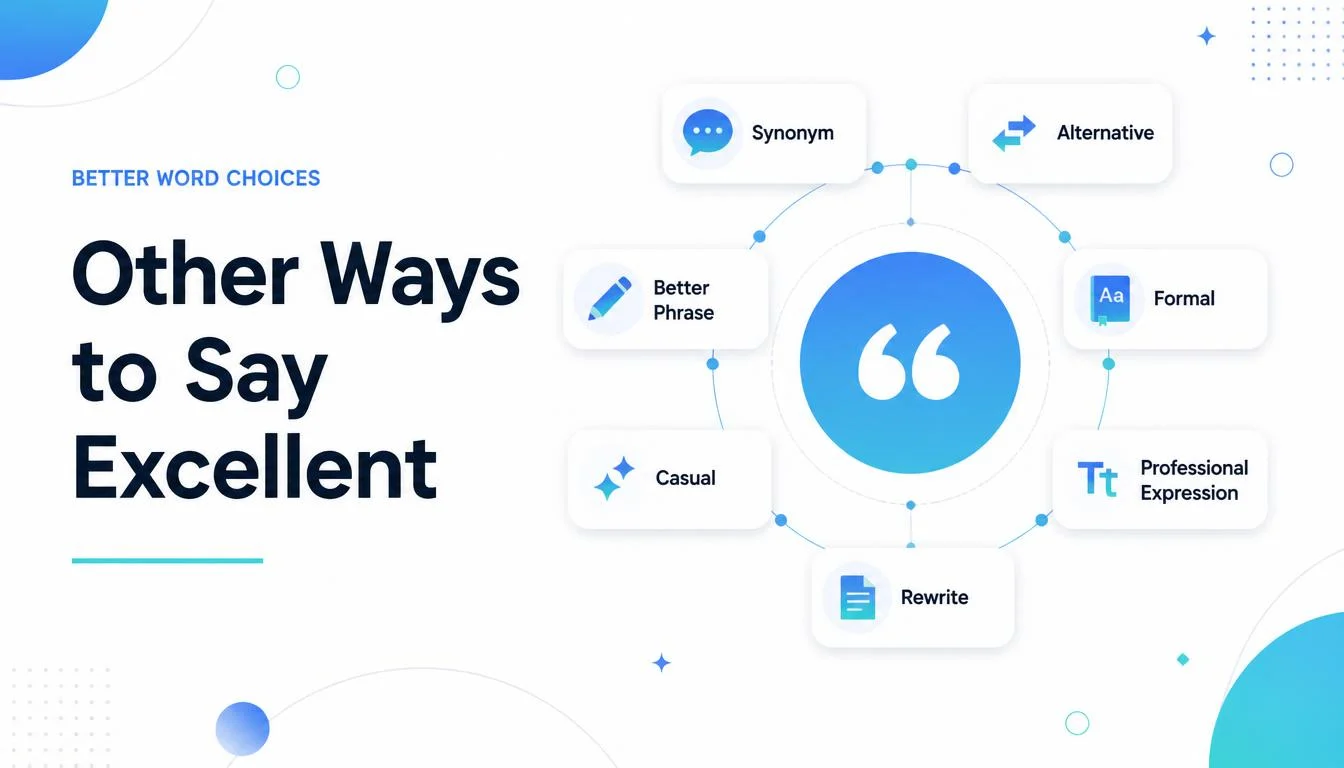
Other Ways to Say “Excellent”
These alternatives will help you sound more fluent, confident, and natural in different situations. Use them according to tone, context, and audience to express excitement, admiration, or approval.
1. Phrase: Outstanding
Meaning: Extremely impressive or remarkable.
Explanation: Highlights performance that clearly stands above others.
Example Sentence: “Her outstanding presentation earned a round of applause.”
Best Use: performance reviews
Worst Use: casual texting
Tone: formal, admiring
Context Variability: professional, spoken
2. Phrase: Exceptional
Meaning: Unusually good or rare in quality.
Explanation: Suggests something goes beyond normal expectations.
Example Sentence: “The team delivered exceptional results this quarter.”
Best Use: business reports
Worst Use: casual chat
Tone: formal, precise
Context Variability: professional, written
3. Phrase: Superb
Meaning: Very impressive and high quality.
Explanation: Adds enthusiasm while still sounding polished.
Example Sentence: “The chef prepared a superb three-course meal.”
Best Use: reviews, dining
Worst Use: technical reports
Tone: enthusiastic, polished
Context Variability: casual, professional
4. Phrase: First-rate
Meaning: Of the highest class or quality.
Explanation: Common in business and product evaluations.
Example Sentence: “Their customer service was first-rate.
Best Use: reviews, feedback
Worst Use: emotional reactions
Tone: formal, confident
Context Variability: professional, written
5. Phrase: Top-notch
Meaning: Of the best possible quality.
Explanation: Slightly informal but still respected in professional speech.
Example Sentence: “The engineering team did top-notch work on the update.
Best Use: team praise
Worst Use: academic writing
Tone: friendly, confident
Context Variability: casual, professional
6. Phrase: Impressive
Meaning: Causing admiration through skill or quality.
Explanation: Focuses on the effect something has on the observer.
Example Sentence: “That was an impressive turnaround on the project.”
Best Use: feedback, praise
Worst Use: minor compliments
Tone: respectful, genuine
Context Variability: professional, spoken
7. Phrase: Remarkable
Meaning: Worthy of attention because it is unusual or special.
Explanation: Suggests something stands out from the ordinary.
Example Sentence: “She showed remarkable patience during the crisis.”
Best Use: storytelling, praise
Worst Use: everyday small talk
Tone: thoughtful, formal
Context Variability: written, professional
8. Phrase: Superior
Meaning: Higher in quality compared to others.
Explanation: Often used in comparisons of products or performance.
Example Sentence: “This model offers superior battery life.”
Best Use: comparisons, reviews
Worst Use: personal compliments
Tone: formal, confident
Context Variability: professional, written
9. Phrase: Exemplary
Meaning: Serving as a model of excellence.
Explanation: Often used to describe behavior or work ethic.
Example Sentence: “His exemplary conduct set the standard for the team.”
Best Use: formal evaluations
Worst Use: casual conversation
Tone: formal, respectful
Context Variability: professional, written
10. Phrase: Stellar
Meaning: Excellent in an exciting, standout way.
Explanation: Slightly informal, often used in modern professional speech.
Example Sentence: “The launch received stellar feedback from users.”
Best Use: marketing, reviews
Worst Use: legal writing
Tone: energetic, modern
Context Variability: casual, professional
11. Phrase: Marvelous
Meaning: Causing wonder or admiration.
Explanation: Slightly old-fashioned but warm and expressive.
Example Sentence: “What a marvelous idea for the campaign.”
Best Use: enthusiastic praise
Worst Use: technical reports
Tone: warm, expressive
Context Variability: spoken, casual
12. Phrase: Phenomenal
Meaning: Extremely impressive or extraordinary.
Explanation: Adds strong emotional emphasis to praise.
Example Sentence: “The sales team had a phenomenal quarter.”
Best Use: celebrations, praise
Worst Use: neutral reporting
Tone: energetic, bold
Context Variability: professional, spoken
13. Phrase: Splendid
Meaning: Very impressive and beautiful or grand.
Explanation: Often used in British English for elegant praise.
Example Sentence: “The event venue looked absolutely splendid.”
Best Use: events, descriptions
Worst Use: informal chats
Tone: elegant, formal
Context Variability: written, professional
14. Phrase: Magnificent
Meaning: Extremely beautiful, impressive, or grand.
Explanation: Suggests grandeur, often used for visuals or achievements.
Example Sentence: “The architecture of the building was magnificent.”
Best Use: descriptions, praise
Worst Use: small compliments
Tone: grand, admiring
Context Variability: written, spoken
15. Phrase: Flawless
Meaning: Without any mistakes or imperfections.
Explanation: Emphasizes precision and perfect execution.
Example Sentence: “Her flawless delivery impressed the entire audience.”
Best Use: performances, execution
Worst Use: subjective opinions
Tone: precise, confident
Context Variability: professional, spoken
16. Phrase: Sublime
Meaning: Of such excellence it inspires awe.
Explanation: Poetic and elevated, often used in creative writing.
Example Sentence: “The dessert had a sublime balance of flavors.”
Best Use: creative writing
Worst Use: business emails
Tone: poetic, refined
Context Variability: written, casual
17. Phrase: Terrific
Meaning: Very good or enjoyable.
Explanation: Friendly and enthusiastic, common in daily speech.
Example Sentence: “You did a terrific job organizing the event.”
Best Use: casual praise
Worst Use: formal documents
Tone: friendly, upbeat
Context Variability: spoken, casual
18. Phrase: Fantastic
Meaning: Extremely good or enjoyable.
Explanation: One of the most common casual alternatives.
Example Sentence: “That was a fantastic idea for the campaign.”
Best Use: everyday conversation
Worst Use: academic writing
Tone: enthusiastic, casual
Context Variability: spoken, casual
19. Phrase: Amazing
Meaning: Causing great surprise or wonder.
Explanation: Widely used but can sound overused if repeated often.
Example Sentence: “The results of the experiment were amazing.”
Best Use: casual reactions
Worst Use: formal writing
Tone: excited, casual
Context Variability: spoken, casual
20. Phrase: Awesome
Meaning: Extremely impressive or excellent.
Explanation: Very informal, popular in spoken American English.
Example Sentence: “That presentation was awesome, great job.”
Best Use: friendly conversation
Worst Use: client emails
Tone: casual, energetic
Context Variability: spoken, casual
21. Phrase: Great
Meaning: Notably good or of high quality.
Explanation: Simple and versatile across many situations.
Example Sentence: “That’s a great point, let’s move forward with it.
Best Use: everyday use
Worst Use: formal evaluations
Tone: neutral, friendly
Context Variability: casual, professional
22. Phrase: Wonderful
Meaning: Inspiring delight or admiration.
Explanation: Adds warmth and positivity to praise.
Example Sentence: “It was wonderful to see the team collaborate so well.”
Best Use: warm compliments
Worst Use: technical feedback
Tone: warm, genuine
Context Variability: spoken, written
23. Phrase: Brilliant
Meaning: Exceptionally clever, skilled, or impressive.
Explanation: Common in British English for strong approval.
Example Sentence: “That was a brilliant solution to the problem.”
Best Use: praise, ideas
Worst Use: formal reports
Tone: enthusiastic, admiring
Context Variability: spoken, professional
24. Phrase: A cut above
Meaning: Better than others in the same category.
Explanation: An idiom used to describe standout quality.
Example Sentence: “Their customer support is a cut above the competition.”
Best Use: comparisons
Worst Use: formal writing
Tone: idiomatic, confident
Context Variability: casual, professional
25. Phrase: Out of this world
Meaning: Extraordinarily good.
Explanation: An expressive idiom for strong enthusiasm.
Example Sentence: “The dinner she cooked was out of this world.”
Best Use: enthusiastic reactions
Worst Use: business writing
Tone: playful, expressive
Context Variability: spoken, casual
26. Phrase: Second to none
Meaning: The best, with nothing better available.
Explanation: Emphasizes superiority without direct comparison words.
Example Sentence: “Their attention to detail is second to none.”
Best Use: reviews, praise
Worst Use: minor compliments
Tone: confident, formal
Context Variability: professional, written
27. Phrase: Commendable
Meaning: Deserving praise and approval.
Explanation: Formal and measured, common in workplace feedback.
Example Sentence: “Your effort on this project is commendable.”
Best Use: performance feedback
Worst Use: casual chat
Tone: formal, respectful
Context Variability: professional, written
28. Phrase: Prime
Meaning: Of the best possible quality.
Explanation: Often used to describe products or conditions.
Example Sentence: “This is prime real estate for the new office.”
Best Use: descriptions, quality
Worst Use: emotional praise
Tone: neutral, formal
Context Variability: professional, written
29. Phrase: Peerless
Meaning: Having no equal.
Explanation: A strong, formal way to describe unmatched quality.
Example Sentence: “Her peerless dedication inspired the whole team.”
Best Use: formal praise
Worst Use: casual speech
Tone: formal, elevated
Context Variability: written, professional
30. Phrase: Top-tier
Meaning: Belonging to the highest level or category.
Explanation: Common in business and product language today.
Example Sentence: “They offer top-tier support for enterprise clients.”
Best Use: business, marketing
Worst Use: personal compliments
Tone: modern, professional
Context Variability: professional, written
Choosing the right synonym is not about sounding smart, it’s about sounding accurate.
Mini Quiz / Self-Check
1. Which word fits best in a formal performance review?
a) Awesome
b) Exceptional
c) Out of this world
2. Which phrase is most appropriate for a casual text to a friend?
a) Commendable
b) Peerless
c) Amazing
3. “The chef prepared a ___ meal” (elegant, review-style tone) best fits:
a) Superb
b) Prime
c) Terrific
4. Which alternative is an idiom rather than a single adjective?
a) Stellar
b) A cut above
c) Flawless
Answers: 1-b, 2-c, 3-a, 4-b
Comparison Table: Top Alternatives
| Phrase | Tone | Best Use |
|---|---|---|
| Outstanding | Formal, admiring | Performance reviews |
| Exceptional | Formal, precise | Business reports |
| Superb | Enthusiastic, polished | Reviews, dining |
| First-rate | Formal, confident | Feedback |
| Top-notch | Friendly, confident | Team praise |
| Impressive | Respectful, genuine | Professional feedback |
| Stellar | Energetic, modern | Marketing, reviews |
| Fantastic | Enthusiastic, casual | Everyday conversation |
| Awesome | Casual, energetic | Friendly conversation |
| Commendable | Formal, respectful | Workplace feedback |
FAQs
Is “excellent” too formal for texting?
It can feel slightly stiff in casual texts; “awesome” or “amazing” usually sounds more natural.
What is a professional way to say excellent in an email?
Outstanding,” “exceptional,” or “commendable” work well for professional reaction phrases in emails.
What is the British English equivalent of excellent?
Brilliant” and “splendid” are common British alternatives with a similar meaning.
Can I use “excellent” and “exceptional” interchangeably?
Mostly yes, though “exceptional” often implies rarity, while “excellent” is more general.
What are some informal expressions in English similar to excellent?
“Awesome,” “out of this world,” and “a cut above” are popular informal expressions in English.
Conclusion
Learning alternatives to excellent gives you more control over tone, whether you are writing a formal report or reacting to good news with a friend. Instead of repeating the same word, you can choose language that matches the exact level of formality and emotion you want to express.
Practice using a few new alternatives each day in real conversations or writing. Over time, this small habit builds noticeable fluency and helps you sound more confident, natural, and professional in English.
Read More Related Articles:
- Other Ways to Say Thoughts and Prayers | Kind Words for Hard Times In 2026
- Other Ways to Say Bye in Spanish | Speak Like a Local With These Phrases In 2026
- Other Ways to Say I Am Excited | When You Want to Sound More Natural In 2026

Victoria Hughes is a content writer dedicated to making communication clearer and more effective. Through TextsResponse.com, she shares practical insights and thoughtfully crafted response ideas that help readers express themselves with confidence.