Quick Answer
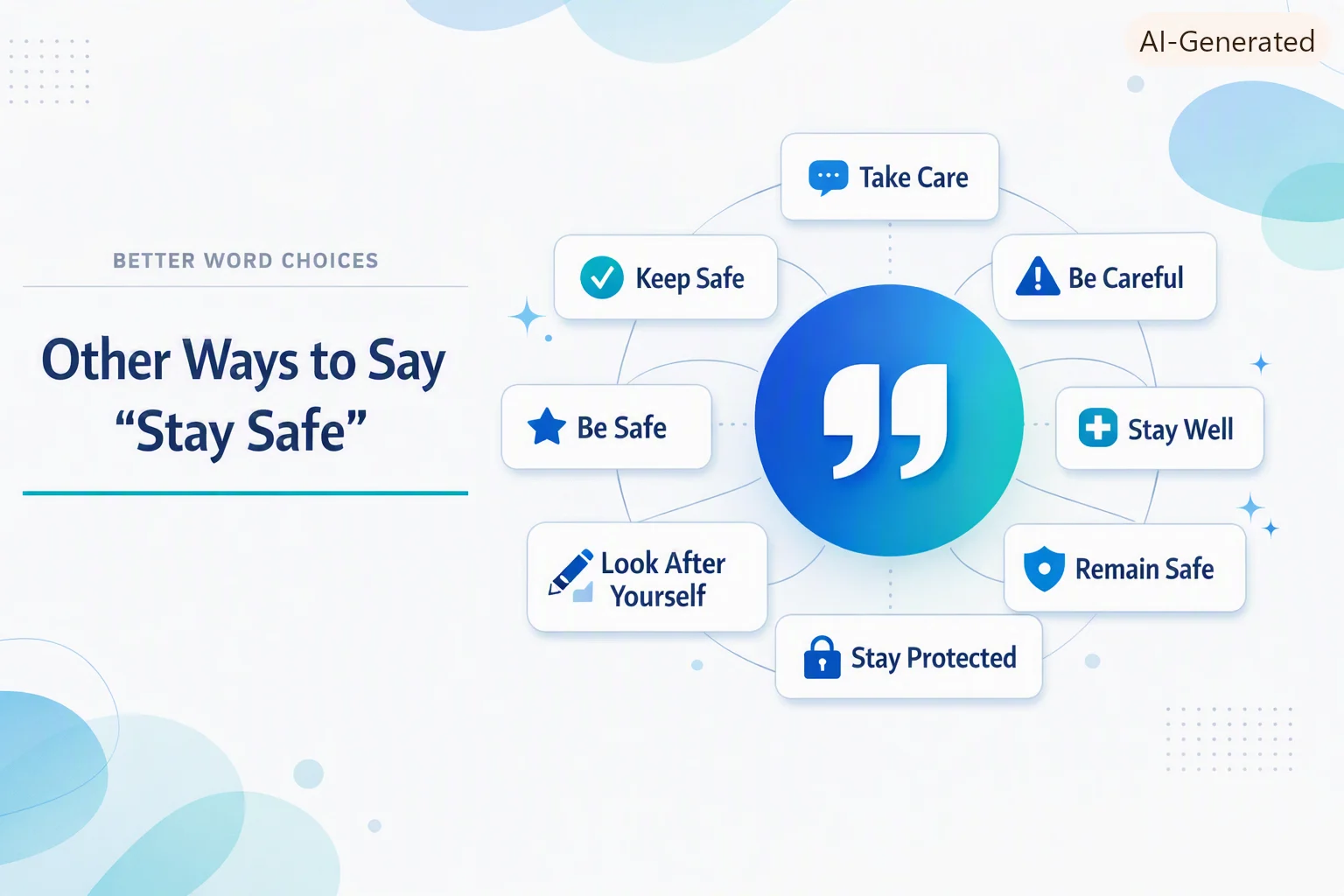
Looking for alternatives to “stay safe”? The phrase is a common way to show care and concern when saying goodbye.Top alternatives include: take care, be careful, stay well, look after yourself, and watch out for yourself.
Stay safe” is one of the most common closing phrases in both spoken and written English. People use it to express care, concern, or a wish for someone’s wellbeing, especially before a trip, during difficult situations, or as a simple farewell. It works in texts, emails, phone calls, and everyday conversation.
Knowing different alternatives to “stay safe” helps you avoid sounding repetitive and lets you match your tone to the situation, whether you are writing a formal email or texting a friend. It also helps you express excitement in English or warmth depending on the phrase you choose, since some alternatives carry more emotion than others.
Learning these variations builds fluency and confidence. Instead of relying on one phrase for every context, you will be able to choose words that fit family, friends, coworkers, or clients naturally.
The right tone makes your English sound professional and confident.
Quick Categories
Formal alternatives to “stay safe”
- Please take care of yourself
- Wishing you a safe journey
- Take every precaution
- Stay vigilant
Casual alternatives
- Take care
- Be safe out there
- Watch yourself
- Stay outta trouble
Professional alternatives
- Please stay safe and well
- Prioritize your safety
- Exercise caution
- Look after your wellbeing
Informal expressions
- Don’t do anything wild
- Stay outta trouble
- Watch your back
- Be good
Pro Tips Box: Match the phrase to the relationship. Use formal alternatives with clients or in official emails, and save casual expressions for friends and family.
Common Mistakes
- Overusing it in every message – Repeating “stay safe” in every text can feel robotic.
- Example: “Stay safe. Talk later. Stay safe again!”
- Using it in purely happy contexts – It can sound odd when there’s no risk involved.
- Example: “Congrats on the promotion, stay safe!”
- Mixing formal and informal tone – Combining “stay safe” with slang confuses the message.
- Example: “Please stay safe, yo.”
- Using it as a substitute for real concern – Saying it without meaning it can feel hollow.
- Example: “Stay safe” (sent with no context during an emergency).
- Translating it literally from another language – This can create unnatural phrasing.
- Example: “Be safe yourself” instead of “Stay safe.”
What Does “Stay Safe” Mean?
“Stay safe” is an imperative phrase used to wish someone protection from harm or danger. Grammatically, it combines the verb “stay” with the adjective “safe,” forming a short command that expresses care rather than an actual order.
Example Sentence: “It’s raining hard tonight, so drive carefully and stay safe.”
When to Use “Stay Safe”
- Before someone travels or drives
- During storms, emergencies, or health concerns
- As a closing line in texts or emails
- Spoken: Common in casual goodbyes and phone calls
- Written: Common in texts, emails, and social media posts
- Formal: Acceptable in professional emails when adapted (e.g., “Please stay safe and well”)
- Informal: Very common among friends and family
Is It Professional or Polite to Say “Stay Safe”?
“Stay safe” is polite and shows genuine concern, but it can feel too casual for certain business contexts, such as formal reports or client contracts.
Business Example: “Thank you for your continued partnership. Stay safe and we look forward to our next meeting.”
Polite? ✔️ Yes Professional? ❌ No (in most strictly formal writing)
Pros and Cons of Using “Stay Safe”
Pros
- Simple and natural
- Friendly tone
- Common usage
- Easy to understand
Cons
- Too informal for work
- Overused
- Limited emotional range
- Not suitable for formal writing
A single phrase can carry warmth, urgency, or professionalism depending on your word choice.”
Other Ways to Say “Stay Safe”
These alternatives will help you sound more fluent, confident, and natural in different situations. Use them according to tone, context, and audience to express excitement, admiration, or approval.
1. Take Care
Meaning: A general wish for someone’s health, happiness, and wellbeing.
Explanation: One of the most common and versatile ways to say goodbye while expressing concern for someone’s wellbeing.
Example Sentence: Take care, and text me when you arrive.
Best Use: Casual goodbyes
Avoid Using: Formal agreements or legal documents
Tone: Warm, friendly
Context: Casual, spoken
2. Be Careful
Meaning: A direct reminder to avoid danger or accidents.
Explanation: Best used when someone may face a specific risk or hazardous situation.
Example Sentence: The roads are icy, so be careful driving home.
Best Use: Giving safety warnings
Avoid Using: Ordinary farewells without any risk
Tone: Cautious, direct
Context: Casual, spoken
3. Stay Well
Meaning: A wish for continued good health and wellbeing.
Explanation: Slightly more formal than stay safe and commonly used during illness or flu season.
Example Sentence: Stay well during flu season.
Best Use: Health-related farewells
Avoid Using: Immediate danger or emergency situations
Tone: Caring, gentle
Context: Professional, spoken
4. Look After Yourself
Meaning: A reminder to take care of your physical and emotional wellbeing.
Explanation: Suggests ongoing self-care rather than temporary safety.
Example Sentence: You’ve been working hard lately, so look after yourself.
Best Use: Friends and family
Avoid Using: Speaking to complete strangers
Tone: Compassionate
Context: Casual, spoken
5. Watch Out for Yourself
Meaning: A reminder to stay alert and protect yourself.
Explanation: Often used when someone is entering an unfamiliar or potentially risky environment.
Example Sentence: It’s your first time in the city, so watch out for yourself.
Best Use: Travel advice
Avoid Using: Formal business communication
Tone: Protective
Context: Casual, spoken
6. Stay Vigilant
Meaning: Remain alert to possible dangers or threats.
Explanation: Frequently used in official announcements and public safety messages.
Example Sentence: Please stay vigilant during the storm warning.
Best Use: Safety advisories
Avoid Using: Friendly everyday conversations
Tone: Serious, formal
Context: Professional
7. Exercise Caution
Meaning: Act carefully and avoid unnecessary risks.
Explanation: A formal expression commonly found in workplace and public safety instructions.
Example Sentence: Please exercise caution when operating the machinery.
Best Use: Workplace safety
Avoid Using: Casual conversations
Tone: Formal, professional
Context: Professional
8. Prioritize Your Safety
Meaning: Make your personal safety your highest priority.
Explanation: Often used during emergencies or official safety communications.
Example Sentence: During the evacuation, prioritize your safety above everything else.
Best Use: Emergency guidance
Avoid Using: Everyday farewells
Tone: Formal, urgent
Context: Professional
9. Take Every Precaution
Meaning: Do everything possible to avoid danger.
Explanation: Encourages thorough preparation before entering a risky situation.
Example Sentence: Take every precaution while traveling abroad.
Best Use: Travel and safety advice
Avoid Using: Everyday conversations
Tone: Formal, thorough
Context: Professional
10. Wishing You a Safe Journey
Meaning: A polite farewell before someone begins a trip.
Explanation: A thoughtful expression commonly used in emails, letters, and formal goodbyes.
Example Sentence: Wishing you a safe journey and a wonderful vacation.
Best Use: Travel-related farewells
Avoid Using: Daily greetings
Tone: Formal, warm
Context: Professional, written
11. Be Safe Out There
Meaning: A casual wish for someone’s safety while they’re away.
Explanation: Often used when weather, travel, or other conditions may be risky.
Example Sentence: The storm is getting worse—be safe out there.
Best Use: Friendly reminders
Avoid Using: Formal emails
Tone: Casual, caring
Context: Casual, spoken
12. Watch Yourself
Meaning: Stay alert and avoid danger.
Explanation: A short and direct warning used in informal conversations.
Example Sentence: It’s dark outside, so watch yourself.
Best Use: Quick safety reminders
Avoid Using: Professional writing
Tone: Direct, casual
Context: Casual, spoken
13. Don’t Do Anything Baffling
Meaning: A playful reminder to avoid risky behavior.
Explanation: Common among close friends before weekends, vacations, or parties.
Example Sentence: Have fun this weekend, but don’t do anything baffling.
Best Use: Friendly banter
Avoid Using: Serious emergencies
Tone: Playful, casual
Context: Casual, spoken
14. Stay Outta Trouble
Meaning: An informal way of telling someone to stay safe and avoid problems.
Explanation: A slang expression often used jokingly between friends.
Example Sentence: See you Monday—stay outta trouble.
Best Use: Close friends
Avoid Using: Professional communication
Tone: Humorous, informal
Context: Casual, spoken
15. Watch Your Back
Meaning: Stay aware of possible danger or betrayal.
Explanation: Can refer to physical safety or social situations requiring caution.
Example Sentence: It’s a rough neighborhood, so watch your back.
Best Use: Informal warnings
Avoid Using: Formal correspondence
Tone: Cautious
Context: Casual, spoken
16. Be Good
Meaning: A lighthearted farewell wishing someone well.
Explanation: Doesn’t necessarily refer to safety but expresses friendly goodwill.
Example Sentence: I’m heading home now—be good!
Best Use: Casual goodbyes
Avoid Using: Emergency situations
Tone: Friendly, lighthearted
Context: Casual, spoken
17. Please Stay Safe and Well
Meaning: A thoughtful wish for both safety and good health.
Explanation: Frequently used in professional emails and public announcements.
Example Sentence: As the weather worsens, please stay safe and well.
Best Use: Workplace communication
Avoid Using: Informal text messages
Tone: Caring, formal
Context: Professional, written
18. Look After Your Wellbeing
Meaning: Take care of your physical and mental health.
Explanation: Focuses on overall wellness rather than immediate safety.
Example Sentence: During this busy season, remember to look after your wellbeing.
Best Use: Workplace wellness messages
Avoid Using: Casual conversations
Tone: Supportive, professional
Context: Professional
19. Take Good Care of Yourself
Meaning: An affectionate way to express deep concern.
Explanation: Adds extra warmth compared to simply saying take care.
Example Sentence: I’ll miss you—take good care of yourself.
Best Use: Emotional farewells
Avoid Using: Business meetings
Tone: Warm, sincere
Context: Casual, spoken
20. Stay Out of Harm’s Way
Meaning: Avoid dangerous people, places, or situations.
Explanation: A slightly literary expression commonly used during serious events.
Example Sentence: During the protest, please stay out of harm’s way.
Best Use: Serious warnings
Avoid Using: Everyday casual conversations
Tone: Serious, protective
Context: Spoken, written
21. Keep Yourself Protected
Meaning: Take steps to reduce risk and stay safe.
Explanation: Often used for health, weather, or workplace safety advice.
Example Sentence: Wear sunscreen and keep yourself protected.
Best Use: Health and safety guidance
Avoid Using: Everyday farewells
Tone: Practical, caring
Context: Professional, spoken
22. Stay Alert
Meaning: Remain aware of what’s happening around you.
Explanation: Common in public safety notices and workplace instructions.
Example Sentence: The area is under construction, so stay alert.
Best Use: Safety instructions
Avoid Using: Casual conversations
Tone: Direct, serious
Context: Professional
23. Mind How You Go
Meaning: Be careful on your way.
Explanation: A traditional British English farewell that expresses concern for someone’s safety.
Example Sentence: It’s slippery outside—mind how you go.
Best Use: British English conversations
Avoid Using: American business writing
Tone: Polite, traditional
Context: Casual, spoken
24. Don’t Take Any Risks
Meaning: Avoid unnecessary danger.
Explanation: A straightforward warning when safety is important.
Example Sentence: The trail is dangerous, so don’t take any risks.
Best Use: Outdoor activities
Avoid Using: Formal reports
Tone: Direct, caring
Context: Casual, spoken
25. Keep an Eye Out
Meaning: Stay observant and pay attention to your surroundings.
Explanation: Encourages awareness rather than simply wishing someone safety.
Example Sentence: It’s crowded downtown tonight, so keep an eye out.
Best Use: Travel and city advice
Avoid Using: Formal business writing
Tone: Practical
Context: Casual, spoken
26. Stay Grounded and Safe
Meaning: Remain calm, focused, and protected.
Explanation: Combines emotional stability with physical safety.
Example Sentence: Whatever happens, stay grounded and safe.
Best Use: Emotional encouragement
Avoid Using: Quick everyday goodbyes
Tone: Supportive, calm
Context: Spoken, written
27. Be Safe and Sound
Meaning: A traditional wish for complete safety and wellbeing.
Explanation: A classic expression often found in greeting cards and letters.
Example Sentence: May you arrive home safe and sound.
Best Use: Written messages and travel wishes
Avoid Using: Technical or business documents
Tone: Warm, traditional
Context: Written, casual
28. Stay Protected
Meaning: Remain shielded from harm or illness.
Explanation: Commonly used in health, weather, and workplace safety advice.
Example Sentence: Stay protected from the sun this summer.
Best Use: Health and weather guidance
Avoid Using: Emotional farewells
Tone: Practical, caring
Context: Professional, spoken
29. Please Remain Cautious
Meaning: Continue to act carefully.
Explanation: Frequently appears in official notices and workplace communications.
Example Sentence: Please remain cautious near the construction site.
Best Use: Official announcements
Avoid Using: Friendly conversations
Tone: Formal, serious
Context: Professional
30. Take It Easy and Stay Safe
Meaning: Relax while also taking care of yourself.
Explanation: Combines a casual farewell with a gentle reminder to stay safe.
Example Sentence: It’s been a long week—take it easy and stay safe.
Best Use: Friendly closings
Avoid Using: Formal business correspondence
Tone: Relaxed, caring
Context: Casual, spoken
Every phrase you learn is a new tool for sounding natural in English.
Quick Quiz
1. Which phrase is most appropriate in a formal company safety announcement?
a) Stay outta trouble
b) Please stay safe and well
c) Watch your back
d) Be good
Answer: b) Please stay safe and well
2. Which alternative would you use with a close friend before a road trip in bad weather?
a) Exercise caution
b) Prioritize your safety
c) Be safe out there
d) Please remain cautious
Answer: c) Be safe out there
3. Which phrase is traditionally British?
a) Mind how you go
b) Watch yourself
c) Stay alert
d) Be good
Answer: a) Mind how you go
4. Which phrase suggests ongoing self-care rather than a one-time warning?
a) Watch your back
b) Look after yourself
c) Stay vigilant
d) Be careful
Answer: b) Look after yourself
Comparison Table: Top Alternatives
| Phrase | Tone | Best Use |
|---|---|---|
| Take care | Warm, friendly | Casual goodbyes |
| Be careful | Cautious, direct | Warnings |
| Stay well | Caring, gentle | Health-related goodbyes |
| Look after yourself | Compassionate | Close relationships |
| Exercise caution | Formal, professional | Workplace safety |
| Prioritize your safety | Formal, urgent | Emergency guidance |
| Wishing you a safe journey | Formal, warm | Travel emails |
| Be safe out there | Casual, caring | Friendly warnings |
| Stay outta trouble | Slang, humorous | Close friends |
| Please stay safe and well | Formal, caring | Company announcements |
FAQs
1. What is a professional way to say “stay safe”?
Try “please stay safe and well” or “exercise caution,” which sound polished in emails and workplace communication.
2. Is “stay safe” too informal for business emails?
It can be, unless slightly adapted, such as “please stay safe and well” or “prioritize your safety.”
3. What can I say instead of “stay safe” to a close friend?
Casual options like “take care,” “be safe out there,” or “watch yourself” work well with friends.
4. What is a British alternative to “stay safe”?
Mind how you go” is a traditional and polite British expression with a similar meaning.
5. How many alternatives to “stay safe” are there?
There are dozens of options, but this guide covers 30 practical alternatives across formal, casual, and professional contexts.
Conclusion
Learning different alternatives to “stay safe” helps you communicate with more warmth, precision, and professionalism. Instead of repeating the same phrase, you can now choose expressions that match the situation, whether it’s a formal workplace notice or a casual goodbye to a friend.
Practice using a few of these alternatives daily in conversations, texts, or emails. Paying attention to tone will help you sound more natural, confident, and fluent in everyday English.
If you found this useful, check out our related guide on other ways to say “take care” and our Professional English communication guide for more phrases like these.
Read More Related Articles:
- Other Ways to Say “From” in a Letter | For a More Professional Sign-Off In 2026
- Other Ways to Say Be Safe | Upgrade Your Farewells In 2026
- Other Ways to Say Feel Free | Formal Writing and Business Communication In 2026

Daniel Murphy is a professional writer and blogger specializing in digital communication and messaging trends. As a contributor to TextsResponse.com, he creates reader-focused content designed to help people find the right words at the right time.